Vlorë's Coastal Construction Boom Conceals the Talent Shortage That Could Stall It
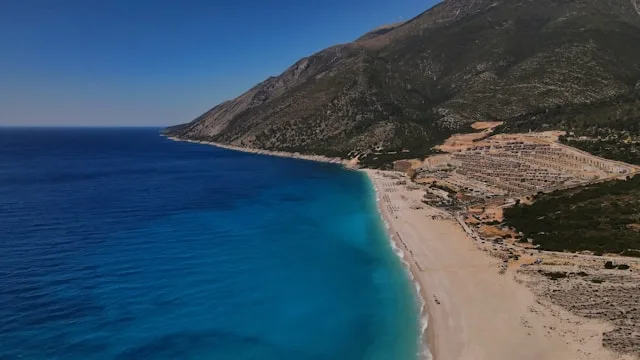
Vlorë's construction sector delivered 12% year-on-year growth in completed square metres through 2024. The Lungomare coastal road opened 18 kilometres of previously unreachable Adriatic shoreline, triggering land value appreciation of 35 to 40% in adjacent zones within six months. Investment projections for the wider region in 2026 sit between €340 and €380 million. By every visible metric, this is a market accelerating.
The invisible metric tells a different story. Marine construction project managers remain vacant for an average of 147 days across southern Albania. Environmental impact assessment specialists go unfilled for six to nine months. Master stonemasons capable of working Vlorë limestone to five-star hospitality standards do not exist in sufficient numbers locally, forcing developers to import artisan teams from Italy's Apulia region on four-to-six-month rotations. The growth numbers describe what is being built. The vacancy numbers describe who is not there to build it.
What follows is a ground-level analysis of the forces reshaping Vlorë's construction and real estate sector, where the capital is flowing, why the three most critical talent categories are nearly impossible to fill through conventional means, and what hiring leaders and developers operating along the Albanian Riviera need to understand before their next search.
A Market Growing in Two Directions at Once
The bifurcation in Vlorë's construction economy is the first thing any hiring leader needs to grasp. On one side sits infrastructure-led expansion: the Lungomare completion, the Port of Vlorë cruise terminal expansion backed by €45 million in investment, and municipal utilities work contracted through firms like the Tirana-based Kastrati Group, which maintains 120 permanent staff in Vlorë municipality and scales to 400 during peak seasons.
On the other side sits high-end residential and resort development, where growth is real but constrained. The Porto Romano Marina and Residential complex represents an estimated €120 million in mixed-use investment. The Aleria Resort in Radhimë added 85 luxury units in its Phase II expansion. Green Coast Resort in Palasë entered its third construction phase in early 2025. These are material projects. Yet aggregate construction volume remains 15% below 2018 peaks, suppressed by stricter environmental impact assessment requirements implemented as Albania aligns with EU candidacy conditions.
The practical consequence for talent is that both sides of this bifurcation compete for the same small pool of senior professionals. A marine civil engineer with pile-driving and coastal defence experience is needed by the Port Authority and by the marina developers simultaneously. An EIA coordinator fluent in EU Habitats Directive compliance is needed by Green Coast and by municipal planning authorities. The pool does not grow because both sides pull from it.
The Density Shift and What It Demands
The National Territorial Planning Agency's Strategic Plan for the Southern Coastal Region now designates Vlorë as a "consolidated urban node." Height restrictions have been lifted from four storeys to seven in designated zones, potentially adding 450,000 square metres of residential stock by end of 2026. This is not incremental change. It is a shift from horizontal coastal sprawl to vertical density.
Vertical construction at this scale requires structural engineering capability, façade specialists, and project directors experienced in multi-storey mixed-use delivery. These are different professionals from those who built Vlorë's previous generation of low-rise beachfront apartments. The skills that ran Vlorë's construction sector in 2020 are not the skills this market needs in 2026.
Infrastructure Limits Behind the Headlines
The Lungomare unlocked coastline, but internal Vlorë infrastructure has not kept pace. The water utility provider Ujësjellës Kanalizime Vlorë reported system capacity at 87% utilisation during peak season. Without an estimated €40 million in utility upgrades not yet budgeted, new connections face hard limits. Electricity grid constraints compound the problem. Every high-density project approved under the new seven-storey zoning will intensify demand on systems already near capacity, creating a secondary construction pipeline for utility infrastructure that requires its own specialist workforce.
The Three Talent Gaps That Cannot Be Solved by Job Postings
The shortages in Vlorë's construction sector are not general. They are concentrated in three micro-specialisations where the candidate population is so small that conventional recruitment methods reach almost no one.
Marine Construction Project Managers: 20 People in the Entire Country
According to the Albanian Association of Construction Companies, marine civil engineers for marina pile-driving and coastal defence works remain vacant an average of 147 days in the southern region. Standard commercial construction managers fill in 62 days. The gap is not incremental. It is a factor of 2.4.
The reason is arithmetic. Fewer than 20 individuals in the entire Albanian labour market possess relevant Adriatic marina construction experience. According to the EBRD's 2024 Skills Assessment for Albania, 90% or more are currently employed. Unemployment in this micro-specialisation is effectively zero. Recruitment relies exclusively on direct headhunting and targeted approaches to professionals who are not looking.
The typical pattern, according to the EBRD, involves developers offering 35 to 45% salary premiums to poach talent from the Port of Durrës Authority. This solves the developer's problem and creates one for Durrës. It does not increase the total supply of qualified professionals. It redistributes scarcity.
Environmental Compliance Officers: The EU Acquis Bottleneck
Albania's alignment with the EU Environmental Acquis has created a role category that barely existed five years ago and now cannot be filled. The 2024 amendments to the Law on Environmental Protection extended EIA timelines from 90 to 180 days and introduced mandatory public consultations for coastal projects exceeding 2,000 square metres. Fourteen projects in the Vlorë region valued at €180 million have been delayed as a direct consequence, with holding costs accumulating at approximately €2.3 million monthly across the portfolio, according to an investor survey by the American Chamber of Commerce in Albania.
The professionals required to move these projects through the new regulatory framework are EIA coordinators familiar with the EU Habitats Directive, the Marine Strategy Framework Directive, and Albanian national law simultaneously. Multinational developers operating along the Albanian Riviera, particularly Greek and Turkish firms, typically maintain continuous recruitment for these roles, with vacancies running six to nine months.
The market response has been to restructure around the shortage rather than solve it. According to the EBRD's consultant utilisation reports, firms frequently engage Romanian or Bulgarian environmental consultants on remote contracts, paying €4,000 to €6,000 monthly for part-time advisory. Local market rates for equivalent roles sit at €1,200 to €1,800 monthly. The premium is not a compensation problem. It is a supply problem. The professionals do not exist locally in sufficient numbers, and the hidden 80% of passive candidates in this niche are embedded in consulting firms, government inspectorates, or multinational infrastructure projects with average tenures of 4.2 years and unsolicited application rates below 5%.
Master Stonemasons: When the Artisan Market Is International by Default
The third shortage is the most unusual. Vlorë's luxury resort market demands artisans capable of working with local limestone and marble to five-star hospitality standards. According to the Union of Albanian Producers and Exporters' Construction Skills Gap Analysis, developers routinely import teams from Italy's Apulia region or Greece's Ioannina province. These artisans are housed on-site for four-to-six-month rotations because local equivalents cannot be sourced.
This is not a training problem that will resolve in a year. It is a vocational pipeline problem embedded in the broader informality challenge. Only 12% of construction workers in the Vlorë region possess certified vocational qualifications, according to the International Labour Organization's 2024 Albania Informal Economy Report. The luxury resort segment requires skills that take years to develop, and the development pathway from informal labourer to certified master stonemason barely exists.
Why Aggregate Wage Data Hides the Real Cost of Scarcity
This is the analytical tension that most hiring leaders will miss from surface-level data. Aggregate wage growth in the Vlorë construction sector registered only 4.2% in 2024. That figure sits below the national inflation rate of 4.8% and well below the 8 to 9% wage growth in Tirana's construction sector. A policymaker reading the headline number would conclude that the market is soft.
The headline number is misleading. The sector's heavy reliance on informal, low-skill labour, comprising roughly 70% of the workforce, suppresses the average. Within the three critical micro-specialisations, the economics look completely different. Marine project managers attract 35 to 45% poaching premiums. EIA specialists on remote contracts command three to four times the local rate. Italian stonemasons negotiate Italian wages for Albanian work.
The aggregate statistic is a weighted average that blends thousands of informal workers earning €600 to €800 monthly with a handful of specialists commanding multiples of that. The true economic cost of skill scarcity is invisible in the data that reaches decision-makers. The developers absorb it in project delays, imported labour costs, and holding expenses. The policymakers never see it.
This dynamic has a direct consequence for executive compensation benchmarking. Any hiring leader using Vlorë's average construction wage as a reference point for a senior search will under-price the offer by a factor that guarantees failure. The relevant benchmark is not the local average. It is the compensation required to move a passive candidate from Tirana, Durrës, or an international posting.
The Regulatory Tightening That Will Reshape the 2026 Pipeline
The EU's Environmental Acquis compliance timeline requires Albania to enforce the Marine Strategy Framework Directive by 2026. This mandates buffer zones of 150 to 300 metres from wetland areas, and, according to the EBRD's 2024 Transition Report, it is expected to freeze approximately €200 million in planned projects within the Vlorë-Narta coastal wetlands interface.
Satellite imagery analysis referenced in the EBRD's Albania Real Estate Snapshot indicates that approximately 30% of new beachfront square footage in 2023 and 2024 occupied areas with ambiguous zoning status. The Ministry of Tourism and Environment revoked nine permits in the Vlorë region between 2022 and 2024 for violations within 200-metre protected coastal zones. The regulatory direction is clear. The enforcement rhythm is accelerating.
Where Development Shifts When Coastal Zones Close
The freezing of €200 million in projects does not eliminate the capital. It redirects it. Former military land and municipal brownfield sites with clearer title histories are absorbing displaced investment. The Vlorë city centre renovation zone, focused on institutional and commercial development, and the Narta-Sazan industrial corridor, focused on logistics infrastructure, are the likely beneficiaries.
This geographic shift carries talent implications. Developers whose core competency is beachfront residential now need professionals experienced in urban infill, adaptive reuse, and commercial mixed-use. The project director who can deliver a 200-unit beachfront condominium is not necessarily the project director who can deliver a seven-storey mixed-use building in a dense urban core with heritage adjacency constraints. The market is evolving faster than the talent profiles serving it.
For organisations trying to fill these roles through traditional means, understanding why executive searches fail in constrained markets like this one is essential to avoiding the same outcome.
Competitor Markets Are Pulling From the Same Pool
Vlorë does not compete for talent in isolation. Tirana draws 65% of Vlorë-region engineering graduates and 45% of experienced construction managers, according to the University "Ismail Qemali" alumni survey, offering 30 to 40% salary premiums and access to international project portfolios. For a young civil engineer graduating from the university's Faculty of Engineering, which produces 80 to 90 graduates annually, the calculation is straightforward. Only 30% remain in the regional construction sector after graduation.
The Italian and Greek Wage Differential
For skilled trades, the competition is international. Italian construction wages for stonemasons, tile setters, and finish carpenters range from €1,800 to €2,200 net monthly. Vlorë rates for the same trades sit at €600 to €800. The gap is not closeable through local market adjustments. Seasonal return migration sees some artisans working summer seasons in Albania at Italian wage rates negotiated remotely, but this is a temporary arrangement, not a structural solution.
For marine construction specialists and environmental engineers, Greek firms in Thessaloniki and Athens offer 2.5 to 3 times the salary multiple. According to the Hellenic Ministry of Migration's work permit data, approximately 15% of qualified Albanian marine engineers leave for Greek employment annually. Language barriers and licensing recognition issues limit but do not prevent this outflow.
Sarandë, the competing Riviera destination 120 kilometres south, offers similar coastal resort projects with an 8 to 12% wage premium over Vlorë, benefiting from proximity to Corfu's tourist traffic. A project manager weighing the two locations has a marginal but real incentive to choose Sarandë.
The cumulative effect of these competitor pulls is that Vlorë's talent pipeline for critical roles is under pressure from above, below, and across borders simultaneously.
What Hiring Leaders Operating in Vlorë Must Do Differently
The conventional hiring approach in Albania's construction sector involves posting on local job boards, working informal networks, and waiting for applicants. In Vlorë's general construction workforce, this works. INSTAT reports 8.4% unemployment among general civil engineers and site supervisors regionally, and job board response rates are adequate for commodity roles.
For the three critical shortage categories, it does not work at all. Marine construction project managers are a micro-population of fewer than 20. Environmental compliance specialists are 80% passive with sub-5% unsolicited application rates. Master stonemasons capable of luxury-standard work are located in Italy and Greece, not on Albanian job boards.
Reaching these candidates requires a fundamentally different method. It requires talent mapping that identifies where every qualified individual currently sits, what would need to be true for them to consider a move, and what proposition exceeds the threshold that keeps them in their current role. It requires approaching candidates who have no intention of leaving, with a level of market intelligence that earns a conversation.
The cost of not doing this is quantifiable. The €2.3 million in monthly holding costs accumulating across delayed Vlorë projects is not an abstract industry statistic. It is the direct financial consequence of searches that run six to nine months instead of six to nine weeks. Every month a critical role stays open adds to the carrying cost of land, financing, and security for projects that cannot progress.
KiTalent's approach to executive search in construction and real estate markets is designed for precisely this kind of constrained environment. With AI-enhanced talent mapping that identifies passive candidates across borders, a pay-per-interview model that eliminates upfront retainer risk, and a track record of delivering interview-ready candidates within 7 to 10 days, the method matches the urgency these markets demand. KiTalent's 96% one-year retention rate for placed candidates reflects the depth of assessment that prevents the hidden cost of a wrong executive hire from compounding an already tight market.
For developers, conglomerates, and international investors competing for marine engineering leadership, environmental compliance expertise, or resort development directors across the Albanian Riviera, where the candidate pool is measured in dozens rather than hundreds and the cost of delay is measured in millions, start a conversation with our executive search team about how we source leadership talent in markets where job boards reach no one.
Frequently Asked Questions
What are the hardest construction roles to fill in Vlorë in 2026?
The three most acute shortages are marine construction project managers, environmental impact assessment specialists, and master stonemasons for luxury resort finishing. Marine project managers with Adriatic marina experience number fewer than 20 across all of Albania, with average vacancy durations of 147 days in the southern region. EIA specialists familiar with EU Habitats Directive compliance go unfilled for six to nine months. Master stonemasons capable of five-star hospitality standards must typically be imported from Italy or Greece because local supply is insufficient.
How much do construction project directors earn in Vlorë?
Resort development project directors at executive level earn €66,000 to €102,000 annually in gross compensation. Diaspora-funded projects occasionally reach €120,000 for expatriate hires with international luxury hotel brand experience. Senior specialist and manager-level project managers earn €33,600 to €45,600 annually, representing a 60% premium over standard commercial construction managers in the region. Compensation benchmarking against these ranges is essential before making an offer.
Why is EU environmental regulation affecting Vlorë construction hiring?
Albania's alignment with the EU Environmental Acquis requires enforcement of the Marine Strategy Framework Directive by 2026, mandating buffer zones of 150 to 300 metres from wetland areas. This is expected to freeze approximately €200 million in planned projects near the Vlorë-Narta coastal wetlands interface. The extended EIA timelines and mandatory public consultations have already delayed 14 regional projects. These regulatory changes have created acute demand for compliance professionals who barely existed as a role category five years ago.
What is the construction investment outlook for Vlorë in 2026?
Investment projections suggest €340 to €380 million in construction value for the wider Vlorë region in 2026, supported by Bank of Albania interest rate stabilisation at 3.25% and continued diaspora demand. Albanian emigrants constitute 42% of luxury coastal property purchasers. However, lending conditions have tightened, with domestic banks reducing loan-to-value ratios to 60% for coastal resort projects, increasing equity requirements for developers.
How can developers find passive construction talent in Albania?
Over 80% of qualified environmental compliance specialists and 90% of marine construction project managers in Albania are passively employed and will not respond to job postings. KiTalent's AI-enhanced direct headhunting methodology identifies and approaches these candidates directly, using talent mapping across international markets including Italy, Greece, and the Albanian diaspora. The pay-per-interview model means developers only pay when they meet qualified, interview-ready candidates.
What competition does Vlorë face for construction talent?
Tirana draws 65% of Vlorë-region engineering graduates with 30 to 40% salary premiums and access to international projects. Italian construction wages for skilled trades are two to three times Vlorë rates. Greek firms offer marine engineers 2.5 to 3 times the Albanian salary. Sarandë, the competing Riviera destination, offers an 8 to 12% premium over Vlorë for equivalent roles. Hiring leaders must benchmark compensation against these competitor markets, not against Vlorë averages.