Vlorë's Hospitality Boom Has a Problem No Amount of Capital Can Solve
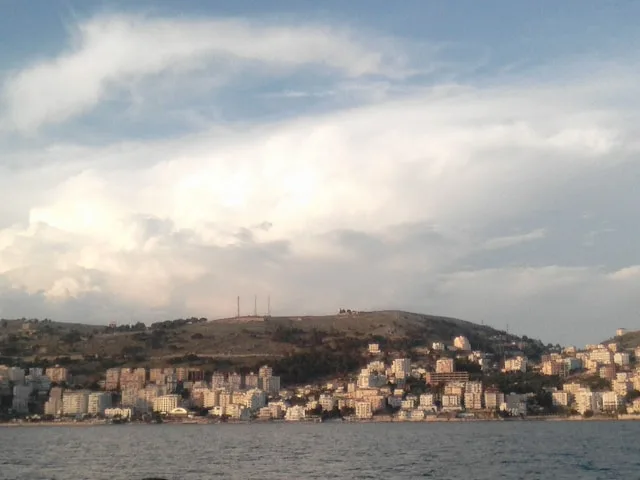
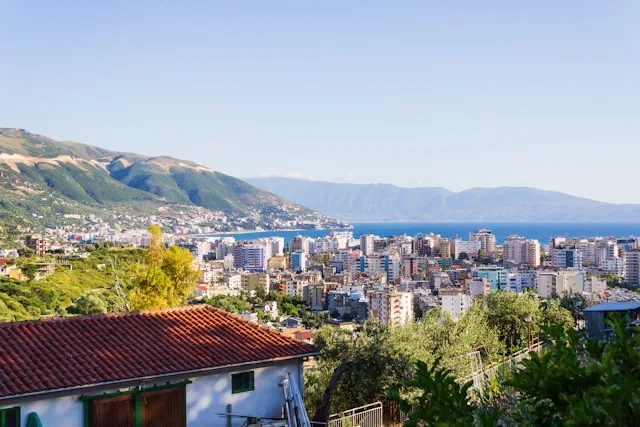
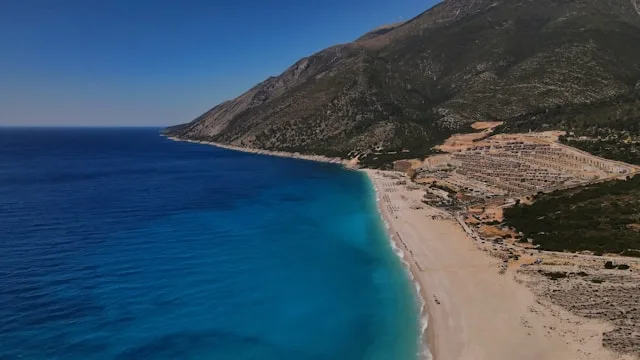
Vlorë recorded 1.2 million overnight stays in 2024. That figure represented a 14% year-on-year increase, driven by new luxury inventory, marina activation, and a coastline that stretches 30 kilometres along one of the Mediterranean's last under-developed riviera corridors. On paper, this is a market in ascent. Investment is flowing. Properties are opening. International tourists are arriving in numbers that would have been unthinkable five years ago.
The problem is not demand. The problem is that the professionals required to run a luxury hospitality operation at scale do not exist in sufficient numbers within Albania, and the infrastructure required to retain imported talent is not yet in place. Marina managers are being recruited from Croatia. Executive chefs are being poached at 35% premiums from rival properties. German-speaking front-office managers cannot be found at all. The capital has moved faster than the human capital could follow, and the result is a market where a €800 million mixed-use development competes for the same small pool of qualified operators as a 42-suite boutique hotel.
What follows is a structured analysis of the forces reshaping Vlorë's coastal hospitality market, the specific roles and skills where supply has failed to keep pace with investment, and what senior leaders hiring into this market need to understand before they commit to a search that conventional methods cannot complete.
A Billion-Euro Pipeline Meeting a Municipal Reality
The headline investment figures for Vlorë's hospitality corridor are substantial. Eagle Hills, the UAE-based developer, is executing an €800 million mixed-use project at Vlora Marina that integrates 1,200 residential units, a 300-berth marina, and a hospitality podium. Phase 1 activated 150 yacht berths in 2024, with direct hospitality employment reaching 450 full-time equivalents and projections pointing toward 1,200 by 2026. Alongside this anchor project, the Regency Hotel and Aler Luxury Apartments Vlorë added 280 luxury keys to the city's inventory in late 2024.
Yet the operational reality behind this investment is materially different from the development brochure. Vlorë's tourism infrastructure carries constraints that directly affect the guest experience these properties promise to deliver. The city's wastewater treatment plant operates at 40% overcapacity during July and August, servicing 250,000 population equivalents against a designed capacity of 180,000. According to the EBRD's Albania Infrastructure Assessment, untreated discharge has affected water quality at Radhimë Beach. New hotel licences are now contingent on municipal system connection, creating a de facto construction moratorium in Radhimë until the plant expansion completes in 2026 or 2027.
Road access and the Llogara bottleneck
The Llogara Pass, Vlorë's gateway to the Albanian Riviera's southern stretch toward Sarandë, remains a single-carriageway road with 90-minute transit times to Llogara National Park. The pass is seasonally inaccessible from November through April. The Vlorë International Airport, a €184 million investment that the municipality projects could increase international bed-nights by 35% annually upon full activation, remains non-operational as of early 2025, with partial seasonal operations now scheduled for late 2026.
What this means for the talent equation
This infrastructure gap matters for hiring leaders because it creates a specific retention risk for imported talent. A Marina Director recruited from Split or a General Manager relocated from Corfu arrives to manage a property whose physical setting is exceptional but whose supporting systems are incomplete. The compensation required to attract them reflects the brand promise of the development. The operational reality does not yet match it. This mismatch is the core tension in Vlorë's hospitality talent market, and it will not resolve until municipal service delivery catches up with private capital deployment.
The Market Structure: Luxury Ambition on a Seasonal Foundation
Understanding Vlorë's hiring challenge requires understanding the market's architecture. It is not a single hospitality market. It is three overlapping markets operating at different quality tiers, with different employment models, competing for talent from different pools.
The luxury tier is small and new. Vlora Marina, the Regency Hotel, Hotel Fieri Group's two properties, and a handful of boutique operations along the Lungomare form a cluster of perhaps 500 luxury keys. Occupancy data tells the story of their commercial vulnerability: 65% in the June-to-September peak, below 20% in the first quarter. Break-even ADR thresholds for new luxury inventory sit at €120 to €150 per night, a level that requires material foreign market penetration to sustain.
The mid-market tier is larger and more established. Hotel Partner Vlorë, with 120 rooms and roughly 90 full-time equivalents, represents this segment. These properties serve a mix of international and domestic guests, with ADRs that allow year-round viability only if occupancy remains above 50% outside the peak months.
The budget tier dominates by volume. Family-owned guesthouses and small hotels along the Radhimë-Orikum corridor account for 55% of accommodation stock. The Vlorë Regional Chamber of Commerce records approximately 320 registered businesses in this corridor, averaging 8 to 12 employees each. Average daily rates sit at €35 to €45, reliant on Albanian domestic demand. An estimated 35% of total accommodation capacity operates without full tourism licences, according to the Albanian National Tourism Agency's 2024 compliance report. This creates uneven competition for compliant employers, who carry higher cost structures but cannot differentiate effectively on price.
The seasonal employment model binds all three tiers. Albanian labour law permits six-month seasonal contracts, and 78% of hospitality employment in Vlorë operates on this basis. The consequence is predictable: limited social security accumulation for workers, annual talent leakage to Tirana's year-round market, and a cycle where employers invest in training staff who leave by October. For executive hiring in hospitality and luxury sectors, this seasonal structure means that even mid-level management roles carry an implicit instability that repels candidates seeking career progression.
Where the Talent Gaps Are Sharpest
Hospitality job postings in Vlorë increased 28% year-on-year in 2024, against a national average of 18%. The National Agency for Employment and Skills recorded 3,400 active vacancies in the third quarter. The fill rate tells the real story: hospitality roles in Vlorë average 67 days to fill, nearly double the national average of 34 days.
But aggregate vacancy data obscures the true severity, because it blends high-turnover entry-level roles with the senior positions where supply has essentially failed. Four role categories face conditions that resemble not a shortage but an absence.
Marina management and nautical operations
Vlora Marina's Phase 1 opening created immediate demand for Marina Managers, Dockmasters, and Marine Maintenance Technicians. According to the Association of Albanian Marine Industries' 2024 skills survey, certified marina management professionals are effectively non-existent in the domestic labour pool. Employers source exclusively from Croatia, Montenegro, or Greece. The typical pattern involves roles remaining open for four to six months while international recruitment is processed, with Albanian work permit delays adding 45 to 60 days beyond that. The ratio of active to passive candidates in this category is approximately 1:8. Unemployment among certified marina professionals across the Western Balkans sits below 2%.
Phase 2 of Vlora Marina's expansion, targeting 2026, will require an additional 15 senior marina staff. Market intelligence from the International Marina Institute's Balkan Region Survey suggests that only three or four of those can be sourced through active recruitment channels. The remainder must be found through direct headhunting of professionals who are currently employed and not considering a move.
Executive culinary talent
The luxury tier's chef shortage is acute and well-documented. According to reporting in Monitor.al, Hotel Fieri Group recruited an Executive Chef from the Splendor Hotel in Dhërmi in mid-2024, offering a 35% salary premium of €3,200 per month against the previous €2,400, plus an accommodation allowance. This is not an isolated incident. It reflects a market pattern where five-star properties in Vlorë bid against Tirana and Sarandë employers simultaneously, with culinary talent commanding retention bonuses of €2,000 to €3,000 for seasonal completion. The passive candidate ratio in executive culinary is 1:5. Established Executive Chefs hold two-to-three-year contracts with non-compete clauses that are increasingly standard in Albanian luxury hospitality.
Multilingual guest experience management
Properties targeting German, Polish, and UK source markets report consistent failure in sourcing front-office managers with C1-level German or Polish. Sector reporting in Shqipëria Gazeta Tema documented a case typical of the broader pattern: a four-star beach resort in Radhimë conducted a six-month search for a German-speaking Rooms Division Manager without success, ultimately engaging an expatriate Romanian manager on an interim contract at 40% above budgeted compensation. This premium does not represent market rate. It represents the cost of a failed executive search that forced an emergency hire.
Revenue management and commercial strategy
These digitally oriented roles are held by young professionals under 35 who are recruited directly by international hotel chains or OTA platforms like Booking.com and Expedia before entering the open market. The passive candidate ratio is 1:6. Revenue management expertise, specifically digital distribution and yield optimisation, commands a 20% premium over standard F&B manager compensation. For a market where 85% of tour bookings are controlled by Tirana-based inbound operators, the absence of local commercial strategy talent means Vlorë's properties are structurally dependent on distribution intermediaries they do not control.
Compensation in a Market That Defies Simple Benchmarking
Vlorë's compensation data is unusually difficult to interpret because three forces pull it in contradictory directions simultaneously: Albania's low formal wage floor, the premium required to attract international talent, and the seasonal structure that compresses annual earnings into six productive months.
At the operational management level, a Hotel Operations Manager at a four-star property of 100 or more rooms earns €1,800 to €2,400 per month in base salary, translating to total annual compensation of €24,000 to €32,000 including seasonal bonuses. A Revenue Manager earns €1,500 to €2,100 monthly. These figures sit well above Albania's median wage but remain far below what the same professional would earn in Croatia or Greece.
At the executive level, the numbers shift materially. A General Manager at a five-star or luxury resort commands €4,500 to €7,500 per month, or €54,000 to €90,000 annually, plus accommodation, vehicle, and performance bonuses. International GMs recruited from Italy, Greece, or Germany command the upper range or expatriate packages exceeding €100,000. A Marina Director or Port Operations VP sits at €5,500 to €8,000 monthly, requiring dual competency in hospitality operations and maritime compliance. A Regional Operations Director overseeing three or more properties earns €6,000 to €9,000 per month, a role predominantly filled by Tirana-based executives or international hires.
The compensation paradox is this: Vlorë's cost of living is 35% below Tirana's, which partially offsets the gap for mid-level Albanian staff. But for the senior international talent that luxury properties require, the comparison is not Vlorë versus Tirana. It is Vlorë versus Dubrovnik, Corfu, or Crete, where net compensation after cost-of-living adjustment is 2.5 to 3 times higher. The salary negotiation for a General Manager relocating from Split to Vlorë is not a discussion about base pay. It is a discussion about career risk, infrastructure quality, and whether the property's brand trajectory justifies a move to a market that cannot yet guarantee year-round occupancy.
An emerging and under-discussed role category adds further pressure. Environmental compliance officers, increasingly mandated by EBRD and IFC lending covenants for new developments, earn €1,200 to €1,800 per month. Albanian Ministry of Tourism and Environment licensing data identifies only 12 qualified professionals in the entire Vlorë region. As lending conditions tighten for coastal developments, this niche bottleneck will increasingly constrain the pace of new hospitality investment.
The Competitor Markets Draining Vlorë's Talent
Vlorë does not exist in a hiring vacuum. It sits within a hierarchical talent market where every competitor offers something Vlorë currently cannot.
Tirana is the primary competitor and the most damaging. The capital draws mid-to-senior management with salary premiums of 40 to 60% and year-round employment stability. Tirana's international hotel chains, including Marriott and Hilton Garden Inn, offer structured career progression paths that Vlorë's standalone resort model cannot replicate. A pattern identified in the Urban Research Institute's 2024 labour mobility study compounds the problem: "commuter managers" who reside in Tirana and work Vlorë's summer season, inflating Vlorë's wage floors to near-Tirana levels without delivering the continuity or local engagement that permanent appointments provide.
Sarandë competes for Riviera-facing specialist talent. Its proximity to Corfu, a 35-minute ferry crossing, provides access to EU labour mobility and Greek wage comparisons. Greece's minimum wage of €850 per month against Albania's formal minimum of €450 creates what the EBRD's 2024 Transition Report describes as a "border wage floor" effect, where even Albanian workers in Sarandë calibrate their expectations against Greek rates.
Durrës competes for volume. Its longer season, May through October versus Vlorë's June through September, and larger-scale operations with over 2,000 rooms provide more stable employment. Data from Albania's national employment agency indicates that Vlorë loses approximately 30% of trained entry-level staff to Durrës employers annually.
The international drain is the deepest wound. Experienced General Managers and Executive Chefs emigrate to Croatia or Greece, where the compensation differential is not marginal but multiplicative. This is not a flow that higher compensation alone will reverse. A professional who has reached GM level in Albania and is offered a role in Dubrovnik at 2.5 times the pay, in a market with year-round demand and EU-standard infrastructure, faces a calculation that no Vlorë employer can win on salary alone.
The Original Insight: Vlorë's Capital Has Created Roles That Its Market Cannot Yet Sustain
The analytical tension at the centre of Vlorë's hospitality talent market is not simply that demand exceeds supply. That framing, while accurate, misses the structural mechanism.
The real dynamic is this: international capital has built physical assets designed for a market maturity level that Vlorë has not yet reached, and those assets require professionals whose skills correspond to that future maturity, not the current reality. A 300-berth marina requires a Marina Director with experience managing yacht provisioning logistics, high-net-worth guest services, and maritime compliance frameworks. That role presumes year-round operations, reliable infrastructure, and a guest profile that generates sufficient revenue to justify the compensation. Vlorë in 2026 offers a four-month peak season, an overloaded wastewater system, and a road network that closes in winter.
The imported talent needed to run these assets is being asked to deliver a five-star operational standard within a two-and-a-half-star infrastructure environment. The compensation must be high enough to attract them. But the commercial model, capped by seasonal occupancy of 55 to 60% for luxury inventory, cannot sustainably support those compensation levels without material foreign market penetration that the airport delay has pushed further into the future.
This means talent mapping and pipeline development for Vlorë's hospitality market cannot be approached as a conventional search problem. It must be approached as a market-building exercise, where the search firm's role extends beyond identifying candidates to advising on the employment proposition, relocation infrastructure, and career trajectory narrative that will make a move to Vlorë rational for an international professional whose alternatives are in established Mediterranean markets.
What This Means for Senior Hiring Leaders
The hiring executive approaching Vlorë's hospitality market in 2026 faces a set of conditions that render conventional recruitment methods ineffective for any role above operational management.
First, the domestic talent pool is structurally absent for the roles that matter most. Marina management, executive culinary, multilingual guest experience, and revenue optimisation roles cannot be filled from within Albania at current skill levels. Retraining intervals are estimated at three to five years. This is not a pipeline that will materialise within a development cycle.
Second, the candidates who can fill these roles are not visible on any job board. Passive candidate ratios of 1:5 to 1:8 across the critical role categories mean that 80 to 90% of qualified professionals will never see a posted vacancy. They are employed in Croatia, Greece, or Montenegro. They are not looking. They must be found, approached individually, and presented with a proposition that addresses not only compensation but infrastructure reality, career trajectory, and quality of life.
Third, speed matters more than it appears. Vlorë's luxury properties are opening on development timelines, not recruitment timelines. A Marina Director search that takes six months plus 45 to 60 days of work permit processing means a property operates its first season without senior leadership. The cost of that gap is measured in guest experience failures, operational inefficiency, and brand damage that compounds through online reviews and tour operator relationships.
For organisations building or operating hospitality assets in Vlorë's coastal corridor, where the professionals you need are employed elsewhere in the Mediterranean and the margin for a slow search is measured in lost seasons rather than lost quarters, speak with our executive search team about how KiTalent approaches emerging hospitality markets. Our AI-enhanced direct search methodology identifies and engages passive candidates across the Western Balkans and wider Mediterranean within 7 to 10 days, delivering interview-ready executives through a pay-per-interview model that eliminates upfront retainer risk. With a 96% one-year retention rate across 1,450 executive placements, KiTalent's approach is built for markets where conventional methods have already failed.
Frequently Asked Questions
What are the biggest hospitality hiring challenges in Vlorë, Albania?
Vlorë faces acute shortages in four executive-level categories: marina management, executive culinary talent, multilingual guest experience management, and revenue optimisation. These shortages exist because international capital has created luxury hospitality assets faster than Albania's domestic talent pool could develop the professionals to run them. Hospitality roles in Vlorë average 67 days to fill, nearly double the national average. For senior positions, passive candidate ratios of 1:5 to 1:8 mean the vast majority of qualified professionals are employed elsewhere in the Mediterranean and unreachable through conventional job advertising.
What do hospitality executives earn in Vlorë?
General Managers at five-star properties earn €4,500 to €7,500 monthly, with international GMs commanding expatriate packages exceeding €100,000 annually. Marina Directors earn €5,500 to €8,000 monthly. Hotel Operations Managers at four-star properties earn €1,800 to €2,400 monthly. Executive Chefs at luxury properties command €3,200 or more monthly with accommodation allowances and seasonal retention bonuses of €2,000 to €3,000. Full compensation benchmarking for hospitality markets should account for Vlorë's seasonal occupancy constraints, which limit year-round earning potential.
Why is marina management talent so scarce in Albania?
Certified marina management professionals are effectively non-existent in Albania's domestic labour pool. The skills required, including STCW certification, marina management software proficiency, and high-net-worth guest service experience, have historically had no domestic demand. Vlora Marina's opening created instant demand for roles the local market had never produced. Employers source exclusively from Croatia, Montenegro, or Greece, where unemployment among certified professionals sits below 2%. Phase 2 expansion in 2026 will require 15 additional senior marina staff against a market that can supply three or four through active channels.
How does Vlorë compete with Tirana for hospitality talent?
Vlorë struggles to compete with Tirana for mid-to-senior management. Tirana offers 40 to 60% salary premiums, year-round employment, and career progression through international hotel chains. A pattern of "commuter managers" who live in Tirana and work Vlorë's summer season inflates wage expectations without delivering operational continuity. Vlorë's 35% lower cost of living provides partial offset for mid-level staff, but at the executive level, the comparison shifts to international destinations like Dubrovnik and Corfu, where compensation is 2.5 to 3 times higher after cost-of-living adjustment.
How can employers find passive hospitality candidates for Vlorë roles?
Conventional recruitment methods reach at most 10 to 20% of qualified candidates for Vlorë's critical hospitality roles. The remainder are employed professionals in established Mediterranean markets who are not monitoring Albanian job boards. Filling these roles requires direct executive headhunting across international markets, combining AI-powered talent identification with a compelling relocation proposition. KiTalent's methodology delivers interview-ready candidates within 7 to 10 days by mapping the full available talent pool across the Western Balkans and Mediterranean, reaching professionals that job postings and local recruitment agencies cannot access.
When will Vlorë International Airport open and how will it affect hospitality hiring?
The airport, a €184 million investment, is scheduled for partial seasonal operations in late 2026. The municipal tourism board projects it could increase international bed-nights by 35% annually upon full activation. For hiring leaders, this timeline means that properties opening before the airport becomes operational must build their executive teams without the international connectivity that justifies their commercial model. The airport's activation will intensify hiring demand across all senior hospitality categories, making early talent pipeline development essential for employers who want leadership teams in place before the demand surge arrives.