Žilina's Automotive EV Transition: Why €340 Million in Investment Has Made the Hardest Roles Even Harder to Fill
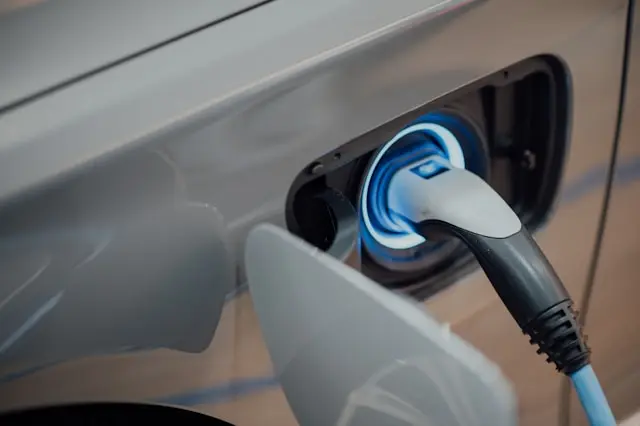
Kia Motors Slovakia's Žilina plant now produces electric vehicles alongside its established combustion range. The €200 million retooling programme that began pilot production in late 2024 reached full serial output of the EV6 on the Electric Global Modular Platform in 2025. Across the Žilina-Kysuce corridor, tier-one suppliers have invested a further €140 million in synchronised EV adaptation. The capital has arrived. The workers have not.
The Žilina automotive cluster faces a hiring problem that defies the assumptions most executives carry into this market. The region hosts Slovakia's highest industrial robot density. It has a dedicated dual education system feeding graduates into automotive trades. Kia itself is the anchor employer in a corridor where suppliers like Schaeffler, Hyundai Mobis, and ZKW are all expanding headcount. Yet toolmaker vacancies increased 28% year-on-year through 2024. Senior automation engineers sit unfilled for more than seven months on average. High-voltage battery technician demand grew 140% in a single year against a domestic candidate pool that barely exists. The investment story is a success. The talent story is a crisis.
What follows is a ground-level analysis of the forces shaping Žilina's automotive sector as of 2026: where the hiring gaps are most acute, why they are deepening rather than closing, and what organisations operating in this cluster need to do differently to secure the technical and leadership talent that the EV transition demands.
The Cluster That Automation Built, and Cannot Staff
The Žilina-Kysuce automotive corridor is not a single factory. It is an integrated production system stretching across a 30-kilometre radius, anchored by Kia Motors Slovakia's 3,850-person plant at Teplička nad Váhom and fed by a network of tier-one and tier-two suppliers. Hyundai Mobis runs module assembly and logistics with 1,180 employees. Schaeffler Kysuce in Kysucké Nové Mesto employs 2,100 people producing bearings and e-mobility components. ZKW Slovakia produces LED headlamp systems with 950 staff. Brose Slovakia operates door systems and cooling modules with 420 employees. MATADOR Automotive in nearby Vrútky adds another 1,600 in tyres and technical rubber. Peguform Slovakia contributes 680 in plastic exterior components.
The aggregate is formidable. The corridor's combined automotive workforce exceeds 14,000 direct employees before counting tier-three suppliers and service firms. The Industrial Park Žilina, managed by the Regional Development Agency, sits at 85% occupancy across 120 hectares. Robot density reached 180 units per 10,000 workers in 2024, approaching German levels and far exceeding the Slovak national average.
A Corridor, Not a City
One geographic distinction matters for anyone planning a search in this market. The supplier base does not cluster neatly within Žilina city limits. It follows the Žilina-Kysuce industrial axis, with the highest density of metalworking, plastics, and electronics suppliers concentrated in Kysucké Nové Mesto and the Bytča district. This corridor distribution means a candidate pool that is regionally dispersed. A senior automation engineer at Schaeffler in Kysucké Nové Mesto is not necessarily willing to commute to Brose in Žilina's industrial park, even though both are within the same labour market statistically. Geographic granularity matters when mapping the real candidate universe.
The Localisation Question
The domestic Slovak content in Kia vehicles remains at roughly 35 to 40%, according to ZAP, Slovakia's automotive industry association. Components from the Czech Republic, Poland, and Korea still make up the majority. This means the corridor's growth potential is capped partly by the supplier base's ability to absorb higher-value work. The EV transition is an opportunity to raise that localisation rate, but only if the suppliers can hire the engineers and technicians required to manufacture higher-specification components. The constraint is circular: more complex work requires more skilled people, but the skilled people are already the scarcest resource.
The Demographic Wall Behind the Investment Wave
The most consequential number in this market is not the €340 million in confirmed investment. It is the 4.5% projected contraction in the Žilina region's 20-to-34 working-age population between 2024 and 2026. The Statistical Office of the Slovak Republic projects the cohort falling from 78,000 to 74,500. At the same time, the confirmed investment pipeline implies net employment growth of 800 to 1,200 positions in the corridor.
These trajectories are mathematically irreconcilable under current conditions.
New labour market entrants cannot fill the gap. Emigration to the Czech Republic continues to draw technical talent through the Čadca-Ostrava corridor, where salary premiums of 25 to 30% and lower income tax rates provide a durable pull. Immigration inflows to Žilina remain negligible: fewer than 3% of new hires in 2024 were foreign nationals. The region has not developed the housing, language, or integration infrastructure that would make it attractive to Romanian, Bulgarian, or Hungarian workers at scale.
The practical consequence is that almost all hiring at the senior technical and engineering level must come from one source: employed professionals currently working for competitors within the same corridor or in adjacent geographies.
This is not a talent shortage in the conventional sense. It is a closed system. And in a closed system, every hire is someone else's loss.
Where the Vacancies Are: Three Scarcity Profiles That Define This Market
Automotive job postings in the Žilina region rose 34% year-on-year in Q4 2024, with 1,240 active vacancies across the cluster according to Profesia.sk and ÚPSVR data. But the aggregate figure masks extreme variation. General production operatives and junior quality inspectors can be filled through conventional channels. The crisis sits in three specific profiles where traditional job advertising reaches almost no one who qualifies.
Industrial Automation Engineers
Average vacancy duration: 7.4 months. Eighty-nine percent of postings require PLC programming in Siemens S7 or TIA Portal and robotic integration with KUKA or ABB systems. Approximately 85 to 90% of qualified professionals with five or more years of experience are employed and not monitoring vacancy boards. Active candidates in this category tend to be recent graduates or individuals with employment gaps. The passive candidate ratio is the highest of any technical role in the region.
According to Hospodárske noviny, Kia Motors Slovakia disclosed in mid-2024 that its Senior Maintenance Technician (PLC Specialist) positions had remained unfilled for an average of 8.3 months, with 28 such vacancies persistently open throughout the first half of the year. The company relied on overtime and contractor agencies to maintain operations. This is not a staffing inconvenience. For a plant running at 92 to 95% capacity utilisation, every unfilled maintenance role is a direct constraint on uptime.
Toolmakers and CNC Programmers
Toolmaker vacancy rates across the cluster sit at 22%. Nationally, only 340 registered unemployed toolmakers were available against 1,100 open positions in western Slovakia as of 2024. The 75% passive candidate ratio in this category compounds the problem. The 25% who are active typically lack the multi-axis programming skills that tier-one suppliers require.
Brose Slovakia's response illustrates the operational distortions this shortage creates. In Q3 2024, the company restructured from two shifts to four-shift continuous operation (24/7) specifically to attract CNC programmers. The shift premiums, totalling 25% above base salary, were designed not to meet demand but to match what the same workers could earn across the border in the Czech Republic. A factory does not reorganise its entire production schedule around a recruitment problem unless that problem has become existential.
High-Voltage Battery Technicians
This is the newest and fastest-growing scarcity category. Vacancy growth of 140% year-on-year reflects the reality that Kia's EV6 production requires battery assembly, thermal management, and high-voltage safety expertise that did not exist in the Žilina talent pool two years ago. The domestic market has insufficient qualified candidates. The few who exist command a 15 to 20% premium over comparable ICE engineering roles.
Kia projects EV6 volumes of 60,000 to 80,000 units annually by 2026, requiring 400 to 600 additional direct employees in battery assembly, high-voltage systems, and quality control. These are not entry-level positions that can be filled through the dual education pipeline. They require professionals who have already worked with HV systems, ideally in an automotive production environment. That experience base is concentrated in Germany, Poland (around the LG and SK Innovation battery plants), and South Korea. Almost nowhere in Slovakia.
The Automation Paradox: Why More Robots Mean More Unfilled Trade Roles
This is the counter-intuitive core of Žilina's talent crisis.
The corridor's robot density is projected to increase from 180 units per 10,000 workers in 2024 to 240 per 10,000 by 2026. An estimated 12 to 15% of current manual assembly roles, particularly in plastics and simple metal assembly, face obsolescence by 2027 due to collaborative robot implementation. The assumption built into most workforce planning models is that this automation relieves pressure on the skilled trades pipeline.
The data says the opposite.
Toolmaker vacancies rose 28% year-on-year through 2024 despite the region's status as Slovakia's most automated industrial corridor. Compensation for these roles inflated 35% since 2022. The paradox resolves when you look at what toolmakers actually do in a highly automated facility. They are not performing the repetitive assembly tasks that robots replace. They are maintaining, retooling, and recalibrating the systems that perform those tasks. Every new robot requires someone who can set it up, diagnose its failures, and modify its tooling when the production line changes models.
Automation has not reduced the need for toolmakers. It has changed what toolmakers do and raised the complexity threshold for the role. The toolmaker a Žilina supplier needed in 2020, someone who could maintain a manual press, is a different professional from the one needed in 2026, someone who can programme a CNC-controlled stamping die and troubleshoot the vision system that inspects its output. The title is the same. The skill set has diverged entirely.
This is the analytical key to understanding why Žilina's investment in technology and automation has not solved its hiring problem. Capital investment moved faster than human capital could follow. The factories retooled in 24 months. The workforce pipeline needs five to eight years to produce a toolmaker with CNC programming skills and multi-system diagnostic capability. The gap between those two timescales is the gap between what the cluster has invested and what it can actually produce.
Compensation: What the Market Pays and Where It Leaks Talent
Compensation in the Žilina corridor follows a clear hierarchy by role type and seniority. The figures that follow reflect the regional market and exclude Bratislava premiums.
Senior automation engineers at the specialist level (eight or more years) earn €48,000 to €65,000 in base salary with €5,000 to €8,000 in annual bonus. At the executive level, a Head of Automation or Technical Director earns €85,000 to €110,000 in total compensation including performance bonuses and a company vehicle. Toolmaking and maintenance managers earn €55,000 to €72,000 at the senior manager level, rising to €95,000 to €130,000 for a VP or Plant Technical Director, typically with relocation packages attached.
Production managers at department level earn €58,000 to €78,000. At plant manager or VP Operations level, total compensation reaches €120,000 to €165,000 including long-term incentive plans. Quality directors earn €90,000 to €125,000 at the executive level. High-voltage battery systems engineers command €54,000 to €72,000 at the senior specialist level, a 15 to 20% premium over equivalent ICE engineers. At the Head of E-Mobility or Battery Plant Manager level, compensation reaches €110,000 to €150,000, with material variation depending on international assignment status.
The Cross-Border Leak
These figures look competitive in isolation. They are not competitive against the three markets that draw Žilina's talent away.
Bratislava offers 18 to 22% wage premiums for equivalent engineering roles. An automation engineer earning €65,000 at the top of Žilina's range would earn €79,000 to €85,000 at Volkswagen Slovakia's Bratislava operation. The Czech Republic offers 25 to 30% premiums adjusted for purchasing power, plus a 15% flat income tax versus Slovakia's progressive 19%/25% structure. According to the OECD Tax Database, this differential is durable and policy-driven, not cyclical.
The result, according to SARIO's talent retention analysis, is that the Žilina cluster loses roughly 8 to 10% of its senior engineering talent annually. The Czech Republic accounts for 4 to 5% of that outflow, driven by geographic proximity and linguistic similarity. A toolmaker in the Kysuce district can commute to the Ostrava industrial basin without changing language or culture.
As reported by Trend magazine, Schaeffler Kysuce recruited a Senior Automation Engineer from ZKW Slovakia in March 2024, offering a 35% salary premium (from €42,000 to €56,700) plus a €5,000 signing bonus. This pattern of intra-regional poaching has intensified across the corridor. When the external talent supply is this constrained, companies are not hiring from the market. They are hiring from each other.
The compensation arms race within the corridor cannot continue indefinitely. Tier-two suppliers operating on 3 to 5% margins cannot match the premiums that Kia or Schaeffler can offer. The result is a widening internal hierarchy where the largest employers attract talent upward, leaving smaller suppliers permanently understaffed. This dynamic is invisible in aggregate employment statistics but obvious to anyone running a search in this market.
Regulatory Pressure and Supply Chain Risk: The Context Hiring Leaders Cannot Ignore
The Žilina cluster does not operate in isolation from EU regulatory architecture, and two regulatory forces are shaping both production planning and talent requirements through 2026 and beyond.
EU CO2 Fleet Mandates
The European Commission's CO2 standards regulation requires OEMs to achieve fleet-average emissions of 93.6 g/km (WLTP) from 2025 onward. Non-compliance penalties of €95 per gram per kilometre per vehicle create direct financial pressure on Kia to hit EV sales volumes. This is not an abstract policy concern. It determines how many EV6 units the Žilina plant must produce and, by extension, how many battery technicians, high-voltage engineers, and quality specialists must be on the payroll. Every unfilled role in the EV production line translates to reduced EV output, which translates to potential fleet compliance penalties across Kia's European portfolio.
Critical Raw Materials Regulation
New EU requirements for battery material traceability, effective from 2027, will require Žilina's tier-two suppliers to implement chain-of-custody documentation. The estimated 3 to 5% increase in compliance costs for these suppliers will require professionals who understand both the regulatory framework and the production processes it governs. This is a compliance-meets-engineering hybrid role that the current talent pipeline does not produce.
Battery Supply Chain Fragility
Kia Žilina relies on battery cell imports from LG Energy Solution in Poland and Samsung SDI in Hungary. According to Trend magazine, citing Kia's own supply chain risk assessment, any disruption to the Hungarian supply route due to geopolitical tensions or border controls would halt EV production within 72 hours. This fragility means that talent mapping and pipeline development for supply chain risk management roles is not a staffing exercise. It is an operational continuity requirement.
What This Market Demands of Hiring Leaders
The research points to a market where conventional recruitment methods systematically fail for the roles that matter most. When 85 to 90% of qualified automation engineers are passive, when the domestic toolmaker supply covers less than a third of open positions, and when the newest critical category (high-voltage battery technicians) has no established domestic talent pool at all, posting vacancies and waiting for applications is not a strategy. It is a way to document failure.
The senior technical and leadership roles in this market require direct identification and approach of candidates who are not looking. They require compensation intelligence that accounts for not just what Žilina pays but what Bratislava, Ostrava, and Kraków offer. They require speed: in a corridor where intra-regional poaching is routine and a 35% premium can move a specialist in a single conversation, the difference between a 30-day search and a 90-day search is the difference between filling the role and losing the candidate to a competitor who moved faster.
KiTalent delivers interview-ready executive and specialist candidates within 7 to 10 days through AI-enhanced talent mapping that identifies the passive professionals no job board reaches. With a pay-per-interview model that eliminates upfront retainer risk, a 96% one-year retention rate across 1,450 completed placements, and specific depth in automotive sector executive search, the approach is built for exactly this kind of constrained, high-stakes market.
For organisations competing for automation engineers, battery technicians, and production leadership in the Žilina-Kysuce corridor, where the candidates you need are employed by your neighbours and the cost of a slow search is measured in unfilled production shifts, speak with our executive search team about how we approach this market.
Frequently Asked Questions
What is the average salary for an automation engineer in Žilina, Slovakia in 2026?
Senior automation engineers in the Žilina automotive corridor earn €48,000 to €65,000 in base salary at the specialist level, with annual bonuses of €5,000 to €8,000. At the executive level, a Head of Automation or Technical Director earns €85,000 to €110,000 in total compensation. These figures reflect the regional market and sit 18 to 22% below equivalent roles in Bratislava. Compensation has risen sharply since 2022, driven by intra-corridor poaching between tier-one suppliers competing for the same constrained pool of PLC and robotics specialists.
Why is it so hard to hire toolmakers in Slovakia's automotive sector?
Slovakia has only 340 registered unemployed toolmakers nationally against 1,100 open positions in western Slovakia. In Žilina, the vacancy rate exceeds 22%. Seventy-five percent of qualified toolmakers are passive candidates not monitoring job boards. The automation wave has not reduced demand for these roles. It has made them more complex, requiring CNC programming and multi-system diagnostic skills on top of traditional trades expertise. Cross-border competition from the Czech Republic, offering 25 to 30% salary premiums, compounds the domestic scarcity.
How is Kia Motors Slovakia's EV transition affecting the Žilina job market?
Kia's EV6 production requires 400 to 600 additional direct employees in battery assembly, high-voltage systems, and quality control by 2026. High-voltage battery technician vacancies grew 140% year-on-year in 2024, and the domestic candidate pool is insufficient. These roles command a 15 to 20% premium over comparable ICE engineering positions. The EV transition has created an entirely new category of technical talent demand in a region where the working-age population is simultaneously contracting by 4.5%.
What executive search approach works best for automotive hiring in Žilina?
With 85 to 90% of senior automation engineers and 80% of production managers with EV experience classified as passive candidates, direct headhunting and executive search outperform job board advertising for all senior technical roles. KiTalent's AI-enhanced talent mapping identifies candidates across the Žilina corridor, adjacent Slovak regions, and cross-border markets in the Czech Republic and Poland, delivering interview-ready shortlists within 7 to 10 days.
How does Žilina's automotive talent market compare to Bratislava?
Bratislava offers 18 to 22% wage premiums for equivalent automotive engineering roles, superior infrastructure, international school access, and dual-career opportunities. Žilina compensates with lower cost of living and proximity to established supplier networks, but loses approximately 8 to 10% of its senior engineering talent annually to competing markets. The Czech Republic, particularly the Ostrava basin, represents the largest single outflow at 4 to 5% per year due to geographic proximity, linguistic similarity, and favourable tax treatment.
What are the biggest risks facing the Žilina automotive cluster in 2026?
Three risks dominate. First, demographic contraction: the 20-to-34 working-age cohort is shrinking by 4.5% while investment demands 800 to 1,200 new positions. Second, EU CO2 fleet mandates impose penalties of €95 per gram per kilometre per vehicle if EV production volumes fall short, making every unfilled production role a regulatory compliance risk. Third, battery supply chain fragility: reliance on imports from Poland and Hungary means any supply route disruption halts EV production within 72 hours, requiring contingency staffing and supply chain leadership talent that the region has not historically needed.