Žilina's Precision Engineering Sector Is Investing Millions in Machines Because It Cannot Find the People to Run Them
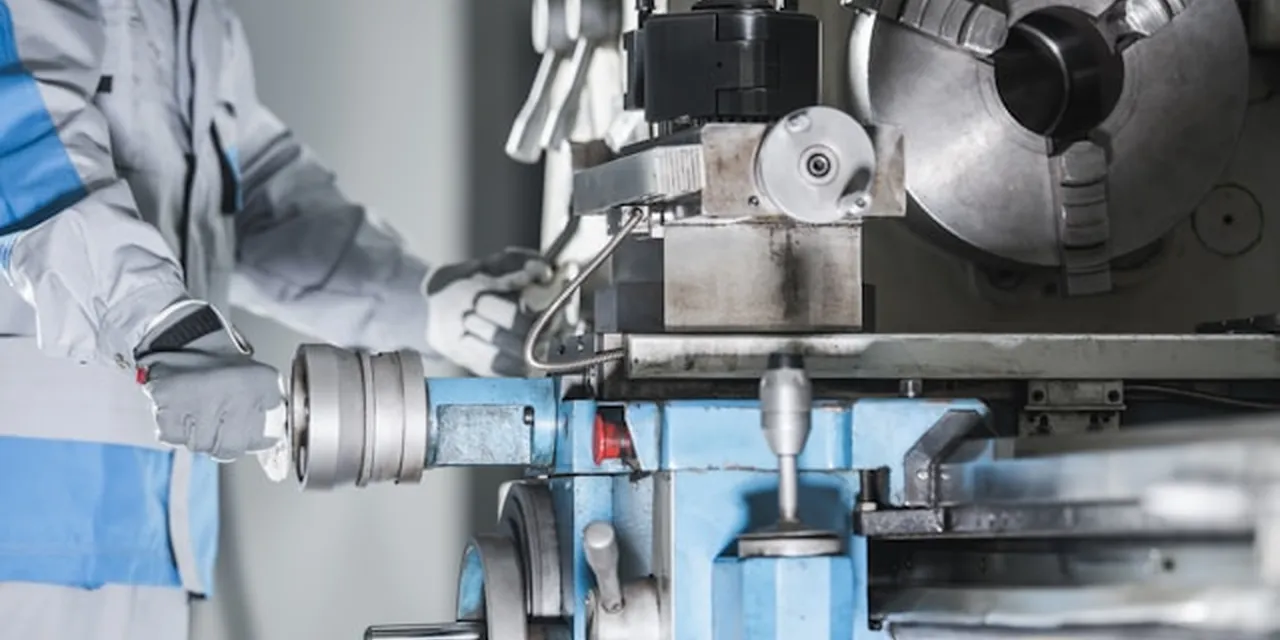
The Žilina region absorbed €142 million in industrial machinery investment in the first three quarters of 2024 alone, a 23% increase over the previous year. Sixty per cent of those projects named a single motivating factor: the inability to hire. Capital is arriving faster than human capital can follow, and the gap between the two defines this market in 2026.
What makes this tension so consequential is its specificity. This is not a general manufacturing slowdown or a broad skills mismatch. Žilina's precision engineering firms have full order books. Their CNC machines have capacity. Their toolrooms have work queued. What they do not have is the CNC programmers, toolmaking masters, and automation integrators required to run those operations at the level their automotive customers demand. The vacancy duration for a toolmaking technician in this region now runs three times longer than for a general manufacturing role.
What follows is a ground-level analysis of the forces reshaping Žilina's precision engineering sector, the specific talent categories where the market has seized, and what hiring leaders operating in this region need to understand before committing to their next search or workforce investment.
The Cluster That Powers [Slovakia](/slovakia-executive-search)'s Automotive Supply Chain
Žilina's precision engineering and metalworking cluster is not an accident of geography. It exists because Kia Motors Slovakia's assembly plant in Teplička nad Váhom, with an annual production capacity of 350,000 units, generates tiered demand for components across three concentrated industrial zones: the Žilina Industrial Park itself, the Kysucké Nové Mesto zone 20 kilometres north, and the Martin-Priekopa hub 30 kilometres south.
Around this anchor sits a bimodal ecosystem. Large foreign-owned Tier-1 suppliers like Schaeffler, Mobis, ZF, and Valeo operate alongside a substratum of approximately 220 active metalworking SMEs with 10 to 250 employees. According to the Žilina Self-Governing Region's 2024 industrial survey, 68% of metalworking SMEs in the district report their primary revenue from B2B supply to automotive Tier-1s or machinery exporters.
The cluster effect is real. Firms benefit from shared infrastructure, proximate customers, and a concentrated (if overstretched) talent pool. But the same concentration that creates efficiency also creates competition. Every SME toolroom and every Tier-1 production line is competing for the same finite population of CNC programmers and toolmaking specialists. The cluster has become a closed system where one firm's hire is another firm's vacancy.
Kia's procurement gravity
Kia's estimated €2.1 billion in annual localised procurement, drawn from 45 or more direct Tier-1 suppliers in the region, creates a demand floor that sustains the entire ecosystem. When Kia's order volumes stabilised in the second half of 2024 after two years of automotive inventory correction and EV transition uncertainty, the effect cascaded downstream. Regional industrial production indices for machinery and equipment rose 4.2% year-on-year in Q3 2024, according to the Slovak Statistical Office.
That recovery, though, exposed rather than resolved the talent constraint. With order books filling again, the labour market tightened further. The Žilina region's unemployment rate stood at 4.8% in December 2024, below the national 5.4%, and the pool of available skilled workers had already been depleted during the preceding cycle.
The SME layer under pressure
The approximately 220 SMEs operating under NACE codes C25 and C28 are the firms most exposed to this dynamic. They lack the employer brand of a Schaeffler or ZF. They cannot match the compensation packages of a Tier-1 operation with a global parent. And they are competing not only within the cluster but against geographic rivals in Bratislava, Brno, and Ostrava that offer materially higher wages. For the executives leading these businesses, every unfilled specialist role is a direct constraint on revenue capacity.
The Three Talent Categories Where the Market Has Seized
The Slovak Employment Service registered a 74% year-on-year increase in unfilled vacancies for machinery mechanics and fitters (ISCO 7233) in the Žilina region for January to September 2024. In the same period, general manufacturing vacancies declined 12%. This divergence is not a blip. It reflects a systemic separation between the skills the market needs and the skills the available workforce offers.
CNC programming and multi-axis machining
This is the category with the largest absolute demand. Multi-axis CNC programming, particularly on Heidenhain TNC 640 and Siemens Sinumerik controls, combined with CAM software expertise in Mastercam or NX, defines the core competency requirement. An estimated 80 to 85% of qualified candidates in this category are passive, meaning they are employed, not searching, and will not appear on any job board. Active candidates tend to be either recent graduates without sufficient experience or professionals leaving the sector entirely.
Average tenure among qualified CNC programmers in the region exceeds 4.5 years. They are settled. Moving them requires more than a salary increment. It requires a proposition that addresses career trajectory, technology access, and working conditions simultaneously.
Toolmaking masters with stamping die expertise
The passive candidate ratio here exceeds 90%. Toolmaking masters, the professionals who design, maintain, and set up progressive dies for automotive stamping, represent the most locked-in talent category in the region. They rarely appear on public job portals. Recruitment occurs through closed industry networks and direct competitor approaches.
Toolmaking technician roles at mid-sized Tier-2 stamping firms in the Žilina district typically remain vacant for 110 to 140 days. That is three to four months where a stamping line operates below capacity or runs less complex tooling because the expertise to maintain high-precision dies is not available. For context, general mechanical maintenance roles fill in 45 to 60 days. The differential tells you everything about where the hidden talent pool sits and how difficult it is to reach.
Automation and robotics integrators
With 75% of qualified candidates passive according to Michael Page's 2024 Slovakia Talent Trends report, the automation integrator category presents a compounding problem. These are the professionals who programme collaborative robots from Universal Robots and KUKA, integrate industrial IoT sensors, and connect MES and ERP data layers to the shop floor. They are essential to the automation investments the region is making, and the demand for them comes from both automotive and non-automotive sectors simultaneously.
This creates a hidden market where candidates field multiple offers without ever posting a CV publicly. Firms that rely on conventional job advertising to reach these candidates are reaching at most 25% of the viable pool. The rest must be found through direct identification and approach.
The Compensation Bifurcation Hiding in the Headline Data
Headline wage data for Žilina's metalworking sector suggests moderate, manageable growth. The Slovak Statistical Office's official figures for the manufacture of fabricated metal products show 6.2% year-on-year wage growth in Q3 2024. That figure barely outpaces inflation.
It is also deeply misleading.
Aggregate recruitment data tells a different story. Firms seeking senior CNC programmers with CAM expertise report paying 25 to 35% salary premiums to secure candidates from direct competitors. For general production roles, the equivalent premium is 8 to 12%. The gap between these two figures reveals a bifurcated market where headline statistics mask acute inflation in the exact specialisms that determine competitive advantage.
A CNC programming team leader or senior CAM programmer commands €38,000 to €48,000 gross annually at base, with high performers at Tier-1 operations reaching €52,000 including bonuses. Toolmaking masters sit at €35,000 to €45,000, with specialised die-casting toolmasters commanding up to €50,000. At the executive level, a plant director running a 200 to 400 employee SME earns €75,000 to €110,000, with performance bonuses tied to EBITDA targets adding 20 to 30% of base. Operations directors at large Tier-1 plants reach €95,000 to €140,000 with long-term incentives.
These figures run 15 to 20% below Bratislava equivalents. But the rate of acceleration is faster. Žilina's specialist compensation grew 9% in nominal terms in 2024, versus 6.5% in the capital. Scarcity, not market benchmarking, is setting prices.
For hiring leaders relying on official statistical wage data to calibrate offers, the risk is straightforward: they will undershoot. An offer built on the headline 6.2% growth figure will fail to move a passive CNC programmer who knows their market value is rising at triple that rate. This is where strategic market benchmarking becomes essential rather than optional.
The Demographic Cliff No Automation Budget Can Fully Offset
The Žilina region's working-age population is projected to decline by 12,000 persons by 2026, according to the Institute of Financial Policy at Slovakia's Ministry of Finance. The University of Žilina produces approximately 850 mechanical and industrial engineering graduates per year. That figure has remained static and is insufficient to cover natural attrition plus sector growth.
The maths is unforgiving. With 2,300 unfilled vacancies in machinery mechanics, fitters, and toolmakers registered in the Žilina region alone at the end of 2024, and a vacancy duration averaging 98 days versus 34 for general manufacturing labour, the pipeline is not keeping pace with demand. New graduates enter a market where they are immediately absorbed, often before completing their studies, through co-funded training programmes like those operated at UNIZA's Innovation Centre of Mechanical Engineering in partnership with Schaeffler and ZF.
Capex intensity is expected to rise to 8 to 10% of revenue among mid-cap suppliers in 2026, up from 6% in 2022. That capital is flowing toward lights-out machining cells and automated quality inspection. The explicit objective, documented in surveys by the Slovak Association of Industrial Associations, is to offset the inability to hire manual machinists.
But here is the paradox that forms the analytical core of this market: the investment in automation has not reduced the workforce requirement. It has replaced one kind of worker with another that does not yet exist in sufficient numbers. A lights-out machining cell does not need a manual operator. It needs a multi-axis CNC programmer to set it up, an automation integrator to connect it, and a quality engineer with CMM programming and SPC capability to validate its output. Capital moved faster than human capital could follow, and the skills gap in advanced manufacturing technology widened rather than closed.
This is the mistake hiring leaders make when they treat automation as a workforce solution. It is a productivity solution. The workforce requirement does not shrink. It shifts upward in complexity, toward precisely the categories where the market is already most constrained.
The Geographic Pull That Drains the Pipeline
Žilina does not lose its engineering talent to unemployment or career changes. It loses them to geography.
Three competitor markets exert constant pull on the region's most qualified professionals. The first and strongest is the Bratislava-Trnava corridor, anchored by Stellantis in Trnava and Volkswagen in Bratislava, offering salaries 15 to 25% higher for equivalent roles and superior international school infrastructure for engineers with families. According to Slovakia's Statistical Office migration data, senior engineers with dependants migrate south for career trajectory into headquarters functions that simply do not exist in Žilina's SME-dominated environment.
The second is the Czech Republic, particularly Ostrava and Brno. Average industrial wages for skilled machinists in these cities run 20 to 30% higher in CZK terms. Czech language proximity means the move is linguistically frictionless for Slovak engineers, especially those from Žilina's Kysuce sub-region. The draw is immediate and quantifiable: a 25% pay gain without learning a new language or moving to an unfamiliar culture.
The third, less prominent but present, is Győr in Hungary, where Audi's high-precision machining operations and Hungary's flat 15% personal income tax rate attract tool designers earning at the upper end of the scale.
Statistical migration data confirms a net outflow of 25 to 34 year-old technical graduates from Žilina to the Czech Republic and Bratislava. This outflow runs parallel to the record FDI inflows documented by SARIO. Machines are arriving. People are leaving. The region is at risk of becoming a high-tech, low-local-employment enclave, capital-intensive but talent-thin.
For hiring executives building leadership teams in this environment, the implication is that retention strategy is inseparable from recruitment strategy. Placing a plant director or technical director in a Žilina SME means finding someone who is willing to operate in a market where their best specialists are perpetually at risk of being drawn away by competitors in more attractive geographies. The leadership competency required is not just operational. It is organisational resilience.
The Leadership Roles That Define Whether an SME Grows or Stalls
Three executive roles carry outsized importance in Žilina's precision engineering SMEs, and each presents distinct search challenges.
The plant director or general manager role at a mid-cap SME carrying full P&L responsibility for 150 to 400 employees is the most visible. It requires German and Slovak bilingualism, direct OEM customer interface experience, and the operational maturity to manage a facility where automation is accelerating but talent is not. This is not a role that can be filled by a general manufacturing manager without specific precision engineering context. The candidate must understand CNC job shop economics, IATF 16949 quality system requirements, and the commercial dynamics of being a Tier-2 supplier to firms like Schaeffler or Mobis.
The operations director or VP manufacturing role oversees CNC divisions or stamping operations and is responsible for OEE optimisation and the automation roadmap. In a market where capex intensity is rising to 8 to 10% of revenue, this role has shifted from operational maintenance to strategic transformation. The candidate must be capable of justifying, specifying, and integrating capital equipment while managing a workforce that is simultaneously shrinking in headcount and increasing in required skill level.
The technical director, or výrobný riaditeľ, is often described by regional firms as the most critical hire for SME growth. This role bridges shop-floor toolmaking expertise with digital manufacturing strategy. The person filling it must be equally credible in a conversation about progressive die maintenance and in a presentation about MES data analytics. The counteroffer risk for candidates at this level is extreme. They are the people who keep production running. Their current employers know it.
For organisations searching for this calibre of leader in a market where 90% of the best toolmaking talent is passive and the most capable operations leaders are already embedded in competitor firms, traditional recruitment methods reach a fraction of the viable pool. The search must go to the candidate. The candidate will not come to the search.
What This Market Requires From a Search Partner
Žilina's precision engineering talent market is small, concentrated, and overwhelmingly passive. The total addressable pool for a senior CNC programming specialist or toolmaking master within a practical commuting radius is measured in dozens of individuals, not hundreds. Most are known to their competitors. None are on job boards.
A search in this market that begins with a job advertisement and waits for inbound applications will fail. The data is unambiguous: vacancy durations of 110 to 140 days for specialist toolmaking roles, 98 days on average for machinery mechanics and fitters, and a 74% year-on-year increase in unfilled vacancies. These are not metrics of a market where passive methods work.
What works is direct identification, approach, and a proposition built on precise compensation intelligence. It requires knowing which firms in the Kysucké Nové Mesto zone or the Martin-Priekopa hub employ the specific profile, what those individuals earn, what would move them, and how to structure a conversation that addresses career trajectory and technology access alongside base salary. It requires talent mapping at a level of granularity that most generalist recruiters cannot deliver.
KiTalent's approach to this market delivers interview-ready candidates within 7 to 10 days through AI-enhanced direct identification of the passive specialists who constitute 80 to 90% of the viable pool. The pay-per-interview model means organisations only invest when they are meeting qualified candidates, and the 96% one-year retention rate for placed candidates reflects the quality of fit achieved through this method.
For manufacturing and engineering firms in the Žilina region facing specialist vacancies that have run 100 days or longer, or for organisations planning leadership hires that will define their automation trajectory for the next five years, start a conversation with our industrial and manufacturing search team about how we approach this specific market.
Frequently Asked Questions
What is the average salary for a CNC programmer in Žilina, Slovakia in 2026?
A senior CNC programming team leader or CAM programmer in the Žilina region commands €38,000 to €48,000 gross annually at base, with high performers at Tier-1 suppliers reaching €52,000 including bonuses. These figures have been accelerating at approximately 9% annually, outpacing Bratislava's 6.5% growth rate. Firms competing for passive CNC programmers with multi-axis and Heidenhain or Siemens Sinumerik expertise report paying 25 to 35% premiums over standard market rates to secure candidates from direct competitors. Offers calibrated to aggregate statistical data will consistently fall short.
Why is it so difficult to hire toolmaking specialists in Slovakia's Žilina region?
Over 90% of qualified toolmaking masters with stamping die expertise are passive candidates. They are employed, not searching, and do not appear on job boards. Toolmaking technician vacancies in the Žilina district run 110 to 140 days on average before being filled or withdrawn, roughly three times the duration for general maintenance roles. The total addressable pool within commuting distance is extremely small, and competing firms within the same industrial parks are targeting the same individuals. Reaching these candidates requires direct headhunting methodology rather than conventional advertising.
How does Žilina's manufacturing talent market compare to Bratislava or the Czech Republic?
Žilina's specialist compensation runs 15 to 20% below equivalent roles in Bratislava and 20 to 30% below Czech cities like Brno and Ostrava. This differential creates a persistent net outflow of engineers aged 25 to 34 from the Žilina region. Czech language proximity makes cross-border migration particularly frictionless. However, Žilina's compensation is accelerating faster than competitor markets, and the region's cluster density means career variety within the automotive supply chain is high for candidates willing to stay.
What executive roles are hardest to fill in Žilina's precision engineering sector?
Three roles carry the highest search difficulty. The technical director (výrobný riaditeľ), bridging shop-floor toolmaking expertise with digital manufacturing strategy, is consistently described as the most critical hire for SME growth. Plant director roles requiring German-Slovak bilingualism and OEM customer interface experience attract thin candidate pools. Operations directors responsible for automation roadmaps must combine traditional manufacturing leadership with Industry 4.0 integration capability, a combination few candidates currently offer. KiTalent's executive search methodology identifies these candidates through direct market mapping.
What impact is automation having on hiring demand in Žilina's manufacturing sector?
Automation investment is not reducing workforce requirements. It is shifting them upward in complexity. As firms invest in lights-out machining cells and collaborative robots, they replace the need for manual operators with demand for CNC programmers, automation integrators, and quality engineers with CMM and SPC capability. Capex intensity among mid-cap suppliers has risen from 6% of revenue in 2022 to a projected 8 to 10% in 2026. The categories replacing manual roles are precisely those where the market is already most constrained, deepening rather than resolving the talent challenge.
Is the Žilina region at risk of losing manufacturing investment to Poland or Romania?
The European Investment Bank's 2024 investment survey identifies Poland and Romania as preferred destinations for new stamping capacity among European OEMs, due to their larger available labour pools. Žilina's saturated labour market creates a real diversion risk for expansionary investment. However, the region retains advantages in established supplier relationships, proximity to the Kia anchor plant, and the quality of its existing engineering base. The risk is concentrated in greenfield capacity rather than in the displacement of existing operations.