Biel/Bienne's Watchmaking Sector Is Automating Fast and Losing Artisans Faster: The Dual Talent Crisis Behind the Numbers

Biel/Bienne entered 2026 as a city running two workforce strategies in opposite directions. Swatch Group has committed CHF 150 to 200 million in capital expenditure across its Swiss production sites through 2026, with the majority directed at Biel/Bienne and Grenchen. The investment targets Industry 4.0 integration, robotics, and AI-driven quality control. At the same time, the regional watchmaking sector cannot fill the roles that no robot can do. Master watchmakers specialising in complication assembly, enamellers, engravers, and gem-setters operate in a market with unemployment below one per cent. The average time to fill a senior master watchmaker position runs eight to twelve months.
This is not a generic skills gap. It is a market splitting into two distinct labour economies within the same factories. One economy is being automated. The other is experiencing a scarcity so acute that competitive poaching between employers in the same city carries salary premiums of 15 to 25 per cent. The aggregate employment figures, which project stable or modestly growing headcount through 2026, mask this divergence entirely.
What follows is a ground-level analysis of how Biel/Bienne's watchmaking talent market actually works in 2026: where the shortages sit, what drives them, why traditional hiring methods fail in a market where 75 to 80 per cent of qualified professionals are not looking, and what organisations competing for this talent must do differently.
The Market That Shapes the Talent Problem
Biel/Bienne is not merely a watchmaking city. It is the administrative and production centre of the world's largest watch conglomerate. Swatch Group AG maintains its global headquarters here and directly employs between 4,200 and 4,500 people in the region. Rolex SA operates two production facilities in the city focused on case and bracelet manufacturing, employing an estimated 1,800 to 2,000. Together, these two employers account for roughly 70 per cent of the 8,500 to 9,000 people working in watchmaking and microtechnology across the Biel/Bienne agglomeration.
This concentration matters for anyone trying to hire here. In a distributed cluster with many mid-sized employers, talent circulates more freely. In Biel/Bienne, the talent pool is shaped by two dominant gravitational forces. A specialist leaving Swatch Group has one obvious local destination: Rolex. And vice versa. The independent SME ecosystem, estimated at 120 to 150 firms specialising in precision engineering and watch component manufacturing, draws from the same constrained pool but cannot match the compensation or career depth that the anchor employers offer.
The sector's export dependency compounds the challenge. Approximately 95 per cent of production value leaves Switzerland, and the Biel region accounts for 25 to 30 per cent of national watch exports by value. This orientation means that hiring decisions in Biel/Bienne are not driven by domestic demand cycles. They are driven by consumer confidence in Shanghai, retail sell-through in Tokyo, and currency movements against the euro and dollar. When Swiss watch exports declined 3.8 per cent in value during 2024, reaching CHF 24.4 billion, Biel/Bienne felt the pressure disproportionately. The city's concentration in mid-range and entry-luxury segments through Swatch, Tissot, and Hamilton made it more exposed to the Chinese market correction than Geneva's haute horlogerie cluster.
That correction was material. According to the Federation of the Swiss Watch Industry (FH), exports to China and Hong Kong fell 25.7 per cent and 21.5 per cent respectively in 2024. Swatch Group derives approximately 37 per cent of revenue from Greater China. Industry analysts, including Morgan Stanley's January 2025 Swiss Watch Industry outlook, project Chinese market stabilisation by the second half of 2025 and export value recovery of 3 to 5 per cent for the Swiss industry in 2026. That recovery appears to be materialising. But the talent consequences of the downturn and the concurrent automation push have not reversed. They have deepened.
Two Labour Markets in One Factory
Here is the analytical claim that the aggregate data conceals: the investment in automation has not reduced the workforce need. It has replaced one category of worker with another that does not yet exist in sufficient numbers, while simultaneously intensifying demand for the oldest category of worker in the industry.
Consider the sequence. Swatch Group's Industry 4.0 programme targets efficiency gains at entry-level assembly and quality inspection. These are roles that can be partially automated through robotic handling, machine vision, and process standardisation. A projected 15 per cent productivity gain by 2026 implies fewer hands needed for repetitive tasks.
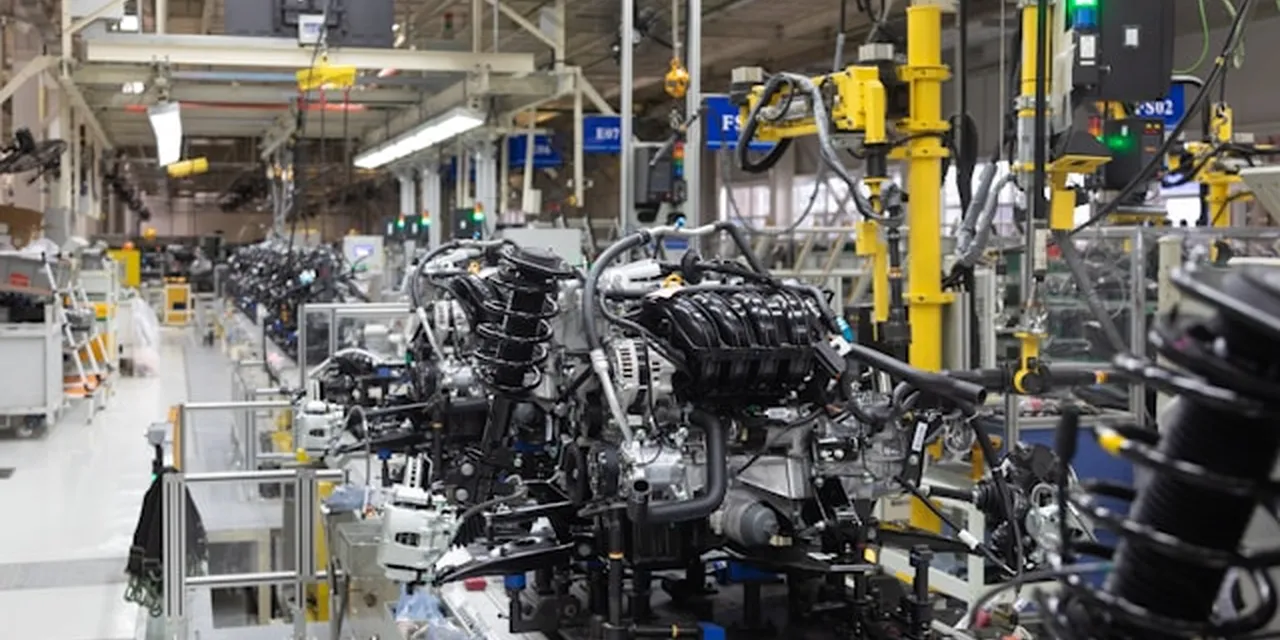
The Automation Side
The roles being created to manage this automation are hybrid positions. Mechatronics specialists who understand both horological tolerances and industrial robotics. Automation engineers who can programme systems for components measured in microns. Data analysts who can interpret quality control output from AI-driven inspection. The Biel/Bienne region faces an estimated shortage of 60 to 80 such positions, part of a national deficit of over 300 according to Swissmem's 2024 industry survey. These professionals exist in Zurich's tech corridor, where medtech and fintech employers offer salaries 20 to 30 per cent higher than watchmaking, along with equity participation and urban amenities that Biel/Bienne cannot match.
The Artisanal Side
At the opposite end of the spectrum, demand for hand skills has not decreased. It has increased. The commercial success of collaboration pieces like the MoonSwatch, which require manual assembly, and the sustained appetite for high-complication movements, have pushed artisanal production volumes upward precisely as the cohort capable of performing the work shrinks through retirement. The sector's annual structural deficit of 1,200 to 1,500 qualified professionals nationally, with 20 to 25 per cent of that gap concentrated in the Biel/Bienne region, is not primarily an automation story. It is a craft succession story.
The dual shortage means that a single employer in this market must now recruit from two entirely different talent ecosystems simultaneously. The automation engineer reads job boards, considers equity packages, and evaluates lifestyle factors. The master watchmaker has worked at the same bench for fifteen years, does not have a LinkedIn profile, and will move only for a combination of prestige, craft challenge, and meaningful compensation adjustment. One responds to digital outreach. The other must be found through direct headhunting approaches that reach professionals who are not visible through any conventional channel.
Compensation in a Market Where Everyone Knows Everyone
Compensation in Biel/Bienne's watchmaking sector is shaped by two forces: the precision of the work and the smallness of the market. A senior micromechanics engineer with expertise in five-axis CNC and electrical discharge machining commands CHF 95,000 to CHF 130,000 in base salary, with bonuses adding 5 to 15 per cent. This represents a 10 to 12 per cent premium over equivalent mechanical engineering roles in Zurich. The premium exists because the tolerances are tighter and the tooling is more specialised, not because the market is generous.
Master watchmakers with over ten years of experience earn CHF 85,000 to CHF 120,000 at base. The premium tier belongs to Métiers d'Art specialists: enamellers, engravers, and gem-setters whose skills take a decade to develop and whose supply is measured in dozens rather than hundreds across all of Switzerland. These specialists command CHF 110,000 to CHF 140,000. The scarcity premium is real but capped by the economics of mid-range watchmaking. Swatch Group cannot pay Geneva rates for every artisan without compressing the margins that fund its automation investment.
At executive level, the numbers shift substantially. A Head of Manufacturing at brand level within Swatch Group earns CHF 180,000 to CHF 250,000 in base salary, with variable compensation adding 20 to 40 per cent. Rolex production director roles in Biel are estimated at CHF 200,000 to CHF 300,000 or above, though Rolex does not disclose site-specific figures. At the executive board level, Swatch Group's 2023 remuneration report shows total compensation ranging from CHF 1.2 million to CHF 8.88 million.
The compensation challenge for hiring leaders is not that pay is low. It is that the gap between Biel/Bienne and its two primary competitor markets operates differently at different levels.
For mid-level technicians and CNC specialists, Biel/Bienne is reasonably competitive with La Chaux-de-Fonds and Le Locle, where the cost of living is lower but the salary base is similar. For senior watchmakers and executives, Geneva offers a 10 to 20 per cent premium for equivalent roles, compounded by superior international school infrastructure and a larger expatriate community. For automation and digitisation specialists, Zurich and Zug offer premiums of 20 to 30 per cent plus stock option culture.
The result is a market where Biel/Bienne can retain mid-level talent reasonably well but struggles to attract and hold the two extremes: the most senior artisans (who are drawn to the prestige of haute horlogerie brands in Geneva) and the most capable technologists (who are drawn to the compensation and lifestyle of the Zurich corridor). This is the salary negotiation challenge that defines every search in this market.
The Geographic Squeeze on Talent
Biel/Bienne sits between two powerful talent magnets. Geneva pulls from the west with higher pay, brand prestige, and cosmopolitan infrastructure. Zurich pulls from the east with technology sector compensation, equity culture, and urban lifestyle appeal for younger engineers. La Chaux-de-Fonds and Le Locle compete on a different axis: deep artisanal tradition, historic watchmaking school infrastructure, and a dense independent supplier network that offers craft diversity rather than corporate scale.
Geneva's Pull
The Geneva effect is particularly pronounced for senior talent. Richemont's brands, Patek Philippe, and Rolex's own headquarters all operate within reach. A master watchmaker with haute horlogerie aspirations sees a clear trajectory from Biel to Geneva. The salary premium of 10 to 20 per cent for equivalent roles, documented by BILAN Magazine's 2024 salary survey, is meaningful but not decisive on its own. The decisive factor is prestige. Assembling a minute repeater for Patek Philippe carries professional capital that assembling a Swatch, however commercially successful, does not.
Zurich's Pull
The Zurich corridor's impact is newer and more targeted. It does not draw watchmakers. It draws the automation engineers, data scientists, and mechatronics specialists that Biel/Bienne desperately needs for its Industry 4.0 transition. ETH Zurich's career placement data shows these graduates gravitating toward medtech and fintech, where starting compensation and career trajectory outpace anything the watchmaking sector currently offers. Swissmem's 2024 migration study confirms this pattern. The drainage is specific: it affects exactly the talent category that the automation investment requires.
Biel/Bienne's counteroffer is cost of living. Average rent runs CHF 300 to 500 per month lower than Geneva, according to Comparis.ch's 2024 rental market analysis. For a mid-level engineer, this is material. For an executive, it is insufficient to offset the compensation and lifestyle gap. The city's bilingual character, straddling French and German, creates both opportunity and friction: it widens the theoretical candidate pool to both linguistic communities but limits international attractiveness compared to fully francophone Geneva or germanophone Zurich.
For organisations hiring across borders, the limited expatriate community and restricted international school options compound the difficulty. A senior automation engineer relocating from Munich or a master watchmaker moving from the Vallée de Joux must accept a smaller city with fewer family infrastructure options. This reality narrows the effective candidate pool for every senior search.
The Succession Crisis Nobody Is Talking About
The most underreported risk in Biel/Bienne's watchmaking ecosystem is not a skills gap. It is a business ownership gap. According to the Biel/Bienne Chamber of Commerce's 2024 SME survey, approximately 40 per cent of watch component SMEs in the region are family-owned with principals aged 55 or older. Without succession solutions, 15 to 20 firms face closure or acquisition by 2027.
This matters for talent strategy in two ways. First, each closure removes a node from the supplier network. The 120 to 150 independent SMEs in the region are not interchangeable. A firm that specialises in a particular finishing technique or component tolerance has built institutional knowledge over decades. When that firm closes, its capability does not transfer automatically to another employer. The talent pipeline that fed it dissipates.
Second, the acquisition scenario is not necessarily better. When a family-owned component supplier is acquired by a larger group, the integration typically results in operational changes that prompt key technicians to leave. The acquirer gains equipment and facilities but often loses the people who made those facilities valuable. This is the hidden cost of a failed leadership transition at the SME level: not just the loss of a single executive, but the unravelling of an entire capability.
The problem is compounded by industrial real estate constraints. Vacancy rates for industrial space suitable for clean-room manufacturing sit below 2 per cent in Biel/Bienne. A new entrant or expanding firm cannot simply lease space. This means that when a firm closes, even its physical capacity is difficult to replace.
For hiring leaders at the anchor employers, the SME succession crisis creates a secondary talent challenge. Skilled technicians leaving closing or acquired SMEs become available, but they carry deep specialisation in supplier-side processes, not brand-level production. The retraining investment is material. And the window to capture these professionals before they relocate to Geneva or La Chaux-de-Fonds is narrow.
What Hiring Looks Like in a 75 Per Cent Passive Market
The data from Hays Switzerland's 2024 Talent Trends report for the luxury goods sector confirms what any search professional working this market already knows: 75 to 80 per cent of qualified master watchmakers, specialised micromechanics engineers, and artistic craft specialists are currently employed and not actively seeking new positions. They are not on job boards. They are not browsing career pages. Many are not on LinkedIn.
This is the single most important statistic for any hiring leader in Biel/Bienne to internalise. A job posting on the company career page, a listing on jobs.ch, an advertisement in the FH industry bulletin: these instruments reach, at best, 20 to 25 per cent of the viable candidate pool. The remaining 75 to 80 per cent must be identified through systematic talent mapping, then approached individually with a proposition tailored to their specific professional situation.
The proposition itself must be carefully constructed. A passive candidate earning CHF 110,000 at a competitor will not move for CHF 115,000 and a generic job description. What moves a senior artisan is typically a combination of factors: access to a more complex or prestigious product line, a workshop culture that values their specific craft, geographic or family considerations, or a role that gives them authority over training the next generation. Understanding which combination applies to a specific individual requires intelligence that no job posting can generate.
Swatch Group publicly acknowledged in its 2023 Annual Report what amounts to this challenge, citing difficulties in recruiting specialised technicians in the Biel region and responding with extended apprenticeship programmes and internal upskilling investments. These are long-term strategies. They will not fill the role that needs to start in three months.
For executive-level roles, the challenge intensifies further. A Head of Manufacturing candidate for a Swatch Group brand must combine multi-site Swiss production oversight, vertical integration management, and automation strategy experience. The number of individuals who possess this combination in Switzerland can be counted in dozens. The number willing to consider a move to Biel/Bienne, given Geneva's pull, is smaller still. This is a market where conventional executive search approaches consistently underperform because the universe of candidates is too small and too passive for any advertising-driven methodology to reach them.
Regulation as Both Protection and Constraint
Two regulatory forces shape the talent market in ways that hiring leaders must account for. The first is protective. The second is additive.
The revised Swiss Made regulation, in force since 2017 with ongoing enforcement, requires that a minimum of 60 per cent of a watch's value originates in Switzerland, with technical development also conducted domestically. This rule makes it impossible for Biel/Bienne manufacturers to offshore significant production. It protects local employment but locks employers into a constrained talent market. A CNC specialist in the Biel region cannot be replaced by a lower-cost equivalent in Southeast Asia. The specialist must be Swiss-based, Swiss-trained, or willing to relocate to Switzerland. This regulatory floor on domestic employment magnifies every shortage.
The second force is the EU Corporate Sustainability Due Diligence Directive, implementation of which is progressing through 2026. Enhanced traceability requirements for gold and tantalum are creating new operational roles in compliance, sustainability reporting, and supply chain verification. Estimated compliance investment runs CHF 5 to 10 million per major entity. For SMEs in the supplier network, the proportional cost is higher and the talent to manage it is even scarcer.
These compliance roles represent a new hiring category for the sector. Five years ago, a watch component manufacturer did not employ sustainability compliance officers. Now the role is essential, and the candidates who combine precious metals supply chain knowledge with regulatory expertise are exceedingly rare. This is an emerging talent category in industrial manufacturing that hiring leaders must build into their workforce planning rather than treating as a one-off recruitment problem.
What This Means for Hiring Leaders in 2026
The Biel/Bienne watchmaking talent market in 2026 is defined by a paradox. Employment is stable. Investment is flowing. The sector is not in crisis. Yet hiring individual specialists has never been harder, because the market is splitting between roles that are being automated and roles that require a generation of accumulated craft knowledge. The automated side needs people who prefer to work in Zurich. The artisanal side needs people who are already employed and not looking.
Organisations that approach this market with job postings and reactive search methods will reach a quarter of the viable talent at best. The remaining three-quarters require direct identification, individual approach, and a proposition constructed around the specific motivations of professionals who are not in the market.
For organisations competing for executive and specialist leadership in Biel/Bienne's precision manufacturing sector, KiTalent delivers interview-ready candidates within 7 to 10 days through AI-enhanced talent mapping of precisely the passive professionals that conventional methods cannot reach. With a 96 per cent one-year retention rate across 1,450 completed executive placements and a pay-per-interview model that eliminates upfront retainer risk, this is how a search should work in a market this constrained.
Frequently Asked Questions
What is the average salary for a master watchmaker in Biel/Bienne in 2026?
A master watchmaker with over ten years of experience in the Biel/Bienne region earns CHF 85,000 to CHF 120,000 in base salary. Métiers d'Art specialists, including enamellers, engravers, and gem-setters, command CHF 110,000 to CHF 140,000 due to extreme scarcity. These figures reflect a market where unemployment among qualified watchmakers sits below one per cent. Executive-level manufacturing roles at major brands range from CHF 180,000 to CHF 300,000 or above. Market benchmarking specific to this sector is essential before structuring any offer.
Why is it so hard to hire watchmaking specialists in Switzerland?
The Swiss watch industry faces an annual structural deficit of 1,200 to 1,500 qualified professionals. Three factors drive this. First, training cycles are long: a master watchmaker requires years of apprenticeship and specialisation. Second, Swiss Made regulations prevent offshoring, locking employers into a domestic talent pool. Third, 75 to 80 per cent of qualified specialists are currently employed and not actively seeking roles. Reaching these passive candidates requires direct headhunting rather than job advertising.
How does Biel/Bienne compare to Geneva for watchmaking careers?
Geneva offers a 10 to 20 per cent salary premium for equivalent watchmaking roles, superior international school infrastructure, and access to haute horlogerie brands like Patek Philippe and Vacheron Constantin. Biel/Bienne offers CHF 300 to 500 per month lower housing costs, proximity to Swatch Group's global headquarters, and access to production roles across multiple brands. The choice often depends on whether a candidate prioritises prestige and compensation or production breadth and lower living costs.
What skills are most in demand in Swiss watchmaking in 2026?
Three categories face the most acute shortages. Micromechanics engineers and CNC specialists with five-axis machining expertise face a 40 per cent supply-demand gap in the Biel region. Automation and Industry 4.0 technicians combining mechatronics with horological knowledge are in short supply nationally. And traditional artisanal skills, particularly complication assembly, enamelling, and hand engraving, face a generational succession crisis that no short-term training programme can resolve.
How does KiTalent approach executive search in the Swiss watchmaking sector?
KiTalent uses AI-enhanced talent mapping to identify the 75 to 80 per cent of qualified watchmaking professionals who are not actively in the market. The firm delivers interview-ready candidates within 7 to 10 days, operates on a pay-per-interview model with no upfront retainer, and provides full pipeline transparency through weekly reporting. This approach is specifically designed for markets like Biel/Bienne where the candidate pool is small, passive, and unreachable through conventional job advertising.
What role does automation play in Swiss watch manufacturing employment?
Automation is reshaping rather than reducing watchmaking employment. Major manufacturers are investing heavily in Industry 4.0 integration for entry-level assembly and quality inspection, projecting productivity gains of around 15 per cent. However, this creates new demand for hybrid technicians while doing nothing to alleviate the shortage of traditional artisans. Net employment in the Biel/Bienne watchmaking sector is projected to remain stable through 2026, but the composition of that employment is changing rapidly.