Bolzano's Luxury Hospitality Market Has a Talent Problem Its Bilingual Advantage Cannot Solve
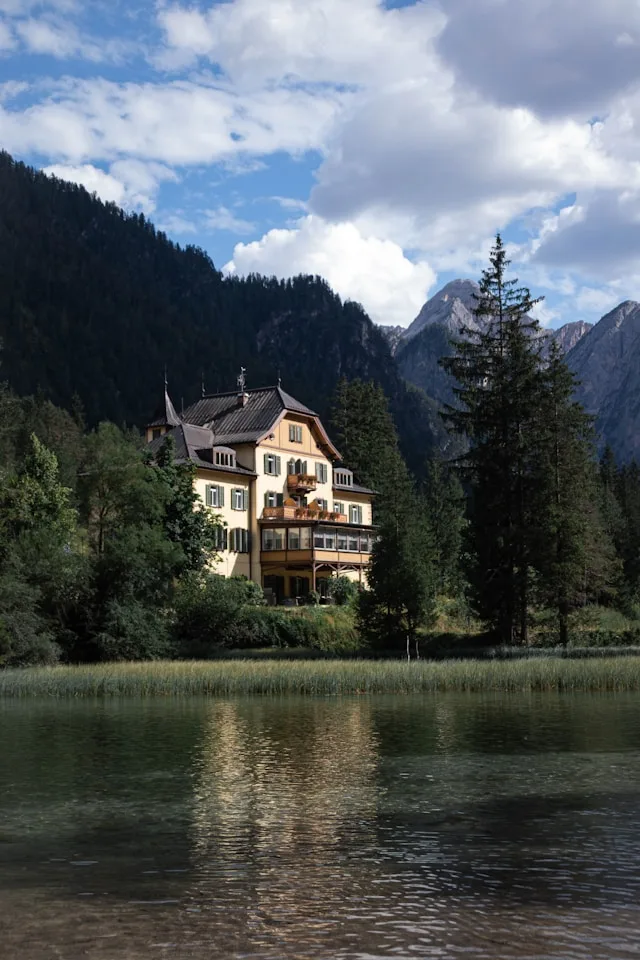
Bolzano's luxury hotel cluster around Piazza Walther reported RevPAR of €189 in 2024, a 12% year-on-year increase driven by American and German high-net-worth travellers seeking alpine culinary tourism and soft adventure. The Ötzi Museum drew 330,000 visitors that year, 68% of whom stayed in the central district for an average of 2.3 nights. By every demand metric, this is a market performing at the top of its class.
Yet those same properties now face a management-tier vacancy rate of 18.7%, a figure that has climbed 340 basis points since 2022. A heritage boutique hotel adjacent to the Waltherplatz maintained a General Manager vacancy for 11 months before filling it through cross-border recruitment from Innsbruck at a 25% compensation premium. The property screened 340 applications. Twelve met the bilingual threshold. The gap between demand for Bolzano's luxury hospitality product and the supply of leaders who can deliver it is not closing. It is accelerating.
What follows is a structured analysis of the forces reshaping Bolzano's hospitality sector, the employers driving that change, and what senior leaders need to understand before they make their next hiring or retention decision in this market. The core problem is not simply that talent is scarce. It is that the very attribute making Bolzano's luxury proposition distinctive, its bilingual Alpine-Italian service culture, is the same attribute shrinking the pool of leaders capable of running it.
The Demand Side Is Not the Problem
Tourism Economics projects a 6-8% growth in high-end arrivals for South Tyrol in 2026, with Bolzano capturing an estimated 45% of the incremental demand. Two infrastructure developments underpin that projection: the Bolzano Airport expansion scheduled for the second quarter of this year, and the ongoing effects of Brenner Base Tunnel connectivity improvements that are beginning to reshape access patterns from northern Europe.
The Waltherplatz micro-cluster, anchored by Parkhotel Laurin, Hotel Greif, and Stadt Hotel Città, has maintained 78-82% average annual occupancy in the luxury segment. This outperforms the provincial average of 64% by a considerable margin, according to ASTAT provincial tourism statistics. The revenue trajectory is strong. American and German HNWI demand for what the industry now calls "soft adventure" and culinary tourism has proven durable through multiple economic cycles.
Supply-side constraints reinforce this pricing power. UNESCO buffer zone regulations and municipal preservation codes (Bauordnung Bozen) strictly limit new development in the historic centre. Only two luxury boutique projects totalling 72 rooms received planning permission in 2024 for the Waltherplatz district. That is insufficient to absorb projected demand growth by any measure. For existing operators, this means occupancy pressure will intensify, not ease.
The commercial opportunity is clear. The constraint is not demand. It is the people required to capture it.
The Bilingual Paradox at the Centre of Every Search
Bolzano's luxury hospitality proposition is built on a foundation of authentic bilingual Alpine-Italian service culture. German-speaking tourists from Austria, Germany, and Switzerland account for 58% of luxury hotel revenue. The service expectation is not merely functional language capability. It is cultural fluency: a General Manager who can negotiate with a German corporate travel buyer in the morning and host an Italian wine dinner in the evening, switching registers seamlessly.
Why the Language Requirement Filters Out 96% of Applicants
This requirement, German C1 and Italian C1 as a minimum with English C1 expected, applies to 78% of management roles. The 11-month General Manager search referenced above illustrates the filtering effect in practice. Of 340 applications, only 12 candidates met the combined language and luxury heritage property experience threshold. That is a 3.5% qualification rate before a single interview was conducted.
The demographic pipeline feeding this talent pool is contracting. According to ASTAT provincial migration statistics, only 31% of South Tyrol's university graduates remain in-province after completing their studies. Hospitality management graduates show the highest emigration rate: 47% leave for Switzerland, Austria, or international markets, according to the Free University of Bolzano's graduate tracking study covering the 2020-2024 cohort. The university's Faculty of Economics and Management produces 120 hospitality and tourism graduates annually. If 47% emigrate, the province retains roughly 64. Not all of those enter luxury hospitality management. Not all of those possess the bilingual fluency that luxury properties require.
The Shrinking Cohort That Defines the Luxury Standard
This is the paradox that sits at the centre of every executive search in this market. The destination's core differentiator, authentic bilingual service, depends on a demographic cohort that is simultaneously shrinking in absolute numbers and increasingly mobile geographically. South Tyrol's working-age population is projected to decline 12% by 2040. The hospitality sector is disproportionately exposed to what labour economists in the region call the "German-language penalty." Young German-speaking South Tyroleans increasingly pursue university education outside hospitality, while Italian-speaking candidates often lack the German proficiency the luxury segment demands.
Capital investment cannot resolve this. No amount of property renovation or brand positioning changes the size of the bilingual talent pool. For hiring leaders in Bolzano's luxury segment, the constraint is not the market. The constraint is the workforce that makes the market possible.
Compensation Is Competitive Regionally but Losing Cross-Border
Bolzano's executive compensation benchmarks sit in an uncomfortable middle position. They are 12% above equivalent roles in Rome or Milan. They are 18% below Innsbruck and 40-60% below Swiss alpine resorts. For the bilingual professionals Bolzano's properties need most, the relevant comparison is not southward toward Italy. It is northward toward Austria and Switzerland.
A Property General Manager or Cluster Director overseeing multiple assets in Bolzano commands €115,000 to €155,000 in base compensation, with performance bonuses of 20-30% and accommodation benefits. Total cash compensation reaches a ceiling of approximately €190,000. In St. Moritz or Zermatt, the equivalent range is €240,000 to €280,000. In Munich, €175,000 to €210,000. The gap is material at every seniority level.
Executive Chefs specialising in Alpine fine dining earn €75,000 to €98,000 at the executive level in Bolzano, with profit-sharing arrangements in independent properties. Swiss competitors offer €110,000 to €140,000 for equivalent roles. The Chef poaching incident at Hotel Greif in the second quarter of 2024, as reported by the trade publication Gastronomie & Hotel Südtirol, illustrates the pressure this creates. According to that publication, the property secured an Executive Chef from a Relais & Châteaux competitor in Merano by offering a €25,000 signing bonus, private accommodation valued at €18,000 annually, and a guaranteed thirteenth-month bonus. The total first-year package represented a 35% increase over the chef's previous compensation.
That single hire triggered a compensation escalation across the central Bolzano luxury cluster. Two competing properties subsequently restructured their chef compensation to include housing allowances, a benefit previously uncommon in the Italian market. When one property pays a 35% premium to poach a single chef, the cost is not confined to that hire. It recalibrates the entire local market.
Revenue Management Directors face similar cross-border pull. Milan and London offer remote-work flexibility and tech-sector-adjacent compensation structures 30-50% above Bolzano-based roles. For a professional who can negotiate a strong package, the financial case for remaining in Bolzano weakens with each year of experience.
The Seasonal Trap Has Become a Year-Round Problem
The conventional framing of Bolzano's hospitality labour challenge centres on seasonality. The winter peak (January to March, averaging 89% occupancy) and the summer trough (July to August, dropping to 61%) create the kind of demand volatility that has historically driven fixed-term contracts and seasonal hiring cycles. This framing is now outdated.
Why MICE Investment Has Not Solved Seasonality
The provincial and municipal governments invested €23 million since 2020 in expanding Fiera Bolzano's digital hybrid capabilities and conference infrastructure. The Convention Center Bolzano hosted 147 MICE events in 2024, up from 132 the prior year. Fiera Bolzano hosts 35 trade fairs annually, generating 215,000 business visitor nights. Yet the MICE strategy has captured only 18% of annual room nights. Luxury hotel occupancy around Waltherplatz remains sharply seasonal, with the investment failing to offset the summer valley effect as originally projected.
Fiera Bolzano's own data shows 42% capacity utilisation outside the autumn trade fair season. Business travellers avoid alpine destinations in summer. The suggestion that Bolzano can become a year-round business destination may be structurally incompatible with its identity as a Dolomite gateway. An alpine destination's seasonality may be irreducible, regardless of conference infrastructure.
The Real Labour Consequence
For hiring leaders, the seasonality problem has evolved from a staffing challenge into an executive retention challenge. Italian labour law mandates permanent contracts after 24 months of fixed-term employment, creating what industry observers call the "seasonal trap." Employers face a choice: convert seasonal managers to permanent roles with months of low utilisation, or lose them to markets offering stable year-round employment. Austrian employers, accessible within an hour from Bolzano, offer precisely that stability under the Hotel- und Gastgewerbe collective agreement.
The provincial Seasonal Workers Office (Büro für saisonale Arbeitskräfte) allocated 15,000 non-EU seasonal permits for all of South Tyrol in 2024. This addresses front-line staffing. It does nothing for the management and specialist roles where vacancies are most acute. A Revenue Director or a Spa Director cannot be hired on a seasonal permit. These are year-round leadership roles in a market that still operates on seasonal economics.
Hoteliers report that mid-week corporate business remains insufficient to justify year-round staffing levels. This is the structural bind: the roles that matter most require permanent, well-compensated leaders, but the revenue pattern does not consistently support twelve months of executive-level payroll without MICE or corporate demand filling the gaps.
The Passive Candidate Reality in Alpine Luxury Hospitality
The talent Bolzano's luxury properties need is not on the market. Industry data from HVS Executive Search Practice indicates that General Managers and Hotel Directors in South Tyrol's luxury segment operate in a 90-95% passive candidate market. Only 5-10% of qualified candidates for property leadership are actively seeking employment through public channels at any given time.
Executive Chefs in Alpine fine dining represent an 85% passive market. Average tenure in luxury Bolzano properties is 4.2 years, with movement typically triggered by competitor poaching rather than active job seeking. Revenue Management Directors are 80% passive, typically holding two to three informal exploratory conversations annually while remaining employed. Spa Directors, constrained by the small cohort of professionals holding both hospitality management degrees and certified wellness therapy qualifications, represent a 75% passive market.
These ratios have a direct implication for search methodology. A job posting on a hospitality recruitment platform reaches, at best, the 5-15% of the target talent pool that happens to be looking. The remaining 85-95% must be found through direct identification and approach of passive candidates. A retained search mandate with a 6-9 month lead time is the industry norm for luxury property leadership in this market. That timeline is itself a competitive disadvantage when the property's revenue is suffering from a leadership vacancy.
The median time-to-fill for professional hospitality roles in Bolzano is 94 days, according to the Excelsior Information System's labour demand data. In Milan, the equivalent figure is 47 days. Bolzano's search takes twice as long in a market with half the candidate pool. For properties competing for the same bilingual, culturally fluent leaders, the cost of a slow search compounds monthly in lost revenue optimisation and service quality erosion.
This is where traditional recruitment methods consistently fail. Advertising a General Manager role in Bolzano and waiting for the right bilingual candidate to apply is a strategy designed to reach 5% of the market. The other 95% are employed, performing well, and not looking at job boards. Reaching them requires a fundamentally different method.
What a Successful Search Looks Like in This Market
The research data points toward a specific profile of successful hiring in Bolzano's luxury hospitality segment. Understanding this profile is essential for any organisation planning an executive search here.
The Cross-Border Recruitment Imperative
The General Manager search that succeeded after 11 months did so through cross-border recruitment from Innsbruck. The 25% compensation premium required to close the hire (€135,000 versus the €108,000 local median) reflects the true cost of sourcing bilingual luxury leadership when the domestic pool is exhausted. This is not an outlier. It is the emerging standard.
For Revenue Management roles, one property near the Ötzi Museum restructured its Revenue Director position to a hybrid-remote model in late 2024, as described by Hotel Management Magazine Italy. The restructuring was necessary to secure a candidate from Milan who refused relocation but possessed the specific Revenue Management System expertise and German-language proficiency required for the property's DACH-market focus. The property invested €40,000 in cloud-based Property Management System upgrades to enable the arrangement.
These examples share a common thread. Successful hires in this market require employers to move toward the candidate, not the other way around. That means cross-border compensation benchmarking, willingness to restructure roles for flexibility, and investment in talent mapping across multiple geographies before a vacancy even opens.
Building the Pipeline Before the Vacancy
Properties that wait until a General Manager resigns to begin searching face 9-14 months of vacancy in a market where the candidate pool yields a 3.5% qualification rate. The alternative is proactive pipeline development: identifying and maintaining relationships with bilingual hospitality leaders across the Alpine region, the DACH markets, and Italian gateway cities before a role opens.
This requires a sustained talent pipeline approach rather than a reactive search. The economics favour it. An 11-month GM vacancy at a 100-room property with €189 RevPAR represents a material revenue optimisation loss. Even a conservative estimate of the gap between interim management performance and a permanent, high-calibre GM suggests hundreds of thousands of euros in unrealised revenue over that period.
The Synthesis: Bolzano's Talent Crisis Is a Knowledge Problem Disguised as a Supply Problem
The conventional diagnosis of Bolzano's hospitality talent challenge is that there are not enough candidates. The more precise diagnosis is that there are not enough candidates who exist at the intersection of three requirements that the market treats as non-negotiable.
First: bilingual German-Italian cultural fluency at C1 or above in both languages. Second: luxury heritage property operational experience, not transferable from chain hotels or urban business properties. Third: willingness to live and work in a small alpine city with compensation 18-40% below what comparable roles pay ninety minutes north across the Austrian border.
No single one of these requirements is unusual. Combined, they reduce the qualified candidate universe to a fraction of what hiring leaders assume when they open a search. The 3.5% qualification rate from 340 applications is not a reflection of a poorly written job description or an inadequate employer brand. It is the mathematical consequence of three independent filters applied simultaneously to a shrinking demographic base.
The bilingual requirement is the filter that distinguishes Bolzano from every other Italian luxury market. Rome, Milan, and Florence face their own hospitality talent pressures, but none of them require German C1 as a baseline for management roles. This filter cannot be relaxed without undermining the service proposition that generates 58% of luxury revenue. It cannot be trained quickly: C1 language proficiency in a second language takes years of immersion to develop. And the demographic pipeline feeding it is contracting at 12% per generation.
This is not a hiring problem that solves itself with better job postings, higher salaries, or faster interview processes. It is a market where the candidates who qualify are known to a relatively small number of people, are almost certainly employed, and must be identified through specialist headhunting methods rather than conventional recruitment channels.
What Hiring Leaders in Bolzano's Luxury Segment Should Do Now
For organisations competing for bilingual hospitality leadership in Bolzano, where the qualified candidate pool is measured in dozens rather than hundreds and the cost of a vacant leadership role compounds monthly, the search methodology matters as much as the compensation package.
KiTalent delivers interview-ready executive candidates within 7-10 days through AI-powered talent mapping that reaches the 90-95% of luxury hospitality leaders who are not visible on any recruitment platform. With a 96% one-year retention rate across 1,450+ executive placements and a pay-per-interview model that eliminates upfront retainer risk, the approach is built for markets exactly like this one: small candidate pools, high passive ratios, and a premium on speed.
The properties that will secure the best leaders in 2026 are not the ones offering the highest salary. They are the ones who identified their next General Manager six months before the role opened. For organisations ready to build that pipeline in Bolzano's luxury hospitality market, start a conversation with our executive search team about how we approach this specific challenge.
Frequently Asked Questions
Why is it so difficult to hire hotel General Managers in Bolzano?
Bolzano's luxury properties require General Managers with German C1 and Italian C1 proficiency combined with heritage property experience. This triple filter reduces the qualified candidate pool to fewer than 4% of typical applicants. Additionally, 90-95% of qualified candidates are not actively seeking new roles. The median time-to-fill for professional hospitality roles in Bolzano is 94 days, double the 47-day average in Milan. Properties that rely on job postings alone reach only a fraction of the viable market, which is why direct executive search methods consistently outperform advertising in this segment.
What do luxury hotel executives earn in Bolzano compared to Austrian and Swiss markets?
A Hotel General Manager or Cluster Director in Bolzano earns €115,000 to €155,000 in base compensation, with total cash compensation reaching approximately €190,000 including performance bonuses. This sits 18% below Innsbruck and 40-60% below Swiss alpine resorts such as St. Moritz and Zermatt, where equivalent roles command €240,000 to €280,000. Executive Chefs earn €75,000 to €98,000 in Bolzano versus €110,000 to €140,000 in Switzerland. This cross-border compensation gap is a primary driver of talent emigration from South Tyrol.
How does seasonality affect executive hiring in Bolzano's hotel sector?
Bolzano's luxury segment shows an inverted seasonality pattern: winter occupancy peaks at 89% while summer drops to 61%. Italian labour law mandates permanent contracts after 24 months of fixed-term employment, creating tension between seasonal revenue patterns and year-round executive staffing costs. Despite €23 million in MICE infrastructure investment since 2020, conference and trade fair events account for only 18% of annual room nights, insufficient to eliminate the summer revenue valley that makes year-round executive retention financially challenging for independent properties.
What skills are most in demand for luxury hospitality roles in South Tyrol?
Beyond mandatory German-Italian bilingualism, the most sought-after specialisms include revenue management system expertise for DACH-market distribution, GSTC sustainability compliance and CasaClima green hotel certification knowledge, alpine wellness programming (including certified Alpine hay bathing and high-altitude spa therapy), and hybrid event management platform proficiency for MICE services. The combination of these technical skills with bilingual fluency creates extremely narrow candidate profiles that require specialist talent mapping to identify.
How can Bolzano hotels compete with Austrian and Swiss employers for talent?
Compensation alone will not close the gap with Austrian and Swiss markets. Successful Bolzano properties are differentiating through non-monetary benefits including private accommodation provision (valued at €18,000 annually), hybrid-remote arrangements for technical specialist roles, and quality-of-life positioning that emphasises Bolzano's lower cost of living and cultural richness. Proactive talent pipeline development across the Alpine region, rather than reactive vacancy-driven searches, gives properties access to passive candidates before competitor poaching triggers a bidding war.
Is KiTalent able to support executive search for hospitality roles in Bolzano?
KiTalent's international executive search capability is designed for markets with small, highly passive candidate pools and cross-border dynamics. The firm's AI-enhanced talent mapping identifies bilingual hospitality leaders across the Alpine region, DACH markets, and Italian gateway cities who are not visible through conventional channels. With a pay-per-interview model and interview-ready candidates delivered within 7-10 days, KiTalent addresses the specific challenge Bolzano properties face: reaching the 90-95% of qualified leaders who will never respond to a job posting.