Bonn's Logistics Sector Is Investing Hundreds of Millions in Automation. The Talent to Run It Does Not Exist in Sufficient Numbers.

Deutsche Post DHL Group has committed €300 million to automation and electrification across its Cologne Bonn Airport hub and regional parcel network through 2026. Robotic sortation lines are replacing manual tilt-tray systems. AI-driven demand forecasting is displacing spreadsheet-based planning. Autonomous mobile robots are being deployed across distribution centres that once relied on human pickers. The capital has moved. The workforce has not followed.
This is the core tension defining Bonn's logistics and supply chain market in 2026. The investment is real. The automation is arriving on schedule. But the mechatronics technicians, SAP integration specialists, and robotics engineers required to install, maintain, and optimise these systems are not available in anything close to the numbers the market requires. Demand for these roles exceeds supply by a factor of three to one. The result is not a slowdown in hiring. It is a slowdown in the return on capital already deployed.
What follows is a structured analysis of the forces reshaping Bonn's logistics sector, the employers driving that change, the specific roles and compensation levels that define this market, and what senior hiring leaders must understand before making their next search decision in this corridor. The gap between investment and human capital is widening, and the organisations that close it first will set the terms for this market's next decade.
The Bifurcated Cluster: Why Bonn's Logistics Market Is Not What It Appears
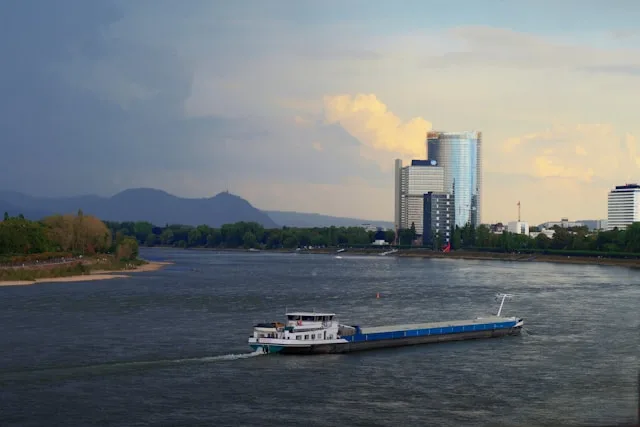
A logistics cluster typically concentrates corporate functions, operational infrastructure, and skilled labour within a single geographic zone. Bonn breaks this pattern. The city hosts DHL Group's global headquarters at the Post Tower, approximately 4,800 staff in corporate, IT, and administrative roles. The prestige is real. The operational gravity, however, has shifted elsewhere.
Large-scale parcel sortation and e-commerce fulfilment facilities have decentralised to peripheral zones. Cologne-Porz, Frechen, and the Lower Rhine logistics belt now absorb the heavy operational footprint, driven by industrial land costs that run 40% below Bonn's city-centre rates. According to JLL's Industrial Market Report from the first half of 2024, industrial rents within Bonn exceed €7.50 per square metre per month, compared to €4.80 in the surrounding Rhein-Sieg-Kreis. With industrial vacancy rates at 1.4% inside Bonn's municipal boundaries, new large-format warehouse development is effectively impossible.
Corporate Bonn, Operational Cologne
This geographic split creates a hiring market with two distinct identities. Corporate Bonn competes for supply chain finance professionals, compliance specialists, and digital innovation leaders against Deutsche Telekom, the UN Campus, and residual federal government agencies. Operational Cologne competes for warehouse managers, sortation engineers, and commercial drivers against Amazon's fulfilment centres in Rheinberg and Dortmund. The two markets share a regional label but not a talent pool.
The Disappearing Middle
The consequence for hiring leaders is a disappearing middle. Bonn produces a surplus of university-educated professionals. Forty-eight percent of the working-age population holds a university degree, compared to 32% across North Rhine-Westphalia. Yet the logistics sector faces its most acute shortages in technically skilled trades: mechatronics, commercial driving, and robotics maintenance. The local educational ecosystem produces talent mismatched to the sector's immediate operational needs, despite the proximity of Bonn-Rhein-Sieg University of Applied Sciences and its logistics IT programmes. The city's white-collar bias, reinforced by the presence of international organisations and technology headquarters, strains blue-collar logistics recruitment in ways that aggregate unemployment figures entirely obscure.
NRW's headline unemployment rate of 6.8% in late 2024 masked a logistics-specific skilled role unemployment rate approaching 1.2%. For the roles that matter most to this sector, the market is already at full employment.
€300 Million in Capital, and the Human Capital Gap It Created
DHL Group's Strategy 2025: Accelerate programme has reshaped the Cologne Bonn Airport hub. The €150 million invested between 2023 and 2025 in hub automation was the first phase. The full €300 million commitment extends through 2026, emphasising robotic sortation and AI-driven demand forecasting systems that require an entirely different workforce profile than the one the hub employed five years ago.
The arithmetic is straightforward. Automation reduces headcount dependency for unskilled sorting roles. It simultaneously increases demand for mechatronics technicians and software integration specialists by an estimated 15 to 20 percent. The roles being eliminated are roles the market could fill. The roles being created are roles it cannot.
This is where the original investment thesis collides with labour market reality. SAP Extended Warehouse Management consultants, the specialists who configure the software backbone of automated fulfilment centres, remain unfilled for six to nine months despite active recruitment campaigns, according to the BVL Personalbarometer 2024. Over 70% of implementation projects in the Cologne-Bonn corridor have experienced delays due to contractor unavailability. A single unfilled SAP EWM role does not just leave a desk empty. It stalls a capital programme that may represent tens of millions in committed infrastructure spending.
The synthesis here is not about a shortage. It is about a sequence error. Capital moved faster than human capital could follow. Every automated sortation line that sits at 60% utilisation because the integration engineer has not been hired represents a return on investment that compounds downward with each month of vacancy. The urgency is not in the hiring department. It is in the finance department.
Who Is Hiring, Who Is Competing, and Where the Talent Actually Sits
The Anchor Employers
DHL Group dominates Bonn's logistics employment but does not monopolise it. Kühne + Nagel maintains approximately 400 airfreight forwarding staff at CGN. DB Schenker operates administrative and air cargo handling functions with roughly 300 employees. DHL Supply Chain runs regional distribution centres in Bornheim and Alfter on Bonn's periphery, employing 800 to 1,200 in warehouse and transport operations.
Amazon does not operate fulfilment centres within Bonn's immediate radius, but its facilities in Rheinberg and Dortmund draw technical talent from the Bonn pool and compete aggressively on compensation. For a senior automation engineer considering two offers, the Amazon package often includes equity components that traditional logistics operators cannot match. This creates a gravitational pull that extends well beyond Amazon's physical footprint.
The Cross-Sector Competitors
Deutsche Telekom, with over 50,000 group employees and a major Bonn presence, competes directly for IT and technical talent. A Python developer or data engineer choosing between a logistics firm and a telecoms giant rarely selects logistics on compensation alone. The UN Campus employs over 1,000 people and, while generating minimal direct logistics employment, creates housing cost pressure that raises the effective cost of living for warehouse operatives and drivers whose wages have not kept pace.
The competitive environment extends beyond the city. Düsseldorf offers 10 to 15 percent higher compensation for VP-level supply chain roles. Frankfurt Airport handles 30% higher air cargo volumes than Cologne Bonn Airport and commands annual salary premiums of €15,000 to €20,000 for equivalent aviation logistics positions, according to Mercer compensation surveys from 2024. The Dutch logistics corridor around Venlo and Rotterdam attracts German logistics professionals with the 30% ruling tax benefit and English-speaking work environments.
For senior candidates, the Bonn proposition rests on something other than compensation. Shorter commutes, access to international schools, and a quality of life that Frankfurt and Düsseldorf cannot replicate at the same price point. But that proposition only works for candidates who are already in the region. Attracting external talent to Bonn requires addressing the counteroffer dynamics that consistently stall executive searches in this market.
Compensation: What Roles Pay and Where the Premiums Sit
The compensation structure in Bonn's logistics market reveals a market that rewards hybrid competence disproportionately. A Senior Logistics IT Consultant specialising in SAP EWM commands €85,000 to €105,000 in base salary. An Operations Manager running a large fulfilment centre earns €75,000 to €95,000. An Automation Engineer focused on robotics integration falls in the €80,000 to €100,000 band. These figures, drawn from Hays, StepStone, and Robert Half salary benchmarks published in 2024, represent base compensation. Total packages typically include 20 to 40 percent in performance bonuses and car allowances.
At the executive level, the numbers step up materially. A VP Operations overseeing a regional network commands €145,000 to €185,000 plus bonus. A Managing Director of a third-party logistics division earns €160,000 to €200,000 plus bonus and equity participation. A Head of Supply Chain Compliance, a role whose demand has surged since the Lieferkettensorgfaltspflichtengesetz enforcement phase, sits at €130,000 to €160,000.
The most notable premium in this market belongs to a specific intersection of competences. Roles requiring dual expertise in logistics operations and pharmaceutical or life sciences regulation command 20 to 25 percent above standard logistics benchmarks. The Bonn-Cologne pharmaceutical corridor, anchored by the Bayer Leverkusen ecosystem, generates demand for Qualified Persons in logistics pharmacovigilance. These candidates are being approached by competitors offering 15 to 20 percent salary premiums and guaranteed remote working arrangements, a benefit that warehouse-adjacent roles structurally cannot provide. The compensation gap is compounded by a flexibility gap. For hiring leaders attempting to recruit or retain these specialists, understanding what constitutes a competitive total package in this market is not optional. It is the difference between a completed search and a six-month vacancy.
The Regulatory Pressure Layer: LkSG, ETS, and the Compliance Hiring Surge
Automation and e-commerce growth are not the only forces generating demand for senior talent in Bonn. The regulatory environment is adding an entirely separate layer of hiring pressure.
Supply Chain Due Diligence
The German Supply Chain Due Diligence Act, the Lieferkettensorgfaltspflichtengesetz, entered its heightened enforcement phase for companies with 1,000 or more employees beginning in 2025. For logistics operators headquartered in Bonn, this means enhanced liability for human rights and environmental violations across global supply chains. The practical consequence is a surge in demand for compliance personnel at headquarters level: supply chain legal specialists, audit professionals, and Director-level compliance leaders capable of implementing frameworks that satisfy both the German legislation and the incoming EU Corporate Sustainability Reporting Directive.
Estimated administrative cost increases of 3 to 5 percent are not the primary concern for hiring leaders. The concern is finding the professionals who can build and run these compliance functions. Director of Supply Chain Compliance is now one of the hardest executive roles to fill in this corridor, with search timelines extending well beyond the 120-day average that already characterises this market.
Transport Emissions and Last-Mile Margins
The European Emissions Trading System extension to road transport, phasing in from 2024, is projected to increase transport costs by €0.15 to €0.20 per kilometre by 2026, according to European Commission implementation guidance. For last-mile delivery operations in the Cologne-Bonn corridor, where margins were already thin, this cost pressure demands operational leaders who can redesign route networks, optimise fleet electrification timelines, and negotiate with grid operators for charging infrastructure that does not yet exist at sufficient scale. Grid congestion across NRW, documented by the Bundesnetzagentur, is delaying heavy-duty EV charging deployment. The CTO who can solve this problem for a logistics firm in this region is extraordinarily valuable. They are also extraordinarily scarce.
The regulatory layer does not operate independently from the automation layer. The organisations investing in robotic sortation and AI-driven demand forecasting must simultaneously invest in compliance infrastructure for supply chain transparency. The budget is split. The talent pool is not. Both investment streams draw from the same finite pool of senior professionals capable of managing complex, technology-driven operational change.
Why 90% of the Candidates This Market Needs Cannot Be Found on a Job Board
The passive candidate ratios in Bonn's logistics talent market explain why conventional recruitment methods consistently fail here. Among SAP EWM and Transportation Management consultants, 85% of qualified professionals are employed and not actively seeking new roles. At the executive level, VP and above, the passive ratio reaches 90%. Even among automation engineering specialists, 75% remain passive due to high tenure and project continuity requirements.
These are not passive candidates in the soft sense of professionals who might consider an approach. These are specialists embedded in multi-year implementation programmes, often with contractual obligations tied to project milestones. The proposition required to move them is not a marginal salary increase. It is a fundamentally different career opportunity, presented through a channel they trust, at a moment when their current project cycle permits a transition.
This is the market condition that makes traditional executive search methods inadequate. Posting a VP Operations role on StepStone or LinkedIn reaches, at best, the 10% of the market that is actively looking. In a corridor where executive searches already stall for four to six months due to counter-offers from Düsseldorf industrial conglomerates and Frankfurt aviation logistics firms, limiting the search to visible candidates guarantees a slow outcome.
The organisations succeeding in this market are those that have shifted to direct headhunting methodologies capable of mapping, identifying, and engaging the 85 to 90 percent of candidates who will never appear in an applicant tracking system. The difference between a four-month search and a four-week search in Bonn's logistics market is almost entirely a function of method, not of compensation. The candidates exist. They are simply invisible to conventional approaches.
What This Means for Hiring Leaders in 2026
The Bonn logistics talent market in 2026 presents a specific challenge that does not respond to generic solutions. The investment cycle is committed. The automation is arriving. The regulatory obligations are legally binding. The candidates required to execute on all three fronts are not available through conventional channels, are not concentrated in a single geography, and are not motivated by the same factors that moved candidates five years ago.
Three dynamics define what hiring leaders must account for. First, the bifurcation between corporate Bonn and operational Cologne means that a single recruitment strategy cannot serve both ends of the talent spectrum. Executive searches for compliance directors and CTOs require different channels, different messaging, and different compensation structures than searches for operations managers and sortation engineers. Second, the demographic decline in warehouse-eligible labour, projected at 8% across the Rhein-Sieg-Kreis by 2030, is not a future problem. It is a present constraint that compounds every year. Third, the competition for senior talent extends well beyond the logistics sector. Deutsche Telekom, Amazon, and the pharmaceutical corridor all draw from the same pool, and they are offering packages that pure logistics operators struggle to match without restructuring their reward frameworks.
For organisations competing for leadership talent across industrial and manufacturing supply chains in this region, the cost of a slow search is no longer measured in recruitment fees. It is measured in delayed capital programmes, regulatory exposure, and competitors who filled the same role three months earlier. KiTalent delivers interview-ready executive candidates within 7 to 10 days, accessing the 80% of senior logistics professionals who are not visible on any job board through AI-powered talent mapping and direct engagement. With a 96% one-year retention rate across 1,450 executive placements and a pay-per-interview model that eliminates upfront retainer risk, the approach is built for exactly the conditions this market presents.
For hiring leaders who need to fill senior logistics, supply chain compliance, or automation leadership roles in the Bonn-Cologne corridor, start a conversation with our executive search team about how we approach this market differently.
Frequently Asked Questions
What are the hardest logistics roles to fill in Bonn in 2026?
SAP EWM consultants, robotics integration engineers, and Director-level supply chain compliance professionals represent the most acute shortages. SAP EWM roles remain unfilled for six to nine months on average. VP Operations and Managing Director searches stall for four to six months due to counter-offer dynamics from competing markets in Düsseldorf and Frankfurt. The passive candidate ratio at executive level exceeds 90%, meaning conventional job advertising reaches fewer than one in ten viable candidates. Organisations using proactive talent pipeline strategies rather than reactive job postings consistently achieve faster outcomes.
What do senior logistics executives earn in the Bonn-Cologne region?
VP Operations roles commanding regional network responsibility pay €145,000 to €185,000 in base salary plus performance bonuses. Managing Directors of third-party logistics divisions earn €160,000 to €200,000 plus bonus and equity participation. Heads of Supply Chain Compliance sit at €130,000 to €160,000. Roles requiring dual logistics and pharmaceutical regulation expertise command 20 to 25 percent premiums above these benchmarks. Total compensation packages typically include 20 to 40 percent above base in bonuses and car allowances.
Why is Bonn's logistics talent market tighter than Germany's overall unemployment rate suggests?
NRW's headline unemployment rate of 6.8% in late 2024 masked a logistics-specific skilled role unemployment rate of approximately 1.2%. Bonn's white-collar bias, driven by the UN Campus, Deutsche Telekom, and federal agency presence, means the city produces a surplus of university-educated professionals while facing acute shortages in technical trades. Forty-eight percent of the working-age population holds a university degree, but the logistics sector needs mechatronics technicians, commercial drivers, and warehouse automation specialists that the local education system does not produce in sufficient numbers.
How does the German Supply Chain Due Diligence Act affect logistics hiring in Bonn?
The Lieferkettensorgfaltspflichtengesetz enforcement phase for companies with 1,000 or more employees has driven demand for compliance personnel at logistics headquarters. Director of Supply Chain Compliance is now among the most difficult executive roles to fill in this corridor. Companies face estimated administrative cost increases of 3 to 5 percent, but the primary challenge is finding professionals who can build compliance frameworks satisfying both German and EU Corporate Sustainability Reporting Directive requirements simultaneously.
How can organisations hire senior logistics talent in Bonn when most candidates are passive?
With 85 to 90 percent of qualified logistics executives and specialists not actively seeking roles, direct headhunting that identifies and engages passive candidates is the only method that reaches the full market. KiTalent's approach uses AI-enhanced talent mapping to identify candidates embedded in multi-year programmes at competing firms and engages them through trusted channels. The pay-per-interview model means clients only invest when they meet qualified candidates, eliminating the retainer risk that makes speculative searches costly in a market with these timelines.
Is Bonn losing logistics operations to Cologne and the wider NRW region?
Bonn is not losing its logistics identity, but it is experiencing a geographic redistribution. Corporate and strategic functions remain anchored at DHL Group's Post Tower headquarters. Operational fulfilment, heavy sortation, and last-mile distribution have shifted to Cologne-Porz, Frechen, and the A61 and A3 corridors, where industrial rents run 35 to 40 percent below Bonn city rates. No greenfield warehouse development is projected within Bonn's municipal boundaries for 2026. The practical implication is that executive search strategies must span the entire Cologne-Bonn corridor, not just the city itself.