Bonn's ICT Paradox: A Telecom Giant's Headquarters That Cannot Hire the Engineers It Needs
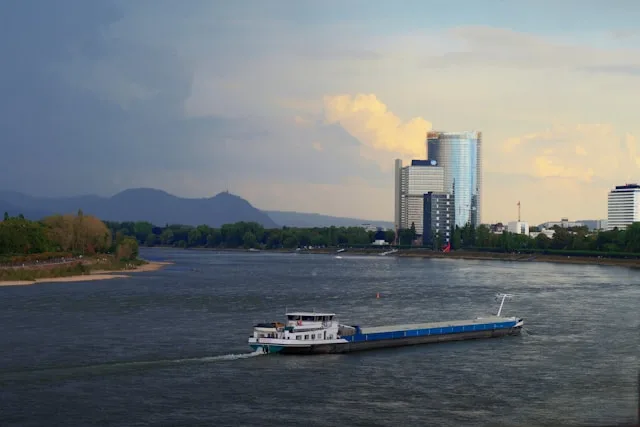
Deutsche Telekom's Post Tower still dominates Bonn's skyline. The building houses the global headquarters of Europe's largest telecommunications company, anchoring an ICT cluster of roughly 32,400 workers in a city of 330,000. On paper, Bonn looks like one of Germany's strongest technology employment markets. In practice, nearly one in seven technical positions sits empty, and the average specialised search takes over four months to close.
The paradox is specific. Deutsche Telekom's restructuring programme eliminated roughly 1,200 administrative roles in Bonn through 2023 and 2024, generating headlines about job losses. Simultaneously, the vacancy rate for cloud, cybersecurity, and 5G roles climbed to 14.8%, well above the national average of 12.3%. The media narrative said the market was softening. The data said the opposite: Bonn's ICT sector is shedding the roles it no longer needs while failing to fill the roles it desperately does.
What follows is a structured analysis of the forces reshaping Bonn's telecommunications and ICT sector, from the monoculture risk created by a single dominant employer to the three-city talent drain pulling engineers toward Cologne, Frankfurt, and Berlin. For any senior leader hiring into this market, the challenge is not whether Bonn has enough technology workers. It is whether Bonn has the right ones, and whether the conditions exist to attract them.
The Monoculture That Defines the Market
Bonn's ICT economy runs on a single engine. Deutsche Telekom AG employs approximately 19,000 to 21,000 people at its Bonn headquarters, representing around 40% of the company's total domestic workforce. When T-Systems' local delivery centre (2,500 to 3,000 staff) and the vendor ecosystem are included, DTAG's direct and indirect footprint accounts for the majority of Bonn's ICT employment.
The Herfindahl Index for employment concentration in Bonn's ICT sector stands at 0.42. Anything above 0.25 indicates high concentration. This is not a diversified technology market in the way Munich benefits from Siemens, BMW, and a deep startup bench, or the way Stuttgart draws on Bosch, Mercedes, and a constellation of industrial software firms. Bonn is a telecom city with a telecom workforce. That concentration creates two consequences that any hiring executive needs to understand before entering the market.
The Restructuring Mirage
Deutsche Telekom's "Future Mode of Operation" programme cut administrative and back-office roles across 2023 and 2024. In Bonn, roughly 1,200 positions were affected. These cuts created an impression of talent availability that does not hold under scrutiny. The eliminated roles were concentrated in procurement support, HR administration, and legacy IT operations. The roles going unfilled are cloud infrastructure architects, cybersecurity engineers with federal clearance, and Open RAN specialists. These two populations barely overlap.
A senior hiring leader reading the headlines might assume that Bonn's talent market has loosened. The 4,800 open ICT positions reported in Q3 2024 say otherwise. The restructuring created surplus in one category and deepened scarcity in another. The cost of assuming these are the same market is a search that runs four months instead of two, targeting candidates who were never displaced in the first place.
The Vendor Ecosystem as Hidden Employer
DTAG's procurement and vendor management functions operate from Bonn, which forces major suppliers to maintain local teams. Ericsson, Nokia, Cisco, AWS, and Microsoft all staff sales engineering and technical account management roles in Bonn specifically because Deutsche Telekom is there. According to the IHK Bonn/Rhein-Sieg's 2024 analysis, this vendor ecosystem accounts for approximately 2,000 to 2,500 indirect ICT jobs.
This dynamic cuts both ways. The vendor presence adds depth to the local talent pool. But it also means that when Cisco or AWS decides to consolidate operations elsewhere, those roles leave Bonn entirely. The market's dependence on DTAG extends beyond direct employment to an entire ring of supplier jobs whose existence is contingent on a single client relationship.
Where Innovation Is Going, and Where It Is Not
The most consequential shift in Bonn's ICT cluster is not a hiring trend. It is a geographic reallocation of intellectual capital. Deutsche Telekom's Innovation Laboratories, once a pillar of the Bonn technology ecosystem, have substantially migrated their primary research activities to Berlin (AI and blockchain) and Vienna (IoT). Bonn retains only network architecture and standards research teams, approximately 150 staff.
This is the analytical claim that sits at the centre of this market: innovation gravity is decoupling from corporate governance gravity. Bonn keeps the C-suite, the board functions, the global strategic decision-making apparatus. But the R&D pipeline, the work that generates the next generation of products and the talent that builds them, is increasingly located elsewhere. Over time, this pattern transforms a technology hub into an administrative hub. The headquarters prestige remains. The engineering magnetism fades.
Fraunhofer FKIE partially counterbalances this drift, with 650 researchers focused on communication systems, cybersecurity, and AI-adjacent disciplines. The institute generates 8 to 10 deep-tech spin-offs annually. But most of those spin-offs relocate to Berlin or Munich to raise Series A funding, taking the founders and early engineering teams with them. The innovation is born in Bonn. It grows up somewhere else.
For hiring executives, this trajectory matters directly. A market that loses its R&D centre of gravity becomes harder to recruit into for senior technical roles, because the career path narrows. A VP of Cloud Architecture in Bonn today can see the headquarters track clearly. The innovation track, the path that leads through cutting-edge product development and research leadership, increasingly points toward Berlin.
The Three-City Talent Drain
Bonn does not compete for ICT talent in isolation. It sits in a pincer between three larger, more diverse technology markets, each pulling different segments of the workforce in different directions.
Cologne: 30 Kilometres and a Career Perception Gap
Cologne is close enough to commute from, which makes it a direct competitor for Bonn's junior and mid-level talent. Compensation is roughly equivalent, tracking 3 to 5% below Bonn for most roles. But Cologne's startup ecosystem and media technology sector create a perception of broader career trajectory. Software developers in particular view Cologne as offering more diverse opportunities. LinkedIn's Economic Graph data on NRW talent flows through 2024 showed a net outflow of developers under 35 from Bonn to Cologne, drawn by flexible equity packages and the sense that the Cologne market offers more paths beyond telecommunications.
Frankfurt: The 15 to 20% Premium That Pulls Seniors
Frankfurt competes at the top of the market. Senior cloud architects and cybersecurity specialists can command 15 to 20% higher base compensation in Frankfurt's financial services sector. The housing cost differential (35% higher than Bonn, according to JLL's 2024 market report) partially offsets the premium, but for a senior engineer earning €130,000 in Bonn, a Frankfurt offer of €155,000 is difficult to refuse even after adjusting for rent. Frankfurt also offers international mobility and a larger expatriate community, both of which matter for non-German candidates considering the Rhine region.
This is the tier of competition where executive search methodology becomes essential rather than optional. A cybersecurity architect with BSI clearance earning €130,000 in Bonn will not respond to a job board advertisement. They may respond to a direct approach that articulates what Bonn offers that Frankfurt does not: lower cost of living, shorter commutes, proximity to federal cybersecurity institutions, and a quality-of-life argument that has genuine weight for professionals with families.
Berlin: Lifestyle, Remote Culture, and the Under-35 Drain
Berlin competes on entirely different terms. Compensation is roughly 10% lower than Bonn. But Berlin's cost of living (rent 20% below Bonn), stronger remote work culture, and AI/ML startup ecosystem create a compelling package for younger researchers and engineers. Data from the Bundesagentur für Arbeit on IT workforce migration through 2023 and 2024 showed a net outflow of under-35 ICT talent from Bonn to Berlin, driven primarily by lifestyle factors and equity upside at early-stage companies.
The Berlin drain is particularly damaging for Bonn's long-term talent pipeline. The researchers leaving Fraunhofer FKIE's spin-offs for Berlin are not just taking their current skills. They are taking the future network effects, the collaborations, the second and third companies that would have been founded locally.
The Roles the Market Cannot Fill
Four categories of ICT talent now operate as acute shortage roles in Bonn. Understanding why each is scarce requires looking beyond aggregate vacancy numbers to the specific structural constraints that make these roles harder to fill here than in competing markets.
Cloud Infrastructure Architects with Sovereignty Expertise
The expansion of Open Telekom Cloud capacity and Gaia-X compliance requirements has created demand for cloud architects who understand both hyperscale infrastructure (AWS, Azure, GCP) and European data sovereignty frameworks. T-Systems and DTAG project 400 to 500 additional specialised cloud infrastructure roles by end of 2026. Only 12% of local engineers currently hold EU-specific certifications such as EuroStack, according to the Gaia-X AISBL Skills Gap Report from 2024. The talent pool is not just small. It barely exists yet.
A search in this category typically runs well beyond the Bonn average of 127 days. The IHK Bonn/Rhein-Sieg documented a pattern in its 2024 IT security workforce analysis: a major IT services firm in the Bonn area kept a Senior Cloud Security Architect position open for 14 months before filling it, ultimately subcontracting the function to a Berlin consultancy at a 40% cost premium. This is not an outlier. It is the market norm for roles that combine deep cloud expertise with German federal security clearance requirements.
Cybersecurity Engineers with Federal Clearance
The relocation of the Federal Office for Information Security (BSI) to Bonn, completed in 2023, created what the local economic development agency describes as a "Cyber Valley" effect. BSI will employ 1,800 staff by 2026. The spillover demand for private-sector cybersecurity consultants and engineers is real, but the supply side has not caught up.
Cybersecurity architects with BSI or VS-level clearance operate in a market where unemployment is below 1% and average tenure exceeds four years. These professionals do not apply to job boards. Fewer than 20% of placements in this category occur through advertised vacancies. The remaining 80% require direct headhunting approaches to passive candidates who are currently employed, well-compensated, and not looking.
The new KRITIS (critical infrastructure) regulations under the 2024 Telecommunications Act reform compound the problem. Bonn-based telcos now require 15 to 20% more security personnel to meet compliance requirements. The regulation created demand. It did not create supply.
5G Core Network Engineers
Open RAN specialists represent perhaps the most constrained talent category in the entire German ICT market. Bitkom's 2024 5G workforce study estimated fewer than 200 qualified Open RAN practitioners in all of Germany. This is an entirely passive market. Every qualified candidate is known to every employer. Traditional recruitment methods are irrelevant here.
The competitive dynamics are stark. According to reporting in Wirtschaftswoche, the pattern of competitor poaching in this space involves signing bonuses in the range of €35,000 and base salary increases of 25%, sufficient to pull principal engineers from one employer to another despite hybrid arrangements that allow continued residence in Bonn. For hiring organisations, the counteroffer risk in this market is not hypothetical. It is the default scenario.
AI and ML Engineers for Network Optimisation
Telco-specific AI talent sits at the intersection of two skill sets that rarely coexist: deep learning expertise and telecommunications network architecture knowledge. DTAG's migration of T-Labs AI research to Berlin has reduced the local training pipeline for this combination. The professionals who remain in Bonn tend to be mid-career network engineers who have upskilled into ML, rather than AI-native engineers who understand telco infrastructure. The distinction matters for hiring: the former category is recruitable locally; the latter must be attracted from Berlin, Munich, or international markets.
Compensation: Competitive Enough to Retain, Not Enough to Attract
Bonn's compensation positioning tells a precise story. The market tracks 8 to 12% below Munich and 5 to 8% below Frankfurt for equivalent ICT roles, while sitting 3 to 5% above Cologne and at rough parity with Düsseldorf. This mid-range positioning is adequate for retention. It is inadequate for attraction at the senior level.
At the executive tier, the gaps widen. A VP of Cloud Architecture in Bonn commands €160,000 to €200,000 base plus 30 to 40% in bonus and long-term incentives. The same role in Frankfurt, where financial services demand inflates the market, commands materially more. A cybersecurity executive with federal clearance earns €170,000 to €220,000 base in Bonn. In Munich, the ceiling is higher and the international mobility options are broader.
The compensation data reveals a structural problem that no single employer can solve alone. Bonn's cost of living is lower than Frankfurt or Munich, and the quality-of-life argument is genuine. But salary benchmarking for these roles shows that the gap is widening fastest at exactly the seniority level where the most critical positions sit. Senior specialists and managers can be retained competitively. VP and director-level candidates require packages that break Bonn's typical compensation bands, and many organisations are unwilling or unable to make that adjustment.
The one structural advantage Bonn holds is housing. With office vacancy at 4.2% and residential costs materially below Frankfurt and Munich, the total cost of employment (compensation plus relocation support plus housing assistance) can be competitive if employers frame the package correctly. The organisations that understand how to negotiate these packages effectively have a genuine edge. The ones that lead with base salary alone lose to Frankfurt every time.
The Constraints That Shape What Comes Next
Three structural constraints will define Bonn's ICT hiring environment through 2026 and beyond. None of them can be solved by increasing recruitment budgets.
The first is infrastructure. Data centre expansion in Bonn faces 18 to 24 month delays for power grid connections due to transformer shortages and Stadtwerke Bonn capacity limitations. This constrains cloud growth despite strong demand, which in turn constrains the job creation that would deepen the local talent pool. Energy costs compound the problem: industrial electricity rates of €0.28 per kilowatt-hour are 40% above 2021 baselines, squeezing margins for T-Systems and colocation providers.
The second is international recruitment capacity. Bonn's limited international school infrastructure and smaller expatriate community, compared to Frankfurt or Düsseldorf, create a material barrier for recruiting non-German ICT executives. For global cloud operations roles that require international experience and multilingual capability, this is not a minor inconvenience. It is a structural disadvantage that complicates cross-border executive hiring in ways that compensation alone cannot offset.
The third is the innovation pipeline. Fraunhofer FKIE produces excellent research and viable spin-offs. But the spin-offs leave. T-Labs has largely left. The BSI relocation brings government cybersecurity talent but not commercial R&D capacity. Over time, a market that retains headquarters prestige while losing innovation activity becomes a market where the most ambitious engineers do not want to build their careers. This is the long-term risk that no quarterly hiring report captures, but that every talent pipeline strategy must account for.
What This Market Requires from a Hiring Strategy
The conventional approach to filling senior ICT roles in Bonn, advertising the position and waiting for applications, reaches a useful candidate pool for general software development and IT project management. For the four acute shortage categories described above, it reaches almost no one.
Cybersecurity architects with federal clearance, senior cloud infrastructure leaders, Open RAN specialists, and telco-specific AI engineers all operate as 80%-plus passive candidate markets. The professionals you need are employed, compensated adequately, and not monitoring job boards. In the case of Open RAN, the entire qualified population in Germany numbers fewer than 200. Every one of them is known. None of them is looking.
Reaching these candidates requires a fundamentally different method. It requires talent mapping that identifies where these professionals currently work, what would motivate them to move, and what package structure addresses their specific constraints. For a cybersecurity specialist with BSI clearance, the constraint may be security-cleared project continuity. For a cloud architect considering Bonn over Frankfurt, the constraint may be total compensation including housing. For an Open RAN engineer, it may be the technical challenge itself.
KiTalent's approach to executive hiring in the telecommunications and ICT sector is built for exactly this type of market. AI-powered talent mapping identifies candidates across passive pools that conventional search firms miss. Interview-ready shortlists are delivered within 7 to 10 days. The pay-per-interview model means organisations invest only when they meet qualified candidates, eliminating the retainer risk that makes experimentation expensive. Across 1,450-plus executive placements globally, the methodology has achieved a 96% one-year retention rate, precisely because the matching process accounts for the motivational and structural factors that determine whether a hire endures.
For organisations competing for cybersecurity, cloud, and network engineering leadership in a market where 127-day searches are the norm and the best candidates are invisible to job boards, start a conversation with our executive search team about how we approach Bonn's ICT talent market differently.
Frequently Asked Questions
What is the current size of Bonn's ICT workforce?
As of late 2024, the telecommunications and ICT services sector employed approximately 32,400 people in Bonn proper, with an additional 12,000 to 15,000 in the surrounding Rhein-Sieg district. ICT employment in Bonn grew 3.2% year over year, outpacing the German national average of 2.1%. Deutsche Telekom's headquarters accounts for the largest single share at 19,000 to 21,000 employees, with T-Systems adding 2,500 to 3,000. The vendor ecosystem created by DTAG's procurement functions generates a further 2,000 to 2,500 indirect ICT jobs from companies including Ericsson, Nokia, and Cisco.
Why is it so difficult to hire senior cybersecurity professionals in Bonn?
Cybersecurity architects with BSI or VS-level security clearance operate in a market with unemployment below 1% and average tenure exceeding four years. Fewer than 20% of placements occur through advertised vacancies. The BSI's relocation to Bonn and new KRITIS regulations have increased demand by 15 to 20%, while the supply pipeline has not expanded. These candidates must be identified through direct headhunting of passive professionals who are not actively seeking new roles. The security clearance requirement further narrows the pool, as clearance cannot be transferred between employers and takes months to process.
How does Bonn ICT compensation compare to Frankfurt and Munich?
Bonn ICT compensation tracks 8 to 12% below Munich and 5 to 8% below Frankfurt for equivalent roles, while sitting 3 to 5% above Cologne. At the executive level, a VP of Cloud Architecture in Bonn earns €160,000 to €200,000 base plus bonus, while cybersecurity executives with federal clearance earn €170,000 to €220,000 base. Bonn's lower housing costs partially offset the gap. Employers who frame total compensation packages including relocation support and quality-of-life factors compete more effectively than those leading with base salary alone.
What are the fastest-growing ICT roles in Bonn for 2026?
Three growth vectors are driving new demand. Cybersecurity roles are expanding due to the BSI's presence and KRITIS regulatory requirements. Sovereign cloud positions are growing as T-Systems and DTAG expand Open Telekom Cloud capacity for Gaia-X compliance, projected to add 400 to 500 specialised roles by end of 2026. Smart city IoT and data analytics roles will add approximately 150 positions through Bonn's municipal digitisation partnership. Cloud infrastructure architects with European data sovereignty certification are in the highest demand relative to available supply.
How does KiTalent approach executive search in Bonn's ICT market?
KiTalent uses AI-powered talent mapping to identify candidates in the passive pools that dominate Bonn's most critical ICT roles. For categories like cybersecurity, cloud architecture, and 5G engineering, where more than 80% of qualified professionals are not actively job-seeking, conventional advertising is insufficient. KiTalent delivers interview-ready shortlists within 7 to 10 days through a pay-per-interview model that eliminates upfront retainer costs. The approach has achieved a 96% one-year retention rate across 1,450-plus placements, reflecting a matching process built around motivational fit, not just technical qualification.
What structural risks should hiring leaders consider in Bonn's ICT market?
The primary risk is monoculture dependence on Deutsche Telekom. With a Herfindahl Index of 0.42 for employment concentration, any major DTAG restructuring disproportionately impacts the entire local market. Additional risks include the migration of R&D activity (T-Labs) to Berlin and Vienna, which reduces Bonn's appeal for innovation-focused senior engineers. Infrastructure constraints, including 18 to 24 month delays for data centre power connections and industrial electricity rates 40% above 2021 levels, limit cloud expansion. Limited international school capacity also constrains recruitment of non-German executives for global operations roles.