Brescia's Firearms Cluster Is Splitting in Two: Why the Talent Market Cannot Keep Up
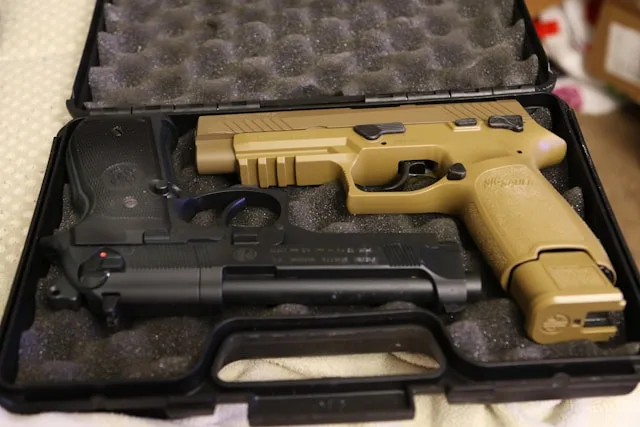
Brescia's firearms and defence cluster exported €1.4 billion worth of goods in 2024. That figure represented a 12% year-on-year increase. It also obscured a widening fracture inside the workforce that produces those goods.
The fracture runs between two versions of the same industry. One version is artisanal, family-owned, and rooted in five centuries of Brescian gunmaking tradition. The other is digital, export-driven, and increasingly governed by NATO specifications, EU dual-use regulations, and Industry 4.0 production standards. Both need talent. They need fundamentally different talent. And the pipeline feeding this market is training young workers for the first version while the commercial imperative accelerates toward the second.
What follows is a detailed analysis of the forces reshaping Brescia's precision manufacturing and defence sector, the specific roles where scarcity is most acute, the compensation dynamics that are failing to correct the imbalance, and what hiring leaders in this market need to understand before their next critical search.
The Bifurcation Driving Brescia's Arms District in 2026
The Distretto Tecnologico della Meccanica Armi e Sport, the legally recognised firearms and sporting goods cluster encompassing more than 180 enterprises across the Province of Brescia, entered 2026 facing two sharply divergent demand signals.
The sporting and hunting arms segment, which still accounts for roughly 70% of district revenue, faces demand compression across European markets. Inflationary pressure on consumer spending and ongoing regulatory uncertainty around EU Firearms Directive revisions have suppressed order volumes. Manufacturers whose product lines are concentrated in semi-automatic sporting rifles face the additional risk that 30 to 40% of their civilian portfolio may be restricted by reclassification under the directive's implementation framework.
The defence and security segment tells an entirely different story. Now approaching 25% of total output, this segment is expanding rapidly. NATO's 2% GDP defence spending targets and the replenishment of European military stocks have created sustained procurement demand. The result is a single industrial district where one segment is contracting and the other is growing, and both are competing for the same narrow pool of specialist workers.
This bifurcation is not a temporary market fluctuation. It is restructuring which roles matter most and which skills command premiums. The firms navigating it successfully are not the largest. They are the ones that understood earliest that the talent required for defence contracts and the talent required for bespoke sporting arms overlap far less than the district's shared geography suggests.
Where the Talent Gaps Are Deepest
CNC Machinists with Firearms-Grade Metallurgy Expertise
The most acute shortage in the district is not at the executive level. It is on the factory floor. According to the DTCMAS's own occupational survey, 35% of member companies identify CNC machining as their primary recruitment constraint. Data from the Unioncamere Lombardia Excelsior system shows that CNC operator vacancies in the Brescia precision mechanics sector remain open for an average of 90 to 120 days. Comparable general mechanical engineering roles fill in 45 days.
The gap is not simply about CNC programming skills. Those are available, if scarce, across northern Italy's manufacturing belt. The compounding problem is the metallurgy overlay. Firearms manufacturing requires machinists who understand ordnance-grade steels, who can programme five-axis operations for complex receiver geometries, and who are fluent in CIP and SAAMI pressure specifications. A CNC programmer from the automotive sector cannot step into a firearms production line without months of retraining.
These candidates are 85 to 90% passively employed. Low turnover, sector-specific skill premiums, and a small total population mean that conventional job advertising reaches almost none of them. A firm waiting for inbound applications for this role is not searching. It is hoping.
Firearms Design Engineers
The shortage at the design engineering level is more severe and more systemic. Firearms design requires a combination of mechanical engineering, interior ballistics knowledge, and deep familiarity with international regulatory frameworks. NATO STANAG compliance, CIP proofing standards, ATF specifications for US-market variants: each of these represents a specialised knowledge domain. The intersection of all three defines a candidate pool so small that it is effectively a 100% passive market. Senior firearms designers with a decade of experience and international patent portfolios do not respond to posted vacancies. They are recruited through direct search or personal networks, or they are not recruited at all.
The consequences of this shortage are already visible. Beretta Holding has partially centralised advanced R&D for its Stoeger and Uberti brands at its Maryland and Accokeek facilities in the United States. According to the company's 2023 strategic review and industry reporting, the move was driven in part by difficulty securing sufficient senior firearms designers in the Brescia area. When a market's anchor employer relocates a core function to another continent because it cannot fill the roles locally, the shortage has moved beyond a hiring challenge. It has become a structural risk to the district's long-term competitiveness.
Export Compliance Managers
The third critical gap sits in Brescia city itself, where the district's administrative and legal functions are concentrated. EU Regulation 2021/821 governing dual-use goods, combined with intensified US ITAR scrutiny on re-exports, has elevated the compliance function from a back-office necessity to a strategic bottleneck.
The specific skills required are narrow: firearms technical knowledge combined with EU dual-use regulatory expertise. According to industry surveys, SMEs in the cluster are increasingly outsourcing compliance to specialised legal firms in Brescia because in-house candidates with this combination simply cannot be found. The outsourcing solves the immediate regulatory obligation. It does not solve the strategic problem. An SME that depends on external counsel for every export licence application operates at the speed of its lawyer's calendar, not at the speed of its order book.
Record Exports, Stagnant Wages: The Compensation Paradox
Here is the analytical claim that sits at the centre of this market and that the data does not state outright but strongly implies: Brescia's firearms cluster is generating record revenues that are not translating into the wage pressure that would normally correct a talent shortage of this severity. The market mechanism is broken.
The numbers tell the story plainly. Export revenues hit €1.4 billion in 2024. Talent shortages are documented and acute. Yet aggregate wage data for precision mechanics in the province shows only 2.8% annual growth, which lagged even the modest national inflation rate. When an industry simultaneously reports record revenues, severe shortages, and below-inflation wage growth, one of three things is happening. Revenue is accruing to holding companies and foreign distribution networks rather than flowing through to local payroll. SMEs lack the pricing power to absorb higher wage costs against international competitors. Or both.
The effect on executive search and talent acquisition in this sector is direct. A CNC machinist earning €55,000 to €72,000 in Brescia province can move to Ticino Canton in Switzerland and earn 50 to 80% more with superior research funding. A senior firearms designer can relocate to Germany's Sauerland region for the same premium. The district's compensation structure is not merely uncompetitive at the margins. It is uncompetitive at precisely the seniority levels where scarcity is most damaging.
The SME Compensation Ceiling
At the anchor employer level, compensation is credible if not market-leading. An R&D Director or Chief Product Officer at a company of Beretta's scale can expect base compensation of €120,000 to €165,000, with total packages reaching €180,000 to €220,000 including bonuses and equity participation. At the SME level, where firms like Tanfoglio or Chiappa operate, the same role compresses to €95,000 to €130,000.
The gap matters because the SMEs are where most of the district's innovation occurs. They are also where digital transformation needs are most acute and where the resistance to change is highest. A Head of Digital Transformation at a family-owned SME faces not only the technical complexity of Industry 4.0 integration but the cultural complexity of persuading a business that has made world-class firearms for three generations that its methods need to change. That role requires a rare combination of technical authority and change management sensitivity. Paying €95,000 for it in a market where Milan offers 25 to 35% more for a comparable leadership role in aerospace or automotive is a competitive disadvantage that no employer brand can fully overcome.
The Geography of Competition
The talent market around Brescia's arms cluster does not operate in isolation. It sits within a competitive geography that pulls candidates in three directions, each with distinct mechanisms.
Milan, 90 kilometres to the west, is the most persistent competitor. The Lombardy capital draws senior supply chain and executive talent with compensation premiums of 25 to 35% and substantially greater career mobility into adjacent sectors. A VP Supply Chain who leaves Brescia for Milan gains access to aerospace, automotive, luxury goods, and general industrial supply chain roles. A VP Supply Chain who stays in Brescia's firearms cluster has deep expertise in a narrow sector with limited lateral movement. The calculus favours Milan for any candidate thinking beyond their current role.
Vicenza, in the Veneto region, competes more directly for firearms-specific talent. The HIT Show exhibition cluster and manufacturers including Benelli attract designers and ballistic technicians with housing costs 15 to 20% lower than Brescia province and comparable mid-level salaries. For a candidate whose primary consideration is quality of life rather than maximum compensation, Vicenza is a credible alternative that does not require leaving the industry.
The third competitor is international. Switzerland's Ticino Canton and Germany's Sauerland region target the highest-value artisan and engineering talent. Master engravers trained in the bulino technique and senior ballistic engineers can earn 50 to 80% more by crossing a border. According to DTCMAS sector analysis, this drain affects the upper echelon of Brescia's artisan talent pool most acutely. These are candidates whose skills were developed over decades. They cannot be replaced by training a new cohort. They can only be retained by meeting the market, and the Brescia district is not meeting it.
For organisations assessing how to position against these competitors, detailed market benchmarking of the specific role, seniority, and geography is no longer optional. It is the baseline for any credible offer.
The Succession Crisis Behind the Skills Mismatch
The average age of master gunsmiths in Val Trompia is 58. Apprenticeship uptake among younger workers is insufficient to replace the generation that will retire within the next decade. This fact alone would constitute a serious workforce risk. But the risk is compounded by a paradox in the training pipeline that makes the long-term outlook considerably worse than the headline figure suggests.
Regional education data from Lombardia shows that enrolment in traditional gunsmithing apprenticeships is stable or increasing. Enrolment in CNC machining courses at local Istituti Tecnici Superiori is declining. The market is training more artisans and fewer programmers, at the exact moment when the sector's stated strategic direction demands the opposite.
This is not a failure of planning at the institutional level. The DTCMAS's own strategic plan for 2024 to 2026 emphasises digitisation of supply chains and Industry 4.0 integration. The University of Brescia's Department of Mechanical and Industrial Engineering provides applied research in metallurgy and precision manufacturing. The infrastructure for a digital transition exists.
The failure is in the signal the market sends to young workers. A 20-year-old considering a career in the Brescia arms district sees a sector that celebrates its artisanal heritage, whose premium brands are defined by hand engraving and walnut stock work, and whose most famous names evoke craft rather than code. The prestige signal points toward the apprenticeship bench, not the CNC terminal. Until the sector changes the signal, the pipeline will continue producing the wrong skills mix. Capital will continue moving faster than human capital can follow.
This dynamic has a direct implication for executive hiring in defence and industrial manufacturing. The Director of Artisanal Manufacturing role, responsible for preserving traditional techniques while integrating lean manufacturing, is a position unique to high-end Brescian manufacturers. It requires someone who can hold both worlds simultaneously. Finding that person when the two worlds are pulling apart, and when the training system favours one over the other, is not a recruitment exercise. It is a talent mapping challenge that requires identifying candidates who may not yet exist in the role you need to fill.
Regulatory Friction as a Talent Multiplier
The regulatory environment surrounding Brescia's arms cluster does not merely constrain commercial operations. It multiplies every talent shortage in the system.
Export licensing through Italy's Unità per le Licenze all'Esportazione now takes 45 to 60 days for standard authorisations, up from 30 days in 2022. Enhanced scrutiny of end-user certificates for Saudi Arabian, Turkish, and certain South American buyers has increased documentation requests and licence denials. According to parliamentary reports and SIPRI arms transfer data, 15% of licence applications from Brescia-based exporters now face denial or additional documentation requirements, up from 8% in 2021.
Each of these regulatory events requires human intervention from a specialist who understands both the technical nature of the goods and the legal framework governing their movement. The EU's new End-User Certificate digital tracking system, projected to add 15 to 20 days to export lead times upon implementation, will demand yet another layer of compliance capacity.
For a large holding company with an in-house legal team, these requirements are manageable. For an SME with 80 employees and no dedicated compliance officer, each regulatory cycle is a bottleneck that delays revenue, ties up working capital, and diverts management attention from production. The inability to hire in-house compliance talent does not simply slow these firms down. It makes them structurally less competitive than their larger neighbours, who can absorb the regulatory overhead without proportional impact on output.
The firms that will thrive in this environment are those that treat compliance capacity as a strategic investment, not an overhead cost. Hiring a senior export compliance professional with firearms-specific ITAR and EAR expertise at the €68,000 to €85,000 range is not cheap for a Brescia SME. Failing to hire one, and absorbing the cumulative cost of delayed shipments, missed contract windows, and outsourced legal fees, is more expensive.
What This Market Requires from Hiring Leaders
The conventional search playbook fails in Brescia's firearms and defence cluster for reasons that are specific to this market and that will not resolve through patience or better job advertising.
The candidate pool for the three most critical role categories is almost entirely passive. CNC machinists with firearms-grade metallurgy skills turn over slowly and do not monitor job boards. Firearms design engineers exist in a market so small that 100% of viable candidates must be identified and approached directly. Export compliance managers with the dual expertise this sector demands are either already embedded at a competitor or working in advisory practices where they are not visible to a standard search.
A search that begins with a job posting and waits for applications will reach, at best, the 10 to 15% of this market that is actively looking. That slice contains candidates who are available for a reason. The strongest professionals in this cluster are solving complex problems, earning sector-specific premiums, and operating in roles where their departure would create an immediate capability gap at their current employer. Moving them requires a proposition that addresses compensation, career trajectory, and the specific nature of the work itself. It requires reaching them in the first place, which means identifying passive candidates through structured intelligence rather than broadcasting a vacancy into a market that is not listening.
KiTalent works with organisations across European defence and precision manufacturing markets to deliver interview-ready candidates within 7 to 10 days. Our approach uses AI-powered talent mapping to identify the professionals who are not on any job board and structured direct engagement to present them with propositions calibrated to what actually moves them. With a 96% one-year retention rate across 1,450 executive placements, the method is built for markets exactly like this one: small, specialist, and dominated by passive talent.
For organisations hiring senior technical, compliance, or leadership talent in Brescia's firearms and defence cluster, where the candidates you need are invisible to conventional methods and every month of vacancy compounds your regulatory and competitive exposure, start a conversation with our industrial sector search team about how we approach this market.
Frequently Asked Questions
What is the Brescia-Val Trompia firearms cluster?
The Brescia-Val Trompia cluster, formally known as the Distretto Tecnologico della Meccanica Armi e Sport (DTCMAS), is Italy's legally recognised industrial district for firearms, sporting goods, and precision mechanics. It encompasses more than 180 enterprises across the Province of Brescia, including anchor manufacturers such as Beretta Holding, Tanfoglio, and Perazzi. The cluster exported €1.4 billion in arms and related products in 2024. Brescia city serves as the administrative and logistics hub, while core manufacturing operations remain concentrated in Gardone Val Trompia and surrounding valley municipalities.
Why is it so difficult to hire CNC machinists in Brescia's firearms sector?
CNC machinists with firearms-specific expertise represent a uniquely narrow talent pool. The role requires not only five-axis programming capability but deep knowledge of ordnance-grade steels and CIP or SAAMI pressure specifications. Vacancies remain open for 90 to 120 days on average, more than double the duration for general mechanical engineering roles. Approximately 85 to 90% of qualified candidates are passively employed and do not respond to job advertisements. Effective recruitment in this market requires direct identification of passive specialists rather than reliance on inbound applications.
What do senior executives earn in Brescia's firearms manufacturing sector?
At the largest employers such as Beretta Holding, an R&D Director or Chief Product Officer can expect base compensation of €120,000 to €165,000, with total packages reaching €180,000 to €220,000. VP Supply Chain and Operations roles command €110,000 to €150,000 base with 20 to 30% bonus potential. At SME level, these ranges compress by 20 to 30%. Export compliance managers with ITAR and EAR specialisation earn €68,000 to €85,000, carrying a 15 to 20% premium over general industrial export roles.
How does Brescia compete with Milan and Switzerland for manufacturing talent?
Brescia faces a three-directional competitive pull. Milan offers 25 to 35% salary premiums and broader career mobility across aerospace, automotive, and luxury goods. Vicenza competes for mid-level firearms talent with 15 to 20% lower housing costs. Switzerland and Germany target Brescia's highest-value artisan and engineering talent with 50 to 80% pay increases and superior research funding. The cumulative effect drains senior specialists from the district at every level.
What regulatory changes are affecting Brescia firearms manufacturers in 2026?
Three regulatory pressures are converging. The EU Firearms Directive revisions may restrict 30 to 40% of the civilian product portfolio for Brescian manufacturers. Italy's export licensing process has lengthened from 30 days to 45 to 60 days. The EU's new End-User Certificate digital tracking system is expected to add a further 15 to 20 days to export lead times. Each of these increases the demand for compliance specialists who combine firearms technical knowledge with dual-use regulatory expertise.
How can KiTalent help with executive hiring in Italy's defence manufacturing sector?
KiTalent delivers interview-ready leadership candidates within 7 to 10 days using AI-enhanced talent mapping and direct engagement. In markets like Brescia's firearms cluster, where critical roles attract almost no active applicants and 85 to 100% of qualified candidates are passive, our methodology identifies and approaches professionals who are not visible through conventional channels. Our pay-per-interview model means clients invest only when they meet qualified candidates, and our 96% one-year retention rate reflects the precision of matching in specialist industrial markets.