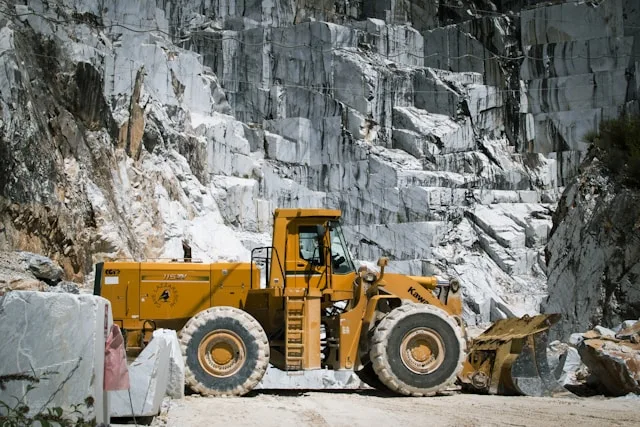
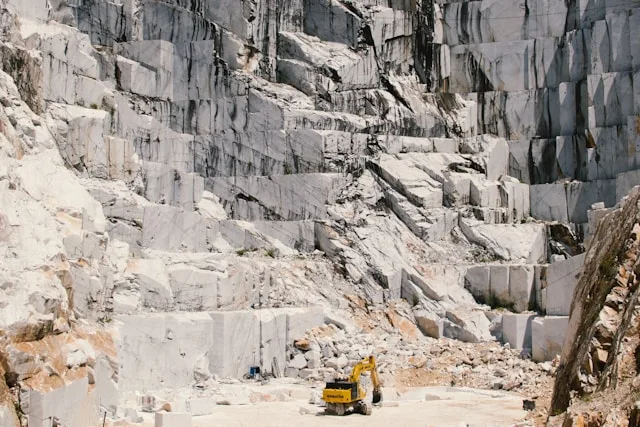
Carrara's Marble Sector Invested €45M in Robotics Last Year. It Still Cannot Find the Hands to Finish What the Machines Produce
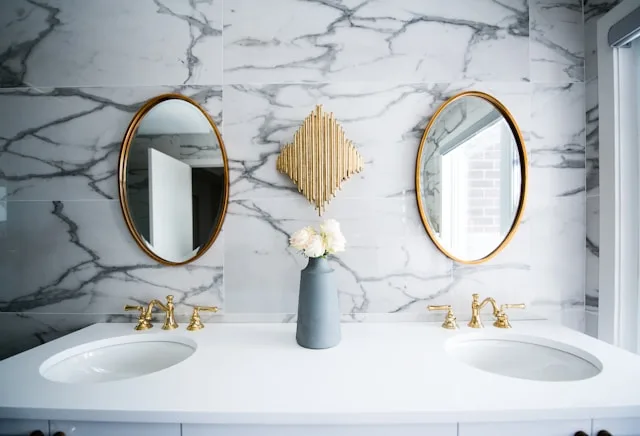
Carrara's marble district deployed €45 million in 5-axis robotic milling equipment across Massa Carrara province in 2024. That figure represents the highest single-year capital expenditure the district has recorded in automation technology. Yet the district's most persistent hiring problem is not for engineers who programme those machines. It is for the artisans who finish what the machines produce.
This is the core tension defining Carrara's talent market as of 2026. The sector has industrialised its roughing and shaping processes at speed. A robotic arm can now mill a marble bathroom vanity to sub-millimetre tolerance in hours. But luxury clients paying €500,000 or more per architectural commission do not accept machine-finished surfaces. They require hand-polishing, edge softening, and vein-matching that can only be performed by a scalpellino with thousands of hours of tactile experience. The average age of those artisans now exceeds 52. Thirty-eight per cent of the firms they work for have no succession plan. The machines are arriving faster than the people who complete their work can be trained, and the district is entering what may be a temporary but damaging quality degradation window.
What follows is a structured analysis of the forces reshaping Carrara's stone processing and luxury fabrication sector, the employers driving that change, the specific roles that are hardest to fill, and what senior leaders need to understand before making their next hiring or investment decision in this market.
A District in Transition: Volume Down, Value Up
Carrara's marble district is not shrinking. It is transforming. Sector turnover for Massa Carrara province reached approximately €1.4 billion in 2024, but the composition of that revenue has shifted decisively. Value-added processing, including bespoke architectural elements, 3D sculpted cladding, and luxury bathroom fabrication, grew 8.3% year-over-year. Raw block extraction declined 4.1% in the same period.
The driver of the extraction decline is not demand. It is regulation. The Apuan Alps Regional Park expansion, formalised across 2023 and 2024, placed 35% of historic quarry surfaces under enhanced environmental protection. New extraction permits have become materially harder to obtain. The Salviamo le Apuane movement has secured stricter particulate emission standards for dry-cutting operations, requiring €200,000 to €500,000 in water-recycling and filtration investment per facility.
The consequence is straightforward. Carrara's economic centre of gravity has moved from pulling stone out of the mountain to doing extraordinary things with it once it is out. This shift rewards firms with advanced fabrication capability and punishes those still dependent on raw block sales. It also rewrites the talent profile the district needs. Quarry labourers and extraction supervisors are giving way to CNC programmers, bilingual project managers in industrial and manufacturing settings, and artistic directors who can translate an architect's sketch into a finished marble installation.
The cluster geography reflects this shift. While the historic Bacino Marmifero around Carrara, Massa, and Colonnata remains the operational core, satellite facilities have emerged along the Versilia coast in Pietrasanta and Forte dei Marmi. These coastal locations offer superior logistics for super-yacht provisioning, a market segment where Carrara marble has become a prestige default.
The Dual-Speed Market: Who Thrives and Who Contracts
The Carrara marble district contains over 1,150 registered firms. That number obscures a deepening polarisation that determines everything about how this market hires.
Tier One: Integrated Luxury Fabricators
At the top sit approximately 50 to 60 mid-to-large industrial fabricators with 50 or more employees. These firms combine advanced CNC machining with hand-finishing ateliers. They dominate high-margin luxury interiors and export 85% of their finished production to international markets.
Henraux S.p.A., operating from Carrara and Serravezza with approximately 220 employees, supplies Louis Vuitton, Ferrari private residences, and Middle Eastern royal palaces. The firm operates the Cervaiole quarry alongside robotic milling facilities. Franchi Umberto Marmi (FUM), listed on AIM Italia with revenues exceeding €85 million, employs over 180 staff across Carrara and Pietrasanta. FUM specialises in ultra-thin marble composite panels for aviation and yacht interiors. The Cooperativa Cavatori Apuana, the largest quarry operator consortium with approximately 350 members and employees, has increasingly diversified into finished product export.
These firms are the ones investing in 5-axis robotics. They are also the ones most acutely affected by the artisan finishing shortage, because their clients are the least tolerant of surface imperfections.
Tier Three: The Artisan Micro-Enterprises Under Pressure
At the other end sit roughly 1,100 workshops with one to ten employees. These entities supply sculpture studios, cultural heritage restoration, and custom residential work. They are concentrated in Carrara's Via XXV Aprile industrial zone and Colonnata.
The economics pressing on this tier are severe. CNC equipment capable of competing with tier-one output starts at €300,000. Most micro-workshops cannot amortise that investment. Projections through 2026 indicate the total firm count may decline by 10 to 15% through acquisition or closure. The traditional funeral monument and mid-market tile fabrication segments these firms serve will contract by an estimated 3 to 5%, squeezed by Chinese import competition and synthetic stone substitution.
The generational arithmetic compounds the pressure. Thirty-eight per cent of firm owners are over 60. Twenty-two per cent are over 70. The 2025 to 2028 window anticipates 150 or more firm closures or distress sales where no succession plan exists. This consolidation will concentrate market share further toward the Henraux and FUM tier, but it will also erase artisan diversity that has defined the district for centuries.
The hiring implications of this bifurcation are direct. Tier-one firms are competing intensely for a small number of hybrid professionals. Tier-three firms are losing their most experienced people to retirement with no pipeline behind them.
Where Capital Has Outrun Human Capital
The analytical claim at the centre of this market is not simply that demand exceeds supply. It is more specific and more consequential than that.
Carrara's investment in robotic automation has not reduced its dependence on artisan labour. It has deepened it. Every 5-axis milling machine installed creates downstream demand for hand-finishers who must complete what the machine cannot. The machines are being deployed at industrial speed. The hand-finishers are being produced, if at all, at artisan speed, through apprenticeships that require 12 to 18 months to reach basic productivity and years to reach mastery.
The result is a bottleneck that sits not at the front of the production process but at the end of it. A Henraux or FUM facility can now rough-cut and shape marble components faster than ever before. But the final 15% of the work, the polishing, softening, and vein-matching that luxury clients pay a premium for, depends on human hands that are retiring faster than they can be replaced. This suggests a temporary but real quality degradation window in 2026 and 2027, as automated output exceeds available finishing capacity. Firms that assumed automation would solve their labour problem have discovered it has created a different one.
This dynamic should concern any hiring leader assessing senior appointments in this sector. The Operations Director who can integrate artisan teams with automated production lines is not a nice-to-have. That person is the bridge across a gap that technology alone cannot close.
The Roles That Cannot Be Filled: A Sector Running at 73% Vacancy
Three role categories define Carrara's most acute hiring failures, each driven by a different structural mechanism.
Master Sculptors and Artistic Directors
The shortage of master sculptors capable of executing large-scale contemporary art commissions represents an existential constraint for high-value studios. Across the district through 2024 and 2025, specialised ateliers serving the art market maintained search mandates for lead sculptors for eight to twelve month durations, often failing to secure candidates with both traditional scalpellino skills and contemporary conceptual art literacy.
Aggregate data indicates a 73% vacancy rate for senior artistic positions in firms with over €5 million in turnover. Positions are typically filled only through international recruitment, drawing Portuguese, British, or American sculptors, or through poaching from competitor studios at 20 to 30% salary premiums. Eighty-five to ninety per cent of qualified candidates in this category are passively employed in permanent studio positions or self-employed with two- to three-year project backlogs. Active job seekers in this segment often signal declining reputation or skill obsolescence.
This is not a market where job advertising produces results. The 80% of senior talent that never appears on a job board is closer to 90% in this category.
CNC Technicians with Marble-Specific Competencies
Standard CNC machinists are available from Emilia-Romagna's automation sector. But operators who understand marble's anisotropic properties, including vein direction, brittleness under tension, and resin-filling protocols, are critically scarce.
According to sector reporting in Marmo Macchine, Henraux S.p.A. sustained an open search for a Senior CNC Programmer/Operator for its Serravezza facility from Q3 2024, extending beyond six months. The role required proficiency in CAD/CAM for stone alongside supervision of artisan finishers. The firm reportedly relaxed its requirements to accept mechanical engineers from other sectors, investing in four-month internal marble-physics training to bridge the gap.
Junior CNC operators with fewer than three years of experience are actively job-seeking through standard channels. But senior programmers with marble-specific CAM libraries are approximately 70% passive, requiring direct headhunting approaches or competitive offers from tier-one rivals.
Export Sales Directors for the Luxury Architecture Channel
The third acute shortage sits at the commercial end. Firms report an inability to find senior sales executives who possess both technical stone engineering knowledge and established relationships with top-tier architectural practices.
According to Il Sole 24 Ore, FUM restructured its commercial organisation in early 2024, relocating its Middle East sales director from Carrara to Dubai after an unsuccessful five-month search for a Carrara-based executive with existing relationships at firms such as Foster + Partners or Yabu Pushelberg. The relocation package included a 40% cost-of-living adjustment and equity participation.
This role profile, someone who can walk into a starchitect's office and discuss both the aesthetic properties of Statuario marble and the engineering tolerances for a 30-storey facade, barely exists as a defined career path. Carrara needs to recruit it or create it. Currently, it is doing neither at the required pace.
Compensation: The 15% Discount That Costs More Than It Saves
Carrara's marble sector pays at a 15 to 25% discount to equivalent roles in Milan's luxury design sector. This is widely understood. What is less understood is how that discount interacts with the district's geographic isolation and housing inflation to create a recruitment tax that exceeds the apparent savings.
At the senior specialist and manager level, a Production Manager overseeing both CNC and artisan operations commands €55,000 to €75,000 base salary plus production bonuses of €5,000 to €12,000. The range peaks at €85,000 for candidates with a decade or more of experience in diamond-wire or 5-axis stone programming. Technical Sales Managers working export markets earn €65,000 to €90,000 base plus commission, with total compensation frequently exceeding €110,000 for high-performing directors covering Middle Eastern or North American markets.
At executive level, Operations Directors managing integrated quarry and fabrication operations command €95,000 to €140,000 plus bonus, with premiums of 20% or more for multilingual candidates with Arabic or Mandarin capability and LEED sustainability credentials. General Managers and CEOs at mid-market fabricators with €20 to €50 million in revenue earn €120,000 to €180,000 plus profit participation. Family-owned firms increasingly compensate through equity succession rather than cash salary.
The equity dimension is notable. In the 60 or more family-run firms currently undergoing generational transition, executive compensation packages increasingly include minority equity stakes of 10 to 25% for non-family professional managers. According to KPMG's analysis of family business succession in Italian manufacturing, these arrangements serve as retention mechanisms in the absence of liquid equity markets. For an executive evaluating a move to this market, the equity component can materially alter the real value of a compensation package that appears modest on its base salary alone.
But the housing market is eroding whatever advantage Carrara's cost of living once offered. Airbnb conversion and coastal second-home demand have inflated property prices to the point where a senior sculptor's salary that provided comfortable home ownership in 2010 now struggles to secure rental housing in Carrara centro. This housing inflation is pushing artistic talent toward Verona or Portugal and making relocation packages more expensive for firms trying to recruit from outside the district.
Geographic Competition: Three Markets Pulling Talent Away
Carrara does not compete for talent in isolation. Three distinct geographies exert pull on different segments of its workforce, and each requires a different retention response.
Verona's Stone District: Better Infrastructure, Better Dual-Career Options
Verona's Distretto della Pietra offers superior automation infrastructure and proximity to the Marmomac trade fair, the sector's global commercial event. Verona firms pay 8 to 12% salary premia for CNC technicians and project managers. Critically, Verona offers better dual-career opportunities for partners and spouses through its broader manufacturing base. For a CNC programmer with a spouse working in a different sector, Verona is simply a more practical place to live. Talent flow is bidirectional for technical roles but unidirectional toward Verona for commercial talent seeking larger platform firms.
Dubai and Miami: Tax-Free Packages for Commercial Talent
For executive sales and project management roles, Carrara competes against Dubai and Miami as proximity-to-market hubs. Dubai offers tax-free compensation and 30 to 50% higher cash packages for Italian-speaking stone technical sales executives. Carrara's response has been the "commuter executive" model: retaining technical fabrication in Italy while allowing senior commercial staff to operate from Dubai or London showrooms for 60% or more of the year, supported by digital twinning of stone slabs for remote selection.
Portugal: The Quiet Brain Drain of Artistic Talent
Portugal's marble sector, centred on Estremoz and Vila Viçosa, competes aggressively for master sculptors and heritage restoration specialists. Portuguese workshops offer lower cost of living and growing public investment in marble tourism. This is attracting younger Italian artisans priced out of Carrara's housing market. The loss is artistic rather than technical-commercial, but it further thins the already depleted pipeline of hand-finishing expertise the district depends on.
For organisations assessing international executive search strategies in this sector, understanding which competitor geography is pulling on which talent segment is the difference between a targeted retention strategy and a generic one that addresses nothing.
The Education Pipeline: 62 Graduates Against 340 Vacancies
The assumption that Carrara's educational institutions automatically supply the local labour market is contradicted by the data. In 2024, the Accademia di Belle Arti di Carrara and the ITS Toscana marble technology programme combined graduated only 62 students with marble-relevant certifications. The sector posted more than 340 job openings in the same period.
The ITS Toscana programme, the district's primary source of stone technicians with CAD/CAM certification, graduates 35 to 40 students annually against sector demand for 120 or more technical roles. The Accademia's Scuola di Scultura, with over 800 students, serves as the primary pipeline for artistic talent, but its curriculum has gaps in digital fabrication and stone engineering. It produces artists. The market needs artist-technicians.
The leakage rate compounds the shortfall. Sixty-two per cent of recent Accademia graduates relocate to Milan, London, or Berlin for design careers within 24 months of graduation. They view Carrara as a training ground, not a career destination. The irony is precise. The district that taught them their craft cannot retain them because the career infrastructure, the housing, the dual-career options, the cultural amenities that young professionals expect, is not competitive with the cities those graduates move to.
This is a problem that no amount of talent pipeline development can solve on its own. The pipeline produces graduates. The district fails to retain them. Fixing one without fixing the other changes nothing.
What This Means for Hiring Leaders in 2026
The Carrara marble sector entering 2026 presents a market where three forces converge to make senior hiring exceptionally difficult.
First, the candidate pool for the roles that matter most is almost entirely passive. Master sculptors are booked two to three years ahead. Senior CNC programmers with marble-specific libraries are embedded in tier-one competitors. Export sales directors with architect relationships are either running their own consultancies or locked into equity arrangements. Traditional search methods, job advertising and inbound applications, reach perhaps 10 to 15% of viable candidates for these roles. The rest must be identified, approached, and persuaded through direct search.
Second, the compensation architecture is more complex than a salary comparison suggests. Base pay runs 15 to 25% below Milan, but equity participation in family succession, territory autonomy for sales directors, and the intrinsic draw of working with one of the world's great materials create a value proposition that must be constructed and communicated with precision. A candidate who sees only the base salary will decline. A candidate who understands the full package may accept.
Third, the window for action is narrowing. The generational succession cliff, 150 or more firm closures or distress sales anticipated through 2028, will consolidate the market around firms that have secured their leadership teams. Firms that delay executive appointments while waiting for the ideal candidate to appear on the open market will find that the market has moved past them.
For organisations competing for senior talent across luxury manufacturing and fabrication markets, this is a search environment where speed, method, and market intelligence determine outcomes. KiTalent delivers interview-ready executive candidates within 7 to 10 days through AI-powered talent mapping that identifies the passive professionals no job board reaches. With a 96% one-year retention rate across 1,450 completed executive placements, the approach is built for markets where the candidates you need are employed, satisfied, and invisible to conventional search.
For hiring leaders working in Carrara's marble sector, or in any market where artisan heritage and industrial technology collide, speak with our executive search team about how we identify and engage the leadership talent this market demands.
Frequently Asked Questions
What are the hardest executive roles to fill in Carrara's marble sector?
The three most difficult categories are master sculptors and artistic directors capable of large-scale contemporary commissions, senior CNC programmers with marble-specific material science knowledge, and export sales directors with established relationships at top-tier architectural practices. The senior artistic positions carry a 73% vacancy rate in firms above €5 million turnover, with searches routinely lasting eight to twelve months. These roles require specialised direct search methods because 85 to 90% of qualified candidates are passively employed and will not respond to advertised vacancies.
What do senior executives earn in Carrara's marble and stone fabrication industry?
Operations Directors overseeing integrated quarry and fabrication operations earn €95,000 to €140,000 plus bonus. General Managers and CEOs at mid-market fabricators command €120,000 to €180,000 plus profit participation. Technical Sales Managers working export markets earn €65,000 to €90,000 base plus commission, with total compensation exceeding €110,000 for top performers. Family firms increasingly offer 10 to 25% minority equity stakes to non-family executives as part of generational succession planning.
Why is the talent shortage in Carrara's marble sector getting worse despite automation investment?
Automation has not reduced artisan labour demand. It has reshaped it. Robotic 5-axis milling handles roughing and shaping, but luxury clients require hand-polished, softened, and vein-matched finishes that only experienced scalpellini can deliver. The district invested €45 million in robotics in 2024 while the average age of master hand-finishers exceeded 52. Machines produce work faster than artisans can complete it, creating a bottleneck at the finishing stage rather than the fabrication stage.
How does Carrara compete with Verona, Dubai, and Portugal for marble sector talent?
Verona attracts CNC technicians and commercial talent with 8 to 12% salary premia and better dual-career options. Dubai draws export sales executives with tax-free packages 30 to 50% above Carrara levels. Portugal's Estremoz district attracts younger sculptors with lower living costs and public marble tourism investment. Carrara's retention strategies include equity participation for executives, the "commuter executive" model allowing senior staff to operate from Dubai or London showrooms, and the intrinsic prestige of working with authentic Carrara marble.
What is the education pipeline for marble sector talent in Carrara?
The Accademia di Belle Arti and ITS Toscana programme combined graduated 62 students with marble-relevant certifications in 2024, against over 340 sector job postings. The ITS programme produces 35 to 40 stone technicians with CAD/CAM skills annually, meeting roughly one-third of technical demand. Critically, 62% of Accademia graduates leave for Milan, London, or Berlin within 24 months, viewing Carrara as training rather than career destination.
How can KiTalent help with executive hiring in Carrara's stone and luxury fabrication sector?
KiTalent uses AI-enhanced talent mapping and direct headhunting to identify passive senior candidates in specialist markets where conventional job advertising fails. In a market like Carrara's marble sector, where 85 to 90% of senior talent is not actively looking, this approach reaches the candidates that define search outcomes. KiTalent delivers interview-ready candidates within 7 to 10 days under a pay-per-interview model with no upfront retainer, supported by weekly reporting and full pipeline transparency.