Cologne's Logistics Boom Has Hit a Ceiling: It Is Made of People, Not Infrastructure
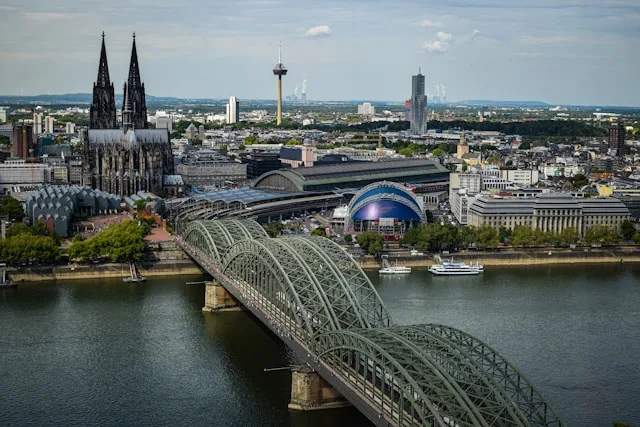
Cologne's trade fair, air cargo, and river logistics cluster generated €5.2 billion in regional GDP through 2025. Koelnmesse reported record booking levels. The Port of Cologne pushed through a €45 million electrification programme. UPS, FedEx, and DHL continued expanding operations at Cologne/Bonn Airport. By every capital investment measure, this is a cluster accelerating.
Yet nearly a quarter of Cologne's exhibition logistics firms turned down contracts in 2024 because they could not staff them. Air cargo operations manager roles sat vacant for 120 to 150 days. Multimodal supply chain architects capable of optimising Rhine-barge-to-rail transfers were, according to port operators, effectively unavailable on the active market. The growth ceiling for one of Europe's most important logistics nodes is no longer defined by runway capacity, warehouse space, or quay wall length. It is defined by the number of qualified people willing to work here.
What follows is a ground-level analysis of why Cologne's logistics cluster is stalling at the point of execution, which roles are hardest to fill, what is driving the gap between investment and staffing capacity, and what hiring leaders in this market need to understand before their next critical search.
A Cluster Running Three Systems, Not One
The standard description of Cologne's logistics strength treats Koelnmesse, Cologne/Bonn Airport, and the Port of Cologne as an integrated ecosystem. The reality is more fragmented. These three anchor institutions operate under separate regulatory jurisdictions: aviation law governs the airport, inland waterway and maritime regulations govern the port, and municipal and trade fair law governs Koelnmesse. The freight forwarders and exhibition logistics providers who connect these systems do so through commercial relationships, not institutional coordination.
This fragmentation matters for talent. A supply chain director who understands air cargo customs procedures may have no experience with Rhine navigation scheduling or ATA Carnet processes for temporary exhibition imports. The cluster demands specialists who can work across all three modes, but each mode trains and certifies its own workforce independently. The University of Cologne's logistics programme produces only 80 to 90 graduates annually with relevant Rhine-navigation and intermodal qualifications. That pipeline feeds a market posting 8,400 vacancies per quarter.
The Cologne logistics and industrial employment market is therefore not one talent pool. It is three overlapping pools with a thin layer of cross-modal expertise at the top. The executives who can integrate all three are the scarcest and most valuable profiles in the region.
Koelnmesse: Record Bookings, Declining Acceptance
Koelnmesse operates 284,000 square metres of exhibition space across 20 halls, hosting roughly 80 trade fairs and more than 2,000 congresses per year. The economic impact for the Cologne region reaches €3.8 billion annually, supporting approximately 23,000 direct and indirect jobs. The 2025 completion of the Confex Conference Center extension has driven the congress segment to project 12% growth into 2026. Anchor events including Anuga, Gamescom, and IDS continue to expand.
The problem is not demand. It is fulfilment. According to FAMAB's 2024 market report, 23% of Cologne-based exhibition logistics firms turned down contracts due to personnel shortages. This is a market where the customer is ready, the venue is booked, and the service provider says no because they cannot field a team.
CGN: Capacity at 89%, Growth Capped by Litigation
Cologne/Bonn Airport handled approximately 971,000 tonnes of air freight in 2024, making it Germany's fourth-largest cargo airport. UPS operates 22 weekly intercontinental departures from its European hub here. FedEx and DHL maintain substantial bases. But capacity utilisation has reached 89% of theoretical maximum under current noise regulation frameworks.
The airport's Masterplan 2030 cargo expansion faces delays due to pending litigation over night-flight permissions. Night operations between 22:00 and 06:00 currently handle 40% of cargo volume. Without regulatory relief, cargo growth is capped at 2 to 3% annually through 2026, well below the 5.7% German industry average projected by BDL. That constraint does not just limit freight volumes. It limits career trajectories. Frankfurt Airport, handling 2.1 million tonnes, offers a steeper advancement path. Mid-career talent notices.
Where the Searches Fail: Three Roles That Define the Crisis
The Cologne logistics sector posted 8,400 vacancies in Q3 2024, a 23% year-over-year increase. Average time-to-fill for specialist roles reached 94 days, compared to 68 days nationally. The unemployment rate for logistics managers in the region stands at 1.2%, indicating full employment conditions. But aggregate numbers obscure where the pain concentrates.
Air Cargo Operations Managers with Dangerous Goods Certification
Freight-forwarding firms in the Cologne-Bonn corridor consistently report that Operations Manager roles requiring IATA Dangerous Goods certification and live animal handling credentials remain vacant for 120 to 150 days. The typical cycle involves an initial search failing within the first 90 days. Firms then turn to interim contractors at €800 to €1,200 per day. That is not a hiring solution. That is a cash burn rate that compounds until someone permanent is found.
The passive candidate ratio here is stark. Unemployment in air cargo operations sits at 0.8%. Average tenure is 7.2 years. An estimated 85 to 90% of qualified candidates are currently employed and not looking. Reaching them through job postings is structurally ineffective. This is exactly the kind of market where the hidden 80% of passive talent determines whether a search succeeds or fails.
Trade Fair Logistics Project Managers
Exhibition service providers near Koelnmesse routinely poach project managers from competitors at premiums of 20 to 25% above standard market rates. According to FAMAB, mid-tier exhibition freight companies lose senior project managers to larger integrated providers such as Kuehne+Nagel, DB Schenker, or Koelnmesse's in-house logistics teams. This triggers contract penalties when event setups are delayed.
Approximately 80% of moves in this specialisation occur through headhunting or network referral rather than open application. The expertise required is venue-specific. Understanding Koelnmesse's hall configurations, customs procedures for temporary imports under ATA Carnet and T5/T1 transit rules, and the peak-season staffing surge from 600 permanent employees to 4,000 is not transferable from general logistics experience. It must be learned on the ground, and the people who have learned it are in no hurry to move.
Multimodal Supply Chain Architects
Candidates capable of optimising Rhine-container-barge-to-rail transfers are effectively unavailable on the active market. HGK and competing port operators typically recruit these profiles from Rotterdam or Antwerp, offering relocation packages. The 80 to 90 annual graduates from Cologne's logistics programme with relevant qualifications cannot fill a fraction of the demand across the corridor.
This role category illustrates the deepest dysfunction. The market needs professionals who sit at the intersection of inland waterway navigation, rail intermodal planning, and road freight optimisation. Each of those disciplines has its own training pathway, its own certification body, and its own career ladder. The person who spans all three is an accident of career history, not the product of a deliberate development pipeline.
The Original Synthesis: Cologne's Growth Ceiling Is a Training Problem Masquerading as a Hiring Problem
Here is the claim this data supports but does not state outright: Cologne's logistics cluster has invested heavily in physical infrastructure while allowing its human capital pipeline to atrophy. The €45 million port electrification, the Confex Center extension, the Masterplan 2030 cargo expansion are all capital commitments that assume a workforce exists to operate them. It does not, in sufficient numbers, and the training pathways to create it run 18 to 24 months at minimum.
This is not a cyclical hiring shortage that will resolve when compensation rises high enough. It is a systemic mismatch between the speed of capital deployment and the speed of human capital formation. The University of Cologne produces 80 to 90 relevant graduates per year. The customs certification pathway for Authorized Economic Operator expertise takes 18 months. Rhine navigation qualifications require hands-on apprenticeship that cannot be compressed. Capital moved faster than human capital could follow, and the gap is widening.
The organisations that understand this are not just searching harder. They are searching differently, building proactive talent pipelines that map the small pool of cross-modal specialists and engage them before a vacancy forces a reactive search. The organisations that do not understand it are losing contracts.
Compensation: What the Market Actually Pays and Why It Is Not Enough
Understanding compensation in Cologne's logistics cluster requires separating three distinct tiers and then comparing them to the markets that actively compete for the same talent.
At the senior specialist and manager level, Supply Chain Directors command €85,000 to €110,000 base salary with 10 to 15% bonus. Air Cargo Operations Directors at the senior manager level earn €75,000 to €95,000. Trade Fair Logistics Directors at the senior manager level sit between €70,000 and €90,000.
At the executive and VP level, the numbers shift materially. A multimodal Supply Chain Director at regional or functional leadership level earns €160,000 to €210,000 base plus 20 to 30% bonus and car allowance. That represents a 12 to 18% premium above the national German median, reflecting Cologne's cost of living and the scarcity of multimodal expertise. Air Cargo VP and Director roles command €145,000 to €185,000. Trade Fair Logistics Directors reach €130,000 to €165,000, with meaningful variability based on event portfolio scale. Directors managing Gamescom and Anuga-level events receive performance bonuses tied to exhibitor satisfaction metrics.
These are competitive numbers within Germany. They are not competitive against the two markets pulling the same candidates away.
The Frankfurt Premium
Frankfurt Airport's air cargo volume is more than double Cologne's. According to Hays' 2024 Aviation Salary Comparison, Frankfurt offers 15 to 20% compensation premiums for Operations Managers and Cargo Terminal Directors. The premium is not only financial. Frankfurt's larger operation provides stronger career trajectory visibility. A mid-career air cargo specialist in Cologne can see a ceiling. In Frankfurt, the ceiling is higher and the organisation is bigger. That combination draws talent east, and the cost of losing a senior hire mid-search compounds when the replacement pool has already migrated.
The Rotterdam Advantage
Rotterdam competes aggressively for inland waterway and port logistics executives. The Dutch 30% ruling provides expatriates with a tax-advantaged arrangement creating a 25 to 30% net pay advantage over Cologne for equivalent Supply Chain Director roles. For a professional already working in Rhine navigation, the move from Cologne to Rotterdam is a lateral step in expertise and a substantial step up in take-home pay.
Cologne's compensation competitiveness is therefore squeezed from both directions. Frankfurt offers higher gross pay and larger organisations. Rotterdam offers dramatically higher net pay through tax structure. Cologne must compete on other dimensions: quality of life, event-driven variety in the work, and the specificity of the multimodal cluster itself. Those are real selling points. But they must be articulated precisely in the approach to a passive candidate, and that articulation requires a different kind of search methodology than posting a role and waiting.
The Demographic Cliff Behind the Current Shortage
The current talent gap is acute. What sits behind it is worse. The logistics sector across North Rhine-Westphalia faces 45,000 unfilled positions by 2030 due to demographic decline. At the Port of Cologne specifically, 38% of the current workforce is aged 50 or older.
That statistic deserves a moment. More than a third of the port's workforce will reach retirement eligibility within the next decade. The replacement pipeline, constrained by the training timelines outlined above, cannot scale fast enough. This is not a forecast based on pessimistic assumptions. It is arithmetic.
The challenge extends beyond volume. Retiring workers take tacit knowledge with them. A Rhine navigation specialist with 25 years of experience has absorbed low-water route optimisation, seasonal scheduling adjustments, and client relationship management that no certification course can transfer. Talent mapping exercises that identify where this expertise currently sits, who holds it, and who is closest to leaving become not merely useful but essential for any employer planning beyond the next quarter.
Port electrification under the Port of Cologne 4.0 programme adds a further layer. The €45 million investment in electric handling equipment and digital berth management creates demand for a new category of worker: someone who combines traditional port operations knowledge with digital platform fluency and electric equipment maintenance certification. That person does not yet exist in the numbers required. They must be trained from one of the two existing pools, traditional port workers or digital platform specialists, and cross-trained into the other.
Infrastructure Constraints That Shape the Talent Market
Talent markets do not exist in isolation from the physical infrastructure they serve. In Cologne, two infrastructure bottlenecks directly shape hiring dynamics and executive recruitment strategy.
The A3 Motorway Problem
The Cologne ring road at the A3/A4 intersection creates average truck delays of 47 minutes during peak hours. That delay costs logistics operators an estimated €3,200 per vehicle monthly in additional diesel consumption alone, before accounting for contract penalties for late delivery. For trade fair logistics, where setup windows are measured in hours, congestion turns a scheduling challenge into a staffing one. Firms must hire larger teams to run overlapping shifts, compressing the available workforce further.
Night-Flight Litigation and Its Talent Consequence
Current regulations limit CGN night operations to 34,000 annual movements. The proposed expansion to 39,000 faces legal challenges from noise abatement groups. Night operations handle 40% of cargo volume. Candidates with CGN-specific night-flight operations experience command top-quartile compensation because the operational window is both constrained and essential.
If the litigation succeeds in maintaining or tightening restrictions, CGN's cargo growth stalls. If the expansion proceeds, demand for night-shift operations managers surges. Either outcome intensifies the talent challenge in different ways. Hiring leaders cannot wait for the legal outcome to begin building their pipeline. They need candidates who can operate under both scenarios, and those candidates are rare.
The environmental tension is real as well. The port and airport are investing over €80 million combined in electrification, shore power, and solar infrastructure to meet 2030 climate targets. Simultaneously, insufficient hydrogen refuelling infrastructure and absent overhead catenary systems for trucks force the same operators to expand diesel fleets for last-mile trade fair logistics. Diesel vehicle registrations in Cologne logistics rose 8% year-over-year even as corporate sustainability commitments tightened. This contradiction creates demand for sustainability and compliance officers who can manage the gap between ambition and operational reality, yet another specialist role in a market that cannot fill its existing vacancies.
What Hiring Leaders in This Market Must Do Differently
The data presented so far describes a market where conventional search methods are fundamentally inadequate. When 85 to 90% of air cargo operations managers are passive, when 80% of trade fair logistics moves happen through headhunting, when customs certification takes 18 months and cannot be accelerated, the standard approach of posting a role, reviewing applications, and building a shortlist from inbound candidates reaches a fraction of the viable market.
The 94-day average time-to-fill for specialist roles in Cologne is not a reflection of market speed. It is a reflection of method failure. Organisations using direct headhunting approaches that target passive candidates systematically rather than waiting for them to appear consistently compress that timeline.
Three strategic adjustments are non-negotiable in this market.
First, compensation benchmarking must account for the Frankfurt and Rotterdam pull. An offer that is competitive within Cologne is not competitive within the candidate's actual decision set. The candidate weighing your role is also weighing Frankfurt's career trajectory and Rotterdam's net pay advantage. Your package must address both, either through total compensation or through a role proposition that neither competitor can match. Accurate market benchmarking for specific roles in the Cologne-Bonn corridor is the starting point, not a luxury.
Second, search timelines must be shortened. In a market where interim contractors cost €800 to €1,200 per day and contract penalties for delayed event setups erode margins directly, every additional week of vacancy has a quantifiable cost. Search processes that deliver interview-ready candidates within days rather than months are not a premium service. They are a financial necessity.
Third, cross-border sourcing is not optional. The domestic pipeline for multimodal supply chain architects, Rhine navigation specialists, and senior customs compliance professionals is structurally insufficient. Rotterdam, Antwerp, Hamburg, and the broader Benelux logistics corridor contain the candidates this market needs. Reaching them requires international search capability and a compensation proposition calibrated for cross-border mobility.
KiTalent's direct headhunting methodology reaches the 85 to 90% of qualified logistics and supply chain executives who are not visible on any job board. With interview-ready candidates delivered within 7 to 10 days and a 96% one-year retention rate for placed candidates, the approach is designed for exactly the kind of passive, specialist-dominated market Cologne's logistics cluster represents.
For organisations competing for air cargo, trade fair, or multimodal logistics leadership in the Cologne-Bonn corridor, where every month of vacancy costs more than the search itself, start a conversation with our executive search team about how we approach this market.
Frequently Asked Questions
What are the hardest logistics roles to fill in Cologne in 2026?
Air Cargo Operations Managers with IATA Dangerous Goods certification consistently prove the hardest to fill, with vacancies lasting 120 to 150 days. Trade Fair Logistics Project Managers with Koelnmesse venue-specific expertise and Multimodal Supply Chain Architects capable of integrating Rhine barge, rail, and road transport are similarly difficult. The common factor is that 80 to 90% of qualified candidates for these roles are passive, meaning they are currently employed and not responding to job advertisements.
What do senior logistics executives earn in Cologne?
Multimodal Supply Chain Directors at the VP or regional leadership level earn €160,000 to €210,000 base plus 20 to 30% bonus. Air Cargo Directors at terminal operations level command €145,000 to €185,000. Trade Fair Logistics Directors earn €130,000 to €165,000, with performance bonuses tied to event delivery metrics. These figures carry a 12 to 18% premium above the national German median for logistics leadership, reflecting Cologne's cost of living and specialist expertise requirements.
Why is Cologne losing logistics talent to Frankfurt and Rotterdam?
Frankfurt offers 15 to 20% higher gross compensation for equivalent air cargo roles and a larger operation that provides clearer career progression. Rotterdam offers a 25 to 30% net pay advantage through the Dutch 30% expatriate tax ruling. Cologne competes on quality of life and the variety of its multimodal cluster, but these advantages must be articulated directly to passive candidates through targeted executive search approaches rather than relying on inbound applications.
How does Cologne/Bonn Airport's night-flight restriction affect logistics hiring?
Night operations between 22:00 and 06:00 handle 40% of CGN's cargo volume. Current regulations cap night movements at 34,000 annually, and proposed expansion to 39,000 faces legal challenge. This constraint limits cargo growth to 2 to 3% annually versus a 5.7% German industry average. For hiring leaders, it means candidates with CGN-specific night operations experience command top-quartile compensation, and the uncertainty around future capacity makes long-term career commitment harder to secure from prospective hires.
How can companies access passive logistics talent in Cologne?
With 85 to 90% of air cargo managers and 80% of trade fair logistics specialists classified as passive candidates, traditional job advertising reaches a fraction of the available market. Effective hiring requires direct headhunting that maps the specific talent pools across Cologne, Frankfurt, Rotterdam, and the wider Rhine-Ruhr corridor. KiTalent delivers interview-ready executive candidates within 7 to 10 days using AI-powered talent mapping combined with direct outreach to passive professionals who are not visible through conventional channels.
What is Cologne's logistics talent outlook for 2026 and beyond?
The near-term outlook is constrained. NRW faces 45,000 unfilled logistics positions by 2030 due to demographic decline. At the Port of Cologne, 38% of the workforce is aged 50 or older. The University of Cologne produces only 80 to 90 graduates annually with relevant intermodal qualifications. Port electrification and digital platform deployment under the Port of Cologne 4.0 programme create demand for a new category of worker that does not yet exist in sufficient numbers. Organisations that build proactive talent pipelines now will have a material advantage over those that wait for vacancies to force a reactive search.