Fermo's Footwear District Spent €94 Million on Automation and Still Cannot Find the People to Run It

The Fermano industrial district produced approximately €2.8 billion in footwear and leather goods exports last year. That figure represented roughly 35% of Italy's total footwear export value, generated from a cluster of around 2,100 enterprises spread across the provinces of Fermo and Macerata. By any measure of output, the district is performing. By any measure of workforce sustainability, it is running out of time.
The core tension is not that Fermo lacks work. Order books remain full, value-added production grew 3.4% through 2024 even as unit volumes dipped, and the United States reclaimed its position as the district's largest export destination at 28% of total shipments. The tension is that the people who know how to make the products are leaving faster than anyone can replace them, while the machines purchased to compensate for their departure require a different kind of expertise that barely exists locally. A dependency ratio of 2.8 retirees for every new entrant tells one part of the story. Average machinery age of 14.3 years, paired with a €94 million capital investment cycle in automation that 78% of micro-enterprises have not participated in, tells the rest.
What follows is an analysis of the forces reshaping this district's talent architecture: who is leaving, what they take with them, why the investment in technology has deepened rather than resolved the staffing crisis, and what organisations operating in or hiring for this market need to understand before they make their next leadership appointment.
The District in 2026: Growth by Value, Decline by Volume
The Fermano district entered 2025 stabilising at a modest 1.2% production volume contraction, following the exhaustion of the post-pandemic rebound and softening demand from China and Germany. Analysts projected volume growth of 1.5 to 2.0% for 2026, contingent on interest rate stabilisation and resolution of Red Sea shipping disruptions that had been affecting raw material imports. That trajectory appears to be holding, though it masks a deeper structural shift.
The growth that matters in Fermo is not measured in pairs produced. It is measured in value per pair. Average unit prices were expected to rise 4 to 6% through 2026, driven partly by the district's deliberate migration toward luxury and upper-contemporary segments, and partly by compliance costs associated with the EU's forthcoming Digital Product Passport requirements. The district is getting smaller in volume and more valuable in output. This is a strategy, not a decline.
But it is a strategy that depends entirely on having the right people to execute it. Higher-margin production demands more skilled workers per unit, not fewer. A hand-finished luxury boot requires construction techniques that take years to learn and cannot be automated at the quality threshold luxury buyers demand. The district's move upmarket is simultaneously its best commercial decision and its most exposed talent risk.
The export geography reinforces this exposure. The United States at 28%, France at 18%, and the United Kingdom at 12% represent the district's primary revenue sources. Direct-to-consumer e-commerce channels now account for 15% of export value for district SMEs, up from 9% in 2022. This growth in DTC sales has created demand for logistics and digital commerce capabilities that traditional workshop infrastructures were never built to support, straining already thin management teams with entirely new operational requirements.
The Demographic Cliff Is Not a Forecast. It Is Arriving Now.
The Fermano footwear sector employs approximately 18,500 direct workers in Fermo province, with an additional 4,000 in dependent supplier networks covering leather tanning, hardware, and packaging. The workforce's average age reached 48.2 years through 2024. That figure alone would signal concern. The dependency ratio makes it urgent.
For every new worker entering the sector through local technical institutes, 2.8 experienced workers are reaching retirement age. In absolute terms, approximately 1,200 skilled workers were expected to exit the workforce in 2025 against 430 certified annual graduates. The arithmetic does not require elaboration. The district is losing nearly three workers for every one it gains.
The Baby Boomer Cohort and the Knowledge It Carries
The largest concentration of departures comes from artisans born between 1960 and 1965, the generation that built the district's international reputation. These are the master pattern makers, the senior cutters, the finishing specialists whose tacit knowledge of leather behaviour, last geometry, and construction sequencing exists nowhere in written form. When a master modellista with 30 years of experience retires, the knowledge of how a particular leather stretches over a specific last shape, how humidity affects stitching tension in a Norwegian construction, or which tannery's hides respond best to a Blake rapid assembly leaves with them.
This is not a problem that recruitment alone can solve. It is a knowledge transfer problem compressed into a closing window. The PNRR (National Recovery and Resilience Plan) funding allocated for workforce reskilling closes in December 2026. That deadline creates a narrow temporal window for capability transfer that, once passed, cannot be reopened on the same terms. The firms that have not begun structured apprenticeship and knowledge capture programmes by now face a permanent loss of institutional capability.
The Pipeline Gap at the Source
The Istituto Tecnico Tecnologico "A. Meucci" in Fermo graduates approximately 85 students annually from its Tecnico della Calzatura programme, of whom roughly 60% enter the local workforce directly. The IPSIA "G. Galilei" in Sant'Elpidio a Mare produces additional vocational graduates specialising in leather cutting and sewing machine operation. These numbers are not trivial. They are simply insufficient against the scale of departures.
The pipeline gap is compounded by competition for those graduates who do enter the market. Mid-sized manufacturers and luxury group subsidiaries can offer structured career progression, welfare benefits, and brand prestige that micro-enterprises cannot match. The 68% of the workforce employed in firms with fewer than 50 employees faces the sharpest recruitment disadvantage, competing for the same small pool of graduates against employers with professional HR functions and formal talent pipeline strategies.
The Automation Paradox: Buying Machines Faster Than You Can Hire People to Operate Them
This is the analytical claim that sits at the centre of Fermo's current talent crisis, and it is the one that most hiring leaders outside the district misunderstand. The investment in automation has not reduced the workforce requirement. It has replaced one category of worker with another that does not yet exist in sufficient numbers locally. Capital moved faster than human capital could follow.
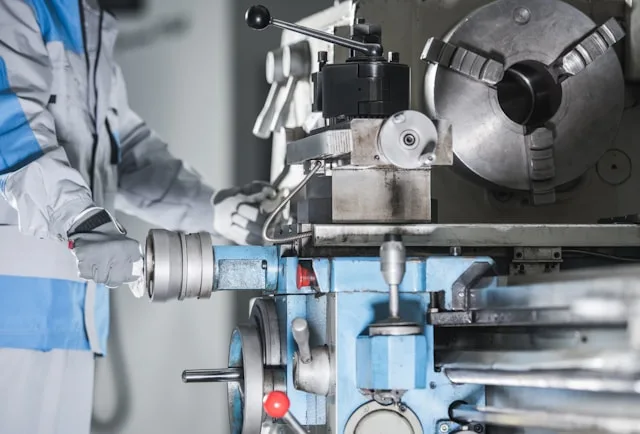
The numbers illustrate the gap precisely. Capital expenditure in Industry 4.0 technologies across the district reached €94 million in 2024, supported by Italy's Transizione 5.0 tax credits. Automated cutting systems from Gerber and Lectra, robotic stitching cells, ERP integration platforms: the hardware is arriving. But adoption remains sharply bifurcated. Sixty percent of medium enterprises with more than 50 employees have implemented CAD/CAM pattern-making systems. Only 22% of micro-enterprises have moved beyond analogue processes.
The gap is not merely about willingness to invest. It is about the human infrastructure required to make that investment productive. Specialists capable of programming, operating, and maintaining automated cutting and stitching machinery from Gerber, Lectra, and Probel systems are subject to aggressive cross-regional poaching. According to Fondirigenti's Observatory on Digital Competences in Manufacturing, employers in the Fermano district have been offering signing bonuses of €15,000 to €20,000 and salary premiums of 25% to attract these technicians from competing districts. One industrial subcontractor in Porto Sant'Elpidio reportedly secured a senior maintenance engineer from Veneto in late 2024 by offering relocation assistance and total compensation exceeding €75,000 annually, a figure 30% above the local median.
The paradox is complete: the district bought the machines to compensate for retiring artisans but now cannot find the technicians to run the machines that were supposed to compensate for the retiring artisans. The firms caught in this gap possess advanced equipment operating well below capacity, which is worse than not having the equipment at all. An idle automated cutting system still depreciates. It still requires floor space, energy, and maintenance contracts. It just does not produce anything.
Talent Poaching and the Three Markets Pulling Fermo Apart
Fermo does not compete for talent in isolation. Three geographic markets exert constant gravitational pull on the district's most valuable workers, and each pulls in a different direction.
The Domestic Rival: Riviera del Brenta
The Riviera del Brenta district in Veneto is the primary domestic competitor. It offers base salaries 15 to 20% higher for equivalent technical roles including production managers and quality controllers, and provides stronger infrastructure for dual vocational training through Italy's apprendistato system. The Brenta's advantage is straightforward: more money, more structured career development, and a larger concentration of luxury brand production facilities offering clear vertical progression.
What keeps some senior artisans in Marche despite lower wages is access to the particular artisanal "saper fare" that defines Fermo's luxury hand-finishing capability. This is a genuine retention asset, but it is a wasting one. As the artisans who embody that knowledge retire, the reason to stay weakens with each departure.
The Prestige Magnet: Florence and Tuscany
Tuscany competes intensely for leather goods artisans and product development executives. The presence of Kering and LVMH supply chains in the Florence-Scandicci corridor, combined with major tanneries in Santa Croce sull'Arno, offers something Fermo structurally cannot: a clear path from production floor to luxury brand headquarters. Tuscan employers offer comparable base salaries for production roles but materially superior non-wage benefits including corporate welfare programmes, training budgets, and proximity to Milan for commercial functions.
For a Product Development Director considering two offers, one from a Fermo SME and one from a Kering supplier in Scandicci, the Tuscan proposition includes not just a comparable salary but the implicit possibility of moving into a brand-side role within three to five years. Fermo's counter-proposition must be built on different foundations entirely: equity participation, operational autonomy, and the quality of the role itself rather than the brand behind it.
The Emerging Disruptor: Portugal
Porto and Felgueiras have emerged as competitors for mid-level production managers. Base salaries run 30 to 40% below Italian equivalents. But Portuguese operations offer younger workforce demographics, EU funding for new facilities, and tax advantages for expatriate managers. Italian technicians with Industry 4.0 expertise are increasingly recruited to establish Portuguese manufacturing operations, with international experience premiums of 20 to 25%.
This third vector is the most concerning for Fermo's long-term position. It does not just compete for talent. It competes for the district's entire operational model by replicating Italian manufacturing know-how in a lower-cost environment. Every senior production manager who moves to Portugal carries with them not just their individual capability but a piece of Fermo's competitive infrastructure.
The Regulatory Squeeze: EU Compliance as a Consolidation Trigger
The 2026 and 2027 implementation timeline for the EU Digital Product Passport and stricter REACH chemical regulations will force the most consequential structural change the district has faced in a generation. This is not a gradual adjustment. It is a compliance cliff.
The Digital Product Passport and What It Costs
By 2026 and 2027, footwear sold in the EU must carry digital traceability covering materials origin, chemical composition, and environmental impact data. For Fermo's micro-enterprises, implementing blockchain or cloud-based traceability systems carries estimated costs of €15,000 to €50,000 per entity. For the broader compliance package including chemical management standards, CTN's White Paper on Compliance estimated costs of €50,000 to €100,000 per entity.
An estimated 300 to 400 micro-enterprises, representing 15 to 20% of the district's current base, face existential technical compliance costs at these levels. The likely outcome is an acquisition wave: larger, already-compliant manufacturers absorbing smaller workshops that cannot independently achieve DPP compliance, or outright exits from the market.
This consolidation will reshape the executive talent requirements across the entire district. Acquiring firms will need integration managers, compliance directors, and supply chain architects capable of absorbing fragmented workshop networks into unified digital traceability systems. These roles barely existed in Fermo five years ago. They are now among the most critical and hardest to fill.
The Chemical Compliance Layer
Increasing restrictions on chromium tanning and solvents under REACH threaten the district's traditional processing methods. The capital investment required for water purification systems and alternative tanning technologies falls disproportionately on the smallest enterprises, compounding the DPP compliance burden. A Sustainability Director or CSR VP capable of managing both regulatory tracks simultaneously, a role commanding €110,000 to €150,000 in base compensation, is now essential for any manufacturer operating at scale. The passive candidate ratio for these roles is extreme, with qualified professionals overwhelmingly employed and not actively seeking new positions.
The supply chain complexity multiplies the compliance challenge. The average pair of shoes in the Fermano district passes through 4.2 different legal entities before completion. Each entity must be independently compliant. Each handoff must be digitally traceable. The coordination required to achieve this across a network of micro-workshops, many of which still operate on analogue processes, demands a category of operational leadership that the district has historically never needed to develop.
Compensation Architecture: What Fermo Pays and Where It Falls Short
The compensation data for the Fermano district reveals a market that is simultaneously more affordable than its competitors and structurally unable to close the gap on the roles that matter most.
At the senior specialist and manager level, Plant Managers commanding oversight of 100 to 200 employees across multi-site subcontractor networks earn €75,000 to €95,000 in base salary with 15 to 20% bonus potential. Technical Directors and Heads of Pattern Making earn €65,000 to €85,000. Supply Chain Managers earn €60,000 to €80,000. Quality Assurance Managers earn €55,000 to €70,000.
At the executive level, a VP of Manufacturing or Operations Director earns €140,000 to €180,000 base with 30 to 40% bonus. A Chief Product Officer or Product Development VP earns €120,000 to €160,000. A Chief Supply Chain Officer earns €130,000 to €170,000. A Sustainability Director earns €110,000 to €150,000.
These figures track 10 to 15% below Milan and 5 to 8% below Florence for equivalent roles, according to Unioncamere Marche's compensation analysis. The cost of living differential, particularly in housing, partially offsets this gap. A senior executive relocating from Milan to Fermo experiences a material reduction in living costs. But "partially offsets" is not "fully compensates," and the gap widens at exactly the seniority level where the most critical roles sit.
The district has adapted with secondary compensation mechanisms. Retention bonuses for master artisans have become standard, ranging from €3,000 to €5,000 annually locked in two to three year vesting schedules. Housing allowances of €800 to €1,200 monthly are increasingly offered to executives relocating from Northern Italy. These are necessary but insufficient measures. They address the symptom of talent flight without resolving the underlying cause: a compensation ceiling set by SME economics that cannot match what luxury groups and larger competitors offer for the same expertise.
The most revealing compensation data point is what the district pays to poach. A signing bonus of €15,000 to €20,000 for an automation technician, and a total package exceeding €75,000 for a senior maintenance engineer recruited from Veneto, both represent emergency pricing. When the cost of acquiring a single technician includes a 30% salary premium plus relocation assistance, the market is not functioning normally. It is rationing scarce capability through price. The salary negotiation dynamics in this environment favour any candidate with relevant skills and the willingness to move.
What This Market Requires from Executive Search
The talent market for senior technical and executive roles in Fermo is predominantly passive. An estimated 85 to 90% of qualified candidates are already employed and not actively seeking new positions. For specific categories the passivity is even more extreme. Master Pattern Makers have an effective unemployment rate of 0%, with average tenure exceeding 12 years. Product Development Directors show a passive market ratio of 9 to 1. Export and Commercial Managers with existing luxury buyer relationships at retailers like Neiman Marcus or Galeries Lafayette are 95% passive.
Active candidate pools exist primarily for entry-level sewing machine operators and logistics coordinators. For every role above that threshold, the conventional approach of posting a vacancy and waiting for applications reaches, at most, 10 to 15% of the viable candidate market. The other 85 to 90% must be identified, mapped, and approached directly. In a district of 2,100 enterprises where 82% are micro-businesses with no HR function, this direct identification methodology is not a premium service. It is the only method that works.
The geographic competition compounds the challenge. A search for a Plant Manager in Fermo is not competing against other Fermo employers alone. It is competing against the Riviera del Brenta, against Tuscany, against Portuguese operations willing to pay international premiums. Understanding where candidates are, what they currently earn, and what proposition would move them requires structured talent mapping across three countries and at least four industrial districts. A local recruiter with a regional database cannot execute this. A generalist firm without manufacturing sector knowledge will not know which questions to ask.
KiTalent's approach to executive search in industrial and manufacturing sectors is built for precisely this pattern: a market where the candidates who matter are invisible to conventional methods, where speed determines whether you reach them before a competitor does, and where the cultural and technical assessment required to identify a genuine fit demands sector-specific intelligence. With a 96% one-year retention rate across 1,450 executive placements, KiTalent delivers interview-ready candidates within 7 to 10 days through AI-powered talent mapping that reaches the passive majority no job board will ever surface.
For organisations hiring production leadership, technical directors, or supply chain executives in the Fermano district or competing Italian manufacturing clusters, where the cost of a failed executive search is measured in lost production capacity and irreplaceable knowledge walking out the door, speak with our executive search team about how we approach this market.
Frequently Asked Questions
What is the average salary for a Plant Manager in Fermo's footwear district?
Plant Managers overseeing 100 to 200 employees across multi-site subcontractor networks in the Fermano district earn €75,000 to €95,000 in base salary with 15 to 20% bonus potential. This tracks approximately 10 to 15% below equivalent roles in Milan and 5 to 8% below Florence. Housing cost differentials partially offset the gap, and relocation allowances of €800 to €1,200 monthly are increasingly standard for candidates moving from Northern Italy. At the VP of Manufacturing level, total compensation reaches €140,000 to €180,000 base with 30 to 40% bonus. Retention bonuses for specialist artisans add €3,000 to €5,000 annually on two to three year vesting schedules.
Why is it so difficult to hire pattern makers in the Marche region?
Master Pattern Makers in Fermo's footwear district have an effective unemployment rate of 0%. Average tenure exceeds 12 years. These roles require a hybrid of manual last-shaping expertise and proficiency in digital CAD systems such as Lectra Modaris or Shoemaster. Aggregate data from Unioncamere Marche shows Senior Pattern Maker vacancies remain open for 7 to 9 months on average, with 45% of employers reporting searches lasting over a year. The retiring baby boomer generation carries tacit knowledge that cannot be replaced through training alone, and the annual output of 85 technical institute graduates cannot offset 1,200 annual retirements across the sector.
How does Fermo's footwear district compare to the Riviera del Brenta for manufacturing talent?
The Riviera del Brenta in Veneto offers 15 to 20% higher base salaries for equivalent technical roles and provides stronger dual vocational training infrastructure. It attracts candidates with clearer vertical progression into large-scale luxury brand production. Fermo's advantage lies in access to artisanal hand-finishing expertise and a concentration of specialist construction techniques including Norwegian stitching and Goodyear welted methods. However, as the artisans who embody this knowledge retire, Fermo's retention advantage weakens. Portugal has also emerged as a competitor, offering 20 to 25% international experience premiums to Italian technicians recruited to establish new facilities.
What impact will the EU Digital Product Passport have on Fermo's footwear manufacturers?
The Digital Product Passport, with its 2026 and 2027 implementation timeline, requires digital traceability covering materials origin, chemical composition, and environmental impact. Implementation costs range from €15,000 to €50,000 for basic traceability systems, rising to €50,000 to €100,000 per entity for full compliance including chemical management standards. An estimated 300 to 400 micro-enterprises in the district face existential compliance costs, likely triggering acquisition waves or market exits. The regulation creates urgent demand for sustainability and compliance executives capable of managing digital traceability across fragmented supply chains.
How can companies hire senior manufacturing executives in Fermo's passive talent market?
With 85 to 90% of qualified candidates already employed and not seeking new positions, conventional job advertising reaches a fraction of the viable market. Effective hiring in Fermo requires direct identification and approach through structured headhunting. KiTalent's AI-powered talent mapping identifies passive candidates across competing Italian districts and international markets, delivering interview-ready shortlists within 7 to 10 days. The pay-per-interview model means organisations only invest when they meet qualified candidates, eliminating the upfront retainer risk that is particularly burdensome for the SMEs that make up the majority of Fermo's manufacturing base.
What are the biggest risks facing Fermo's footwear manufacturing sector in 2026?
The convergence of four risks defines 2026. First, the demographic cliff: 1,200 skilled workers exiting annually against 430 graduates entering. Second, regulatory compliance costs from the EU Digital Product Passport and REACH chemical restrictions threatening 15 to 20% of micro-enterprises with existential costs. Third, geographic talent poaching from Veneto, Tuscany, and Portugal drawing senior technicians away with 15 to 50% compensation premiums. Fourth, the automation paradox: €94 million invested in Industry 4.0 equipment that many firms lack the technical staff to operate at capacity. These risks compound each other, and addressing any one in isolation leaves the others to accelerate.