Fermo's Agri-Food Producers Have the Funding and the Markets. They Cannot Find the Leaders to Reach Either.
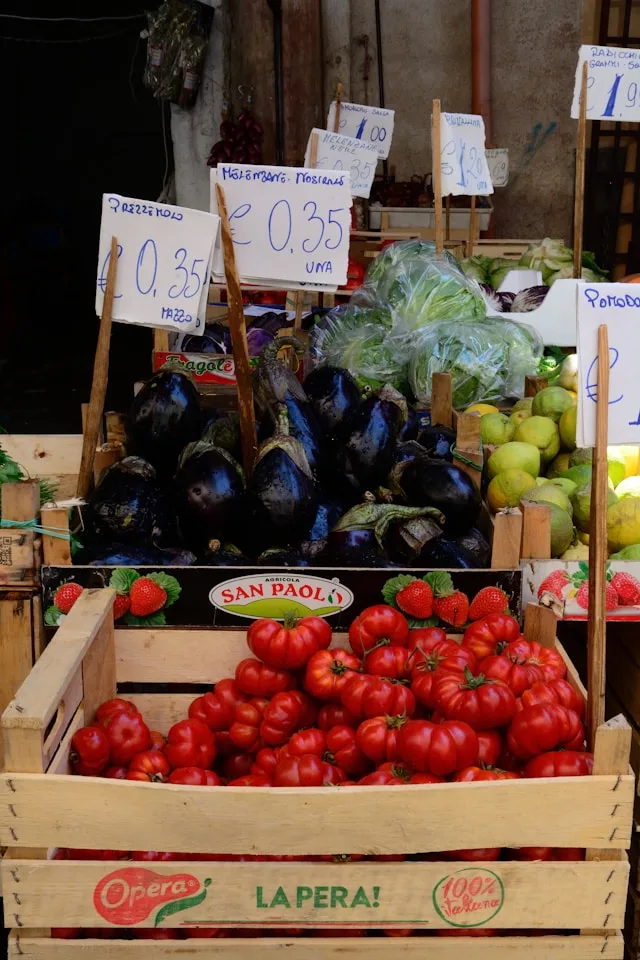
Fermo province produces some of Italy's most distinctive protected foods. Ciauscolo IGP. Maccheroncini di Campofilone IGP. Ascolana Tenera del Piceno DOP olive oil. Rosso Piceno DOC wines. These are products that command premium pricing in exactly the export markets, Northern Europe and beyond, that are growing fastest for Italian specialty foods. The raw materials are here. The certifications are in place. The PNRR funding to modernise production has been allocated. And yet the businesses that make these products are consistently unable to find, attract, or retain the senior professionals required to turn regional excellence into international scale.
The problem is not a generic labour shortage. Fermo's agri-food sector employs roughly 4,800 permanent full-time equivalents and absorbs 1,200 to 1,500 seasonal workers during peak harvest. Those numbers have held steady. The crisis sits higher up the organisation chart. Export directors who can open German and Scandinavian retail accounts. Agronomists who can interpret drone data and IoT sensor outputs for DOP-compliant production. Food safety managers who hold dual competence in HACCP auditing and EU Protected Designation of Origin protocols. Quality assurance leaders who can manage BRC/IFS certification for facilities running artisanal methods. These are the roles that stay open for months while the businesses that need them watch competitors in Bologna and Modena pull further ahead.
What follows is an analysis of the forces reshaping Fermo's agri-food sector, the specific leadership roles that are hardest to fill, what they pay, and why the methods most SMEs use to recruit them are failing. The article examines a market where capital investment, export demand, and talent supply are moving in three different directions, and what that means for the organisations trying to hold them together.
A Provincial Economy Built on Craft, Governed by Scale Constraints
Fermo province sits on the Adriatic coast of the Marche region in central Italy. Its agri-food identity is defined not by volume production but by designation-protected artisanal foods with deep local heritage. The Oleificio Cooperativo Montegiorgio e Valle dell'Aso, established in 1966, aggregates production from approximately 1,200 member farms and crushes 25 to 30 percent of provincial olive output. Pastificio La Campofilone employs around 75 people across permanent and seasonal roles, producing IGP egg pasta for export to 30 countries. Salumificio Santoro in Carassai runs a 30-person operation focused on Ciauscolo IGP and traditional cured meats. L'Orto di Eleonora processes artisanal preserves and organic vegetables in Fermo municipality with roughly 25 employees.
These are not large companies by any standard. The average farm in the province is 8.3 hectares, well below the national average of 11.2 hectares. Seventy-eight percent of holdings are classified as micro-enterprises under five hectares, according to ISTAT's 6th General Census of Agriculture. The average processing facility employs fewer than 50 people. This scale creates a fundamental tension. The products are premium. The markets they can reach are global. But the businesses making them operate with the headcount and budgets of local enterprises. That gap between product quality and organisational capacity is where the talent challenge in this market originates.
Only 12 percent of Fermo-based food SMEs engage in direct export, according to ICE Agenzia's 2023 Marche report. Most supply private-label intermediaries in Ancona or Bologna, surrendering margin in exchange for market access they cannot build internally. The reason they cannot build it is not a lack of ambition. It is a lack of the people who know how.
The Funding Paradox: Capital That Cannot Be Absorbed
The most striking tension in Fermo's agri-food economy is not between supply and demand. It is between available investment and the capacity to deploy it. The National Recovery and Resilience Plan, the PNRR, allocates €150 million to Marche agriculture for digitalisation and precision farming. Fermo province SMEs are eligible for subsidies covering 40 to 50 percent of investments in IoT sensors, automated sorting lines, and digital traceability systems. Target export markets in Germany and Scandinavia for organic olive oil and craft pasta are projected to grow 8 to 10 percent annually, contingent on obtaining BIO certification and English-language marketing capacity.
The money is there. The market demand is there. Yet 40 percent of Fermo processors cite lack of internal technical staff to manage digital transition as the primary barrier to accessing PNRR funds, according to Nomisma's 2024 Agroalimentare Marche report. This is the paradox at the centre of this market: the funding designed to modernise production cannot be absorbed because the same talent it would eventually attract does not yet exist in the province in sufficient numbers.
This is the original analytical claim that ties together the data in this research, and it is worth stating plainly. The investment has moved faster than the human capital required to deploy it. A €75,000 IoT sensor array for an olive grove is useless without an agronomist who can interpret NDVI data. An automated pasta sorting line requires a plant manager who understands both artisanal bronze-die extrusion and BRC/IFS standards. A 40 percent subsidy on digital traceability software achieves nothing if there is no quality assurance professional in the building who can operate TracciaSicura platforms and satisfy ASUR hygiene protocols simultaneously. Capital arrived. The people to use it did not follow.
For hiring leaders in this sector, the implication is direct. The competitive window created by PNRR funding is finite. Firms that secure the right senior technical and commercial talent in the next 12 to 18 months will absorb the subsidies, modernise, and reach export markets at scale. Firms that do not will watch the funding cycle close and the gap with Emilia-Romagna's food giants widen further.
Three Roles That Define the Shortage
Agronomists with Precision Agriculture and Data Analytics Skills
The vacancy rate for agronomist positions in Fermo province stands at 12.4 percent, double the national average of 6.1 percent, according to Unioncamere Marche's Excelsior data from Q3 2024. Average time to fill is 87 days. The issue is not a shortage of agronomists in the abstract. Italy produces them. The issue is a shortage of agronomists who combine traditional DOP cultivation knowledge with the ability to interpret drone-captured NDVI data, calibrate IoT soil sensors, and manage GIS mapping for precision olive and vine management.
Regional labour market data indicates that cooperative oil mills in the Montegiorgio area typically operate with 30 percent of technical roles understaffed during the October to November milling season, relying on retired agronomists on consulting contracts to fill gaps. This pattern, documented by FLAI CGIL Marche in their 2023/24 olive season report, reveals a workforce running on borrowed time. When the retirees stop answering the phone, the gap becomes a crisis.
Experienced agronomists with five or more years and IoT or compliance expertise are overwhelmingly passive candidates. CIA Marche's survey of agricultural professions estimates the ratio of active to passive candidates at 1:4. Recent graduates are findable. The professionals who can actually run a precision agriculture programme across multiple DOP-compliant estates are not visible on any job board.
Export Sales Managers for Food and Beverage
Job postings for export managers in the Marche agri-food sector increased 34 percent year over year in 2024. Applications per posting dropped to 4.2, down from 11.0 in 2019. The arithmetic is stark. More roles, fewer candidates, and the candidates who do apply are less likely to have the profile the role requires: fluency in German or English, existing distributor networks in the DACH region, experience with modern trade accounts such as Edeka or Monoprix, and competence in e-commerce logistics.
The most qualified export directors in this market are employed and not looking. LinkedIn data for the Marche region shows a 0.4 percent open-to-work rate among profiles matching export manager, food, and seven or more years of experience. The average across all professional categories is 4.2 percent. That gap, a factor of ten, explains why conventional recruitment methods consistently fail for these roles.
According to Confartigianato Marche's 2024 competency survey, artisanal pasta producers in Fermo province reportedly poach export managers from competitors in Ascoli Piceno and Ancona, offering 15 to 20 percent salary premiums and equity participation to secure them. The talent pool is so thin that firms are circulating the same small group of qualified professionals rather than expanding it.
Food Safety and DOP Compliance Managers
The third acute shortage is in quality assurance professionals who hold dual competence in HACCP auditing and EU Protected Designation of Origin administrative protocols. This combination is non-negotiable for any Fermo producer selling DOP or IGP certified products into regulated export markets. Vacancies in this category remain open for 60 or more days. The problem is compounded by the regulatory burden these professionals must manage: annual consortium fees and mandatory laboratory testing for IGP/DOP products cost SMEs €8,000 to €15,000 per year. Finding someone who understands both the technical science and the administrative complexity of these certifications narrows the candidate pool to a fraction of the broader food safety profession.
The talent scarcity in all three of these categories is not cyclical. It is embedded in the structure of the market itself. Fermo's producers need professionals who sit at the intersection of artisanal tradition and digital capability, a combination that Italy's education system produces in very small numbers.
What These Roles Pay, and Why the Numbers Mislead
The Bifurcation Between Aggregate and Executive Compensation
National agri-food compensation data from Unioncamere shows moderate wage growth of 2.1 percent annually in response to inflation. That figure describes the broad labour market. It does not describe what is happening at the senior leadership level in specialty food production.
Executive search data for the Marche region, reported by Hays Italy, indicates that Export Director and Plant Manager roles in specialty foods now command 15 to 25 percent premiums above 2022 levels. The driver is straightforward: Bologna-based conglomerates such as Barilla and Granarolo offer 20 to 35 percent higher base salaries than Fermo equivalents for comparable roles. Fermo employers must close enough of that gap to prevent attrition while operating on margins that cannot support Bologna-level compensation.
A Responsabile Ufficio Estero, the export manager tier, earns €48,000 to €62,000 base plus 10 to 15 percent bonus in the Southern Marche zone covering Fermo and Ascoli Piceno. A Direttore Commerciale at VP level commands €75,000 to €95,000 base plus car allowance and profit sharing, with total compensation reaching €90,000 to €110,000. In rare cases with equity participation, packages reach €120,000. A Direttore di Stabilimento, the plant director role, earns €65,000 to €80,000 plus performance bonus. A senior agronomist with five-plus years commands €32,000 to €42,000, while a Direttore Tecnico Agricolo managing multiple estates earns €50,000 to €65,000.
These figures carry a 10 to 15 percent discount compared to Milan or Bologna, but a 5 percent premium compared to Southern Italy. For salary benchmarking purposes, the discount versus Emilia-Romagna is the number that matters most. It is the gap that drives talent northward and keeps Fermo's most critical roles unfilled.
The Lifestyle Counteroffer
Fermo employers counter the salary differential with a lifestyle proposition: lower cost of living, Adriatic coastal proximity, and the offer of equity participation in family-owned businesses. Confartigianato Marche reports mixed success with this approach. For younger professionals building careers, the pull of Bologna's larger firms, international mobility programmes, and visible career progression outweighs Fermo's quality of life. For mid-career professionals with families and a preference for smaller-scale work, the proposition can be compelling, but only when the total package is structured correctly and presented by someone who understands what the candidate actually values.
The firms that win these candidates are not the firms offering the highest number. They are the firms offering the most complete proposition. That distinction requires a level of recruitment sophistication that most Fermo SMEs, accustomed to hiring through personal networks and local advertising, do not possess.
The Competitors Pulling Talent Away
Fermo does not lose candidates to a single dominant competitor. It loses them in three directions simultaneously, each with a different mechanism.
Bologna and Modena, the self-styled Food Valley of Emilia-Romagna, represent the gravitational centre. Large agri-food conglomerates offer 20 to 35 percent higher base salaries, structured international careers, and proximity to Italy's most efficient logistics infrastructure. For an export manager or plant director, accepting a role in Bologna is the rational economic choice unless a Fermo employer can construct a counter-proposition that appeals to non-financial motivations.
Ancona, the Marche regional capital 60 kilometres north, presents a subtler drain. According to ISTAT pendolarismo data from 2023, senior professionals often reside in Fermo province but commute to Ancona for €5,000 to €10,000 salary premiums. The port-related logistics sector and diversified economy provide non-agricultural exit options for supply chain managers who might otherwise work in food processing. This commuting pattern is particularly damaging because it removes talent from the local executive pool without the individual ever formally leaving the area.
The Abruzzo provinces of Pescara and Chieti compete on a different axis: equivalent agricultural profiles, similar salaries, but lower housing costs. For agronomists and cellar masters, the choice between two comparable markets often comes down to personal geography. And Fermo, with a declining population of 173,000 that shrinks 0.4 percent annually, does not have the demographic momentum to replace professionals lost to any of these competitors.
Structural Forces That Will Not Reverse
Several forces acting on this market are not temporary disruptions. They are permanent features that any hiring strategy must account for.
Demographic Decline and Generational Transfer Risk
Fifty-eight percent of farm owners in Fermo province are over 60 years old, according to ISTAT's 2022 Census. Succession planning is uncertain across the majority of holdings, creating a risk of land abandonment that would shrink the raw material base for processors. The educational pipeline produces 40 to 50 agricultural technical graduates annually from the Istituto di Istruzione Superiore "A. Gentili" in Fermo. That number covers a fraction of replacement demand before accounting for graduates who leave the province for higher-paying markets.
The agritourism sector, with 180 active operations and growing bookings, might seem like a natural absorber of agricultural talent. It is not. Regional data from Regione Marche and CIA Marche reveals a demand for a hybrid profile, what some in the region call the agronomo ospitale, a hospitality-trained agronomist, that the local technical education system, focused on pure agriculture or pure hospitality, does not produce. The sector creates a new kind of role faster than institutions can train people for it.
Energy Transition Costs and Consolidation Pressure
Compliance with EU Green Deal emissions standards for small-scale dryers and pasteurisers will require capital investment of €50,000 to €150,000 per SME, according to Confagricoltura Marche. For micro-enterprises already managing DOP compliance costs of €8,000 to €15,000 annually and mandatory safety consulting fees of €5,000 to €8,000, this additional burden will likely trigger consolidation. Some firms will merge. Others will close. The survivors will need leaders capable of managing through transformation, not merely maintaining steady-state operations.
Agri-food processing value-added in Fermo is projected to grow 2.5 to 3.0 percent in nominal terms in 2026, driven by premiumisation. But employment is forecast to remain flat. Automation and labour scarcity are cancelling out the growth effect. The sector is producing more value with the same headcount, which means every individual hire carries more weight than it did five years ago. A wrong appointment at plant director or export director level does not just cost a salary. It costs a season. In a market where olive yields dropped 15 percent in the 2024/25 cycle due to climate stress and wine harvest volumes fell 8 percent, a single season lost to a failed senior hire can represent an irrecoverable setback.
Why the Conventional Search Fails in This Market
The dynamics described above create a recruitment environment where standard methods are structurally inadequate. Consider the numbers. The most critical hire for a Fermo agri-food SME looking to grow, the export director, has an open-to-work rate of 0.4 percent on LinkedIn. That means for every 250 qualified professionals in the region, one is actively looking. A job posting reaches that one person, if they happen to see it. The other 249 must be found through direct identification and approach.
Seventy-eight percent of hires in the food technologist category during 2023 and 2024 were sourced through ricerca diretta, direct search, rather than applications, according to Unioncamere Marche's Excelsior data. The market has already told us how these roles get filled. The question is whether Fermo's SMEs have access to the capability that makes direct search work.
Most do not. A 30-person salumificio or a 75-person pastificio does not have an internal talent acquisition function. Hiring decisions are made by the owner or general manager, drawing on personal networks that extend to the boundaries of the province and occasionally into Ancona or Ascoli Piceno. When those networks are exhausted, the search stalls. The 87-day average time to fill for agronomist roles is not a reflection of market complexity alone. It is a reflection of search method inadequacy.
For organisations hiring at the senior specialist and leadership level in Italy's food and beverage sector, the method must match the market. That means systematic talent mapping across competitors in Emilia-Romagna, Abruzzo, and broader Marche. It means approaching passive candidates with a proposition constructed around the specific combination of compensation, equity, lifestyle, and role scope that this market requires. And it means doing this fast enough that the candidate is not intercepted by a Bologna firm with a simpler offer before the process concludes.
What a Successful Hire Looks Like From Here
The projected 180 to 220 new permanent hires in Fermo's processing and technical agriculture sector for 2026 will not fill themselves. The seasonal labour pipeline, dependent on Decreto Flussi permits in a year where available seasonal agricultural workers are projected to decline 5 percent due to stricter immigration enforcement and competition from construction in Romagna, is tightening. The permanent hires that matter most, the technical and commercial leaders, sit in a candidate pool that is passive, geographically dispersed, and already employed at firms that do not want to lose them.
KiTalent works with agri-food and industrial organisations across Italy facing exactly this profile: senior roles in markets where job advertising reaches fewer than 20 percent of qualified candidates. Through AI-enhanced talent mapping, KiTalent identifies and approaches the professionals who are not visible on any job board, delivering interview-ready candidates within 7 to 10 days under a pay-per-interview model that eliminates upfront retainer risk for SMEs operating on tight budgets.
With a 96 percent one-year retention rate across 1,450 executive placements globally, and an average client relationship exceeding eight years, the approach is built for markets where the cost of a wrong hire is measured not in recruitment fees but in lost seasons, missed subsidy windows, and export contracts that go to competitors.
For Fermo's agri-food producers navigating the gap between available capital and available talent, where the right export director or plant manager is the difference between absorbing PNRR funding and watching it expire, speak with our team about how we source leadership talent in this market.
Frequently Asked Questions
What are the hardest agri-food roles to fill in Fermo province?
Three categories show the most acute shortages as of 2026: agronomists with precision agriculture and data analytics skills, where the vacancy rate is double the national average at 12.4 percent; export sales managers with German or English fluency and modern trade experience, where applications per posting have dropped to 4.2 from 11.0 in 2019; and food safety managers with dual competence in HACCP auditing and EU DOP compliance protocols, where vacancies remain open for 60 or more days. All three require a combination of traditional artisanal knowledge and digital or international capability that the local education pipeline produces in very small numbers.
What do export managers and plant directors earn in Fermo's agri-food sector?
In the Southern Marche zone covering Fermo and Ascoli Piceno, an export manager earns €48,000 to €62,000 base plus 10 to 15 percent bonus. A Direttore Commerciale at VP level commands €75,000 to €95,000 base with total compensation reaching €90,000 to €110,000 including car allowance and profit sharing. Plant directors earn €65,000 to €80,000 plus performance bonus. These figures carry a 10 to 15 percent discount versus Milan or Bologna, which drives talent northward and forces Fermo employers to compete on lifestyle, equity participation, and role scope. Understanding market-level compensation benchmarks is essential before structuring an offer.
Why is PNRR funding not solving Fermo's agri-food modernisation challenge?
The PNRR allocates €150 million to Marche agriculture for digitalisation and precision farming, with subsidies covering 40 to 50 percent of eligible investments. However, 40 percent of Fermo processors cite lack of internal technical staff as the primary barrier to accessing these funds. The paradox is that the funding intended to drive digital transformation requires the same talent, digital agronomists, IoT-capable plant managers, that is already in severe shortage. Capital has arrived before the people needed to deploy it.
What percentage of qualified agri-food candidates in Marche are passive?
The data varies by role but is consistently high. Export directors show a 0.4 percent open-to-work rate on LinkedIn, compared to a 4.2 percent average across all professional categories. Experienced agronomists with five or more years show a passive-to-active ratio of 4:1. In the food technologist category, 78 percent of hires in 2023 to 2024 were sourced through direct search rather than applications. Job advertising alone reaches a small fraction of the qualified pool in this market.
How does Fermo compete with Bologna and Modena for agri-food leadership talent?
Bologna and Modena's large conglomerates offer 20 to 35 percent higher base salaries, international mobility programmes, and superior logistics infrastructure. Fermo counters with lower cost of living, Adriatic coastal proximity, and equity participation in family-owned SMEs. Success depends on constructing a complete proposition that appeals to candidates valuing lifestyle and ownership over scale. Firms that rely solely on salary to compete will lose. Firms that identify passive candidates through targeted headhunting and present a structured total package have a materially better chance of closing these hires.
How can a small agri-food SME in Fermo run an effective executive search?
Most Fermo SMEs lack internal talent acquisition functions and rely on owner networks that rarely extend beyond the province. For senior roles where 80 percent of qualified candidates are passive, this approach is structurally insufficient. Effective executive search in this market requires systematic talent mapping across competing regions, direct candidate identification, and a proposition built around what the specific candidate values. Working with a specialist executive search partner that understands both the agri-food sector and the dynamics of Italy's provincial talent markets converts a months-long search into a structured process that delivers interview-ready candidates within days.