Fidenza Village Retail Hiring in 2026: More Visitors, Fewer People to Serve Them
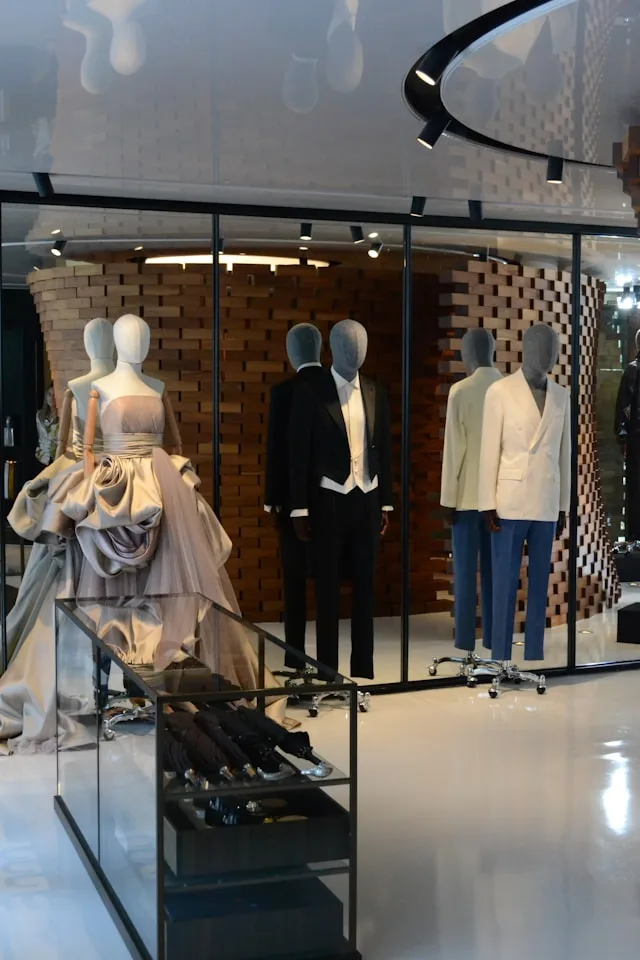
Fidenza Village welcomed nearly four million visitors last year. Its 120 luxury boutiques operated at near-full occupancy. A €20 million expansion of the Luxury Quarter added 10,000 square metres of retail space and roughly 200 new positions. By almost every commercial metric, this is a retail destination performing at capacity.
Yet across the village and its surrounding hospitality cluster, a quieter pattern has taken hold. Multilingual luxury sales roles sit open for 90 to 120 days. Facilities maintenance positions remain unfilled for more than 100 days during peak operational periods. Seasonal hiring surges now require close to 1,000 temporary workers, up from 700 in 2025, and the pool of qualified candidates has not grown to match. The commercial success of Fidenza Village is producing hiring pressure that the local and regional labour market cannot absorb.
What follows is an analysis of the forces shaping this market in 2026: where the talent gaps are deepest, why they persist, what they cost in operational and strategic terms, and what organisations hiring within this ecosystem need to do differently to fill the roles that matter most.
The Economic Engine Behind Fidenza's Talent Demand
Fidenza Village, operated by Value Retail S.p.A. and backed by Apollo Global Management since 2020, is the dominant employer in the Province of Parma's retail and tourism sector. The village directly and indirectly supports an estimated 2,500 to 3,000 jobs when hospitality and logistics roles are included. Direct employment breaks down across four categories: 40% brand retail staff, 25% hospitality and food and beverage, 20% centre management and facilities, and 15% logistics and security.
The visitor profile has shifted materially over the past three years. Domestic Italian visitors now account for 60% of footfall. European intra-Schengen tourists make up 25%, and non-European tourists the remaining 15%. The historical reliance on Swiss and German cross-border shoppers has diminished. This rebalancing toward domestic and Southern European visitors changes the skills profile the village requires from its staff, particularly in terms of language capabilities and cultural service expectations.
What makes this employment base unusual is its geographic concentration. Unlike a distributed retail district, Fidenza's luxury retail and tourism employment is contained within the 30,000 square metre village boundary and its immediate surroundings. The municipality of Fidenza, with a population of roughly 27,000, has not developed a broader fashion manufacturing or design cluster. Economic spillover is limited to hotels, restaurants, and transport logistics. This concentration means that hiring shortfalls at the village do not have alternative local employers to draw from. They simply go unfilled.
The 2026 growth trajectory compounds this pressure. Physical expansion is blocked by land use restrictions in the Po Valley agricultural protection zone. Growth will instead focus on experiential retail integration with Parma's gastronomy tourism circuit, linking the outlet to the region's Parma ham and Parmigiano Reggiano routes. Value Retail's strategic plan projects hospitality and food and beverage hiring increases of 10 to 12% to support this shift. That is new demand layered on top of existing vacancies the market has already failed to fill.
Where the Hiring Gaps Are Deepest
Multilingual Luxury Sales Associates
The most persistent vacancy pattern in this market sits at the customer-facing level. Roles requiring fluency in German, Mandarin, or Russian alongside Italian and English take 90 to 120 days to fill. Comparable monolingual Italian sales positions fill in 30 to 45 days. The gap is not about retail experience. It is about language capability combined with luxury service standards combined with willingness to work in a location 90 minutes from Milan.
Throughout 2024, identical role specifications appeared and reappeared on LinkedIn and InfoJobs for luxury brand concessionaires at the village. The continuous republication of these listings is a reliable signal that the roles are either going unfilled or being filled and vacated within a single season. For brands like those operated by Prada Group, LVMH, and Kering, each of which staffs 15 to 40 people per boutique, even two or three unfilled multilingual positions directly affects the revenue yield from international visitors who represent 40% of all footfall.
Facilities and Technical Maintenance
The second chronic shortage sits in facilities management. HVAC-certified technicians with experience in high-traffic retail environments face vacancy durations exceeding 100 days during peak operational periods in May and November. This is a national pattern. According to Adecco Italy's 2024 Technical Skills Shortage Report, maintenance technician roles across Italian retail and commercial property consistently rank among the hardest to fill. But in Fidenza, the problem is amplified by the village's geographic isolation from major urban centres where most qualified technicians live and work.
A facilities failure at an outlet centre operating near capacity during peak season is not a minor inconvenience. It is a direct threat to the visitor experience that justifies the destination's premium positioning. The inability to maintain a stable technical workforce creates a dependency on emergency contractors at significantly higher cost and lower reliability.
Seasonal Surge Hiring
The seasonal dimension of this market cannot be overstated. Q4 hiring increases by 180 to 200% over baseline, with the October to December period and the July to August summer season each requiring hundreds of temporary positions. In 2026, projections indicate the village and its surrounding hospitality providers will need 800 to 1,000 seasonal workers, up from 700 last year. New labour market reforms under Legislative Decree 206/2024 may restrict the flexibility of fixed-term contracts, further constraining an already difficult seasonal hiring process. For any organisation managing talent pipelines into this market, the seasonal volatility is the defining operational challenge.
The Compensation Reality: What Roles Pay and Why It Matters
Compensation in this market tells a story about the structural challenge facing Fidenza as a talent destination. A luxury retail store manager at Fidenza Village earns €45,000 to €62,000 in base salary, with a performance bonus of 15 to 25% and a clothing allowance. A visual merchandising manager earns €38,000 to €52,000 plus bonus.
These figures are competitive within the Emilia-Romagna region. They are not competitive against Milan.
Milan offers compensation premiums of 25 to 35% for equivalent luxury retail management roles. More importantly, Milan offers career trajectory. A store manager at a flagship Via Montenapoleone boutique has a direct line of sight to regional or global headquarters positions. A store manager at Fidenza Village, no matter how strong their performance, is managing an outlet concession. The career ceiling is lower, and senior candidates know it.
At the executive level, the premium required to attract talent to Fidenza is explicit. An outlet centre general manager commands €95,000 to €135,000 in base salary, plus a 30 to 40% annual bonus, relocation package, and car allowance. That represents a 20 to 25% premium over standard shopping centre management roles, driven by the complexity of managing luxury brand tenant relationships and tourism integration. A retail leasing director focused on luxury outlets earns €85,000 to €120,000 plus commission tied to occupancy and tenant mix. These are meaningful packages. But the premium exists precisely because Fidenza must compensate for what Milan provides automatically: proximity to decision-making centres, access to global career networks, and the social infrastructure that senior executives and their families expect.
For organisations benchmarking offers in this market, the relevant comparison is not what the role would pay in Parma. It is what it would take to prevent a candidate from choosing Milan instead. And that calculation increasingly includes non-monetary factors: housing allowances, accelerated promotion pathways within Value Retail's European network, and the promise of lateral moves to the group's properties in France, the UK, or Germany.
The Competitive Dynamics Pulling Talent Away
Fidenza does not lose talent to one competitor. It loses talent in three directions simultaneously, each for a different reason.
Milan: The Career Gravity Problem
Net talent flow for executive roles runs from Fidenza to Milan. This is not surprising. Milan is Italy's luxury capital, home to the headquarters and regional offices of LVMH, Kering, Prada, and dozens of independent fashion houses. For any ambitious retail executive, Milan is the market where careers accelerate. Fidenza is the market where you prove yourself before moving on.
The 45-minute high-speed rail connection between the two cities facilitates this dynamic in both directions. Milan-based executives can be recruited into Fidenza roles with a manageable commute. But Fidenza-based executives can just as easily be poached by Milan employers offering a 30% raise and a title upgrade. Several outlet centre management roles during 2024 were filled by executives relocating from Milan-based luxury houses, a pattern consistent with Fidenza offering rapid advancement that Milan's more hierarchical structures cannot match at the same speed.
Serravalle: The Accessibility Advantage
For operational and sales staff, Serravalle Designer Outlet in Alessandria Province presents a direct competitor. Operated by McArthurGlen, Serravalle offers similar wages but superior public transport connectivity via the Milan-Genova railway line. It draws from the same Piedmont-Lombardy talent pool. A multilingual sales associate weighing two otherwise identical offers will choose the one with the easier commute. Fidenza's lack of direct high-speed rail service, requiring transfers at Parma or Bologna, is a tangible competitive disadvantage against centres with better transport links.
Parma City Centre: The Stability Alternative
Parma's UNESCO-designated city centre offers hospitality and retail roles with comparable pay and significantly better year-round stability. The seasonal volatility at Fidenza Village, where staffing swings by nearly 200%, is unattractive to workers who want predictable hours and consistent income. Parma absorbs candidates who might otherwise choose the village, not because it pays more, but because it offers a working pattern that does not require accepting four months of intense demand followed by relative quiet. For organisations trying to build a workforce strategy in Fidenza, understanding why candidates choose Parma over the village is as important as understanding why they choose Milan.
The Paradox Behind the Numbers: More Visitors, Less Spending
Here is the analytical tension that should concern every hiring leader in this ecosystem.
ENIT, Italy's national tourism agency, reported 12% growth in shopping tourism arrivals to Emilia-Romagna in 2024. Visitor volumes at Fidenza Village are at or near record levels. But according to Bain & Company's Luxury Outlet Market analysis, average transaction values at Italian outlet centres have remained flat or declined 2 to 3% in real terms over the same period. Average dwell time at the village is 4.5 hours, with 35% of visitors combining the outlet with Parma's cultural tourism circuit.
The implication is material. The village is attracting more people who spend less per visit and stay longer. This is not a retail efficiency gain. It is a shift toward experiential browsing rather than high-yield purchasing. More visitors means more staff required for customer service, security, food and beverage, and facilities maintenance. Flat or declining transaction values mean the revenue base supporting those additional roles is not growing proportionally.
This is the core tension that makes Fidenza's talent challenge different from a simple supply shortage. The business model is evolving toward experience-led tourism, which is the right strategic response to e-commerce cannibalization from brand-owned online outlet channels. But experience-led tourism is more labour-intensive per unit of revenue than transaction-led retail. The village needs more people, with more diverse skills, to generate the same or less revenue per visitor.
The organisations staffing this ecosystem are not just competing for scarce talent. They are competing for scarce talent in a model where the economic return per hire is under pressure. That changes the calculus on what they can afford to pay, which in turn affects how competitive their offers are against Milan, Serravalle, and Parma. The cycle is self-reinforcing.
What 2026's Specific Risks Mean for Hiring Strategy
Two near-term risks intensify the hiring challenge in 2026, and both are already confirmed rather than speculative.
The first is infrastructure disruption. Planned maintenance closures on the A1 motorway between Parma and Fidenza in Q2 2026 threaten to reduce visitor footfall by 15 to 20% during construction phases. Given that 78% of visitors arrive by private vehicle via the A1, this is not a marginal impact. It creates a paradox for employers: seasonal hiring must still proceed on the assumption that full visitor volumes will return after the works, but the disruption period itself may not justify the cost of full staffing. The risk of under-hiring for the recovery is as real as the risk of over-hiring during the disruption.
The second is regulatory. Italy's Sunday trading framework, maintained under Law 194/2024, limits Fidenza Village to 18 to 20 Sunday openings annually despite its tourist-commercial designation. This restricts revenue potential and complicates shift scheduling. Meanwhile, Legislative Decree 206/2024's modifications to fixed-term contract rules may further constrain the seasonal hiring flexibility that the village's operating model depends upon. Retail leaders familiar with the hidden costs of misaligned hiring will recognise the pattern. Tighter regulations on temporary employment, applied to a business that relies on 180% seasonal staffing surges, create friction that manifests as either unfilled roles or compliance risk.
The convergence of these factors in 2026 makes proactive talent mapping essential rather than optional. Organisations that wait for seasonal demand to arrive before beginning their search will find the market has already been picked over by competitors who started earlier.
What This Means for Senior Hiring Leaders
The executive roles that define the performance of this ecosystem are among the hardest to fill. An outlet centre general manager, a retail leasing director, or a newly created tourism experience director cannot be sourced from job postings. These candidates sit in Milan headquarters, in competing outlet networks across Europe, or in senior hospitality roles in Northern Italy's tourism sector. They are not looking. The majority of qualified executives in this market are passive, and the methods required to reach them bear no resemblance to the methods that fill sales associate positions.
The newly created tourism experience director role, designed to integrate outlet retail with Parma's UNESCO gastronomy circuit, illustrates the problem precisely. This role requires a combination of luxury retail understanding, hospitality revenue management, and cultural tourism programme design. There is no established pipeline producing candidates with this exact profile. The role must be filled by identifying someone who has two of three competencies and can develop the third, or by finding a rare individual who has assembled this combination independently through an unusual career path.
Traditional executive search methods often fail in markets like this because the candidate universe is too small and too specific for conventional sourcing to reach it. The role specifications are narrow. The location is not a natural draw. And the timeline, particularly for roles that must be filled before peak season, does not allow for a six-month process.
KiTalent works with organisations in exactly this position. Our approach to executive hiring in luxury and retail markets is built on AI-powered talent identification that maps the full universe of qualified candidates, including the passive majority no job board will ever surface. We deliver interview-ready shortlists within 7 to 10 days, operate on a pay-per-interview model with no upfront retainer, and maintain a 96% one-year retention rate across 1,450 completed placements. For a market where the cost of a wrong hire is amplified by seasonal pressure and geographic isolation, the ability to move quickly and accurately is not a luxury. It is a requirement.
For organisations hiring leadership talent into Fidenza's outlet retail and tourism ecosystem, where the candidate pool is narrow, the location premium is real, and the strategic complexity of the role demands more than a standard retail management profile, speak with our executive search team about how we identify and deliver the candidates this market requires.
Frequently Asked Questions
What types of roles are hardest to fill at Fidenza Village in 2026?
Multilingual luxury sales associates requiring German, Mandarin, or Russian fluency alongside Italian and English face 90 to 120 day vacancy durations, roughly triple the timeline for monolingual positions. At the executive level, outlet centre general management and retail leasing director roles demand a rare combination of luxury brand relationship management, tourism integration capability, and willingness to work outside Milan. HVAC-certified facilities technicians also face chronic shortages exceeding 100 days during peak operational periods.
What does a luxury retail store manager earn at Fidenza Village?
A luxury retail store manager at Fidenza Village earns €45,000 to €62,000 in base annual salary plus a performance bonus of 15 to 25% and a clothing allowance. This is competitive within Emilia-Romagna but 25 to 35% below equivalent roles in Milan, which is the primary reason senior retail talent tends to migrate toward the city. Executive roles such as outlet centre general manager command €95,000 to €135,000 base plus a 30 to 40% bonus, reflecting the premium required to attract talent to a non-metropolitan location. More detail on how to evaluate and negotiate executive compensation is available through KiTalent's advisory resources.
How does Fidenza Village compete with Milan for retail talent?
Fidenza competes through faster promotion pathways, housing allowances, and access to Value Retail's European network of outlet villages in France, the UK, and Germany. The 45-minute high-speed rail link to Milan makes commuting feasible for senior roles. However, Milan's 25 to 35% compensation premium and direct career path to global luxury headquarters remain powerful draws. The net flow of executive talent runs from Fidenza to Milan, making retention as critical as recruitment.
How does seasonal hiring volatility affect talent strategy at Fidenza Village?
Seasonal staffing surges of 180 to 200% above baseline during October to December and July to August require an additional 800 to 1,000 temporary workers in 2026. This creates training costs, service quality inconsistency, and intense competition with Parma city centre employers offering year-round stability. New labour reforms under Legislative Decree 206/2024 may further restrict fixed-term contract flexibility, making advance workforce planning essential.
Can an executive search firm help fill leadership roles in outlet retail?
Outlet retail leadership roles require candidates with luxury brand relationship management, tourism integration, and commercial property expertise. This combination is rare and almost never visible on job boards. KiTalent's AI-powered executive search methodology identifies passive candidates across the full European luxury retail and hospitality talent pool, delivering interview-ready shortlists within 7 to 10 days. Our pay-per-interview model means clients only invest when they meet qualified candidates, reducing the risk inherent in searching a narrow and specialised market.
What infrastructure risks affect Fidenza's retail employment in 2026?
Planned A1 motorway maintenance between Parma and Fidenza in Q2 2026 could reduce visitor footfall by 15 to 20% during construction. Since 78% of visitors arrive by car, this disruption directly affects revenue and staffing decisions. Fidenza's railway station also lacks direct high-speed service, requiring transfers at Parma or Bologna, which limits accessibility compared to competitors like The Mall Firenze with direct high-speed rail connections.