Gradiška's Logistics Sector in 2026: The Infrastructure Upgrade That Threatens the Jobs It Was Built to Support
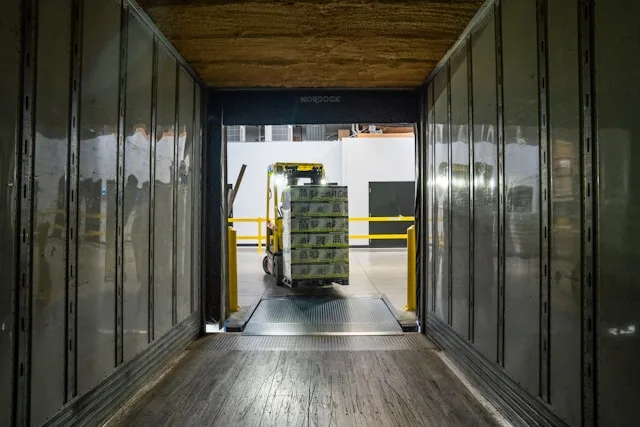
Gradiška processes roughly 1,300 heavy goods vehicles through its border crossing every day. For a Bosnian municipality of 52,000 people, that volume of commercial traffic has produced something unusual: an entire local economy built around the friction of moving goods across an international frontier. Customs brokers, freight forwarders, truck parks, driver accommodation, expediting services, and roadside fuel stops all exist because crossing from Bosnia and Herzegovina into Croatia takes between 45 and 120 minutes rather than the EU target of 15.
That friction is now being engineered away. The Svilaj section of Corridor Vc, the Pan-European transport corridor connecting Budapest to the Adriatic, reached 68% completion early in 2025. When the motorway section opens fully in the second half of 2026, traffic modelling projects that 30 to 40% of Gradiška's current transit volume will divert to the new Svilaj crossing 15 kilometres east. For the municipality's wider transport infrastructure, this is progress. For the 680 to 720 people whose livelihoods depend on the current crossing's inefficiency, it is an existential question.
What follows is an analysis of a market where macroeconomic infrastructure improvement and local employment stability are working against each other, where a 12.4% unemployment rate coexists with 67-day vacancy durations for technical logistics roles, and where the talent required to transition the sector toward higher-value operations barely exists in the region. For any organisation operating, investing, or hiring in Western Balkans logistics, Gradiška is a case study in what happens when a border economy meets modernisation head-on.
The Border Delay Economy and What Sustains It
Gradiška's position as the busiest Bosnia-Croatia commercial crossing point is a function of geography and infrastructure timing. The municipality sits on the Sava River directly opposite Croatia's Stara Gradiška, and until Corridor Vc completes, it remains the default route for EU-bound freight from central Bosnia and Republika Srpska. In 2024, the crossing handled 487,000 commercial vehicle movements according to Bosnia's Border Police statistics.
The 45-to-120-minute crossing time during peak season is not simply a delay. It is the economic engine of a cluster of micro-enterprises. Forty-two percent of the sector's workforce operates in road freight transport, predominantly in firms running one to five trucks. Another 28% works in customs brokerage and documentation. The remaining 30% fills warehousing, cargo handling, and support services: fuel, maintenance, and driver catering.
Why Delay Creates Employment
The relationship between crossing time and local employment is direct and measurable. A truck waiting 90 minutes at a border requires parking, potentially overnight accommodation for its driver, refuelling, and often the services of a licensed customs broker to manage documentary clearance. When peak-season volumes spike 40% above winter lows, these services scale with demand. The RS Economic Institute's 2024 vulnerability assessment found that 78% of Gradiška's logistics employment depends on the single Stara Gradiška crossing. Any disruption, whether geopolitical, technical, or infrastructural, creates immediate sectoral unemployment.
This is the tension at the centre of Gradiška's logistics market. The World Bank's 2024 Western Balkans Trade and Transport Facilitation report identifies border crossing times as a primary barrier to regional trade integration. Reducing those times is a stated policy objective. But the municipality has no documented transition plan, no warehouse zoning expansion, and no compensatory economic development strategy to absorb the displacement that faster transit will cause. The efficiency that benefits the corridor as a whole may hollow out the community that hosts it.
The Skills That Should Replace the Delay Economy Do Not Exist Locally
If Gradiška is to transition from a border-delay economy to a higher-value logistics hub offering warehousing, consolidation, and EU-compliant freight management, it needs a workforce with an entirely different skill profile. The current workforce is configured for delay: parking management, basic customs documentation, roadside services. The future workforce needs licensed customs brokers fluent in the Union Customs Code, forwarding managers with TIR and CMR convention expertise, fleet compliance officers who understand the EU Mobility Package, and specialists in the New Computerised Transit System Phase 5.
That workforce does not exist in sufficient numbers. The Indirect Taxation Authority licensed only three new customs brokers in Gradiška during 2024. Seven retired or left. The net deficit is four brokers in a single year, drawn from a base of just 23.
The Demographic Cliff Behind the Numbers
The age profile compounds the shortage. Eighty-nine percent of Gradiška's licensed customs brokers are aged 45 or older, according to the ITA's 2024 personnel statistics. There is no pipeline. The Privredna Komora Republike Srpske's regional office processed 140 logistics-related training applications from the Gradiška area last year, but training applications and licensed, experienced professionals are different categories entirely. The gap between a training application and a broker capable of managing NCTS Phase 5 clearances under the EU Carbon Border Adjustment Mechanism is measured in years, not months.
The working-age population of Gradiška declined 1.8% annually between 2019 and 2024, according to RS Institute of Statistics demographic projections. This is not a temporary dip. It is a structural contraction of the labour pool from which every logistics employer in the municipality must recruit. When the pool shrinks and the skills required become more specialised simultaneously, the result is not a labour market. It is a competition for individuals.
This is where the article's central analytical claim becomes visible. Gradiška's logistics sector is not experiencing a talent shortage in the conventional sense. It is experiencing a category error: the skills that sustain the current economy are not the skills that will sustain the next one, and the transition timeline imposed by Corridor Vc and EU regulatory harmonisation is shorter than the time required to develop those skills locally. Capital and infrastructure are moving at motorway speed. Human capital is moving at training-programme speed.
Twelve Percent Unemployment and Sixty-Seven-Day Vacancies: The Paradox Explained
Republika Srpska reported a structural unemployment rate of 12.4% in Q3 2024. To a hiring executive unfamiliar with the market, this suggests labour surplus. Gradiška should be easy to hire in. It is not.
The RS Employment Service registered 127 active transport and storage vacancies for Gradiška municipality in Q4 2024, a 34% increase year-on-year. Average days-to-fill for skilled logistics roles stood at 67 days, nearly three times the 23-day average for general administrative positions. The unemployment surplus is real but irrelevant to the roles that matter. A municipality with thousands of unemployed residents cannot fill a customs brokerage position because the unemployed population does not hold ITA certifications, Union Customs Code training, or NCTS system proficiency.
ADR Drivers and the Outsourcing Consequence
The paradox is sharpest in hazardous materials transport. According to dispute filings cited by the RS Transport Federation, Gradinski put a.d. restructured its fleet operations in Q2 2024 to outsource ADR transport to a Zagreb-based contractor. The company had searched for a qualified local ADR Class 1 and 3 driver for six months, offering €1,800 per month against a local average of €1,200. No qualified candidate was found.
The outsourcing decision is individually rational. It is collectively destructive. Every ADR route outsourced to a Croatian contractor is a route that no longer develops local capability. The driver who might have been trained does not get trained. The certification pathway atrophies. The next search will be harder than the last one, not easier.
For senior logistics operators evaluating the Western Balkans, this dynamic is a signal. The available workforce in municipalities like Gradiška is configured for today's operations, not tomorrow's requirements. Any hiring strategy that assumes general unemployment translates into available skilled talent will fail in the same way executive searches fail when they mistake candidate volume for candidate quality.
What Gradiška Pays and Why It Cannot Compete
Compensation in Gradiška's logistics sector reflects the municipality's position in a regional hierarchy where every rung above it offers materially more. Understanding the pay structure is essential for any organisation considering operations or hiring in this corridor.
A senior customs broker or compliance team lead with five or more years of experience and an ITA licence earns between €1,400 and €1,900 per month in base salary, with performance bonuses tied to clearance volumes. At director level, covering regional customs operations, total compensation reaches €55,000 to €72,000 annually including bonuses, according to the BiH Management Association's 2024 Executive Compensation Study.
In freight forwarding, an operations manager overseeing 50 or more full-time equivalents earns €1,200 to €1,700 monthly. A general manager with multi-site responsibility earns €3,500 to €5,500, though international firms operating through BiH pay Zagreb-indexed rates of €4,500 to €7,000 for equivalent roles.
The Zagreb Multiplier
These figures cannot be read in isolation. Zagreb, 170 kilometres west, offers 3.2 to 4.0 times the salary for equivalent customs brokerage positions: €6,000 to €9,000 monthly, with EU labour mobility rights included, according to Eurostat purchasing power parity adjusted wage data. Slavonski Brod, just 20 kilometres north across the Croatian border, pays truck drivers €2,200 to €2,800 monthly against Gradiška's €1,000 to €1,400, with EU social benefits.
Banja Luka, only 35 kilometres east within Republika Srpska, draws mid-level managers with salaries 15 to 20% higher and career progression into national headquarters roles. DHL Express operates from Banja Luka rather than Gradiška, and according to DHL's BiH corporate presence data, it draws senior talent from the Gradiška area.
The compensation gap between Gradiška and its nearest competitors is not closing. It is widening at exactly the seniority levels where the transition to higher-value logistics operations requires the most experienced people. An experienced customs broker choosing between €1,900 in Gradiška and €7,000 in Zagreb is not making a nuanced career decision. The arithmetic is overwhelming. The only professionals who stay are those with deep personal ties to the municipality, property obligations, or family circumstances that prevent relocation. For executive-level talent acquisition strategies, this means the conventional approach of advertising a role and waiting for applications reaches almost no one worth hiring.
Regulatory Modernisation Is Arriving Faster Than the Workforce Can Adapt
Two regulatory forces are converging on Gradiška's customs brokers simultaneously. The EU's Carbon Border Adjustment Mechanism requires new carbon reporting capabilities for goods crossing into EU territory. NCTS Phase 5, the full deployment of the EU's New Computerised Transit System, demands digital fluency that most of Gradiška's broker workforce does not currently possess.
The BiH Directorate for Economic Planning's 2025 EU Integration Readiness Report estimates that 85% of current customs brokers in Gradiška require upskilling to meet these requirements. The compliance cost is €3,500 to €5,000 per broker for software and certification. For a micro-enterprise running two or three brokers, this is not a rounding error. It is a material capital expenditure with no guarantee that the broker, once trained, will not leave for a higher-paying market.
The Community Customs Code Deadline
Separately, Bosnia's EU candidate status requires implementation of the Community Customs Code by 2027. The IT infrastructure at Gradiška's customs terminal requires a €12 million upgrade to meet this standard, according to BiH's Ministry of Foreign Trade EU Integration Roadmap. The physical scanning capacity improved in 2024 when six additional devices were deployed, increasing inspection throughput by 30%. But the bottleneck is not machines. It is the single-shift documentary processing schedule running from 08:00 to 20:00, which creates predictable congestion for just-in-time EU-bound freight.
For organisations dependent on this crossing for supply chain reliability, the regulatory trajectory is clear: compliance costs will rise, processing requirements will become more complex, and the human resources to manage that complexity are in net decline locally. The three to four mid-sized firms expected to emerge through micro-enterprise consolidation will need the same skilled brokers that everyone else needs. Consolidation changes the corporate structure. It does not create talent.
The Passive Candidate Problem in a Market This Small
In larger markets, the distinction between active and passive candidates is a matter of search methodology. In Gradiška, it is the entire hiring equation.
The Hays Balkans Logistics Market Report for 2024 estimates that 80 to 85% of licensed customs brokers in the Gradiška-Banja Luka corridor are employed and not actively seeking new roles. The ManpowerGroup Talent Shortage Survey for BiH shows a passive candidate ratio of 3:1 for supply chain managers with EU accreditation: three employed professionals for every one actively looking.
In a market with 23 licensed brokers, 80% passivity means roughly 18 or 19 are not looking. The remaining four or five who might be open to a conversation are the same four or five that every employer in the municipality is already aware of. There is no hidden pool to discover through job postings. The market is too small for anonymity. Everyone knows everyone.
What This Means for Search Strategy
General cargo truck drivers represent the only truly active candidate segment, with 35% annual turnover creating regular movement. But the moment a specialisation is added, whether ADR certification, cold chain capability, or TIR carnet expertise, the market reverts to passive dynamics. The experience of Šped-trans Gradiška illustrates this: the firm's search for a TIR carnet specialist with CMR convention expertise reportedly ran for 11 months during 2023 and 2024. The role was eventually filled by recruiting from Banja Luka with a 25% salary premium above standard local rates, according to proceedings from the Ekonomski forum Gradiška in November 2024.
This pattern is not unique to Gradiška. It is characteristic of any market where the total population of qualified professionals is measured in dozens rather than hundreds. The methodology that works in Frankfurt, Zagreb, or even Banja Luka, posting a role and filtering inbound interest, reaches almost none of the candidates who matter in a market this concentrated. Finding the right person requires knowing who they are, where they work, and what would make them move. In a 23-broker market where seven left and three entered in a single year, this is not recruitment. It is individual negotiation.
What Corridor Vc Changes and What It Does Not
The completion of the Svilaj-Gradiška motorway section, projected for Q3 2026, will divert approximately 30% of transit traffic to the new crossing point. For the corridor's overall efficiency, this is a meaningful improvement. Reduced urban congestion is projected to save an estimated €4.2 million annually, according to the RS Ministry of Transport's economic impact assessment.
For Gradiška's logistics workforce, the calculation is different. Forty percent of local logistics jobs exist because of the "border delay economy": the truck parking, driver accommodation, expediting services, and roadside retail that thrive on current wait times. A 30% volume reduction does not eliminate these services entirely, but it compresses their economics below viability for the smallest operators.
The market structure response will be consolidation. The Federation of Transport Associations of BiH forecasts that three to four mid-sized operators of 20 to 50 employees will emerge through merger of micro-firms. Solo operators with single trucks face marginalisation as new EU environmental and insurance requirements raise the cost of independent operation. The counteroffer dynamics in this consolidation phase will be acute: the few qualified brokers and managers become even more valuable as fewer, larger firms compete for the same constrained talent pool.
Yet no modern Class A logistics facility exists in Gradiška. The municipality holds approximately 12,000 square metres of Class B and C warehouse space, with nothing approaching the 10,000-plus square metre cross-docking facilities that would attract distribution operations. No foreign-majority logistics multinational maintains a presence. The nearest major anchor is DHL Express in Banja Luka.
The corridor upgrade creates a window. If Gradiška can develop warehousing and consolidation infrastructure before the traffic diversion completes, it has a chance to replace delay-economy jobs with distribution-economy jobs. If it cannot, the motorway that was supposed to connect it to European markets may instead bypass it entirely.
What This Market Requires From Senior Hiring Leaders
The challenges facing logistics operations in Gradiška are not solvable through standard recruitment. A market with 23 licensed brokers, a net annual loss of four, 89% aged 45 or older, and passive candidate rates above 80% does not respond to job advertisements or applicant tracking systems. The total addressable candidate pool for any critical role is small enough to map individually.
For organisations with cross-border logistics operations touching the Western Balkans, the implications extend beyond Gradiška. The same demographic decline, regulatory complexity, and compensation disparity with EU neighbours applies across the Bosnia-Herzegovina logistics corridor. The specific dynamics are more visible in Gradiška because the market is smaller and the data is clearer, but the pattern is regional.
KiTalent's approach to markets like this uses AI-enhanced talent mapping to identify the full universe of qualified professionals, not just those who happen to be looking. In a market where the entire candidate pool might number fewer than 30 individuals, the difference between mapping every one of them and posting a job advertisement is the difference between filling a role and watching it sit open for 11 months.
With a pay-per-interview model that eliminates upfront retainer risk and a track record of delivering interview-ready candidates within 7 to 10 days, KiTalent works with organisations that cannot afford the cost of a prolonged vacancy in a market where every month of delay increases the probability that the best remaining candidate accepts an offer from Zagreb or Banja Luka. A 96% one-year retention rate matters more in a market this small, where a failed placement does not just cost money. It removes a candidate from the available pool entirely.
For organisations hiring logistics leadership in the Western Balkans, where the candidate pool is measurable in dozens and every qualified professional is already known to every local employer, start a conversation with our executive search team about how direct headhunting reaches the candidates that no job board can surface.
Frequently Asked Questions
What is the average salary for a customs broker in Gradiška, Bosnia and Herzegovina?
A licensed customs broker in Gradiška with five or more years of experience earns between €1,400 and €1,900 per month in base salary. At director level with regional coverage, total annual compensation reaches €55,000 to €72,000 including bonuses. These figures sit well below equivalent roles in Zagreb, Croatia, where experienced brokers command €6,000 to €9,000 monthly. The disparity is the primary driver of talent outflow from the Gradiška corridor and makes retention of senior professionals one of the most pressing challenges for local logistics employers.
Why is it so hard to hire logistics professionals in Gradiška?
Three factors converge. First, 80 to 85% of qualified customs brokers in the region are passive candidates, employed and not seeking new roles. Second, the total pool is extremely small: only 23 licensed brokers operate in the municipality. Third, demographic decline is shrinking the working-age population by 1.8% annually while regulatory modernisation demands increasingly specialised skills. General unemployment of 12.4% in Republika Srpska masks acute shortages in technical logistics roles, where vacancy fill times average 67 days.
How will Corridor Vc affect logistics employment in Gradiška?
The Svilaj-Gradiška motorway section, projected to open in Q3 2026, is expected to divert 30 to 40% of transit traffic to a new crossing point 15 kilometres east. This will reduce border congestion but threatens an estimated 40% of local logistics jobs that depend on the "border delay economy," including truck parking, driver accommodation, and roadside services. Consolidation of micro-enterprises into mid-sized firms is anticipated, though no compensatory warehouse development plan is currently documented.
What regulatory changes affect Bosnia's logistics sector in 2026?
Two major changes are converging: full deployment of the EU's New Computerised Transit System Phase 5 by mid-2026 and implementation of the Carbon Border Adjustment Mechanism. The BiH Directorate for Economic Planning estimates 85% of Gradiška's customs brokers need upskilling, at a cost of €3,500 to €5,000 per person. Separately, Bosnia's EU candidate status requires Community Customs Code implementation by 2027, necessitating a €12 million IT infrastructure upgrade at the Gradiška customs terminal.
How does executive search work in small logistics markets like Gradiška?
In markets where the total qualified candidate pool numbers in the dozens rather than hundreds, traditional job advertising reaches almost no one worth hiring. Effective executive search in specialised logistics markets requires direct identification and approach of passive professionals. KiTalent uses AI-enhanced talent mapping to identify every qualified individual in a given corridor, then approaches them directly with a specific proposition. This method consistently outperforms job postings in markets where 80% or more of qualified professionals are not actively looking.
What are the biggest risks for logistics businesses operating near Gradiška?
The primary risk is single-point-of-failure dependency: 78% of local logistics employment relies on one border crossing. Secondary risks include demographic decline constraining the labour pool, a compensation gap with Croatian competitors that makes retention difficult, and the potential displacement effect of Corridor Vc completion. Organisations considering investment in this corridor should conduct detailed talent mapping and market benchmarking before committing to operations that depend on locally sourced specialist staff.