Hannover's Exhibition Sector Is Booking Faster Than It Can Staff: The Constraint That Will Define 2026
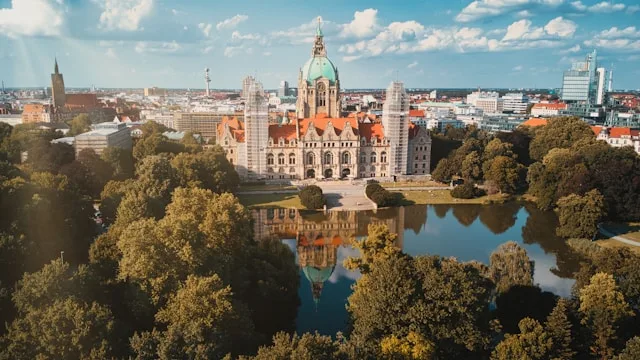
Hannover's exhibition halls are 78% pre-booked for 2026, a figure above the five-year average and rising. Deutsche Messe AG, the anchor institution behind one of Europe's most important industrial trade fair calendars, ended 2023 with €441 million in revenue and is projecting 8 to 10% exhibitor growth for next year's flagship Hannover Messe. On paper, the recovery from pandemic-era disruption is nearly complete. In practice, the sector is running on a workforce it cannot replenish and an accommodation base it cannot expand.
The tension at the centre of Hannover's MICE economy is not between supply and demand in any conventional sense. It is between a revenue model that has recovered through price increases and productivity extraction and a labour market where the people needed to sustain that model are vanishing from the hiring pool. Exhibition construction masters, hybrid event architects, and international sales directors are not unemployed and waiting. They are employed, passive, and increasingly expensive to move. The 1,840 open positions in event management and exhibition construction across the Hannover region as of late 2024 represent a 23% increase over 2019 levels. The average time to fill a skilled role has stretched to 68 days, sixteen days longer than the regional average across all sectors.
What follows is a structured analysis of the forces reshaping Hannover's exhibition and trade fair sector, the specific roles and skills driving the most acute competition, and what organisations operating in this market need to understand before they commit to a 2026 hiring plan that the current talent pool may not be able to support.
The Recovery That Did Not Bring the Workforce Back
The narrative around Hannover's exhibition sector in 2026 is one of resilience. Attendance at the 2025 Hannover Messe stabilised at roughly 85 to 90% of pre-pandemic physical levels, with 4,000 exhibitors and 130,000 visitors. The digital engagement layer that expanded during the pandemic has settled into a permanent but smaller revenue stream: Deutsche Messe's digital services division reported €23 million in 2023, down from a €45 million peak in 2021 but well above pre-pandemic baselines.
The workforce, however, did not follow the same trajectory. The sector's contribution to the Hanover regional economy stands at approximately €3.8 billion annually, supporting 38,000 direct and indirect jobs. But the exhibition construction cluster that physically builds, installs, and dismantles the trade fair infrastructure is operating with chronic vacancies. The Hanover Chamber of Crafts reports 340 unfilled apprenticeship positions and a 34% dropout rate from training programmes. The pipeline that historically replenished this workforce is broken at the entry point.
This is the original analytical claim that the data supports but that no single source states directly: Hannover's exhibition sector has recovered its revenue without recovering its headcount. The gap between the two is being bridged by overtime, productivity pressure, and price increases rather than by new hires. That bridge holds during a year of moderate demand. It will not hold if 2026 delivers the exhibitor growth that current booking data projects.
The MICE sector's dependence on seasonal labour compounds the problem. During peak fair weeks, temporary staffing agencies supply between 2,500 and 3,000 workers to hospitality and logistics alone. But the core exhibition construction and technical event management roles cannot be filled with temporary labour. They require deep expertise that takes years to develop, and the people who hold that expertise are not looking for new positions.
Where the Real Bottleneck Sits: Accommodation, Not Transport
A common assumption about Hannover's exhibition infrastructure is that transport capacity constrains growth. The data says otherwise. Hannover Airport handled 5.2 million passengers in 2024, still 12% below 2019 levels. There is spare capacity in the air. Rail connections to the fairgrounds are functional and well-established. The binding constraint is accommodation.
Hotel Capacity During Peak Fairs
Hannover's hotel inventory of approximately 15,000 rooms reaches 98% utilisation during major fairs. Average daily rates inflate by 340% above baseline during Hannover Messe and CeMAT. This is not a pricing signal that attracts new supply. The development pipeline shows only 420 additional rooms coming online by 2027, a 2.8% increase against a demand curve that is growing faster.
The accommodation bottleneck creates a cascading talent problem. Major fairground-adjacent hotels, including the Maritim Hotel Hannover (408 rooms, 220 employees), Congress Hotel am Stadtpark (261 rooms, 110 employees), and the Radisson Blu (250 rooms, 95 employees), operate with skeleton crews during off-peak periods and surge hiring during fairs. The extreme seasonality makes permanent hospitality roles unattractive to skilled workers who can find year-round employment in Frankfurt or Munich.
The Misallocation of Public Investment
Regional economic development funding continues to prioritise transport infrastructure, including A2 and A7 motorway expansion, over hospitality investment. The empirical evidence suggests this is addressing a constraint that does not bind while ignoring the one that does. An exhibitor who cannot book a hotel room within 40 kilometres of the fairgrounds at a reasonable rate is not helped by a faster motorway. The risk is that recurring exhibitors, faced with pricing volatility that adds five figures to their participation cost, begin evaluating alternative venues.
This dynamic matters for talent strategy because it limits Hannover's ability to attract and retain senior professionals across the exhibition and events sector. A market that cannot house its own visitors during peak periods sends a signal about scalability that makes long-term career commitments less attractive.
The Roles That Cannot Be Filled and the Premiums They Command
The Hannover MICE sector's hiring challenges are concentrated in three categories, each with distinct dynamics and different implications for search strategy.
Exhibition Construction Masters
The most acute shortage sits in the skilled trades. Exhibition construction master craftsmen, holding Zimmerermeister or Schreinermeister qualifications, combine traditional carpentry mastery with CAD/CAM system proficiency. Ninety-four percent of qualified candidates in this category are employed and not actively searching. Average tenure at their current employer is 7.2 years.
The Uniplan case illustrates the difficulty. According to IHK Hannover documentation and archived job posting data, the firm advertised for a senior exhibition construction project manager with master certification from March through September 2024. That is 180 days. The role was reportedly filled by recruiting from a competitor in Frankfurt, at a 15% premium above standard Hannover market rates. A base salary range of €55,000 to €72,000 becomes €75,000 to €90,000 in total compensation when overtime premiums during peak seasons are included. But even at that level, the premium required to move a passive candidate from a stable position in a competing city is substantial.
The Hanover Chamber of Crafts classifies this as an acute shortage occupation with vacancy rates exceeding 8%. The German Skilled Immigration Act (Fachkräfteeinwanderungsgesetz), which entered its third implementation phase in March 2024, was designed to ease visa processes for non-EU exhibition construction specialists and event technicians. Uptake in Hannover has been slower than in Frankfurt or Munich, partly because Hannover's lower international visibility makes it harder to attract candidates from outside Germany in the first place.
Digital and Hybrid Event Technologists
The second critical gap is in hybrid event technology. The pandemic created permanent demand for professionals who can manage streaming platforms, LED wall configurations, and spatial computing for virtual exhibitions. Deutsche Messe's subsidiary DMCE restructured its technical services division in mid-2024, creating a new Hybrid Events Architect role reporting directly to the CTO. According to IHK documentation citing internal Deutsche Messe personnel reporting, the company had spent six months attempting to fill comparable positions through standard recruitment before restructuring the role and ultimately recruiting from the broadcast television sector in Berlin.
The Berlin hire came with an accommodation that is unusual for Hannover-based technical roles: remote-work flexibility. This is telling. Berlin's IT talent market offers more flexible arrangements and startup equity cultures that Hannover's traditional industrial exhibition sector struggles to match. A Technical Event Manager with digital and hybrid focus commands €68,000 to €85,000 in base salary, a 12 to 15% premium over traditional event managers. But the compensation gap is less important than the cultural gap. Candidates from Berlin's technology and broadcast sectors are accustomed to working environments that Hannover's exhibition sector has not historically offered.
International Trade Fair Sales Directors
The third shortage is in international sales, specifically professionals who can acquire exhibitors from Asian markets. Aggregate data from the Bundesagentur für Arbeit indicates that specialists in Asian market acquisition receive 78% fewer applications than equivalent domestic sales roles. Eighty-five percent of successful placements in this category occur through executive search rather than job postings.
A VP Sales for International Markets commands €140,000 to €180,000 in base salary, with uncapped commission structures for exhibition space sales pushing total compensation to €220,000 to €280,000. At this level, Hannover competes directly with Frankfurt, where equivalent roles pay 18 to 22% more in base salary and where the airport hub and international school infrastructure make relocation significantly easier for executives with families.
The cost of a failed search at this seniority is measured not just in recruiter fees but in lost exhibitor relationships that take years to build.
The Compensation Map: What Hannover Pays and Where It Loses
Compensation in Hannover's MICE sector follows a clear hierarchy, but the more important story is where Hannover sits relative to its competitors and what that positioning means for talent attraction.
At the senior specialist and manager level, a Senior Exhibition Project Manager with five to eight years of experience earns €62,000 to €78,000 in base salary plus project bonuses averaging €8,000 to €12,000. A Messebau-Projektleiter at master craftsman level earns €55,000 to €72,000 base, with overtime driving total compensation higher during peak periods.
At the executive level, a Director of Event Operations at Deutsche Messe AG or a large contractor commands €125,000 to €165,000 base with bonus potential of 20 to 30%. A Creative Director at an exhibition design agency earns €110,000 to €145,000 base, with equity participation common in mid-sized Hannover agencies.
The problem is not that these figures are low in absolute terms. It is that Frankfurt pays 18 to 22% more for equivalent senior roles, Munich offers 15 to 20% premiums for digital and sustainability specialists, and even Düsseldorf and Cologne offer 8 to 12% more for exhibition construction project managers. Hannover's cost of living advantage partially offsets these gaps at the mid-level. It does not offset them at the executive level, where the negotiation involves total career value rather than monthly take-home pay.
Frankfurt's Messe Frankfurt, with €650 million in revenue, offers broader career progression paths. Munich's Messe München has, according to IAB labour market monitoring data, actively recruited Hannover-based talent for its automotive and environmental technology fairs. The talent flow is directional. It moves from Hannover outward, and the compensation differential accelerates it.
For organisations hiring in this market, the implication is clear: a standard salary benchmarking exercise calibrated to Hannover's local market will produce offers that lose candidates to competing cities before the first interview.
The Deutsche Messe Investment Cycle and What It Demands
Deutsche Messe AG has allocated €180 million for infrastructure modernisation through 2027. This includes a Hall 1 energy efficiency retrofit and 5G campus network expansion. The capital expenditure cycle will create sustained demand for construction project managers and technical facility managers through late 2026 and beyond.
This investment sits against a regulatory backdrop that is raising costs across the sector. The German Building Energy Act (Gebäudeenergiegesetz) mandates progressive CO2 reduction for temporary structures, increasing exhibition construction costs by an estimated 12 to 18% through 2026. Deutsche Messe faces regulatory pressure to achieve climate neutrality by 2035. That target requires not just capital but people who understand sustainable construction certification, reusable stand systems like Aluvision and beMatrix, and carbon-neutral material sourcing.
The sustainability skills gap is a subset of the broader trades shortage, but it has a different character. The traditional exhibition construction workforce built temporary structures designed to be dismantled and discarded. The new regulatory environment demands structures designed to be dismantled and reused, with full lifecycle carbon accounting. This is not a minor adjustment. It requires new technical competencies that the existing training pipeline is not producing at sufficient volume.
The 340 unfilled apprenticeship positions in the Hanover Chamber of Crafts district are not just a number. They represent a structural failure in workforce renewal that will take five to seven years to correct, even if every position were filled tomorrow. The 34% dropout rate from training programmes suggests that many of them will not be.
The Industrial Cycle Risk That Shadows Every Hiring Decision
Hannover Messe's core identity is industrial. Its exhibitor base draws from automation, energy technology, and logistics equipment sectors. This gives the trade fair distinctive value, but it also creates cyclical exposure that other German exhibition cities do not share to the same degree.
The S&P Global Purchasing Managers' Index for German manufacturing remained below 50 for 18 consecutive months through December 2024. A PMI below 50 indicates contraction. For a trade fair whose exhibitors are drawn overwhelmingly from manufacturing, this creates headwinds that no amount of talent acquisition can overcome if exhibitors begin reducing their participation budgets.
Deutsche Messe's risk reporting acknowledges this exposure. The 2026 Hannover Messe theme of AI in manufacturing is partly a strategic pivot: by positioning the fair at the intersection of traditional industry and emerging technology, the company is attempting to diversify its exhibitor base toward AI and technology businesses that are growing while traditional manufacturing contracts.
The talent implication is that the profiles Deutsche Messe needs for 2026 and beyond are different from those it needed in 2019. International sales directors must understand AI applications in industrial settings. Exhibition project managers must design spaces that demonstrate autonomous systems and digital twins, not just machine tools on plinths. The skills are shifting beneath the job titles, and the talent pipeline that served the old model is not producing candidates for the new one.
What Organisations Hiring in This Market Need to Do Differently
Hannover's MICE talent market has three defining characteristics that conventional hiring methods cannot address. First, the most critical roles are overwhelmingly passive. Ninety-four percent of exhibition construction masters, 88% of international sales directors, and 85% of senior event technicians are not actively looking. A job posting reaches, at best, the 6 to 15% of the pool that is already in motion. Second, the competing cities are not waiting. Frankfurt, Munich, and Berlin are actively drawing Hannover's best people with compensation premiums and lifestyle advantages that a reactive employer cannot match. Third, the skills profile is changing faster than the training system can respond, meaning the candidates who fit tomorrow's requirements are even scarcer than those who fit today's.
For organisations that need to fill Director of Event Operations roles, VP Sales positions, or senior technical leadership in this market, the search process itself becomes the competitive advantage. A search that relies on inbound applications will miss the overwhelming majority of viable candidates. A search that takes 90 days will lose the strongest candidates to firms that moved in 30.
KiTalent's approach to executive search and direct headhunting was built for markets with exactly these characteristics: high passive candidate ratios, intense competition from neighbouring geographies, and a premium on speed. By using AI-powered talent mapping to identify and engage candidates who are not on any job board, KiTalent delivers interview-ready candidates within 7 to 10 days. The pay-per-interview model means organisations only invest when they are meeting qualified people, not when a retainer is signed.
With a 96% one-year retention rate across 1,450 completed executive placements, the methodology is designed to move passive candidates in markets where the traditional recruitment playbook consistently fails.
For organisations competing for exhibition leadership, hybrid event technology, or international sales talent in Hannover's constrained and competitive MICE sector, start a conversation with our executive search team about how we approach this market differently.
Frequently Asked Questions
What is the average salary for an exhibition project manager in Hannover?
A Senior Exhibition Project Manager with five to eight years of experience in Hannover earns €62,000 to €78,000 in base salary, with project bonuses of €8,000 to €12,000. Master craftsman-level Messebau-Projektleiter earn €55,000 to €72,000 base, rising to €75,000 to €90,000 in total compensation during peak fair seasons. These figures trail Frankfurt by 18 to 22% and Munich by 15 to 20% for equivalent roles, making retention a persistent challenge for Hannover-based employers who do not supplement compensation with non-financial differentiators such as remote flexibility or project variety.
Why is it so hard to hire exhibition construction specialists in Germany?
Germany's exhibition construction sector faces a systemic workforce renewal failure. The Hanover Chamber of Crafts reports 340 unfilled apprenticeship positions with a 34% dropout rate from training programmes. Ninety-four percent of qualified exhibition construction masters are employed and not actively searching, with average tenure of 7.2 years. The German Skilled Immigration Act has simplified visa processes for non-EU specialists, but processing times of four to six months and Hannover's lower international profile compared to Frankfurt or Munich have limited uptake. The shortage is not cyclical. It is embedded in a training pipeline that has been underproducing for years.
How large is Hannover's MICE sector?
The MICE sector contributes approximately €3.8 billion annually to the Hannover regional economy, supporting 38,000 direct and indirect jobs. Deutsche Messe AG alone reported €441 million in 2023 revenue, employing 1,200 permanent staff and engaging roughly 1,800 temporary workers during peak periods. The exhibition construction cluster includes 180 registered firms and 4,200 workers. Hannover ranks fourth among German exhibition cities by rental space and revenue, behind Frankfurt, Munich, and Cologne, according to AUMA's industry reporting.
What executive roles are most in demand in Hannover's exhibition sector?
Three executive categories face the most acute shortages: Director of Event Operations (€125,000 to €165,000 base), VP Sales for International Markets (€140,000 to €180,000 base, up to €280,000 total with commissions), and Creative Director at exhibition design agencies (€110,000 to €145,000 base). For all three, the majority of successful placements happen through direct headhunting rather than job advertisements, because the candidates who can fill these roles are overwhelmingly in stable positions and not monitoring job boards.
How does KiTalent approach executive search in niche sectors like exhibitions and trade fairs?
KiTalent uses AI-powered talent mapping to identify passive candidates in specialised markets where traditional job advertising reaches fewer than 15% of viable professionals. In sectors like exhibitions and MICE, where 85 to 94% of senior talent is not actively searching, this direct identification capability is the difference between a six-month vacancy and a shortlist delivered within 7 to 10 days. The pay-per-interview model means clients invest only when meeting qualified candidates, and full pipeline transparency through weekly reporting ensures hiring leaders have real-time visibility into market conditions and candidate engagement.
Is Hannover's exhibition sector at risk from the German manufacturing downturn?
Yes. Hannover Messe's exhibitor base is heavily concentrated in industrial automation, energy technology, and logistics equipment. With the German manufacturing PMI below 50 for 18 consecutive months through late 2024, exhibitor budgets face downward pressure. Deutsche Messe is partially mitigating this risk by pivoting the 2026 Hannover Messe toward AI in manufacturing, broadening the exhibitor base beyond traditional heavy industry. However, the cyclical exposure remains a material risk for hiring plans, particularly for roles tied to industrial sector sales acquisition.