Innsbruck's Outdoor Sector Is Breaking Tourism Records and Losing the Workforce That Makes Them Possible
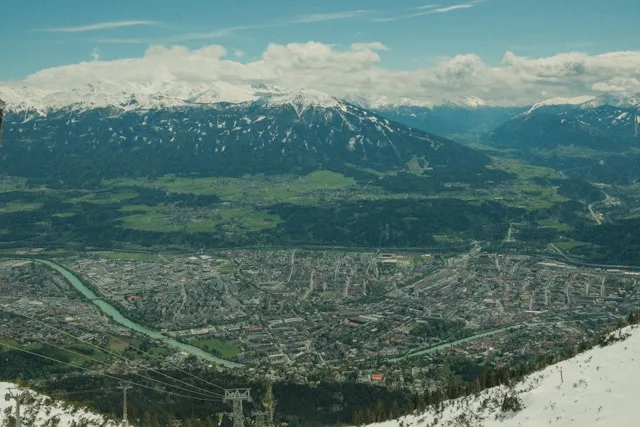
Tyrol recorded 20.4 million overnight stays in 2024. Revenue for specialist sporting goods retailers across the region reached €487 million in 2023. Mountain guide firms operated at utilisation rates above 85% through winter high season. By every demand metric, Innsbruck's outdoor and winter sports cluster is thriving.
The workforce keeping that cluster running is not. Apprenticeship starts in sporting goods retail and technical crafts fell 18% across Tyrol between 2019 and 2023. UIAGM-certified mountain guide positions sit unfilled for eight to twelve months. Race-level ski servicing technicians exist in a micro-market with zero unemployment, meaning every hire requires extracting a professional from an existing employer. The sector's bottleneck has shifted permanently: goods are available, but the skilled humans required to sell, rent, service, and guide are not.
What follows is a ground-level analysis of the forces reshaping Innsbruck's outdoor and winter sports talent market, the specific roles and skills in shortest supply, and what organisations operating in this sector need to understand before they make their next senior hire.
Record Tourism Demand Meets a Workforce That Has Stopped Arriving
Innsbruck's outdoor sector exists at an unusual intersection. It is simultaneously a tourism economy, a specialist retail market, a technical services cluster, and an alpine safety operation. Each of these layers depends on different talent, and each is experiencing its own version of the same problem: demand is outpacing the humans available to meet it.
The tourism numbers tell only the demand side of the story. Innsbruck accounted for 3.8 million of Tyrol's overnight stays in 2024, and the broader regional figure rose 2.3% year-on-year. That growth drives rental volume, guide bookings, retail footfall, and event revenue. It does not, however, create the technicians, guides, or managers required to service it.
The structural disengagement is visible across every layer. Independent ski rental workshops have declined 12% since 2019. Chain-affiliated operations now control 68% of the Innsbruck basin's rental volume, not because chains are inherently superior, but because independent operators cannot staff their businesses. Repair workshop lead times stretched to five to seven days during the Christmas 2024 peak, more than double the pre-pandemic standard of two to three days. The constraint is not parts. It is people.
What makes this market different from a standard seasonal labour squeeze is that the shortages are concentrated in the most skilled, most safety-critical roles. Retail floor staff and seasonal hires remain relatively accessible: 70% of candidates in that segment are actively seeking work. But the professionals who differentiate Innsbruck's outdoor cluster from a generic tourism economy, the certified guides, the race-level technicians, the managers who can run omnichannel rental operations, operate in talent pools where 60% to 85% of qualified individuals are not looking for a new role. Reaching them requires a fundamentally different approach from posting a vacancy and waiting.
The Guide Shortage: A Pipeline Problem No Salary Increase Can Solve Alone
Why Vacancy Durations Stretch Beyond Eight Months
The UIAGM-certified mountain guide is the most prestigious and scarcest professional in Innsbruck's outdoor economy. According to the Österreichischer Bergführerverband, guide positions in the Innsbruck region remain unfilled for an average of eight to twelve months despite active recruitment campaigns. Only 45 new state-certified guides qualify annually across the whole of Austria, against more than 120 retirements. The mathematics are unambiguous. The profession is shrinking.
The ÖBV estimates that 85% of guide placements occur through direct outreach, referrals, or what the industry describes plainly as poaching. Published vacancies reach only the 15% of qualified guides who are actively seeking employment. The remaining 85% are employed or self-employed, generating income through established client networks, and approachable only through direct headhunting methods designed to reach professionals who are not on the market.
The Swiss Salary Wall
The competitive pressure is geographic and severe. Switzerland's mountain guide market, particularly around Zurich and Zermatt, offers CHF 90,000 to CHF 120,000 (approximately €95,000 to €128,000) for certified UIAGM guides on year-round contracts. Innsbruck's seasonal employment model yields an effective annual income of €45,000 to €55,000 for senior guides. The gap is not marginal. It is a factor of two.
Mid-sized guide service firms in the Innsbruck region have responded by introducing relocation packages and guaranteed minimum income floors of €3,500 per month during the off-season. These measures narrow the gap but do not close it. For a guide weighing a Swiss contract against a Tyrolean one, the financial calculus still points across the border. The firms that succeed in hiring are not necessarily the ones offering the highest pay. They are the ones offering year-round engagement, progression to operational leadership, and the quality-of-life argument that Innsbruck's location provides. Communicating that proposition to a passive candidate who is not reading job boards requires a search methodology built around direct candidate identification, not advertising.
The implications extend beyond individual hires. With approximately 180 state-certified guides operating in the Innsbruck region and fewer than 45 new certifications per year nationally, every unfilled position represents lost revenue capacity that cannot be recovered through overtime or seasonal substitution.
The Race Technician Micro-Market: Zero Unemployment, Maximum Fragility
Ski servicing technicians capable of World Cup-level preparation occupy what may be the tightest labour segment in any European outdoor market. The WKO Tirol reports zero unemployment among certified race service technicians. Every qualified professional is already employed. Every hire is, by definition, a competitive extraction.
The technical demands are precise: stone grinding, race binding mounting, and ski preparation to FIS standards. This is not work that can be learned quickly or outsourced. The traditional pipeline, apprenticeships in the Sportartikelhändler and Textilhandwerk categories, has declined 18% in Tyrol since 2019. Younger workers are avoiding manual technical trades, drawn instead to digital roles or university pathways that offer higher starting salaries and less physical strain.
Major retailers and rental chains have responded by offering salary premiums of 15% to 20% above publicly advertised collective agreement wage scales. The WKO's Handels-KV tariff sets a framework, but the market has moved beyond it for this specialism. A certified race technician earning €38,000 to €52,000 base salary represents the published range. The actual packages, inclusive of premiums, seasonal bonuses, and equipment allowances, run higher.
The fragility of this micro-market lies in its size. There are not enough qualified professionals to staff every workshop, every racing team service centre, and every retailer simultaneously. When one employer poaches a technician, another loses one. The net supply does not change. This is a zero-sum talent market, and the only way to expand it is to invest in training pipelines that take three to five years to mature. For organisations that need a technician this season, the only viable channel is identifying and approaching passive candidates who are already employed elsewhere in the market.
Omnichannel Retail Management: Where Munich Competes Directly for Innsbruck's Talent
The third critical shortage is less dramatic but equally consequential for the sector's commercial future. App-based equipment reservation systems are projected to capture 35% of rental transactions by end of 2026, up from 22% in 2024. This acceleration demands managers who understand both physical retail logistics and digital platform operations. These omnichannel retail managers show vacancy durations of 90 to 120 days, three to four times longer than standard retail management roles.
The Munich Pull Factor
The competition for this profile is not coming from within the alpine sector. It is coming from Munich. Germany's outdoor industry hub hosts the headquarters of Jack Wolfskin, Salewa/Dynafit, and Blue Tomato, all of which offer corporate career trajectories that a family-owned Innsbruck retailer cannot easily replicate. Munich pays 25% to 35% more for retail operations managers and e-commerce specialists, according to Mercer's 2024 cost-of-living data and WKO regional analyses.
The cost-of-living offset is real but insufficient. Munich's living costs are approximately 40% higher than Innsbruck's, which narrows the effective gap. But for a mid-career retail professional weighing a managing director path at a 50-person Innsbruck chain against a divisional leadership role at a Munich-based brand with 500 employees, the career architecture matters as much as the salary. Innsbruck employers offering these roles have begun structuring remote-work flexibility for administrative components to compete. The adjustment is necessary but does not resolve the core challenge: these candidates must be found through talent mapping across adjacent markets rather than local advertising.
[Salzburg](/salzburg-austria-executive-search)'s Proximity Risk
Salzburg adds a secondary pressure. Hosting Intersport Austria's headquarters and adjacent to Red Bull's lifestyle marketing operation, the city competes for marketing and product management talent with modern campus environments. The two-hour commute between Innsbruck and Salzburg is feasible, creating what workforce analysts describe as a brain-drain corridor for mid-level professionals. A product manager or marketing lead who wants an alpine lifestyle but also wants corporate infrastructure has a credible alternative that does not require relocation. It requires only a train ticket.
For Innsbruck employers, the implication is that retention and recruitment cannot be separated. Losing a senior retail manager to Salzburg or Munich is not just a vacancy. It is a six-month search process in a market where 60% of qualified candidates are passive. The cost of that delay compounds through a peak season that does not wait for the search to conclude.
The Inventory Paradox: Goods Overflow While Expertise Disappears
The original analytical claim this data supports is counter-intuitive and worth stating directly: Innsbruck's outdoor sector has solved its supply chain problem and created a worse one in the process.
Global supply chains have normalised since the disruptions of 2022. Retailers are sitting on excess inventory, with markdown rates of 30% to 40% on 2023 hard goods. The shelves are full. The warehouses are stocked. The equipment is available.
But the people who service, fit, maintain, and expertly sell that equipment are not.
This is the paradox at the centre of the market. Lead times for binding mounting and ski servicing doubled during peak 2024 despite abundant inventory. Repair workshops cannot process demand despite having parts on hand. The bottleneck migrated from the container ship to the workshop floor, and it is a harder problem to solve. Container ships can be rerouted. Additional stock can be ordered. A certified technician cannot be manufactured in a quarter.
The conventional assumption in retail is that supply chain recovery benefits the entire value chain. In Innsbruck's outdoor sector, the opposite has occurred. The resolution of goods scarcity exposed and amplified the human capital scarcity that was previously masked by it. When customers could not get the product at all, the service gap was invisible. Now that the product is abundantly available, the service gap is the defining customer experience problem. A €1,200 ski boot sitting in stock but without a qualified technician to fit it properly is not an asset. It is a liability generating returns and dissatisfied customers.
This shift from supply chain constraint to human capital constraint is not cyclical. The apprenticeship pipeline is contracting. The certification programmes produce fewer graduates each year. The demographic profile of the most critical technical roles skews heavily toward retirement age. Organisations that treat this as a temporary staffing difficulty rather than a permanent market condition will find themselves consistently understaffed during precisely the weeks when revenue concentration is highest.
Compensation Realities and the Executive Search Calculation
The compensation data for Innsbruck's outdoor sector reveals a market where published frameworks and actual packages have materially diverged.
At the store management level, outdoor retail Filialleiters with five or more years of experience earn €55,000 to €75,000 base. At Geschäftsführer level for mid-sized chains with 50 to 200 employees, total compensation reaches €95,000 to €140,000, including performance bonuses tied to winter season revenue. Family-owned businesses, which dominate the Innsbruck market, frequently include profit-sharing arrangements that push actual compensation 10% to 15% above published figures. This opacity makes accurate market benchmarking essential for any organisation constructing a competitive offer.
For mountain guide services, the gap between employed and self-employed income creates complexity. A senior guide in employed status earns €42,000 to €58,000 base. A Geschäftsführer of a guide service firm reaches €70,000 to €95,000. Self-employed guides with established client bases and premium pricing can exceed these ranges, but their income volatility is higher. Recruiting a self-employed guide into an employed structure requires addressing the autonomy trade-off as carefully as the financial one.
The ski technician segment, despite its scarcity, remains the lowest paid of the three critical roles. Certified technicians earn €38,000 to €52,000. Workshop managers reach €65,000 to €85,000. These figures explain the apprenticeship decline more clearly than any cultural narrative: a young person choosing between a three-year technical apprenticeship yielding €40,000 and an entry-level digital marketing role in Munich yielding €45,000 with clearer progression makes a rational economic decision. The sector will not reverse the apprenticeship decline without restructuring its compensation architecture for technical roles.
Senior retail executives in Tyrol's family-owned businesses show average tenure of 8.3 years and low turnover. They are the definition of passive candidates. They are not on LinkedIn looking for roles. They are not attending industry recruitment events. Reaching them requires executive search methods designed for candidates who are not visible on any public platform, and the approach must carry a proposition that addresses what they would gain, not just what the employer needs.
Climate, Regulation, and the Forces Compressing the Talent Runway
The Cryospheric Decline
The structural constraint that hovers over every hiring decision in this market is climate. The Klimastatusbericht Tirol 2024 projects a reduction of 30 to 50 snow-reliable ski days by 2050 at elevations below 1,500 metres. Innsbruck sits at 574 metres. Its surrounding ski areas extend to approximately 2,000 metres. The business model built on 100-plus-day winter seasons is under direct threat.
Rental firms are already responding. Investment in e-bike and via ferrata equipment represents a diversification strategy against potential 15% to 20% reductions in reliable ski days by 2030. This pivot does not eliminate the need for winter sports talent. It adds a second talent requirement on top of it. A firm that previously needed ski technicians and winter rental managers now also needs e-bike maintenance specialists and summer activity coordinators. The talent demand is expanding even as the core seasonal window may be contracting.
Artificial snowmaking, the industry's primary climate adaptation tool, is approaching regulatory limits under water usage restrictions. The Alpine Convention's protocols further restrict helicopter transport for heli-skiing and infrastructure expansion, limiting the growth options available to high-end guide services. The regulatory environment is tightening precisely when the climate environment demands more operational flexibility.
CSRD Compliance and the Cost of Transparency
The EU Corporate Sustainability Reporting Directive will capture approximately 15 mid-sized outdoor retailers and rental chains in the Innsbruck area by financial year 2026. Implementation costs are estimated at €150,000 to €300,000, a material burden for family-owned businesses that form the backbone of this cluster. Compliance requires supply chain due diligence disclosures, which is particularly challenging for a sector where 90% of hard goods sold by major retailers are imported from Asia.
The EU's Carbon Border Adjustment Mechanism adds further cost pressure. Equipment containing aluminium and steel, which includes virtually every hard good in the ski and climbing categories, will face increased import costs. For a sector already managing inventory carrying costs that rose 14% due to post-2022 supply chain hedging, the additional regulatory burden compounds an already compressed margin environment.
These regulatory shifts create a new executive capability requirement. Managing directors and operations leaders who previously needed P&L management skills and supplier negotiation experience now also need sustainability compliance knowledge and the ability to manage reporting obligations that did not exist three years ago. Finding a Geschäftsführer who combines weather-dependent revenue management, global brand negotiation, and CSRD compliance fluency is a considerably harder search than finding one who needed only the first two.
What Hiring Leaders in This Market Need to Do Differently
Innsbruck's outdoor and winter sports sector is not a conventional hiring market. The roles that matter most, the guides, the technicians, the senior retail leaders, exist in talent pools that are small, passive, and geographically contested. The standard recruitment playbook of job postings, recruitment agencies, and inbound applications reaches, at best, the 15% to 40% of candidates who are actively looking. The remaining majority must be found through direct approaches that identify and engage employed professionals who are not monitoring any job board.
For organisations competing in executive hiring across industrial and specialist service sectors where niche technical expertise intersects with commercial leadership, the search must begin with the candidate pool, not the job description. Understanding who holds the qualification, where they currently work, what would need to be true for them to move, and how to construct a proposition that addresses their specific calculation is the work that determines whether a search takes three months or twelve.
KiTalent's approach to this type of market starts with AI-enhanced talent mapping to identify the full universe of qualified candidates, including those who are invisible to conventional channels. With a pay-per-interview model that eliminates upfront retainer risk, and a track record of delivering interview-ready candidates within seven to ten days, the method is designed for markets where speed and precision both matter. A 96% one-year retention rate reflects the rigour of the matching process: candidates placed through this approach stay because the proposition was built around what they actually needed, not just what the employer was offering.
For organisations in Innsbruck's outdoor sector facing searches where the candidate pool is measured in dozens rather than hundreds, and where every month of vacancy represents lost peak-season revenue, speak with our executive search team about how direct headhunting reaches the candidates this market cannot surface through conventional methods.
Frequently Asked Questions
Why is it so difficult to recruit UIAGM-certified mountain guides in Innsbruck?
The supply pipeline produces only 45 new state-certified guides annually across Austria, against more than 120 retirements each year. Switzerland offers year-round contracts at nearly double the effective annual income available through Innsbruck's seasonal model. The ÖBV reports that 85% of guide placements happen through direct outreach rather than advertised vacancies, meaning standard recruitment methods reach only a fraction of the qualified pool. Firms that succeed in this market use executive search approaches built for passive candidate identification rather than relying on job postings.
What does a senior outdoor retail executive earn in Innsbruck?
A Geschäftsführer of a mid-sized outdoor retail chain with 50 to 200 employees earns €95,000 to €140,000 in total compensation, including winter season performance bonuses. Family-owned businesses, which dominate the Innsbruck market, frequently add profit-sharing arrangements that push actual compensation 10% to 15% above published figures. Store managers with five or more years of experience earn €55,000 to €75,000 base. Accurate benchmarking requires going beyond collective agreement tariffs to capture the full picture.
How does Innsbruck compete with Munich for outdoor retail talent?
Munich offers 25% to 35% salary premiums for retail operations and e-commerce managers, plus corporate career trajectories at brands like Salewa/Dynafit and Jack Wolfskin. Innsbruck partially offsets this through 40% lower cost of living. Employers are also introducing remote-work flexibility for administrative roles. The most effective strategy combines a compelling quality-of-life proposition with a search process that actively identifies mid-career professionals in Munich who may be open to a lifestyle shift.
What impact will climate change have on Innsbruck's outdoor sports workforce?
Projections indicate a reduction of 30 to 50 snow-reliable ski days by 2050 at elevations below 1,500 metres. Rental firms are diversifying into e-bike and via ferrata equipment, but this expands rather than replaces the talent requirement. Leaders now need both winter sports expertise and summer activity management capability, creating a broader and harder-to-fill executive profile.
How does KiTalent approach executive search in niche outdoor and alpine markets?
KiTalent uses AI-enhanced talent mapping to identify the full universe of qualified candidates in specialist markets where the active candidate pool is extremely small. The pay-per-interview model means organisations pay only when they meet qualified candidates, eliminating upfront retainer risk. With interview-ready candidates delivered within seven to ten days and a 96% one-year retention rate, the approach is built for markets where precision matters more than volume.
What is the biggest hiring risk for outdoor sports employers in Tyrol right now?
The structural risk is treating the current shortage as cyclical when it is permanent. Apprenticeship starts in relevant trades fell 18% between 2019 and 2023. The certification pipeline for guides and technicians produces fewer graduates each year. Organisations that delay senior hires or rely on seasonal staffing models for critical technical roles will find the candidate pool smaller each year, not larger. Proactive talent pipeline development is the only sustainable response.