Kaohsiung's Steel and Petrochemical Sector in 2026: The Transformation Trap Holding Back Taiwan's Heavy Industry
Kaohsiung's heavy industrial corridor entered 2026 caught between two forces moving at different speeds. Capital has moved fast. China Steel Corporation and Formosa Plastics Group have committed between NT$180 billion and NT$220 billion in decarbonisation and smart manufacturing investment through 2028. The EU's Carbon Border Adjustment Mechanism entered its definitive phase on 1 January 2026. Taiwan's own carbon price is climbing toward NT$1,200 per tonne by 2030. The money is flowing. The regulatory deadlines are fixed. But the people who must execute this transformation do not exist in sufficient numbers, and the industry's compressed margins mean it cannot pay what the open market demands for them.
This is not a conventional talent shortage where raising salaries solves the problem. Kaohsiung's steelmaking and petrochemical complex faces something more structurally embedded: a transformation trap. The roles required to decarbonise blast furnace operations, implement carbon capture systems, and satisfy EU reporting obligations are so specialised that the domestic candidate pool for some positions numbers fewer than 50 people nationally. The semiconductor sector, headquartered barely 300 kilometres north, pays 40 to 60 per cent more for equivalent engineering seniority. Singapore pays double. The heavy industry employers that need transformation talent most urgently are the least equipped to compete for it.
What follows is an analysis of the forces reshaping Kaohsiung's industrial sector, why the talent market has bifurcated in ways that standard recruitment cannot resolve, and what organisations operating in or hiring for this market need to understand before their next critical search.
The Industrial Complex That Built Kaohsiung Is Now Rebuilding Itself
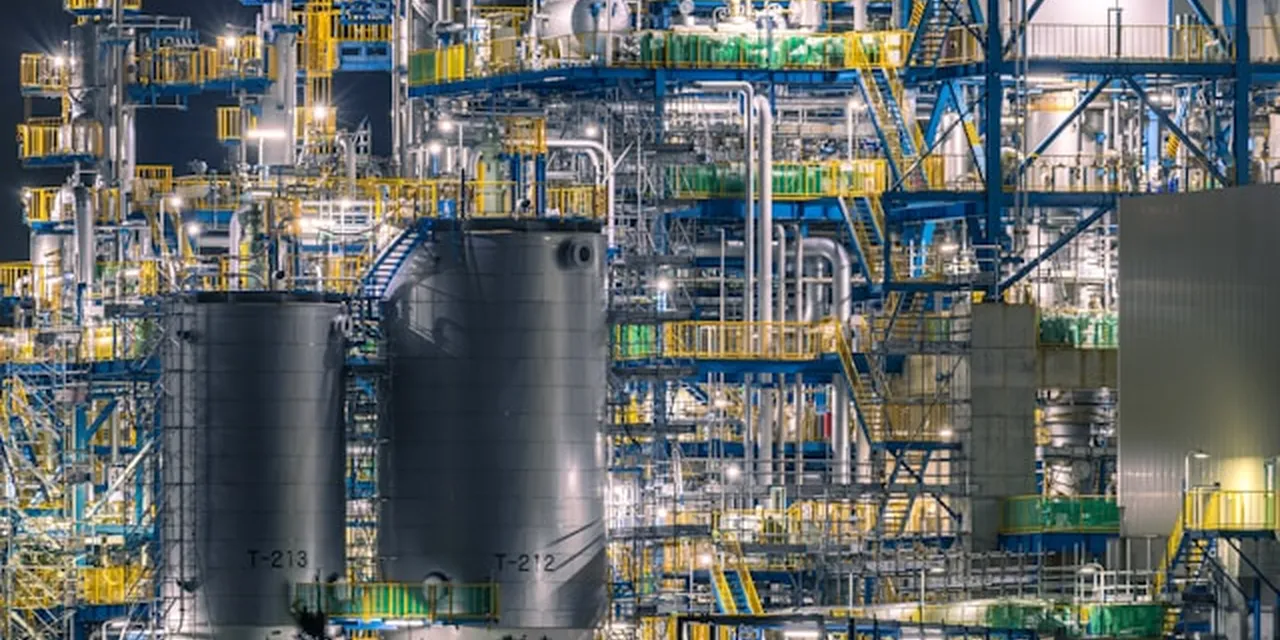
Kaohsiung's identity as Taiwan's heavy industry capital rests on a material ecosystem that few Asian cities can replicate. China Steel Corporation's Siaogang plant maintains crude steel production capacity of approximately 15 million tonnes annually, with export ratios fluctuating between 25 and 35 per cent of total output depending on global demand cycles. CPC Corporation's Kaohsiung refinery, processing 270,000 barrels per day, supplies naphtha feedstock to Formosa Plastics Group's downstream operations across the Linhai Industrial Park and Nanzi Export Processing Zone. Formosa's cluster produces polyethylene, polypropylene, PVC, engineering plastics, and aromatics that contributed to Taiwan's petrochemical trade surplus of approximately USD 8.2 billion in 2024.
The co-location logic is elegant. CPC refines crude oil. Formosa converts naphtha into ethylene glycol and purified terephthalic acid. Nan Ya Plastics turns those intermediates into polyester fibres. CSC supplies steel plate to local shipbuilding through CSBC Corporation. Kaohsiung Port's bulk terminals handle 120 million tonnes of raw material imports annually. Every facility feeds the next. This interdependency creates what industrial economists call co-location lock-in: a single facility closure cascades through the entire supply chain.
The cluster directly employs between 38,000 and 42,000 people in Kaohsiung Municipality. CSC accounted for 11,247 direct employees as of December 2024, with a consolidated group total of 19,832. Formosa Plastics Group's Kaohsiung operations employ an estimated 18,000 to 22,000. Secondary employment in logistics, maintenance, and engineering services multiplies these figures by 2.5 to 3 times. This is not a sector on the margins of Kaohsiung's economy. It is the foundation.
But that foundation is shifting. Capacity utilisation across steel and primary petrochemicals fell to approximately 78 to 82 per cent in early 2025, down from 85 to 88 per cent in 2022. CSC's 2024 revenue dropped 12.4 per cent year on year to NT$468.2 billion, squeezed by steel price declines driven partly by Chinese steel exports reaching 90 million tonnes in 2024. EBITDA margins compressed to 3.2 per cent in Q3 2024. The export engine that powered Kaohsiung's industrial economy is running, but running lean. And the cost of keeping it running is about to increase materially.
Two Carbon Clocks Are Now Ticking Simultaneously
The EU CBAM Effect on Kaohsiung's Export Margins
The EU's Carbon Border Adjustment Mechanism moved from its transitional reporting phase into definitive implementation on 1 January 2026. For Kaohsiung's steel exporters, this means embedded emissions in every tonne shipped to Europe now carry a direct financial liability. CSC's blast furnace operations generate approximately 2.1 tonnes of CO2 per tonne of crude steel produced, according to World Steel Association data and CSC's own sustainability reporting. Industry analysts at the Taiwan Institute of Economic Research project that CBAM Phase II could erode 8 to 12 per cent of gross margins for unabated steel exports to Europe.
The proposed American Clean Competition Act, while not yet enacted, threatens similar barriers to an estimated 18 per cent of CSC's export volume. The regulatory direction is clear even where the timeline is not.
Taiwan's Domestic Carbon Price Trajectory
Taiwan's own carbon pricing, implemented under the Climate Change Response Act, started at NT$300 per tonne of CO2e in 2024 and is scheduled to reach NT$400 to NT$500 in 2026, with a trajectory toward NT$1,200 by 2030. At the upper end of that range, carbon costs could add NT$2,500 to NT$3,000 per tonne of steel production cost. That is equivalent to 12 to 15 per cent of current export prices. For an operation already running at 3.2 per cent EBITDA margins, the arithmetic is punishing.
These two pricing mechanisms are not independent pressures. They compound. A tonne of steel exported from Kaohsiung to Rotterdam faces both Taiwan's domestic carbon cost and the EU's border adjustment. The combined effect makes the status quo untenable faster than either mechanism would alone. Every month of delay in decarbonisation technology deployment is a month of margin erosion that cannot be recovered. And the technology required to change course depends entirely on people who are, at present, almost impossible to hire.
The Transformation Trap: Why Heavy Industry Cannot Buy the Talent It Needs
Here is the core tension of Kaohsiung's industrial talent market in 2026, and the dynamic that separates it from a standard hiring challenge. The roles critical to the sector's survival, hydrogen metallurgy engineers, CCUS project managers, EU CBAM reporting specialists, industrial AI architects, sit at the intersection of deep process industry experience and emerging technical disciplines. These combinations barely existed five years ago. The domestic candidate pool for some of them is measured in dozens, not hundreds.
CSC publicly listed a Senior Hydrogen Metallurgy Engineer position in March 2024 to support its hydrogen-DRI pilot project, offering above-scale compensation. According to Liberty Times Business reporting from November 2024, that position remained open after 11 months as of February 2025, with the search expanding to include overseas Taiwanese engineers and Japanese steel industry veterans. CSC's HR division cited in a November 2024 investor call that fewer than 20 qualified candidates exist domestically with both blast furnace operational experience and hydrogen energy systems expertise.
That is not a recruitment failure. It is a market reality. You cannot recruit experience that does not yet exist in sufficient quantity. Hydrogen-based direct reduced iron technology remains commercially unproven at CSC's scale. The engineers who understand it learned their craft in pilot programmes in Sweden, Austria, or Japan. They are not browsing job boards in Kaohsiung.
The same pattern holds for EU CBAM compliance. The number of qualified individuals nationally with specific expertise in CBAM reporting methodologies and ISO 14064-1 carbon inventory verification is estimated at fewer than 50. According to Commercial Times reporting from June 2024, Formosa Chemicals and Fibre Corporation recruited a Chief Environmental Compliance Officer from a competitor in the Mailiao complex in Q2 2024, reportedly offering a 45 to 50 per cent compensation premium, with a total package estimated to exceed NT$5 million annually plus stock options. The candidate possessed exactly the CBAM reporting expertise that becomes financially critical in 2026.
These are not isolated anecdotes. The Taiwan Steel and Iron Industries Association reported in its July 2024 skills survey that 68 per cent of member companies face what it defines as "severe difficulty", meaning vacancy durations exceeding six months, when recruiting certified welders and instrumentation technicians with Level B or A professional certifications. At the senior specialist level, passive candidate identification through direct search is the only viable method: 85 to 90 per cent of qualified senior process safety engineers in Kaohsiung's heavy industry are employed and not actively seeking new roles. For hydrogen energy specialists, that figure reaches 95 per cent.
The transformation trap is this: the sector's compressed margins, driven by Chinese overcapacity and commodity price pressure, create a rigid ceiling on what employers can offer. But the talent required to escape those compressed margins commands premiums that the ceiling does not permit. Capital has been allocated. NT$180 to NT$220 billion in committed investment. But the hidden cost of failing to fill these roles is not a line item in any capital expenditure plan.
The Semiconductor Shadow Over Kaohsiung's Talent Pool
The most consequential competitor for Kaohsiung's industrial talent is not in another country. It is 300 kilometres north, in Hsinchu Science Park. And it is expanding south, into Tainan's Southern Taiwan Science Park, where TSMC's Fab 18 and Fab 20 are drawing from the same engineering talent base.
The compensation gap is severe and widening at exactly the seniority levels where Kaohsiung's transformation depends. A VP of Engineering at CSC earns approximately NT$5 to NT$7 million annually. A VP-level engineering director at TSMC or Micron Taiwan commands NT$10 to NT$15 million plus substantial stock grants. That is a 40 to 60 per cent gap at the executive level. At the senior specialist level, 104 Job Bank cross-industry data from 2024 shows Hsinchu offering 35 to 50 per cent premiums for equivalent mechanical engineering, automation, and EHS roles.
The semiconductor sector also offers something heavy industry structurally cannot: equity upside. TSMC's stock option packages transform senior engineering compensation in ways that a state-controlled steelmaker or a family-controlled plastics conglomerate cannot replicate. The career trajectory is different too. A process engineer at TSMC works inside a global technology architecture with mobility across facilities in Arizona, Kumamoto, and Dresden. A process engineer at CSC works inside a single Kaohsiung plant with limited lateral movement.
Kaohsiung's cost-of-living advantage, housing costs at approximately 43 per cent of Hsinchu levels, partially offsets the salary differential for mid-career professionals. But it does not offset it for the senior digital transformation and decarbonisation specialists who represent the critical gap. These candidates are not optimising for housing costs. They are optimising for career velocity and total compensation. Heavy industry loses that comparison consistently.
The result is a talent market that is splitting. General mechanical and electrical maintenance roles remain relatively accessible, with 60 to 70 per cent active application rates, though quality mismatch is acute among entry-level candidates lacking practical high-temperature process experience. But the specialised roles driving the sector's green transition operate in a fundamentally different market. Average time-to-fill for senior process engineer positions in petrochemicals extended to 87 days in 2024, compared to 52 days for equivalent semiconductor roles. For executive-level hiring across industrial manufacturing, the gap is wider still.
What Decarbonisation and Digital Roles Actually Pay in Kaohsiung
Understanding the compensation structure is essential for any organisation hiring into this market, because the numbers reveal where the system is breaking.
Decarbonisation Technology Leadership
At the senior specialist and manager level, hydrogen process engineers and carbon capture project managers command NT$1.8 to NT$2.4 million annually in base plus bonus. This represents a 25 to 35 per cent premium over traditional chemical engineering roles in the same facilities, a premium that reflects scarcity but remains insufficient to compete with semiconductor equivalents. At the executive level, Chief Sustainability Officers and Decarbonisation Division Heads at major groups like CSC or FPG earn NT$6 to NT$10 million in base compensation, with long-term incentive plans tied to carbon reduction targets that can potentially double total compensation.
The requirements at the executive level are exceptionally narrow: 15 or more years in heavy process industry, a proven record in environmental regulatory compliance, and capital project management experience exceeding NT$10 billion in scale. The number of individuals in Taiwan who meet all three criteria simultaneously is small enough that every search for these roles becomes a direct headhunt by definition.
Smart Manufacturing and Digital Transformation
Industrial AI implementation managers and digital twin architects earn NT$1.5 to NT$2.2 million annually. Chief Digital Officer roles, an increasingly common title at both CSC and Formosa subsidiaries, command NT$4.5 to NT$7 million. The challenge here is domain specificity. Integrating IoT sensors in high-temperature blast furnace environments requires simultaneous fluency in Python or C++ programming and steel process metallurgy. Candidates with both are rare. Candidates willing to apply that combination in heavy industry rather than semiconductor fabrication are rarer.
Process Safety and Environmental Compliance
Senior PSM engineers and EU CBAM reporting specialists earn NT$1.2 to NT$1.8 million annually. This is where the compensation suppression is most visible and most damaging. Equivalent EHS roles in the semiconductor sector pay NT$1.6 to NT$2.2 million for the same seniority level. The gap is not enormous in absolute terms, but it is large enough to redirect career decisions at the precise moment when heavy industry needs these specialists most. When a well-structured counteroffer from a semiconductor employer arrives offering 30 per cent more plus equity, the calculation is straightforward.
VP-level EHS executives earn NT$4 to NT$6.5 million annually. These individuals increasingly attract interest from Singapore-based engineering consultancies and European firms like McDermott and Technip for Asia-Pacific regional roles, adding international competition to an already constrained market.
The Demographic and Geographic Forces Compounding the Shortage
The talent challenge would be difficult even in a growing labour market. Kaohsiung's is shrinking.
The city's working-age population declined 1.8 per cent annually between 2020 and 2024. Heavy industry bears a disproportionate share of this decline because younger cohorts demonstrate a measurable preference for service sector or technology employment. CSC's direct employee count fell 4.3 per cent from 2020 levels through a combination of automation and attrition-based hiring freezes. The company's stated "natural attrition" policy means no mass layoffs, but it also means the average age of the remaining workforce rises each year.
Approximately 40 per cent of current steel and petrochemical technicians trained primarily on analog control systems, according to the Ministry of Labor's 2024 Industry Skills Gap Assessment. CSC's Steel 3.0 digital transformation programme, reaching Phase II implementation in 2026, deploys AI-assisted blast furnace control and automated finishing lines. These systems require operators who understand both the metallurgical process and the digital control layer. Reskilling at this scale is a multi-year programme, not a training course.
Singapore's Jurong Island petrochemical complex attracts Taiwanese chemical engineers with tax-advantaged packages typically 1.8 to 2.2 times Taiwan salaries for senior roles. Chinese state-owned enterprises, Baowu Steel and Sinopec among them, recruit Taiwanese senior technicians and plant managers for facilities in Fujian and Zhejiang at 2.5 to 3 times base salaries, though cross-strait political tensions introduce career risks that limit uptake. The competitive field for experienced heavy industry talent is genuinely international, and Kaohsiung competes from a position of compensation disadvantage against every major alternative.
The air quality dimension adds another layer. Kaohsiung recorded annual average PM2.5 concentrations of 18.2 μg/m³ in 2024, improved from 22.1 μg/m³ in 2020 but still more than triple the WHO guideline of 5 μg/m³. For a candidate weighing a relocation to Kaohsiung against an offer in Hsinchu, Tainan, or Singapore, environmental quality enters the personal calculation alongside compensation and career trajectory. Seventeen enforcement actions against Linhai Industrial Park facilities for VOC emissions violations in 2024 do not help the recruitment narrative, even as CSC's NT$42.8 billion investment in pollution control since 2020 represents genuine progress.
CSC plans to recruit 300 to 400 digital transformation specialists and environmental engineers in 2026 to support its decarbonisation projects. That target number, set against a domestic market where some specialisms have fewer than 50 qualified individuals nationally, illustrates the scale of the mismatch. Traditional talent acquisition methods relying on job board postings and inbound applications will reach the 5 to 15 per cent of candidates who are actively looking. The other 85 to 95 per cent require a fundamentally different approach.
What This Means for Organisations Hiring in Kaohsiung's Heavy Industry
The analytical claim at the centre of this article is not that Kaohsiung faces a talent shortage. Every industrial market faces some version of that. The claim is more specific and more consequential: Kaohsiung's heavy industry sector has committed capital to a transformation it cannot staff at current compensation levels, and the margin compression preventing competitive pay is itself the condition the transformation is meant to escape. This is the transformation trap. The sector needs decarbonisation talent to restore margins. But current margins cannot fund the compensation required to attract decarbonisation talent. Breaking this cycle requires either patient capital willing to accept near-term cost inflation for long-term viability, or a search methodology capable of identifying and securing the small number of qualified individuals through precision rather than premium.
For hiring executives at CSC, Formosa Plastics Group, CPC Corporation, and their supply chain partners, several implications follow.
First, every critical search in this market is a direct headhunting engagement by definition. The passive candidate ratios leave no alternative. When 95 per cent of hydrogen metallurgy specialists and 100 per cent of CBAM compliance experts are employed and not looking, the search must go to them. A posted vacancy, no matter how generous the offer, reaches only the fraction already considering a move.
Second, the search perimeter must be international from the outset. CSC's own experience with the hydrogen metallurgy engineer role, expanding after 11 months to include overseas Taiwanese engineers and Japanese steel industry veterans, confirms that the domestic pool is insufficient for the most specialised positions. International executive search capability is not optional for these roles. It is the baseline.
Third, speed matters more in this market than in most. The 87-day average time-to-fill for senior petrochemical process engineers is not merely inconvenient. In a market where regulatory deadlines are fixed and capital deployment schedules are locked, every unfilled month represents a month of stranded investment. A blast furnace control system installed without a qualified operator to calibrate it is a capital asset generating no return. The organisations that understand why executive searches fail and structure their processes to avoid the common stall points will consistently outperform those that do not.
Fourth, market benchmarking is not a luxury in this hiring environment. It is the difference between an offer that lands and an offer that loses to a semiconductor employer or a Singapore-based consultancy. The compensation data in this article provides a framework, but the real benchmarking work is candidate-specific: understanding what a particular individual's current package includes, what would need to change to motivate a move, and whether the proposition on offer is competitive on the dimensions that matter to that specific person. Effective negotiation at this level requires more than a number. It requires a full understanding of what the candidate values.
KiTalent works with industrial and manufacturing organisations across Asia facing exactly this profile of challenge: specialised technical leadership roles in markets where the qualified candidate pool is small, overwhelmingly passive, and subject to cross-sector and cross-border competition. With a talent mapping methodology built on AI-enhanced identification of passive candidates, KiTalent delivers interview-ready executive shortlists within 7 to 10 days, operating on a pay-per-interview model with no upfront retainer. The 96 per cent one-year retention rate for placed candidates reflects a search process designed to match on capability, motivation, and fit rather than on availability alone.
For organisations competing for decarbonisation leadership, digital transformation expertise, or senior talent in AI and technology-driven industrial roles across Kaohsiung's heavy industry corridor, where every month of vacancy is a month of stalled capital deployment, start a conversation with our executive search team about how we approach this market.
Frequently Asked Questions
What is driving the talent shortage in Kaohsiung's steel and petrochemical sector?
Three forces are converging. First, decarbonisation investment requires entirely new specialisms, hydrogen metallurgy, carbon capture engineering, EU CBAM compliance reporting, for which the domestic talent pool is extremely small. Second, the semiconductor sector in Hsinchu and Tainan pays 40 to 60 per cent more at equivalent seniority levels, pulling engineers away from heavy industry. Third, Kaohsiung's working-age population is declining at 1.8 per cent annually, and younger graduates prefer technology or service sector careers. These are not temporary conditions. They are systemic forces that will persist through the decade.
How much do decarbonisation and digital transformation roles pay in Kaohsiung?
Senior hydrogen process engineers and carbon capture project managers earn NT$1.8 to NT$2.4 million annually, a 25 to 35 per cent premium over traditional chemical engineering roles. Chief Sustainability Officers and Decarbonisation Division Heads at major groups command NT$6 to NT$10 million in base compensation, with performance-linked incentives tied to carbon reduction targets. Chief Digital Officer roles pay NT$4.5 to NT$7 million. These premiums reflect scarcity but remain well below equivalent positions in the semiconductor sector.
Why is hiring for heavy industry leadership roles so difficult in Taiwan?
The challenge is structural rather than cyclical. Approximately 85 to 95 per cent of qualified senior specialists in process safety, hydrogen energy, and environmental compliance are employed and not actively seeking new roles. For CBAM compliance expertise, the entire national pool is estimated at fewer than 50 individuals. Traditional job advertising reaches only the small active fraction of the market. Direct headhunting through passive candidate identification is the only viable method for most critical positions.
How does the EU Carbon Border Adjustment Mechanism affect Kaohsiung's steel exports?
CBAM entered its definitive phase on 1 January 2026, imposing direct carbon costs on steel imports to the EU based on embedded emissions. With CSC's blast furnaces generating approximately 2.1 tonnes of CO2 per tonne of crude steel, analysts project CBAM could erode 8 to 12 per cent of gross margins on European-bound exports. Combined with Taiwan's domestic carbon pricing, now set at NT$400 to NT$500 per tonne and rising to NT$1,200 by 2030, the economics of unabated steel production face sustained pressure.
How can organisations in Kaohsiung compete for talent against the semiconductor sector?
Compensation alone will not close the gap given heavy industry's margin constraints. Successful strategies combine targeted compensation premiums for transformation-critical roles, meaningful project scope that appeals to engineers motivated by industrial-scale impact, and international career exposure through technology licensing partnerships. KiTalent's executive search methodology helps heavy industry employers identify candidates whose motivations extend beyond pure compensation, matching on career ambition, technical interest, and cultural alignment alongside financial terms.
What is the typical timeline for filling senior technical roles in Kaohsiung's heavy industry?
Senior process engineer positions in petrochemicals averaged 87 days to fill in 2024. Highly specialised roles take considerably longer. CSC's Senior Hydrogen Metallurgy Engineer vacancy remained open for at least 11 months. For passive candidate recruitment in decarbonisation and advanced safety roles, organisations report four to six month average lead times. KiTalent's approach compresses this timeline by delivering interview-ready candidates within 7 to 10 days through AI-enhanced talent mapping that identifies qualified passive candidates before a search formally begins.