Kaohsiung's Offshore Wind Paradox: Thousands of Shipyard Workers, and Still the Wrong Talent
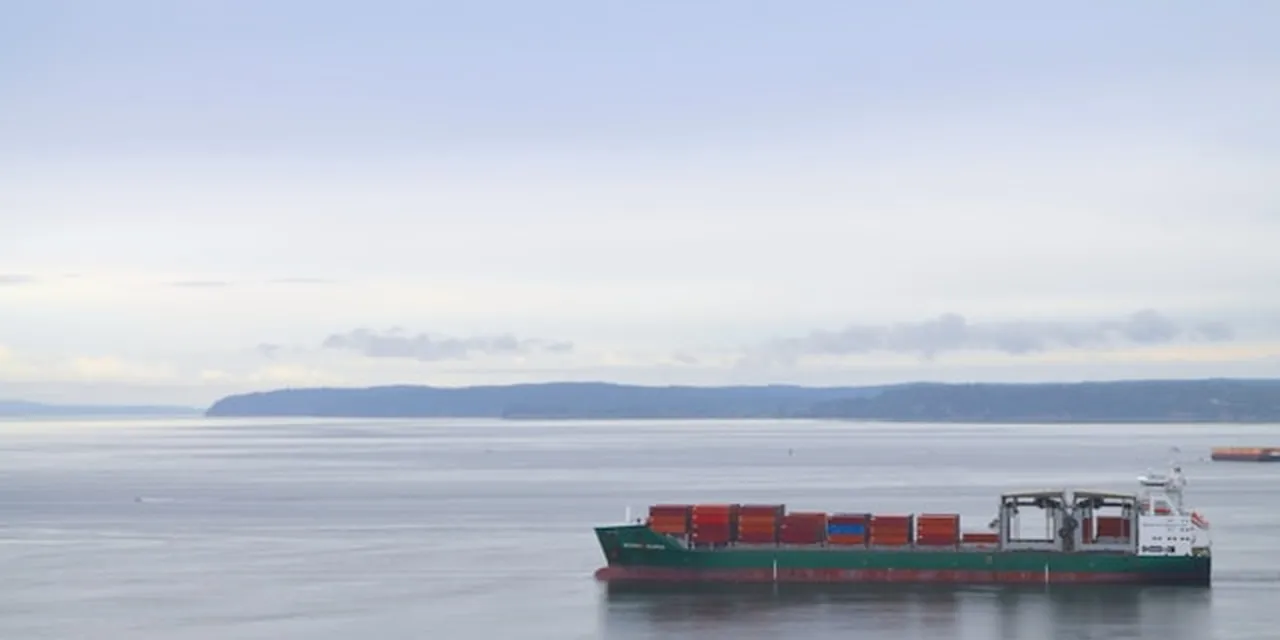
Kaohsiung's shipyards have idle capacity. CSBC Corporation Taiwan reports 20 to 25 per cent underutilisation in traditional commercial shipbuilding. Walk through the city's heavy industrial districts and you will find experienced welders, fitters, and marine tradespeople available for work. By every conventional measure, this should be a market with labour surplus.
It is not. Offshore wind fabrication contracts are running at 75 to 80 per cent yard utilisation. Offshore Installation Manager roles sit open for 8 to 12 months. A 2023 recruitment drive by CSBC for 200 certified welders drew only 127 qualified applicants, according to Liberty Times and CSBC's Q2 2023 investor conference, forcing the company to subcontract portions of its Hai Long foundation contract to South Korean yards. The market has people. It does not have the right people.
This is the central tension defining Kaohsiung's offshore wind supply chain in 2026: a city that looks labour-rich at the aggregate level while experiencing some of the most acute specialist shortages in Asia's renewable energy sector. What follows is a detailed analysis of why this mismatch has proven so resistant to resolution, where the most critical gaps sit, and what organisations operating in this market need to understand before they commit to their next hire.
The Skills Mismatch That Training Programmes Have Not Solved
The surface reading of Kaohsiung's labour market tells a simple story. Global shipping downturns have left traditional shipbuilding yards underutilised. Offshore wind is booming. Workers should move from one to the other. The story falls apart on contact with certification requirements.
Offshore wind fabrication demands welding to ISO 5817 and AWS D1.1 standards, with non-destructive testing (NDT) qualifications that take 12 to 18 months of supervised practice to achieve. A welder with 15 years of commercial shipbuilding experience cannot walk onto an offshore wind jacket fabrication line without retraining and recertification. The Metal Industries Research & Development Centre (MIRDC) in Kaohsiung provides this pathway, but throughput is limited. The gap between available general tradespeople and qualified offshore wind specialists is not closing at a pace that matches contract timelines.
This is not a labour shortage. It is a knowledge and certification problem. Capital investment in offshore wind has moved faster than the human capital pipeline can follow, and Kaohsiung sits at the sharpest point of that mismatch.
The Taiwan Offshore Wind Industry Association's 2023 Talent Gap Report documented a 47 per cent year-over-year increase in offshore wind job postings in Kaohsiung, with average time-to-fill for senior technical roles extending to 98 days. The Taiwan manufacturing average is 34 days. That nearly threefold premium on hiring timelines reflects a market where posting a role and waiting for applications reaches, at best, 15 to 20 per cent of the qualified candidate pool.
The remaining candidates are not looking. An estimated 85 to 90 per cent of qualified Marine Warranty Surveyors and 80 per cent of certified Offshore Installation Managers are passive candidates embedded in long-term contracts with classification societies, major marine contractors, or competing developers. They do not respond to job advertisements. They must be found, assessed, and approached directly.
Who Employs Kaohsiung's Offshore Wind Workforce
Understanding where the talent sits requires mapping the employers who hold it. Kaohsiung's offshore wind cluster directly employs approximately 4,200 to 4,800 personnel, representing roughly 35 per cent of Taiwan's total offshore wind direct employment of an estimated 13,500 nationwide. By Q3 2026, that figure is projected to peak at 6,200 to 6,800 FTEs, driven by foundation fabrication for the 640MW Changhua Phase 2 and 1,044MW Hai Long projects.
The Fabrication Anchor: CSBC and Its Orbit
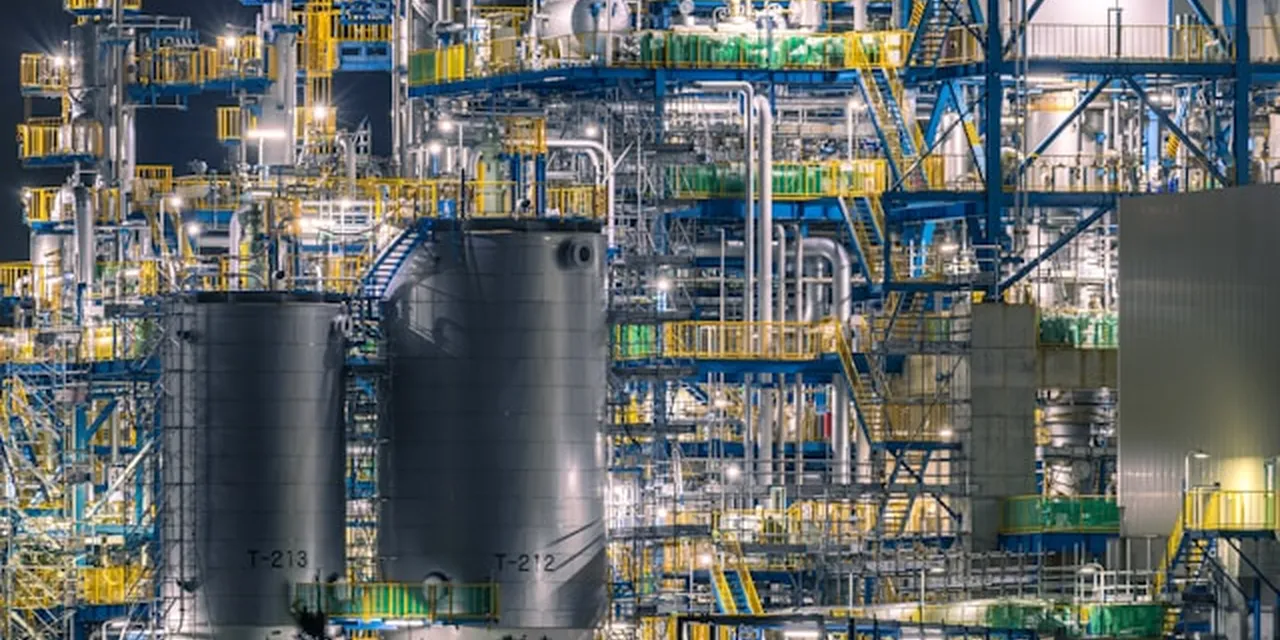
CSBC Corporation Taiwan dominates the local employment picture. The state-owned yard employs approximately 2,800 permanent staff in Kaohsiung, expanding cyclically to 3,400 during peak offshore wind fabrication periods. CSBC's specialisms are jacket foundation fabrication, offshore substation topside integration, and steel pretreatment. It is the single largest holder of offshore wind manufacturing talent in southern Taiwan.
Century Wind Power adds 420 personnel focused on transition piece manufacturing and secondary steel. Hwa Yang Steel contributes 650 manufacturing roles supplying steel plates and structural sections. Together, these three employers account for the majority of Kaohsiung's 2,100 offshore wind manufacturing positions.
International Developers Operating Locally
The developer presence in Kaohsiung is meaningful but lean. Ørsted Taiwan maintains an 80-person supply chain and logistics coordination office supporting the 900MW Greater Changhua 2b and 4 projects, though its headquarters remain in Taipei. Copenhagen Infrastructure Partners operates a base for its Fengmiao projects with 45 permanent staff scaling to 120 contractors during construction phases. Corio Generation has established a marine coordination centre for its 1GW Haiding project.
These offices are small. They are also the primary source of demand for the executive and senior project management roles that are hardest to fill. A Director of Offshore Construction or Country Operations Manager in this market commands NT$7.5 million to NT$12 million annually (USD 235,000 to 375,000), with variable bonus components of 30 to 50 per cent tied to commercial operation date milestones. The pool of candidates who can command those packages and who are willing to be based in Kaohsiung rather than Singapore or Taipei is vanishingly small.
The Roles That Define the Bottleneck
Not all shortages carry equal consequence. Kaohsiung's offshore wind hiring gaps fall into three tiers of criticality, each with distinct dynamics.
Offshore Installation Managers and Marine Warranty Surveyors
These are the roles that stop projects. An OIM certified for 15MW-plus turbine installation supervises the single most expensive and weather-dependent phase of an offshore wind project. According to TOWIA's Workforce Survey, only three to four qualified Taiwanese nationals exist in the market for large-scale turbine installation supervision. The role has remained open for 8 to 12 months across multiple developers during the 2025 to 2026 construction campaigns.
Marine Warranty Surveyors accredited by DNV or Lloyd's Register are equally constrained. The established pattern, reported by CommonWealth Magazine and the Taiwan Welding Association, involves international contractors poaching directly from CSBC's quality assurance departments at salary premiums of 35 to 45 per cent. This is not a market where traditional executive recruiting methods produce results. It is a market where the entire qualified population is known by name.
Referral bonuses for successful OIM hires now average NT$150,000 to NT$200,000 (USD 4,700 to 6,250), a signal of just how difficult these placements have become through conventional channels.
Grid Integration and High-Voltage Engineering
The second critical tier involves professionals who connect generation assets to the transmission network. Grid Connection Managers and HV Electrical Engineers experienced with Taipower's 161kV and 345kV substation protocols earn NT$2.4 million to NT$3.6 million at senior specialist level, rising to NT$6 million to NT$9 million (USD 188,000 to 281,000) at director level. The premium reflects extreme scarcity: Taipower's proprietary systems create a knowledge barrier that cannot be crossed with international grid experience alone.
This shortage has consequences beyond individual project timelines. The Southern Grid Reinforcement Project, critical for evacuating power from Kaohsiung-staged projects, has confirmed completion delays pushing full commissioning to Q2 2027. Projects targeting 2026 commercial operation dates face potential curtailment of 15 to 20 per cent of annual output until transmission upgrades are finalised, according to Taipower's 10-Year Transmission Network Development Plan. The people who can solve this problem are the same people every developer in southern Taiwan is trying to hire.
Certified Welders and NDT Technicians
This tier is the volume problem. CSBC's 2023 recruitment drive demonstrated the gap in plain numbers: 200 positions advertised at 30 per cent above standard shipbuilding rates, 127 qualified applicants returned. The shortfall forced subcontracting to South Korean yards. At scale, this dynamic threatens Kaohsiung's ability to retain fabrication work that local content requirements were designed to protect. If the certified workforce cannot grow fast enough, the work moves to yards that have the people regardless of regulatory intent.
The Investment Surge That Outran Its Own Workforce
Here is the analytical claim that sits beneath all of this data: the offshore wind investment thesis and the human capital thesis were never synchronised, and the gap between them has widened at precisely the point where it matters most.
Taiwan's Bureau of Energy set targets of 5.7GW operational by 2026 and 13.1GW by 2030. These targets drove procurement rounds, developer commitments, port investment, and fabrication contracts. They did not drive a proportional investment in workforce development at the specialist certification level. The assumption, implicit in the policy framework, was that a city with shipbuilding heritage would naturally produce offshore wind workers.
That assumption was wrong. Offshore wind is not shipbuilding with different steel. The certification pathways are longer. The safety standards are more demanding. The intersection of marine engineering, high-voltage electrical systems, and renewable energy project management is a discipline that barely existed in Taiwan a decade ago. You cannot recruit experience that has not had time to accumulate.
The result is a market where capital moved faster than human capital could follow. Every new project announcement in Kaohsiung intensifies demand for the same constrained pool. Every delayed grid upgrade extends the timeline over which that pool must be stretched. And every international developer establishing a Kaohsiung operations base adds another bidder for the three or four OIMs and the handful of grid integration directors who actually exist.
This dynamic will not resolve through salary competition alone. It requires strategic talent mapping that identifies where qualified professionals sit globally, what it would take to relocate them, and how to structure propositions that compete with Singapore's 30 to 50 per cent salary premiums and South Korea's superior R&D infrastructure.
The Geographic Competition for the Same People
Kaohsiung does not compete for offshore wind talent in isolation. It competes against three regional markets and one domestic rival, each pulling different segments of the specialist pool.
Singapore functions as the regional headquarters city for international developers. Ørsted, CIP, and TotalEnergies all maintain their Asia-Pacific executive functions there. For commercial and project management roles, Singapore offers 30 to 50 per cent salary premiums over Kaohsiung. A VP Development role in Singapore commands SGD 250,000 to 400,000 against Taiwan's NT$7 million to NT$10 million equivalent. Singapore's higher cost of living partially offsets this premium, but for office-based executive roles, the draw is powerful.
Japan's offshore wind market targets 10GW by 2030 and competes aggressively for bilingual marine engineers and project managers. Japanese firms offer 20 to 25 per cent base salary premiums over Kaohsiung rates with stronger job security protections. The weak yen through 2023 and 2024 reduced the attractiveness of these packages to Taiwanese expatriates, but Tokyo and Yokohama remain draws for HVDC and grid integration specialists.
South Korea's shipbuilding giants compete most directly with CSBC. Korean heavy industry salaries run 15 to 20 per cent above equivalent Kaohsiung roles. More critically, South Korea offers superior R&D infrastructure for floating offshore wind technology, a segment where Kaohsiung currently has no capability. For engineers thinking about career trajectory rather than immediate compensation, Korea offers a path into the next generation of the technology.
Within Taiwan, Taipei pulls executive and corporate functions away from Kaohsiung with 10 to 15 per cent salary premiums and superior international schooling and amenities. Kaohsiung retains its advantage in technical and fabrication roles through sheer proximity to the yards. But any senior candidate weighing an international career move into this sector will evaluate Kaohsiung against all four of these alternatives simultaneously.
The implication for hiring leaders is uncomfortable. Kaohsiung is not the default destination for top offshore wind talent in Asia. It must make a case, and that case must go beyond compensation to include project significance, career development, and quality of life.
The Vessel Cliff and What It Means for 2026 Hiring
An additional 3GW of capacity is scheduled to enter the installation phase by Q4 2026. This requires an estimated 14 to 16 dedicated vessel campaigns for foundation, turbine, and cable installation. Current global WTIV availability indicates only 8 to 10 vessels will be deployable in Taiwanese waters during this window.
Taiwan possesses no Taiwan-flagged Wind Turbine Installation Vessels capable of handling 15MW-plus turbines. Installation relies entirely on foreign-flagged WTIVs with day rates exceeding EUR 180,000 to 220,000. The Maritime and Port Bureau's 2024 regulatory amendments reduced administrative lead times for foreign vessel port entry from 45 days to 21 days. This helps. It does not solve the fundamental supply constraint.
For hiring leaders, the vessel availability cliff creates a secondary talent problem. When projects queue for vessel access, they do not simply pause. They maintain construction teams on standby. Marine coordinators, OIMs, and logistics staff remain on payroll during delays. The cost of carrying a specialist team through a vessel-driven delay is substantial, and the temptation for competitors to poach idle specialists during standby periods is acute.
The organisations that will manage this period most effectively are those that have already secured their critical marine and installation leadership rather than those attempting to recruit during the congestion window. A proactive talent pipeline built six to twelve months ahead of the installation campaign is not a luxury in this market. It is the difference between a project that proceeds on schedule and one that adds months of delay because the OIM was hired away during standby.
What Hiring Leaders in This Market Must Do Differently
Kaohsiung's offshore wind market requires an approach that breaks with several assumptions common in industrial and manufacturing recruitment. The candidate population for the most critical roles is small enough to be individually identified. The passive candidate ratio, at 80 to 90 per cent for the roles that matter most, means that any strategy dependent on job postings or inbound applications will fail systematically.
The local content requirements add a layer of complexity. The Bureau of Energy mandates 60 per cent local content for Block Development projects, yet Kaohsiung suppliers currently cannot manufacture array cables, blade bearings, or HV switchgear. The resulting compliance gap increases project CAPEX by an estimated 3 to 5 per cent and creates demand for compliance and regulatory specialists who understand both the letter and the politics of the LCR framework. These professionals do not appear on job boards.
Currency risk compounds the challenge. Projects are denominated in USD for major equipment but receive revenue in TWD. Fabrication contracts are often fixed-price. The margin pressure this creates for Kaohsiung-based suppliers means that compensation negotiation for senior technical hires involves a more complex calculation than headline salary. Offshore allowances, rotation schedules, project completion bonuses, and relocation packages all factor into whether a passive candidate currently based in Singapore or Seoul will consider the move.
For organisations competing for offshore wind leadership talent in Kaohsiung, where the qualified candidate population for critical roles can be counted on two hands and the cost of a failed or delayed search is measured in vessel standby costs and curtailment losses, start a conversation with KiTalent's executive search team about how direct headhunting reaches the candidates this market's job boards will never surface. KiTalent delivers interview-ready executive candidates within 7 to 10 days through AI-enhanced talent identification that maps the passive specialist pool across Asia's offshore wind markets. With a 96 per cent one-year retention rate and a pay-per-interview model that eliminates upfront retainer risk, the approach is built for markets where the margin for a bad executive hire is razor thin.
Frequently Asked Questions
What is the average salary for an Offshore Installation Manager in Kaohsiung?
Offshore Installation Manager roles in Kaohsiung's offshore wind sector are not compensated on a single fixed salary band due to the extreme scarcity of qualified candidates. Senior Project Managers in offshore construction earn NT$2.8 million to NT$4.2 million annually (USD 88,000 to 132,000), while Director-level offshore construction leaders command NT$7.5 million to NT$12 million (USD 235,000 to 375,000) with variable bonuses of 30 to 50 per cent tied to project milestones. Day-rate OIM contracts during installation campaigns command further premiums. These figures reflect a market where only three to four qualified Taiwanese nationals are available.
Why is Kaohsiung experiencing offshore wind talent shortages despite surplus shipyard workers?
The shortage is a certification and skills mismatch, not a labour volume problem. Offshore wind fabrication requires welding to ISO 5817 and AWS D1.1 standards with NDT qualifications that take 12 to 18 months of supervised practice. General shipbuilding tradespeople cannot transfer to offshore wind roles without retraining and recertification. CSBC's 2023 recruitment drive for 200 certified welders attracted only 127 qualified applicants, despite offering 30 per cent above standard shipbuilding rates. Training programme throughput has not kept pace with project timelines, and the gap is widening as new capacity enters the installation phase.
How does Kaohsiung compare to Singapore for offshore wind executive compensation?
Singapore offers 30 to 50 per cent salary premiums over Kaohsiung for commercial and project management roles. A VP Development role in Singapore commands SGD 250,000 to 400,000, compared with NT$7 million to NT$10 million in Taiwan. Singapore's cost of living is approximately 40 per cent higher than Kaohsiung's, partially offsetting the headline premium. Kaohsiung retains a competitive advantage for technical and marine specialist roles due to yard proximity, but for office-based executive functions, Singapore remains the stronger draw in the region.
What are the biggest risks facing Kaohsiung's offshore wind sector in 2026?
Three risks converge in 2026. First, vessel availability: only 8 to 10 WTIVs are expected to be deployable in Taiwanese waters against a requirement for 14 to 16 campaigns. Second, grid transmission delays: the Southern Grid Reinforcement Project will not reach full commissioning until Q2 2027, threatening 15 to 20 per cent curtailment for projects targeting 2026 commercial operation dates. Third, local content compliance: Kaohsiung suppliers cannot yet manufacture array cables, blade bearings, or HV switchgear, creating a regulatory gap estimated to increase project CAPEX by 3 to 5 per cent.
How can companies find qualified offshore wind specialists in Taiwan's passive candidate market?
With 80 to 90 per cent of qualified Marine Warranty Surveyors and Offshore Installation Managers classified as passive candidates on long-term contracts, job advertising reaches a fraction of the available pool. Successful hiring in this market requires direct headhunting and AI-powered talent mapping that identifies specific individuals across classification societies, marine contractors, and competing developers in Taiwan, Singapore, Japan, and South Korea. KiTalent's approach delivers interview-ready candidates within 7 to 10 days through systematic identification of passive specialists who are not visible on any job platform.
What local content requirements affect offshore wind hiring in Kaohsiung?
The Bureau of Energy mandates 60 per cent local content for projects awarded under Round 3 and Block Development phases. This requirement covers fabrication, installation, and operations. Kaohsiung-based suppliers currently lack certification for high-voltage cable manufacturing, advanced corrosion protection systems, and several critical turbine components, creating compliance gaps that force developers to seek waivers or absorb cost penalties. The LCR also drives demand for regulatory and compliance specialists who understand the framework's enforcement mechanisms and can manage the waiver application process.