Split's €50 Million Luxury Bet Has a Staffing Problem No Job Board Can Solve

Split's coastal tourism economy crossed a threshold in 2024 that few Mediterranean rivals can match. The city recorded 945,000 tourist arrivals and 2.8 million overnight stays, surpassing pre-pandemic levels by 18%. Historic centre properties hit 94% occupancy in peak months. Daily rates at five-star hotels averaged €380 to €450. By every revenue metric, the market is performing at capacity.
The problem is that it literally cannot staff that capacity. The Split-Dalmatia County hospitality sector carried a structural deficit of 3,200 to 3,800 full-time equivalent positions during the 2024 peak season, against a registered labour pool of just 12,400 hospitality workers. That gap is not a recruitment inconvenience. It is a constraint that forced 28% of registered hospitality employers to open at less than full capacity in June 2024. Hotels that spent millions on renovation opened their doors without enough people to run every floor.
What follows is a ground-level analysis of why Split's tourism economy has outgrown its talent base, where the hiring gaps are most acute, which roles are functionally unreachable through conventional recruitment, and what organisations operating in this market need to do differently if they intend to staff their most critical positions before the 2026 season begins.
A Tourism Market Running Above Its Labour Ceiling
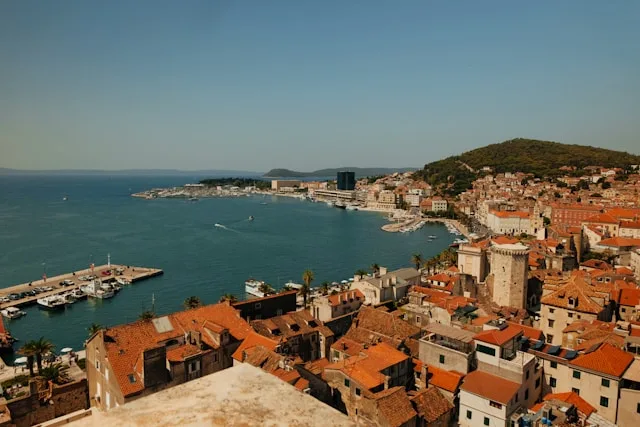
Split's growth trajectory has been consistent and well documented. The 12% year-on-year increase in arrivals through 2024, building on an 18% gain over 2019, reflects a city that has successfully repositioned itself from a transit hub for island ferries into a destination in its own right. Diocletian's Palace and its immediate buffer zone generate approximately 70% of pedestrian tourist traffic and 85% of guided tour activity. The spatial concentration is extreme, and it drives both the economic intensity and the operational pressure that define this market's hospitality sector.
But the growth has not been matched by the labour supply needed to service it. Croatia's working-age population in Split County has remained essentially flat. The Croatian Employment Service's 2026 forecast projects workforce demand increasing by a further 8 to 10%, driven by the Marriott AC Hotel opening in Kaštela and the new cruise terminal coming online. That demand will land on a labour market that was already short by thousands of positions last season.
The seasonality is what makes this shortage qualitatively different from hiring difficulties in year-round tourism markets like Barcelona or Rome. Split's seasonality index, measured by the coefficient of variation of monthly arrivals, stands at 1.45. Barcelona's is 0.85. Rome's is 0.62. July and August alone account for 42% of annual bed nights. The 110-day peak season from June to September generates 68% of annual tourism revenue. This is not a market with a busy period. It is a market with an existence period and an off-season that barely justifies keeping the lights on.
That compression creates a paradox. Investors are deploying capital on seven-to-ten-year amortisation schedules that assume 365-day operations. The labour market operates on 180-day seasonal contracts. The two timelines are fundamentally incompatible, and this incompatibility is the root cause of the executive recruitment failures that have become routine in Split's luxury segment.
The Capital Flowing In and the Talent Leaking Out
An estimated €50 million in five-star capacity improvements is being deployed across the Split conurbation between 2024 and 2026. Maistra d.d. completed an €8.2 million renovation of Hotel Park in 2024, repositioning it as a 59-room five-star urban resort with 3,000 square metres of conference space. The Marriott AC Hotel in Kaštela, scheduled for Q2 2026, will add 120 rooms and become the first internationally branded select-service property in the immediate Split conurbation. Boutique investors continue to renovate historic properties within the Diocletian's Palace buffer zone, though new construction there is effectively prohibited under the Split City Master Plan, which designates 78% of the historic centre as no-new-construction zones.
Where the Investment Lands
The investment is real, visible, and committed. What is less visible is where the leaders required to run these properties will come from. The net flow of executive-level hospitality talent runs outward from Split. The primary direction is toward Dubrovnik, where ultra-luxury properties like Dubrovnik Palace and Villa Dubrovnik offer 20 to 30% salary premiums for equivalent general manager and culinary director roles. Dubrovnik's season also extends 30 to 45 days longer due to winter MICE demand, providing the employment stability that top candidates weigh heavily in their decisions.
The [Zagreb](/zagreb-croatia-executive-search) Pull
The secondary drain runs toward Zagreb, where corporate hospitality chains including Westin and DoubleTree offer year-round employment without seasonal layoffs. Absolute salaries in Zagreb run 10 to 15% below Split's peak-season rates, but the stability premium is considerable. A revenue manager or marketing director who accepts a position in Zagreb trades a higher headline number for the certainty of twelve monthly pay cheques and a clearer vertical career path into regional or corporate roles. For a professional with a family and a mortgage, that trade is often rational.
The result is a market where capital investment is accelerating while the executive talent pool to manage that investment is simultaneously shrinking. Investors are building five-star products. The leaders needed to deliver a five-star experience are choosing to work elsewhere.
The Roles That Cannot Be Filled Fast Enough
The 3,200-position peak-season deficit is not evenly distributed. It clusters in predictable categories, and the difficulty of filling each category varies enormously.
Housekeeping and accommodation services account for 1,400 of those unfilled positions, roughly 45% of the total gap. Food and beverage service accounts for 980 positions, or 31%. These are volume shortages, painful but addressable through seasonal recruitment from Bosnia and Herzegovina, Serbia, and Kosovo, which already supply the majority of mid-level service staff flowing into Split each summer. The mechanisms for filling these roles exist, even if they are strained.
The categories that matter most for business performance are the ones where the shortages are smallest in absolute numbers but most damaging in operational impact. Skilled maritime hospitality roles, including yacht crew and marina staff, account for 480 unfilled positions. Management and administration roles account for 340 unfilled positions. These numbers look modest next to 1,400 missing housekeepers. They are not modest in their consequences.
A boutique hotel that opens its season without a general manager is a different business from one that opens without two housekeepers. The housekeeping gap creates friction. The leadership gap creates strategic drift. It means pricing decisions made without revenue management expertise. Service standards set without experienced oversight. Guest experiences that fall short of the rate card. At €380 to €450 per night, guests notice.
The aggregate data confirms the severity. Days-to-fill for executive chef positions in Dalmatia's five-star segment increased by 340% between 2019 and 2024. A role that once took 45 to 60 days to fill now typically runs 180 to 270 days. That is not a tight market. That is a market where conventional recruitment has functionally stopped working for the most critical roles.
Why Conventional Recruitment Reaches Almost Nobody Who Matters
The passive candidate data for Split's hospitality market is unambiguous. For general managers and hotel directors at five-star boutique properties, 85 to 90% of qualified candidates are passive. They are employed, not searching, and not responding to job advertisements. For executive chefs with Michelin or Gault&Millau credentials, the passive rate is 80%. For marine engineers and technical officers, it is 75%.
These figures mean that a job posting on MojPosao or any other platform is visible to, at best, 10 to 20% of the viable candidate population for a senior role. The remaining 80 to 90% must be found through direct identification and approach. Average tenure for executive chefs in Split's luxury segment is 4.2 years, which means low voluntary turnover and high barriers for employers trying to attract experienced talent from competing properties.
The Proposition Problem
The challenge is compounded by what these passive candidates actually need to hear before they will move. A general manager currently employed at a competing property in Rovinj or Dubrovnik is not simply waiting for a higher salary. They are weighing Split's shorter season against Dubrovnik's year-round operation. They are calculating whether Split's housing costs, which rose 34% between 2022 and 2024 while hospitality wages rose only 11%, allow them to maintain their standard of living. They are assessing whether the role offers genuine year-round employment or a ten-month contract dressed up as permanent.
The compensation alone rarely moves them. A general manager at a five-star boutique property in Split earns €85,000 to €115,000 annually, with performance bonuses tied to RevPAR and GOP margins potentially adding 20 to 30%. Those figures are competitive by Croatian standards. They are not competitive against the year-round stability that Zagreb offers or the 20 to 30% premium that Dubrovnik pays. Moving a passive candidate in this market requires a proposition that addresses career trajectory, housing support, and seasonal risk simultaneously. That is not a proposition a job advertisement can deliver.
This is the structural reality that makes specialist headhunting methodology essential rather than optional in Split's hospitality market. The candidates who can run a five-star property through a compressed, high-pressure season are not reading job boards. They are running someone else's property.
The Marina and Maritime Dimension
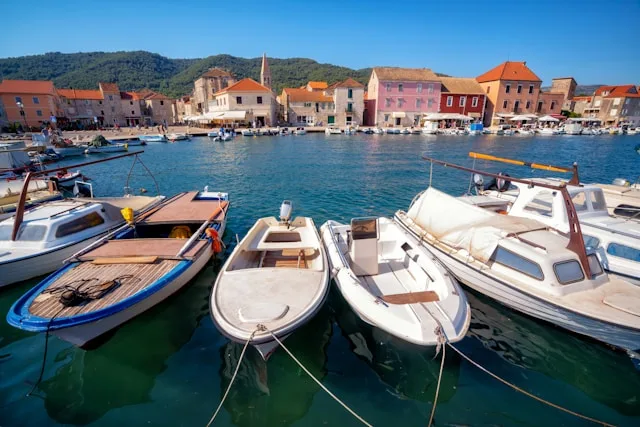
Split's maritime economy operates as a parallel talent market with its own dynamics and its own scarcity patterns. ACI Marina Split runs at 98% berth utilisation from May to September. Waiting lists for annual contracts exceed 18 months for vessels over 20 metres. The 340 licensed boat-tour operators, predominantly micro-enterprises running one to three vessels, generate €45 to €60 million in aggregate annual revenue. This is a market with real economic weight, not a peripheral amenity.
The talent competition in maritime operations is intense and increasingly cross-border. According to the Superyacht Intelligence Agency's 2024 Crew Salary Report, Athens and Barcelona actively recruit Croatian maritime hospitality professionals, offering €15,000 to €25,000 annual premiums for senior yacht captains. Cyprus and Greece investment migration programmes add tax advantages that Split cannot match.
Within the domestic market, the pattern in 2024 involved marina management companies poaching operations managers from competing facilities with compensation premiums of 15 to 20%. According to ACI Marinas' Personnel Cost Analysis, successive counter-offers for harbour masters and fleet maintenance managers inflated senior marina operations salaries by 18% year-on-year, while wages in other hospitality verticals remained essentially flat. The maritime segment is pulling away from the rest of the hospitality compensation structure.
The 2025 IMO emission regulations have added a certification layer. STCW-certified marine engineers and yacht maintenance technicians with expertise in Volvo Penta and MAN engine systems were already scarce. The additional requirements for scrubber systems and shore-power integration certification have narrowed the qualified pool further. The completion of the €14 million Kaštela Cruise Terminal Phase 1 in 2026, with its cold ironing infrastructure, will create demand for technical staff whose qualifications did not exist as a formal requirement three years ago.
This is the pattern that defines Split's talent market at its most fundamental level. Capital investment has not reduced the workforce requirement. It has replaced one category of worker with another that does not yet exist in sufficient numbers. The infrastructure moved faster than the human capital could follow.
Compensation Benchmarks That Hiring Leaders Are Getting Wrong
One of the most common errors in Split's hospitality market is benchmarking compensation against local norms rather than against the markets that actually compete for the same candidates. A hiring leader setting a general manager's package at the upper end of the Split range may feel generous. The candidate they are trying to attract is comparing that package to Dubrovnik, Zagreb, or Athens.
The compensation architecture for Split's critical roles breaks down as follows. A hotel operations manager reporting to a general manager earns €42,000 to €55,000 annually plus seasonal bonuses. A general manager with full P&L responsibility and international luxury brand experience earns €85,000 to €115,000, with performance bonuses potentially adding 20 to 30%. An executive chef with Michelin experience commands €58,000 to €85,000, often with accommodation allowances to offset Split's housing inflation.
In maritime operations, a certified harbour master earns €28,800 to €38,400 annually. A marina director or fleet maintenance director earns €57,600 to €74,400, carrying a 12 to 15% premium over equivalent hospitality management roles. Revenue managers at independent hotels earn €33,600 to €45,600. Directors of sales and marketing with regional responsibility earn €66,000 to €90,000, with high variance depending on whether the employer is internationally or domestically owned.
These figures are not low by Croatian standards. But they are not the figures that win candidates. Dubrovnik pays 20 to 30% more for the same general manager profile. Zagreb offers lower absolute numbers but eliminates the seasonal employment risk that discounts Split's headline figures in every candidate's mental arithmetic. The international Mediterranean, particularly Greece and Spain, offers yacht captains and marina managers €15,000 to €25,000 more per year with better tax treatment.
Any organisation hiring for a senior role in Split without current market benchmarking data is making offers in the dark. The candidates know exactly what they are worth. The question is whether the employer does.
The Regulatory Squeeze and What It Means for Staffing
The regulatory environment tightening around Split's tourism economy is not a background condition. It is an active force reshaping which roles need to be filled and how many compliance-aware professionals the market requires.
The Sustainable Tourism Tax, effective January 2026, levies €1.50 to €3.00 per person per night in the historic centre, with revenues earmarked for heritage conservation and workforce housing. The amendments to the Law on Hospitality, effective 2025, require short-term rental operators to register as limited companies rather than sole proprietors, increasing annual compliance costs by €1,200 to €1,800 per unit. This regulatory tightening is projected to reduce unlicensed short-term rental capacity by 15 to 20%, shifting demand toward formal hotel operations but also reducing overall accommodation flexibility.
At the port level, the Environmental Maritime Single Window became mandatory in 2025, requiring real-time emissions reporting for all cruise vessels. The Mediterranean Emission Control Area, projected for implementation by 2026, will require cruise vessels to use 0.1% sulphur fuel or scrubbers in Split waters. According to European Commission estimates, this will increase cruise line operational costs by 8 to 12%, potentially reducing call frequency if berth fees rise to fund shore-power infrastructure.
Each of these regulations creates demand for professionals who understand compliance frameworks. Revenue managers who can model the tourism tax impact on pricing strategy. Operations managers who understand the shift from sole-proprietor to corporate rental structures. Port and marina staff certified in emissions monitoring and shore-power systems. These are not roles that existed in Split five years ago. They are roles that must be filled now, and they must be filled from a talent pool that was already insufficient for the roles that existed before.
For organisations navigating this increasingly complex regulatory environment, the need for senior leaders who combine operational expertise with regulatory fluency has moved from desirable to essential.
What Must Change for Organisations Hiring in This Market
The fundamental tension in Split's hospitality labour market is not a shortage in the conventional sense. Shortages imply that more recruitment effort will yield more candidates. Split's problem is that the candidates its luxury and maritime sectors need are structurally unavailable through any volume-based recruitment method. They are passive, employed, and evaluating propositions that go far beyond salary.
Three adaptations separate the organisations that fill their critical roles from those that open at reduced capacity.
First, the search must begin before the need is acute. An executive chef search that begins in April for a June opening is already six months too late given the 180-to-270-day fill timeline for this role category. The organisations succeeding in this market are building proactive talent pipelines twelve months ahead of their seasonal requirements.
Second, the proposition must address the seasonality discount explicitly. A passive candidate in Dubrovnik or Zagreb will not move to Split for a role that offers higher peak-season compensation but carries implicit seasonal risk. Year-round employment guarantees, housing support, and clear off-season role definitions are now table stakes for senior hires.
Third, the search must reach across borders. The domestic Croatian talent pool for five-star general managers, Michelin-level executive chefs, and STCW-certified marine engineers is finite and oversubscribed. Successful placements increasingly involve international executive search targeting professionals in Montenegro, Slovenia, Italy, and Greece who are open to an Adriatic relocation but invisible to any Croatian job board.
KiTalent's approach to this market reflects these realities. With interview-ready executive candidates delivered within seven to ten days through AI-powered talent mapping, and a pay-per-interview model that eliminates the upfront retainer risk, the process is built for markets where the conventional post-and-wait approach has already failed. A 96% one-year retention rate for placed candidates matters more in a seasonal market than anywhere else, because replacing a failed hire mid-season is not difficult. It is impossible.
For organisations competing for executive hospitality and maritime leadership talent in Split's compressed, high-pressure market, where the candidates who can run a five-star operation through a 110-day season are not visible on any job board and the cost of a vacant leadership role is measured in lost revenue and diminished guest experience, speak with our executive search team about how we approach this market differently.
Frequently Asked Questions
What are the hardest hospitality roles to fill in Split, Croatia?
Executive chef positions at five-star properties and general manager roles at boutique hotels within the Diocletian's Palace zone are the most difficult to fill. Executive chef searches now take 180 to 270 days on average in Dalmatia's luxury segment, a 340% increase since 2019. General manager candidates are 85 to 90% passive, meaning they are employed and not responding to advertisements. Marina directors and certified harbour masters face similar scarcity due to cross-border competition from Greece and Spain. These roles require direct headhunting approaches rather than conventional job advertising.
How does Split's hospitality compensation compare to Dubrovnik?
Dubrovnik pays 20 to 30% more than Split for equivalent general manager and executive culinary roles at the five-star level. A general manager in Split earns €85,000 to €115,000 annually, while Dubrovnik's ultra-luxury properties offer materially higher packages. Dubrovnik also provides 30 to 45 additional days of peak-season operation due to winter MICE business, which improves employment stability. This premium makes Dubrovnik the primary competitor for Split's senior hospitality talent, and any organisation hiring in Split must benchmark against Dubrovnik's compensation structure to remain competitive.
Why is seasonality such a barrier to executive hiring in Split?
Split's seasonality index of 1.45 is nearly double Barcelona's and more than double Rome's. July and August account for 42% of annual bed nights, and the 110-day peak season generates 68% of annual revenue. This compression means senior professionals face implicit seasonal employment risk even when offered nominally permanent contracts. Candidates in Zagreb or Dubrovnik compare Split's concentrated earning period against year-round stability elsewhere. Addressing this requires explicit year-round employment guarantees and housing support as part of the recruitment proposition.
What impact will the new Kaštela Cruise Terminal have on Split's labour market?
The €14 million Kaštela Cruise Terminal Phase 1, completing in 2026, adds capacity for two 300-metre vessels simultaneously and includes cold ironing shore-power infrastructure. This is projected to increase Split's cruise handling capacity by 25%. However, it simultaneously creates demand for technical staff certified in emissions monitoring, shore-power systems, and Environmental Maritime Single Window compliance. The Croatian Employment Service projects overall workforce demand will increase 8 to 10% in 2026, landing on a labour market that was already short by over 3,200 positions.
How does KiTalent approach executive search in Split's hospitality market?
KiTalent uses AI-powered talent mapping to identify passive candidates across Croatia, Montenegro, Slovenia, Italy, and Greece who match the specific requirements of Split's luxury hospitality and maritime sectors. Because 80 to 90% of qualified candidates for senior roles are not actively searching, conventional job advertising reaches a fraction of the viable pool. KiTalent delivers interview-ready candidates within seven to ten days under a pay-per-interview model, with no upfront retainer. The firm's 96% one-year retention rate is particularly relevant in a seasonal market where mid-season replacement is not feasible.
What new regulations affect hospitality hiring in Split for 2026?
Three regulatory changes are reshaping Split's talent requirements. The Sustainable Tourism Tax, effective January 2026, requires revenue management professionals who can model per-night levies into pricing strategy. Amendments to the Law on Hospitality require short-term rental operators to register as limited companies, creating demand for compliance-aware operations managers. The Mediterranean Emission Control Area implementation requires cruise and marina operations staff certified in low-sulphur fuel systems and shore-power integration, adding a technical certification layer that did not previously exist.