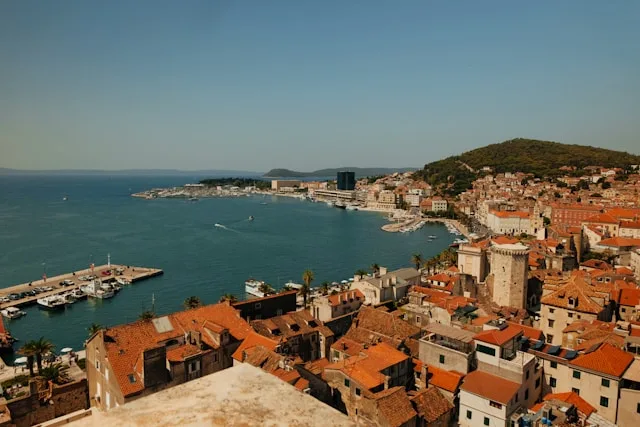
Split's Maritime Cluster Is Building World-Class Vessels and Losing the People Who Make Them
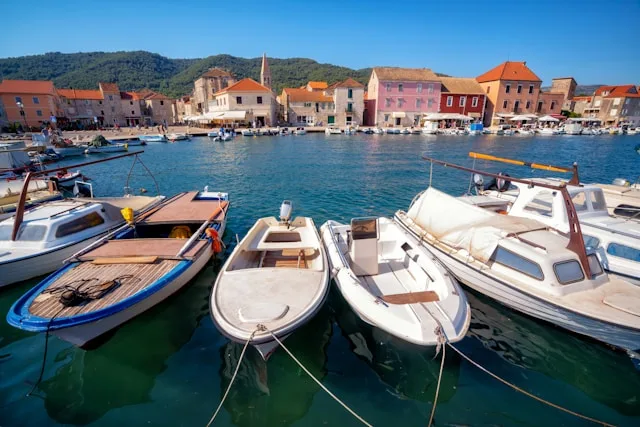
Split's shipyards delivered polar expedition cruise vessels in 2024 that rank among the most technically sophisticated ships constructed anywhere in Europe. The city's repair yards ran at 85–90% drydock utilisation through the winter maintenance season. ACI Marina Split completed a €2.3 million infrastructure upgrade to accommodate superyachts up to 80 metres. By every measure of capability, this is a maritime cluster performing at a level that should attract and retain senior technical talent with ease.
It is not retaining them. Italian yards in Monfalcone and Ancona are recruiting naval architects and production managers directly from Split employers, offering 40–60% gross wage premiums and relocation packages. An estimated 15–20 senior technical staff leave Brodosplit and the University of Split's Faculty of Electrical Engineering, Mechanical Engineering and Naval Architecture (FESB) for Italian shipyards each year. The welding inspectors, marine electrical engineers, and project managers this cluster needs most take six to nine months to recruit when they can be recruited at all. Meanwhile, 15% of the current shipbuilding workforce is reaching retirement age by 2026, and the pipeline of vocational graduates is not keeping pace.
What follows is an analysis of the forces pulling Split's maritime talent market apart: a cluster with genuine world-class technical capability that cannot translate that capability into the workforce stability its order books require. The article examines where the gaps are deepest, what is driving the outflow, why conventional hiring methods fail in this market, and what organisations operating in Split's maritime sector need to understand before launching their next critical search.
The Cluster That Builds Polar Ships but Cannot Hold Its Builders
Brodosplit, owned by DIV Group, remains the largest single industrial employer in Split-Dalmatia County. Employment at the yard fluctuates between 800 and 1,200 workers depending on project phase, a figure that reflects both the yard's niche positioning and its financial constraints. The yard delivered the Ocean Explorer for Vantage Travel and Viking Octantis for Viking Cruises in 2024. Active orders for two additional polar expedition cruise vessels carry delivery dates through 2025 and into 2026, with bids submitted for two 130-metre polar class vessels for international expedition operators.
This is not a dying shipyard. It is a technically accomplished one operating under persistent financial stress. Brodosplit has relied on state guarantees to back new construction contracts and continues financial restructuring under DIV Group ownership following a liquidity crisis in 2022–2023. The yard's specialisation in polar expedition vessels, which are PC6 ice class ships with advanced stability systems commanding premium pricing, demonstrates engineering capability that very few European yards can match.
The paradox at the centre of Split's maritime and industrial talent market is this: technical excellence in niche vessel construction has not produced financial sustainability in the Split operational context. A yard capable of building ships that sell for tens of millions of euros to global cruise operators has spent five consecutive years in some form of financial distress. That instability radiates directly into recruitment. Senior engineers with 12-year average tenures at Brodosplit are not leaving because they dislike the work. They are leaving because Italian competitors offer both higher compensation and the perception of greater organisational stability. The capability is real. The confidence that the capability will be rewarded over a full career is not.
Where the Gaps Are Deepest: Three Shortages Converging
The Croatian Employment Service listed 420 vacant positions in shipbuilding and maritime repair across Split-Dalmatia County as of December 2024, a 28% year-on-year increase. The aggregate number understates the severity. The most acute shortages are concentrated in three categories where the consequences of unfilled roles cascade through entire projects.
Welding Inspectors and Quality Control Specialists
Ship repair yards in the Split area experience six to nine month vacancy periods for welding inspectors holding EN ISO 9712 (UT/RT) and IWE/EWE certifications. Croatian Employment Service data shows a 340% increase in days-to-fill for welding quality control positions between 2019 and 2024. These are not roles where an employer can compromise on qualifications. Classification societies require specific certifications before a vessel can return to service. An unfilled welding inspector position does not merely slow a project. It stops it.
Electrical marine systems vacancies tell a similar story: 45% of posted positions remain unfilled beyond 90 days. Pipefitting vacancies run at 38% unfilled beyond 90 days. The pattern is consistent across employers and has worsened every year since 2019.
Marine Electrical Automation Engineers
The convergence of EU regulatory pressure and superyacht refit demand has created a new category of shortage. The FuelEU Maritime regulation and EU Emissions Trading System for maritime transport, both phasing in from 2024 and 2025, require retrofitting existing ferries and charter vessels with updated propulsion and monitoring systems. This drives demand for marine electrical engineers with PLC programming capability, integrated bridge systems experience, and yacht AV/IT integration skills. Split's vocational training infrastructure produces welders and general marine mechanics. It does not produce the electrical automation specialists the retrofit market requires.
Senior Project Managers with Superyacht Newbuild Experience
The superyacht repair and refit segment is the fastest-growing part of Split's maritime economy, with 15–20% revenue growth year-on-year as of late 2024. But managing a superyacht newbuild or major refit is not the same discipline as managing a ferry construction project. The pool of project managers who have delivered vessels above 40 metres is small globally and almost nonexistent within Croatia's borders. These candidates are predominantly passive, with roughly 75% not actively seeking new roles. The 25% who are active typically signal either project completion or organisational instability at their current employer, creating adverse selection risks for organisations relying on inbound applications.
The Compensation Gap That Widens at Exactly the Wrong Level
Executive compensation in Split's shipbuilding sector sits 35–45% below equivalent roles in Northern Italy and 50–60% below German shipbuilding centres in Kiel and Hamburg. Cost of living differences partially offset this differential, but only partially. The gap is widest at the seniority levels where Split's shortages are most acute.
A Senior Naval Architect or Lead Structural Engineer in Split earns €48,000–€68,000 gross annually. The same professional in Monfalcone or Trieste commands a 40–60% premium. At executive level, a Technical Director or Chief Naval Architect in Split earns €90,000–€140,000, with top-tier yacht build directors at specialised firms reaching €150,000 or above. In Germany, the equivalent floor is materially higher.
Shipyard operations tell a similar story. A Production Manager in Split earns €42,000–€60,000. A Shipyard Director or General Manager earns €75,000–€110,000. Marine surveying and quality assurance roles range from €38,000–€55,000 for senior specialists to €65,000–€95,000 at executive level.
The compensation data reveals something that aggregate shortage statistics miss. The gap is not uniform across seniority. It is steepest at the mid-career inflection point where a naval architect transitions from technical execution to project leadership. This is precisely the career stage where Italian and Slovenian competitors make their approaches. A professional earning €55,000 in Split who receives an offer for €85,000 in Monfalcone faces arithmetic that no amount of lifestyle marketing can overcome. Negotiating retention at this level requires structural changes to compensation frameworks, not one-off counteroffers.
Montenegro adds a different kind of pressure. The yachting hubs of Porto Montenegro and Porto Novi offer tax-free salary packages through a 0% income tax arrangement for foreign maritime workers. Net compensation in Tivat runs 20–25% above Split equivalents. For senior yacht captains, marine engineers, and charter management professionals, the Montenegrin proposition combines higher take-home pay with an English-language working environment. The competition for yachting talent is not just about gross salary. It is about net income in a sector where professionals already think in cross-border terms.
The Original Synthesis: Tourism Success Is Cannibalising Industrial Capacity
The research contains a tension that deserves explicit articulation because it runs counter to how most observers think about maritime clusters. Split's yachting and nautical tourism success is not complementary to its shipbuilding and repair capacity. It is actively undermining it.
This is not an abstract concern. It operates through a specific mechanism: real estate. Tourism-driven property inflation in Split pushed average property prices up 18% year-on-year through 2023–2024. Shipyard workers earning €42,000–€60,000 are being priced out of the city, forced into longer commutes from hinterland areas. That commute time and housing cost increase functions as an invisible pay cut, making the already unfavourable compensation comparison with Italian yards even worse.
But real estate is only the first-order effect. The second-order effect is land use. Split's maritime cluster requires industrial waterfront for shipyard operations, drydock facilities, and port logistics. The city's tourism economy drives conversion pressure that makes retaining that waterfront for industrial use economically irrational for landowners. The Split City Development Plan 2024–2030 envisions relocating industrial shipbuilding to the Vranjic/Bakarac zone, freeing central harbour land for mixed-use development. The infrastructure investment required exceeds €150 million, with earliest implementation in 2027–2028.
The paradox is that both the yachting sector and the shipbuilding sector appear under "maritime industry" in economic statistics. ACI Marina Split's 360 berths running at 80% occupancy and Brodosplit's polar expedition vessels appear as parts of the same cluster. In practice, they are competitors for the same scarce resource: waterfront real estate in a city where tourism generates higher returns per square metre than ship construction. The hidden cost of this competition is not measured in lost contracts. It is measured in senior engineers who conclude that Split's industrial future is less certain than Monfalcone's and make career decisions accordingly.
The Passive Candidate Problem in a Small, Visible Market
Split's maritime talent pool is small enough that most senior professionals know each other personally. This creates a passive candidate dynamic unlike larger metropolitan markets. Less than 5% of senior naval architects and marine engineers with more than ten years of experience actively apply to posted vacancies. The figure for experienced yacht captains holding permanent positions with established Split charter companies exceeds 95% passive.
The implications for search methodology are direct. Conventional job advertising reaches at most the 5–15% of viable candidates who are actively looking. In a talent pool this small and this passive, that fraction may represent zero suitable candidates for a specialised role. A certified welding inspector with EN ISO 9712 qualifications who is employed and performing well at Navis d.o.o. will not see a job posting on the Croatian Employment Service website. They may not have updated a CV in a decade. They are reachable only through direct, confidential outreach that understands their specific career motivations and can articulate a proposition worth considering.
Production managers and project managers with superyacht build experience present a particular challenge. The active 25% in this segment are disproportionately available because their current project has ended or their employer is unstable. Hiring from this active pool carries selection risk. The strongest candidates, those mid-project at a successful yard, are the least likely to respond to anything other than a carefully constructed direct approach. Understanding why executive recruiting fails in markets like this is not theoretical. It is the difference between filling a critical role and watching it sit open for nine months.
Average tenure at Brodosplit for senior engineers exceeds 12 years. This indicates low voluntary mobility but high vulnerability to international competitors who make targeted approaches. A professional who has been in the same role for 12 years has not been testing the market. When an Italian recruiter arrives with a 50% pay increase, they have no recent benchmark against which to evaluate the offer. The counteroffer dynamic in this context is especially fragile. A Split employer who matches the financial offer but cannot match the perceived career trajectory or organisational stability will lose the candidate regardless.
Regulatory Pressure Is Creating Demand for Skills That Do Not Yet Exist Locally
The EU Green Deal's maritime provisions are reshaping the skills profile this cluster needs. FuelEU Maritime regulation enforcement began in 2025. The EU Emissions Trading System for maritime transport has been phasing in since 2024. Together, these regulations require retrofitting existing ferry and charter fleets with updated propulsion monitoring, emissions tracking, and in some cases alternative fuel systems.
This creates a specific kind of skills gap. The engineers who can execute these retrofits need a combination of traditional marine mechanical knowledge and newer competencies in LNG-ready systems, cryogenic welding for fuel containment, and digital emissions monitoring platforms. Split's vocational training pipeline, anchored by FESB, graduates approximately 80–100 marine engineering and naval architecture students annually. This output was calibrated for a pre-regulatory market. The regulatory shift has not reduced workforce needs. It has replaced one kind of worker with another that the educational system has not yet been resourced to produce.
The capital expenditure burden falls heaviest on local ferry and charter operators with limited access to green financing. These are the employers least able to compete on salary for the marine electrical engineers they now require. Larger operators like Jadrolinija, despite maintaining 400–500 operational staff in Split, manage strategic decisions from Rijeka. The result is that Split bears the operational impact of the green transition without fully capturing the executive decision-making roles that drive fleet modernisation strategy.
The workforce demographics compound this pressure. The average age of shipyard workers in Croatian shipbuilding is 48.3 years. By 2030, 23% of the workforce will be eligible for retirement, according to the European Commission's EU Shipbuilding Industry Report. The replacement pipeline from vocational schools is insufficient in volume and misaligned in skills. Every year that passes without addressing this misalignment narrows the window for a managed transition.
What This Market Requires: A Different Approach to Search
The combination of a small, passive talent pool, intense cross-border competition, and a compensation gap that widens at the most critical seniority levels means that standard recruitment methods are structurally inadequate for Split's maritime sector. A posted vacancy for a welding inspector reaches the 5% of qualified professionals who happen to be looking. The other 95% must be identified through systematic talent mapping and approached individually.
For organisations hiring into this cluster, three principles apply.
First, speed matters more than it appears to. The research shows that active candidates in production management are disproportionately available due to project completion or employer instability. The strongest passive candidates, by contrast, receive approaches from Italian and Montenegrin competitors on an ongoing basis. A search that takes six months to produce a shortlist is not just slow. It is operating in a market where the best candidates may accept competing offers during that period. Delivering interview-ready candidates within 7–10 days is not a convenience in this market. It is a competitive requirement.
Second, compensation benchmarking must account for the cross-border reality. A Split employer benchmarking against other Split employers will produce an offer that feels competitive locally and loses to Monfalcone every time. Accurate market benchmarking in this sector means understanding what Fincantieri, Cantiere delle Marche, and Porto Montenegro are offering for the same profiles, then constructing packages that compete on total proposition rather than gross salary alone.
Third, the search methodology must reach candidates who are not visible on any digital platform. Senior naval architects with 12-year tenures at Brodosplit do not maintain active LinkedIn profiles for recruitment purposes. Yacht captains holding MCA certifications and permanent positions circulate through industry networks like PYA and ISS, not through job boards. KiTalent's approach to identifying and engaging passive senior talent through direct headhunting is designed for precisely this kind of market: one where the most qualified candidates are invisible to conventional search and will only engage through confidential, well-informed outreach.
KiTalent has completed over 1,450 executive placements globally, with a 96% one-year retention rate. In a market where the cost of a failed hire includes not just the replacement search but the months of project delay and the reputational signal it sends to an already sceptical talent pool, retention outcomes matter as much as placement speed.
For organisations competing for naval architecture, marine engineering, or shipyard leadership talent in the Adriatic maritime market, where the candidates who matter most are passive, cross-border mobile, and being actively courted by competitors offering 40–60% premiums, speak with our executive search team about how KiTalent approaches searches in small, specialised, and highly competitive talent pools.
Frequently Asked Questions
What are the main maritime employers in Split, Croatia?
The largest industrial employer is Brodosplit (owned by DIV Group), employing 800–1,200 workers depending on project phase. Navis d.o.o. operates the primary commercial repair facility with 120–150 permanent staff, expanding beyond 200 during peak season. The Port of Split Authority employs 280 directly plus over 1,200 concessionaires and service providers. Jadrolinija maintains 400–500 operational staff in Split, though corporate headquarters remain in Rijeka. ACI Marina Split serves as the flagship location for Croatia's publicly listed marina operator.
Why is it difficult to hire naval architects and marine engineers in Split?
Senior naval architects and marine engineers in Split demonstrate less than 5% active job-seeking behaviour, meaning over 90% are passive candidates who must be reached through direct executive search methods. Competition from Italian yards in Monfalcone and Trieste, which offer 40–60% gross salary premiums, further depletes the local pool. FESB graduates approximately 80–100 marine engineering students annually, which is insufficient to replace retirements and outward migration simultaneously.
What do maritime executives earn in Split compared to Italy and Germany?
A Technical Director or Chief Naval Architect in Split earns €90,000–€140,000 gross annually. Equivalent roles in Northern Italy command 35–45% more, and German shipbuilding centres pay 50–60% above Split levels. At senior specialist level, naval architects earn €48,000–€68,000 in Split. Cost of living differences partially offset the gap, but the differential is widest at mid-career seniority levels where cross-border recruitment pressure is strongest.
How is the EU Green Deal affecting maritime hiring in Split?
FuelEU Maritime regulation and the EU Emissions Trading System for maritime transport are driving retrofit demand across ferry and charter fleets. This has created acute demand for marine electrical engineers with PLC programming, emissions monitoring, and LNG-ready system experience. Split's vocational training pipeline has not yet adapted to produce these specialists in sufficient numbers, creating a skills gap that conventional local recruitment cannot close.
How does KiTalent approach executive search in small maritime talent markets?
KiTalent uses AI-enhanced talent mapping and direct headhunting to identify and engage passive candidates who are not visible through job postings or standard databases. In markets like Split's maritime cluster, where the total pool of qualified senior professionals may number in the low hundreds, this approach reaches the 90%+ of candidates who will only engage through confidential, well-informed direct outreach. KiTalent delivers interview-ready candidates within 7–10 days and operates on a pay-per-interview model with no upfront retainer.
What skills are hardest to recruit in Split's shipbuilding and repair sector?
The three most difficult categories are certified welding inspectors holding EN ISO 9712 and IWE/EWE qualifications, electrical automation engineers specialising in yacht systems and marine PLC programming, and senior project managers with superyacht newbuild experience on vessels above 40 metres. Croatian Employment Service data shows vacancy periods of six to nine months for welding quality control roles and 45% of electrical marine systems positions unfilled beyond 90 days.