Kristiansand Tourism Hiring in 2026: Why Full Employment Masks the Deepest Shortages
Kristiansand's hospitality sector hit 2.1% unemployment last winter. By any standard measure, that is full employment. Yet Dyreparken AS restructured its entire zoological team in 2024 because it could not find the veterinary specialists it needed. Hotel General Manager roles in the city's four-star segment sat open for 110 to 140 days. Color Line reported vacancy durations of four to six months for maritime Hotel Manager positions on the Kristiansand-Hirtshals route. The aggregate statistics say the talent is there. The hiring data says it is not.
This is the core tension defining Kristiansand's tourism and hospitality market heading into 2026. The city's economy is not short of workers. It is short of the specific senior professionals who run its most complex operations: the zoological directors who manage exotic species programmes, the revenue managers who optimise yield across a 10-week peak season, the executive chefs whose relocation depends on spousal career opportunities that a city of 95,000 cannot guarantee. These are not roles that can be filled by extending a seasonal contract or raising an hourly rate.
What follows is a structured analysis of the forces reshaping Kristiansand's tourism sector, the employers driving that change, and what senior leaders need to understand before they make their next hiring or retention decision in this market. The picture that emerges is one where growth is capped not by demand but by physical capacity, where environmental regulation is about to reshape the visitor pipeline, and where the executive talent required to manage all of this is almost entirely passive.
A Tourism Economy Built on Three Pillars and One Ceiling
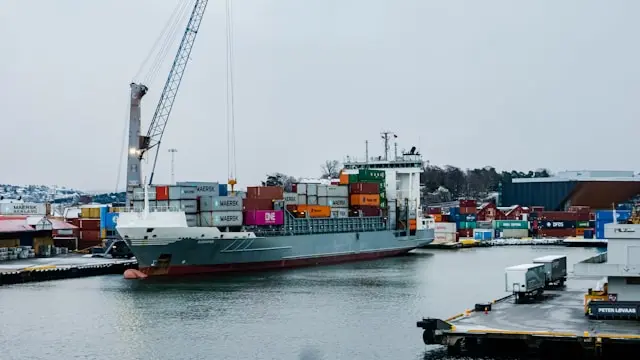
Kristiansand's tourism sector rests on three anchor institutions that together define the city's visitor economy. Dyreparken AS operates Norway's most visited zoo and amusement park complex, scaling from roughly 150 to 200 permanent employees to 800 to 1,000 staff during peak summer months. Color Line AS moves 1.6 million passengers annually through its Kristiansand-Hirtshals ferry route, operating vessels with combined capacity exceeding 5,000 passengers per sailing. And the Port of Kristiansand handled 120 cruise calls and 185,000 passenger arrivals in 2024, up from 98 calls the previous year.
These numbers paint a picture of a market in motion. But the constraint that governs everything sits above all three pillars.
The 2,400-Room Bottleneck
Kristiansand's hotel inventory stands at approximately 2,400 rooms across 15 to 18 properties. In July 2024, average occupancy reached 94%, according to STR Global's Norway Hotel Review. Average Daily Rates for upper-upscale properties exceeded NOK 2,200. At 94% occupancy, there is almost no room to absorb additional visitors, whether they arrive by cruise ship, ferry, or car. New hotel development faces zoning resistance in the compact city centre, meaning this ceiling is not lifting in the near term.
The practical consequence for employment is stark. Innovation Norway's regional analysis estimates employment growth at approximately 2% annually regardless of demand. The market is not constrained by whether tourists want to come. It is constrained by whether there is anywhere for them to sleep.
What the Capacity Ceiling Means for Hiring
When growth is capped by physical infrastructure rather than demand, the nature of the talent acquisition challenge changes. The market does not need more bodies. It needs better performance from a fixed asset base. That shifts the hiring priority from volume recruitment toward revenue optimisation, guest experience leadership, and operational efficiency at executive level. The roles that matter most in a capacity-constrained market are precisely the roles that are hardest to fill.
The Seasonality Problem Is Worse Than It Looks
Kristiansand's tourism employment exhibits a Gini coefficient of seasonality exceeding 0.65, according to Statistics Norway's Labour Force Statistics. That places it among the most seasonal labour markets in the country. To put that in practical terms: Dyreparken AS employs five to six times more people in July than in January.
This is not news to anyone who works in Norwegian hospitality. What is less well understood is how the seasonality interacts with the competitive dynamics for permanent executive talent.
The Winter Drain
Skilled operational managers who accept year-round positions in Kristiansand face a specific calculation during the off-season. The city's winter economy cannot support the career mobility, spousal employment, or professional network density that Oslo or Bergen offer. According to Hays Norway's regional compensation data, Oslo commands a 12 to 18% premium for equivalent Hotel General Manager roles. But the compensation gap is only part of the story. The dual-career problem is more damaging. A Hotel GM's spouse with a career in finance, consulting, or technology will find Kristiansand's labour market too shallow to sustain their trajectory.
The result is predictable. Firms offer year-round contracts with competitive pay, and candidates still decline. According to hospitality sector data, 60% of Hotel General Manager hires in Kristiansand's four-star segment require relocation packages from Oslo or Copenhagen. In Oslo, that figure is 25%. The cost of a failed executive hire compounds quickly in a market where the replacement search takes another four months.
Seasonal Workers Are Leaving Norway Entirely
The challenge extends below the executive tier. Polish and Baltic seasonal workers, who historically formed the backbone of Kristiansand's frontline hospitality workforce, increasingly prefer Mediterranean markets. Spain, Greece, and Croatia offer earning windows stretching from April to November. Kristiansand's core season runs June to August. That is a 40% shorter earning period for the same relocation effort, according to the European Labour Authority's Seasonal Mobility Report.
Non-EEA seasonal workers face an additional regulatory barrier: six-month visa caps that do not cover the full March-to-October operating season that Dyreparken AS runs. The resulting dependence on EEA nationals creates exposure to EU labour market shifts that Kristiansand cannot control.
Three Roles That Define the Executive Shortage
The gap between aggregate employment data and actual hiring difficulty is widest in three specific role categories. Each tells a different story about why this market resists conventional recruitment.
Zoological Directors and Veterinary Specialists
Norway's national pool of qualified zoological veterinarians numbers fewer than 150. Dyreparken AS competes for this talent against Oslo Zoo and, across the border, Copenhagen Zoo, both of which offer larger research budgets and more credible international career trajectories, according to the European Association of Zoos and Aquaria's workforce mobility study.
The passive candidate ratio in this category approaches 100%. Qualified zoological curators and veterinary specialists hold tenure-track positions or long-term contracts at competing institutions. They are not on any job board. They are not reading advertisements. Moving one requires a proposition that addresses research opportunity, institutional mission, and long-term career architecture. Dyreparken AS acknowledged the severity of this constraint publicly in March 2024, announcing a restructuring that combined veterinary and curatorial roles into hybrid positions to secure scarce expertise.
Compensation for a Zoological Director sits at NOK 1,100,000 to 1,400,000 including performance components. At that level, money alone does not differentiate. The search is won or lost on the quality of the approach and the specificity of the role narrative presented to the candidate.
Maritime Hospitality Leadership
Color Line's Hotel Manager positions for the Kristiansand-Hirtshals route carry a specific requirement that narrows the candidate pool dramatically: Danish/Norwegian bilingual capabilities combined with dual regulatory compliance expertise. According to Maritime Executive Norway's recruitment trends analysis, these roles average four to six months to fill, compared to two to three months for comparable positions on the Oslo-Copenhagen route.
The maritime hospitality executive market is 60% passive, with candidates moving through industry networks rather than formal channels. This is a market where headhunting methodology matters more than advertising budget. The candidates who can satisfy the bilingual and dual-compliance requirements are a subset of an already small pool, and they know their scarcity value.
Hotel General Managers, Upper-Upscale Segment
Hotel GM searches in Kristiansand run 110 to 140 days on average. The passive candidate ratio sits at 75 to 80%. The hidden 80% of passive talent that defines most executive markets is, in Kristiansand's case, closer to 80% in reality, not just theory.
Compensation for a GM of a 150-plus room upper-upscale property runs NOK 950,000 to 1,200,000 base with 15 to 20% bonus potential tied to Gross Operating Profit metrics. These figures are adjusted for a regional cost differential of 12 to 15% below Oslo, according to Scandic Hotels Group's executive remuneration benchmarks. The gap is material enough to require explanation and mitigation in any offer conversation. It is not large enough to explain the 140-day vacancy durations on its own. The spousal employment barrier does more damage than the salary differential.
Environmental Regulation Is About to Reshape the Visitor Pipeline
Here is the analytical claim that sits beneath all of the hiring data: the cruise and ferry growth that has driven Kristiansand's tourism optimism for the past two years is running directly into a regulatory wall, and the hospitality firms making permanent staffing investments based on extrapolated growth trajectories are building on ground that may shift beneath them.
The Port of Kristiansand's 22% growth in cruise calls between 2023 and 2024 is real. The 15% hotel revenue increases attributed to cruise spillover spending are real. But three regulatory forces are converging.
Norway's maritime CO2 tax escalation, effective January 2025, is projected to increase Color Line's operating costs by 8 to 12%, according to the Norwegian Ministry of Finance's 2025 budget proposal. That cost will flow through to fares or reduced sailing frequency, dampening the Danish cross-border tourism that Color Line's route sustains.
Innovation Norway's regional forecasting now projects cruise passenger numbers plateauing at 190,000 to 200,000 annually due to environmental regulations restricting ship sizes in Kristiansand's inner harbour. The current 185,000 figure is already approaching that ceiling.
And the delayed harbour electrification project, originally targeted for completion in late 2025, creates compliance risk against Norway's zero-emission coastal regulations taking effect in 2026. Color Line's Color Hybrid battery-hybrid operations depend on shore power infrastructure that does not yet exist at full capacity.
The implication for hiring leaders is specific. Permanent executive hires in roles tied to cruise and ferry visitor flows should be stress-tested against a scenario where those flows flatten or contract. A Revenue Director hired to optimise yield across growing cruise traffic may need to optimise across shrinking cruise traffic within 18 months of appointment. The talent pipeline for these roles should reflect strategic flexibility, not just current demand.
What Kristiansand's Compensation Data Actually Reveals
The salary data for Kristiansand's tourism executive roles tells a story of a market that pays well enough to be competitive but not well enough to overcome the structural disadvantages of its location.
A Hotel Operations Manager earns NOK 650,000 to 750,000. An Executive Chef in the upper-upscale segment: NOK 550,000 to 700,000 at specialist level, rising with seniority. A Revenue Manager at cluster level: NOK 550,000 to 680,000, extending to NOK 850,000 to 1,050,000 for a multi-property Director of Revenue. A Cruise Terminal Operations Manager: NOK 580,000 to 700,000, with the harbour master role reaching NOK 900,000 to 1,100,000.
These are respectable numbers by Norwegian regional standards. They are not Oslo numbers. And the gap matters most at exactly the seniority level where the most critical searches sit.
The 12 to 18% compensation premium that Oslo commands for equivalent Hotel GM roles is not a general market differential. It is concentrated at the senior leadership tier. A frontline receptionist earns roughly the same in Kristiansand as in Oslo once collective bargaining agreements are applied. But a GM earns materially less, and the cost-of-living savings in Kristiansand do not fully offset the gap when a candidate's spouse faces reduced earning potential.
Copenhagen adds a second competitive vector. Danish maritime hospitality roles offer higher net disposable income due to tax differentials for specialised maritime workers. For Color Line's bilingual Hotel Manager candidates, Copenhagen is the most natural alternative. It pays better on a net basis, offers richer career networks, and does not require relocating to a city of 95,000 people.
When negotiating salary for executive roles in this market, the conversation must address the total proposition. Compensation benchmarks matter, but the relocation package, the spousal employment support, and the narrative about Kristiansand's strategic trajectory often determine whether a candidate accepts or declines.
Dyreparken's Winter Pivot and the Flattening of the Curve
Dyreparken AS is making the most aggressive structural attempt to address Kristiansand's seasonality problem. Its "Winter Wonderland" programming targets 350 to 400 winter employees by 2026, roughly doubling the current winter baseline. If successful, this would represent the most material shift in the city's seasonal employment curve in a decade.
The logic is sound. A flatter employment curve reduces the annual talent drain, makes year-round positions more viable, and improves the retention proposition for the operational managers whose departure during winter months creates the most damage. A zoological veterinarian who sees year-round programme activity and research opportunity has a fundamentally different career calculus than one facing a November-to-March hibernation of institutional activity.
But the initiative is contingent on weather and energy costs. Norway's electricity prices have been volatile, and the energy cost of running large-scale winter attractions in southern Norway is not trivial. If energy prices spike, the economics of Winter Wonderland deteriorate quickly. And Kristiansand's weather is milder than northern Norway but still marginal for outdoor winter attractions. A poor weather season could undermine visitor volumes and, with them, the business case for the expanded winter workforce.
The "Julebyen" Christmas Town initiative in Posebyen historic district extended the 2024 operating season for hospitality firms by approximately six weeks, according to Visit Sørlandet. This is promising but incremental. The persistent gap left by the defunct Quart Festival (ceased 2008) means Kristiansand still lacks a summer anchor event capable of driving overnight stays at the scale needed to justify major accommodation investment.
For hiring leaders evaluating opportunities at Dyreparken AS or its hospitality partners, the winter pivot changes the executive search conversation. Roles framed as year-round leadership positions with genuine programme depth in every quarter are more attractive than roles that acknowledge a quiet season. How the opportunity is positioned to passive candidates matters as much as what it pays.
Why This Market Demands a Different Search Method
Kristiansand's executive hospitality market is too small and too passive for conventional recruitment to work. At 75 to 80% passive for Hotel GMs, approaching 100% passive for zoological specialists, and 60% passive for maritime operations managers, the arithmetic is stark. Job advertising reaches, at best, one in five viable candidates for the most critical roles.
The 85% unionisation rate under Fellesforbundet/NAF agreements adds another layer. Collective bargaining mandates create rigidity in seasonal hiring and firing, compress margins through overtime premiums during peak periods, and limit the flexibility that employers need when competing for scarce talent against markets with different regulatory structures.
The candidate pool for senior hospitality roles in Kristiansand is defined by three filters, each of which eliminates a large portion of theoretically qualified professionals. Filter one: willingness to relocate to a city of 95,000, which eliminates candidates whose spouses have established careers in larger urban markets. Filter two: sector-specific expertise (maritime compliance, zoological operations, revenue management for extreme seasonality), which eliminates generalists. Filter three: current passive employment status, which means the surviving candidates cannot be reached through job boards, recruitment advertising, or inbound applications.
What remains after those three filters is a very small number of individuals who must be identified, approached, and engaged through direct search and talent mapping. This is not a market where posting a role and waiting produces results. The data on vacancy durations confirms this: 110 to 140 days for a Hotel GM, four to six months for a maritime Hotel Manager. These are not timelines that reflect high standards. They reflect an inability to access the candidates who exist but are not looking.
The counteroffer risk is elevated in a market this passive. When you identify and engage one of fewer than 150 zoological veterinarians in Norway, their current employer will fight to retain them. The search process must anticipate this and build the candidate relationship to withstand it.
For organisations hiring senior tourism and hospitality leadership in Kristiansand, where the candidates who matter most are invisible to conventional recruitment and the cost of a prolonged vacancy is measured in lost peak-season revenue, start a conversation with our executive search team about how KiTalent approaches markets with extreme passive-candidate concentrations. With a track record of delivering interview-ready executive candidates within 7 to 10 days, a 96% one-year retention rate, and a pay-per-interview model that removes the upfront retainer risk, KiTalent is built for precisely the conditions that define this market.
Frequently Asked Questions
What is the average salary for a Hotel General Manager in Kristiansand?
A Hotel General Manager overseeing an upper-upscale property of 150-plus rooms in Kristiansand earns NOK 950,000 to 1,200,000 in base salary, with bonus potential of 15 to 20% tied to Gross Operating Profit metrics. This sits 12 to 18% below equivalent Oslo roles. The regional differential reflects lower cost of living but also limits the candidate pool, as many qualified GMs factor spousal career opportunities and long-term earning trajectory into relocation decisions rather than evaluating the Kristiansand offer in isolation.
Why are hospitality executive searches in Kristiansand so slow?
Three factors converge. First, 75 to 80% of qualified Hotel GMs are passive candidates who are not monitoring job boards. Second, the dual-career barrier deters candidates whose partners need urban labour market access. Third, the extreme seasonality of the market creates perception risk for candidates weighing career stability. The result is vacancy durations of 110 to 140 days for senior hotel leadership, nearly double the Oslo equivalent. Firms using direct headhunting rather than job advertising consistently reduce these timelines by reaching candidates that conventional channels miss entirely.
How does seasonality affect tourism employment in Kristiansand?
Kristiansand's tourism employment has a seasonality Gini coefficient exceeding 0.65, among Norway's highest. Dyreparken AS scales from 150 to 200 permanent staff to 800 to 1,000 during summer. This extreme swing creates structural retention challenges: skilled managers migrate to permanent roles in Oslo or abroad during winter months. Dyreparken's Winter Wonderland initiative targets 350 to 400 winter employees by 2026 to flatten this curve, but success depends on energy costs and weather patterns.
What specialist roles are hardest to fill in Kristiansand's tourism sector?
The three most constrained categories are zoological veterinarians specialised in exotic species (national pool under 150 individuals), maritime hospitality managers requiring Danish/Norwegian bilingual capabilities and dual regulatory expertise, and executive chefs for the upper-upscale hotel segment. Each category combines deep technical specialisation with location-specific requirements that shrink an already small candidate pool further.
How will environmental regulation affect Kristiansand's cruise tourism?
Innovation Norway projects cruise passenger numbers plateauing at 190,000 to 200,000 annually due to environmental rules limiting ship sizes in the inner harbour. Norway's maritime CO2 tax escalation is expected to increase Color Line's costs by 8 to 12%, potentially raising fares or reducing frequency on the Kristiansand-Hirtshals route. Senior hiring leaders should stress-test executive appointments against a scenario where cruise-driven visitor growth levels off within the next 12 to 18 months.
How does KiTalent approach executive search in small, seasonal tourism markets?
KiTalent uses AI-powered talent mapping to identify the passive candidates who dominate Kristiansand's senior hospitality talent pool. In markets where 75 to 100% of qualified candidates are not actively seeking, conventional recruitment fails systematically. KiTalent delivers interview-ready candidates within 7 to 10 days, operates on a pay-per-interview basis with no upfront retainer, and maintains a 96% one-year retention rate across more than 1,450 executive placements globally.