Lausanne Life Sciences: The Market That Creates Innovation Faster Than It Can Hire Leaders to Scale It
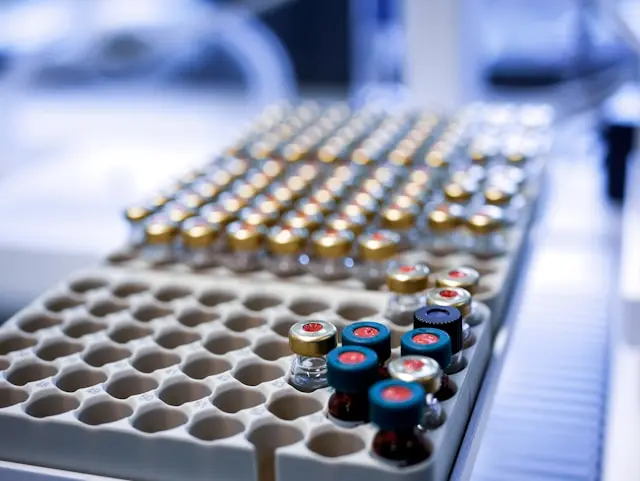
Lausanne's life sciences sector produces spin-offs at one of the highest per-capita rates of any city in Europe. EPFL generated 27 life sciences and medtech companies in 2023 alone. Biopôle's wet-lab facilities operate at 94% occupancy. CHUV runs more than 1,100 clinical trials, with 38% backed by industry sponsors. By every measure of scientific productivity, this is a market that works.
Yet Director-level regulatory affairs positions across the Biopôle cluster routinely sit unfilled for six to nine months. According to the Swiss Biotech Association's 2024 industry survey, 70% of Vaud-based mid-to-large biotech firms report unfilled Director-level regulatory roles after 180 days. Searches for Chief Commercial Officers in digital therapeutics fail after four to six months, forcing companies onto interim consultants at CHF 2,000 to 2,500 per day while EU market entry slips by eight months to a year. The problem is not that Lausanne lacks innovation. The problem is that the ecosystem manufactures scientific founders and early-stage breakthroughs faster than it develops or attracts the commercial and operational leaders required to turn those breakthroughs into revenue.
What follows is a structured analysis of the forces shaping Lausanne's life sciences sector in 2026: the infrastructure investments that are expanding capacity, the talent dynamics that are constraining it, the compensation benchmarks that define the market, and the strategic choices facing any organisation trying to hire senior leaders in one of Switzerland's most productive and most difficult recruitment markets.
The Infrastructure Is World-Class. The Talent Retention Is Not.
The Canton of Vaud hosts approximately 450 life sciences companies employing over 17,000 people directly. Lausanne accounts for roughly 60% of that concentration through the Biopôle-CHUV-EPFL triangle, according to the Innovaud Economic Observatory's 2024 data. The sector contributed CHF 4.2 billion in value added to the Vaud economy in 2023. That figure represented 12% of cantonal GDP.
The physical infrastructure continues to expand. Biopôle's Phase 3 development, adding 12,000 square metres of laboratory space, is scheduled for completion in mid-2026. It could accommodate 40 to 50 additional early-stage companies. EPFL's BioMedical Research Center commenced partial operations in late 2024 following a CHF 120 million federal investment. CHUV's operating budget reached CHF 2.34 billion for 2024, underwriting the clinical throughput that makes Lausanne attractive to trial sponsors in the first place.
None of this investment has solved the hiring problem at the leadership level. The sector is projected to add 800 to 1,200 net new positions in the Lausanne area by the end of 2026, representing 6 to 8% headcount growth, according to BAK Economics. But the hidden 80% of qualified senior candidates in this market are not looking for roles. At the VP level in regulatory and clinical functions, 85% of qualified professionals are passive, with average tenure at current employers of 4.2 years. These are not people browsing job boards.
The trajectory established through 2025 has continued into 2026: more laboratory space, more spin-offs, more clinical trials, and no proportional increase in the executive talent required to commercialise any of it.
The Founder Surplus and Executive Deficit
This is the analytical tension at the centre of Lausanne's life sciences market, and it is the one that most hiring leaders underestimate.
EPFL produces 20 to 30 life sciences spin-offs every year. That rate is among the highest per-capita globally. The university's Technology Transfer Office reported that only 60% of these spin-offs remain headquartered in Greater Lausanne after their Series A funding round. Many relocate to Basel or Boston to access the commercial leadership talent they cannot find locally.
The assumption embedded in most regional development strategies is that scientific excellence attracts commercial leadership. Lausanne disproves this. The city produces world-class science. It does not produce, in sufficient numbers, the CEOs, Chief Business Officers, and Chief Commercial Officers with experience scaling a biotech from CHF 10 million to CHF 100 million in revenue. These individuals exist, but they sit in Basel, Boston, and San Francisco. Recruiting them into Lausanne requires overcoming cost-of-living premiums, a smaller peer ecosystem, and in many cases the absence of the large-pharma proximity that Basel offers.
The result is a market condition that could be described as a founder surplus paired with an executive deficit. The scientific pipeline is full. The leadership pipeline is not. And the gap between the two is widening as Biopôle's expansion adds capacity for more early-stage companies without a proportional increase in the pool of experienced operators who can run them past the translational stage.
For hiring leaders, this means that every senior commercial or operational search in Lausanne life sciences is competing not just against other local employers but against the gravitational pull of larger ecosystems. The candidates who could fill these roles are overwhelmingly passive, employed elsewhere, and receiving multiple approaches per month.
Where the Shortages Are Most Acute
Regulatory Affairs and Quality Leadership
The most severe hiring constraint in Lausanne's life sciences market sits in regulatory affairs. Director-level RA positions for combination products, those bridging drug and device classifications, remain unfilled for six to nine months as a standard pattern. The bottleneck is specific: candidates must hold dual Swissmedic and FDA submission experience. That combination is rare globally. In Lausanne, where Swissmedic's medical device registration timeline averages 18 months for Class III devices compared to 12 months via the FDA's De Novo pathway, the regulatory complexity is higher than in most competing markets.
Swissmedic's 2025 to 2027 strategic plan indicates accelerated review pathways for breakthrough devices, potentially reducing time-to-market by 30% for qualifying innovations. But implementation depends on federal budget allocations that remain uncertain. Until these pathways are operational, EPFL medtech spin-offs continue pursuing US-first regulatory strategies despite local development. That strategic reality further narrows the candidate pool, since the leaders they need must be fluent in both Swiss and American regulatory systems simultaneously.
VP Regulatory Affairs and Chief Quality Officer roles in the Lausanne region command base salaries of CHF 280,000 to 380,000, with 30 to 50% bonus and equity components. Total compensation reaches CHF 400,000 to 550,000 for NASDAQ-listed firms, according to KPMG Switzerland's 2024 Life Sciences Executive Compensation Study. Even at these levels, the roles go unfilled for months.
Clinical Development and Medical Affairs
Senior Clinical Project Managers with oncology trial experience face active poaching between Lausanne firms. According to Michael Page Switzerland's 2024 Life Sciences Salary Guide, 45% of Vaud biotech companies reported losing clinical operations talent to Basel-based competitors during 2024. Retention bonuses averaging CHF 25,000 to 40,000 failed to prevent departures when Basel offered 20 to 25% salary premiums.
The dynamic is straightforward. Basel hosts Roche and Novartis headquarters. Those organisations offer larger team leadership opportunities and clearer progression to Global Head roles. A mid-career clinical professional in Lausanne with five to ten years of experience faces a choice: stay in an ecosystem of small-to-mid-stage companies with limited upward mobility, or move to Basel and manage a global function within 18 months. The choice, for many, is not difficult. This creates a persistent drain on the specific career stage that Lausanne needs most: experienced enough to lead a trial programme, not yet senior enough to be immovable.
VP Clinical Development and CMO roles in the Lausanne region carry base salaries of CHF 300,000 to 450,000, with equity packages valued at CHF 500,000 to 1.5 million for pre-IPO biotechs. The cost of a failed search at this level is not just the direct recruitment expense. It is the clinical timeline that stalls, the regulatory submission that misses its window, and the investor confidence that erodes.
AI, Machine Learning, and Computational Biology
The third acute shortage spans AI and technology roles applied to drug discovery. Senior Data Scientists with life sciences domain expertise earn CHF 140,000 to 180,000 in base salary. VP Bioinformatics and Chief Data Officer positions reach CHF 280,000 to 400,000, with material equity components for EPFL spin-offs. The passive candidate ratio for AI and ML scientists with biology domain expertise stands at 75%. These professionals receive three to five unsolicited recruitment approaches monthly.
Zurich competes aggressively for this talent, drawing on ETH Zurich's computer science reputation. Zurich-based startups offer equity packages approximately 20% higher than Lausanne equivalents and provide hybrid working arrangements accepted by 85% of firms, compared to 60% in Lausanne's lab-heavy environment. The flexibility gap matters. An AI researcher whose work is primarily computational, not laboratory-based, has limited reason to accept Lausanne's in-office norms when Zurich offers more money and more flexibility for equivalent work.
The Basel Gravity Problem
The competitive threat from Basel deserves its own examination because it operates differently from international competition.
Boston and San Francisco recruit Swiss-trained PhDs and MD-PhDs with total compensation packages 50 to 70% higher than Lausanne when converted to USD, according to Nature Biotechnology's 2024 Salary Survey. The net advantage is partially offset by Swiss taxation and cost-of-living calculations. Cambridge and Amsterdam target Lausanne's EU-national talent pool with relocation packages that emphasise EU regulatory passporting, a meaningful benefit given the stagnation in Swiss-EU institutional framework negotiations.
But Basel's pull is more insidious because it does not require relocation in any meaningful sense. Basel is 2.5 hours from Lausanne by train. A mid-career professional can move employers without moving homes, at least initially. The salary premium for equivalent regulatory and clinical development roles in Basel runs 20 to 30% above Lausanne, according to BAK Economics. The team sizes are larger. The career paths are more legible. And the employer brands, Roche and Novartis, carry global weight that no Lausanne employer except perhaps CHUV can match.
For Lausanne's hiring leaders, this means that a competitive compensation package alone is insufficient. The package must be paired with a role proposition that Basel cannot offer: the chance to build something from scratch, to sit closer to the science, to shape a company rather than manage a function within one. That proposition exists. But it must be articulated explicitly in the search process, and it must reach the right candidates at the right moment. Posting the role and waiting for applications will not achieve this.
The 40% of EPFL graduates who leave for Basel or Zurich within a year of completing their degrees represent the long-term pipeline cost. The 20% who leave Switzerland entirely represent the permanent loss. Only 30% of EPFL and UNIL life sciences MSc and PhD graduates remain in the Canton of Vaud after graduation, according to the Federal Statistical Office's 2023 graduate tracking data. The infrastructure investment is real. The retention of the people it trains is not keeping pace.
The Cost Ceiling That Constrains Scaling
Lausanne's operating cost profile creates a compounding challenge for companies trying to scale within the region while simultaneously recruiting senior talent from outside it.
Wet-lab space in Lausanne averages CHF 750 to 950 per square metre annually. That is 35% above comparable space in Basel and 60% above Munich, according to CBRE Switzerland's Q3 2024 Life Sciences Real Estate Report. The Vaud canton's cost-of-living index stands at 142 against a Swiss average of 100. For a candidate relocating from a lower-cost European market, or even from Zurich, the Lausanne premium adds a meaningful friction layer to an already complex relocation calculation.
The lack of mutual recognition between Swissmedic and the EU MDR system since 2021 adds regulatory costs averaging CHF 150,000 to 300,000 per device in duplicate conformity assessment. For early-stage medtech companies at Biopôle, this cost falls at precisely the moment they are also trying to hire their first VP of Regulatory Affairs at CHF 280,000 or more in base salary. Burn rates accelerate. Runway shortens. And the pressure to relocate to a market with lower costs and simpler regulatory pathways increases.
The funding environment adds a further constraint. Venture capital inflow to Vaud biotech reached CHF 680 million in 2024, a 15% decline from 2023's peak, though still 22% above the five-year average through 2023, according to EY's Swiss Biotech Report. A projected 20% decline in Series B and C funding availability through 2025 compared to 2021 peaks threatens to force consolidation among Biopôle's mid-stage companies. This could reduce overall hiring demand but simultaneously intensify competition for the senior talent that surviving companies need most.
The cost ceiling does not make Lausanne uncompetitive. It makes the hiring proposition more complex. A candidate evaluating a Lausanne opportunity against a Basel or Munich alternative is weighing not only salary and role scope but also laboratory costs, regulatory timelines, and the financial stability of the employer. The organisations that succeed in hiring at this level are the ones that address these objections before they are raised, not the ones that hope candidates will overlook them.
What This Market Requires From a Search Process
The data points toward a single conclusion about how executive hiring must work in Lausanne's life sciences sector. Conventional methods are structurally inadequate for this market.
Job postings for life sciences professionals in the Lausanne region increased 28% year-over-year in Q3 2024. Vacancy durations averaged 127 days for senior technical roles, compared to 89 days in Basel, according to Adecco Switzerland's market analysis. The Vaud canton's 7.2% vacancy rate for STEM positions is nearly double the national average of 3.8%, per SECO labour market statistics. Advertised vacancies attract primarily underqualified active candidates, while the market above CHF 200,000 relies almost entirely on executive search.
At the VP level, 85% of candidates are passive. They are employed, performing well, and not monitoring job boards. They are also, critically, being approached by Basel employers, Zurich digital health firms, and US recruiters on a regular basis. A search methodology that reaches only active candidates misses the overwhelming majority of the talent pool.
The Specificity Problem
The roles hardest to fill in this market are not generically senior. They are specifically complex. A VP Regulatory Affairs for a combination product must understand Swissmedic Class III timelines, FDA De Novo pathways, EU MDR conformity, and the commercial reimbursement environment for digital therapeutics. A Chief Commercial Officer for an EPFL spin-off must have scaled a biotech from pre-revenue through Series B while managing European market access. These are not roles where a broad talent search and a strong job description will produce a viable shortlist.
The headhunting methodology required for this market must begin with a precise mapping of where these individuals currently sit: which Basel companies employ them, which Boston biotechs have trained them, which Zurich digital health firms are using them in adjacent roles. The search must then construct a proposition tailored to each candidate's specific situation, addressing the Basel gravity problem, the cost-of-living premium, and the career trajectory question simultaneously.
KiTalent's approach to this challenge is built around AI-enhanced talent mapping that identifies passive candidates across competing ecosystems, combined with direct engagement that presents the Lausanne opportunity in terms calibrated to what each candidate actually values. The model delivers interview-ready candidates within 7 to 10 days, a timeline that matters in a market where a four-month search means a missed clinical submission window and a delayed Series B.
For organisations in the Lausanne life sciences market that are watching senior searches stall while competitors in Basel and Boston recruit from the same constrained pool, start a conversation with our executive search team about how we build shortlists in markets where 85% of qualified candidates are invisible to conventional methods. With a 96% one-year retention rate across 1,450 completed executive placements, and a pay-per-interview model that eliminates upfront retainer risk, KiTalent is built for precisely this kind of search.
Frequently Asked Questions
Why is executive hiring in Lausanne life sciences so difficult despite strong infrastructure investment?
Lausanne's difficulty is not a lack of infrastructure. Biopôle operates at 94% lab occupancy, CHUV runs over 1,100 clinical trials, and EPFL generates 20 to 30 spin-offs annually. The gap is in experienced commercial and operational leadership. The ecosystem produces scientific founders faster than it develops or attracts the C-suite executives who can scale those companies past the translational stage. Eighty-five percent of VP-level candidates in regulatory and clinical functions are passive and employed elsewhere. Reaching them requires direct headhunting approaches rather than job advertising, which attracts primarily underqualified active applicants.
What do senior life sciences roles pay in Lausanne in 2026?
Compensation for senior roles in Lausanne life sciences is competitive within Switzerland though below Basel equivalents by 20 to 30%. VP Regulatory Affairs positions command CHF 280,000 to 380,000 in base salary with 30 to 50% bonus and equity. VP Clinical Development and CMO roles carry CHF 300,000 to 450,000 base with equity valued at CHF 500,000 to 1.5 million for pre-IPO biotechs. Senior Data Scientists with life sciences AI expertise earn CHF 140,000 to 180,000 base. Total compensation at VP level can reach CHF 400,000 to 550,000 for NASDAQ-listed firms.
How does Basel compete with Lausanne for life sciences talent?
Basel offers 20 to 30% salary premiums for equivalent roles, larger team leadership responsibilities, and clearer progression paths to Global Head positions within Roche and Novartis. For mid-career professionals with five to ten years of experience, Basel provides something Lausanne's smaller employers cannot easily match: scale, global brand recognition, and structured career advancement. Forty-five percent of Vaud biotech companies reported losing clinical operations talent to Basel competitors in 2024, with retention bonuses of CHF 25,000 to 40,000 often insufficient to prevent departures.
What regulatory challenges affect hiring in Lausanne's medtech sector?
Swissmedic's Class III medical device registration averages 18 months, compared to 12 months via the FDA De Novo pathway. The lack of mutual recognition with the EU MDR system since 2021 forces duplicate conformity assessments costing CHF 150,000 to 300,000 per device. This creates a specific hiring challenge: medtech companies need regulatory leaders fluent in both Swissmedic and FDA systems simultaneously. That dual expertise is scarce globally, and searches for Director-level regulatory affairs candidates with this profile routinely take six to nine months to fill.
How can Lausanne biotech companies compete for passive executive candidates?
The key is reaching candidates who are not actively looking. In Lausanne's market, 85% of VP-level regulatory and clinical professionals are passive, averaging 4.2 years of tenure at their current employers. KiTalent uses AI-enhanced talent mapping to identify these professionals across Basel, Zurich, Boston, and other competing markets, then constructs engagement strategies that address each candidate's specific motivations. The pay-per-interview model means organisations only invest when meeting qualified candidates, reducing the risk of extended, unproductive search cycles.
What is the outlook for Lausanne life sciences hiring through 2026?
The sector is projected to add 800 to 1,200 net new positions by the end of 2026, contingent on talent supply resolution. Biopôle's Phase 3 expansion adds 12,000 square metres of laboratory space in mid-2026, potentially housing 40 to 50 additional early-stage companies. Swissmedic's planned accelerated review pathways could reduce medtech time-to-market by 30%. However, with only 30% of EPFL and UNIL life sciences graduates remaining in the Canton of Vaud, the domestic pipeline alone cannot meet this projected demand. International executive search will remain essential for senior appointments.