Lecco's Steel Sector Is Investing Millions in Decarbonization. The Workforce It Needs Does Not Exist Yet
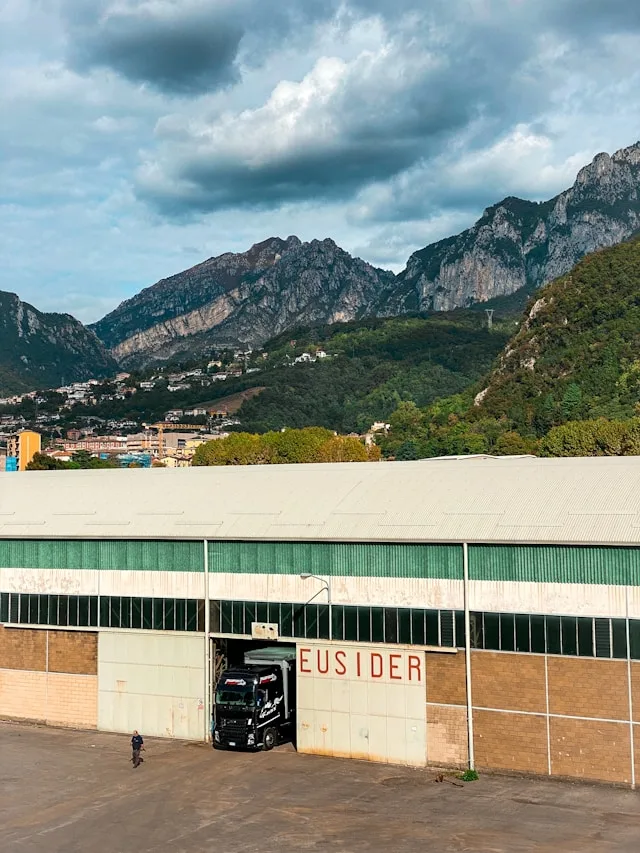
Lecco's metallurgical cluster produced approximately 400,000 tonnes of finished steel products in 2024 through AFV Beltrame's rolling mill alone. Across the province, roughly 850 metallurgical and fabricated metal enterprises employed some 12,000 workers. The numbers suggest a functioning industrial ecosystem. They conceal a labour market approaching a breaking point.
The tension is specific. AFV Beltrame committed €45 million in group-wide decarbonization investments through 2026, including hydrogen-ready reheating furnaces and predictive maintenance AI at the Lecco facility. The Lombardy Regional Operational Programme earmarked a further €12 million for metallurgical innovation across the Lecco-Bergamo axis. Capital is flowing in. The people required to deploy that capital are flowing out. Junior engineers under 35 are leaving for Milan and Brescia. Senior process metallurgists average over 52 years of age. Retirements exceed new entrants by a ratio of three to one. The investment is arriving into a talent vacuum.
What follows is an analysis of the forces reshaping Lecco's historic steel sector, the specific roles and skills that this market cannot currently supply, and what senior hiring leaders in Italy's metallurgical industry need to understand before they attempt to fill the positions that will determine whether these investments succeed or fail.
The Myth of the Self-Contained Steel City
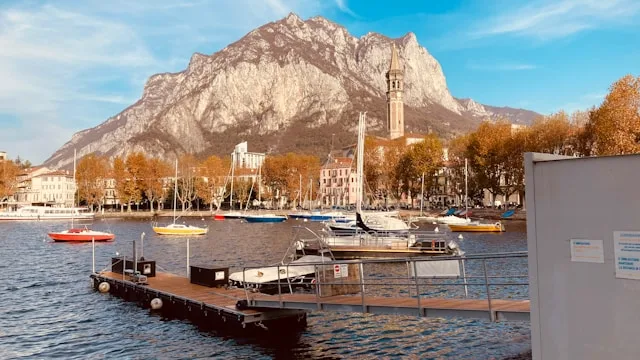
Lecco has long identified itself as a città dell'acciaio. Municipal economic development strategy, regional branding, and local political identity remain anchored to this metallurgical heritage. The cluster is real. The Cluster Lombardo Metalmecanico includes 35 Lecco-based firms. CNA Lecco represents 420 metalworking SMEs. The Politecnico di Milano's satellite campus in Lecco produces 120 to 150 engineering graduates annually in disciplines relevant to the sector.
But the labour market data tells a different story. Compensation for equivalent engineering roles runs 10 to 15 per cent higher in Brescia province, where over 1,200 metallurgical firms compete for the same talent pool. Milan draws senior executives and white-collar technical staff with premiums of 20 to 30 per cent. The gap widens further at the international level: skilled technicians and engineers with German language skills migrate to ThyssenKrupp, Salzgitter, and SMS group facilities in Baden-Württemberg and North Rhine-Westphalia, attracted by net salaries 40 to 50 per cent higher and more stable energy costs, according to the Deutsche Bundesagentur für Arbeit's 2024 skills shortage report.
The migration pattern is directional. Junior engineers leave Lecco for Milan and Brescia. Experienced technicians aged 45 to 55 arrive from Southern Italy, particularly Taranto and Naples, seeking stability in Northern industrial clusters. Lecco is importing seniority and exporting youth. This dynamic sustains the current workforce in the short term. It does not replace it.
The persistence of the "Lecco steel" identity matters because it shapes hiring assumptions. Organisations recruiting for the province often default to local channels and regional networks, expecting a self-contained industrial district. The reality is that Lecco now functions as a secondary node in a regional manufacturing network stretching from Milan to Brescia. A senior executive search for a plant director or automation lead in this market must treat the entire Lombardy corridor as the sourcing geography, not the province alone.
What the Decarbonization Investment Actually Requires
The €45 million in AFV Beltrame group decarbonization spending, reported in the group's 2023 Sustainability Report and covered by Il Sole 24 Ore, is not a capacity expansion programme. The Lecco allocation focuses on digitization of the rolling mill and logistics automation. This distinction matters for anyone planning a hiring strategy.
Hydrogen-Ready Infrastructure and the Skills It Demands
Pending ministerial decrees under Italy's National Steel Strategy may mandate hydrogen-ready retrofits for rolling mill reheating furnaces by 2028, requiring capital expenditure of €15 to 25 million per facility. The technology itself is straightforward in engineering terms. The talent required to operate, maintain, and optimise hydrogen-fired systems in a production environment is not.
Italy has no established training pipeline for electrification metallurgists at scale. The Politecnico di Lecco campus produces generalist mechanical and materials engineers. Converting those graduates into specialists who can manage a hydrogen-fuelled reheating process within a rolling mill takes years of supervised industrial experience. That supervision comes from the same senior metallurgists whose average age already exceeds 52.
Predictive Maintenance and Industry 4.0 Automation
The digitization investment at Lecco targets predictive maintenance AI and SCADA integration across the rolling line. These systems require PLC programmers, SCADA specialists, and data engineers who understand both the software architecture and the metallurgical processes they are monitoring.
Demand for these automation engineers increased 34 per cent year-over-year across Lombardy's metal sector in 2024, according to the Unioncamere-Anpal Excelsior Information System. The supply has not kept pace. Unioncamere Lombardia's September 2024 employment survey found that 68 per cent of metallurgical firms in the Lecco-Bergamo area report "extreme difficulty" filling automation engineering positions. Average time-to-fill for senior roles exceeds 180 days.
The investment thesis assumes a workforce that does not currently exist in the local market. Capital moved faster than human capital could follow. Every month a digitised rolling line runs without the automation engineers to optimise it is a month of sub-optimal return on a multi-million euro investment.
Three Roles Define the Crisis
Lecco's talent market in industrial and manufacturing sectors is not uniformly constrained. Entry-level production operators and maintenance technicians remain available, with unemployment rates of 6 to 8 per cent in those categories. The shortage is concentrated in three specific role types, each with a different structural cause.
Senior Process Metallurgists
These are specialists with over a decade of experience in electric arc furnace and rolling mill operations. An estimated 80 to 85 per cent of qualified candidates are currently employed and not actively seeking new positions, according to the Hays Italy 2024 Scarcity Index for Engineering. The average age in traditional steelmaking roles exceeds 52. Retirements are accelerating. New entrants are insufficient to replace them.
A senior plant metallurgist or rolling mill manager commands €75,000 to €95,000 in base salary plus 15 to 20 per cent in variable compensation. At the executive level, a plant director or COO of a steel division earns €140,000 to €180,000 base with 30 to 50 per cent variable. These figures, benchmarked by Korn Ferry and Confimi Industria Lombardia, are competitive within the Italian market. They are not competitive against German employers offering 40 to 50 per cent higher net compensation.
The talent pool is not just small. It is shrinking by the year.
Industry 4.0 Automation Engineers
The 75 per cent passive candidate ratio among automation engineers with steel-specific PLC and SCADA experience means that conventional job advertising reaches barely a quarter of the viable talent pool. The specialists who hold these skills typically occupy stable positions at Tenaris, Danieli, or Beltrame itself. They move only for meaningful premiums or a step up into management.
Senior automation engineers with steel mill experience command 25 to 35 per cent salary premiums when moving between these employers, according to Michael Page Italy's 2024 Salary Guide for Engineering and Manufacturing. A senior automation manager or digital transformation lead earns €65,000 to €85,000 base. At CTO or Industry 4.0 Director level, compensation reaches €120,000 to €160,000 base, occasionally supplemented by equity or long-term incentives in family-owned steel groups.
The 180-day average time-to-fill for senior automation roles tells the story plainly. A firm using standard recruitment channels for these positions will lose half a year before the role is filled. In a sector where the technology investment is already deployed and waiting for operators, that delay carries a measurable cost.
Sustainability and CBAM Compliance Managers
The EU's Carbon Border Adjustment Mechanism entered its transitional reporting phase in October 2023. From January 2026, definitive CBAM reporting imposes administrative costs estimated at €50,000 to €100,000 annually per medium-sized steel importer or processor. Lecco's service centres, which source semi-finished billets from North Africa and Eastern Europe, face direct exposure.
Simultaneously, EU ETS Phase IV carbon costs of €60 to 80 per tonne CO2, with free allocation phasing down 2.2 per cent annually, require environmental managers who understand both the regulatory architecture and the specific emissions profile of EAF-based steel processing.
A senior environmental manager or CBAM compliance lead earns €60,000 to €80,000 base. A Chief Sustainability Officer in the steel sector reaches €130,000 to €170,000. These roles did not exist in most mid-market steel producers five years ago. The talent pipeline for them barely exists now. You cannot recruit experience that has not yet accumulated in sufficient quantity. The firms that recognised this earliest and invested in developing internal ESG capability have a head start that later entrants cannot easily close.
Energy Costs Are Compressing the Margin for Error
The talent shortage does not exist in isolation. It compounds an energy cost disadvantage that leaves Lecco's processors less room to absorb the premium required to attract scarce specialists.
Industrial electricity rates in Lecco averaged €0.18 to €0.22 per kWh in Q3 2024, according to Eurostat's data on non-household electricity prices. This is 40 per cent higher than equivalent French rates and 25 per cent above German averages. For energy-intensive rolling operations, these costs compress margins on commodity-grade products directly.
The sector's partial protection lies in its downstream positioning. AFV Beltrame's Lecco facility processes semi-finished billets from EAF plants rather than operating a blast furnace. EAF production carries lower carbon intensity, which provides some insulation against the steepest ETS costs. But the rolling process itself remains electricity-intensive. Every percentage point increase in energy costs narrows the compensation premium a Lecco employer can offer versus a Brescia competitor with lower overheads or a German employer with more stable energy pricing.
This is the mechanism that traditional executive recruiting often fails to account for. The challenge is not simply that candidates are scarce. It is that the economic margin available to attract them is thinner in Lecco than in competing locations. A search strategy that relies on matching the top offer from Brescia or Milan will fail because the employer cannot sustain that premium without eroding the production margin that justifies the role in the first place. The offer must be constructed differently.
The Construction Downturn Masks a Deeper Divergence
Italian construction output contracted 2.1 per cent in 2024, according to the Ance construction industry report. Federacciai projects long products output, the segment that includes rebar and structural sections from Lecco's rolling mills, to stagnate at approximately 11.5 million tonnes through 2026. From a distance, this looks like a sector in decline.
The picture is more complex. High-grade specialty steel demand for energy infrastructure, including wind towers and electrical grid components, is expected to grow 4 to 5 per cent annually. Lecco's precision-oriented producers serving construction and mechanical engineering supply chains are positioned to capture this growth, but only if they can retool production lines and hire the metallurgists and automation engineers to operate them.
The sector is splitting. Commodity-grade production faces stagnation and import competition. Specialty production faces growing demand and a talent market that cannot supply the people to meet it. The firms that will survive this divergence are not the largest. They are the ones that secure the right technical leadership first.
This bifurcation affects talent mapping for the sector in a specific way. Hiring leaders must distinguish between roles that serve a flat or declining demand curve and roles that serve a growth curve. The compensation strategy, the candidate profile, and the search methodology differ between the two. A rolling mill manager overseeing commodity rebar production and a rolling mill manager overseeing specialty steel for wind infrastructure may carry the same job title. They require different people, different packages, and different sourcing approaches.
Why Standard Search Methods Fail in This Market
The data on passive candidate ratios tells a clear story. Eighty per cent or more of qualified senior process metallurgists are not looking. Seventy-five per cent of steel-specific automation engineers are not looking. These professionals sit in stable roles at a small number of identifiable employers: Tenaris Dalmine, Danieli, Beltrame, and the Brescia-based producers including Alfa Acciai and Feralpi Group.
A job posting on a generalist platform reaches the 20 to 25 per cent of the market that is already active. In a sector with 6 to 8 per cent unemployment among entry-level operators, those active candidates tend to be junior. The senior specialists a decarbonization investment demands are the hidden majority who will never respond to an advertisement.
According to La Repubblica's Affari & Finanza supplement, AFV Beltrame has reportedly shifted senior metallurgist recruitment from local channels to national executive search firms, offering relocation packages for candidates from Taranto and Piombino steel hubs. This is a recognition that the local market alone cannot supply what the investment programme requires.
The practical implication for any organisation hiring at senior level in this cluster is that the search must be conducted as a direct headhunting exercise, not a recruitment advertising exercise. The candidate pool is identifiable. It is finite. It is employed. And it will only engage with an approach that is specific, confidential, and carries a proposition that addresses the precise calculation a passive candidate in a stable role must make before considering a move.
That calculation, for a senior automation engineer currently at Tenaris Dalmine, involves weighing a known employer against an unknown one, a Bergamo commute against a Lecco one, and a compensation package that must clear the 25 to 35 per cent premium threshold to justify the transition. Understanding the economics of that calculation before the first approach is made is what separates a productive negotiation from a failed one.
What Senior Hiring Leaders in This Sector Should Do Now
The convergence of decarbonization investment, demographic contraction, and regulatory compliance pressure creates a hiring environment where speed and precision both matter. A 180-day time-to-fill for an automation engineer means a digitised rolling line running six months below optimised capacity. A missed CBAM compliance deadline means direct financial exposure. A retiring plant metallurgist whose knowledge is not transferred means institutional capability lost permanently.
For organisations operating within Lecco's metallurgical cluster or competing for the same talent pool across Lombardy, three actions are immediate.
First, treat senior technical hiring as an executive search problem, not a recruitment problem. The passive candidate ratios make this unavoidable. Job boards and inbound applications will not reach the candidates who matter.
Second, build the compensation package before identifying candidates, not after. The energy cost compression that characterises Lecco means the total proposition, including relocation support, role scope, and career trajectory, must be structured to compete without relying solely on base salary premiums the business cannot sustain.
Third, map the talent before the vacancy becomes urgent. The firms that built a proactive talent pipeline for automation and sustainability roles in 2024 are filling those roles now. The firms that waited until the mandate arrived are entering a market with 180-day lead times and 75 to 85 per cent passive candidate ratios.
KiTalent delivers interview-ready executive candidates within 7 to 10 days through AI-powered talent mapping that identifies the passive specialists who will never appear on a job board. With a 96 per cent one-year retention rate across 1,450 executive placements, and a pay-per-interview model that eliminates upfront retainer risk, the methodology is built for exactly the conditions this market presents: a small, identifiable talent pool where every approach must count.
For organisations competing for metallurgical, automation, and sustainability leadership across Italy's steel sector, where the candidates you need are employed, passive, and evaluating a very specific set of trade-offs before they will move, speak with our executive search team about how we approach senior hiring in industrial and manufacturing markets.
Frequently Asked Questions
What is the average salary for a senior metallurgist in Lecco's steel sector?
A senior plant metallurgist or rolling mill manager in the Lecco area commands €75,000 to €95,000 in base salary plus 15 to 20 per cent in variable compensation, according to 2024 benchmarks from Korn Ferry and Confimi Industria Lombardia. At executive level, a plant director or COO of a steel division earns €140,000 to €180,000 base with 30 to 50 per cent variable. These figures are competitive within Italy but lag German equivalents by 40 to 50 per cent in net terms, which drives cross-border talent migration from the sector. Accurate salary benchmarking for industrial roles is essential before structuring an offer in this market.
Why is it so hard to hire automation engineers for steel manufacturing in Italy?
Three factors converge. Demand for PLC programmers, SCADA specialists, and predictive maintenance engineers increased 34 per cent year-over-year across Lombardy's metal sector. Seventy-five per cent of qualified candidates with steel-specific experience are passive, meaning they are employed and not actively seeking. And the small number of employers who hold this talent, primarily Tenaris, Danieli, and Beltrame, create a closed loop where movement requires premiums of 25 to 35 per cent. Average time-to-fill for senior automation roles in the Lecco-Bergamo area exceeds 180 days.
How does CBAM affect steel companies in Lecco?
From January 2026, definitive Carbon Border Adjustment Mechanism reporting imposes administrative costs estimated at €50,000 to €100,000 annually per medium-sized steel importer or processor. Lecco's steel service centres, which source semi-finished billets from North Africa and Eastern Europe, face direct compliance exposure. This has created new demand for environmental managers and CBAM compliance leads with steel-specific regulatory expertise, a role category that barely existed five years ago and remains critically undersupplied.
What is the talent outlook for Lecco's steel sector through 2026?
The province faces a structural demographic contraction. Lecco's working-age population declined 1.2 per cent annually from 2020 to 2024. Metallurgical sector retirements exceed new entrants by three to one. The Politecnico di Milano's Lecco campus produces 120 to 150 relevant graduates per year, insufficient to offset departures. Meanwhile, decarbonization mandates and digitization investments are creating demand for roles that require years of specialised experience to fill, widening the gap between capital deployment and workforce readiness.
How does KiTalent approach executive hiring in Italy's steel and manufacturing sector?
KiTalent uses AI-powered talent mapping for industrial and manufacturing leadership roles to identify passive candidates within identifiable employer clusters. In a market like Lecco's steel sector, where 80 per cent or more of senior specialists are not actively looking, conventional recruitment methods reach only a fraction of the viable candidate pool. KiTalent's direct headhunting methodology identifies, approaches, and qualifies candidates before they enter any public hiring process. Interview-ready shortlists are delivered within 7 to 10 days, with full pipeline transparency and weekly reporting.
Is Lecco still a major steel production centre in Italy?
Lecco maintains a meaningful metallurgical cluster with roughly 850 enterprises and 12,000 workers across basic metals and fabricated metal products. However, AFV Beltrame's Lecco facility operates as a specialty rolling mill processing imported billets, not as an integrated steelworks with blast furnace capacity. The province functions increasingly as a downstream processing and precision engineering node within a broader Lombardy manufacturing corridor stretching from Milan through Bergamo to Brescia, rather than as a self-contained primary steel production hub.