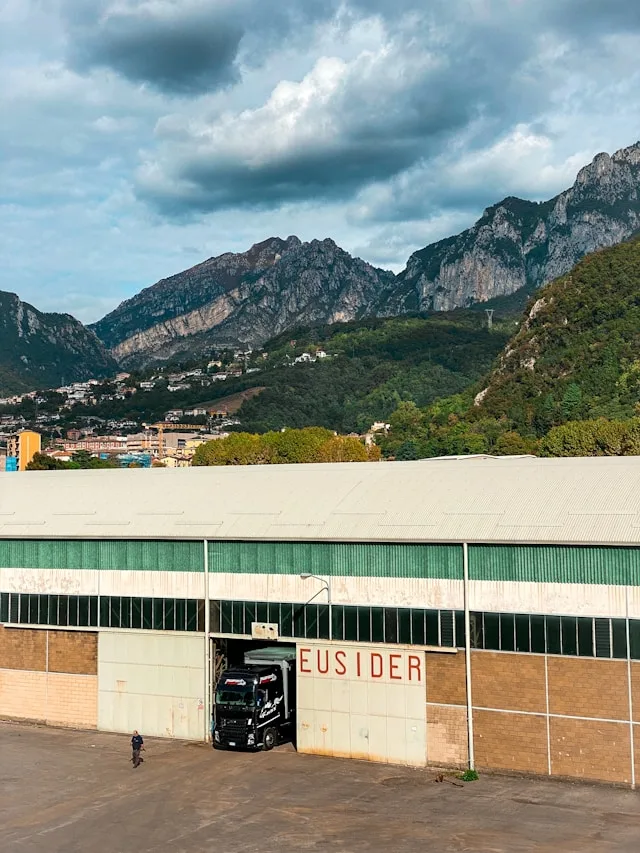
Lecco's Explosion-Proof Equipment Sector Is Growing at 6%. Its Talent Pipeline Is Heading in the Opposite Direction

Palazzoli's Calolziocorte facility, the production nerve centre for roughly 70% of the company's European explosion-proof junction boxes, cable glands, and hazardous area lighting, operated at 85 to 90% capacity utilisation through early 2025. The constraint was not orders. It was people. Confindustria Lecco e Sondrio's Q1 2025 observatory confirmed what hiring managers in the province already knew: the order book is full, and the technicians needed to fulfil it are not available in sufficient numbers.
This is not a generic manufacturing shortage story. It is a story about a sector where the growth drivers are accelerating faster than the workforce can follow. The EU Green Deal's hydrogen infrastructure investments, pharmaceutical manufacturing expansion across Lombardy, and the new EU Cyber Resilience Act are all converging on the same small cluster of ATEX/IECEx-certified professionals. Those professionals, concentrated in a province of roughly 340,000 people wedged between Milan and Bergamo, are overwhelmingly already employed, not looking for new roles, and increasingly aware of their market value.
What follows is an analysis of the forces pulling Lecco's specialty electrical equipment sector in two directions at once. The investment is arriving. The talent is leaving. The gap between those two trajectories is the defining problem for every hiring leader in this market, and closing it requires a fundamentally different approach to finding and attracting the people who make hazardous area equipment work.
The Market That Built Lecco's Specialty Electrical Equipment Sector
The Province of Lecco sits at the eastern edge of Lombardy's industrial belt, historically known for textile machinery and general metalworking. Specialty electrical equipment, specifically ATEX-certified products for explosive atmospheres, emerged as a high-value niche within this broader mechanical tradition. Today, the sector directly employs approximately 2,800 to 3,200 people in the province and generated an estimated €480 to 520 million in turnover through 2024. Sixty-five percent of that revenue came from hazardous area equipment exports, according to ANIE Federazione's 2024 electrotechnical market report.
Palazzoli S.p.A., headquartered in Calolziocorte, functions as the anchor firm. With 380 to 420 direct employees in the province, it is the capofila of a production system that extends outward into a network of SMEs providing precision metalworking, galvanic treatments, and plastic moulding for electrical enclosures. The employment structure is heavily concentrated: 68% of sector jobs sit within firms of 250 or more employees, while the remaining 32% is distributed among smaller specialists.
A Supply Chain That Commutes Rather Than Clusters
One of the most consequential features of this market is what it lacks. Unlike Bergamo's Tecnogranda cluster or the formalised industrial districts elsewhere in Lombardy, Lecco's electrical equipment sector does not operate as a tightly integrated local cluster. Only 30 to 35% of Palazzoli's Tier-2 suppliers for metal casting and precision machining are located within the Province of Lecco itself. The majority, roughly 55%, are situated in the neighbouring provinces of Bergamo and Brescia, creating what is more accurately described as a commuting supply chain.
This dispersal matters because it means the talent ecosystem surrounding the anchor firm is thinner than a hiring leader might assume from the outside. The assumption that a major ATEX equipment manufacturer in Lecco operates within a dense web of local specialists and can draw on a deep local talent pool is incorrect. The network exists, but it stretches across three provinces. The people who run it do the same.
Where the Growth Is Coming From, and Why It Outpaces the Workforce
The sector's 2026 growth trajectory of 4.5 to 6.2% year-on-year rests on three specific demand drivers. Each one increases the need for specialised talent that does not yet exist in sufficient quantity in the Lecco labour market.
Hydrogen Infrastructure and the Ex Equipment Requirement
The EU Clean Hydrogen Alliance's implementation programme is generating direct demand for explosion-proof enclosures, junction boxes, and monitoring systems rated for hydrogen hazardous zones. Hydrogen, classified under ATEX Zone 1 and Zone 2 requirements, demands equipment that meets the most stringent certification thresholds. Palazzoli has committed €12 million in capital expenditure across 2025 and 2026, with a portion directed specifically at expanding Lecco production lines for hydrogen-compatible explosion-proof enclosures. The equipment pipeline is materialising. The engineering and compliance talent to design, certify, and manufacture that equipment has not materialised at the same pace.
Smart Ex Equipment and the IoT Integration Challenge
The second pressure point is the accelerating demand for IoT-enabled hazardous area sensors and monitoring systems. Traditional electromechanical expertise, which Lecco's workforce possesses in depth, must now integrate with electrotechnical software capabilities: ISA100 Wireless, WirelessHART, and the broader architecture of connected hazardous-environment monitoring. This is not an incremental extension of existing skills. It requires a different kind of engineer, one who can work across hardware and embedded software in environments where a design error has explosive consequences. The Fondazione Edison's 2024 assessment of innovation and employment in Lecco confirmed that this capability is underrepresented in the local labour pool.
The EU Cyber Resilience Act, entering force in 2026, compounds the problem. Any explosion-proof equipment with digital components must now meet cybersecurity standards. For Lecco's SMEs, ANIE estimates compliance costs of 3 to 5% of turnover, a material burden that requires both capital and the cybersecurity-literate engineering staff to implement. The regulation is arriving on schedule. The people who understand both ATEX certification and cybersecurity protocols are not.
This is the original tension at the heart of the Lecco market. The capital investment is flowing into the province at pace. The human capital required to convert that investment into production is flowing out of it.
The Graduate Pipeline That Empties Before It Fills
Politecnico di Milano's Lecco campus, the Polo Territoriale di Lecco, is the primary source of engineering graduates in the province. It produces approximately 180 to 200 mechanical and industrial engineers per year. That sounds adequate until you examine the conversion rate. Only 15 to 20% of those graduates specialise in electrotechnical systems relevant to explosion-proof equipment manufacturing. That narrows the useful annual output to roughly 27 to 40 graduates.
Of those, between 60 and 70% leave the province within two years of graduating, according to Almalaurea placement data from 2023. The draw is Milan, 45 kilometres to the west, which offers compensation premiums of 25 to 35% for equivalent engineering roles. For some, it is Bergamo, which offers a similar cost of living to Lecco but a denser cluster of electromechanical employers and therefore better career progression options without the need to relocate far. For the most senior bilingual engineers, Switzerland is the destination: Lugano, 70 kilometres north, where net salary premiums of 60 to 80% are available for Italian engineers who speak German or French.
The result is a paradox that defines this market more than any single data point. Palazzoli maintains its primary European R&D centre for explosion-proof technologies in Lecco. Patent filings and corporate registry data confirm it. Yet the province that hosts this R&D activity cannot retain enough of its own engineering graduates to staff it. The anchor firm increasingly relies on commuters from Bergamo and Brescia, or on imported talent, rather than on the local graduate pipeline that was supposed to feed it.
This is the analytical observation that the raw data alone does not make obvious. The R&D headquarters and the talent pipeline are physically co-located but functionally disconnected. Lecco has the engineering school and the employer, but the economic pull of Milan and Switzerland creates a drain between them that no amount of local investment has yet overcome. Capital can be committed to a province by board decision. Human capital cannot.
Compensation in a Market Pulled in Three Directions
Executive and specialist compensation in Lecco's ATEX equipment sector reflects the geographic tension described above. The numbers are competitive within Lecco but structurally disadvantaged against the markets that compete for the same people.
A Senior ATEX Compliance and Certification Manager in Lombardy's electrotechnical manufacturing sector commands €68,000 to €85,000 in base salary, plus a 10 to 15% bonus. At VP or Technical Director level, total compensation reaches €120,000 to €155,000, with meaningful variation depending on international scope. An Industrial Operations Director overseeing explosion-proof manufacturing sits at €75,000 to €95,000 at plant manager level, rising to €140,000 to €190,000 at Director or VP level, though equity participation remains rare in the family-owned structures that dominate the Lecco industrial zone. R&D Team Leads earn €65,000 to €80,000, while CTO or R&D Director roles command €130,000 to €170,000, with premiums for IECEx scheme auditor qualifications.
These figures are credible offers for professionals who want to live in a small Lombardy province with high quality of life and relatively low cost of living. But they are not competitive against Milan or Switzerland for the same profiles. A senior engineer considering a move to Milan gains 25 to 35% in base compensation plus access to automotive, fintech, and broader industrial sectors. A senior engineer considering Lugano gains 60 to 80% in net salary. Lecco cannot match either figure without fundamentally restructuring its cost base.
For hiring leaders, the implication is direct. Negotiating executive compensation in this market is not a matter of benchmarking against local competitors. It is a matter of benchmarking against Milan, Bergamo, and Lugano, because those are the markets your candidates are actually considering. Any offer that does not account for the geographic premium differential will lose the candidate before the first interview.
The 8.3% Vacancy Rate and What It Actually Means
The headline vacancy rate for specialised roles in Lecco's electrical equipment sector stood at 8.3% as of Q1 2025, more than double the 4.1% provincial manufacturing average, according to the Excelsior Information System. But the aggregate figure understates the severity in specific functions.
Three roles account for the most acute scarcity. ATEX/IECEx Certification Engineers, responsible for ensuring products meet the explosive atmospheres directives that govern every item leaving the production line. Industrial Electromechanical Designers, who work in CAD/CAE to create IP66 and Ex d-rated enclosures. And Supply Chain Managers with hazardous substances logistics expertise, a role that combines regulatory knowledge with operational complexity in ways that general supply chain professionals cannot replicate.
Recruitment analytics for the Lombardy industrial automation sector indicate that technical roles in hazardous area specialisations average 110 to 140 days to fill. General mechanical engineering roles in the same region average 65 days. The difference, 45 to 75 additional days per search, is the cost of specificity. An ATEX certification engineer is not a general compliance professional. A hazardous area designer is not a standard CAD operator. The certification requirements, the regulatory stakes, and the consequence of error all narrow the viable candidate pool to a fraction of the broader engineering workforce.
Compounding this, approximately 75 to 80% of qualified professionals in the Italian hazardous area equipment sector are employed and not actively seeking new roles. Average sector tenure runs 8 to 10 years. ANIE's 2024 workforce survey confirmed low voluntary turnover across the electrotechnical manufacturing segment. The active candidate pool, those actually visible on job boards and responding to postings, consists primarily of recent graduates without ATEX experience or professionals exiting adjacent but non-Ex electrical sectors. Neither group can step directly into the roles that matter most.
SMEs in the Calolziocorte industrial zone report that ATEX-certified project engineers are, in the words of one regional recruitment assessment, "unfindable" through standard job postings. Michael Page Italy's 2024 salary benchmark noted that 80% of senior hires in the Lecco manufacturing sector require executive search intervention rather than conventional advertising. The people these firms need are not looking. They must be found.
The Ecosystem Paradox: An Anchor Firm Growing Away From Its Own Supply Base
The research reveals a second tension that hiring leaders in this sector need to understand, because it has direct implications for where talent sits and how it moves.
Palazzoli is projecting 6%+ growth for 2026, driven by the hydrogen and pharmaceutical demand described above. The local SME sub-supplier network, the firms providing the precision metalworking, casting, and moulding that the anchor firm depends on, reports growth of only 1 to 2%. Confindustria Lecco's 2024 survey documented this gap directly. The smaller firms lack the capital to invest in ATEX-compliant machining capabilities. They cannot keep pace with the specification upgrades that Palazzoli's growth markets demand.
The implication is that Palazzoli's growth may be decoupling from the local supplier network. Industry data suggests the anchor firm is increasingly sourcing complex components from German and Polish electromechanical markets rather than developing the dense local sub-supplier network that would typically characterise a healthy industrial district. The Calolziocorte industrial zone reports 95% occupancy, leaving no physical room for supplier expansion even if the capital were available.
For the talent market, this decoupling has a specific effect. When an anchor firm grows but its local suppliers stagnate, the career development opportunities available within the province narrow rather than widen. An engineer who joins an SME in the Calolziocorte zone has fewer advancement paths than one who joins the anchor firm directly. The local ecosystem does not generate the lateral career moves, the cross-firm experience accumulation, or the progression routes that retain mid-career professionals. Milan and Bergamo offer all three.
The Workforce Clock: Why Demographics Make This Harder Every Year
Thirty-five percent of technical employees in Lecco's electromechanical sector are aged 50 or over, according to INPS pension data from 2023. The replacement rate from Gen Z entrants is insufficient to offset the retirement trajectory, a pattern that the Confindustria Lecco observatory has flagged repeatedly.
In a sector where ATEX certification competence takes years to develop, and where the regulatory and safety stakes of error are extreme, the departure of experienced professionals does not simply create a vacancy. It removes institutional knowledge that cannot be transferred through a training programme. The ATEX 2014/34/EU Directive and IECEx 02 scheme are not abstract regulatory frameworks. They are technical disciplines that require hands-on experience with specific product categories, failure modes, and certification audit processes. A 55-year-old certification engineer who retires takes two decades of accumulated judgment with them. The graduate who replaces them brings academic knowledge but not the practical calibration that keeps a production line compliant and a product safe in a Zone 1 environment.
This demographic pressure is not unique to Lecco. But it is more acute here because the province's small size and geographic position between larger labour markets mean the replacement pipeline is thinner than in Milan or Bergamo. The province cannot absorb the loss and the gap simultaneously.
For organisations building succession plans and talent pipelines in this sector, the window to act is narrowing. Every year of delay makes the eventual transition harder, because the experienced professionals who could mentor the next generation are closer to leaving, and the graduates who could become that next generation are closer to Milan.
What This Market Demands From a Search Strategy
The conventional approach to filling technical and leadership roles, posting a vacancy, waiting for applications, shortlisting from inbound candidates, reaches at most 20 to 25% of the viable candidate pool in Lecco's specialty electrical equipment sector. The remaining 75 to 80% are passive. They have ATEX or IECEx credentials, 8 to 10 years of tenure, and no reason to browse a job board. They will not apply. They must be identified, mapped, and approached directly.
The specificity of the required credentials narrows the pool further. An ATEX compliance engineer is not interchangeable with a general quality manager. A hazardous area designer is not interchangeable with a standard mechanical CAD operator. Every search in this sector requires a method that begins with the credential and works outward to find the individuals who hold it, assess their career motivations, and construct a proposition that addresses the geographic competition from Milan, Bergamo, and Lugano simultaneously.
KiTalent's approach to executive search in industrial and manufacturing markets is built for exactly this kind of search. AI-powered talent mapping identifies the specific professionals who hold the certifications, language capabilities, and sector experience that a role requires, including the 80% who are not visible through conventional channels. The pay-per-interview model means clients pay only when they meet qualified candidates, eliminating the financial risk of a retained search that stalls in a thin market. And the speed matters: interview-ready candidates delivered within 7 to 10 days, in a market where the average time-to-fill for a hazardous area specialist exceeds 110 days through traditional methods.
For organisations hiring ATEX compliance leaders, R&D directors, or operations executives in Lecco's specialty electrical equipment sector, where the candidates are passive, the pool is narrow, and the cost of a failed search is measured in production delays and certification gaps, start a conversation with our industrial executive search team about how we source the talent this market cannot surface on its own.
Frequently Asked Questions
What is the average salary for an ATEX certification engineer in Lecco, Italy?
A Senior ATEX Compliance and Certification Manager in Lombardy's electrotechnical manufacturing sector earns €68,000 to €85,000 in base salary, plus a 10 to 15% annual bonus. At VP or Technical Director level, total compensation reaches €120,000 to €155,000. These figures are competitive within the Lecco province but sit 25 to 35% below equivalent roles in Milan, creating a persistent geographic compensation gap that hiring leaders must address when building offers for senior candidates.
Why is it so hard to hire explosion-proof equipment specialists in Italy?
Three factors converge. First, ATEX and IECEx certification requires years of hands-on experience that cannot be accelerated through training alone. Second, 75 to 80% of qualified professionals are passive candidates who are employed and not actively seeking new roles, with average tenure of 8 to 10 years. Third, the geographic competition from Milan, Bergamo, and Switzerland pulls qualified engineers away from smaller provinces like Lecco with compensation premiums of 25 to 80%. Standard job postings reach only a fraction of the viable pool.
How long does it take to fill a hazardous area engineering role in Lombardy?
Technical roles in hazardous area specialisations in Lombardy average 110 to 140 days to fill, compared to 65 days for general mechanical engineering positions. The additional 45 to 75 days reflects the scarcity of ATEX/IECEx-certified candidates, the high proportion of passive professionals, and the narrow credential requirements that eliminate most general engineers from consideration.
What is the EU Cyber Resilience Act's impact on ATEX equipment manufacturers?
The Cyber Resilience Act, entering force in 2026, requires explosion-proof equipment with digital components to meet new cybersecurity standards. For Lecco's SMEs, ANIE estimates compliance costs at 3 to 5% of turnover. Beyond the financial impact, the regulation creates a new talent requirement: engineers who understand both ATEX explosive atmosphere certification and embedded systems cybersecurity. This dual-skilled profile is currently underrepresented in the Lecco workforce.
How can companies find passive ATEX and IECEx specialists in Italy?
Because 80% of qualified hazardous area professionals are not actively job seeking, direct headhunting and AI-powered talent mapping are the most effective methods. KiTalent's approach begins with the specific certification and technical credential required, maps the professionals who hold it across Italy and neighbouring markets, and approaches them directly with a tailored proposition. This method consistently reaches candidates that job postings and recruitment advertising cannot surface, with interview-ready shortlists delivered within 7 to 10 days.
What are the main growth drivers for Lecco's explosion-proof equipment sector in 2026?
Three drivers are converging. EU Green Deal hydrogen infrastructure investments require ATEX-certified equipment for H2 hazardous zones. Pharmaceutical manufacturing expansion across Lombardy demands compliant electrical systems. And the transition to IoT-enabled smart Ex equipment is creating demand for connected monitoring and sensor systems rated for explosive atmospheres. Together these drivers support projected sector growth of 4.5 to 6.2% in 2026.