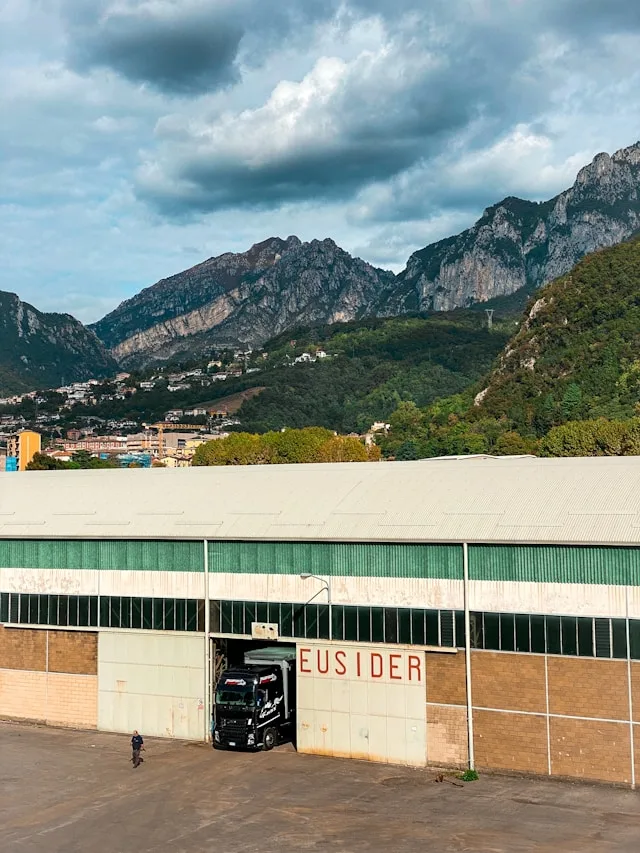
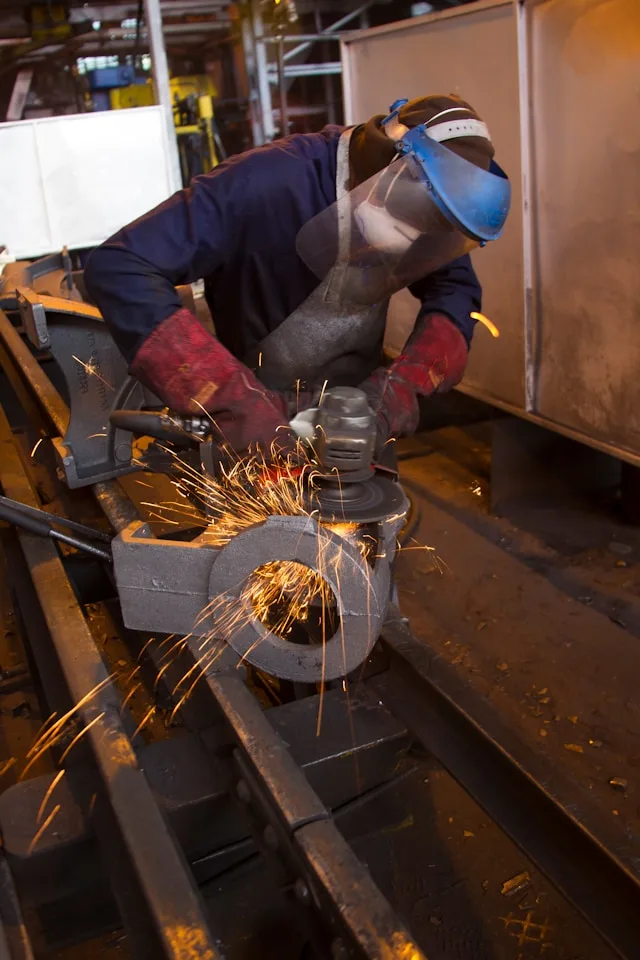
Lecco's Machinery Cluster Has Full Order Books and Empty Workbenches: The Talent Bottleneck Capping Industrial Growth
Order backlogs for Lecco's specialised press and automation manufacturers extend into the second quarter of 2026. Export demand from Germany, France, and the United States remains strong. The province's 1,240 active machinery and mechatronics firms generated €4.18 billion in production value as recently as 2023, a figure 4% above pre-pandemic levels. By every demand-side metric, this cluster should be accelerating.
It is not. One in three firms in the province reports that it cannot expand production. Not because of weak orders, not because of capital constraints, but because the people required to run the machines, programme the systems, and lead the engineering teams are not available. The vacancy rate for mechatronics technicians stands at 8.5%, nearly triple the provincial average. Roles requiring combined mechanical design and PLC programming competencies take six to nine months to fill. Senior automation engineers with a decade of experience are, in 82% of cases, not looking for work at all. They must be found and persuaded, one at a time.
What follows is a ground-level analysis of the forces shaping Lecco's industrial machinery market in 2026: why the talent constraints are deeper than a cyclical shortage, where the competitive threats to retention originate, and what hiring leaders in this cluster need to understand before their next critical search.
A Heritage Cluster Running Into a Modern Constraint
Lecco's mechanical engineering tradition stretches back to the 19th century, rooted in steel processing and textile machinery. That heritage has produced something unusual: a province of 340,000 people where 18.2% of total employment sits in the machinery and mechatronics sector. The density is remarkable. Over 1,200 firms, anchored by mid-sized manufacturers like Omera S.p.A. in Calolziocorte and Colombo Filippetti S.p.A. in Calco, serve global automation, automotive, and pharmaceutical packaging markets from a footprint smaller than most European industrial parks.
The Politecnico di Milano's satellite campus in Lecco, established in 1989, produces approximately 400 engineering graduates annually. The MUSP Consortium conducts applied research in machine tool dynamics and precision engineering. The Polo Tecnologico Lecco supports 35 active startups in advanced manufacturing. The institutional infrastructure exists.
The problem is arithmetic. Four hundred graduates per year cannot replace the retiring workforce, fill the new roles created by Industry 4.0 investment, and compensate for the steady flow of senior engineers crossing the Swiss border for 60% to 80% net salary premiums. The pipeline is real. It is simply not large enough for a cluster of this size and ambition.
The Italian machine tool and automation industry association, UCIMU-Sistemi Per Produrre, forecasts 3.5% growth in production value for 2026. For Lecco, that forecast carries an asterisk. Growth is contingent on resolving talent constraints that have already forced a third of local firms to turn away capacity they could otherwise fill.
The Three Roles That Define the Bottleneck
Not all vacancies are equal. Lecco's machinery cluster can absorb general production staff with relative ease. The positions that create the growth ceiling are specific, senior, and cross-disciplinary.
Mechatronics Design Engineers
The most acute shortage sits at the intersection of mechanical design and industrial automation. Firms need engineers fluent in both SolidWorks or CATIA and PLC programming environments like Siemens TIA Portal or Rockwell. According to Fondimpresa Lombardia's 2024 survey on technical skills gaps, the average time-to-fill for these roles runs six to nine months. The difficulty is not simply volume. It is the combination of competencies. A strong mechanical designer who cannot programme a PLC is incomplete for this market. A strong PLC programmer who has never designed a press mechanism is equally incomplete. The Venn diagram of candidates who possess both skills, with the required seniority, within commuting distance of Lecco, is extremely small.
Five-Axis CNC Machining Specialists
Lecco's precision metalworking heritage demands tolerances of ±5 microns on hardened steel components. Programming and operating five-axis machining centres at this level is not a skill acquired through coursework alone. It requires years of hands-on calibration, material knowledge, and process intuition. The hidden 80% of passive talent in this category are typically embedded in firms where their institutional knowledge makes them difficult to replace and, consequently, difficult to recruit. They do not respond to job advertisements. They are not on job boards.
Automation Software Engineers
The third gap is newer but growing fast. Embedded systems programmers capable of writing real-time machine control code in C++ or Python for industrial applications are in demand across every manufacturing cluster in Europe. Lecco competes for this talent not only with Brescia and Bergamo but with Milan's corporate R&D centres and software firms, which offer 25% to 35% salary premiums and career trajectories that extend well beyond the shopfloor.
Each of these three categories shares a common characteristic. The candidates who can fill them are overwhelmingly passive. They are employed, well compensated relative to their local market, and not scanning job listings. Reaching them requires direct headhunting methodology and sector-specific intelligence that general recruitment cannot provide.
The Swiss Border Effect: A Retention Crisis With a 40-Kilometre Radius
Canton Ticino begins roughly 30 to 40 kilometres north of Lecco. For a senior PLC programmer or commissioning engineer, that distance represents a salary transformation.
Swiss automation firms actively recruit Lecco-based technical talent, offering net salary premiums of 60% to 80% combined with hybrid work arrangements: two to three days on-site in Switzerland, the remainder remote or at an Italian base. According to the Canton Ticino Office of Statistics, the flow of Italian-resident machinery engineers commuting to Swiss employers increased 12% between 2023 and 2024. The trend has not reversed.
This creates a specific and measurable retention problem. Lecco firms cannot match Swiss compensation. Italian industrial salary structures, compressed by the national collective bargaining framework and the relative scarcity of equity participation in mid-cap firms, leave limited room for counter-offers. A Technical Director in Lecco earns €95,000 to €130,000 gross annually. The equivalent role in Ticino, adjusted for the Swiss salary environment, can approach double that figure after tax.
Local firms have responded with the tools available to them. Promotion timelines from Senior Engineer to Technical Coordinator, normally a five-year progression, are being compressed to two or three years. This keeps some talent by accelerating career development. But it also creates a secondary problem: engineers promoted before they are fully ready, managing teams with less mentorship capacity than the generation before them.
The retention factors Lecco can genuinely offer are real but intangible. Shorter commutes than Milan. Deeper project ownership, with senior engineers leading complete machine development cycles rather than narrow component slices. A working culture that valorises tacit mechanical knowledge. These matter. They are not, however, sufficient to overcome a 60% net pay differential for every candidate in every situation. Understanding the counteroffer trap is essential for firms attempting to retain talent approached by Swiss recruiters.
Industry 4.0 Investment Is Outpacing the Technicians Trained to Operate It
This is the dynamic that makes Lecco's challenge distinct from a simple cyclical shortage.
Capital investment in Industry 4.0 technologies across the province increased 22% year-over-year in 2024. Sixty-eight percent of mid-sized firms have implemented at least one digital manufacturing solution: IoT sensors, predictive maintenance systems, collaborative robotics. The willingness to invest is not in question.
But only 12% of firms report full integration of their IT and OT systems. The gap between partial adoption and meaningful digital transformation is a human gap. Machines are being installed faster than the workforce is being trained to operate, maintain, and programme them. The investment in automation has not reduced the workforce requirement. It has replaced one kind of worker with another that does not yet exist in sufficient numbers. Capital moved faster than human capital could follow.
This is the original synthesis that makes the Lecco story different from the standard manufacturing talent shortage narrative. The cluster is not simply short of engineers. It is short of a specific hybrid profile that its own investment trajectory has created. The more these firms invest in smart manufacturing, the more they need mechatronics professionals who sit at the boundary of mechanical engineering and software. And the global supply of that hybrid profile is inadequate everywhere, not just in Lecco.
The skills in demand now go well beyond traditional precision mechanics. Firms need professionals fluent in hybrid mechatronics: the integration of physical machinery with industrial IoT, edge computing, and OPC UA communication protocols. They need people who understand AI-driven manufacturing systems and industrial technology integration alongside the fundamentals of cam mechanisms and hydraulic press design. The training pipeline for this profile barely existed five years ago.
Compensation Realities and the Milan Gravity Well
Executive compensation in Lecco's mid-sized machinery firms follows a predictable pattern. A senior mechatronics or automation engineer with 15-plus years of experience earns €55,000 to €75,000. A Technical Director or Head of Automation commands €95,000 to €130,000. An Operations Director with multi-site responsibility reaches €100,000 to €140,000. A VP of R&D with a strategic innovation portfolio sits at €110,000 to €160,000.
These figures include Italy's standard benefits structure: 13th and 14th month payments and performance bonuses. They almost never include equity. Italian mid-cap industrial firms rarely offer ownership participation, which limits the upside for senior hires compared to what larger publicly listed groups or private-equity-backed platforms can structure.
Milan, 45 minutes south by rail, offers 25% to 35% salary premiums for equivalent mechatronics roles. The attraction is not only financial. Milan provides alternative career trajectories in corporate R&D centres, consulting, software, and finance. A senior automation engineer in Lecco has a narrow set of next moves within the local market. The same engineer in Milan has a broad set, and that optionality itself has compensation value. For hiring leaders trying to benchmark offers accurately, market benchmarking for industrial roles is not optional. It is the foundation of any credible candidate approach.
Brescia and Bergamo, the neighbouring manufacturing provinces, compete on roughly equal salary terms but offer larger firm density. Brembo, Camozzi, and their supply chains provide more lateral movement opportunities for senior engineers who want to stay in manufacturing but want variety. This is not always a poaching problem in the traditional sense. It is a gravitational pull. Engineers leave not because they are dissatisfied but because the alternatives are simply more numerous.
For organisations attempting to negotiate salary packages that hold up against these competing offers, the challenge is structural. The gap is not a rounding error. It is a 20% to 25% differential with Milan and a 50% to 60% differential with Switzerland, applying at exactly the seniority level where the most critical roles sit.
The Demographic Cliff and the Tacit Knowledge Crisis
The mechanical engineering workforce in Lecco has an average age of 46.3 years. Twenty-eight percent of employees are over 55. According to INPS labour market data, this sector faces a generational transition that is not simply about headcount replacement. It is about knowledge transfer.
Master machinists and veteran toolmakers carry decades of undocumented heuristic knowledge. How a particular alloy behaves under specific press conditions. How to diagnose a machining vibration by sound alone. How to set up a five-axis programme for a geometry that the CAM software handles poorly. This knowledge lives in people, not in manuals.
When those people retire, the knowledge leaves with them. No Industry 4.0 investment can replicate it. No training programme can compress 30 years of hands-on learning into a two-year curriculum. The hidden cost of failing to plan for these departures compounds over time. A firm that loses three senior toolmakers in a single year does not simply have three vacancies. It has a capability gap that the next generation of hires, however talented, will take years to fill.
This makes succession planning in Lecco's machinery cluster an executive-level problem, not an HR administrative task. The firms that will sustain their competitive positions through 2026 and beyond are the ones mapping their at-risk knowledge holders now and building proactive talent pipelines before retirements force reactive searches.
The Regulatory Overlay
Layered onto the demographic transition is the EU Machinery Regulation (EU) 2023/1230, which becomes fully applicable on 20 January 2027. This regulation replaces the Machinery Directive 2006/42/EC and introduces stricter conformity assessment procedures for software-controlled machinery along with cybersecurity requirements for networked machines. Compliance costs for Lecco's mid-sized firms are estimated at €50,000 to €200,000 per firm, covering testing, documentation, and potential control system redesign.
The regulation demands professionals who understand both the mechanical safety standards (ISO 13849-1, PL d/e categories) and the software governance dimensions of connected machinery. This is yet another expression of the hybrid profile problem. The regulation does not create new demand for mechanical engineers or for software engineers separately. It creates demand for professionals who are both simultaneously. The compliance preparation window is now less than twelve months. Firms that have not secured the relevant expertise are running out of time to do so through conventional channels.
What This Means for Hiring Leaders in Lecco's Machinery Cluster
The conventional executive search playbook, post a role, wait for applications, interview the respondents, reaches at most 18% of viable candidates in this market. The other 82%, according to LinkedIn Talent Insights data for the Lombardy machinery sector, must be identified and approached directly. In a province where the total addressable pool for a senior mechatronics design engineer might number in the low hundreds, and where Swiss and Milanese employers are working the same list, the difference between a successful search and a failed one is method.
Speed matters as well. A role that sits open for seven to eleven months, as is typical for senior mechanical designer positions in the €20 to €50 million revenue range, is not merely an inconvenience. It is a production constraint. It delays product development cycles, stretches existing engineering teams, and pushes the firm further from the Industry 4.0 integration targets that its capital investment was meant to achieve. Understanding why executive recruiting fails in specialised markets is the first step toward avoiding the same outcome.
The firms succeeding in this environment share common characteristics. They define the role precisely before beginning the search, rather than posting a broad description and hoping for the best. They engage search partners with genuine sector expertise in executive hiring across industrial manufacturing. They move quickly when candidates are presented. And they build their employer proposition around the factors Lecco can genuinely offer: project ownership, engineering heritage, and a quality of life that Milan and Zurich cannot match.
KiTalent works with mid-sized industrial firms facing exactly this profile of challenge: specialised technical leadership roles in markets where the candidates are passive, the competition is cross-border, and the margin for error on a senior hire is measured in lost production quarters. With a 96% one-year retention rate across 1,450-plus executive placements and a pay-per-interview model that eliminates retainer risk, KiTalent's approach to talent mapping in manufacturing clusters is designed for markets where conventional sourcing consistently falls short.
For organisations in Lecco's machinery cluster competing for mechatronics leadership, automation engineering directors, or operations executives in a market where 82% of the candidates you need are not looking and the Swiss border is recruiting from the same pool, start a conversation with our industrial search team about how we approach this market differently.
Frequently Asked Questions
Why is there a mechatronics talent shortage in Lecco province?
Lecco's mechatronics shortage is driven by three converging forces. First, the province's 1,240 machinery firms require hybrid engineers who combine mechanical design with PLC programming, a profile that university programmes have only recently begun producing at scale. Second, Swiss employers in Canton Ticino recruit senior engineers at 60% to 80% salary premiums, creating persistent attrition. Third, 28% of the current workforce is over 55, and retirements are removing experienced practitioners faster than the pipeline can replace them. These factors compound in a market where 82% of senior candidates are passive and unreachable through job advertisements.
What do mechatronics engineers earn in Lecco in 2026?
A senior mechatronics or automation engineer with 15-plus years of experience earns €55,000 to €75,000 gross annually in Lecco. At the executive level, a Technical Director or Head of Automation commands €95,000 to €130,000. An Operations Director with multi-site responsibility reaches €100,000 to €140,000. These figures trail equivalent Milan roles by 20% to 25% and Swiss roles by 50% to 60%. Italian mid-cap industrial firms rarely include equity, which limits total compensation flexibility compared to larger platforms.
How long does it take to fill a senior engineering role in Lecco's machinery sector?
Senior mechanical designer and mechatronics engineering roles in Lecco typically take six to eleven months to fill through conventional recruitment. The extended timelines reflect the scarcity of hybrid profiles combining mechanical design expertise with automation programming skills. Firms using targeted direct search methods rather than job advertisements can compress this timeline substantially by accessing the passive candidate pool that represents 82% of qualified professionals in this market.
How does the EU Machinery Regulation affect hiring in Lecco?
The EU Machinery Regulation (EU) 2023/1230 becomes fully applicable on 20 January 2027 and introduces cybersecurity requirements for networked machines alongside stricter conformity assessment for software-controlled equipment. Lecco firms face compliance costs of €50,000 to €200,000 each. The regulation creates specific demand for professionals who understand both mechanical safety standards and software governance, intensifying competition for the same hybrid profiles already in short supply across the cluster.
Why do Lecco engineers leave for Switzerland?
Swiss automation firms in Canton Ticino, located 30 to 40 kilometres north of Lecco, offer net salary premiums of 60% to 80% for senior PLC programmers and commissioning engineers. Many positions include hybrid arrangements with only two to three days required on-site in Switzerland. Cross-border commuting by Italian-resident machinery engineers increased 12% between 2023 and 2024. Lecco firms cannot match these salaries within Italy's collective bargaining framework and instead compete on project ownership, shorter commutes, and engineering heritage.
How can Lecco machinery firms improve executive hiring outcomes?
The most effective approach combines three elements. First, precise role definition before the search begins, distinguishing between genuinely required hybrid competencies and preferences that unnecessarily narrow the pool. Second, direct headhunting that reaches passive candidates rather than reliance on job postings. Third, speed: presenting qualified candidates within days rather than months, before competing employers in Milan or Switzerland make their approach. KiTalent delivers interview-ready executive candidates within 7 to 10 days using AI-powered talent mapping across industrial sectors, with clients paying only when they meet qualified candidates.