Livno's Livestock Paradox: 110,000 Animals, No Processing Plant, and the Talent Gap That Explains Both
The Livno Plain holds approximately 42,000 head of cattle and 68,000 sheep. Canton 10 accounts for 11% of Bosnia and Herzegovina's total cattle stock and 14% of its sheep, despite representing just 4% of the national population. By any standard measure of agricultural density, this is one of the most productive pastoral regions in the Western Balkans.
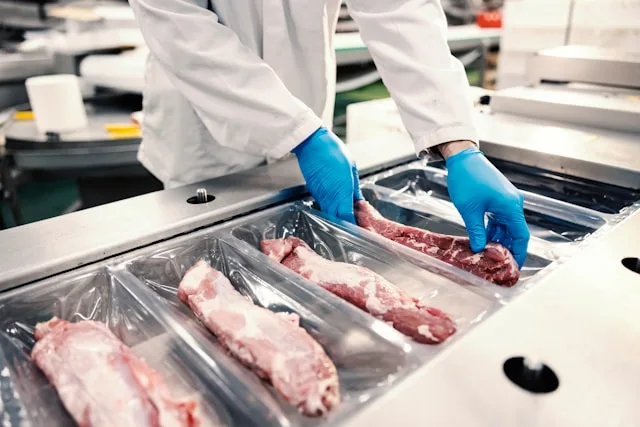
Yet the municipality does not contain a single industrial-scale meat processing facility. Its four registered slaughterhouses are micro-enterprises, each employing fewer than ten people, with a combined daily capacity of eight to twelve cattle equivalents. An estimated 60 to 70% of livestock raised on the Livno Plain leaves the Canton alive, transported to processing facilities in Sarajevo, Mostar, or informal roadside operations where the value captured locally is negligible. The region functions as a raw material colony for its own agricultural output.
What follows is an analysis of why Livno's agricultural sector has failed to convert production density into processing investment, how EU accession requirements are accelerating a consolidation that the talent market cannot support, and what this means for the leaders and specialists who will determine whether Livno's meat sector modernises or contracts further. The answer is not simply capital. It is the absence of the people who know how to deploy it.
The Value Chain That Runs in the Wrong Direction
Standard agglomeration theory predicts that production density attracts processing investment. Where animals concentrate, slaughterhouses and packaging plants follow. The economics are straightforward: transport costs for live animals exceed transport costs for processed meat, so processing facilities locate near the source.
Livno defies this pattern entirely. The municipality's livestock density is the highest in Canton 10, yet its processing infrastructure would be modest even for a region with a tenth of the herd. The four registered slaughterhouses classified as micro-enterprises handle a fraction of local production. The remainder moves outward: to larger facilities in Sarajevo Canton or Herzegovina-Neretva Canton, or to informal channels that bypass veterinary inspection altogether.
This inversion has a specific cause. It is not that investors have looked at Livno and declined. It is that the preconditions for investment do not exist. A modern meat processing facility requires EU-compliant cold chain infrastructure, HACCP-certified management, veterinary oversight meeting EC 853/2004 hygiene standards, and electronic traceability systems integrated with Bosnia's Central Animal Database. Livno currently lacks the physical infrastructure for the first requirement and the human capital for the remaining three. No facility in Livno holds authorised slaughterhouse certification for EU export. The Canton 10 Development Strategy 2021-2027 identified the cold chain gap explicitly: the municipality has no public cold storage facility meeting EU standards, forcing processors to transport carcasses to Mostar within four hours at an additional cost of BAM 0.40 per kilogram.
Capital follows capability. In Livno, the capability arrived in animal form but never in human or institutional form. The result is a value chain that extracts rather than processes.
Six Veterinarians for an Entire Canton
The talent deficit in Livno's livestock sector is not a general labour shortage. General agricultural labourers and butchers turn over at rates of 25 to 30% annually, but they are available. The crisis sits in three specific roles that determine whether the sector can modernise, comply with EU requirements, or retain its existing operational licences.
Veterinary Technicians: Fourteen Months to Fill a Role Nobody Applies For
The Veterinary Station Livno employs six veterinary specialists serving the entirety of Canton 10. This is the public institution responsible for mandatory ante- and post-mortem inspection across all registered slaughterhouses. When a position opens, it stays open. Agricultural cooperatives on the Livno Plain report veterinary technician vacancies remaining unfilled for eight to fourteen months, with positions re-advertised quarterly. A typical employer offering BAM 1,800 to 2,200 net per month receives zero qualified applications per recruitment cycle.
The consequence is that cooperatives rely on retired veterinary staff working past pension age. This is not a sustainable hiring strategy. It is a countdown.
Nationally, unemployment among qualified veterinarians sits below 3%. In Canton 10, an estimated 80 to 85% of veterinary professionals are already employed and do not respond to job advertisements. This is a market where the candidates who matter are invisible to conventional recruitment methods. The Employment Service of BiH lists veterinary technicians as a critical shortage occupation for the Canton, but listing a shortage and resolving one are different activities entirely.
HACCP and Food Safety Officers: Fewer Than Fifty in the Entire Federation
The second critical gap is in food safety compliance management. HACCP coordinators with export-relevant experience number fewer than fifty individuals across the entire Federation of Bosnia and Herzegovina. This is not a role category. It is a named list.
The pattern documented by the Federation of Employers' Associations is consistent with a retention crisis rather than a recruitment one. Smaller slaughterhouses in Livno lose qualified HACCP officers to processing plants in Sarajevo and Croatia. A typical case involves a Livno-based processor losing a compliance officer to a Mostar facility offering a 30 to 40% salary premium and subsidised accommodation. The departure triggers a six-month operational halt in export certification efforts while the employer searches for a replacement that may not exist within the Canton.
This dynamic is self-reinforcing. Every departure makes the remaining pool smaller and the next hire harder. The cost of losing a critical specialist in a market this thin is not measured in recruitment fees. It is measured in months of lost operational capacity.
Cold Chain Mechanics: The Infrastructure Bottleneck Nobody Can Staff
Refrigeration and cold chain mechanics are the third critical shortage occupation listed by the Employment Service. This role sits at the intersection of Livno's infrastructure deficit and its talent deficit. Even if a modern cold storage facility were built tomorrow, the technicians required to operate and maintain it do not exist locally. The vocational training pipeline has contracted: the Agricultural School in Livno discontinued its meat processing specialisation in 2019 due to low enrolment.
The training pipeline dried up before the demand arrived. This sequencing problem means that any infrastructure investment in Livno must also fund the creation of a workforce that the local education system no longer produces.
The Compensation Arithmetic That Drives Talent Out
Livno's compensation levels for agricultural and veterinary professionals are approximately 15% below Sarajevo averages, according to national salary scale data adjusted for Cantonal cost-of-living differentials. This gap is manageable in isolation. In combination with the competing offers from Mostar, Sarajevo, and Croatia, it becomes a structural disadvantage that no individual employer can overcome.
A senior specialist in meat processing or HACCP coordination earns BAM 2,800 to 3,500 net monthly in Livno. The same role in Mostar commands a 20 to 25% premium. In Sarajevo, executive-level compensation runs 40 to 50% higher than Livno equivalents, with the additional draw of career progression into federal regulatory bodies or international agricultural development programmes run by the FAO and UNDP.
The most damaging competition comes from across the border. For bilingual professionals under 35 with EU passport or Croatian work authorisation, Split and Zagreb offer salary multiples of 2.5 to 3 times Livno rates, combined with EU labour protections. The Croatian Bureau of Statistics documented rising foreign agricultural worker intake through 2024, and BiH veterinarians represent a meaningful share of that inflow.
An executive-level role in a Livno agricultural cooperative or processing SME pays BAM 4,000 to 6,000 net monthly, with high variability depending on whether the operation is family-owned or investor-backed. This is €2,000 to €3,000. For context, the equivalent role in a Croatian food processing operation pays €5,000 to €7,500. The gap is not incremental. It is categorical.
The result is a market where salary negotiation dynamics are inverted. Employers cannot raise offers high enough to compete with Mostar, let alone Sarajevo or Zagreb. The candidates with the strongest qualifications leave first, because they have the most options. The candidates who remain are those with the strongest personal ties to the region, not necessarily those with the strongest professional qualifications. Hiring for commitment rather than competence is a survival strategy, not a growth strategy.
EU Accession: The Regulatory Pressure That Cannot Wait
Bosnia and Herzegovina's EU candidate status obligations are reshaping the regulatory environment for food production faster than the sector can adapt. The Veterinary Law of the Federation of BiH, combined with the 2025 intensification of inspection regimes, has imposed compliance costs that disproportionately impact small processors.
Two requirements illustrate the pressure. First, electronic animal identification: FBiH Regulation 02/2023 mandates electronic ear-tagging and integration with the Central Animal Database. This requires both hardware investment and staff who can operate the software. Second, HACCP certification: any facility seeking to process meat for sale beyond the immediate locality must maintain documented hazard analysis procedures under qualified management. Both requirements demand specialists that Livno cannot recruit.
The European Commission's 2023 Report on Bosnia and Herzegovina noted explicitly that no slaughterhouse in Livno holds the authorised certification required for EU meat exports. Should BiH achieve "approved third country" status for meat exports by late 2026, the optimistic scenario described in the Commission's analytical report, the immediate beneficiaries will not be Livno's processors. They will be Croatian and Slovenian slaughterhouses receiving Livno's live animals for processing under EU-compliant conditions.
This is the central irony. EU accession, which should theoretically open export markets and attract investment, may instead accelerate the extraction model. Live animal export to EU-compliant facilities across the border becomes easier than building EU-compliant facilities locally. The value chain runs outward more efficiently under EU rules than under current arrangements.
The World Bank's BiH Agribusiness Commercialization Study projected that by 2026, the number of operational slaughterhouses in Livno would contract from four to two or three. The driver is not competition. It is the capital cost of cold chain and traceability infrastructure that only larger operations can absorb. The Canton 10 government allocated approximately BAM 2.5 million from pre-accession funds for 2025-2026 to modernise milk and meat collection centres. No greenfield meat processing plant is planned.
Consolidation without modernisation is contraction. Fewer facilities processing the same volume under the same constraints does not move the sector forward. It simply concentrates the existing limitations in fewer hands.
The Informal Sector Paradox
An estimated 30 to 35% of meat consumed locally in the Livno area bypasses registered slaughterhouses entirely. This informal sector evades veterinary inspection and VAT, creating price competition that compliant operators cannot match. The Indirect Taxation Authority of BiH estimated the shadow economy's share of meat sales in its 2023 analysis, and the figure has not materially declined.
The tension between EU compliance pressure and embedded cultural practice is not resolvable through regulation alone. Private slaughter for religious and family events is deeply rooted. Strict enforcement of centralised slaughter requirements would eliminate roughly a third of current supply, potentially destabilising local food security and farmer cash flow. But tolerance of the informal sector undermines every investment case for modern, compliant processing infrastructure.
This is where the talent question intersects with the regulatory question in a way that neither can solve independently. A qualified HACCP officer can bring a facility into compliance. A veterinary inspector can enforce standards. But neither can operate effectively in a market where a third of their sector exists outside any regulatory framework. The professionals who might build a compliant processing sector in Livno face a market where their competitors face no compliance costs at all.
Any executive recruited to lead modernisation in this market must understand that they are not simply managing a processing operation. They are managing a transition from informal to formal market structures while competing with the informal economy for the same raw material supply. This requires a different kind of leadership search than a standard operations director appointment.
What the Sector Actually Needs: The Talent That Does Not Exist in Sufficient Numbers
The original synthesis of this analysis is this: Livno's processing vacuum is not primarily a capital problem. It is a sequencing failure. The talent required to justify and manage investment left before the investment arrived, and the training pipeline that could have replaced them was dismantled while demand was still rising. Capital cannot precede capability in a market where the capability has emigrated.
Consider the sequence. The Agricultural School discontinued meat processing vocational training in 2019. Veterinary technician vacancies began accumulating to eight- and fourteen-month durations. HACCP-qualified managers drained toward Mostar and Sarajevo. Cold chain mechanics were never produced locally in sufficient numbers to begin with. Then, starting in 2023, EU accession pressure intensified compliance requirements, making the absent specialists more critical than ever. The demand curve and the supply curve moved in opposite directions simultaneously.
The roles the sector needs are specific. An operations director capable of managing EU compliance in an industrial and manufacturing context while navigating the informal economy's competitive distortion. A chief veterinarian with both public health authority and private sector commercial awareness. A supply chain manager who can smooth the seasonal procurement cycle, managing the spring lamb surplus against winter shortages, while integrating electronic traceability systems.
These are not roles that appear on job boards. They are not roles where passive candidates in a sub-3% unemployment cohort will respond to an advertisement. They require direct identification and approach. In a market where traditional recruitment methods consistently fail to reach candidates embedded in stable public sector or private practice positions, the method of search matters as much as the specification.
What This Means for Organisations Hiring in Western Balkans Agribusiness
The dynamics visible in Livno are not unique to one municipality. They represent a pattern replicated across Western Balkans agribusiness: production density without processing depth, EU regulatory convergence outpacing institutional capacity, and a talent market where the critical specialists number in the dozens rather than thousands.
For any organisation seeking to invest in or lead a meat processing operation in Bosnia and Herzegovina's agricultural heartland, the hiring challenge is threefold. The candidate pool for veterinary, food safety, and cold chain roles is almost entirely passive. Compensation competition from Sarajevo, Mostar, and Croatia means that offers must include non-monetary value propositions: housing, career development pathways, and genuine operational autonomy. And the risk of losing a placed candidate to a counteroffer from a larger market is exceptionally high in a sector where fewer than fifty qualified HACCP managers exist nationally.
KiTalent works with organisations across agribusiness and industrial sectors where the talent market is thin, passive, and geographically dispersed. Through AI-enhanced talent mapping, KiTalent identifies the specific individuals embedded in veterinary stations, public health roles, and competitor operations who would not appear through any conventional search method. The firm delivers interview-ready candidates within 7 to 10 days and operates on a pay-per-interview model, meaning clients pay only when they meet a qualified candidate.
For organisations building or modernising meat processing operations in Canton 10 or wider BiH, where the candidates you need number in the dozens nationally and zero are actively looking, start a conversation with our executive search team about how to reach them before your competitor in Mostar does.
Frequently Asked Questions
What are the main challenges facing the meat processing sector in Livno, Bosnia and Herzegovina?
Livno's meat processing sector faces a combination of infrastructure gaps, talent shortages, and regulatory pressure. The municipality lacks EU-compliant cold storage, forcing processors to transport carcasses to Mostar at added cost. Veterinary technician vacancies remain open for eight to fourteen months. HACCP-qualified managers number fewer than fifty in the entire Federation and are actively recruited away by Sarajevo and Croatian employers offering 30 to 50% salary premiums. Meanwhile, 30 to 35% of local meat consumption bypasses registered slaughterhouses entirely, undermining the business case for compliant operations.
How many livestock are on the Livno Plain and why does processing capacity lag?
The Livno Plain holds approximately 42,000 cattle and 68,000 sheep, making Canton 10 home to 11% of BiH's cattle and 14% of its sheep despite only 4% of the population. Processing capacity lags because no facility holds EU export certification, the municipality lacks a public cold storage facility meeting EU standards, and 60 to 70% of livestock leaves the Canton alive for processing elsewhere. The absence of qualified food safety managers, veterinary technicians, and cold chain mechanics makes infrastructure investment difficult to justify or operate.
What do executive and specialist roles pay in Livno's agricultural sector?
A senior HACCP coordinator or plant manager in Livno earns BAM 2,800 to 3,500 net monthly, roughly €1,400 to €1,750. Executive-level roles such as general director of an agricultural cooperative pay BAM 4,000 to 6,000 net monthly, or €2,000 to €3,000. These figures sit approximately 15% below Sarajevo equivalents and dramatically below Croatian salaries for comparable roles, where compensation benchmarking shows multiples of 2.5 to 3 times Livno rates for bilingual professionals.
How does EU accession affect Livno's meat sector?
EU accession requirements are intensifying compliance costs for small processors through mandated HACCP certification, electronic animal identification, and cold chain traceability. If BiH achieves approved third country status for meat exports by late 2026, the immediate beneficiaries will likely be Croatian and Slovenian slaughterhouses receiving Livno's live animals, not local processors. The World Bank projects that Livno's slaughterhouse count will contract from four to two or three by 2026 as smaller operations cannot absorb EU-compliance infrastructure costs.
How can organisations find qualified veterinary and food safety professionals in Bosnia and Herzegovina?
With veterinary unemployment below 3% nationally and HACCP managers numbering fewer than fifty across the Federation, conventional job advertising is ineffective. An estimated 80 to 85% of qualified veterinary professionals are already employed and do not respond to advertisements. Successful recruitment requires direct headhunting approaches that reach passive candidates embedded in public veterinary stations, academic institutions, and competitor operations. KiTalent uses AI-powered talent mapping to identify these individuals and delivers interview-ready candidates within 7 to 10 days.
What is the outlook for investment in Livno's livestock and meat processing sector?
Canton 10 has allocated BAM 2.5 million from pre-accession funds for 2025-2026 to modernise collection centres, but no greenfield processing plant is planned. The investment trajectory depends on resolving the talent sequencing problem: recruiting qualified veterinary, food safety, and cold chain professionals before infrastructure investment can be productively deployed. Organisations considering entry into this market should assess the talent pipeline as rigorously as the capital requirements, as the human capital gap is currently the binding constraint on sector development.