Miskolc Spa Tourism Is Booming. Its Talent Pipeline Is Not. The Hiring Crisis Behind Hungary's Biggest Regional Tourism Investment
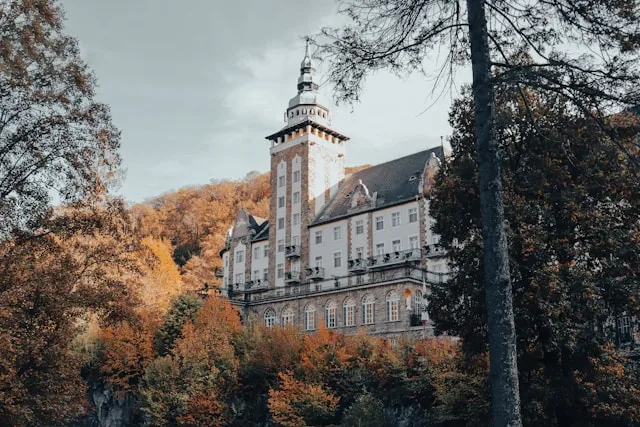
Miskolc's thermal spa and heritage tourism sector generated HUF 8.4 billion in direct revenue through the first half of 2025. Foreign visitation from Germany and Poland grew by 18% and 23% respectively. Three boutique hotels are under construction in the city centre, and the Miskolctapolca Cave Bath is midway through a €9.9 million expansion that will add 1,200 square metres of wellness space. By every investment metric, this is a regional tourism market on the rise.
The hiring picture tells a different story. Job vacancy rates in Borsod-Abaúj-Zemplén County's accommodation and food service sector hit 11.2% in Q2 2025, nearly double the Hungarian national average. Senior operational roles at flagship properties routinely remain open for eight to fourteen months. The Cave Bath itself operated with a 30% vacancy in its technical maintenance division throughout 2024 and 2025, covering shifts with overtime premiums of 150%. The capital is flowing in. The people required to put it to use are flowing out.
What follows is a ground-level analysis of the forces reshaping Miskolc's tourism sector, the specific roles that cannot be filled through conventional methods, and what organisations investing in this market need to understand before they commit to expansion plans that depend on talent they do not yet have.
A Market Investing Beyond Its Workforce
The scale of investment entering Miskolc's tourism infrastructure in 2025 and 2026 represents the largest capital commitment to regional Hungarian hospitality outside Budapest in over a decade. The Cave Bath Phase II renovation alone carries a HUF 3.8 billion EU grant under the Territorial and Settlement Development Operational Programme. The Hungarian National Asset Management body (MNV) has announced a HUF 1.2 billion refurbishment of the Palota Hotel Lillafüred targeting Green Key certification by Q4 2026. Three new boutique hotels totalling 140 rooms are scheduled for completion in the first half of this year.
This investment is arriving into a market that recorded approximately 1.24 million commercial guest nights through the first three quarters of 2025, a 7.3% year-over-year increase but still 4.1% below the pre-pandemic 2019 peak. The municipal destination management organisation projects 1.35 to 1.42 million guest nights for 2026, contingent on the Cave Bath expansion completing on schedule.
The gap between the infrastructure arriving and the workforce available to operate it is the defining challenge of this market in 2026. Sector employment is forecast to expand by 8 to 10%, adding 300 to 380 full-time positions. But the Miskolc Employment Pact's own workforce forecasting acknowledges that labour supply constraints may limit realised growth to 4 to 5%. That shortfall is not distributed evenly. It concentrates in exactly the roles that determine whether a €10 million wellness facility operates at its intended standard or below it.
The original analytical claim that underpins this article is this: Miskolc's tourism talent crisis is not primarily a shortage problem. It is a retention architecture problem. The region produces enough graduates. It invests enough capital. But it has built no mechanism to prevent the trained workforce from leaving within five years of entering the sector. Every euro spent on new facilities without a corresponding investment in retention infrastructure accelerates the very outflow it needs to reverse.
The Talent Drain That No Vacancy Listing Can Fix
Budapest's Gravitational Pull
The capital absorbs 60 to 70% of experienced hospitality management talent from Miskolc within five years of graduation or junior management placement. The compensation differential is not marginal. Budapest four-star hotel General Managers earn HUF 2,500,000 to 3,500,000 gross monthly. Their Miskolc equivalents earn HUF 1,600,000 to 2,200,000. That is a 60 to 75% premium for the same tier of role, with the additional draw of international career mobility through expatriate tracks to Vienna and Prague that regional Hungary simply cannot offer.
This is not a new dynamic. What has changed is its severity. As Miskolc's investment pipeline raises the operational complexity of its flagship properties, the seniority and capability required to run them increases in lockstep. The Palota Hotel's refurbishment and Green Key certification target demand a General Manager with sustainability credentials and international chain experience. The expanded Cave Bath needs technical management capable of overseeing thermal water chemistry in a UNESCO-monitored cave environment. These are not profiles that can be sourced from the local market. They must be attracted from Budapest or internationally, at compensation levels that Miskolc's revenue base struggles to sustain.
The Austrian Corridor
Cross-border emigration compounds the problem at the mid-skill level. Austrian hospitality wages for chefs reach €2,800 to 3,500 net monthly, representing a 120 to 150% premium over Miskolc after adjusting for living costs. Skilled thermal bath therapists and culinary professionals follow this corridor westward. Meanwhile, Slovak workers commute into Miskolc for lower-wage housekeeping and entry-level roles. The result is a squeeze in the middle: the supervisory and specialist tier that bridges entry-level operations and senior management is being hollowed out from both ends.
This dynamic means that the hidden 80% of passive talent in this market is not merely passive in the conventional sense. The most capable mid-career professionals have often already left the region entirely. Reaching them requires not just identification but a proposition compelling enough to reverse a relocation decision they made years ago.
Where the Vacancies Concentrate: Four Critical Role Categories
Spa and Wellness Management
The Regional Wellness Director role, overseeing multiple sites, commands HUF 1,400,000 to 1,800,000 gross monthly with car allowance and housing support. This already represents a 25% premium over equivalent positions in Eger or Sopron. The premium exists because candidates with the right combination of balneology knowledge, commercial acumen, and willingness to relocate to Borsod-Abaúj-Zemplén County are extraordinarily scarce. Spa Manager roles at the specialist level sit at HUF 750,000 to 950,000 plus performance bonuses, but finding candidates with thermal water chemistry qualifications and the trilingual capability (Hungarian, German, English) that foreign visitor growth demands filters out the vast majority of applicants.
Hotel General Management
The documented experience at the Palota Hotel Lillafüred illustrates the market's difficulty. According to the Hungarian Hotel and Restaurant Association's survey of senior appointment timelines, a Complex F&B Director search at the property ran eleven months through 2024 and 2025. It concluded only after the employer offered 40% above the median compensation package combined with relocation support from Budapest. At the Cluster General Manager level, Miskolc properties have paid toward the upper bound of HUF 2,200,000 to secure candidates with Marriott, Hilton, or Accor backgrounds. Even at these levels, the passive candidate ratio at the General Manager and Director of Operations tier sits at an estimated 85 to 90%. Average tenure in regional four-star properties is 4.2 years, and unemployment among experienced hospitality managers with a decade or more of tenure is just 2.1%.
For organisations competing at this level, understanding why executive recruiting fails in markets with these characteristics is essential before committing to a search strategy.
Culinary and F&B Leadership
Executive Chefs managing multiple outlets command HUF 1,000,000 to 1,400,000 gross monthly. The acute gap sits one level below: Executive Sous Chefs trained in dietary and thermal cuisine, the specialised culinary discipline required for medical wellness positioning. This niche commands HUF 650,000 to 850,000, but the pool of candidates with this training is vanishingly small. Hungary's culinary education system produces generalist chefs. The thermal and dietary specialisation must be acquired on the job, and the properties where that experience can be gained are the same ones struggling to retain staff.
Digital Marketing and Revenue Management
The revenue management challenge in Miskolc is distinct from Budapest or Western European markets because of the extreme seasonality. The 2.5:1 ratio between peak July occupancy and January troughs demands yield optimisation expertise specific to highly seasonal operations. Revenue management system proficiency in Opera, Duetto, or Protel with seasonal modelling experience is the requirement. Commercial Director roles pay HUF 1,200,000 to 1,600,000. E-commerce Managers earn HUF 600,000 to 800,000. Budapest-based agencies report that Miskolc employers pay 15 to 20% premiums to attract digital talent from the capital's e-commerce sector. The digital professionals who could transform Miskolc's tourism marketing are in Budapest earning more, working in sectors with year-round demand, and seeing no reason to move.
The combined effect across all four categories is a market where the cost of a bad executive hire is amplified by the time required to correct it. A failed General Manager placement in Budapest can be replaced within three to four months. In Miskolc, the same failure means restarting an eight-to-fourteen-month search.
The Education Paradox: 240 Graduates, Rising Vacancies
The University of Miskolc's Faculty of Economics and the region's three vocational schools produce approximately 240 hospitality and tourism graduates annually. Replacement and growth demand is estimated at 180 full-time equivalents per year. On paper, the pipeline exceeds the need.
In practice, graduate retention in local hospitality sits below 35%. Two out of three graduates trained in Miskolc leave the sector or the region within their first years of employment. The vacancy rate continues to climb despite this educational output. The mismatch is not quantitative. It is qualitative and geographic.
The vocational curriculum emphasises theoretical knowledge and digital marketing skills. Employers report that graduates lack practical F&B service competency, thermal bath maintenance capability, and the multilingual guest relations skills that foreign visitor growth now demands. The constraint is not the number of people entering the pipeline. It is what happens to them inside it and after they emerge.
This is the structural basis for the retention architecture argument. Miskolc does not need more graduates. It needs a system that converts the graduates it already produces into mid-career professionals who stay. Housing, career progression pathways, mid-career compensation that narrows the Budapest gap at the five-year mark, and structured international experience programmes that bring professionals back rather than losing them permanently: these are retention infrastructure investments. Without them, every expansion of educational capacity feeds the outflow to Budapest and Vienna rather than the local workforce.
For hiring leaders evaluating this market, salary benchmarking and market intelligence specific to regional Hungarian hospitality is not optional. National averages obscure the premiums required to attract and hold talent in Borsod-Abaúj-Zemplén.
Seasonality as a Structural Hiring Barrier
Acute seasonality is not merely a revenue management problem in Miskolc. It is the root cause of its most damaging talent dynamics.
Average annual occupancy for the Lillafüred mountain hotels stands at 52%, with Q2 and Q3 peaks reaching 78 to 85% versus Q1 troughs of 28 to 34%. The Cave Bath partially mitigates this through year-round operations, maintaining 62% average utilisation across seasons. But the broader hotel and F&B sector experiences a 2.5:1 ratio between peak and trough months that creates cash-flow volatility preventing SME investment in year-round staff retention.
The consequence is measurable. Seasonal unemployment in the sector reaches 18 to 22% in Q1. Each winter layoff cycle pushes workers toward permanent emigration. A sous chef laid off in November who finds a permanent position in Vienna by February does not return for the Miskolc summer season. The seasonal model produces a ratchet effect: each trough permanently removes a proportion of the workforce that the following peak cannot recover.
This dynamic directly affects executive hiring. A General Manager candidate considering a Miskolc role evaluates not just the salary but the operational volatility. Managing a property that oscillates between 85% and 28% occupancy requires a specific temperament and skill set. It also carries career risk: a year of underwhelming financial performance driven by a harsh winter or a weak shoulder season reflects on the GM's track record regardless of cause. The seasonal profile narrows the candidate pool beyond what compensation alone can explain.
Understanding how to negotiate the total proposition for executive roles in seasonal markets requires addressing these concerns directly. Housing support, performance metrics adjusted for seasonality, and contractual stability through trough periods are as material as the gross monthly figure.
Competing Forces: Heritage Tourism Growth and the Cave Bath Premium
The research reveals an important bifurcation in Miskolc's visitor economy that has direct implications for talent strategy.
The Heritage Tourism Shift
Heritage-related guest nights have grown at a 14.2% compound annual rate since 2021, outpacing spa tourism growth at 6.8%. The reopening of the reconstructed Diósgyőr Castle, following a HUF 5.2 billion EU-funded investment, has shifted visitor flows toward the northern district. Three boutique hotels under construction in the Belváros are positioned to capture this demand. This is not a replacement for spa tourism. It is a diversification that changes the mix of roles the sector needs. Heritage tourism demands curatorial knowledge, event management capability, and cultural programming skills that the traditional spa hospitality pipeline does not produce.
The Cave Bath's Pricing Power
The Miskolctapolca Cave Bath recorded its highest-ever revenue in 2025 despite a 12% ticket price increase and ongoing construction disruptions. This suggests inelastic demand among core wellness tourists. However, destination marketing surveys simultaneously show that price sensitivity among Polish and Czech coach tour groups, representing 23% of foreign bed nights, has intensified. Eighteen percent of surveyed operators reported removing Miskolc from itineraries due to cost.
This creates a strategic tension for 2026. The post-renovation premium pricing strategy projects rates 20% above 2024 levels. If the Cave Bath's individual wellness visitors absorb this increase while budget group tourism contracts, the revenue may hold but the visitor profile shifts upmarket. That shift demands a different workforce: fewer housekeepers managing high-volume turnover, more wellness therapists delivering personalised treatments, more multilingual concierge staff managing premium expectations.
For leaders managing this transition, talent pipeline development that anticipates the changed visitor profile is more valuable than reactive recruitment after the shift has already occurred.
What Hiring Leaders in This Market Must Do Differently
The conventional approach to filling senior hospitality roles in regional Hungary follows a predictable sequence: advertise nationally, engage a local recruitment agency, wait, extend the search, compromise on candidate quality, or overpay to extract someone from Budapest. The Palota Hotel's eleven-month F&B Director search and its 40% above-median resolution illustrate where this approach leads.
The problem is not effort. It is method. In a market where 85 to 90% of qualified General Manager and Operations Director candidates are passive, and where the most capable mid-career professionals have already relocated to Budapest or Austria, a search strategy built around visible candidates and inbound applications reaches at most 10 to 15% of the viable pool. The other 85% must be identified, approached, and persuaded through a proposition that addresses not just compensation but relocation support, career trajectory, housing, and the specific operational challenges of seasonal regional hospitality.
Three adjustments separate successful searches in this market from the ones that run a year and still compromise:
First, compensation benchmarking must be specific to the regional premium, not to national hospitality averages. The 25% Miskolc premium over Eger for Regional Wellness Directors and the 60 to 75% Budapest premium for General Managers are not anomalies. They are the market. Employers who benchmark against national medians will consistently lose candidates to competitors who benchmark against the actual cost of relocation.
Second, the search must reach candidates in Budapest, Vienna, and the Eger corridor who have left regional hospitality but might return for the right role. These are not candidates who will see a job posting. They are candidates who must be mapped, identified, and approached directly through proactive headhunting methodology that treats the search as a talent intelligence exercise rather than a vacancy advertisement.
Third, the proposition must address the seasonality concern head-on. Contractual commitments through trough periods, performance metrics adjusted for occupancy cycles, and structured international exposure through partner properties convert a perceived career risk into a differentiated offer that Budapest hotels, with their more predictable demand profiles, cannot match.
KiTalent's approach to executive search across hospitality and leisure markets applies these principles through AI-powered talent mapping that identifies passive candidates across geographic boundaries, delivering interview-ready shortlists within 7 to 10 days rather than the 8 to 14 months this market's conventional searches typically require. With a 96% one-year retention rate across 1,450 executive placements completed globally, the methodology is built for markets where the right candidate is employed, not looking, and located in a different city.
For organisations investing in Miskolc's thermal spa and heritage tourism expansion, where the capital commitment is measured in tens of millions of euros and the senior talent required to operate it cannot be found through any job board or local agency, speak with our executive search team about how we approach regional hospitality markets with exactly these characteristics.
Frequently Asked Questions
What is the average salary for a Hotel General Manager in Miskolc?
A Hotel General Manager overseeing a single property of up to 100 rooms in Miskolc earns HUF 900,000 to 1,200,000 gross monthly (approximately €2,340 to €3,120). At the Cluster General Manager or Complex Director level, compensation reaches HUF 1,600,000 to 2,200,000 (€4,160 to €5,720). Properties seeking candidates with international chain experience from Marriott, Hilton, or Accor consistently pay toward the upper bound. These figures include base salary only. Relocation packages, car allowances, and housing support are standard additions for candidates relocating from Budapest. Accurate compensation benchmarking for regional hospitality roles is essential given the premiums this market demands.
Why is it so hard to hire senior hospitality staff in Miskolc?
Three forces converge. First, Budapest draws 60 to 70% of experienced hospitality managers from Miskolc within five years, offering 60 to 75% higher compensation and international career mobility. Second, Austria's hospitality sector pays 120 to 150% more than Miskolc after cost-of-living adjustments, draining mid-skill professionals westward. Third, 85 to 90% of qualified General Manager candidates are passive and employed. The combination means that conventional recruitment methods reach only a fraction of the viable candidate pool. Direct executive search that maps passive talent across Budapest, Vienna, and regional competitors is typically the only method that produces results within a reasonable timeframe.
How many people work in Miskolc's tourism and hospitality sector?
The sector directly employs approximately 3,800 full-time equivalents within Miskolc's administrative boundaries in accommodation and food and beverage services. An additional 1,200 indirect positions exist in transport, retail, and guiding services. Seasonal peaks in July and August add 600 to 800 temporary positions, primarily in F&B service and housekeeping. Sector employment is forecast to expand by 300 to 380 positions in 2026, though labour supply constraints may limit realised growth to roughly half that figure.
What is the Miskolctapolca Cave Bath Phase II expansion?
The Phase II renovation is a HUF 3.8 billion (€9.9 million) EU-funded expansion of the Barlangfürdő in Miskolctapolca. It adds 1,200 square metres of wellness space and 150 underground parking spaces to address infrastructure bottlenecks that have constrained visitor capacity. The project is funded under Hungary's Territorial and Settlement Development Operational Programme. Completion is expected to support the municipal target of 1.35 to 1.42 million guest nights in 2026, but the expanded facility also increases demand for specialist roles in thermal spa management and cave environment technical maintenance that are already among the hardest vacancies to fill in regional Hungary.
What skills are most in demand in Miskolc's hospitality sector?
The four most acute skill deficits are: thermal water chemistry and balneology qualifications required for medical spa operations; trilingual capability in Hungarian, German, and English for guest-facing roles; sustainable tourism management including ESG reporting and Green Key certification implementation; and revenue management system proficiency in platforms such as Opera, Duetto, or Protel with yield optimisation experience for highly seasonal markets. Language competency gaps alone filter out 70% of applicants for front-facing positions, making this the single largest barrier at the operational level.
How does Miskolc's tourism sector compare to Eger?
Eger, located 60 kilometres west, is Miskolc's most direct competitor for thermal tourism positioning. Eger offers a marginally lower cost of living and stronger wine tourism career pathways through its historic city centre and wine resort infrastructure. Cross-poaching between Eger and Miskolc properties accounts for 15 to 20% of senior job moves in the region. However, Miskolc's Cave Bath is a unique attraction with no direct equivalent in Eger, and the scale of current EU-funded investment in Miskolc exceeds Eger's pipeline. The counteroffer dynamics between the two markets are particularly acute at the spa management and F&B leadership levels.