Monopoli's Luxury Tourism Boom Has Created a Talent Market It Cannot Staff
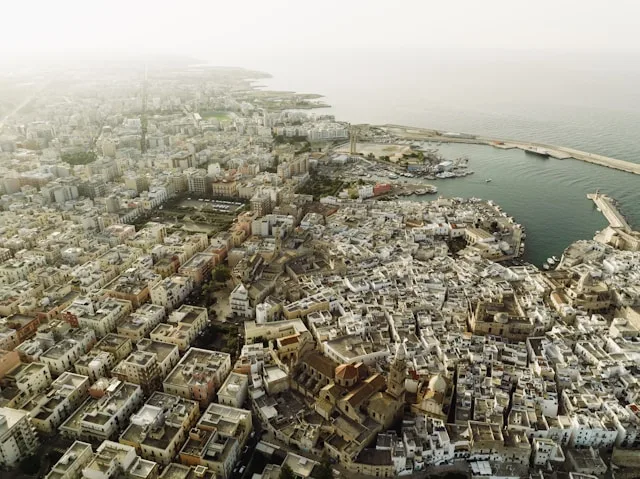
Monopoli recorded 1.2 million tourist nights in 2023. That figure represented a 28% increase over pre-pandemic levels. International visitors now account for 58% of arrivals, up from 42% in 2019. Capital is flowing into luxury masseria conversions, a waterfront regeneration project is nearing completion, and the "Monopoli-Valle d'Itria" cultural corridor is attracting sustained marketing investment from the Metropolitan City of Bari. By every measure of tourism success, Monopoli is performing.
The problem is on the other side of the equation. Executive chef searches at luxury properties along the Monopoli-Fasano corridor now run 90 to 120 days. 68% of member properties in the Monopoli area reported front-office management vacancies open for more than 60 days in 2024. The Unioncamere Puglia Excelsior system projects 1,850 new hires required for the April to October 2025 season in the corridor alone. Yet the compensation that Monopoli's hospitality employers offer remains 15 to 20% below Milan and Rome equivalents, and 35 to 45% below what the same candidates could earn in international luxury markets. The investment is arriving. The people to run it are not.
What follows is a structured analysis of the forces reshaping Monopoli's hospitality and tourism sector, the specific roles employers cannot fill, the structural reasons conventional recruitment fails here, and what hiring leaders in this market need to understand before their next search.
A Tourism Economy Growing Faster Than Its Workforce
Monopoli's tourism trajectory is not a cyclical rebound. It is a structural expansion. The 28% increase in tourist presences over 2019 levels reflects permanent shifts in visitor demographics, property investment, and destination positioning that have rewritten the market's operating conditions.
The most consequential shift is the composition of demand. International visitors, particularly from the UK, Germany, the Netherlands, and North America, now constitute the majority of arrivals. This change has not simply increased volume. It has altered what visitors expect. A German couple booking a restored masseria for five to seven nights expects multilingual concierge service, dynamic pricing sophistication, and curated local experiences. An American family arriving through a luxury travel advisor expects Michelin-calibre dining. These expectations require staff with skills that Monopoli's traditional family-run hospitality model was never designed to produce.
The shoulder season has extended by approximately 15 to 20 days since 2019, driven by wedding tourism and cycling route development. This is positive for revenue diversification but compounds the staffing challenge. Properties that once needed full teams for four months now need them for five or six, while the pool of qualified seasonal candidates has not expanded at the same rate.
The Seasonal Compression Problem
The numbers illustrate the severity. During peak season in July and August, the hospitality sector directly employs an estimated 3,800 to 4,200 individuals in the municipality. In winter months, that figure contracts to 1,100 to 1,300. This is not a gradual seasonal curve. It is a cliff.
For employers, this compression creates a specific hiring challenge that goes beyond simple recruitment volume. A general manager hired in April must build, train, and integrate a team that will triple in size within eight weeks. A revenue manager must optimise pricing across a portfolio that generates 68% of its annual revenue in a four-month window. The margin for error in hiring is close to zero, and the cost of a wrong appointment at this level is measured in lost seasons, not lost quarters.
The Luxury Investment Paradox
Here is the analytical tension that defines Monopoli's hospitality talent market in 2026: foreign capital is flowing into luxury property conversions at a pace that implies global service standards, but compensation remains anchored to regional Italian benchmarks that cannot attract the talent those standards require.
The 2024 acquisition of Palazzo San Michele by the San Domenico Group, with renovation underway for a 2026 reopening, is one visible example. Masseria San Domenico itself employs more than 120 seasonal staff and maintains 45 year-round positions. Properties of this calibre are not competing for talent against Monopoli's family-run hotels. They are competing against the Maldives, the French Riviera, and the Caribbean, where Italian hospitality graduates aged 28 to 35 can earn tax-free salaries or Euro-denominated packages two to three times local Monopoli rates.
This is the fracture point. International investors applying global service expectations to a local labour market are discovering that the "Puglia lifestyle discount," where executives accept lower pay for quality of life, has limits. A general manager at a luxury masseria in Monopoli earns €65,000 to €95,000 annually. The same role in Milan commands 35 to 45% more, according to Michael Page Italy's 2024 Salary Guide. The lifestyle premium keeps some candidates in Puglia. It does not keep enough.
What Happens When Family Hotels Cannot Compete
The downstream effect is less visible but equally damaging. When a luxury masseria offers a €15,000 signing bonus to secure an executive chef from a regional competitor, the competitor it poaches from is almost certainly a family-owned property that cannot match the offer. The family hotel does not replace the chef. It restructures.
According to reporting in La Gazzetta del Mezzogiorno, Hotel Cavaliere in Monopoli restructured its reception operation into a "guest experience" pod system in 2024 after being unable to hire a traditional front-office manager. The property hired two junior concierges at premium rates instead. This is a creative adaptation. It is also a signal that the traditional employer model in this market is being hollowed out by competition it was never structured to face.
The local family-run segment, which still represents the majority of Monopoli's 42 Federalberghi-member properties, is caught between rising guest expectations and a compensation structure that collective bargaining agreements and thin margins will not allow them to break. The talent is not disappearing from the market. It is moving upward into luxury properties and outward into international markets, leaving the mid-scale segment to improvise with junior staff and restructured operations.
Where the Shortages Are Most Acute
The Unioncamere Puglia Excelsior projections for the 2025 season identified five categories of demand across the Monopoli-Fasano corridor. Kitchen staff accounted for 34% of vacancies. Front office and reception roles represented 22%. Wait staff followed at 19%, housekeeping at 15%, and management or specialist roles at 10%.
The percentage breakdown understates the difficulty gradient. Entry-level service staff and seasonal housekeeping show high active candidacy, with winter unemployment rates of 18 to 22% in the province. These roles fill, even if the quality and retention rates are inconsistent. The acute shortages concentrate in three categories where the candidate pool is fundamentally different.
Executive Chefs With Seafood Specialisation
A search for an executive chef capable of managing high-volume, Michelin-level seafood operations in the Monopoli-Fasano corridor now takes 90 to 120 days. In 2019, the same search took 45 to 60 days. The doubling of search duration reflects a genuine supply constraint. These professionals maintain exclusive relationships with placement agencies or move through personal networks. The estimated ratio of active to passive candidates in this segment is 1:9, according to ManpowerGroup Italy's 2024 Talent Shortage Survey for the hospitality sector.
The implication for hiring leaders is direct. A posted vacancy for an executive chef in this market reaches, at best, 10% of qualified candidates. The other 90% must be found through direct identification and confidential approach. Any property beginning its chef search in April for a June opening is already behind.
Multilingual Front-Office Management
Federalberghi Bari reports that 68% of its member properties in the Monopoli area carried front-office management vacancies open for more than 60 days in 2024. The specific requirement driving these extended searches is language capability. Properties serving a majority international clientele need German-English or English-French bilingual reception managers. This is not an aspirational preference. It is an operational necessity when 58% of guests arrive from international markets.
The supply of multilingual hospitality managers in southern Italy is structurally thin. Graduates with these language combinations from Italian hospitality programmes are recruited early by Northern Italian and international employers offering materially higher compensation. By the time a Monopoli property posts a vacancy, the candidate pool has already been filtered.
Revenue Management Directors
Revenue management is the most technically demanding role in modern hospitality operations. Proficiency in channel management platforms like Cloudbeds and Siteminder, combined with dynamic pricing algorithm expertise, separates properties that maximise yield from those that leave revenue on the table. In a market where 68% of annual arrivals fall within a four-month window, the financial impact of competent revenue management is enormous.
Candidates for these roles are almost exclusively passive. They are recruited through LinkedIn campaigns or hospitality-specific executive search. A multi-property revenue management director in Puglia earns €55,000 to €75,000, which is competitive regionally but unremarkable against what the same candidate could command in a Northern Italian hotel group. The search process for this role requires proactive talent mapping rather than reactive job advertising.
The Housing Constraint That Compounds Every Other Problem
Short-term rental conversion has reduced long-term rental stock in Monopoli's historic centre by an estimated 25% since 2020, according to Tecnocasa's 2024 residential market report. Active short-term rental listings increased by 34% between 2022 and 2024, reaching approximately 2,800 units, based on AirDNA market data. Average residential rents in central districts rose 18% year-on-year.
This is not an abstract housing policy concern. It is a direct hiring barrier. When a qualified sous chef or reception manager considers a position in Monopoli, the first question after compensation is accommodation. If the property does not provide housing, the candidate calculates whether a €28,000 to €36,000 salary covers rent that has risen 18% in a single year. For many, the answer is no.
Employers that provide staff accommodation report labour cost increases of 15 to 20%. Employers that do not provide it report higher turnover. Neither outcome is sustainable at current margins, particularly for the family-owned mid-scale segment. The 2024 Italian Legge di Bilancio introduced tax incentives for employee housing construction in tourist municipalities. Several properties are investing in staff accommodation facilities as a result. But construction timelines mean these solutions are arriving in 2026 and 2027, while the shortages are already here.
The housing compression creates a self-reinforcing cycle. Properties convert residential units to short-term rentals, increasing tourism revenue but reducing the housing stock available to the workers who service that tourism. The municipality grows richer in visitors and poorer in the workforce required to host them. This is the dynamic that no individual employer can solve alone, and it is the dynamic that makes Monopoli's talent market fundamentally different from any city where housing is not a binding constraint on recruitment.
The Structural Barriers Conventional Recruitment Cannot Overcome
Monopoli's hospitality talent challenge is not a standard supply-and-demand imbalance that higher wages would resolve. It is a convergence of structural constraints that make traditional recruitment methods ineffective at the roles that matter most.
Italian labour law and the CCNL Turismo-Confcommercio collective bargaining agreement create rigid seniority structures that discourage rapid promotion of young talent. A capable 28-year-old sous chef who could step into an executive role is, under collective agreement terms, still years from the seniority tier that matches the responsibility. The alternative is to recruit laterally from outside the system, which returns the employer to the same problem: the candidates they need are not looking.
The digital gap compounds the difficulty. Unioncamere Puglia's 2024 Digital Innovation Scoreboard found that 45% of Monopoli's family-run hospitality SMEs lack dedicated digital marketing staff. Owners manage recruitment informally, posting on local job boards or relying on word of mouth. These methods reach active candidates. They do not reach the passive executive chef with a 1:9 active-to-passive ratio, or the revenue management director who will only move for a confidential, well-constructed approach.
Geographic competition is the final structural barrier. The Ionian Coast offers longer seasons, drawing kitchen and service staff southward toward Gallipoli and Otranto. Croatia's Istrian and Dalmatian coasts offer 20 to 30% higher net wages for marine and hospitality staff through tax incentives for seasonal workers. And the international luxury market, from the Maldives to the Caribbean, actively recruits the Italian hospitality graduates and mid-level managers who represent Monopoli's future leadership pipeline. According to ENIT's analysis of professional mobility in Italian tourism, this outflow is concentrated in the 28 to 35 age bracket. These are not entry-level departures. They are the loss of the cohort that should be stepping into general management within five years.
The cumulative effect is a market where the roles easiest to fill are the roles that matter least to service quality, and the roles that define a property's competitive position are the roles that take longest to fill and are most likely to be poached once filled. The risk of losing a critical hire to a counteroffer is acute in a corridor with only 15 to 20 luxury properties, where every competitor knows every candidate.
What the 2026 Regulatory Shift Means for Hiring
The Comune di Monopoli is expected to implement restricted entry protocols for the historic centre during peak summer 2026, following the model established by nearby Polignano a Mare. Pre-registration for day-trippers may be required. The proposed "Decreto Alberghi," under parliamentary discussion, may impose stricter energy efficiency standards requiring Class A certification by 2030. Compliance costs for historic buildings, which constitute the majority of Monopoli's hospitality stock, are estimated at €800 to €1,200 per square metre.
These regulatory shifts will change the shape of labour demand. Entry limits for the historic centre will likely redistribute visitor flow toward shoulder months, reducing the intensity of the summer peak but extending the period over which full staffing is required. Properties that currently operate with skeleton crews in May and October will need to staff for meaningful volume.
The energy compliance requirement creates demand for a new category of expertise: sustainability compliance professionals who understand PNRR green transition protocols for hospitality. This is a role that barely existed in Monopoli's job market three years ago. The supply is minimal. And the timeline, with mandatory compliance by 2030, means that properties beginning their search for this expertise in 2028 will find the market has already been picked clean.
For hiring leaders, the regulatory outlook reinforces a single conclusion. The talent challenges described in this article are not cyclical. They are deepening. The properties that build a forward-looking talent pipeline before the regulatory requirements take full effect will have a material advantage over those that wait.
How Executive Search Must Work in This Market
The original synthesis of this analysis is this: Monopoli's talent crisis is not a recruitment problem. It is a market architecture problem. Capital investment has arrived at global scale and speed. Labour market structures, from collective bargaining rigidity to housing availability to geographic competition, remain local. The gap between the two is widening, and no amount of job advertising will close it.
Conventional search methods reach the 10% of executive hospitality candidates who are actively looking. In a market where the active-to-passive ratio for executive chefs is 1:9 and general manager unemployment sits below 2%, conventional methods are structurally incapable of reaching the candidates who would actually fill the role.
What works in this market is direct, confidential identification: mapping the 15 to 20 luxury properties in the corridor, identifying who holds the roles that match the requirement, and approaching them with a proposition specific enough to justify the disruption of a move. That proposition must address compensation, but it must also address housing, career trajectory, and the lifestyle calculation that keeps candidates in Puglia rather than accepting a higher offer in Milan or abroad. Understanding how to structure that conversation and avoid the traps that derail executive negotiations is as important as identifying the right candidate in the first place.
KiTalent's approach to executive hiring across luxury and hospitality markets is built for exactly this kind of market. AI-powered talent mapping identifies passive candidates across competitor properties and adjacent markets within days, not months. The pay-per-interview model means properties are not paying retainers on searches that may take 90 to 120 days through traditional channels. They pay when they meet qualified candidates. The 96% one-year retention rate for placed candidates reflects an approach that matches not just skills and experience but the full set of conditions, from compensation to location to career trajectory, that determine whether a hire stays.
For properties in Monopoli and the wider Puglia corridor that are entering the 2026 season with unfilled executive chef, general manager, or revenue management roles, the window to act is narrow. The candidates you need are not on any job board. They are employed, performing, and visible only to firms that know where to look. Open a conversation with our executive search team about how we approach this market before the season begins and the strongest candidates are already committed elsewhere.
Frequently Asked Questions
How long does it take to hire an executive chef in Monopoli?
Executive chef searches at luxury properties along the Monopoli-Fasano corridor now take 90 to 120 days, roughly double the 45 to 60 day average recorded in 2019. The extended timeline reflects a passive candidate market where an estimated 9 out of 10 qualified chefs are employed and not actively seeking new roles. Properties that rely on posted vacancies reach only a fraction of the available talent. Firms specialising in direct identification of passive hospitality candidates consistently reduce these timelines by approaching qualified professionals confidentially before they enter the open market.
What does a luxury hotel general manager earn in Monopoli?
A general manager at a five-star boutique hotel or luxury masseria in the Monopoli area earns between €65,000 and €95,000 annually, with accommodation often included as part of the package. This represents approximately 15 to 20% less than equivalent roles in Milan or Rome. The compensation gap is partially offset by lower cost of living and lifestyle factors, but international luxury markets in the Maldives, Caribbean, and French Riviera offer packages two to three times higher, creating persistent outward pressure on Puglia-trained management talent.
Why is housing a barrier to hospitality recruitment in Monopoli?
Short-term rental conversion has reduced long-term rental stock in Monopoli's historic centre by an estimated 25% since 2020, while average residential rents rose 18% in a single year. Hospitality workers earning €28,000 to €36,000 cannot afford central accommodation at current rates. Employers that provide staff housing report labour cost increases of 15 to 20%. Those that do not experience higher turnover. New tax incentives for employee housing construction are beginning to generate investment, but the built solutions will not arrive until 2026 and 2027.
What seasonal hiring volume does Monopoli require?
The Unioncamere Puglia Excelsior system projected 1,850 new hires for the Monopoli-Fasano corridor for the April to October 2025 season. Kitchen staff represent 34% of vacancies, front office roles 22%, wait staff 19%, housekeeping 15%, and management or specialist positions 10%. Peak employment reaches 3,800 to 4,200 individuals in July and August, contracting to 1,100 to 1,300 in winter. This extreme seasonal curve compresses the hiring window and leaves almost no margin for search delays in critical roles.
How does KiTalent approach hospitality executive search in Italy?
KiTalent uses AI-powered talent mapping to identify passive candidates across competitor properties and adjacent markets, reaching the 90% of qualified executives who are not visible on job boards. The pay-per-interview model means clients pay only when they meet qualified candidates, eliminating upfront retainer risk on searches that can extend to 90 or 120 days through conventional channels. With a 96% one-year retention rate and interview-ready candidates delivered within 7 to 10 days, the approach is designed for markets like Monopoli where speed, discretion, and access to passive talent determine whether a search succeeds or fails.
What regulatory changes will affect Monopoli's hospitality sector in 2026?
The Comune di Monopoli is expected to implement restricted entry protocols for the historic centre during peak summer 2026, requiring pre-registration for day-trippers. This will likely shift visitor demand toward shoulder months, extending the period over which full staffing is needed. Separately, the proposed Decreto Alberghi may mandate Class A energy efficiency certification for hospitality properties by 2030, with compliance costs estimated at €800 to €1,200 per square metre for historic buildings. Both changes will increase demand for sustainability compliance expertise and longer-season staffing capacity.