Nola's Metalworking SMEs Sit Inside Italy's Worst Labour Mismatch: 17% Unemployment and 127-Day Vacancies
Campania records the highest general unemployment rate in Italy. In the province of Naples, youth unemployment exceeds 30%. Yet in the industrial zones surrounding Nola, nearly half of all manufacturing firms report that filling a technical production role is difficult or impossible. A certified welder search in this market now averages 127 days. The equivalent search in Lombardy takes 68.
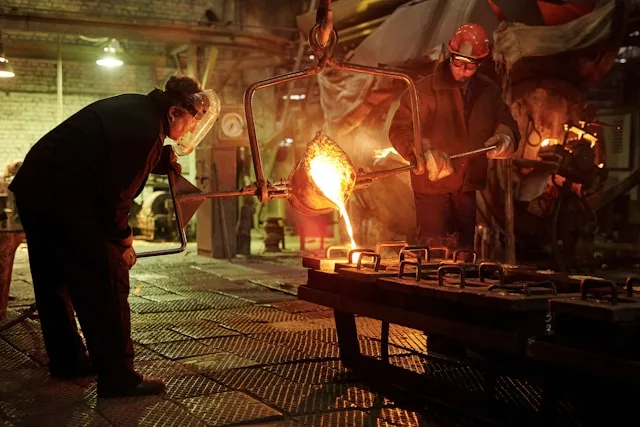
This is not a labour shortage in the conventional sense. The people are there. The skills are not. Nola's metalworking and light manufacturing cluster employs roughly 1,200 to 1,400 SMEs across structural steel, sheet metal processing, subcontract machining, and logistics-adjacent production. The firms are small, averaging 12 to 18 workers each. They operate in an environment of elevated energy costs, tightening environmental regulation, and a training pipeline that produces a fraction of the technicians the market requires. The result is a territory where the labour surplus and the talent deficit coexist in the same postcode, and neither resolves the other.
What follows is a ground-level analysis of where Nola's hiring gaps are most acute, what is driving them, and what organisations operating in this market need to understand before they commit to their next search. The data covers compensation benchmarks, passive candidate dynamics, the environmental and regulatory constraints shaping expansion, and the competitive pressure from northern Italian industrial districts that are systematically drawing mid-career talent out of Campania.
The Mismatch at the Centre of Nola's Manufacturing Economy
The single most important number in this market is this: 46% of Nola-area manufacturing firms reported "difficult or impossible" recruitment for technical-production roles in Unioncamere Excelsior's 2024 forecasting cycle. That figure sits alongside Campania's 17.2% general unemployment rate, recorded by ISTAT in Q4 2024.
These two figures are not contradictory. They describe entirely different populations within the same regional economy.
The surplus exists in non-technical categories: general assembly, manual labour, administrative support. The deficit exists in CNC machining, certified welding, mechatronics maintenance, and digitally literate operations management. The regional training pipeline, composed of IFTS institutes, ITS academies, and professional schools, does not produce output at the volume or quality the manufacturing sector demands. The gap between what the education system delivers and what the factory floor requires has widened every year since 2020.
CNC and Welding: The Two Roles That Define the Crisis
CNC machining roles advertised through Campania's regional employment centres receive fewer than 0.3 qualified applications per vacancy. That is not a ratio that improves with patience. According to ANPAL's 2024 mismatch report, 78% of Nola-area metalworking firms received zero qualified respondents for level-3 machining technician postings despite 14 or more months of continuous advertising.
Certified welders face similar dynamics. The average time-to-fill of 127 days in Campania compares to 68 days in Lombardy. The difference is not explained by compensation alone. It reflects a structural gap in the qualified population. The candidates who hold EN ISO 9606 certification and can work with specialised alloys are already employed. They are not looking. And they are being courted by Fincantieri's shipbuilding operations and process industry employers who can offer larger-scale operations and stronger career progression than a 15-person metalworking shop in the ASI Nola zone.
The implication is direct: any employer in this market relying on job postings and employment centre referrals is recruiting from a pool that, for the roles that matter most, is functionally empty.
Why the Training Pipeline Cannot Close the Gap
The obvious response to a skills mismatch is to train more people. In Nola, the mathematics work against this at every level.
Campania's manufacturing SMEs are overwhelmingly micro-enterprises. Ninety-five percent of firms in the Nola industrial zone employ fewer than 20 workers. A firm with 14 employees does not have a training department. It does not have a dedicated HR function. It does not have the administrative capacity to access the Sabatini-Locatelli or Industria 4.0 tax credit schemes that exist specifically to fund workforce digitisation and technology adoption. Only 22% of eligible Nola firms accessed 2024 digitisation credits, compared to 41% nationally, according to Agenzia delle Entrate data.
This underutilisation is not laziness. It is a structural consequence of firm size. Applying for a digitisation tax credit requires specialised consulting that a micro-enterprise cannot afford. The schemes designed to modernise Italian manufacturing are systematically bypassed by the firms that need them most.
The result is a self-reinforcing cycle. Firms cannot invest in automation because they lack the administrative capacity to access subsidies. They cannot attract technicians who can operate automated equipment because they have not invested in it. The 18% Industry 4.0 adoption rate among Nola-area SMEs, compared to 34% in Lombardy, is not a technology gap. It is a capability gap that begins with firm size and ends with an inability to attract the talent that would close it.
The original synthesis this data supports is this: the mismatch in Nola is not between supply and demand. It is between the scale of the problem and the scale of the firms trying to solve it. A training deficit that requires systemic, multi-year investment cannot be resolved by employers whose average headcount is 15.
The Environmental Constraint That Hiring Leaders Do Not See Coming
Nola's industrial zones fall within the buffer zone of the Terra dei Fuochi, the territory in the provinces of Naples and Caserta contaminated by decades of illegal waste dumping. The Ministry of Environment's 2024 to 2026 remediation plan imposes strict soil and groundwater monitoring requirements on all new industrial authorisations.
In practical terms, this adds 8 to 14 months to any facility expansion timeline. Industrial decontamination costs run between €15,000 and €50,000 per hectare. Wastewater discharge permissions are increasingly restricted.
What This Means for Talent Strategy
For a hiring leader considering Nola as a manufacturing base, the environmental constraint is not simply a real estate issue. It is a talent issue. If a firm cannot expand its physical footprint within a reasonable timeframe, it cannot scale production. If it cannot scale production, it cannot offer the career progression that mid-career technicians evaluate when deciding whether to stay in Campania or move north.
The €45 million in PNRR funds allocated for soil remediation in the Nola-Marigliano-Casalnuovo industrial triangle may release constrained brownfield capacity by late 2026. But the gap between remediation funding and operational readiness is measured in years, not quarters.
Meanwhile, Interporto Campano reports 8% annual volume growth and plans €200 million in expansion investments through 2026. The demand for light metalworking, racking systems, conveyor infrastructure, and packaging equipment is projected to grow 6 to 8% annually. The logistics hub is accelerating. The industrial zone's capacity to respond is constrained by contaminated soil.
This tension between logistics-driven demand growth and environmental capacity limits is the defining structural challenge for Nola's manufacturing sector in 2026. The firms that can attract operations leaders who understand both regulatory compliance and production scaling will outperform. Those that cannot will watch demand pass them by.
The Northern Drain: How Emilia-Romagna and Lombardy Recruit From Nola
Nola does not lose talent to abstract market forces. It loses talent to specific competitors in specific geographies offering specific premiums.
Bologna and Modena are the primary destination. Operations Manager roles in Emilia-Romagna command €95,000 to €120,000 gross annual, compared to €85,000 to €110,000 in Campania. That 20 to 35% salary premium, documented by Michael Page Italy's 2024 Industrial Salary Guide, comes with stronger Industry 4.0 infrastructure, larger firms offering clearer career paths, and a manufacturing culture built around precision engineering rather than subcontract work.
Turin and Milan compete for automotive component and automation engineering talent, offering 30 to 40% premiums at VP level with greater multinational career mobility. The cost-of-living differential partially offsets the salary gap: housing costs in Lombardy run 80 to 100% above Campania, according to Immobiliare.it's Q4 2024 data. But for a 38-year-old CNC programmer earning €35,000 in Nola, the move to a €48,000 role in Modena with better equipment, better training, and a larger team is not a difficult calculation.
The Hybrid Threat That SMEs Cannot Match
The competitive pressure extends beyond traditional relocation. For executive roles such as Operations Directors and Supply Chain VPs, Nola firms now compete with Milan-based companies offering hybrid remote arrangements. According to LinkedIn Economic Graph data from 2024, this trend is accelerating at precisely the seniority level where Nola's needs are greatest.
Campania's manufacturing SMEs cannot match hybrid offers. Manufacturing supervision is hands-on. A plant manager must be on the floor. This is not a flexibility problem that policy changes can solve. It is a fundamental constraint of the sector that narrows the candidate pool to professionals willing to commit to full-time, on-site work in a territory that offers lower compensation than the alternatives.
The result is a market where 95% of operations and plant managers at the executive level are passive candidates. They are not looking. They are not applying. They are being approached directly by competitors, and the proposition required to move them must overcome both the salary gap and the lifestyle calculation.
Compensation Benchmarks: What Nola's Manufacturing Roles Actually Pay
Understanding the precise compensation structure is essential for any hiring leader operating in this market. The discount to northern Italy is real, but it is not uniform across roles.
An Operations Director with P&L responsibility in Campania earns €85,000 to €110,000 gross annual. The equivalent role in Emilia-Romagna pays €95,000 to €120,000. The gap is 15 to 25% at the top of the range. For Plant Managers at the senior level, Nola offers €52,000 to €65,000 against northern equivalents that start materially higher.
Quality Managers holding ISO 9001, ISO 14001, and automotive certifications command €45,000 to €58,000 at senior level in Nola, rising to €68,000 to €85,000 at director level with ESG compliance responsibility. Supply Chain Managers sit at €48,000 to €62,000 at senior level and €70,000 to €90,000 at executive level.
The Non-Monetary Dimension
Executive compensation in Nola's SME sector typically includes company cars, performance bonuses of 10 to 20%, and occasionally profit-sharing. But equity participation, common in northern Italian industrial districts, is rare. According to Unioncamere's 2024 survey on executive remuneration, this absence of equity limits the total compensation package in ways that base salary figures alone do not capture.
For a hiring leader trying to attract a passive Operations Director from a northern employer, the negotiation requires more than salary adjustment. It requires a compelling narrative about the role itself: autonomy, P&L ownership, the opportunity to build rather than maintain. Nola's SMEs can offer something that a middle-management role in a large northern firm cannot. But only if the search process reaches the right candidate and frames the opportunity correctly.
The compensation gap between Nola and its northern competitors is not closing. It is widening fastest at the Plant Manager and Operations Director levels, precisely where the most critical hiring needs sit.
The Interporto Effect: Logistics Growth as a Manufacturing Catalyst
Interporto Campano is Europe's second-largest inland port by volume. It functions as the economic anchor of the Nola area, indirectly supporting an estimated 3,500 manufacturing jobs through supplier relationships and co-location.
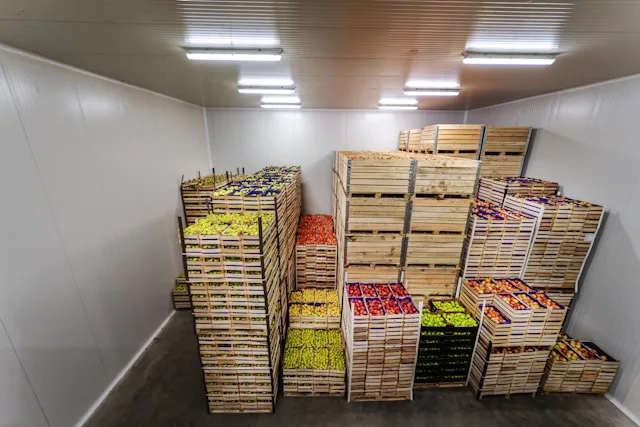
The logistics hub's expansion is not slowing. Cold-chain capacity additions and value-added logistics services are driving demand for light metalworking that did not exist at this scale five years ago. Racking systems, conveyor components, packaging equipment, and specialised steel fabrication for warehouse infrastructure represent a growing share of Nola's manufacturing output.
This is the mechanism through which Nola's metalworking SMEs are evolving from pure subcontractors into integrated production partners for logistics operations. The firms that can deliver just-in-time fabricated components to Interporto's expanding tenant base have a durable competitive advantage. The firms that cannot are competing solely on price for generic subcontract work.
The talent implication is precise. The logistics-manufacturing convergence creates demand for a specific profile: operations leaders who understand both production management and supply chain integration. This hybrid skillset is not common in Nola's existing talent pool. It is not produced by the regional training system. And it is exactly the profile that northern employers are recruiting away with better compensation and clearer career structures.
By late 2026, if the PNRR-funded remediation releases additional brownfield capacity, the growth opportunity for logistics-adjacent manufacturing could be material. But the talent to capture that opportunity must be in place before the capacity comes online. Firms that begin their executive searches after expansion is approved will find the candidates they need have already been placed elsewhere.
What This Market Requires: A Different Approach to Executive Search
The data presented in this analysis points to a single operational conclusion for hiring leaders in Nola's manufacturing sector. Conventional recruitment methods do not work here.
Posting a role through a regional employment centre and waiting for qualified applicants produces, on average, 0.3 qualified responses per vacancy for technical roles. At the executive level, 95% of operations and plant managers are passive. They are employed, compensated adequately, and not monitoring job boards.
Reaching these candidates requires direct identification and approach. It requires understanding who they are, where they work, what would move them, and how to frame an opportunity in a market that carries real stigma from the Terra dei Fuochi association and real compensation disadvantage against northern competitors. A generic recruiter posting a role description on LinkedIn will not reach the CNC programming specialist with nine years of tenure at a competitor. That specialist must be found, assessed, and approached with a proposition tailored to what they value.
KiTalent's approach to executive search in industrial and manufacturing markets is built for exactly this challenge. AI-powered talent mapping identifies the passive candidates who constitute 80 to 95% of the viable pool in Nola's metalworking sector. Interview-ready candidates are delivered within 7 to 10 days, with full pipeline transparency and weekly reporting. In a market where the average time-to-fill for a specialised welder is 127 days, that speed differential is not incremental. It is decisive.
KiTalent operates on a pay-per-interview model with no upfront retainer. Clients pay only when they meet qualified candidates. With a 96% one-year retention rate across 1,450 completed executive placements, the approach is designed for markets where the cost of a wrong hire or a stalled search is measured not in recruitment fees but in lost production capacity and missed growth windows.
For organisations hiring operations directors, plant managers, quality leaders, or supply chain executives in Nola's metalworking and light manufacturing sector, where the candidates you need are not visible on any job board and the competitive pressure from northern Italy intensifies every quarter, start a conversation with our industrial search team about how we approach this market.
Frequently Asked Questions
Why is it so difficult to hire CNC machinists and certified welders in the Nola area?
Nola sits in a market where 17.2% general unemployment coexists with acute technical shortages. CNC machining vacancies receive fewer than 0.3 qualified applications per posting, and 78% of metalworking firms report zero qualified respondents. The regional training pipeline produces far fewer certified operators than the manufacturing sector requires, and the candidates who hold certifications are overwhelmingly passive, with 85 to 90% currently employed and not actively seeking new roles. The average time-to-fill for a certified welder in Campania is 127 days, nearly double the Lombardy equivalent.
What do Operations Directors and Plant Managers earn in Nola's manufacturing sector?
An Operations Director with P&L responsibility in Campania earns €85,000 to €110,000 gross annual, representing a 25 to 30% discount to equivalent roles in Emilia-Romagna. Plant Managers at senior level earn €52,000 to €65,000, rising to €75,000 to €95,000 for multi-site or larger operations. Executive packages typically include company cars and performance bonuses of 10 to 20%, but equity participation remains rare compared to northern Italian industrial districts. For detailed salary benchmarking across manufacturing roles, current market data is essential before structuring an offer.
How does the Terra dei Fuochi environmental regulation affect manufacturing expansion in Nola?
The Terra dei Fuochi remediation protocols require enhanced soil and groundwater monitoring for all new industrial authorisations in the Nola zone. This adds 8 to 14 months to facility expansion timelines. Industrial decontamination costs range from €15,000 to €50,000 per hectare. While €45 million in PNRR funds have been allocated for remediation in the Nola-Marigliano-Casalnuovo triangle, operational capacity release is not expected before late 2026. The constraint limits both physical expansion and the career growth trajectories that attract mid-career talent.
Why do Nola manufacturing SMEs lose talent to northern Italy?
Northern industrial districts in Emilia-Romagna, Lombardy, and Piemonte offer 20 to 40% salary premiums for equivalent roles, stronger Industry 4.0 infrastructure, larger firm sizes with clearer career paths, and in some cases hybrid remote arrangements that Nola's hands-on manufacturing environment cannot match. The cost-of-living differential partially offsets the salary gap, but for mid-career technicians in the 35 to 45 age bracket, the combination of higher pay and better-equipped workplaces makes relocation a straightforward decision.
How can Nola manufacturing firms access passive candidates who are not responding to job postings?
In Nola's metalworking sector, 75 to 95% of qualified candidates across critical roles are passive. They are employed, not monitoring job boards, and will not respond to standard advertisements. Reaching them requires direct headhunting and AI-powered talent mapping that identifies specific individuals based on skills, certifications, tenure, and employer profiles. KiTalent delivers interview-ready candidates within 7 to 10 days using this approach, with a pay-per-interview model that eliminates upfront retainer risk.
What is the Industry 4.0 adoption rate among Nola's manufacturing SMEs?
Only 18% of Nola-area SMEs report Industry 4.0 implementation, defined as integration of IoT, cyber-physical systems, or advanced automation, compared to 34% in Lombardy. The gap is driven by firm fragmentation: 95% of Nola firms employ fewer than 20 workers and lack the administrative capacity to access digitisation tax credits. Only 22% of eligible firms utilised the 2024 Industria 4.0 credits versus 41% nationally. This low adoption rate compounds the talent challenge, as technicians trained on modern equipment find fewer opportunities to use their skills locally.