Nola's Cold Chain Is Expanding Fast. The Workforce to Run It Does Not Exist Yet
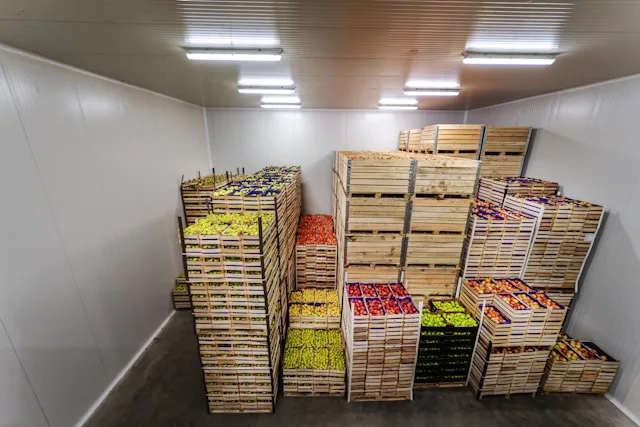
The Nola logistics corridor is adding 40,000 cubic metres of multi-temperature warehousing by mid-2026. The €45 million investment behind that expansion, funded through Italy's PNRR recovery plan and private co-financing, will produce state-of-the-art facilities capable of handling frozen, chilled, and ripening environments for Campania's growing agri-food export market. The physical infrastructure is on schedule. The people required to operate it are not.
This is not a generic labour shortage. Campania's unemployment rate sits at 14.2%. The region has no shortage of workers. What it has is an acute deficit in the specific technical competencies that modern cold chain operations require: F-Gas certified refrigeration engineers, BRCGS and IFS lead auditors with export compliance experience, and supply chain directors capable of managing multi-temperature P&L operations worth €50 million or more. The average time to fill a refrigeration technician role in Nola's agri-food logistics cluster reached 127 days in late 2024. For senior positions, the timeline stretches further. For some roles, the search has not succeeded at all.
What follows is an analysis of the forces reshaping this market: why the investment in capacity has outpaced the development of human capital, where the specific gaps sit, what they cost, and what hiring leaders operating in or around the CAAN ecosystem need to understand before they commit to their next search.
€45 Million in Infrastructure, Zero Percent Unemployment in Refrigeration Engineering
The Centro Agroalimentare Napoletano handles roughly 1.2 million tonnes of produce annually, recording €1.4 billion in transactional value in 2023. It ranks as Italy's third-largest wholesale market by volume, behind Bologna's CAAB and Milano Agroalimentare, but leads in perishable throughput for Southern Italy. The broader ecosystem, encompassing CAAN's 47 active trading units and the adjacent Interporto Campano facilities with over 250,000 cubic metres of controlled-temperature warehousing, directly employs around 7,000 workers across distribution, logistics, and packaging.
These are not small numbers. They describe a mature operating cluster with real economic weight. The problem is that this cluster's growth trajectory has shifted from volume handling to technical complexity. The CAAN "Digital Cold Chain" project alone allocates €12 million to IoT temperature monitoring and blockchain traceability systems. ISMEA forecasts an 8 to 10% volume increase in agri-food exports through Naples-area logistics hubs by 2026, driven by growing Northern European demand for Campania DOP and IGP products.
Unioncamere Excelsior projects 580 new positions in the Nola agri-food logistics cluster by the end of 2026. Seventy percent of those positions fall into technical-professional categories: refrigeration technicians, supply chain analysts, and quality assurance managers. The Associazione Italiana del Freddo reports that unemployment among senior refrigeration engineers with ammonia system expertise is effectively zero in Southern Italy. There is no bench of available talent waiting for these roles to open.
Capital has moved faster than human capital could follow. That single sentence defines the central challenge of this market in 2026.
The Three Roles That Stall Every Search
Not every position in the Nola cold chain is hard to fill. Entry-level logistics coordinators and non-specialised warehouse operatives attract high application volumes. The difficulty concentrates in three categories where technical certification, regulatory knowledge, and operational experience must converge in the same individual.
Industrial Refrigeration Engineers with F-Gas and Ammonia Expertise
The EU F-Gas Regulation (2024/573) mandates rapid phase-down of HFC refrigerants, pushing operators toward CO₂ or ammonia systems. Compliance costs for Nola facilities range from €80,000 to €200,000 per medium-size warehouse. The transition requires engineers who understand both legacy HFC systems and next-generation natural refrigerant technology. These professionals must hold current F-Gas certification under EU Regulation 517/2014 and practical ammonia system experience.
Sixty-eight percent of Nola-area logistics firms had open refrigeration technician positions in Q4 2024. According to reporting in Il Mattino's Economia Campania section in October 2024, Frio Service maintained an open position for a Responsabile Tecnico Impianti Frigo for over nine months. The role required ammonia system expertise combined with HACCP auditor certification. Three consecutive offers were reportedly rejected. Competing offers from Northern Italian logistics hubs carried 25 to 30% salary premiums.
That pattern is not unique to one employer. It is the norm. Qualified technicians in this specialism typically hold tenure positions at major 3PLs or industrial refrigeration contractors. They change roles only through direct headhunting approaches, not through job boards.
Food Safety and Quality Assurance Managers with Export Compliance
The 8 to 10% projected export growth makes this category increasingly critical. Campania's DOP and IGP products command premium pricing in Germany, France, and the UK, but accessing those markets requires compliance with BRCGS, IFS, and GlobalGAP certification standards, managed by professionals who can also handle phytosanitary certification for extra-EU destinations.
Fifty-four percent of firms in the cluster report difficulty filling these roles. The challenge is compounded by a language requirement. Export compliance managers need English and increasingly German to manage buyer relationships and regulatory documentation in destination markets. That combination, dual certification plus language proficiency plus Southern Italian willingness to stay, narrows the candidate pool severely.
According to Il Sole 24 Ore reporting in November 2024 citing executive search firm Novaxia, Apofruit Italia recruited a Quality Assurance Manager from Conserve Italia's Bologna operations to lead their Nola export compliance unit. The hire required an €18,000 relocation bonus and a 22% salary premium above standard Campania market rates. The candidate had faced counter-offers from the Emilia-Romagna food belt. That is the cost of moving a single mid-senior specialist south.
Cold Chain Supply Chain Directors
At the executive level, active candidates represent approximately 25% of the market. The remaining 75% are passive, employed in roles they are not looking to leave, and reachable only through executive search engagement. Supply Chain Directors with cold chain P&L experience averaging 8.2 years of tenure and voluntary turnover of just 4.5% annually represent one of the most stable and least accessible talent pools in Italian logistics.
The implications for any organisation planning to fill a Supply Chain Director role through conventional methods are clear. Job postings and inbound applications will surface, at best, a quarter of the viable market. The other three quarters require a fundamentally different approach to identifying candidates who are not visible through standard channels.
The Compensation Gap That Keeps Widening at the Wrong Level
Nola's compensation for cold chain professionals trails Northern Italian benchmarks by 15 to 25% at the median. That gap is not news to anyone operating in this market. What matters is where the gap bites hardest.
At the senior specialist and manager level, cold chain engineering roles in Nola pay €42,000 to €58,000 for F-Gas certified technicians with eight or more years of experience. Food safety and QA managers with BRC lead auditor certification earn €38,000 to €52,000. Supply chain managers with a decade of experience command €45,000 to €65,000.
At the executive and VP level, Technical Directors and Plant Managers at large facilities earn €75,000 to €95,000. Group Quality Directors overseeing multiple sites earn €68,000 to €88,000. Supply Chain Directors with P&L responsibility reach €85,000 to €120,000.
The gap is not uniform. Top-quartile offers at multinational 3PLs operating at the Interporto Campano, firms like Lineage Logistics and Kloosterboer, approach Northern parity. The mid-market, where the majority of CAAN-adjacent operators sit, does not.
This creates a bifurcated labour market. A small number of internationally backed operators can compete on compensation. The majority cannot. The latter group is not losing candidates to other Nola employers. They are losing them to Milan, Bologna, and increasingly to Hamburg and Frankfurt, where the German logistics market offers 60 to 80% salary premiums and English-language working environments.
The compensation gap is widening fastest at exactly the seniority level where the most critical roles sit. A €42,000 technician role competing against a €55,000 offer in Milan is a 30% deficit. A €90,000 Supply Chain Director role competing against a €120,000 offer in Milan is a 33% deficit, but the absolute difference of €30,000 carries far more weight in a relocation decision. At the executive level, the cost-of-living advantage of Campania does not fully offset the raw salary differential, especially when candidates factor in career mobility and international exposure.
For hiring leaders benchmarking compensation packages, understanding how to structure an offer that moves a passive candidate in this environment requires more than adjusting a salary figure. It requires addressing the full proposition: role scope, career trajectory, quality of life, and the credibility of the organisation's growth story.
The Brain Drain Beneath the Numbers
Here is the analytical point that the raw data does not state but the numbers make unavoidable: the Nola cold chain's talent problem is not a recruitment problem. It is a retention-of-region problem. The talent pipeline exists. It is being educated in Campania. And then it leaves.
Thirty-four percent of engineering graduates from Campania universities exit the region within five years of graduation. Compare that to 18% in Lombardy. The Università degli Studi di Napoli Federico II produces qualified engineers with precisely the foundational skills that cold chain operations need. But the career arithmetic graduates face upon completion is straightforward. A refrigeration engineering role in Frankfurt pays 60 to 80% more than the equivalent in Nola. A supply chain analyst position in Milan offers faster promotion and exposure to international headquarters operations.
The PNRR investment addresses physical capacity. It does not address the economic incentive structure that sends graduates north or abroad. Forty thousand cubic metres of new warehousing will require trained operators. If those operators continue to be educated locally and employed elsewhere, the infrastructure investment produces capacity without capability.
This is the core tension in Nola's cold chain story in 2026. The physical expansion is real. The export demand is real. The gap between infrastructure readiness and workforce readiness is also real, and it is not closing at the rate the investment timeline requires.
Organisations hiring in this market need to understand that they are not competing for talent against other Nola employers. They are competing against the entire Northern Italian and Northern European logistics sector. Every search strategy that treats this as a local labour market will underperform. Every compensation package benchmarked only against Campania norms will lose candidates to firms that benchmark against Milan.
Regulatory Pressure Is Creating Roles That Did Not Exist Three Years Ago
The EU F-Gas phase-down is not the only regulatory force reshaping the talent requirement. Cold chain operators in the CAAN ecosystem face a convergence of compliance demands that collectively create new role categories.
EU Regulation 2023/607 imposes enhanced traceability requirements for cold chain documentation. The Digital Cold Chain project's blockchain and IoT components are a direct response to this regulatory trajectory. But deploying IoT temperature monitoring and blockchain-based traceability systems requires professionals who combine supply chain operations knowledge with technology implementation experience. Three years ago, a logistics coordinator at CAAN needed to manage truck schedules and warehouse allocation. In 2026, the same role requires familiarity with digital traceability platforms, real-time temperature analytics, and automated exception reporting.
Meanwhile, the growing share of CAAN volumes destined for export, approximately 35% of traded volumes transit to Germany, France, and the UK, means that phytosanitary certification management for extra-EU markets has shifted from an occasional requirement to a core operational function. The Regione Campania ASL audit cycle recorded a 94% compliance rate for cold chain continuity documentation in 2024. That sounds strong. But 18% of smaller operators received minor infractions for traceability record-keeping, a category that will intensify under the new EU framework.
The regulatory trajectory points in one direction: more complex compliance, requiring more specialised staff, in a market that already cannot fill the roles it has. The cost of a wrong hire in a compliance-sensitive role is measured not just in salary and severance but in audit failures, export delays, and potential loss of BRCGS or IFS certification.
For any operator whose growth plan depends on export markets, quality assurance and regulatory compliance leadership has moved from a support function to a strategic hire. The question is whether the organisation's search method matches the urgency.
Energy, Infrastructure, and the Risks That Shrink the Talent Pool Further
The structural constraints facing Nola's cold chain operators do not just affect margins. They affect hiring.
Refrigerated warehousing consumes 85 to 120 kWh per cubic metre annually. The 2023-2024 energy price crisis increased operational costs by 35 to 40% for Nola cold-storage operators. According to ENEA analysis of industrial refrigeration energy consumption, residual volatility has caused many operators to delay expansion plans pending grid stability. Delayed expansion means delayed hiring. But it also means that the operators who do expand and do hire are competing for talent against an even smaller pool of employers who can offer the job security that comes with capital commitment.
The road congestion on the A16/A30 motorway junction causes temperature excursions during truck queuing, a food safety risk that adds compliance burden. The absence of a direct rail freight connection to CAAN, unlike Bologna's CAAB, increases reliance on trucking, which conflicts with EU sustainable mobility targets and adds operational complexity.
Labour informality adds a further distortion. Approximately 18 to 22% of seasonal handling labour in the broader Nola produce sector operates under informal contracts. For compliant operators, this creates an uneven playing field: they bear the full cost of employment regulation while competing against operations with lower effective labour costs. For senior professionals evaluating whether to relocate to Nola for a leadership role, the perception of informality in the broader market can itself be a deterrent.
None of these risks are new. What is new is their cumulative weight in 2026, arriving simultaneously alongside the capacity expansion and the regulatory transition. A hiring leader filling a Supply Chain Director role in this market needs a candidate who can manage not just logistics and compliance but energy cost volatility, infrastructure limitations, and the operational complexity of a market in transition.
What This Market Requires from Executive Search
The Nola cold chain talent market is defined by three characteristics that make conventional hiring methods insufficient.
First, the passive candidate ratio. At the specialist and executive level, 70 to 75% of qualified professionals are employed, not looking, and will not respond to job advertisements. A talent mapping approach that identifies and engages these candidates directly is not an optional enhancement. It is the only method that reaches the majority of the viable market.
Second, the geographic competition. Every candidate worth approaching has alternatives in Milan, Bologna, Rome, or Northern Europe. The search process must anticipate counter-offers and competing propositions from the outset. A slow search, one that takes weeks to produce a shortlist, will consistently lose candidates to faster-moving competitors. Understanding why traditional executive recruiting approaches frequently fail in markets with these dynamics is essential for any hiring leader operating here.
Third, the regulatory specificity. The combination of F-Gas certification, HACCP and BRCGS auditing credentials, EU traceability regulation knowledge, and language skills required for export compliance roles means that generic talent acquisition processes cannot adequately assess candidates. The search firm must understand the technical and regulatory content of the role, not just the seniority level and salary range.
KiTalent delivers interview-ready executive candidates within 7 to 10 days through AI-enhanced talent mapping that reaches passive professionals across European cold chain and agri-food logistics markets. The pay-per-interview model means organisations pay only when they meet qualified candidates, eliminating the upfront retainer risk that makes retained search prohibitive for mid-market operators in sectors like these. With a 96% one-year retention rate across 1,450 executive placements, the methodology is built for markets where the cost of getting the hire wrong compounds with every month a critical role remains unfilled.
For organisations competing for refrigeration engineering, export compliance, or supply chain leadership talent in Nola's cold chain market, where the candidates you need are employed, passive, and being courted by Northern Italian and German competitors simultaneously, speak with our executive search team about how we approach this market and what a realistic search timeline looks like.
Frequently Asked Questions
Why is it so hard to hire refrigeration technicians in the Nola logistics corridor?
Unemployment among senior refrigeration engineers with ammonia system expertise is effectively zero in Southern Italy. Qualified technicians hold tenure positions at major 3PLs and industrial refrigeration contractors, with an average time to fill of 127 days in the Nola area as of late 2024. The EU F-Gas phase-down has simultaneously increased demand for next-generation natural refrigerant skills while reducing the pool of engineers certified in both legacy HFC and new CO₂ or ammonia systems. Competing offers from Northern Italian hubs carry 25 to 30% salary premiums, and German logistics centres offer 60 to 80% more. These are predominantly passive candidates who will not respond to job advertisements.
What does a Supply Chain Director earn in Nola's cold chain sector?
Supply Chain Directors with P&L responsibility in the Nola agri-food logistics cluster earn €85,000 to €120,000 annually at the executive level. Senior Supply Chain Managers with ten or more years of experience earn €45,000 to €65,000. These figures trail Northern Italian benchmarks by 15 to 25% at the median, though top-quartile offers at multinational 3PLs operating at the Interporto Campano approach Milan-level compensation. The gap is most pronounced at the director level, where the absolute salary differential carries the greatest weight in relocation decisions.
How does the PNRR investment affect cold chain hiring in Nola?
The PNRR allocates €45 million to cold chain infrastructure investment in the Nola corridor through 2026, including €12 million specifically for digital cold chain technology. This investment creates 580 projected new positions, 70% in technical-professional categories. However, the investment addresses physical capacity without directly addressing the compensation and career mobility gaps that drive qualified professionals north. The infrastructure will arrive on schedule. The workforce to operate it requires proactive search strategies that reach candidates across Italy and Northern Europe.
What certifications do food safety managers need for Nola export compliance roles?
Export-facing food safety managers in the CAAN ecosystem require dual certification in BRCGS and IFS standards, HACCP auditing credentials, and phytosanitary certification management capability for extra-EU destinations. Increasingly, English and German language skills are mandatory for managing buyer relationships in Northern European markets. Fifty-four percent of firms in the cluster report difficulty filling roles with this certification profile. The combination of regulatory expertise and language proficiency significantly narrows the available talent pool in Southern Italy.
How can companies in Nola compete for talent against Northern Italian employers?
Compensation adjustments alone are unlikely to close the gap. Northern Italian logistics hubs offer 20 to 30% salary premiums combined with faster promotion tracks and international headquarters exposure. Nola employers must compete on the full proposition: role scope, autonomy, quality of life, and the credibility of the organisation's investment trajectory. The €45 million PNRR-backed expansion provides a genuine growth narrative that Northern competitors may not match. KiTalent's executive search methodology identifies passive candidates across European cold chain markets and presents the specific proposition that each candidate needs to see, reaching the 75% of the senior market that job advertising cannot access.
What is the biggest risk to Nola's cold chain sector growth in 2026?
The convergence of three pressures creates the primary risk: EU F-Gas compliance costs of €80,000 to €200,000 per facility, residual energy price volatility after the 2023-2024 crisis, and the structural outflow of 34% of Campania engineering graduates to Northern Italy within five years of graduation. Any one of these is manageable in isolation. Together, they threaten the sector's ability to convert infrastructure investment into operational capability. The organisations that address the talent pipeline challenge proactively, rather than waiting until facilities are built and roles are empty, will be best positioned to capture the export growth that the market data clearly supports.