Tuzla's Salt Tourism Is Growing. The Workforce to Run It Is Leaving.
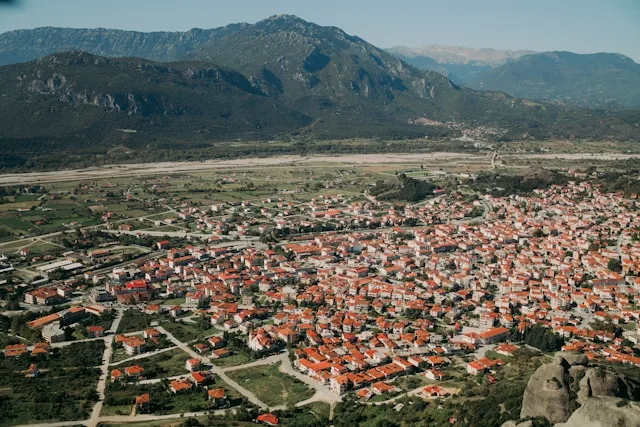
Tuzla Canton recorded between 78,000 and 82,000 tourist arrivals in 2024, a 12 to 15 percent increase over the previous year. The Panonska jezera complex drew roughly 180,000 paid visitors across its summer season. A 40-room hotel annex is due to open in 2026. A boutique heritage hotel inside the Solana complex may follow later in the year. On paper, the numbers describe a tourism cluster moving confidently from post-pandemic recovery toward genuine growth.
The reality on the ground tells a different story. JP Pannonika, the municipal utility that operates the lakes, filled only 78 percent of its planned seasonal positions by May 2024, despite offering wages 15 to 20 percent above the cantonal minimum. General manager searches in the market routinely take four to six months. Certified spa therapists are so scarce that the lakes' wellness centre ran at 60 percent staffing capacity for the entire 2024 season. The sector is building rooms it may not be able to staff.
This is the core tension defining Tuzla's hospitality market in 2026: capital investment has outpaced human capital development so severely that new capacity risks becoming an operational liability rather than a growth driver. What follows is an analysis of why that gap exists, where it is most acute, what the compensation dynamics look like, and what organisations hiring in this market must do differently to find the leaders they need.
The Bipolar Structure of Tuzla's Tourism Economy
Tuzla's leisure and hospitality cluster is not a single market. It is two overlapping markets operating on different logics, different timelines, and different talent requirements.
The first is a high-volume, low-yield seasonal leisure market driven by the Panonska jezera complex. This market peaks sharply between May and September, when Q3 alone accounts for 42 to 45 percent of annual tourist overnights across Tuzla Canton. The visitors are predominantly domestic and regional. Foreign tourists represent just 18 percent of arrivals, drawn largely from Serbia, Croatia, and the Bosnian diaspora in Germany and Austria. The revenue model depends on volume: 180,000 paid entries at modest ticket prices, supported by lakeside restaurants and seasonal retail.
The second is a nascent business-events segment centred almost entirely on the Mellain Hotel and Convention Centre. This market is year-round in theory but constrained in practice by the shallow accommodation stock. The Mellain's 96 rooms and the Hotel Tuzla's 90 rooms together constitute 45 to 50 percent of the Canton's classified hotel capacity. During peak periods, that capacity evaporates entirely. During the 2024 Salt Festival, according to reporting by Klix.ba, hotels in Tuzla turned away groups exceeding 50 rooms. Overflow bookings were redirected to private apartments in Lukavac and Živinice, 15 to 20 kilometres away.
Why the Split Matters for Hiring
Each side of this market demands fundamentally different talent. The seasonal leisure operation needs volume staffing: lifeguards, ticketing staff, maintenance crews, and entry-level service workers. The MICE segment needs commercially sophisticated leaders: revenue directors who understand yield management, convention managers handling 500-person events, and general managers who can run a profitable 80-room property against international hospitality benchmarks. The two talent pools barely overlap. A strong seasonal operations manager does not become a MICE revenue director through experience alone. The skills are different. The career paths are different. The supply dynamics are different.
This bifurcation is not temporary. As Tuzla adds capacity oriented toward the business-events segment, the hiring challenge shifts from a volume problem to a specialisation problem. Volume problems can be addressed, at least partially, by higher wages. Specialisation problems cannot.
Where the Talent Has Gone
The most striking feature of Tuzla's hospitality labour market is not the shortage itself. It is the direction of movement. Skilled workers are leaving, and the destinations they are choosing reveal why wage increases alone will not bring them back.
The Croatian and Austrian Pull
Seasonal workers from Tuzla Canton are increasingly migrating to Istrian hotels in Rovinj and Pula for the April to October season. According to Federal Employment Service cross-border worker registrations from 2024, the draw is not merely higher pay. Croatian seasonal contracts now routinely include guaranteed return provisions and shared accommodation. Net savings potential is higher despite higher living costs. For a seasonal worker comparing a Tuzla lakeside role paying 15 to 20 percent above the cantonal minimum against an Istrian hotel role paying 40 to 60 percent more with tips included, the calculation is straightforward.
At the executive level, the drain runs toward Austria and Germany. Executive chefs and senior food and beverage managers with German language skills are actively recruited by hospitality staffing agencies such as HOGAST and Allgeier for Austrian alpine hotels. Those roles offer €2,500 to €3,500 per month gross. That is 3.5 to 4.5 times what equivalent roles pay in Tuzla. The counteroffer dynamics in this market are almost impossible. A Tuzla employer cannot match an Austrian salary without destroying their entire wage structure.
The Generational Shift
The second driver is less visible but potentially more consequential. Youth hospitality job applications in Tuzla Canton have declined despite rising wages. The assumption that higher pay resolves seasonal shortages is being tested and found wanting. Workers aged 18 to 25 are gravitating toward gig economy delivery services through platforms like Wolt and Glovo, and toward remote customer service roles. These alternatives offer comparable pay with greater schedule flexibility and lower physical demands.
This is not a cyclical shift that will correct when wage growth accelerates further. It reflects a structural change in how young workers in the region value their time. Seasonal hospitality work, with its long hours and compressed earning period, is losing its appeal as an employment category. For Tuzla's tourism cluster, which depends on 150 to 200 seasonal hires annually at the Panonska jezera complex alone, this generational preference shift is an existential operational risk.
The Roles That Cannot Be Filled Locally
The most acute pain in Tuzla's hospitality hiring market sits at the senior specialist and executive level. Entry-level vacancies are difficult to fill, but they are ultimately a wage and conditions problem. The senior roles are a supply problem. The candidates do not exist in the local market in sufficient numbers.
Hotel General Managers
A general manager search in Tuzla for a property exceeding 50 rooms typically takes four to six months. The reason is simple: candidates with international chain experience from operators like Marriott, Hilton, or Accor are virtually absent in the local talent pool. When such candidates are identified, they are invariably employed in Sarajevo or Zagreb and require compensation premiums of 40 to 60 percent above standard Tuzla rates to consider a move. This makes the passive candidate challenge in this market especially severe. For every one active application to a hotel general manager role in Tuzla, executive search firms estimate that eight to twelve passive candidates must be approached to generate a single viable interview.
The Mellain Hotel expansion and the planned Solana Heritage Hotel will both require experienced general management. Neither project has a pipeline of local candidates ready to step into those roles when they open.
Bilingual Guest Experience Managers
Front-desk managers with German and English proficiency are in competitive bidding between Tuzla's two principal hotels. Through 2024, offers for these roles escalated from 1,800 BAM per month to between 2,400 and 2,600 BAM per month net, according to wage pressure analysis by the Tuzla Canton Chamber of Commerce. German language skills are critical because diaspora returnees from Austria, Germany, and Switzerland represent the highest-yield visitor segment. Losing a bilingual front-desk manager to a competitor means losing the interface with your most valuable customers.
Specialist Therapists
The Panonska jezera complex operates a salt spa concept requiring therapists trained in halotherapy and physical therapy. Searches for certified practitioners routinely stall after 60 to 90 days. The typical resolution is hiring uncertified staff and funding internal training, which takes months and produces inconsistent service quality. The wellness centre at the lakes operated at 60 percent staffing capacity throughout 2024. That gap represents both lost revenue and a degraded visitor experience that undermines the premium positioning the complex needs to grow average spend per visitor.
These three role categories share a common feature. They require skills that are formed over years in specific environments. You cannot train a hotel general manager in six months. You cannot teach halotherapy certification in a pre-season workshop. And you cannot develop German-language guest relations capability through a language course. The talent pipeline for these roles needs years of lead time that the market has not invested in.
Compensation: The 30 to 60 Percent Disadvantage
Tuzla's hospitality compensation sits in a structural trap. Wages in the sector carry a 15 to 25 percent premium over equivalent roles in retail or manufacturing within Tuzla Canton. But they remain 30 to 40 percent below Sarajevo and 50 to 60 percent below Zagreb for comparable positions.
A hotel general manager in Tuzla earns between 4,000 and 5,500 BAM per month net, roughly €2,040 to €2,805. In Sarajevo, that same role commands 25 to 35 percent more, with the additional benefit of international chain brand recognition on the manager's CV. In Zagreb, the premium reaches 40 to 60 percent with EU-market career progression built in. Understanding how to negotiate compensation for senior hospitality roles in this context means understanding that the numbers are only part of the package.
At the specialist level, the picture is equally challenging. A revenue or digital marketing director with cluster-level responsibility earns 3,500 to 4,800 BAM per month net in Tuzla. A food and beverage director or executive chef with high-volume heritage restaurant experience earns 3,200 to 4,500 BAM. These figures include the accommodations and vehicle allowances that are standard in senior Tuzla hospitality packages.
The problem is not that these salaries are low in absolute terms for the Bosnian market. They are competitive locally. The problem is that the candidates who can fill these roles are not local. They are in Sarajevo, Zagreb, Vienna, or Munich. And the proposition required to move them must overcome not just a pay gap but a career-trajectory gap. A mid-career hospitality professional in Zagreb is building a CV that works globally. The same professional in Tuzla is building a CV that works regionally at best.
This compensation disadvantage is not closing. It is widening fastest at exactly the seniority level where the most critical roles sit. As Sarajevo adds international chain hotels and Zagreb continues its post-EU-accession hospitality expansion, the pull on Tuzla's senior talent intensifies with each year.
The Infrastructure Paradox
Tuzla has invested materially in physical infrastructure. The City Administration completed an 8.5 million BAM EU-funded wastewater pre-treatment upgrade in late 2024, resolving a bottleneck that had directly limited lakeside restaurant expansion. Two hotel projects are moving through planning. The Canton's tourism development strategy targets 90,000 to 95,000 arrivals by 2026.
Yet the most revealing number in the entire market is this: the Panonska jezera complex has an estimated maximum carrying capacity of 220,000 to 230,000 annual entries before visitor experience degrades, according to JP Pannonika's environmental impact assessment. The complex recorded 180,000 entries in 2024. That leaves headroom for approximately 25 to 28 percent more visitors. But the complex could not fully staff its current operations. Adding 25 percent more visitors to a facility running at 60 percent wellness staffing capacity and 78 percent seasonal staffing does not produce growth. It produces service failure.
The road access constraint compounds this. The Tuzla to Živinice M18 corridor remains single-carriageway, generating 40 to 60 minute congestion delays on summer weekends. The EU-funded motorway connecting Tuzla to the Belgrade corridor is delayed until 2027 or 2028. Bus tourism inflows from Serbia, which represent a material growth opportunity, are functionally limited until that infrastructure arrives.
Here is the original synthesis this data supports: Tuzla's tourism cluster has solved the wrong problem first. Physical infrastructure, while necessary, was never the binding constraint on growth. The binding constraint is that the sector is building capacity in a labour market where the operational workforce is emigrating and the leadership talent pool was never large enough to begin with. Every new room added without a corresponding investment in talent acquisition and retention makes the overall system more fragile, not more robust. Capital has moved faster than human capital could follow.
What Hiring in This Market Actually Requires
Traditional recruitment methods reach a narrow fraction of the candidates who could fill Tuzla's critical hospitality roles. Job boards and active advertising connect employers with the small pool of candidates already looking. In a market where 80 to 90 percent of qualified general manager candidates are employed and not applying, conventional search methods are structurally insufficient.
The effective candidate pool for a Tuzla hotel general manager role is not in Tuzla. It is distributed across Sarajevo, Zagreb, Belgrade, and the Austrian hospitality market. Reaching those candidates requires proactive identification: mapping the talent in competing properties, understanding which professionals are approaching contract renewal points, and knowing which compensation and career-development elements will make a relocation proposition credible.
The regulatory environment adds friction. Heritage preservation restrictions within 500 metres of Solana Tuzla add 6 to 12 months to permitting timelines. The seasonal employment framework imposes a 33.5 percent employer social contribution burden that discourages hiring beyond minimum necessary staff. These are not insurmountable barriers, but they mean that hiring for senior hospitality roles in this region requires a deep understanding of local operating conditions that generic international search firms rarely possess.
For organisations building leadership teams in Tuzla's expanding hospitality cluster, KiTalent's AI-enhanced direct headhunting methodology identifies interview-ready candidates within 7 to 10 days, drawing on passive candidate identification methods that reach the professionals who will never appear on a Bosnian job board. With a 96 percent one-year retention rate across 1,450 executive placements, the approach is designed for exactly this kind of market: small, specialised, and defined by candidates who must be found rather than attracted.
The cost of a failed or prolonged search in this market is not abstract. It is a wellness centre running at 60 percent capacity. It is a hotel annex opening without a general manager. It is a convention centre losing MICE bookings because no one is running yield management. The financial cost of a wrong executive hire compounds in a shallow market where replacement options barely exist.
For hiring leaders responsible for filling general management, revenue leadership, or specialist hospitality roles in Tuzla or across the Western Balkans, start a conversation with our executive search team about how we source and deliver leadership talent in markets where the candidates you need are not visible through conventional channels.
Frequently Asked Questions
What are the main tourism attractions driving hospitality employment in Tuzla?
The Panonska jezera (Pannonian Lakes) complex and the Solana Tuzla heritage salt works anchor Tuzla's tourism cluster. The lakes drew approximately 180,000 paid entries during the 2024 season, while Solana hosted around 25,000 visitors, with 60 percent concentrated during the July Days of Salt festival. Together they generate demand for hotels, restaurants, event services, and specialist wellness staffing across the Canton. Two new hotel projects entering the market in 2026 will expand capacity but also intensify the demand for experienced hospitality leadership.
Why is it so difficult to hire hotel general managers in Tuzla?
Candidates with international chain experience from operators such as Marriott, Hilton, or Accor are effectively absent from the local market. Qualified professionals are concentrated in Sarajevo or Zagreb and require compensation premiums of 40 to 60 percent above Tuzla rates. Searches typically take four to six months. For every active applicant, firms estimate that 8 to 12 passive candidates must be approached to produce one viable interview. KiTalent's direct search approach for senior hospitality roles is built for exactly this kind of passive-dominated talent pool.
What does a hotel general manager earn in Tuzla in 2026?
A general manager overseeing a property of 80 or more rooms earns between 4,000 and 5,500 BAM per month net, approximately €2,040 to €2,805. Vehicle and accommodation allowances are standard at this level. Performance bonuses of 10 to 15 percent are typical. These figures carry a 15 to 25 percent premium over other local industries but remain 30 to 40 percent below equivalent roles in Sarajevo and 50 to 60 percent below Zagreb.
How does seasonality affect hospitality hiring in Tuzla Canton?
Tuzla's tourism market is heavily seasonal, with July to September accounting for 42 to 45 percent of annual overnight stays. Hotel occupancy swings from 90 to 95 percent in peak summer months down to 25 to 30 percent in January and February. This creates intense seasonal staffing pressure. JP Pannonika, which manages the lakes complex, employs 150 to 200 seasonal workers but filled only 78 percent of planned positions by May 2024, despite paying above-minimum wages.
What is the biggest constraint on Tuzla's tourism growth?
While physical infrastructure improvements are underway, the binding constraint is human capital. The sector faces simultaneous emigration of skilled workers to Croatia and Austria, declining youth applications for seasonal roles, and an extremely shallow pool of senior hospitality leaders. New hotel capacity opening in 2026 will worsen the gap unless proactive talent pipeline strategies are in place before properties open.
How can employers compete for hospitality talent against Sarajevo and Zagreb?
Pure compensation matching is not viable given the 30 to 60 percent pay gap. Competitive employers in Tuzla combine accommodation and vehicle allowances, performance bonuses, and career development investment such as international training secondments. The most effective strategies involve identifying candidates for whom Tuzla offers a specific lifestyle or career advantage, including those returning from the diaspora, those seeking lower living costs with property ownership potential, or those attracted to the novelty of the heritage tourism concept. Reaching these candidates requires targeted executive search rather than broad job advertising.