Reggio Calabria's Bergamot Monopoly: A €220/kg Ingredient With €28,000 Workers
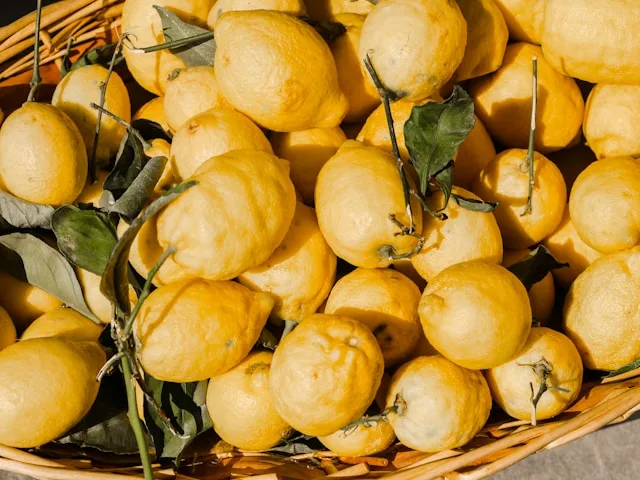
Reggio Calabria produces roughly 90% of the world's bergamot. The coastal strip between Villa San Giovanni and Monasterace, barely 100 kilometres long, supplies the essential oil that underpins Earl Grey tea, the fragrance portfolios of the world's largest perfumery houses, and a fast-growing nutraceutical segment targeting cholesterol management. By any reasonable measure, this is a luxury ingredient market. Bergamot essential oil commands €180 to €220 per kilogram. The professionals who extract, process, and sell it should be compensated accordingly.
They are not. Entry-level processing technicians in Reggio Calabria's agrifood sector earn €28,000 to €35,000, equivalent to what an orange juice processor earns in Sicily for a product worth 60% less per kilogram. Senior plant managers earn €42,000 to €52,000 while their counterparts in Milan or Piedmont collect €58,000 to €72,000 for comparable roles. The result is predictable: the specialists this industry needs most are the ones it can least afford to attract, and the ones it already employs are the most vulnerable to poaching from Northern Italian flavour houses, Sicilian citrus processors, and the perfumery capital of Grasse.
What follows is a structured analysis of the forces shaping this sector in 2026, the specific roles where hiring has stalled, the compensation gaps that drive attrition, and what organisations operating in or hiring for this market need to understand before they commit to a search strategy that the data suggests will not work.
A Global Monopoly Built on Structural Fragility
The bergamot industry's dominance is real but precarious. Production in 2025 fell to an estimated 22,000 to 24,000 tonnes of fruit, down from 27,000 tonnes in 2022, driven by adverse flowering conditions. Essential oil output settled at 120 to 130 tonnes, with juice and pulp byproducts accounting for the remaining 18,000 tonnes. For 2026, volume forecasts remain conservative at around 25,000 tonnes, constrained by Xylella fastidiosa surveillance protocols and water scarcity in the Locride sub-region.
The production base is extraordinarily fragmented. Approximately 1,800 to 2,200 micro-farms cultivate bergamot across 1,400 to 1,600 hectares. The average landholding is 1.8 hectares per producer, against a national agricultural average of 11.2 hectares. This fragmentation is not merely a curiosity. It prevents mechanised harvesting investment, keeps production costs 15 to 20% above achievable economies of scale, and creates a processing chain dependent on cooperative aggregation rather than vertical integration.
Three tiers define the cluster. Primary cooperatives such as the Cooperativa Agricola Bergamotticoltori Riuniti (CABR), representing over 400 members, aggregate fruit from smallholders. Mid-tier distilleries and juice processors, anchored by Capua 1880 S.r.l. with estimated annual revenues of €45 to €55 million and 120 to 140 employees, handle the extraction. Downstream, 85 to 110 registered SMEs produce bergamot-infused olive oils, marmalades, liqueurs, and cosmetic actives. Only three facilities possess continuous automated steam distillation capacity exceeding five tonnes per day. The majority operate batch artisanal equipment processing below 500 kilograms daily.
This is the context that makes the talent challenge so acute. The sector needs specialists capable of running modern extraction processes, but the production infrastructure remains largely pre-industrial in scale. The gap between the product's market value and the industry's operational maturity is where the hiring problem begins.
The Value Capture Problem That Distorts Every Salary Band
Here is the original analytical claim that the data forces but that none of the individual statistics state directly: Reggio Calabria's bergamot sector is paying its processing workforce as though it produces a commodity, while pricing its output as though it produces a luxury good. The margin between these two realities is not being reinvested in human capital. It is being captured upstream by landowning cooperatives and downstream by intermediary traders, leaving the processing tier too capital-poor to compete for the specialists it needs.
The evidence is clear. Bergamot essential oil sells at €180 to €220 per kilogram. Yet 70% of export transactions pass through intermediary traders rather than direct manufacturer-to-brand relationships, compressing the margins that processors actually retain. Three fragrance houses (Givaudan, Firmenich, IFF) purchase an estimated 70% of essential oil exports, creating oligopsony pricing power that further limits what processors can pay.
The consequence is a wage structure disconnected from product value. A senior plant manager in Reggio Calabria earns €42,000 to €52,000. The equivalent role in Milan commands €58,000 to €72,000. A VP of Operations earns €75,000 to €95,000 locally versus €110,000 to €140,000 in Bologna. An Export Manager earns €45,000 to €58,000 in Calabria versus €65,000 to €80,000 in Turin or Florence.
These are not minor differentials. A 30 to 40% base salary discount to Northern Italian benchmarks creates a gravitational pull that acts on every qualified professional in the region. The sector's compensation benchmarks tell a story of chronic underinvestment in the people who actually create the product's value. Until processors can bypass intermediaries and capture more margin directly, the salary bands will remain structurally misaligned with the expertise the roles demand.
Three Roles the Industry Cannot Fill and Why Each One Stalls
Master Distillers and Extraction Specialists
The role of Responsabile Estrazione, combining organic chemistry expertise with mechanical engineering capability, is the most acute bottleneck. Distilleries report six to nine month vacancy periods for this position. The candidate pool is almost entirely passive: unemployment among qualified distillers sits below 2%, average tenure exceeds nine years, and 85% of placements occur through direct search or referral rather than applications.
The reasons are systemic. The skill set is narrow. Professionals must understand steam distillation, vacuum rectification, and increasingly supercritical CO2 extraction as the nutraceutical segment grows. The number of training pathways is limited, with the University of Messina's Chemistry Department and UniRC's Laboratorio di Chimica degli Oli Essenziali producing a small annual cohort. Processors typically poach from Sicilian citrus operations, offering 20 to 25% salary premiums over standard agrifood engineer wages. But Sicilian processors have begun counter-offering at eight to 12% premiums of their own, turning what was once a one-directional talent flow into a bidding cycle.
The investment in supercritical CO2 extraction capacity, driven by projected 12 to 15% demand growth for bergamot-derived polyphenol extracts, will intensify this shortage. The equipment is new. The technicians who can operate it are fewer still.
International Business Development Managers
The sector's pivot from commodity ingredient sales to branded nutraceutical and fine fragrance channels requires executives capable of negotiating with LVMH, Givaudan, and pharmaceutical laboratories. This means professionals fluent in English and French technical negotiation who also understand citrus chemistry well enough to discuss product specifications credibly.
Searches for Export Manager Area Francia roles typically stall after four to five months. The dual competency requirement eliminates most candidates: those with the language and commercial skills lack the technical grounding, while those with the chemistry knowledge lack international sales experience. Faced with persistent failure, firms default to retaining commission-based agents in Grasse rather than building internal commercial capacity. This is a rational short-term response that deepens long-term dependency on the very intermediary structure compressing their margins.
EUDR Compliance and Regulatory Affairs Officers
Demand for QA managers capable of implementing geolocation traceability and mass-balance certification has increased 140% year-on-year since the EU Deforestation Regulation's passage. Implementation costs run €15,000 to €25,000 per SME, a figure that is prohibitive for the 60% of processors with revenues below €2 million. But the regulation is not optional. Firms that cannot demonstrate compliance by the December 2025 implementation deadline face exclusion from EU supply chains entirely.
The candidate pool for EUDR specialists exhibits classic passive dynamics. Qualified professionals hold three to four concurrent opportunities through recruiter relationships. Active applications represent fewer than 15% of the viable talent pool. Only 12% of regional agrifood SMEs currently employ staff capable of interpreting NDVI drone data or blockchain traceability systems. The gap between regulatory obligation and operational capability is widening, not closing.
For organisations struggling with these searches, traditional recruiting methods reach a fraction of the viable candidates in this market. The specialists are employed, they are not looking, and they will not respond to job postings.
Regulatory Pressure Is Rewriting Processing Economics in Real Time
The regulatory environment facing Reggio Calabria's bergamot processors in 2026 is not static. It is compounding. Three distinct regulatory pressures are arriving simultaneously, each requiring different expertise and different investment.
The EUDR compliance requirement, now in effect, demands geolocation data for every plot of land contributing to a supply chain. For an industry built on 1,800 micro-farms with 1.8-hectare average holdings, the data collection burden is extraordinary. The 40% of SMEs lacking supply-chain traceability software face the steepest climb. This is not a technology problem that a single hire solves. It requires a compliance infrastructure that most processors have never built.
Separately, the anticipated EU 2026 classification of certain essential oil byproducts as "novel foods" rather than traditional foodstuffs may force reformulation investments among preserve manufacturers. The distinction matters commercially: a product classified as a novel food faces a different approval pathway, different labelling requirements, and different liability exposure than a traditional foodstuff. The regulatory affairs expertise to manage this transition is scarce across Italy, let alone concentrated in a region where hiring for specialised compliance roles already takes months.
The third pressure comes from ECHA's pending re-evaluation of bergamot oil as a potential Category 1B skin sensitiser under the CLP Regulation. If confirmed, this classification could require reformulation investments exceeding €500,000 per distillery for safety handling infrastructure. The technical and regulatory talent needed to manage that transition overlaps with the same pool of professionals already stretched thin by EUDR and novel foods requirements.
Each regulation alone would be manageable. Their convergence creates a compliance burden that exceeds the capacity of most SMEs to absorb, both financially and in terms of human capital. The firms that secure regulatory affairs talent now will maintain market access. Those that do not risk being regulated out of their own supply chains.
The Three-Front Talent War Calabria Cannot Win on Compensation Alone
Reggio Calabria competes for the same professionals against three distinct labour markets, each with different advantages that salary alone cannot neutralise.
Northern Italian centres, particularly Milan, Bologna, and Turin, draw commercial and technical talent with 30 to 40% base salary premiums and materially better infrastructure. Bologna's "Packaging Valley" and Milan's fragrance headquarters actively target Calabrian-trained essential oil technicians. According to the Ambrosetti Mezzogiorno Competitiveness Report, the northward migration of specialised agrifood professionals has accelerated since 2022. Northern employers can offer hybrid working arrangements for R&D and regulatory roles that are physically impossible in hands-on distillation positions. This creates an asymmetric competition: Calabria cannot match flexibility for desk-based roles and cannot match salaries for plant-based roles.
Grasse, the global epicentre of the perfume industry, competes for senior extraction specialists and commercial profiles. French firms offer net compensation 50 to 60% above Calabrian equivalents. Cost-of-living differentials on the Côte d'Azur partially offset the gap, but the professional prestige of working in Grasse carries its own gravitational pull. The migration of Italian essential oil experts to France is a documented pattern that has persisted for decades and shows no sign of reversing.
Sicily, the closest geographic competitor, operates at a similar cost of living but with stronger university-industry linkages through the University of Catania's citrus research programmes. Sicilian processors poach Calabrian talent with modest eight to 12% premiums, which are enough to move mid-career technicians for whom the lifestyle difference between Catania and Reggio is minimal. Better port logistics in Catania also make export-oriented roles more attractive to commercially minded candidates.
The implication is stark. Processors in Reggio Calabria that rely on compensation as their primary retention tool are fighting a battle on terms they cannot win. The firms that retain talent in this market will do so through proposition design that goes beyond base salary: equity participation, co-investment in professional development, and roles that offer technical challenges unavailable elsewhere. The nutraceutical extraction segment, still nascent, may be the strongest proposition card Calabrian processors hold.
Why Export Growth Numbers Mask a Competitiveness Collapse in Progress
Regional export statistics show 8% year-on-year growth in bergamot-derived product value. Taken at face value, this suggests industrial health. It does not.
Capital expenditure data from the Chamber of Commerce tells a different story. Only 3% of SMEs invested in automated distillation or pasteurisation equipment between 2022 and 2024. Export growth is being driven by price inflation in essential oil markets and volume increases in low-margin juice sales, not by productivity-enhancing industrial upgrading.
This pattern predicts a competitiveness collapse if either of two conditions materialise. The first is rising labour costs. Processors currently paying at commodity-fruit levels will face pressure from every direction: regulatory compliance staffing costs, retention premiums against Northern and French competitors, and the simple demographic reality that the thermal process engineering expertise they depend on is concentrated among technicians averaging 58 years of age. As these technicians retire, their replacements will command market rates that reflect actual scarcity rather than historical wage norms.
The second trigger is synthetic substitution. Biotechnology firms including Evolva and Ginkgo Bioworks are advancing synthetic biology production of linalool and linalyl acetate, the primary aromatic constituents of bergamot oil. McKinsey's Bio-Engineered Materials Outlook projects synthetic alternatives could capture 10 to 15% of industrial fragrance applications by 2026. A processor operating artisanal batch equipment at margins compressed by intermediary traders has no buffer against a 10% demand reduction. An automated facility with direct brand relationships and a nutraceutical revenue stream does.
The firms investing in extraction technology and human capital now are building resilience. The firms relying on price inflation and low wages are building a business model with no margin for disruption. This is the split that will define the sector over the next three to five years.
What Hiring Leaders in This Market Must Do Differently
The conventional approach to filling specialist roles in Reggio Calabria's bergamot sector follows a predictable pattern. Post the role on Italian job boards. Wait. Receive applications from candidates who lack the specific extraction chemistry or regulatory expertise required. Extend the search. Wait longer. After four to six months, either lower the hiring standard or abandon the search and hire a contractor or commission-based agent instead.
This approach fails because 85% of the candidates these firms need are not on the market. Master distillers averaging nine-year tenures are not browsing job boards. EUDR compliance specialists holding multiple concurrent offers are not submitting applications. International sales directors whose value lies in their client relationships at Givaudan or Firmenich are not visible in any applicant tracking system.
Reaching these candidates requires direct identification and approach through structured talent mapping, not advertising. It requires understanding which Sicilian processors employ the extraction specialists with supercritical CO2 experience, which regulatory consultancies in Milan house the EUDR expertise that could relocate or work remotely, and which commercial directors in Grasse retain Italian connections and would consider a return proposition.
KiTalent's approach to executive search in the agrifood and FMCG sectors is designed for precisely this kind of market: one where the candidates who can fill the role exist in small numbers, are currently employed, and will not respond to public advertising. Through AI-enhanced talent mapping, KiTalent identifies and approaches these passive professionals directly, delivering interview-ready candidates within seven to ten days. The pay-per-interview model means organisations only invest when they meet qualified candidates, removing the retainer risk that deters SMEs from engaging executive search in the first place.
With a 96% one-year retention rate across 1,450 executive placements and an average client relationship exceeding eight years, KiTalent provides the search methodology and market intelligence that this sector's hiring challenges demand.
For processors, cooperatives, and agrifood SMEs competing for extraction specialists, regulatory affairs leaders, and international commercial talent in one of the world's most concentrated and hardest-to-hire agricultural markets, speak with our executive search team about how we approach candidate identification in markets where traditional methods consistently fail.
Frequently Asked Questions
What makes bergamot processing roles in Reggio Calabria so difficult to fill?
Three factors converge. The skill sets required, particularly in steam distillation, supercritical CO2 extraction, and EU regulatory compliance, are highly specialised. The candidate pool is almost entirely passive, with unemployment among qualified distillers below 2% and average tenures exceeding nine years. And compensation in Calabria runs 20 to 30% below Northern Italian benchmarks for equivalent roles, creating persistent attrition toward Milan, Bologna, and Grasse. Fewer than 15% of viable candidates for these roles are actively applying anywhere. Filling them requires direct identification of employed professionals rather than reliance on job postings.
How much do bergamot processing executives earn in Reggio Calabria versus Northern Italy?
A Senior Plant Manager in Reggio Calabria earns €42,000 to €52,000, against €58,000 to €72,000 in Milan or Piedmont. VP Operations roles pay €75,000 to €95,000 locally versus €110,000 to €140,000 in Bologna. Export Managers earn €45,000 to €58,000 base in Calabria versus €65,000 to €80,000 in Turin. Commercial Directors in fragrance ingredients command €85,000 to €110,000 with sign-on bonuses of €15,000 to €25,000 for candidates holding existing Givaudan or Firmenich relationships.
What regulatory changes are affecting bergamot processors in 2026?
Three regulatory pressures are converging. The EU Deforestation Regulation requires geolocation traceability for every supply-chain plot, at an estimated cost of €15,000 to €25,000 per SME. Pending EU classification of certain essential oil byproducts as "novel foods" may force reformulation investments. And ECHA's re-evaluation of bergamot oil as a potential Category 1B skin sensitiser could require safety handling infrastructure investments exceeding €500,000 per distillery. Each regulation demands specialised compliance expertise that the region currently lacks.
How does synthetic substitution threaten Reggio Calabria's bergamot industry?
Biotechnology firms are advancing synthetic production of linalool and linalyl acetate, bergamot's primary aromatic constituents. Projections suggest synthetic alternatives could capture 10 to 15% of industrial fragrance applications by 2026. Processors relying on low-cost artisanal methods and intermediary-dependent sales channels are most vulnerable. Firms investing in nutraceutical extraction, where the polyphenol compounds brutieridin and melitidin cannot yet be synthetically replicated at scale, hold a stronger defensive position.
Can executive search firms operate effectively in a niche agricultural market like bergamot?
Niche markets are where executive search delivers its highest value. In a sector with fewer than 200 qualified extraction specialists regionally and where 85% of placements occur through direct approach or referral, job advertising reaches almost no one. KiTalent's AI-enhanced talent mapping methodology identifies employed specialists across competing processors in Calabria, Sicily, and Southern France, then approaches them with a structured proposition. The narrower the talent pool, the more critical it is to map it completely rather than advertise into it.
What is the outlook for bergamot industry hiring through 2026 and beyond?
Demand for bergamot-derived polyphenol extracts is projected to grow 12 to 15%, driving investment in new extraction capacity. This will intensify competition for chemical engineers and distillation specialists. Simultaneously, the retirement wave among thermal process engineers, averaging 58 years of age with limited knowledge transfer pipelines, will remove institutional expertise faster than training programmes can replace it. Organisations that begin building their talent pipelines proactively rather than reactively will hold a material advantage over those waiting until vacancies become critical.