Rho's Logistics Cluster Is Full, Frozen, and Running Out of the Specialists It Needs
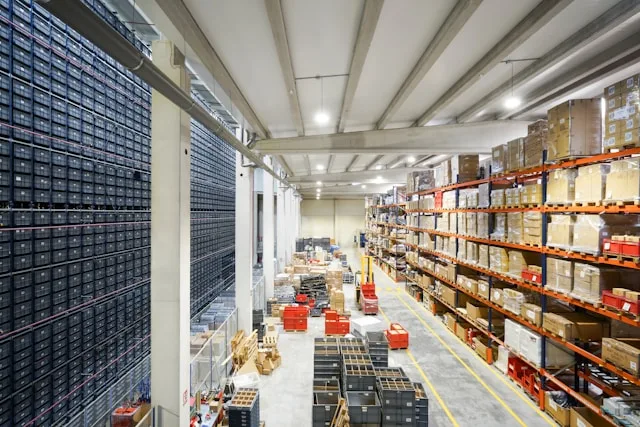
Rho's industrial vacancy rate dropped to 1.8% in the third quarter of 2024. For most markets, that figure would signal a sector at the peak of its cycle. In Rho, it signals something more complicated: a logistics cluster that is physically full but functionally stuck. Net absorption of industrial space actually declined 14% year-over-year in that same quarter, according to CBRE's Milan industrial market analysis. Companies that want to grow cannot find the space. Companies that have the space cannot find the specialists to run what they have already built.
The result is a market where 78% of employers cannot fill specialist logistics roles within 90 days, even though Lombardy's general unemployment rate sits at 5.2% and youth unemployment exceeds 18%. That contradiction defines everything about hiring in Rho today. The problem is not that there are no workers. The problem is that the workers who exist do not hold the certifications, language skills, or operational experience the sector demands. A pharma logistics operations manager with GDP certification and English fluency takes seven to nine months to recruit. A customs broker with AEO certification is 90% passive, locked into their current employer by non-compete clauses and retention bonuses that make them nearly impossible to move.
What follows is a structured analysis of the forces reshaping Rho's logistics sector, who the major employers are, where the talent gaps sit, and what organisations hiring into this market need to understand before they begin a search that conventional methods will not close.
Rho's Position in the [Milan](/milan-lombardy-italy-executive-search) Logistics Corridor
Rho occupies one of the most strategically constrained locations in European logistics. The municipality sits at the intersection of the A4 Torino-Trieste motorway and the A50 Tangenziale Ovest di Milano, a corridor that handles an estimated 25% of Italy's north-south freight traffic. The Interporto Rho-Monza, one of Lombardy's primary rail-road intermodal terminals, processed approximately 130,000 TEU in 2023 and provides direct rail connections to the Port of Genoa and wider European freight corridors.
This infrastructure concentration has attracted a dense cluster of global logistics operators. Amazon operates a 160,000 square metre fulfilment centre in San Vittore Olona, two kilometres from Rho's centre, employing approximately 1,200 permanent staff. DHL Supply Chain manages a 45,000 square metre multi-client facility in Rho. Kuehne+Nagel runs pharmaceutical distribution from the Rho-Arese industrial zone. FERCAM, Geodis, and speculative developers including P3 Logistic Parks and Segro all maintain operations in the immediate area.
The Fiera Milano exhibition complex adds another layer of demand. The fairground generates more than 200,000 truck movements annually and creates recurring spikes in temporary logistics employment for warehousing, freight forwarding, and specialised handling. For any organisation considering executive hiring in the industrial and manufacturing sector, Rho presents a market that looks dense with opportunity from the outside but proves deeply constrained from the inside.
The Infrastructure Ceiling
The constraint is physical before it is anything else. Modern Class A warehouse stock above 5,000 square metres has effectively reached full occupancy. The Parco delle Groane regional park blocks expansion to the north. Dense urbanisation blocks it to the south. Rho's Piano di Governo del Territorio restricts new industrial development to brownfield regeneration only. Greenfield logistics construction near the park is prohibited.
Development plot values have reached €180 to €220 per square metre, among the highest in Italy outside Milan proper. Approximately 45,000 square metres of new logistics space is scheduled for delivery across Rho and Arese in the period covering 2025 and 2026. Projected demand stands at 120,000 square metres. The gap between supply and demand is not closing. It is widening.
The market is now being forced toward vertical densification and multi-storey warehousing, solutions that are common in East Asia but rare in Italian logistics. This shift changes the talent requirement. Running a multi-storey automated warehouse is operationally different from running a single-level distribution centre. The building is changing. The people needed to run it are changing with it. And Rho does not yet produce them in sufficient numbers.
The Specialist Scarcity Beneath the Unemployment Numbers
Lombardy's 5.2% unemployment rate, reported by ISTAT, creates a misleading impression of labour availability for logistics employers. Youth unemployment above 18% compounds the illusion. Hiring leaders unfamiliar with this market might reasonably expect a deep pool of candidates eager to work in one of Italy's most active industrial zones.
The reality is inverted. Entry-level warehouse operatives and truck drivers represent active candidate markets with higher turnover and genuine availability. But the roles that determine whether a logistics operation runs profitably, the operations managers, customs specialists, and supply chain directors, exist in a separate market entirely. In that market, unemployment is functionally zero for the profiles employers most need.
The GDP Certification Bottleneck
The clearest example is pharmaceutical logistics management. Rho's proximity to Milan's pharma hub has created strong demand for operations managers with Good Distribution Practice certification. GDP certification ensures compliance with temperature-controlled distribution requirements, covering the cold chain protocols for products stored between 2 and 8 degrees Celsius and those requiring minus 20 degrees. These managers must also be fluent in English, a non-negotiable requirement for multinational pharma clients.
According to Hays Italy's 2024 salary guide for life sciences and industrial logistics, Lombardy faces a structural deficit of approximately 340 qualified professionals against 580 open positions. The typical search duration for this profile in the Rho pharmaceutical logistics cluster runs seven to nine months. That is not a recruitment cycle. That is a business continuity risk.
Employers who cannot fill these roles do not simply wait. They downgrade their requirements, promote internally before staff are ready, or accept candidates without the full certification profile. Each of these compromises carries regulatory exposure. For organisations managing healthcare and life sciences talent pipelines, the gap between what regulators require and what the candidate market provides is the central problem.
The AEO Certification Lock
Customs brokers with Authorised Economic Operator certification present an even more extreme version of the same problem. AEO certification takes three to five years to obtain. The regulatory complexity of the EU Customs Code, with further implementations rolling out beyond 2025, means that every year of experience increases a professional's scarcity value.
An estimated 90% of AEO-certified customs brokers in the Rho market are passive candidates. They are not looking. They are not on job boards. Many are retained through non-compete clauses and structured retention bonuses that make departure financially painful. Reaching these professionals requires direct identification methods that go beyond conventional job advertising. The standard approach of posting a role and waiting for applications reaches, at best, the 10% of this population that happens to be in transition.
The implication is that any organisation needing a customs and compliance manager in Rho is competing not just against other employers' job postings. It is competing against the candidate's existing retention package, their non-compete clause, and their rational calculation that staying is safer than moving.
The Amazon Effect and Concentration Risk
Amazon's San Vittore Olona fulfilment centre is not just the largest single employer in Rho's logistics cluster. It functions as a gravitational centre that distorts the talent market around it.
When Amazon expanded into the Rho labour market in 2023, mid-sized 3PLs employing between 50 and 200 people reported a pattern consistent with a retention crisis. Transport managers with hazmat (ADR) certifications began receiving counter-offers within 48 hours of submitting their resignations. Salary premiums of 25 to 30% became the cost of retention. Forty-two percent of logistics firms in the Milan metropolitan area cited "immediate replacement impossibility" for this profile in ManpowerGroup's 2024 talent shortage survey for Italy.
This dynamic creates a two-sided risk. On one side, Amazon's presence raises the baseline compensation expectation for every logistics role in the area. On the other, Rho's over-reliance on a single anchor employer creates concentration risk. If Amazon were to shift volume toward its Piacenza hub, where the company owns larger land banks and faces lower costs, the displacement effect would be severe. The local labour market would simultaneously lose service demand and absorb displaced workers, a combination that would depress mid-level salaries while doing nothing to resolve the specialist shortages at senior level.
This is the analytical point that the raw data does not state directly but that the evidence makes clear: the investment that made Rho's logistics cluster dense has not made it resilient. Density and resilience are different properties. A market can be full of employers and full of activity and still be fragile, because that activity depends on a small number of large operators whose strategic calculations are made at continental scale, not local scale. When a hiring leader in Rho plans a senior search, they are operating in a market whose structure could shift materially based on decisions made in Seattle or Luxembourg.
For any organisation assessing the hidden cost of a senior appointment that does not work out, Rho's concentration dynamic adds a layer of risk that pure compensation analysis does not capture.
Compensation Structures and the Geographic Tug-of-War
Compensation in Rho's logistics sector is shaped by three competing forces: Milan pulling talent upward, the Piacenza-Bologna corridor pulling it southward, and Switzerland pulling executives out of Italy entirely.
A supply chain director at VP level based in Rho earns between €110,000 and €150,000 in fixed annual salary. Total cash compensation including bonus reaches €140,000 to €200,000. Top performers at major 3PLs may reach €220,000 with long-term incentive plans. These figures sit 5 to 8% below equivalent roles at corporate headquarters in Milan's city centre but 12 to 15% above benchmarks in Bologna or Turin.
Warehouse operations managers, the profile responsible for P&L on single or multi-site operations with 100-plus employees and 15,000-plus pallet spaces, earn €55,000 to €75,000 fixed. Total compensation reaches €65,000 to €90,000. Bilingual candidates with pharma experience command the upper quartile.
Customs and compliance managers earn €48,000 to €68,000 fixed, with high-demand specialists in freight forwarding reaching €75,000.
The Swiss Drain at Senior Level
The figures above become less meaningful when viewed against the Swiss alternative. Canton Ticino and Zurich offer supply chain directors with international scope a 40 to 60% salary premium over Lombardy, combined with favourable tax regimes. This cross-border pull actively recruits from Rho and Milan, and it targets exactly the profile that is hardest to replace: multilingual, internationally experienced, comfortable operating across European corridors.
An organisation in Rho competing for a supply chain director is therefore not benchmarking against Piacenza. It is benchmarking against Lugano. The salary negotiation dynamics in this market require employers to understand that the candidate's real alternative is often outside Italy entirely.
The Piacenza Pull at Mid-Level
The opposite dynamic operates at mid-level. The Piacenza-Bologna corridor pays 8 to 12% below Rho but offers materially lower housing costs and newer warehouse stock. For professionals aged 30 to 40 seeking home ownership, disposable income in Piacenza exceeds what a higher nominal salary in Rho provides. This corridor is drawing away operational management talent at the career stage where professionals are most productive and most difficult to replace.
Rho's talent pipeline for mid-level operational managers is therefore losing candidates not because competitors pay more, but because the total life proposition is better elsewhere. Compensation alone cannot solve this. The package must address the full calculation the candidate is making.
Automation, Regulation, and the Roles That Do Not Yet Exist in Sufficient Numbers
The Rho logistics cluster is not standing still. Sixty-eight percent of local 3PLs implemented warehouse management system upgrades and robotics pilot programmes through 2024. The shift toward automated guided vehicles, WMS platforms such as SAP EWM and Manhattan, and data analytics for inventory optimisation is well underway. The Politecnico di Milano's Rho campus provides engineering talent and research partnerships that support this transition.
But the investment in automation has moved faster than the workforce capable of operating it. The professionals who configure and manage a WMS platform are not the same professionals who ran manual warehouse operations five years ago. The specialists who integrate rail and road networks through the Interporto's multimodal systems need a different skill set from those who managed single-mode trucking operations. Capital has moved. Human capital has not kept pace.
The Regulatory Acceleration
Three regulatory forces are compounding this skills gap simultaneously. First, Milan's Low Emission Zone, Area B, expanded its restrictions from the second quarter of 2025, directly affecting Rho-based operators servicing the city centre. Fleet routing, vehicle specifications, and compliance documentation all changed. Second, the EU Emissions Trading System will extend to road freight operators above 3.5 tonnes from 2027. The European Commission's Fit for 55 package estimates compliance costs of €8,000 to €12,000 per vehicle annually for Rho-based 3PLs. Charging infrastructure for electric fleets remains inadequate.
Third, the 2024 Italian labour reform, the DDL Lavoro, increased penalties for logistics sector subcontracting chains. Rho's 3PL model relies heavily on temporary agency workers, who constitute 30 to 40% of warehouse staff. Projected labour cost increases of 8 to 12% are already reshaping workforce planning.
Each of these regulatory shifts creates demand for compliance specialists, fleet transition managers, and sustainability officers who did not exist as defined roles in this market three years ago. The technology and automation talent required to manage these transitions overlaps with, but is not identical to, the operational talent the sector has historically recruited. The training system has not caught up. The roles exist. The people to fill them are still being formed.
What Conventional Search Methods Miss in This Market
The passive candidate ratios in Rho's logistics sector make the limitations of conventional hiring methods unusually visible. At supply chain director level, an estimated 85 to 90% of qualified executives are passive. Average tenure at this level is 4.5 years in the Milan metropolitan area. These professionals are recruited through retained search, not job boards.
For GDP-certified pharma logistics managers, the passive rate sits at approximately 80%. Unemployment in this specialism is below 2% across Lombardy. For AEO-certified customs brokers, the passive rate reaches 90%, compounded by non-compete clauses that restrict lateral movement even when a candidate is willing.
A search strategy built around job postings and inbound applications will, in this market, reach only the fraction of the talent pool that happens to be between roles. The fraction that is performing well, retained well, and not actively looking, which is the fraction that every employer actually wants, remains invisible to that approach.
The distinction between a direct headhunting methodology and a conventional job-board strategy is not abstract in Rho. It is the difference between reaching 10% of the viable candidate pool and reaching the remaining 90%. For roles where the total qualified population in Lombardy numbers in the hundreds rather than thousands, that difference determines whether a search succeeds or stalls for seven months.
Organisations that have experienced the pattern where executive searches fail repeatedly will recognise the dynamics at work. The role is posted. Applications arrive from candidates who lack the certification profile. The shortlist is assembled from whoever is visible. The strongest candidates, currently employed and performing well, never see the posting. The search restarts.
KiTalent's approach to this market uses AI-powered talent mapping to identify the certified, multilingual, currently-employed professionals who constitute the real candidate pool. The firm delivers interview-ready candidates within 7 to 10 days through a pay-per-interview model that eliminates upfront retainer risk. With a 96% one-year retention rate across 1,450-plus executive placements, the methodology is built for exactly the kind of market Rho represents: high certification barriers, deep passive candidate pools, and a margin for error that approaches zero.
Hiring Into a Full, Frozen Market
Rho's logistics sector in 2026 presents a paradox that aggregate market data cannot resolve. The cluster is full. Vacancy is at historic lows. Employment is dense. Investment continues. By every surface metric, the market is thriving.
Beneath those metrics, the market is frozen. Companies cannot expand because there is no space. Companies cannot staff what they have because the specialists do not exist in sufficient numbers. The automation investment that was supposed to reduce headcount has instead created demand for a different kind of headcount that the training system has not yet produced. The regulatory environment is adding compliance roles faster than the market can fill them. And the geographic competition, from Milan above, Piacenza below, and Switzerland to the north, is pulling candidates in three directions at once.
For hiring leaders operating in this market, the conventional playbook does not apply. The candidates you need are not applying to your postings. They are employed, certified, retained, and in many cases contractually restricted. The compensation required to move them must account not just for salary but for the full life calculation they are making about where to live, what restrictions they face, and whether the move is worth the disruption.
For organisations competing for supply chain directors, GDP-certified operations managers, or AEO customs specialists in Rho's logistics cluster, where the viable candidate pool is measured in hundreds and 85 to 90% of it is invisible to conventional methods, start a conversation with our executive search team about how KiTalent approaches this market differently.
Frequently Asked Questions
What is the average salary for a supply chain director in Rho, Italy?
A supply chain director based in Rho earns between €110,000 and €150,000 in fixed annual salary. Total cash compensation including bonus reaches €140,000 to €200,000, with top performers at major 3PLs reaching €220,000 with long-term incentive plans. Rho-based roles typically pay 5 to 8% below equivalent positions at Milan city-centre headquarters but 12 to 15% above Bologna or Turin benchmarks. Swiss employers in Canton Ticino offer 40 to 60% premiums over Lombardy figures, which senior candidates increasingly treat as their real market benchmark for executive compensation.
Why is it so hard to hire logistics specialists in Rho?
Rho's logistics talent shortage is driven by certification barriers rather than general labour scarcity. GDP-certified pharma logistics managers, AEO customs brokers, and hazmat-qualified transport managers require three to five years of specialised training and experience. Unemployment among these profiles is below 2% in Lombardy. Between 80 and 90% are passive candidates not visible on job boards. Meanwhile, Lombardy's general unemployment sits at 5.2%, creating a misleading impression of candidate availability that masks the acute specialist deficit.
How does Rho compare to Piacenza for logistics operations?
Rho offers superior rail connectivity through the Interporto Rho-Monza and proximity to Milan's corporate headquarters and pharma hub. Piacenza offers 20 to 25% lower land costs, at €45 to €60 per square metre per year versus €75 to €95 in Rho, with fewer zoning restrictions and newer warehouse stock. For mid-level talent aged 30 to 40, Piacenza's lower housing costs can deliver higher disposable income despite 8 to 12% lower nominal salaries. The choice between locations depends on whether an operation prioritises intermodal access or expansion capacity.
What regulatory changes affect Rho logistics employers in 2026?
Three forces are converging. Milan's Area B Low Emission Zone expanded restrictions from mid-2025, affecting Rho operators servicing the city centre. The EU Emissions Trading System extends to road freight above 3.5 tonnes from 2027, adding estimated compliance costs of €8,000 to €12,000 per vehicle. Italy's 2024 labour reform increased penalties for subcontracting chains, raising workforce costs by 8 to 12% for 3PLs reliant on temporary agency staff. Each creates demand for compliance and sustainability specialists who are in very short supply.
How does KiTalent approach executive search in Rho's logistics sector?
KiTalent uses AI-powered talent mapping to identify certified, currently-employed professionals who are not visible through job boards or conventional recruitment channels. In a market where 85 to 90% of supply chain directors and GDP-certified logistics managers are passive, this direct headhunting approach reaches the candidates that standard methods miss. The firm delivers interview-ready candidates within 7 to 10 days on a pay-per-interview basis, with no upfront retainer. A 96% one-year retention rate across more than 1,450 placements reflects a methodology built for certification-constrained markets.
What is the biggest risk for logistics companies hiring in Rho?
Concentration risk around Amazon's San Vittore Olona facility is the most underappreciated threat. Amazon's 2023 expansion raised baseline salary expectations across the area, with mid-sized 3PLs reporting 25 to 30% counter-offer premiums to retain transport managers. If Amazon shifts volume toward Piacenza, where it owns larger land banks, Rho faces simultaneous demand reduction and labour market disruption. Hiring leaders should build retention strategies that account for this structural dependency rather than assuming current demand patterns will persist.