Tetovo's Logistics Paradox: 18% Unemployment and Zero Candidates for the Roles That Matter
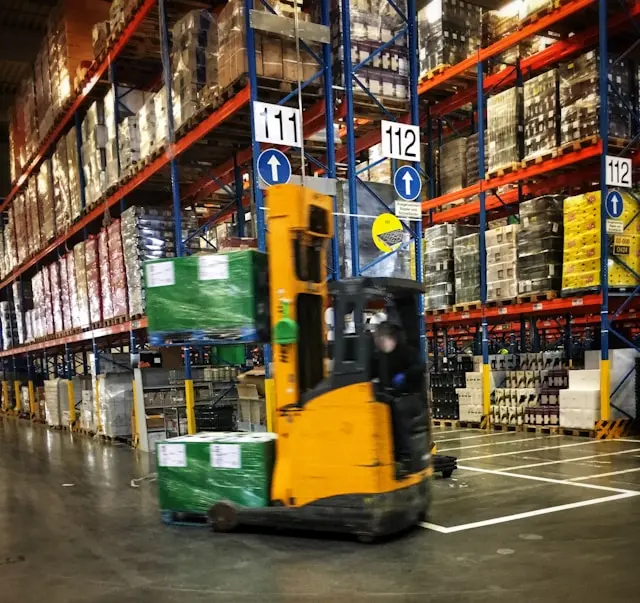
Tetovo sits fifteen kilometres from the Kosovo border, straddles the primary road artery connecting western North Macedonia to Pristina, and processes more than 1.2 million vehicle crossings annually through the Jazince checkpoint. On paper, this is a logistics node. In practice, the municipality cannot fill the roles required to operate as one.
The paradox is stark. The Polog region reports general unemployment above 18%, with more than 12,000 registered job seekers. Yet 68% of logistics vacancies remain unfilled beyond 90 days. Managerial positions in customs compliance, warehouse technology, and cold chain operations attract almost no qualified applicants. One employer has held a customs compliance manager search open for over seven months. Another created a hybrid operations and IT role after failing to find separate candidates for either function. The talent market for specialised logistics professionals in Tetovo is not merely tight. It is functionally empty.
What follows is an analysis of why this gap exists, what it costs employers already operating here, and what any organisation hiring for logistics leadership in western North Macedonia needs to understand before launching a search. The disconnect between Tetovo's geographic advantage and its workforce reality is not a temporary misalignment. It is a systemic condition with specific causes and specific implications for how senior roles must be sourced.
The Market That Should Work But Does Not
Tetovo's claim to logistics relevance rests on geography. The municipality connects to the A2 motorway via the R1202 regional road. The Jazince border crossing handles the majority of commercial traffic between western North Macedonia and Kosovo. Cross-border vehicle crossings grew 8.3% year-on-year in 2024 to reach 1.2 million. The Polog region accounted for 12.4% of North Macedonia's total wholesale trade volume in 2023.
These figures suggest a functioning secondary distribution hub. The physical reality tells a different story.
The A2 motorway remains a single carriageway with chronic congestion at the Tetovo-Gostivar bottleneck. Commercial freight at Jazince faces customs processing delays of four to six hours during peak periods, compared with ninety minutes at the Blace crossing near Skopje. The EBRD's Western Balkans Regional Economic Integration Report noted in late 2024 that "last-mile connectivity in the Polog region suffers from inadequate road maintenance and limited alternative routing options." Modern Class A warehousing, the kind with temperature control and high-bay racking sufficient for pharmaceutical or perishable distribution, does not exist in Tetovo's commercial infrastructure. Available industrial space consists of converted manufacturing facilities averaging fifteen to twenty years old. Floor loading capacities fall short of what modern distribution requires.
The infrastructure deficit is not merely an inconvenience. It is a cost multiplier. The absence of any rail freight connection to Tetovo forces complete road dependency. This adds 12 to 15% to operating costs compared with Skopje-based operators who can access rail. Public infrastructure investment per capita in the Polog region runs at €127 annually. In the Skopje region, the equivalent figure is €298. Tetovo ranks 78th out of 80 North Macedonian municipalities for road quality. The geographic advantage that should define this market is being systematically neutralised by the investment gap beneath it.
Where the Wholesale Sector Actually Sits
Tetovo hosts approximately 340 registered enterprises in wholesale trade and land transport, generating combined annual turnover of €145 to €160 million. Over 78% of transport and storage enterprises in the Polog region employ fewer than ten people. This is a market of micro-operators, not institutional logistics providers.
Wholesale activity concentrates in the historic Čaršija district and the Tetovo Green Market. The products moving through these channels are agricultural goods from the Polog valley, imported consumer goods from Turkey and China, and construction materials serving local demand. The sector's structure resembles a bazaar economy with logistics bolted on rather than a modern supply chain operation with wholesale attached.
Cross-border e-commerce fulfilment has emerged as a notable niche. Three local operators, including Logistics Plus Tetovo, Balkan Freight Solutions, and Inter-Trans, specialise in parcel consolidation for Kosovo-bound shipments. Their value proposition is specific: they help individual senders circumvent the complex customs documentation that makes small cross-border shipments prohibitively difficult. This is a useful service. It is not a scalable logistics business model.
The Tetovo Free Economic Zone, established in 2020, currently hosts three manufacturing exporters with on-site warehousing. Utilisation sits at 60% capacity. The constraint is not demand. It is utility infrastructure that has not kept pace with the zone's ambitions. A planned bonded warehouse facility, developed in partnership with the Agency for Foreign Investments, would represent a genuine upgrade. But groundbreaking is not expected before the final quarter of 2026, and the construction timeline extends well beyond that.
The implications for hiring are direct. Employers here are not building large logistics teams around sophisticated operations. They are trying to professionalise fragmented, informal supply chains with a handful of skilled managers. The roles they need are rare. The candidates who can fill them are rarer still.
The Talent Contradiction: Mass Unemployment, Zero Supply
The central tension in Tetovo's labour market is one that hiring leaders from larger markets may find difficult to believe. The Polog region's unemployment rate of 18.2% sits well above the national average of 13.8%. More than 12,000 people are registered as seeking work. And yet the average time to fill a managerial logistics position in the region reached 112 days in 2024, compared with 67 days nationally. Vacancies in transport and storage occupations increased 34% year-on-year in the final quarter of 2024.
The labour surplus exists in low-skill categories and among demographic groups mismatched to what the logistics sector needs. Women over fifty. Young people without vocational certification. Workers whose experience is in agriculture or informal retail. The specific profile that logistics employers require, bilingual professionals with customs certification, technology fluency, and operational management experience, represents a micro-market with near-zero effective unemployment.
The DHL Search That Stalled
According to the Economic Chamber of North-Western Macedonia's labour committee, DHL Supply Chain's Tetovo facility has maintained an open position for a Cross-Border Customs Compliance Manager since August 2024. The role was re-advertised three times with expanding salary bands, offering a premium of 35% above standard local wages. The search stalled because the requirements are simultaneously specific and intersecting: bilingual proficiency in Macedonian, Albanian, and English, plus expertise in Kosovo customs regulations under UNMIK and CEFTA protocols. The number of professionals in western North Macedonia who meet all three criteria is vanishingly small.
The Hybrid Role That Should Not Exist
Inter-Trans, a mid-sized freight forwarder, restructured its operational model in January 2025 after failing to fill separate positions for logistics operations management and IT systems administration. The result was a hybrid role combining both functions at a salary 60% above the market rate for either position individually. This is not creative organisational design. It is a signal that the local candidate pool for warehouse management system implementation experience cannot support even basic functional specialisation.
The passive candidate data reinforces the picture. LinkedIn Talent Insights data for North Macedonia shows that professionals with customs and trade compliance skills average 4.2 years of tenure and respond to recruiter outreach at a rate of just 12%. For senior logistics technology roles, the ratio of active to passive candidates is estimated at 1:4. Eighty percent of qualified WMS specialists are employed and not applying to posted vacancies. Reaching them requires direct sourcing methods that go beyond job advertising.
Compensation: The Numbers That Explain the Stalemate
Executive compensation in Tetovo's logistics sector reflects both the scarcity premium and the market's fundamental ceiling. Data drawn from PeopleXpert's Western Balkans Logistics Compensation Survey 2024 and Michael Page's Southeast Europe Salary Guide 2025 reveals a market where specialist managers earn well above local averages but well below the figures available in competing cities.
A Customs Compliance Specialist at senior manager level earns €14,000 to €18,000 annually. At executive level, a Head of Trade Compliance commands €28,000 to €38,000, carrying a 15 to 20% premium over equivalent roles in retail or manufacturing sectors. A Logistics Operations Manager at senior level earns €16,800 to €22,000 annually. A Regional Logistics Director earns €36,000 to €48,000.
Cold chain and warehouse management follows a similar pattern. Senior specialist roles pay €15,600 to €20,400. A Supply Chain Director earns €32,000 to €42,000 annually.
These figures are competitive within Tetovo. They are not competitive against Skopje, where equivalent roles pay 25 to 35% more. They are not competitive against Pristina, where customs compliance specialists earn €2,000 to €3,500 monthly with growing logistics park infrastructure behind them. And they are not competitive against Tirana, where regional logistics director roles command €40,000 to €60,000 annually with access to Adriatic port logistics through Durres.
According to reporting in Skopje Business Weekly, Emona Commerce poached a Warehouse Operations Manager from a competitor in Skopje in late 2024 by offering a relocation package including housing allowance and a salary premium estimated at 40 to 45% above the Skopje market rate. The total package reached approximately €2,800 monthly, compared with €1,900 to €2,000 in Skopje for equivalent roles. This represents an inversion of the normal pattern. Tetovo-based employers typically lose talent to the capital. Pulling talent inward required a premium that few local firms can sustain.
The compensation gap between Tetovo and its competitors is not closing. It is widening most sharply at exactly the seniority level where the most critical roles sit. A general logistics coordinator in Tetovo earns a modest discount to the Skopje rate. A Director of Compliance or Supply Chain Director in Tetovo faces a gap of 30 to 50% against Tirana and 25% against Skopje. The higher the skill requirement, the wider the spread, and the harder the executive search challenge becomes.
The Competitive Geography: Skopje, Pristina, and Tirana
Tetovo's talent problems cannot be understood in isolation. The municipality operates within a three-city competitive triangle that determines where logistics professionals choose to work.
Skopje is the primary competitor. It offers salaries 25 to 35% higher for equivalent roles, superior infrastructure including proximity to Alexander the Great Airport's cargo terminal, and concentration of multinational logistics providers such as Kuehne+Nagel and DB Schenker. For a mid-career logistics professional in Tetovo weighing their options, Skopje offers better pay, better career trajectory, and access to regional headquarters roles that simply do not exist in the Polog region. The EBRD's 2024 internal labour mobility study confirms this pull effect.
Pristina competes specifically for customs compliance specialists and cross-border trade experts. Kosovo's consumption-driven economy generates strong demand for these roles. Salaries match Skopje levels at €2,000 to €3,500 monthly for senior positions. Pristina also offers cultural and linguistic alignment for Albanian-speaking professionals from Tetovo, removing a friction that makes Skopje less attractive to some candidates. The Kosovo Investment and Enterprise Promotion Agency's 2024 labour market report documents growing logistics park development near the Merdare border crossing, creating infrastructure that Tetovo lacks.
Tirana operates at a different tier. Regional logistics director roles there command €40,000 to €60,000 annually. Access to Adriatic port logistics provides international exposure unavailable anywhere in landlocked North Macedonia. For the most senior professionals, Tirana represents a career step that neither Skopje nor Tetovo can match.
Remote work offers no escape valve. Warehouse management, customs clearance, and cross-border freight coordination require physical presence. The candidates Tetovo needs cannot be accessed through hybrid arrangements or flexible working policies. They must be physically present at border crossings, in warehouses, and at distribution facilities. This constraint eliminates the possibility of accessing Skopje's talent pool remotely and forces Tetovo employers into direct competition for relocation.
The Structural Headwinds That Are Not Improving
Beyond the talent squeeze, several systemic forces are compressing Tetovo's logistics market from multiple directions simultaneously.
Depopulation and Emigration
The Polog region is losing 2.1% of its population annually to emigration, primarily to Germany, Italy, and Switzerland. The departure disproportionately affects working-age men, the demographic traditionally employed in transport and warehousing. This is not a cyclical pattern. It is a demographic trajectory that removes potential candidates from the market permanently. Every year the pipeline shrinks, the scarcity compounds.
The Informal Economy
An estimated 35 to 40% of cross-border wholesale trade in the Tetovo corridor operates informally. Unregistered transport operators undercut formal logistics firms on price. This dynamic suppresses margins for legitimate businesses, limiting their capacity to offer the compensation premiums needed to attract scarce talent. The Centre for Economic Analysis's shadow economy estimates for 2024 confirm that the informal sector is not a marginal presence. It is a structural competitor that distorts the formal labour market.
Regulatory Cost Escalation
North Macedonia's 2023 amendments to the Law on Transport introduced stricter driver qualification requirements and increased liability caps for freight forwarders. Operational costs for small operators rose 8 to 10%. EU integration alignment with the EU Mobility Package threatens to restrict cabotage rights for North Macedonian hauliers operating in Kosovo. For Tetovo-based carriers, whose business model depends on cross-border flexibility, this represents a direct constraint on operational scope. Meanwhile, diesel prices in North Macedonia at €1.45 per litre exceed Serbian and Bulgarian averages, eroding haulage competitiveness further.
The Customs Bottleneck
Despite North Macedonia's CEFTA membership, Kosovo maintains parallel import documentation requirements. Average customs clearance time for goods destined for Kosovo via Tetovo runs at 2.3 days, compared with 1.1 days for goods entering Serbia via Tabanovce. The Jazince border crossing operates on a single shift from 06:00 to 22:00, creating overnight delays. The Blace crossing near Skopje operates around the clock. This operational disadvantage is not a policy problem Tetovo employers can solve. It is an institutional constraint that makes every cross-border operation slower and more expensive than the alternative routes.
What This Market Demands of Hiring Leaders
The research data points to one conclusion that is not stated anywhere in the individual statistics but becomes inescapable when they are combined. The compensation gap between Tetovo and its competitors is not just a recruitment problem. It is a market structure problem that standard hiring practices cannot overcome.
When salaries widen most sharply at the exact seniority level where the most critical roles sit, when passive candidate response rates run at 12%, when the nearest competing city offers 25 to 35% higher pay with superior infrastructure, and when the formal labour market competes against an informal sector capturing 35 to 40% of trade volume, no job posting or salary increase alone will fill the gap. The 340 registered enterprises in Tetovo's wholesale and logistics sector are not fishing in a competitive pond. They are fishing in a pond where the target species migrated to three other bodies of water.
The organisations that have succeeded in filling senior roles here have done so through methods that resemble executive search more than traditional recruitment. Emona Commerce's relocation package with a 40 to 45% salary premium over Skopje rates was not a job advertisement. It was a targeted headhunting exercise aimed at a specific individual. DHL's seven-month search for a customs compliance manager demonstrates what happens when the same role is approached through conventional channels in a market this constrained.
For any employer building logistics capability in Tetovo or the broader Polog region, three realities must inform the search strategy. First, the candidates who can fill these roles are passive, employed, and not reading job boards. Second, they are distributed across three countries and multiple languages. Third, the proposition required to move them extends beyond salary into relocation support, career positioning, and role design that acknowledges the dual-skill problem Inter-Trans encountered.
KiTalent's approach to markets like this one, built on AI-powered talent mapping that identifies passive candidates across fragmented geographies and delivers interview-ready shortlists within seven to ten days, addresses the specific failure mode that conventional methods produce here. With a 96% one-year retention rate and a pay-per-interview model that removes the upfront cost risk of a retained search in an uncertain market, the approach is designed for exactly the conditions Tetovo's logistics sector presents.
For organisations competing for customs compliance, WMS, and cold chain leadership in North Macedonia's most constrained logistics market, where the candidates you need are employed in Skopje, Pristina, or Tirana and not visible on any job board, speak with our executive search team about how we source across the Western Balkans.
Frequently Asked Questions
What logistics roles are hardest to fill in Tetovo and the Polog region?
Cross-border customs compliance managers, warehouse management system specialists, and cold chain logistics managers represent the most persistent vacancies. These roles require intersecting skills: bilingual proficiency in Macedonian, Albanian, and English, familiarity with CEFTA and Kosovo-specific customs protocols, and technology fluency with systems like SAP EWM. The average time to fill a managerial logistics position in the Polog region reached 112 days in 2024, nearly double the national average. KiTalent's direct search methodology is built to reach the passive professionals who hold these rare skill combinations but are not actively seeking new roles.
What do senior logistics roles pay in Tetovo compared to Skopje?
A Logistics Operations Manager at senior level earns €16,800 to €22,000 annually in the Tetovo market. A Regional Logistics Director earns €36,000 to €48,000. Skopje equivalents pay 25 to 35% more for the same roles, with superior infrastructure and career progression. Tirana commands €40,000 to €60,000 for regional director positions. This compensation gap widens at higher seniority levels, making market benchmarking essential before structuring an offer.
Why is unemployment high in the Polog region while logistics vacancies go unfilled?
The Polog region's 18.2% unemployment rate reflects a severe skills mismatch. The labour surplus exists in low-skill categories and among demographic groups without the vocational certification, language skills, or technology fluency that logistics employers require. The specific profile needed for customs compliance or WMS implementation represents a micro-market with near-zero effective unemployment, even as thousands remain registered as job seekers in unrelated categories.
How does cross-border trade with Kosovo affect Tetovo's logistics hiring?
Cross-border traffic through the Jazince crossing reached 1.2 million vehicles in 2024, and trade volumes are projected to grow 5 to 7% annually. This growth increases demand for customs specialists and freight coordinators. However, customs processing delays of four to six hours at Jazince and Kosovo's parallel documentation requirements create operational complexity that requires experienced professionals. Pristina simultaneously competes for the same talent pool, offering comparable salaries with growing logistics infrastructure.
What infrastructure changes could affect Tetovo's logistics sector in 2026?
The Ministry of Transport has committed to upgrading the Tetovo-Gostivar road segment to dual carriageway by late 2026, which would reduce transit times to the Kosovo border by approximately 25%. Construction disruptions during 2026 are expected to temporarily reduce logistics efficiency by 10 to 15%. A planned bonded warehouse facility could begin groundbreaking in the final quarter of 2026, though completion extends beyond that timeline. These improvements may gradually attract more logistics investment, but the talent supply constraint will persist independently of infrastructure gains.
How can employers in small logistics markets like Tetovo find qualified candidates?
In markets where 80% of qualified specialists are passive and distributed across multiple countries, traditional job advertising reaches a fraction of the viable candidate pool. Effective hiring requires proactive talent pipeline development, direct identification of candidates in Skopje, Pristina, and Tirana, and structured outreach that presents a complete proposition including relocation support and role design. KiTalent delivers interview-ready candidates within 7 to 10 days through AI-enhanced direct search, with clients paying only when they meet qualified professionals.