Tirana's Construction Sector Is Building Faster Than It Can Hire: The Talent Split Behind Albania's Biggest Boom

Tirana's construction output exceeded ALL 150 billion annually through the 2024 reporting period, accounting for 42 per cent of Albania's entire construction activity. The city's population has grown from roughly 250,000 in 1990 to over 907,000 by 2023, and every year of that growth has put pressure on the same set of developers, engineers, and project leaders to build more, faster, and to higher standards than the year before. The European Investment Bank's €250 million urban infrastructure facility, approved in late 2024, will accelerate that pressure further across 2026.
Yet the sector's most visible problem is not demand. It is a fracture running through the middle of its workforce. Specialised roles, particularly seismic engineers with Eurocode 8 certification and BIM managers capable of meeting incoming digital mandates, sit vacant for eight to eleven months at a time. Meanwhile, general civil engineering roles show unemployment approaching 8 to 9 per cent. The same market that cannot fill its most critical positions has a surplus of candidates for its least critical ones. This is not a shortage in the conventional sense. It is a split, and it is widening.
What follows is a structured analysis of the forces driving that split: the regulatory changes creating new skills requirements, the compensation dynamics pulling scarce talent out of Albania entirely, the infrastructure investments reshaping what gets built and where, and what senior leaders responsible for construction hiring in Tirana need to understand before their next search.
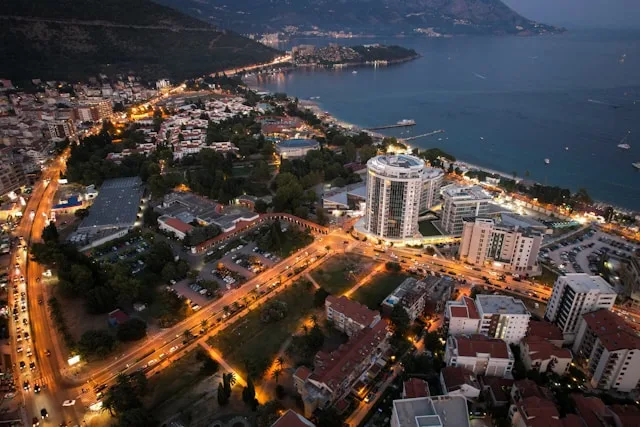
A City at Capacity: What Tirana's Construction Market Looks Like Now
Tirana's development pipeline is operating at capacity constraints even as Albania's GDP growth moderated to a projected 3.2 per cent through 2025, according to the EBRD's Albania Economic Outlook. Residential construction accounts for 68 per cent of permits issued, with high-rise developments of twelve or more storeys concentrated along the Rruga e Elbasanit corridor and the Kombinat district. The National Agency of Territorial Planning (AKPT) processed approximately 4,200 building permits annually for Tirana's expanding metropolitan area, a volume that has tested every layer of the city's administrative and technical infrastructure.
Material cost inflation stabilised at 4.5 per cent annually following the severe spikes of 2022 and 2023. But stabilisation is relative. Steel reinforcement and premium glazing remain 18 per cent above 2019 baselines, and 60 per cent of construction materials are imported, including 90 per cent of steel reinforcement and 75 per cent of ceramic fixtures. That import dependence exposes margins to Euro/ALL exchange rate volatility in ways that most other European construction markets do not face.
The National Reconstruction Programme's Quiet Drain
The most consequential constraint on Tirana's commercial development capacity is not a market force. It is a government programme. The National Reconstruction Programme, established after the devastating November 2019 earthquake, was still consuming 40 per cent of qualified engineering capacity through the end of 2024. For any hiring leader trying to staff a commercial high-rise or mixed-use development, this means the available pool of experienced structural engineers is roughly half the size the market's output figures would suggest. The reconstruction programme does not appear on any competitor's payroll. But it competes for the same professionals, and it has first call on many of them.
New Energy Standards Add a Second Layer of Scarcity
Energy efficiency mandates effective from January 2025 require all new construction over 1,000 square metres to meet EU Near Zero Energy Building (NZEB) standards. This regulation did not arrive with a corresponding supply of professionals trained in passive house design and HVAC integration. The local market is still scrambling to source these competencies. For developers already struggling to find seismic engineers, the NZEB mandate adds a second layer of scarcity on top of the first. Every large project now needs specialists that barely existed in Albania's workforce three years ago.
The convergence of reconstruction demand, new regulatory mandates, and a development pipeline running at historic highs is producing a talent environment that cannot be understood through simple supply-and-demand framing. The real dynamic is more specific than that, and the compensation data reveals exactly where it bites hardest.
The Compensation Split That Defines This Market
The most important analytical claim about Tirana's construction talent market is one that the headline numbers obscure. While executive compensation for specialised roles (seismic engineers, BIM specialists) has risen 12 to 15 per cent annually, mid-level construction manager salaries have stagnated at 3 to 5 per cent growth, below inflation. This is not a general talent shortage driving all wages upward. It is a bifurcation where only skills exportable to the EU command scarcity premiums, while locally contained roles face oversupply or employer pricing power.
This split is the intellectual spine of the entire market. A VP of Construction or Construction Director at a Tirana developer earns ALL 7.5 million to ALL 12 million annually (€75,000 to €120,000), with project delivery bonuses of 20 to 50 per cent of base salary. Professionals at international firms operating in Tirana command a further 40 to 60 per cent premium above those figures. A senior civil engineer with seismic specialisation earns ALL 3.2 million to ALL 4.8 million (€32,000 to €48,000), plus a 25 to 35 per cent premium for the seismic certification.
But a mid-level construction manager handling site supervision or general project coordination? Their compensation has barely moved. The reason is straightforward: their skills do not transfer easily to Germany, Italy, or Dubai. They are not being poached, so they are not being paid more. The market prices mobility, not just competence.
What Germany, Italy, and Dubai Are Offering
The competitor compensation picture makes the local retention challenge concrete. Germany offers €65,000 to €85,000 for mid-level seismic and structural roles through the Western Balkans Mobility Partnership and EU Blue Card schemes. That is 1.5 to 2.5 times the Tirana ceiling for the same skills. Italy offers 2.8 to 3.5 times Tirana salary multiples for project managers and BIM specialists, with Milan and Rome close enough for weekly commuting patterns. Dubai targets senior construction executives with tax-free packages of €120,000 to €200,000.
According to the German-Albanian Chamber of Commerce Industry Survey 2024 and the Deutsches Institut für Bautechnik Skills Mobility Report 2024, German engineering consultancies including Dorsch Gruppe and IGF have systematically recruited Albanian seismic engineers from Tirana firms, offering 3.5 to 4.2 times local market rates to staff earthquake recovery projects in Turkey and retrofitting mandates in Germany. This is not incidental attrition. It is organised extraction of the exact skills Tirana needs most.
The result is a market where compensation benchmarking for construction leadership roles must account not only for local comparables but for the international floor that any qualified specialist can access. Any offer below that floor is not competitive. It is a countdown to departure.
The Regulatory Environment Reshaping Every Project
Tirana's construction sector is being reshaped by three overlapping regulatory forces, each creating distinct hiring implications. Understanding them together explains why the talent requirements for this market in 2026 look fundamentally different from those of even three years ago.
Seismic Compliance After 2019
The National Technical Code for Construction (Kodi Teknik i Ndërtimit), fully enforced from 2022 following the November 2019 earthquake, requires retroactive certifications that 30 per cent of existing buildings in Tirana's informal settlements fail to meet. Compliance costs run €450 to €600 per square metre, according to the World Bank's Albania Systematic Country Diagnostic Update 2024. These retrofitting requirements could freeze development in central zones where informal settlement buildings sit alongside new high-rise corridors.
For hiring leaders, the seismic mandate creates non-negotiable demand for Eurocode 8 expertise. This is not a preference or a nice-to-have. It is a legal prerequisite for every project above a certain scale. The Polytechnic University of Tirana graduates approximately 280 civil engineers annually, but only 35 per cent specialise in seismic and structural disciplines. That means roughly 98 new seismic-capable engineers per year, entering a market where the reconstruction programme alone absorbs dozens of them before they ever reach a commercial developer.
BIM Mandates and the Digital Divide
The Tirana Smart City Strategy 2024-2028 requires Building Information Modelling (BIM) compliance for all public projects over €5 million from 2026. This single mandate is creating what the strategy document itself describes as a bifurcated market: digitised firms capable of competing for the largest and most lucrative projects, and traditional contractors facing exclusion from the public works pipeline entirely.
The BIM mandate does not just require software. It requires BIM managers, coordinators trained in Autodesk Revit and Navisworks, and project directors who understand how to integrate digital workflows into construction delivery. These professionals are precisely the ones being recruited remotely by Italian and Greek firms offering significantly higher compensation for technology-enabled roles. Major developers have responded with non-standard retention structures including profit-sharing on specific towers and flexible remote-work arrangements for design-phase roles, according to proceedings from the Albanian Construction Association Conference in November 2024. These are unusual concessions in a traditionally site-based industry, and they signal the severity of the retention pressure.
Permitting: Improved but Still Costly
Despite digitalisation efforts through the One Stop Shop (Qendra Kombëtare e Shërbimeve), permitting remains a friction point. Standard residential projects now take 90 to 110 days, down from 149 days under the older system. But 40 per cent of permits require "technical corrections" averaging 45 additional days of processing, particularly for environmental impact assessments. The State Supreme Audit Institution's 2024 performance audit of AKPT confirmed this pattern. For organisations planning construction timelines, the effective permitting window is often 135 to 155 days, not the 90 to 110 that the reform numbers suggest.
Each of these regulatory forces creates specific demand for professionals who did not need to exist in Tirana's market a decade ago. The talent market has not caught up. And the 2026 outlook suggests it will not catch up soon.
Who Builds Tirana: The Employer Map and Its Implications
The real estate and construction sector in Tirana is dominated by local developers, though the competitive structure is evolving. XHIKN shpk controls approximately 15 per cent of premium residential stock in central Tirana, employing 850 direct staff and 3,200 construction workers. Gjikuria Construction specialises in seismic retrofitting and high-rise commercial work, with active projects totalling €180 million. Fusha shpk operates at the intersection of mixed-use development and public-private partnerships. Kastrati Group, a diversified conglomerate, focuses its construction subsidiary on logistics parks and industrial real estate.
Turkish contractors, notably Yda Group and Ağaoğlu, have increased joint venture activity since 2022, and Italian firms have followed. The Albanian Construction Association represents 340 member firms, of which 120 hold international certification. This is a market with a long tail of smaller operators and a small cluster of firms large enough to attract and retain senior talent.
The implication for executive search in this market is that the qualified candidate pool for any senior role is concentrated inside a handful of organisations. Everyone in the market knows everyone else. A Construction Director at XHIKN knows the structural engineers at Gjikuria. A BIM manager at Fusha has been approached by every Italian firm operating in the Balkans. The pool is small, interconnected, and overwhelmingly passive. For VP-level Construction Directors, the market is 85 to 90 per cent passive, with candidates moving through retained search rather than applications. For seismic engineers with five or more years of post-qualification experience, unemployment runs below 2 per cent and average tenure exceeds 4.5 years.
This is not a market where posting a job advertisement reaches the candidates that matter most. The professionals capable of filling the most critical roles are employed, known by name within the industry, and reachable only through direct identification and confidential approach.
The Invisible Workforce: Informality and Its Hidden Costs
An estimated 35 per cent of Tirana's construction workforce operates informally, according to the International Labour Organization's Albania Labor Market Assessment 2024. This figure helps explain a tension in the data that would otherwise appear contradictory: construction output grew 8.4 per cent annually and permit volumes hit historic highs, yet formal employment in the sector increased only 2.1 per cent through 2024.
The gap is not explained by mechanisation. Albanian construction remains labour-intensive. It is explained by continued reliance on informal subcontracting arrangements that evade statistical capture. The implication is that formal development activity does not translate to formal job creation in the way the headline figures suggest.
For senior hiring leaders, the informality problem compounds every other challenge in this market. Informal workers cannot receive formal training investments. They are invisible to workforce planning models. They create liability risks on every project they touch. And they contribute to the persistent gap between the talent a developer needs and the talent it can formally employ. An organisation that wants to professionalise its workforce, whether for EU compliance, for insurance purposes, or simply to reduce project delivery risk, finds that a third of the available labour pool sits outside the formal system entirely.
Land tenure uncertainty adds a parallel constraint. Twenty-five per cent of developable land in greater Tirana lacks clear title due to communist-era expropriation and post-1990 restitution conflicts. This complicates collateralisation, slows financing, and means that even the most aggressive development pipeline is built on a foundation that is, in some cases, legally uncertain. Infrastructure deficits in peripheral zones compound this further: water supply and sewage capacity in Kamza and Paskuqan cannot support the 18,000 new residential units approved in 2024.
These are the structural realities that sit beneath the construction boom's headline numbers. They do not stop development. But they shape the kind of leaders and specialists that development requires.
What 2026 Demands: The Roles This Market Cannot Fill
Four categories of talent represent the acute shortage that Tirana's construction sector faces heading into 2026 and beyond.
Seismic and structural engineers with Eurocode 8 expertise are the most acutely scarce. Vacancy periods for senior seismic engineers run 8 to 11 months, compared to 3 to 4 months for general civil engineers. According to aggregated job board monitoring reported by Monitor.al's Labour Market Analysis and the Papaylon Recruitment Albania Market Report 2025, both XHIKN shpk and Gjikuria Construction maintained open postings for Chief Structural Engineer positions for over 280 days during 2024. The annual graduate pipeline of roughly 98 seismic-specialised engineers cannot replace those leaving for Germany at multiples of their local salary, let alone expand the pool.
BIM managers with Level 2 coordination capability are the second critical gap. The 2026 public project mandate makes this an existential requirement for any firm competing for government work. Yet the professionals with Autodesk Revit and Navisworks proficiency are exactly those most likely to be recruited into remote roles by firms across the EU, where they can earn Italian-market rates without relocating.
Quantity surveyors with FIDIC contract experience are essential for the growing pipeline of internationally funded infrastructure projects. The EIB's €250 million facility and the EU accession process both demand procurement and contract management standards that require FIDIC Red Book and Yellow Book expertise. This is a technical specialisation with a very small domestic talent base.
Project directors capable of managing EU-funded public works represent the senior leadership gap. These roles require a combination of technical construction knowledge, regulatory compliance understanding, multi-stakeholder management, and procurement discipline that few professionals in the Albanian market have assembled. A typical search for this profile now runs longer than a standard executive recruitment process in most European markets.
The professionals who can fill these roles are not looking for work. They are employed, well compensated by local standards, and reachable only through direct search methodologies. Posting a vacancy and waiting is the strategy most likely to produce a result eight months from now. In a market moving this fast, eight months is the difference between delivering a project and losing it.
What This Means for Hiring Leaders in Tirana's Construction Market
The conventional approach to construction hiring in Tirana has relied on local networks, word of mouth within the Albanian Construction Association's 340-member ecosystem, and job postings on Albanian-language platforms. For general civil engineering roles, this approach still works. But for the four critical shortage categories, it reaches at most 10 to 15 per cent of viable candidates. The other 85 to 90 per cent are passive, employed, and not monitoring job boards.
The cost of a failed or delayed search in this market is concrete. A seismic engineer vacancy lasting 280 days does not just delay a project timeline. It delays the regulatory certification that permits occupancy. It holds up revenue recognition. It forces the reallocation of other engineering staff away from their own projects. And in a market where the Bank of Albania's prudential measures may moderate residential starts by 8 to 12 per cent in 2026, every month of delay narrows the window of opportunity.
Tirana's construction talent challenge requires search methods designed for markets with this specific profile: small, interconnected, passive, and under constant extraction pressure from higher-paying geographies. KiTalent's approach to talent mapping and passive candidate identification is built for precisely this scenario. With interview-ready candidates delivered within 7 to 10 days and a pay-per-interview model that eliminates upfront retainer risk, the method is designed for markets where speed and precision both matter.
KiTalent's track record across more than 1,450 executive placements, with a 96 per cent one-year retention rate, reflects an approach built on understanding the specific dynamics of markets like Tirana's: where the candidates you need are not visible, the competition is international, and the cost of a wrong hire is measured in project delays and regulatory exposure.
For organisations competing for seismic engineers, BIM specialists, and construction leadership in Tirana's pressurised market, where 90 per cent of qualified candidates will never respond to a job posting, speak with our executive search team about how we approach this market.
Frequently Asked Questions
What are the hardest construction roles to fill in Tirana in 2026?
The four most acute shortages are seismic engineers with Eurocode 8 certification, BIM managers with Level 2 coordination skills, quantity surveyors experienced in FIDIC contracts, and project directors qualified to manage EU-funded public works. Senior seismic engineer vacancies typically remain open for 8 to 11 months. BIM specialists face constant recruitment pressure from EU firms offering remote roles at 2.8 to 4.2 times Tirana salary levels. KiTalent's direct headhunting methodology is designed to identify and engage these passive, highly sought professionals before competitors do.
What do construction executives earn in Tirana?
A VP of Construction or Construction Director earns €75,000 to €120,000 base salary, with project delivery bonuses of 20 to 50 per cent. Senior civil engineers with seismic specialisation earn €32,000 to €48,000, plus a 25 to 35 per cent premium for EC8 certification. International firms operating in Tirana pay 40 to 60 per cent above local developer benchmarks for equivalent senior roles.
Why is Tirana losing construction talent to Germany and Italy?
Germany offers €65,000 to €85,000 for mid-level seismic and structural roles through the Western Balkans Mobility Partnership and EU Blue Card schemes. Italy offers 2.8 to 3.5 times Tirana salary multiples for BIM specialists and project managers, with geographic proximity enabling weekly commuting. Dubai competes for senior executives with tax-free packages of €120,000 to €200,000. These international rates set a floor that Tirana employers must acknowledge.
How does Albania's seismic regulation affect construction hiring?
The National Technical Code for Construction, fully enforced from 2022 after the 2019 earthquake, requires Eurocode 8 compliance for all new buildings and retroactive certification for existing structures. Thirty per cent of buildings in informal settlements fail these standards. This creates non-negotiable demand for seismic engineers on every major project. The Polytechnic University of Tirana graduates only about 98 seismic-specialised engineers annually, far below market requirements.
What is the BIM mandate and why does it matter for hiring?
From 2026, all public construction projects in Tirana over €5 million must use Building Information Modelling. This creates a bifurcated market between digitised firms that can compete for large public contracts and traditional contractors that cannot. Firms that lack BIM managers and Revit-certified coordinators risk exclusion from the most lucrative projects. KiTalent's talent pipeline development approach helps organisations build the specialised teams these mandates require.
How long does it take to fill a senior construction role in Tirana?
General civil engineering roles fill in 3 to 4 months. Senior seismic engineer searches typically take 8 to 11 months through conventional methods. VP-level construction director searches are almost entirely conducted through retained executive search, as 85 to 90 per cent of qualified candidates are passive. Firms using proactive search approaches rather than job advertising reach viable candidates significantly faster.