Busto Arsizio's Metalworking District Has the Orders but Not the People: The Hiring Crisis Inside Italy's Precision Mechanics Corridor
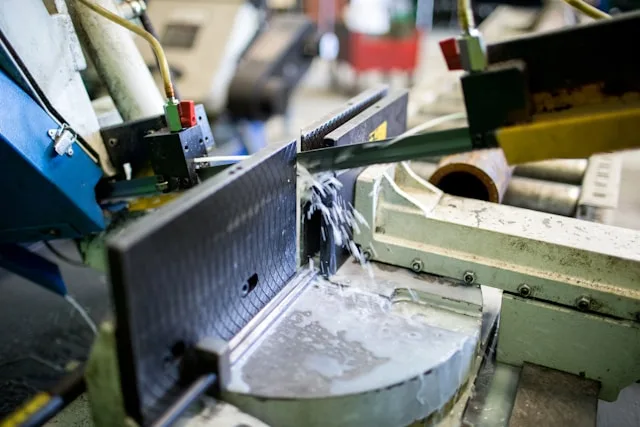
Busto Arsizio's precision metalworking cluster entered 2026 with order books that should signal confidence. Aerospace subcontractors carry more than five months of backlog. Energy costs have stabilised enough to restore margins. The 280 to 320 SMEs that form this distributed manufacturing district are running at roughly 80% capacity utilisation, up from 74% in 2023. By most industrial indicators, this is a sector recovering well.
The problem is that recovery requires people the district cannot find. As of early 2025, 2,400 vacancies sat unfilled across precision mechanics roles in the Busto Arsizio and Varese corridor. The average skilled machining role took 127 days to fill. Job postings for CNC machine operators and CAM programmers rose 42% year on year. And the candidates who could fill the most critical positions are not looking for work. They are employed, settled, and receiving two to three unsolicited offers every month from competitors who need them just as badly.
What follows is an analysis of the forces reshaping this district, the specific roles and skills that define its talent crisis, and what leaders running metalworking businesses in the Varese corridor need to understand before they lose another search to a Swiss cross-border offer or a 14-month vacancy that ends in overpayment.
The District That Runs on Proximity and Skill, Not Scale
Busto Arsizio does not resemble a traditional manufacturing hub anchored by one or two large employers. Its metalworking economy is a distributed network. Approximately 1,800 to 2,000 workers are spread across 280 or more micro-enterprises, most employing between 5 and 20 people, specialising in precision turning, milling, and electromechanical assembly. The larger anchors in the area, such as FICEP S.p.A. with roughly 340 personnel in the municipality and O.M.G. S.r.l. with around 85 employees working on aerospace hydraulics, are mid-cap operations rather than multinationals. BLM Group maintains a technical centre and subcontracting coordination hub serving the wider Varese zone.
This structure has historically been a strength. Supplier proximity within 15 kilometres enables just-in-sequence delivery. Multi-generational machining expertise runs deep. The district accounts for 18% of the province of Varese's precision mechanics output, feeding end markets that include Leonardo S.p.A.'s aerospace operations, packaging and textile machinery OEMs, and a growing portfolio of automation equipment clients.
But the same structure that makes the district agile also makes it fragile when talent runs short. A 15-person shop cannot absorb the loss of a senior CNC programmer the way a 500-person plant can. When a single specialist leaves, the shop does not lose a percentage of capacity. It loses a capability entirely. And the district's dominant end markets have shifted in ways that demand more specialised skills than ever, pulling the talent requirement upward at the exact moment supply is contracting.
The original end-market mix required refinement from earlier assumptions. While automotive supply relationships exist, the dominant demand drivers are now aerospace components, industrial machinery with roots in the legacy Gallarate-Busto Arsizio textile district, and electromechanical equipment for automation. The household appliance supply chain, once a pillar, has contracted materially following Whirlpool's 2023 to 2024 restructuring and partial offshoring of Italian operations.
This shift matters for hiring leaders because it changes who they need. The general machinist who served the appliance supply chain is not the same professional who can programme a five-axis centre for titanium aerospace parts to AS9100 standards.
Where the Searches Stall: The Three Roles No One Can Fill
CNC Five-Axis Programmers with Aerospace Certification
The single hardest role to fill in the Busto Arsizio corridor is a programmer capable of operating DMG Mori or Mazak five-axis centres with AS9100 aerospace quality certification. Searches for these profiles regularly stall past 90 days. An estimated 80 to 85% of qualified candidates are passive, meaning they are employed and not applying to any job posting. Unemployment in this specialism sits below 2% in the Varese province, and average tenure is 7.2 years, pointing to very low voluntary turnover unless a candidate is directly approached.
Regional trade media reported that one Busto Arsizio precision machining SME of 20 employees carried a 14-month vacancy for a senior CNC programmer capable of CAM programming for titanium aerospace components. The role was eventually filled by recruiting from a competitor in Gazzada Schianno, with a total compensation package exceeding the market median by 22%.
This pattern repeats across the district. Firms resort to poaching within the Varese-to-Lecco corridor, offering 15 to 20% salary premiums and sign-on bonuses of €3,000 to €5,000. The effect is circular. One firm's hire is another firm's vacancy. The district is not growing its talent pool. It is shuffling it.
Specialised TIG and MIG Welders
Welders certified for EN 1090 structural steel and AWS D17.1 aerospace standards are predominantly passive candidates. An estimated 75% rely on word-of-network referrals and union channels rather than job boards. According to Italia Oggi's sectoral analysis, a medium-sized sheet-metal subcontractor in the Busto Arsizio area maintained a nine-month vacancy for an aluminium TIG welder. The firm ultimately restructured its production line to use robotic welding and hired a single robot programmer at a 35% premium instead.
That adaptation is telling. It reveals both the depth of the shortage and the cost of working around it. Automating a welding station is not a minor capital decision for a firm with fewer than 50 employees.
Maintenance Technicians with Mechatronics and PLC Skills
Technicians who can handle PLC programming on platforms like Siemens TIA Portal while also performing predictive maintenance analytics are under relentless demand from multiple directions. Automation integrators, packaging machinery OEMs, and Swiss employers in Canton Ticino all compete for the same profile. Local firms report what aggregate data describes as systematic failed searches after six-month campaigns. In 60% of cases, candidates accept counter-offers from their current employers rather than moving.
The Swiss competition is particularly damaging. Canton Ticino firms offer CHF 75,000 to CHF 90,000 for roles paying €45,000 to €55,000 locally. That is a 60 to 80% net compensation differential. According to Fondazione Edison's analysis of talent mobility in northwest Italy, approximately 12 to 15% of skilled technicians trained in the Varese province migrate to Swiss cross-border positions within five years of certification.
The implication is blunt. The district's training pipeline is producing technicians for export.
The Demographic Collapse Behind the Vacancy Numbers
The hiring difficulty in Busto Arsizio's metalworking sector is not cyclical. It is demographic.
The precision mechanics workforce in the province carries a median age of 48.3 years. Nearly a quarter of technicians are over 55. The replacement rate stands at 0.7: for every ten workers exiting, only seven enter. This is not a ratio that stabilises over time. It accelerates.
ITS Meccatronico Lombardo, the higher technical institute located eight kilometres away in Varese, produces 120 certified technicians annually with CNC and automation specialisations. That figure sounds meaningful until it is set against the 2,400 unfilled vacancies across the corridor. Even assuming every graduate stays in the Varese province, which the Swiss migration data contradicts, the training system replaces roughly 5% of the current shortfall each year.
Youth unemployment in the 18 to 29 age group runs at 15.2% in the province. The overall provincial unemployment rate is 4.8%, below the national average of 6.9%. These figures appear contradictory. They are not. They describe a structural mismatch. The young people without work do not have the skills the metalworking sector needs. The people with those skills are employed and ageing out.
This mismatch challenges the assumption that aggregate labour market slack can resolve sector-specific shortages through generic training programmes. The problem is not a shortage of people willing to work. It is a shortage of people with seven to ten years of CNC experience, an aerospace quality certification, and proficiency in CAM software platforms like Mastercam or HyperMILL. No training programme produces that profile in under a year.
The Industry 4.0 Paradox: Capital Moved Faster Than Human Capital Could Follow
Italy's Transition 5.0 tax credits, the 2024 to 2025 evolution of the Industry 4.0 incentive framework, have directed real capital toward digitalisation and green transition in Lombardy's mechanical SMEs. At the regional level, €890 million in investments were approved for mechanical SMEs in 2024 alone, according to Italy's Ministry of Enterprises and Made in Italy. Busto Arsizio firms accessed an estimated €12.4 million in digitalisation and green transition tax incentives.
This investment is producing new machines. It is not producing the people who know how to operate them.
Only 34% of local SMEs in the Busto Arsizio area have implemented IoT-enabled production monitoring, compared to 51% in the Lecco mechanical district. The gap is not primarily financial. Sixty-four percent of surveyed SMEs cite implementation complexity and lack of internal IT competence as the primary barriers. And only 28% of Busto Arsizio mechanical SME owners or managers possess sufficient digital competence to evaluate Industry 4.0 investments in the first place, according to Fondazione Edison's analysis of digitalisation in Lombardy's SMEs.
This creates a specific analytical insight that the aggregate data obscures. The investment in automation has not reduced the workforce requirement. It has replaced one kind of worker with another that does not yet exist in sufficient numbers. The district needs fewer general machinists and more mechatronics technicians, fewer manual welders and more robot programmers, fewer shop-floor supervisors and more production managers fluent in IoT, SCADA, and predictive maintenance analytics. Capital moved faster than human capital could follow. The firms that invested first are now competing hardest for the people who can make that investment productive.
The same dynamic is visible in technology-driven sectors globally, where automation spending and talent shortages are not opposing forces but reinforcing ones.
Compensation in a Compressed Market: What Roles Actually Pay
Compensation in Busto Arsizio's metalworking sector reflects the district's SME structure. Base salaries are lower than in Milan or Emilia-Romagna, but the gap narrows sharply for scarce specialisms.
A Production Manager or Plant Manager in an SME context of 50 to 150 employees commands €65,000 to €85,000 in base salary, with bonuses of up to 15% bringing total cash compensation to €75,000 to €98,000. A Senior CAM Programmer or Manufacturing Engineer with eight or more years of experience and proficiency in aerospace materials earns a base of €48,000 to €62,000, but aerospace-certified profiles at the senior end command €68,000 to €78,000.
At the executive level, an Operations Director or General Manager with P&L responsibility, supply chain management scope, and digital transformation strategy oversight earns €110,000 to €150,000 in base salary. Bonuses of 20 to 30% push total compensation to €135,000 to €190,000. Equity participation is rare except in family succession transitions. Compensation at the top end, above €170,000, typically requires multilingual capabilities in English and German alongside experience with automotive OEM direct supply relationships.
A Quality Director with multisite responsibility overseeing AS9100 and IATF compliance across distributed SME networks earns €95,000 to €125,000 in base plus bonus.
These numbers matter because they define the offer calibration required to move passive candidates. A five-axis CNC programmer earning €62,000 in a stable role with a seven-year tenure will not move for €65,000. The poaching premiums of 15 to 22% documented in the district reflect what it actually costs to dislodge a settled specialist. Firms that benchmark to median rather than to the premium required to trigger movement will continue running 14-month vacancies.
The competitive pull from Milan's metropolitan area is a 20 to 25% salary premium for production managers and manufacturing engineers, often combined with clearer corporate career trajectories at larger multinationals such as Siemens Italy or ABB. From Emilia-Romagna, the pull for automotive-specific experience is a 10 to 15% premium attached to the dense mechanical ecosystems surrounding Ferrari, Lamborghini, and Ducati supply chains. And from Switzerland, the pull is not a premium at all. It is a different financial reality entirely.
The Risks Ahead: German Demand, Eastern European Competition, and Aerospace Concentration
The 2026 outlook for the Varese precision mechanics cluster projects 2.1 to 2.8% value-added growth, contingent on two things that are not guaranteed: aerospace demand stability and successful pivots toward electric vehicle battery housing and charging infrastructure components.
German Industrial Exposure
Twenty-five percent of Varese mechanical exports target German machinery and automotive markets. Germany's industrial output has contracted, and the Bundesbank forecast for 2025 projected a further 0.5% decline. For Busto Arsizio subcontractors with general machinery order books averaging only 2.1 months of backlog, this exposure is immediate. Aerospace-focused firms with 5.2-month backlogs have more buffer. But the district as a whole is not uniformly insulated.
Eastern European Price Competition
Nearshoring trends could in theory benefit Italian subcontractors as European manufacturers shorten supply chains. In practice, competition from Polish and Romanian precision mechanics operations with labour costs 40 to 50% lower threatens commoditised turning and milling work, as noted in the European Commission's Annual Report on European SMEs. The district's survival depends on moving up the value chain, toward complex aerospace components, multi-axis machining, and certified quality processes that cannot be replicated at volume in lower-cost markets. That move, in turn, depends on hiring the specialists who can deliver it.
Aerospace Concentration Risk
The district's heaviest order books are tied to Leonardo S.p.A.'s helicopter and aerostructures divisions at Vergiate and Samarate. Any programme delays in the NH90 or AW139 platforms cascade to subcontractors within 60 days, according to Leonardo's own supply chain risk assessments. This concentration is a strength while orders flow and a vulnerability when they pause.
The regulatory burden adds further pressure. Italy's EU-ETS phase-out of free emission allowances by 2026 threatens energy-intensive heat treatment and surface finishing subcontractors, with an estimated €400,000 to €800,000 investment required per SME for electric furnace conversion or compliance measures. The new EU Machinery Regulation requires conformity reassessments costing €15,000 to €30,000 per product line.
Each of these risks is manageable individually. Together, they compress the margin for error in every hiring decision.
What This Means for Hiring Leaders in the Varese Corridor
The Busto Arsizio metalworking talent market has a characteristic that distinguishes it from more visible hiring crises in technology or financial services. The candidates are not just passive. They are invisible to conventional search methods.
A five-axis CNC programmer with aerospace certification does not have a LinkedIn profile optimised for recruiter searches. A certified TIG welder does not respond to job board postings. A mechatronics technician receiving three direct offers a month has no incentive to enter an application process. Seventy to 85% of the candidates in the district's three most critical role categories are passive, and traditional recruitment channels reach a fraction of them.
The 127-day average time-to-fill is not a scheduling inconvenience. For a 15-person shop, it represents four months of constrained production capacity. At 80% utilisation with an order backlog, every unfilled role is revenue that cannot be captured.
Firms that have adapted are using direct identification methods: mapping competitors' technical teams, building talent pipelines before roles open, and calibrating compensation to the premium that triggers movement rather than to the market median. Firms that have not adapted are cycling through the same recruitment agencies, posting the same advertisements, and filling the same role every 14 months at a 22% premium after the previous hire is poached by a neighbour.
The cost of a failed or delayed senior hire in this market is not abstract. It is the order that ships late, the quality certification that lapses because the auditor left, the Industry 4.0 investment that sits idle because no one on the shop floor can operate it.
For organisations competing for production leadership, specialist engineering talent, or operations executives in Busto Arsizio's precision mechanics corridor, where 80% of the candidates you need will never see your job posting and the cost of a vacant role is measured in lost production capacity, start a conversation with our executive search team about how KiTalent approaches this market. With interview-ready candidates delivered within 7 to 10 days through AI-powered talent mapping and a pay-per-interview model that eliminates upfront retainer risk, KiTalent reaches the specialists that job boards and conventional agencies cannot. Across 1,450 executive placements globally, with a 96% one-year retention rate, the method is built for exactly the kind of passive, specialist-dominated market that defines Busto Arsizio's metalworking district.
Frequently Asked Questions
Why is it so difficult to hire CNC programmers in Busto Arsizio?
The difficulty stems from a combination of extreme specialism and passive candidate dominance. Programmers capable of running five-axis centres with aerospace quality certification represent fewer than 2% of the unemployed workforce in the Varese province. An estimated 80 to 85% are employed and not actively seeking new roles, with average tenures of 7.2 years. Job postings reach only a fraction of this population. Searches regularly exceed 90 days, and firms typically must offer 15 to 22% salary premiums to move a settled specialist. Direct headhunting methods that identify and approach passive candidates individually are the most effective route in this market.
What does a Production Manager earn in Busto Arsizio's metalworking sector?
A Production Manager or Plant Manager in an SME context of 50 to 150 employees earns a base salary of €65,000 to €85,000, with performance bonuses of up to 15% pushing total cash compensation to €75,000 to €98,000. At the Operations Director level with full P&L responsibility, total compensation ranges from €135,000 to €190,000 including bonuses of 20 to 30%. The top end of this range requires multilingual capability and direct OEM supply chain experience.
How does Swiss competition affect the Busto Arsizio talent market?
Canton Ticino employers offer 60 to 80% higher net compensation for the same roles. A maintenance technician earning €50,000 in Busto Arsizio can command CHF 80,000 to CHF 90,000 across the border. According to Fondazione Edison, 12 to 15% of skilled technicians trained in the Varese province migrate to Swiss cross-border positions within five years of completing their qualifications. This drain is most acute for mechatronics technicians and CNC programmers.
What is the Industry 4.0 adoption rate among Busto Arsizio metalworking SMEs?
Only 34% of local SMEs have implemented IoT-enabled production monitoring, compared to 51% in the competing Lecco mechanical district. The barrier is not primarily financial: Italy's Transition 5.0 tax credits offer substantial incentives. Sixty-four percent of SMEs cite implementation complexity and lack of internal IT competence as the primary obstacles. Only 28% of SME owners or managers have sufficient digital competence to evaluate technology-related investments effectively.
What aerospace certifications matter most for metalworking roles in this district?
AS9100D is the primary aerospace quality management standard and a requirement for any subcontractor in Leonardo S.p.A.'s supply chain. IATF 16949 applies to firms with automotive OEM relationships. EN 1090 covers structural steel fabrication. Candidates holding multiple certifications, particularly those combining AS9100 with advanced CAM programming capability, command the highest premiums and are the most difficult to recruit through conventional channels.
How can executive search firms help metalworking SMEs compete for scarce talent?
SMEs with 5 to 50 employees rarely have dedicated talent acquisition functions and rely on local agencies or word of mouth. Specialist executive search firms with manufacturing sector expertise use talent mapping and direct candidate identification to reach the 75 to 85% of qualified professionals who are passive. KiTalent's approach delivers interview-ready candidates within 7 to 10 days using AI-enhanced talent mapping, with a pay-per-interview model that removes upfront retainer risk for smaller organisations.