Busto Arsizio Logistics Hiring: Why 22% Youth Unemployment Has Not Solved a Single Talent Gap
The Province of Varese recorded youth unemployment of 22.4% in the third quarter of 2024. In the same period, logistics firms in Busto Arsizio reported that 68% of entry-level warehouse operative positions required more than six months to fill. These two figures describe the same geography at the same moment. They are not contradictory. They reveal a market where general labour availability and industry-specific human capital have almost nothing to do with each other.
This disconnect sits at the centre of a hiring challenge that intensifies at every rung of the seniority ladder. At the operative level, the problem is a mismatch between available skills and required competencies. At the supervisory level, it is a scarcity of professionals who combine physical logistics experience with enterprise software fluency. At the executive level, it becomes something closer to a closed market: 75 to 80% of qualified Operations Directors and Supply Chain VPs in the Busto Arsizio and Malpensa corridor are not actively seeking new roles, and the few who are get picked off by Swiss employers willing to pay 40 to 60% more.
What follows is a ground-level analysis of Busto Arsizio's logistics and light manufacturing sector: where the hiring gaps are most acute, what is driving them, what roles cost, and what organisations in this market need to do differently to reach the candidates who will never appear on a job board.
A Logistics Micro-Cluster Built on Road, Constrained by Land
Busto Arsizio sits at the junction of the A8 (Milano-Varese) and A9 (Lainate-Como-Chiasso) motorways. This position makes it a natural distribution node for Milan's consumer basin and a staging area for Malpensa Airport's cargo corridors. The Alto Milanese logistics micro-cluster, with Busto Arsizio at its eastern edge, manages approximately 12 to 15% of Lombardy's non-food consumer goods distribution volume. The specialisms are distinctive: fashion and textile logistics, e-commerce parcel sorting, and light manufacturing assembly for aerospace and consumer electronics components bound for Malpensa's Cargo City.
The sector employs an estimated 8,400 to 9,100 workers in Busto Arsizio proper. That figure represents 18% of local industrial employment. Roughly 65% of those workers are concentrated in third-party logistics and parcel delivery operations. The remaining 35% work in light manufacturing and kitting operations integrated with warehousing.
But the infrastructure that makes this cluster viable also constrains it. Road transport accounts for 94% of goods movements in the Province of Varese. Rail freight holds less than 5% market share, despite the presence of FNM's Busto Arsizio-Saronno-Milan line. Peak-hour delays on the A8 average 45 to 55 minutes. Industrial land availability in the municipality has compressed to 2.8%, with zero greenfield logistics land remaining within municipal boundaries. Class A logistics rents have reached €65 to €72 per square metre annually, a 14% increase from 2022. Expansion now means moving into neighbouring Gallarate or Cassano Magnago, which fragments operational efficiency and complicates workforce planning.
This is not a market that can grow its way out of a talent problem by building new facilities and attracting new workers. The physical ceiling is already in place.
The Three Roles This Market Cannot Fill
Across Lombardy, 42% of logistics firms report hard-to-fill positions. In the Busto Arsizio and Malpensa corridor, the scarcity concentrates in three specific profiles. Each one represents a different kind of hiring failure, and each requires a different response.
Warehouse Team Leaders with WMS Competency
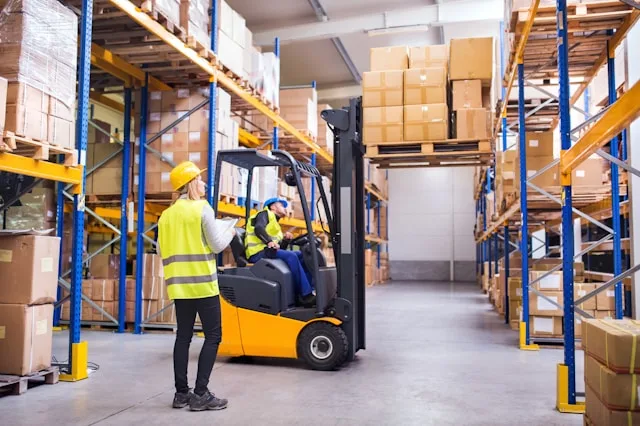
The first gap is supervisory. Large 3PLs in the Alto Milanese area consistently report that Warehouse Team Leader roles requiring fluency in SAP Extended Warehouse Management or Oracle WMS remain open for 90 to 120 days on average. A traditional forklift operator role fills in 45 days. The difference is not volume of applicants. It is the near-total absence of candidates who combine mechanical handling licences with enterprise software competency. The market has moved to digital warehouse management faster than the workforce has retrained, and the supervisory layer is where that mismatch bites hardest.
Customs Brokers with AEO Certification
The second gap is regulatory. Union Customs Code expertise and Authorized Economic Operator certification create a high barrier to entry. The replacement pool is limited. Employers retain these professionals through non-compete clauses and equity retention bonuses rather than hoping they will stay. The passive candidate dynamics in this segment are pronounced: qualified customs brokers are not searching for new roles, because their current employers know exactly how hard they are to replace and price their retention accordingly.
Heavy Vehicle Drivers with ADR Certification
The third gap is operational. Drivers holding C+E licences with ADR certification for dangerous goods command signing bonuses of €2,000 to €3,000 in the Busto Arsizio employment basin. Annual turnover exceeds 25%, as drivers migrate to Swiss-based carriers or Italian firms offering long-haul international routes with higher per-kilometre rates. The general driver market is active: people apply. But the qualified subset, those with ADR certification, clean licences, and digital tachograph competency, behaves as passive. They are employed, recruiteable only via direct wage offers, and gone within months if a better rate appears.
The pattern across all three profiles is the same. General availability masks specific scarcity. Unemployment statistics describe one market. Hiring data describes another entirely.
The Swiss Premium and What It Actually Costs
The most corrosive competitive dynamic in this market is not internal. It comes from 30 kilometres north.
Canton Ticino, specifically Lugano and the Mendrisiotto district, represents the primary competitor for executive logistics talent in the Busto Arsizio catchment. Swiss pharmaceutical logistics firms and 3PLs routinely target Operations Managers from Busto Arsizio-based firms. According to data from the Canton Ticino Office of Statistics and salary benchmarks from Michael Page Switzerland, the compensation premiums offered run between 35% and 45% for managers holding dual Italian and Swiss customs brokerage experience with AEO certifications.
Approximately 1,200 Italian logistics professionals commute daily from the Province of Varese to Swiss logistics hubs. That daily cross-border flow represents a material brain drain at the senior level, because the professionals who leave are precisely the ones with the cross-border supply chain experience that makes them most valuable on either side of the border.
Milan exerts its own gravitational pull, though through a different mechanism. The northwestern suburbs around Rho-Pero offer 20 to 25% salary premiums for equivalent strategic roles in supply chain planning and procurement. Milan also offers something Busto Arsizio cannot: a career trajectory into corporate headquarters functions. Senior talent moves eastward along the A8 corridor toward roles with broader scope. Housing costs are 40% higher in Milan, which acts as a partial brake. But for a Supply Chain Manager earning €55,000 to €72,000 in Busto Arsizio, a move to Milan at €70,000 to €90,000 with a path to a VP title is a straightforward calculation.
Bologna competes on a narrower front. Its Interporto offers specialised career paths in rail freight management that Busto Arsizio's road-dominated market cannot match. Salaries are comparable, but the concentration of pharmaceutical multinationals in Bologna's "Pharma Valley" cluster provides sector-specific advancement absent in the Malpensa fashion and electronics mix.
The result is a market squeezed from three directions simultaneously. Switzerland takes the executives. Milan takes the strategists. Bologna takes the pharma specialists. What remains is a talent pool that is smaller than headcount figures suggest and harder to reach than conventional recruitment methods assume.
Compensation in Full: What the Roles Actually Pay
Understanding the competitive dynamics requires knowing what the roles are worth. The following figures draw on 2024 salary guides from Hays Italy, Michael Page Italy, and Robert Walters Italy. By 2026, upward pressure from Swiss competition and e-commerce volume growth has likely pushed the upper ranges further.
A Senior Warehouse Manager or Site Manager in Busto Arsizio earns a base salary of €48,000 to €62,000, with a performance bonus of 10 to 15%. Candidates with pharma cold-chain (GDP) or fashion luxury handling experience command a premium of 12 to 18% above these bands. This is the role that requires 90 to 120 days to fill when WMS fluency is a prerequisite.
A Logistics Operations Director, whether in a 3PL or manufacturing context, carries P&L responsibility for multi-site operations or a large single site managing 150 or more headcount. Base salary runs €85,000 to €115,000, with a 15 to 20% performance bonus, a company car allowance of €800 to €1,000 per month, and long-term incentive plans in multinational firms. Malpensa-specific air cargo expertise and customs brokerage oversight add 10 to 15% to the base. The top quartile reaches €130,000 in firms with Swiss cross-border operations.
A Supply Chain Manager at mid-to-senior level earns €55,000 to €72,000 base.
Now hold these numbers against the Swiss premium. A Logistics Operations Director earning €110,000 in Busto Arsizio faces an offer of €154,000 to €176,000 from a Lugano-based employer, before considering Switzerland's more favourable tax treatment for cross-border workers. The gap is not 10%. It is 40 to 60%. No retention bonus and no counteroffer closes that differential permanently. It can only be managed by finding replacement talent faster than it leaves, which brings the conversation back to search methodology.
The Regulatory Pressure Building Beneath the Surface
The cost structure for logistics firms in Busto Arsizio is about to shift. Two regulatory changes converging in 2026 will reshape fleet economics and facility planning, with direct implications for which firms can attract and retain the talent they need.
Fleet Transition and the Low Emission Zone
Lombardy's Low Emission Zone restrictions, planned for 2026 implementation, will ban Euro 4 diesel commercial vehicles from the A8 and A9 corridors during peak hours. That restriction affects an estimated 30 to 35% of current local delivery fleets. Simultaneously, the EU Emissions Trading System extension to road transport will increase operating costs for light distribution firms running aging diesel van fleets for last-mile delivery from Busto Arsizio to Milan's hinterland.
For firms that have already invested in fleet modernisation, this is a competitive advantage. For firms that have not, it is a cost shock arriving at the same moment as driver retention pressure. A driver offered €2,500 more per year by a competitor with a newer fleet, better working conditions, and no risk of peak-hour route restrictions has no reason to stay.
ZES Tax Credits and the Accreditation Bottleneck
Lombardy's implementation of the ZES (Zone Economiche Speciali) framework for Varese province offers 25% tax credits for logistics investments. In theory, this should accelerate facility upgrades and technology adoption. In practice, bureaucratic certification delays have meant that only 12% of eligible Busto Arsizio firms had completed accreditation as of the third quarter of 2024. The firms most likely to benefit from the incentive, larger operations with compliance teams capable of managing the application process, are the same firms most capable of attracting and retaining senior talent through superior compensation. The incentive widens the gap between well-resourced firms and the SME base that forms the backbone of the cluster.
Energy costs compound the picture. Electricity for automated warehousing remains 38% above 2019 baselines at €0.28 per kilowatt-hour, disproportionately impacting light manufacturing firms with high conveyor and automation energy usage. Every firm in this market is managing rising costs and constrained physical space simultaneously. The ones that also face executive vacancies lasting months are managing those pressures without the leaders who should be making the decisions.
The Original Analytical Claim: Capital Moved, but Human Capital Cannot Follow the Same Route
Here is the observation that the individual data points, taken separately, do not reveal.
Malpensa's cargo volumes grew 8.3% in 2024, reaching 750,000 tonnes handled. The airport's development plan through 2026 projects continued demand growth of 6 to 8% annually in pharma and luxury goods cargo. Investment is flowing. Facility demand is rising. The regional government is offering tax credits. The infrastructure story looks strong on paper.
But the modal share of rail freight in the Busto Arsizio catchment has declined to below 5%, not risen. Zero greenfield industrial land remains. The workforce qualified to operate the increasingly digital, increasingly regulated, increasingly automated facilities does not exist in sufficient numbers. And the senior leaders who could manage this transition are being recruited across the Swiss border at premiums no Italian employer in this market can sustainably match.
Capital has moved into this corridor faster than human capital can follow. The investment thesis assumes a workforce that has not yet been built. Every new pharma cold-chain facility, every e-commerce sorting hub, every automated kitting operation requires not just operatives but supervisors with WMS fluency, compliance certifications, and multilingual capability that take years to develop. The firms investing in Busto Arsizio's logistics future are competing for a workforce shaped by Busto Arsizio's logistics past. That is the core tension, and it will not be resolved by posting vacancies.
What This Market Requires from Executive Search
The passive candidate ratio tells the story. An estimated 75 to 80% of qualified Operations Directors and Supply Chain VPs in the Busto Arsizio and Malpensa catchment are not actively applying to postings. Average tenure in current roles exceeds five years. Voluntary turnover is low precisely because of the scarcity: employers know what they have and structure retention accordingly.
For customs brokers and compliance managers, the dynamics are even more pronounced. High certification barriers, limited replacement pools, and non-compete clauses create a market where the best candidates are functionally invisible to any search method that relies on applications or database trawling.
This is where the youth unemployment paradox becomes most telling. A market with 22.4% youth unemployment and simultaneous 90-day vacancies for WMS-qualified supervisors is not a market that lacks people. It is a market that lacks a mechanism for connecting investment to capability. The traditional executive search approach, posting a role and waiting for applications, reaches at best the 20 to 25% of candidates who happen to be looking. The other 75 to 80% must be identified through systematic talent mapping, approached confidentially, and presented with a proposition specific enough to justify the disruption of a stable, well-compensated role.
KiTalent delivers interview-ready executive candidates within 7 to 10 days through AI-powered talent pipeline development that reaches professionals who are not visible on any job board. In a market where the qualified candidate pool is small, passive, and actively targeted by Swiss competitors, speed is not a luxury. It is the difference between filling a role and losing the search to a Lugano-based offer that arrives while your shortlist is still being assembled.
The pay-per-interview model eliminates the upfront retainer risk that makes SME logistics firms in this market hesitant to engage retained search. With a 96% one-year retention rate for placed candidates, KiTalent's approach is built for markets where the cost of a wrong hire is measured not just in salary but in the months of operational disruption that follow.
For organisations hiring Operations Directors, Warehouse Managers, or Supply Chain leaders in the Busto Arsizio and Malpensa logistics corridor, where the candidates you need are retained behind non-competes and targeted by Swiss premiums you cannot match on salary alone, speak with our executive search team about how we approach this market differently.
Frequently Asked Questions
What are the hardest logistics roles to fill in Busto Arsizio?
Three profiles consistently prove hardest to fill in the Busto Arsizio and Malpensa corridor: Warehouse Team Leaders with SAP EWM or Oracle WMS fluency, which average 90 to 120 days to fill; Customs Brokers with AEO certification, who are retained through non-compete clauses and rarely appear on the open market; and Heavy Vehicle Drivers with ADR certification, who experience annual turnover above 25% due to Swiss and long-haul competition. The common thread is that general candidate availability does not translate to qualified availability. Each role requires a specific combination of certifications and experience that the local workforce has not yet developed at sufficient scale.
What does a Logistics Operations Director earn in Busto Arsizio?
A Logistics Operations Director in Busto Arsizio earns a base salary of €85,000 to €115,000, with a performance bonus of 15 to 20%, a company car allowance of €800 to €1,000 per month, and long-term incentive plans in multinational firms. Candidates with Malpensa-specific air cargo expertise and customs brokerage oversight command a 10 to 15% premium above these bands. The top quartile reaches €130,000 in firms managing Swiss cross-border operations. Market benchmarking is essential when competing against Canton Ticino employers offering 40 to 60% gross salary premiums.
Why is logistics hiring in Busto Arsizio difficult despite high local unemployment?
The Province of Varese recorded 22.4% youth unemployment in Q3 2024, yet 68% of entry-level logistics operative positions required more than six months to fill. The gap is a skills mismatch: logistics roles now require digital literacy, WMS competency, language skills, and specific certifications that the general unemployed population does not hold. At senior levels, the problem shifts from mismatch to scarcity. An estimated 75 to 80% of qualified directors and VPs in this corridor are passive candidates who are not searching and must be reached through confidential direct approaches.
How does Swiss competition affect logistics hiring near Malpensa?
Canton Ticino employers, particularly pharmaceutical logistics firms in Lugano and Mendrisio, offer gross salary premiums of 40 to 60% to Operations Managers from Busto Arsizio-based firms. Approximately 1,200 Italian logistics professionals commute daily from the Province of Varese to Swiss logistics hubs. The cross-border drain is most acute for managers with dual Italian and Swiss customs brokerage experience and AEO certifications, the exact profiles that Busto Arsizio firms need most. This dynamic means local employers must compete on role scope, career trajectory, and speed of offer rather than salary alone.
How does KiTalent approach executive search in Italian logistics markets?
KiTalent uses AI-enhanced direct headhunting methodology to identify and approach passive candidates who are not visible through job boards or applications. In markets like Busto Arsizio, where 75 to 80% of qualified senior logistics professionals are not actively searching, this capability is the difference between accessing the full candidate pool and competing for the visible 20%. KiTalent delivers interview-ready candidates within 7 to 10 days, operates on a pay-per-interview model with no upfront retainer, and maintains a 96% one-year retention rate for placed executives across more than 1,450 completed placements.
What regulatory changes will affect Busto Arsizio logistics firms in 2026?
Two changes converge in 2026. Lombardy's Low Emission Zone restrictions will ban Euro 4 diesel commercial vehicles from the A8 and A9 motorway corridors during peak hours, affecting 30 to 35% of current local delivery fleets. Simultaneously, the EU Emissions Trading System extension to road transport will increase operating costs for last-mile distribution firms. Firms that have not modernised their fleets face both higher costs and reduced ability to attract drivers, who increasingly prefer employers with newer vehicles and fewer route restrictions.