Cesena's Food Processing Sector Invested €200 Million in Automation. It Made the Hiring Problem Worse.
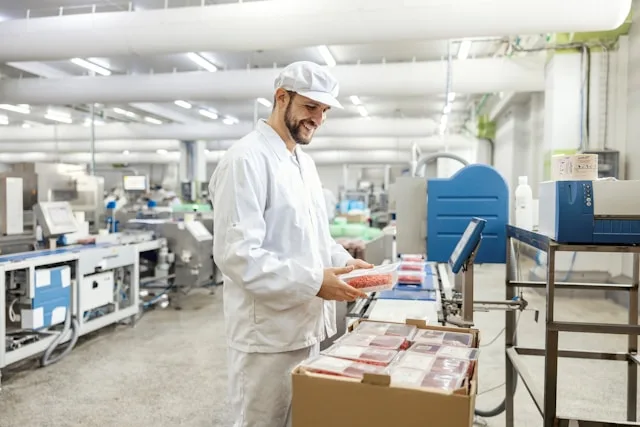
Between 2022 and 2025, the fruit, vegetable, and frozen food processors clustered around Cesena poured roughly €200 million into automated processing and packaging lines. The investment was intended to reduce dependency on manual labour, a persistent vulnerability in a sector where seasonal worker shortages have threatened production schedules for years. The strategy was rational. The outcome was not what anyone planned.
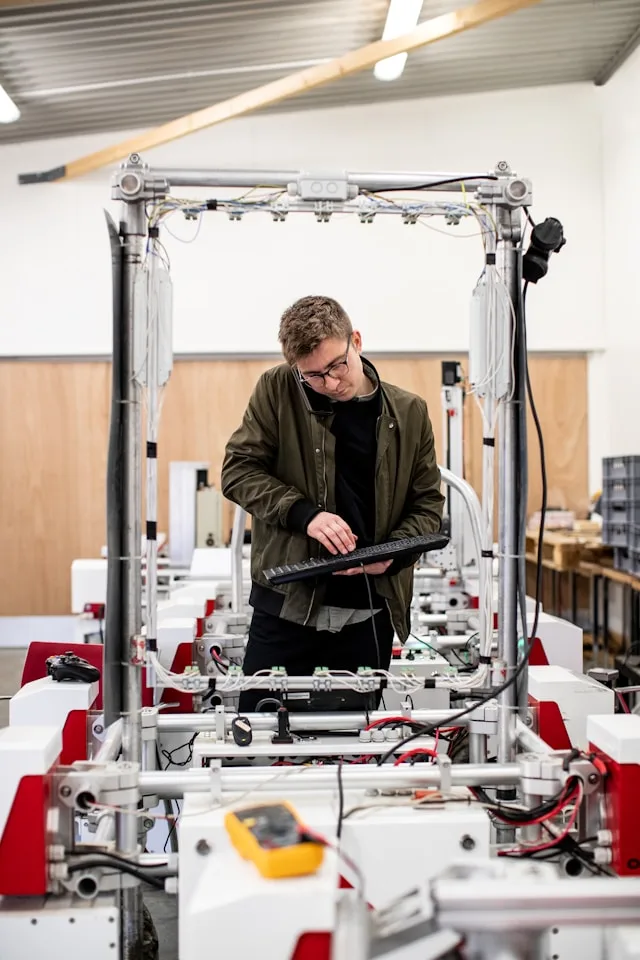
The new equipment works. Optical sorting lines, robotic packaging cells, and AI-driven quality inspection systems are operational across multiple sites in the Romagna Fruit and Vegetable District. But the mechatronics technicians required to maintain these systems, the automation engineers who programme them, and the food technologists who integrate them into production workflows are in shorter supply than the manual workers they were meant to replace. Capital moved faster than human capital could follow. The investment that was supposed to solve a labour problem created a different one, at a higher skill level and a higher salary band.
What follows is an analysis of the forces reshaping Cesena's agri-food processing sector, the employers driving that change, and what senior leaders need to understand before they make their next hiring or retention decision in one of Italy's most concentrated food production clusters.
Inside the Romagna Fruit and Vegetable District in 2026
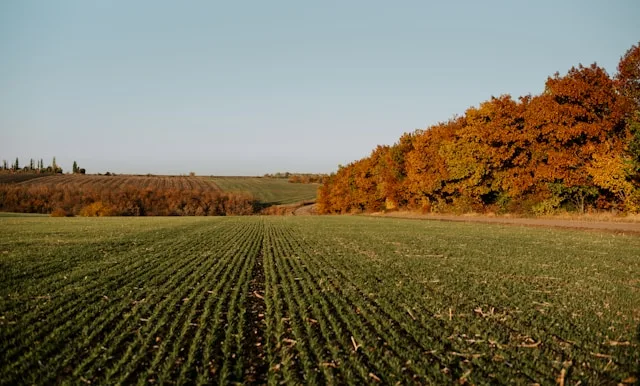
The province of Forlì-Cesena is not an obvious candidate for a hiring crisis. It is a mid-sized Italian province, anchored by agriculture and food processing, with a cost of living materially below Bologna or Milan. Yet it sits at the centre of a district that processes over a million tonnes of raw produce annually, exports 48% of its output to Germany, France, and Scandinavia, and employs approximately 8,200 direct workers in fruit, vegetable, and frozen food processing alone.
The district encompasses 3,800 specialised farms and 85 industrial processing sites spread across the provinces of Forlì-Cesena and Ravenna. The operations are diverse: blast freezing and IQF (Individually Quick Frozen) processing, fourth-range minimal processing, fresh fruit conditioning and packing, and cooperative sourcing networks that aggregate supply from thousands of small producers into export-scale volumes.
Two anchor employers define the market. Orogel S.p.A., Italy's second-largest frozen vegetable company, is headquartered in Cesena with 2023 revenues of €847 million and approximately 1,340 direct employees across three production sites in the municipality. Apofruit Italia, a cooperative headquartered on Via Dismano in Cesena, aggregates over 2,000 associated farmers and reported a 2023 turnover of €412 million, handling 220,000 tonnes of produce. Its stone fruit packing and conditioning facility is the largest in Southern Europe. Fruttagel, though headquartered in Alfonsine, maintains processing operations in the Cesena hinterland employing 420 people.
This is not a diffuse market. It is a concentrated one, and concentration intensifies both the opportunity and the vulnerability. When the district's largest employers compete for the same small pool of specialists, the effects ripple across every processor in the cluster.
The Capital-Labour Mismatch: Why €200 Million Did Not Solve the Problem
The automation investment that reshaped Cesena's processing infrastructure through 2025 followed a clear logic. Seasonal labour shortages, amplified by constraints in the Decreto Flussi quota system for non-EU workers, had left production lines understaffed during peak harvest. Coldiretti estimates a shortfall of 8,000 workers in Romagna's fruit and vegetable chain during peak season. Machines were the answer. Or so it appeared.
The substitution that created new scarcity
Orogel's €22 million upgrade to its Cesena freezing lines, completed in 2024, installed optical sorting systems and automated packaging cells. Across the broader cluster, processors claimed €47 million in Industry 4.0 tax credits during 2024 alone. According to projections from the Osservatorio Nazionale Distretti Italiani, the adoption of AI-driven sorting and robotic packaging is expected to reduce manual handling roles by 8% while increasing demand for mechatronics technicians by 22% as of 2026.
That 22% increase lands in a market where only two to three specialised training programmes in Northern Italy graduate 40 to 50 qualified engineers annually, against more than 200 regional vacancies. The training pipeline expansion has lagged automation deployment by three to four years.
This is the paradox at the heart of Cesena's agri-food sector. Capital substitution did not reduce demand for scarce technical profiles. It increased it. The roles that were supposed to disappear were low-skill and seasonal. The roles that appeared in their place are high-skill and permanent. And they are harder to fill by an order of magnitude.
What the vacancy data shows
Vacancy rates for technical roles in Cesena's food processing sector stand at 16.8%, compared to a 9.2% national average for food processing, according to Unioncamere-Excelsior's 2025 forecast data. Mechatronics maintenance positions average 4.7 months to fill. Food safety management roles average 4.2 months.
A senior food technology manager search in this market typically runs six to nine months, compared to a national average of 3.4 months for equivalent roles in food manufacturing. The time cost is not merely administrative. Each unfilled month on an automated line represents underutilised capital investment. The €22 million sorting line that cannot operate at full capacity because the technician who maintains it has not been hired is a more expensive problem than the seasonal worker shortage it was meant to fix.
Where the Scarcity Is Most Acute: Four Functions Under Pressure
The shortage is not uniform. It concentrates in four functional areas that together determine whether Cesena's processors can operate their upgraded infrastructure, comply with tightening regulation, and expand into the export markets they are targeting.
Frozen food technology and R&D
The unemployment rate for food technologists (Laureati in Tecnologie Alimentari) in Emilia-Romagna is 1.2%, according to Alma Laurea's occupational data. This is full employment by any definition. Qualified professionals in IQF technology and cryogenic freezing hold stable positions and do not respond to job advertisements. Ninety per cent of the viable candidate pool for these roles is passive. They must be identified and approached directly through targeted headhunting methods rather than conventional recruitment channels.
The challenge intensifies at the leadership level. R&D Director and Chief Innovation Officer roles, responsible for clean-label and plant-based innovation pipelines, command €95,000 to €135,000 in total compensation. Top performers at major exporters can reach €150,000 with long-term incentives. But these figures trail what Parma-based processors offer by 15 to 20%, creating a persistent gravitational pull toward competitors.
Cold chain engineering and logistics
Cold chain logistics managers with frozen food certification are a finite population in Northern Italy. Industry recruitment sources indicate that when these professionals move from Cesena-based employers to multinational competitors in Parma and Bologna, the moves command salary premiums of 20 to 25%. Cesena employers have responded with retention bonuses and vesting periods of 24 to 36 months. The fact that "golden handcuff" mechanisms are now standard in a mid-market Italian food processing cluster tells you something about the severity of the retention challenge.
With only 40 to 50 refrigeration engineers graduating from specialised programmes annually against 200-plus vacancies, the arithmetic is simple. There are not enough people. Every hire by one processor is a loss for another. The district is competing internally for a pool that is not growing fast enough.
EUDR compliance and sustainability
The implementation of the EU Corporate Sustainability Reporting Directive (CSRD) and deforestation-free supply chain regulations (EUDR) is projected to require 15 to 20% expansion in sustainability and traceability compliance roles through 2026. These are new functions. Two years ago, most Cesena processors did not have a dedicated sustainability team. Now they need one, and they need it staffed with professionals who understand supply chain due diligence, geolocation verification, and regulatory frameworks that are still being finalised.
The cost of a failed hire in these compliance roles extends beyond salary. Regulatory non-compliance carries direct financial penalties and, more critically, can block access to EU export markets that account for nearly half the district's output.
International sales and export compliance
Cesena processors aim to increase non-EU export share from 12% to 18% by 2026, targeting Middle Eastern and East Asian markets for frozen fruit and processed tomatoes, according to ICE Agenzia's export plan. This requires Export Sales Directors who combine food sector commercial experience with market-specific regulatory knowledge. These professionals are scarce enough in Milan. In Cesena, they are nearly non-existent in the active candidate pool.
The Cooperative Paradox: Lower Pay, Longer Tenure
The most counter-intuitive finding in Cesena's talent data is the relationship between compensation and retention. Cesena's cooperative ownership model, which governs Apofruit and its associated producer organisations, structurally suppresses executive compensation. Executive pay trails Parma by 15 to 20% and Bologna by 25 to 30% for equivalent roles. Cooperative statutes legally constrain profit distribution, restricting bonus pools. Equity incentive schemes, standard at shareholder corporations in Parma and Bologna, are not available.
Pure market-compensation theory predicts that this gap should produce chronic talent flight. The data says otherwise.
Average tenure at Orogel and Apofruit is 7.2 years, exceeding the 4.8-year average at comparable Parma-based processors, according to Unioncamere's personnel rotation index. The cooperatives retain their people longer despite paying them less.
The mechanism is not mysterious, but it is important. Job security in a cooperative structure is materially higher than in a shareholder corporation subject to private equity ownership cycles. Territorial embeddedness matters: professionals who grew up in Romagna, whose families farm in the district, and who value proximity to the Adriatic coast are making a lifestyle calculation that a Parma salary premium does not automatically override. Cooperative participation rights, the sense of ownership that comes with membership in a mutual enterprise, function as non-monetary compensation.
This is good news for retention. It is bad news for recruitment. The same factors that keep existing employees loyal make it extraordinarily difficult to attract external senior talent. A candidate in Bologna earning 30% more, with equity participation, working in a city with superior public infrastructure and a larger professional network, faces a proposition that Cesena's cooperatives struggle to match on paper. The hidden 80% of passive talent in this market can only be reached by articulating a value proposition that extends well beyond cash compensation.
Climate, Cost, and the Squeeze on Margins
The talent challenges described above do not exist in isolation. They operate within an economic environment that constrains the resources available to address them.
Water scarcity and raw material insecurity
Water scarcity represents an existential risk to the Cesena cluster. The Po Valley drought reduced vegetable yields by 12% in 2024, forcing processors to source raw materials from Spain and Egypt at 18 to 25% cost premiums, according to ISMEA's fruit and vegetable observatory. The Romagna district experienced a 15% reduction in irrigation availability during the 2024 growing season. Processing volumes in 2024 reached 1.1 million tonnes, a 3% decrease from 2023.
Climate volatility is projected to increase supply chain costs by €15 to 20 million annually for the Cesena cluster through 2026, according to Nomisma. These are costs that come directly off the bottom line of enterprises already operating on thin margins.
Energy costs and regulatory burden
Freezing operations consume enormous amounts of energy. Energy represents 30 to 35% of operating costs. Despite moderation from 2022 crisis peaks, industrial electricity costs for freezing operations remain 38% higher than 2021 baselines, averaging €0.185 per kilowatt hour. The EU Emissions Trading System Phase IV expansion may increase logistics costs by a further 8 to 12%, according to Confindustria's analysis of the Fit for 55 package.
The margin constraint on compensation
Net margins for frozen food processors in Italy average 3.2%, according to Federalimentare. Consolidation in Italian retail has increased private-label penetration to 42% of frozen vegetable sales, with the major chains exerting persistent downward price pressure. This margin environment limits the capacity of Cesena's processors to compete on compensation with better-capitalised employers in Parma and Bologna.
The implication for hiring leaders is direct. Cesena's processors cannot simply outbid their competitors. The strategy must be different. It must identify candidates for whom the total proposition, including lifestyle, cooperative culture, and job security, outweighs a cash compensation gap of 15 to 30%.
What Senior Hiring Leaders in This Market Need to Do Differently
The conventional approach to executive hiring in Cesena's food processing sector has been to advertise locally, tap personal networks, and wait. This method works for production line operators and logistics coordinators, where 60 to 70% of hires are sourced through active applications. It does not work for the roles that matter most.
For senior food technologists, cold chain engineers, operations directors, and the new generation of sustainability compliance leaders, the candidate pool is overwhelmingly passive. Unemployment among qualified food technologists in the region is 1.2%. Among refrigeration engineers, the ratio of vacancies to annual graduates is four to one. These professionals will not see a job posting on InfoJobs or LinkedIn. They are not looking. They need to be found, assessed, and presented with a proposition that is specific enough to justify moving.
This requires a fundamentally different search methodology. Executive search that maps the full universe of qualified candidates across Emilia-Romagna, the broader Po Valley, and potentially international markets is the only approach that reaches the 80% of viable candidates who are invisible to conventional recruitment. The speed of that search matters too. In a market where a competitor can close a cold chain engineer within weeks, a process that takes four to five months is not a slower version of the same search. It is a failed search that produces a second-choice outcome.
KiTalent's AI-enhanced direct headhunting methodology delivers interview-ready candidates within 7 to 10 days, reaching the passive specialists and senior leaders who define the operating capability of every processor in this district. With a pay-per-interview pricing model and a 96% one-year retention rate across 1,450-plus executive placements, the approach is built for markets where the traditional search playbook consistently fails.
The cooperative governance constraints that limit equity incentives make the quality of the search conversation even more important. When you cannot compete on equity, you must compete on precision: finding the specific candidates for whom Cesena's combination of cooperative stability, lifestyle quality, and district-level innovation infrastructure is genuinely more attractive than a larger pay packet in Parma. That is not a job for a job board. It is a job for a firm that understands both the compensation dynamics of the Italian food sector and the non-monetary factors that actually move senior professionals.
For organisations hiring Operations Directors, R&D Directors, Export Sales Directors, or Chief Sustainability Officers in Cesena's fruit and vegetable processing cluster, where the candidates who can fill these roles are not on any job board and the cost of a six-month vacancy is measured in underutilised capital and regulatory exposure, speak with our executive search team about how we approach this market.
Frequently Asked Questions
What is the average time to fill a senior food technology role in Cesena?
Senior Food Technology Manager positions requiring frozen vegetable formulation expertise in Cesena typically remain vacant for six to nine months, roughly double the 3.4-month national average for equivalent food manufacturing roles. The extended timeline reflects near-full employment among qualified food technologists in Emilia-Romagna, where unemployment in the specialism sits at 1.2%. KiTalent's direct headhunting approach compresses this timeline by accessing passive candidates who are not visible through conventional job advertising, delivering interview-ready shortlists within 7 to 10 days.
How does executive compensation in Cesena compare to Parma and Bologna?
Executive compensation in Cesena's food processing sector trails Parma by approximately 15 to 20% and Bologna by 25 to 30% for equivalent roles. An Operations Director overseeing multi-site freezing operations earns €110,000 to €160,000 in Cesena. However, Cesena's cooperative employers report average executive tenure of 7.2 years versus 4.8 years at Parma-based competitors, suggesting that job security, territorial embeddedness, and cooperative participation rights offset the cash compensation gap for professionals already in the market.
What impact is automation having on hiring needs in Cesena's food processing sector?
Automation investment of roughly €200 million across the Cesena cluster between 2022 and 2025 has reduced manual handling roles by approximately 8% while increasing demand for mechatronics technicians by 22%. The net effect has been to shift demand from low-skill seasonal positions toward high-skill permanent roles that are significantly harder to fill. Only 40 to 50 specialised engineers graduate from Northern Italy's training programmes annually against more than 200 regional vacancies.
What new compliance roles are emerging in Cesena's agri-food sector?
The EU Corporate Sustainability Reporting Directive and EU Deforestation Regulation are driving 15 to 20% expansion in sustainability and traceability compliance roles across Cesena's processing cluster. New functions include supply chain due diligence specialists, geolocation verification analysts, and Chief Sustainability Officers. These roles barely existed in the district two years ago, and the candidate pool for them remains extremely thin in the Romagna region.
Why is it so difficult to recruit external executives into Cesena's cooperative processors?
Cooperative governance statutes legally constrain profit distribution and prohibit the equity incentive schemes that shareholder corporations in Parma and Bologna use to attract C-suite talent. Combined with a 15 to 30% cash compensation discount, this makes the on-paper proposition difficult to match. Effective recruitment into these roles requires identifying candidates for whom cooperative stability, Romagna lifestyle, and district-level innovation infrastructure outweigh the compensation gap. This demands precision-targeted executive search rather than broad market advertising.
What are the biggest economic risks facing Cesena's food processing employers in 2026?
Three risks dominate. Water scarcity from Po Valley droughts reduced vegetable yields by 12% in 2024 and is projected to add €15 to 20 million in annual supply chain costs. Energy costs for freezing operations remain 38% above 2021 baselines. And retail consolidation has pushed private-label penetration to 42% of frozen vegetable sales, compressing net margins to an average of 3.2%. Together, these pressures limit the compensation headroom available to attract and retain senior talent.