Cesena's Mechanical Sector Is Growing Into a Workforce That No Longer Exists
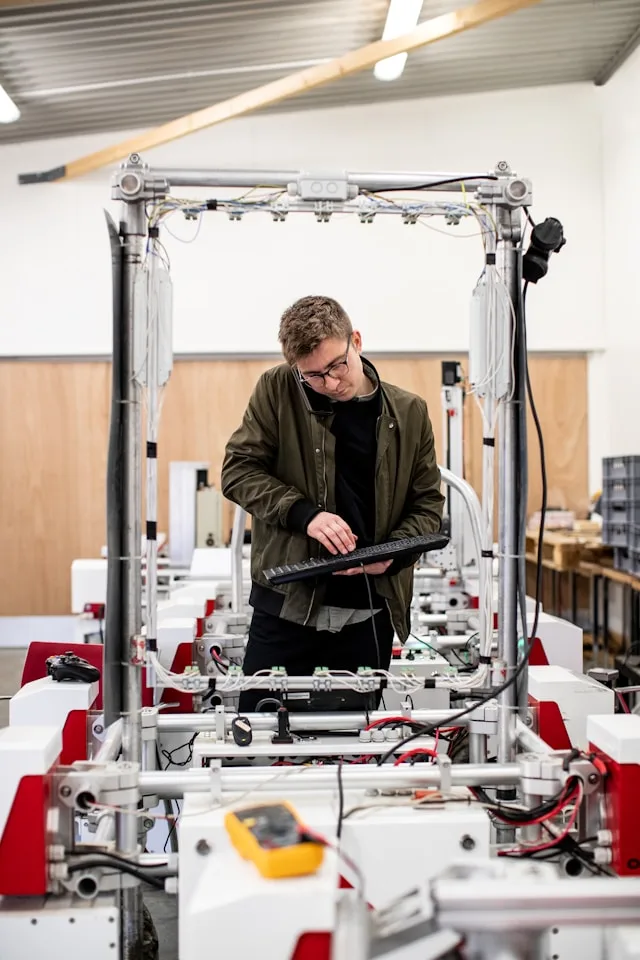
Cesena's mechanical engineering and power systems sector entered 2026 with record export order books, expanding production capacity, and a hiring problem it cannot solve with conventional methods. The contradiction is stark. Firms are investing in new testing facilities, hybrid generator technology, and automated agricultural equipment. The engineers and technicians they need to build and maintain these systems are not available locally, and the pipeline producing them is shrinking.
This is not a familiar cyclical squeeze where demand briefly outstrips supply before the market corrects. The province of Forlì-Cesena is losing its technical workforce to retirement and geographic competition simultaneously. Enrollment in mechanical trades has dropped 12% since 2019. Nearly a third of working mechanical technicians are over 55. The University of Bologna's Cesena campus produces 180 to 200 engineering graduates each year, and fewer than 40% of them stay in the province. The firms expanding fastest are competing for talent against Bologna, Modena, and Milan, all of which offer materially higher compensation and broader career trajectories.
What follows is an analysis of how this mismatch developed, why it is deepening despite visible investment, and what senior hiring leaders in this market must understand if they intend to fill the roles that determine whether Cesena's mechanical sector can execute its growth plans or simply watch them erode.
A Bimodal Industrial Base With a Single Centre of Gravity
Cesena's mechanical and manufacturing sector is not structured like the large-scale clusters in Bologna or Modena. It is bimodal. One dominant exporter, Mase Generators, anchors the market with 220 to 240 direct employees and a supply chain that feeds into more than 50 local SMEs. Around that anchor sits a constellation of 60 to 80 specialised subcontractors along the Via Emilia corridor, each employing 10 to 50 people in precision machining, turning, and milling.
The total mechanical engineering workforce in the Cesena municipality and its immediate hinterland sits between 4,800 and 5,200 individuals. That represents 14% of local industrial employment according to ISTAT's 2024 provincial data. In absolute terms this is modest. In structural terms it is the second pillar of Cesena's economy after agribusiness, and the two pillars are deeply intertwined. Approximately 65% of the province's mechanical production is exported, primarily to Germany, France, and North Africa, with a large share of the remainder supplying Emilia-Romagna's agricultural sector directly.
This integration with agribusiness is both a strength and a constraint. Firms like OMAS, which manufactures orchard and vineyard management equipment, and the precision machining SMEs that produce components for food processing lines, benefit from the region's agricultural export growth. Orders for automated sorting and packaging machinery were projected to grow 8 to 10% through 2026 according to CNA Forlì-Cesena's November 2024 forecast. But the integration means these firms need engineers who understand both mechanical systems and the specific operational demands of agricultural automation. That combination is exceptionally rare.
The sector recovered to 98% of pre-pandemic output volumes through 2024, entering a stabilisation phase. Margin compression from energy costs and electronic component supply chain delays persisted, but the fundamental demand signal remained strong. The problem is no longer whether there is enough work. It is whether there are enough people to do it.
The Expansion That Outran Its Own Workforce
Mase Generators committed publicly to expanding its Cesena headquarters workforce by 15 to 20% by 2026, a commitment reported in Il Sole 24 Ore in September 2024 alongside an interview with the company's CEO. The expansion focuses on hybrid generator technologies combining diesel and battery systems for construction and telecommunications markets. The company inaugurated a new testing facility for large-scale generating sets exceeding 1,000 kVA in mid-2024, aimed squarely at the data centre backup power market.
This investment makes strategic sense. Decentralised power generation demand is rising across Southern Europe as renewable energy grids require reliable backup systems. The construction and telecom sectors need portable hybrid power on site. Mase is well positioned to capture this demand from its Cesena base.
But a 15 to 20% workforce expansion requires finding 35 to 50 additional engineers and technicians in a province where the projected deficit is 300 to 400 skilled technicians by 2026 if current training pipelines persist. Unioncamere Excelsior's regional forecast made this projection based on retirement rates, graduation volumes, and outmigration patterns. Mase is not the only firm hiring. It is the largest firm hiring into a market where everyone else is also trying to hire, and the total annual supply of new technical talent from local institutions does not cover the aggregate demand.
The ITS Mecatronico in Forlì, which serves Cesena, produces approximately 25 to 30 mechatronics technicians per year. The University of Bologna's Cesena campus contributes 180 to 200 engineering graduates, of whom roughly 65 to 80 stay locally. The arithmetic is unforgiving. Even if every local graduate entered the mechanical sector, the numbers would fall short.
This is the core tension running through Cesena's mechanical sector in 2026. Capital investment has moved faster than human capital can follow. The firms are not wrong to expand. The order books justify it. But the execution depends on finding people who do not currently exist in sufficient numbers within commuting distance of Cesena, and who have limited financial incentive to relocate there from higher-paying markets.
The Skills Mismatch Is More Specific Than It Appears
The shortages in Cesena's mechanical sector are not uniform. Three profiles account for the most acute hiring pain, and each one presents a distinct problem.
Mechatronics Technicians: The Integrated Skill Set Nobody Has
Mechatronics positions that combine PLC programming, hydraulic systems knowledge, and mechanical maintenance remain open for 90 to 120 days on average, double the provincial vacancy average of 45 days. The issue is not a lack of applicants. SMEs report receiving applications from pure mechanical technicians and pure IT graduates. Fewer than 5% of applicants possess the integrated skill set that modern agricultural machinery maintenance and power systems assembly actually require.
This is a training design problem as much as a supply problem. Italy's vocational and university systems still largely separate mechanical engineering from software and embedded systems instruction. The market needs professionals who operate comfortably across both. The gap between what traditional hiring processes surface and what the roles actually demand becomes wider with every cycle of automation investment.
Technical Sales Engineers: Six Months and Counting
The most extreme vacancy durations belong to technical sales engineer roles. Firms seeking commercial staff with mechanical engineering qualifications and fluency in German and English report search durations exceeding six months. The pattern involves poaching from competitors at 15 to 20% salary premiums because organic applications from candidates with this triple qualification are essentially nonexistent.
The German language requirement is not arbitrary. Germany is the primary export destination for Cesena's mechanical output. A technical sales engineer who cannot conduct product discussions in German with procurement teams at German OEMs is functionally limited to secondary markets. Bilingual Italian-German engineers with technical degrees tend to gravitate toward Bologna, Munich, or Stuttgart, where compensation is materially higher and career progression faster.
Industrial Automation Engineers: Double the National Vacancy Rate
The vacancy rate for industrial automation engineers in the province's mechanical sector stands at 8.2%, compared to a 4.1% national average for engineering roles as measured by ANPAL in Q2 2024. This gap reflects both the growing demand from firms implementing Industry 4.0 systems and the limited local supply of engineers trained in industrial IoT protocols, sensor integration, and the specific PLC platforms (Siemens, Rockwell) that dominate the installed base.
Only 23% of mechanical firms in the province had implemented IoT-enabled predictive maintenance as of late 2024, lagging Bologna's 34% benchmark. This does not mean demand for automation talent is low. It means the firms that want to digitise cannot find the people to do it, and the gap between intention and execution is growing. For organisations planning technology-driven hiring strategies, this represents a market where the shortage of implementers constrains the adoption of the technology itself.
Compensation Tells the Story of a Market Under Pressure
Cesena's mechanical sector compensation tracks 5 to 8% below Bologna and 12 to 15% below Milan for equivalent roles. This discount is the structural price of a smaller market with a lower cost of living and fewer multinational employers. It becomes a strategic liability when firms need to attract talent from those higher-paying markets.
A senior mechatronics engineer with eight or more years of experience earns between €48,000 and €62,000 base annual salary in the Cesena area, rising 10 to 15% for bilingual German-Italian profiles. An R&D manager in power systems or mechanical product development commands €75,000 to €95,000 with potential for €10,000 to €15,000 in performance bonuses. At Mase Generators, senior R&D leadership for hybrid generator lines reaches upper quartile levels above €90,000 to retain talent against international competitors.
Operations directors and plant managers at SMEs with 50 to 200 employees fall in the €85,000 to €110,000 range plus company car and incentives. VP-level operations or general management roles at divisional scale reach €110,000 to €140,000 with considerable variance depending on international scope.
These figures are competitive within the Romagna subregion. They are not competitive against Bologna's 15 to 20% premiums or Modena's 25 to 30% premiums for specialised mechanical engineers. The Motor Valley cluster around Ferrari, Maserati, and Dallara pulls aggressively from the entire Emilia-Romagna talent pool, and the prestige factor compounds the financial differential. A senior engineer weighing Cesena against Modena is weighing not only a salary gap but a career narrative gap.
The dynamics of negotiation and compensation positioning in this market require precision. Cesena employers cannot simply match Bologna on salary. They must construct offers that account for lower living costs, shorter commutes, quality of life, and the specific technical challenge of the role itself. This is relationship-based recruiting, not transactional salary competition.
The Demographic Cliff and the Brain Drain Compounding It
Two forces are hollowing out Cesena's mechanical talent base simultaneously, and their interaction is worse than either one alone.
The first is demographic. The province of Forlì-Cesena faces a 0.3% annual population decline. Twenty-eight percent of the province's mechanical technicians are over 55 years old. Within a decade, nearly a third of the skilled technical workforce will have retired, and the training institutions producing replacements are shrinking rather than expanding. Enrollment in mechanical trades has fallen 12% since 2019. The ITS Mecatronico produces 25 to 30 graduates annually into a market that needs hundreds.
The second is geographic outmigration. AlmaLaurea's 2024 employment report on graduate outcomes shows that graduates of the University of Bologna's Cesena campus who stay in the province accept starting salaries 20 to 25% below what their peers earn by moving to Bologna, Milan, or Turin. For a 25-year-old engineer with student debt and ambition, the calculation is not complicated. Cesena offers stability and familiarity. Bologna offers more money, more firms, and a more diverse career path. Milan offers all of that plus international exposure.
The firms that lose these graduates are not failing to recruit them initially. Many offer internships and thesis projects. The loss happens at the point of first permanent employment, when the salary differential becomes concrete and the emotional pull of staying close to home meets the financial reality of being offered 20% more an hour away.
Here is the analytical claim that sits beneath all of this data: Cesena's mechanical sector is not facing a skills shortage. It is facing a market positioning failure. The skills exist. They are being produced in the same university system. They are walking out the door to better-paying markets because Cesena's employers have not collectively repositioned their value proposition beyond salary. The sector's stated strategic priority of digital servitisation, selling performance contracts and monitoring services rather than hardware, requires software, data analytics, and service-design talent. But executive compensation remains anchored to traditional hardware manufacturing metrics such as EBITDA based on unit production. The incentive structures have not caught up to the strategic ambition. Until they do, the talent this sector needs will continue to see better-aligned opportunities elsewhere.
What the Servitisation Ambition Demands
The sector's strategic trajectory points toward a model where firms sell uptime, maintenance contracts, and digital monitoring rather than equipment alone. This shift from hardware revenue to recurring service revenue is well-documented across European industrial manufacturing. In Cesena, it is especially relevant for Mase Generators, whose data centre backup clients value guaranteed availability over unit purchase price, and for agricultural machinery suppliers whose customers increasingly expect predictive maintenance as a standard offering.
The competencies required for this transition are materially different from those the sector has historically hired. Digital servitisation requires software engineers, data analysts, IoT platform architects, and commercial talent who can design and sell service-level agreements. These are not incremental additions to existing job descriptions. They represent a fundamentally different kind of employee.
Cesena's mechanical firms have not yet built the talent pipelines for this transition. The ITS Mecatronico curriculum is oriented toward physical systems. The university's engineering programmes produce graduates with strong theoretical foundations but limited exposure to industrial IoT commercial application. The firms that successfully navigate this shift will be those that recruit from outside the traditional mechanical engineering talent pool entirely, pulling in software professionals, commercial analysts, and service design specialists from adjacent sectors.
This is where the sector's compensation anchoring becomes a strategic bottleneck. A software engineer with IoT platform experience benchmarks their market value against technology sector salaries, not mechanical manufacturing salaries. Offering €62,000 for a senior embedded systems role when a comparable position at a Bologna-based technology firm pays €75,000 or more is not a negotiation. It is a non-starter. The firms that recognise this earliest will build the teams that execute the servitisation shift. The rest will announce the strategy and fail to staff it.
How Search Must Work Differently in This Market
The passive candidate ratios in Cesena's mechanical sector explain why conventional job advertising consistently fails. Senior automation engineers with five or more years of experience are estimated at 80 to 85% passive. Unemployment in this segment sits below 2%, and average tenure exceeds seven years. These candidates do not browse job boards. They do not respond to LinkedIn InMail from unknown recruiters. They are solving specific problems at specific firms, and they are generally well-compensated enough to be unresponsive to generic outreach.
R&D managers with power systems expertise are approximately 75% passive, with hybrid generator knowledge concentrated at Mase and a handful of competitors. Bilingual technical sales engineers are 70% passive, subject to regular approaches from firms across Northern Italy's mechanical export sector.
The hidden 80% of senior talent in this market cannot be reached through advertising. They must be identified through systematic talent mapping, approached individually with a proposition that addresses their specific career situation, and engaged through a process that respects both the candidate's current employment and the hiring firm's urgency.
A typical pattern described across 40% of mechanical SMEs surveyed in the province involves a firm advertising a production management role with Industry 4.0 competencies for four months, receiving no qualified local candidates, and ultimately promoting a junior internal technician while funding their part-time university enrolment. This is not a hiring strategy. It is the absence of one. The firm spends four months waiting for candidates who were never going to see the posting, then invests two to three years developing someone internally because the external search was structurally incapable of reaching the right people.
For organisations operating in Cesena's mechanical and power systems market, where the candidates capable of executing a hybrid technology or servitisation strategy are concentrated at a small number of firms and are not actively looking, direct headhunting with full market coverage is not a premium option. It is the baseline requirement.
KiTalent delivers interview-ready executive candidates within 7 to 10 days through AI-powered talent mapping that identifies the passive professionals conventional searches miss. With a 96% one-year retention rate across 1,450 executive placements, and a pay-per-interview model that eliminates upfront retainer risk, the approach is designed for markets exactly like this one: specialised, talent-constrained, and invisible to job boards.
For hiring leaders seeking R&D managers, automation engineers, or technical sales leadership in Cesena's mechanical sector, where the cost of a vacant role is measured in delayed product lines and lost export contracts, start a conversation with our executive search team about how we approach this market.
Frequently Asked Questions
What is the average salary for a senior mechanical engineer in Cesena?
A senior mechatronics or automation engineer with eight or more years of experience earns between €48,000 and €62,000 base annual salary in the Cesena area. Bilingual profiles with German and Italian fluency command a 10 to 15% premium. R&D managers in power systems reach €75,000 to €95,000 with performance bonuses. These figures track 5 to 8% below Bologna and 12 to 15% below Milan for equivalent roles. Compensation benchmarking requires local precision, as provincial aggregates can obscure the specific premiums attached to hybrid technology and export-oriented competencies. KiTalent provides detailed market benchmarking for firms hiring in this segment.
Why is it so hard to hire mechatronics technicians in Emilia-Romagna?
The difficulty stems from a training design problem. Italy's vocational and university systems still largely separate mechanical engineering from embedded software and IoT instruction. Modern mechatronics roles require integrated competency across PLC programming, hydraulic systems, and sensor technology. Fewer than 5% of applicants for these roles in the Forlì-Cesena province possess the combined skill set. The ITS Mecatronico in Forlì produces only 25 to 30 graduates annually, far below regional demand. Vacancy durations for mechatronics technicians run 90 to 120 days, double the provincial average.
How does Cesena compare to Bologna for mechanical engineering careers?
Bologna offers 15 to 20% salary premiums for equivalent mechanical engineering roles, access to aerospace employers like Leonardo, automotive supply chains for Lamborghini and Ducati, and a larger university ecosystem. Cesena offers lower living costs, shorter commutes, and a specialist community in power systems and agricultural machinery. The career trade-off favours Bologna for breadth and compensation, and Cesena for niche expertise and quality of life. The migration pattern reflects this: roughly 60% of Cesena campus engineering graduates leave the province for higher-paying markets.
What are the biggest risks facing Cesena's mechanical manufacturing sector in 2026?
Three risks converge. First, demographic contraction: 28% of the province's mechanical technicians are over 55, and enrolment in mechanical trades has fallen 12% since 2019. Second, geographic competition for talent from Bologna, Modena, and Milan, where compensation premiums of 15 to 30% pull engineers away. Third, EU Stage V emissions standards require costly R&D investment in cleaner or electrified systems, disproportionately burdening smaller agricultural machinery firms. Energy costs remain 35% above 2019 levels. Together these risks threaten the sector's ability to execute on strong order books.
How can Cesena manufacturers find passive engineering candidates?
Senior automation engineers and R&D managers in this market are 75 to 85% passive. They hold stable positions, earn above inflation-adjusted salaries, and do not respond to job advertisements. Reaching them requires direct identification and individual engagement through structured talent mapping, not volume advertising. KiTalent's AI-enhanced direct headhunting methodology identifies these candidates within specific firms and functional specialisms, delivering interview-ready shortlists within 7 to 10 days for organisations that cannot afford months-long vacancy cycles.
What skills will Cesena's mechanical sector need most by 2027?
The shift toward digital servitisation is rewriting requirements. Beyond traditional mechanical and power systems engineering, the sector increasingly needs IoT platform architects, data analysts for predictive maintenance systems, embedded software engineers, and commercial talent capable of designing and selling service-level agreements. Hybrid powertrain integration expertise for diesel-battery generator systems is in acute demand at firms like Mase Generators. The firms that build these capabilities first will capture the recurring revenue models that define the sector's next growth phase.