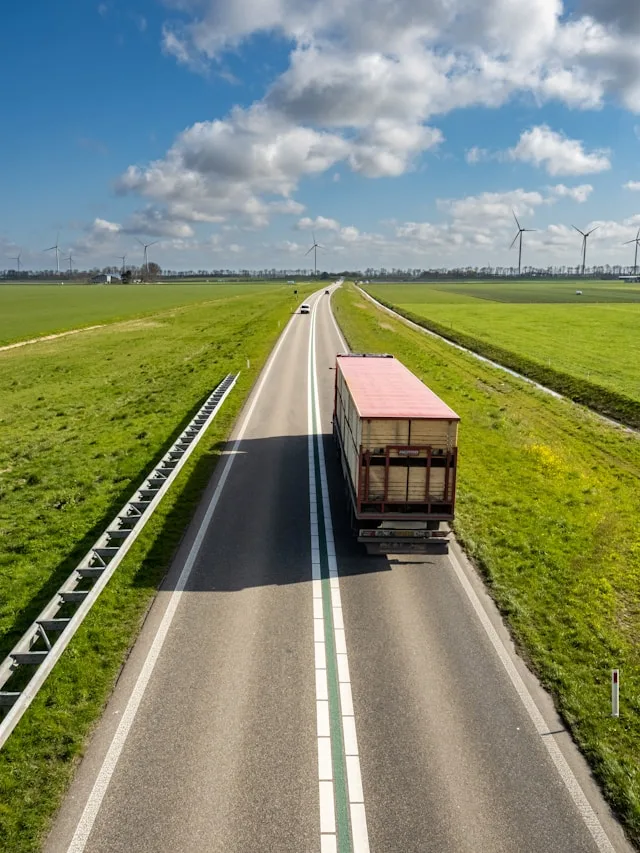
Doboj's Logistics Sector Sits on Europe's Most Strategic Freight Corridors. It Cannot Keep the People Who Run Them.
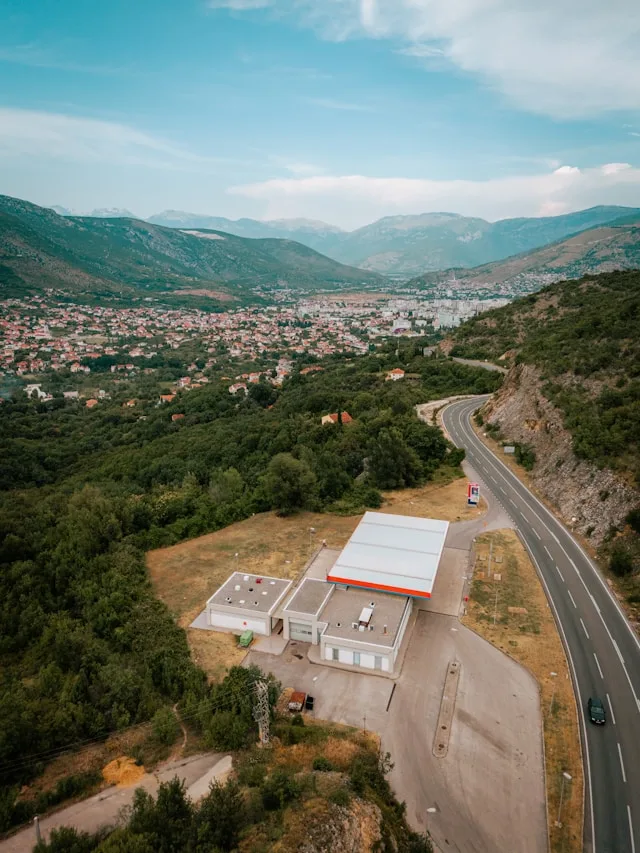
Every tonne of rail freight moving between Zagreb and Belgrade passes through Doboj. The city's classification yard, its position at the intersection of Pan-European Corridor X and the M17/E73 road corridor, and its convergence of four strategic railway lines give it infrastructure that no other city in northern Bosnia and Herzegovina can replicate. Approximately 3.2 million tonnes of freight move through the Doboj rail yard annually. The city hosts 147 registered transport and logistics firms. On paper, this is a market with embedded advantages that should command premium talent and strong wage growth.
The reality is the opposite. Doboj logistics wages run 15 to 20 percent below the national average for the sector. Customs broker vacancies take 120 to 150 days to fill. International truck drivers leave for Germany, where net wages are three to four times higher, through bilateral recruitment programmes that actively drain the local labour pool. The city processes freight worth millions of euros daily through infrastructure that averages 42 years of age, staffed by a workforce that is shrinking by 180 to 220 logistics professionals each year. Freight passes through. Value does not stay.
What follows is an analysis of why Doboj's irreplaceable infrastructure position has not translated into labour market strength, what that means for the firms that operate there, and what hiring leaders working in or recruiting for the Western Balkans logistics corridor need to understand before their next search.
The Bottleneck Economy: Why Infrastructure Dominance Is Not Labour Market Power
The conventional assumption is straightforward. A city that controls a critical chokepoint in a continental freight network should be able to attract and retain the talent needed to operate it. Doboj's position as the primary freight classification and marshalling facility between Zagreb and Belgrade on Corridor X should, in theory, create the conditions for wage growth, career progression, and a self-sustaining talent ecosystem.
That theory collapses when geographic mobility allows talent arbitrage.
Doboj's infrastructure advantage is fixed. The rail yard cannot move. The corridor intersection cannot relocate. But the customs brokers, operations directors, and international drivers who make that infrastructure function are not fixed. They respond to wage signals from Zagreb, Ljubljana, and the German Federal Employment Agency. The result is what the data describes as a bottleneck economy: a place where freight concentrates due to geography but where the economic value of moving that freight accrues to labour markets elsewhere.
This is the original analytical tension at the centre of this article. Doboj's strategic geography should be a source of labour market leverage. Instead, it functions as a subsidy to competing markets. Every driver trained in Doboj who moves to Germany for a three-to-one wage premium takes operational knowledge of Corridor X with them. Every customs broker who relocates to Sarajevo for a 20 percent raise carries dual-entity clearance expertise that took years to develop. The infrastructure stays. The knowledge walks.
For hiring leaders operating in this market, the implication is direct. You are not competing with other Doboj employers. You are competing with every accessible labour market in the EU pre-accession zone, and the gap is widening as Bosnia and Herzegovina's EU candidate status progressively opens mobility rights for exactly the professionals you need most.
The Three Shortages Defining Doboj's Logistics Labour Market
Customs Brokers: A 150-Day Search in a 23-Broker Market
The Doboj Customs Office processed approximately 18,500 customs declarations in 2023. It did so with a pool of just 23 customs brokers spread across five private agencies and the public sector. That ratio alone signals chronic understaffing. But the more revealing figure is the time required to replace one of those brokers when they leave.
Typical time-to-fill for a certified customs broker position in Doboj runs 120 to 150 days. In Sarajevo, the equivalent is 45 to 60 days. The gap reflects a market where 80 to 85 percent of qualified brokers are already employed and not actively looking. An estimated 3.2 percent unemployment rate among certified brokers, set against 12.8 percent general unemployment in the broader transport sector, confirms this as a predominantly passive candidate market.
Small freight forwarding firms of 5 to 15 employees report a pattern that has become normalised: broker positions sit vacant for four to six months, during which managing directors personally handle customs documentation. This is not a temporary inconvenience. It is a structural deformation of how these businesses operate. The managing director spends half the working day on paperwork that a BAM 2,500 per month employee should be handling. Growth stalls. New contracts are declined.
The problem compounds because Doboj sits near the Inter-Entity Boundary Line between Republika Srpska and the Federation of BiH. Despite single state-level VAT administration, customs clearance for goods crossing this line still requires duplicate documentation checks, adding four to six hours to transit times. A broker who can handle both entity frameworks is worth materially more than one who cannot. And those dual-entity specialists are the scarcest of an already scarce group.
International Truck Drivers: A Vacancy That Fills in Germany Before It Fills in Doboj
The driver shortage operates on different mechanics. Unlike brokers, drivers do appear in the active candidate pool for domestic routes. Entry-level positions servicing local distribution can be filled. The crisis sits at the international tier: drivers holding EU digital tachograph cards and clean international licences.
These professionals operate as passive candidates. Seventy percent of their placements occur through informal networks and word-of-mouth rather than formal applications. The remaining 30 percent are contested by employers offering 25 to 30 percent salary premiums above standard wages to retain drivers with EU corridor experience.
But even those premiums cannot compete with Germany. The German Federal Employment Agency recruits BiH truck drivers through bilateral agreements, offering net wages of €2,800 to €3,200 monthly. The equivalent in Doboj is €900 to €1,100. That is a differential of roughly three to one. An 85 to 90 percent turnover intention among drivers under age 35 is the predictable result.
The vacancy period for an international driver in Doboj typically extends to 90 days. In practice, many positions are not filled at all. The firm adjusts by running fewer international routes, subcontracting to Croatian operators at higher cost, or simply declining contracts. Each of these responses erodes competitive position further.
Supply Chain Compliance Specialists: The Role That Does Not Exist Yet
The third shortage is the most structurally concerning because it involves roles that firms need but have largely stopped trying to fill. Positions requiring expertise in EU REACH regulations, Authorised Economic Operator certification, and C-TPAT security standards show vacancy rates exceeding eight months. Rather than continue searching, firms typically restructure to combine these functions under finance directors who lack the specialist knowledge the role demands.
This is not adaptation. It is atrophy. The finance director handling compliance paperwork is not performing compliance. They are performing documentation. The distinction matters enormously as Bosnia and Herzegovina moves toward EU regulatory alignment, where the consequences of non-compliance escalate from administrative friction to market access denial.
The root cause sits in the education system. Doboj maintains technical secondary education infrastructure producing logistics-adjacent graduates, yet employers report that 65 percent of vacancies require EU-specific regulatory knowledge not taught in local curricula. Youth unemployment in the sector runs at 28 percent. Acute shortages of experienced professionals coexist with an oversupply of graduates whose qualifications do not match what the market needs. This is not a volume problem. It is a curriculum problem, and it will not resolve within a single hiring cycle.
Compensation: The Structural Ceiling That Drives Emigration
The compensation data for Doboj's logistics sector tells a story of systematic undervaluation relative to the infrastructure's economic importance.
A senior logistics manager in Doboj earns BAM 2,000 to BAM 3,200 monthly, equivalent to €1,020 to €1,635. That sits 18 to 22 percent below equivalent roles in Sarajevo. An operations director or logistics VP earns BAM 4,500 to BAM 6,500 monthly, roughly €2,300 to €3,320, with performance bonuses tied to fleet utilisation rates.
The one segment where compensation breaks above these ceilings is telling. Executives with German fluency and experience managing EU-corridor operations command premiums of 35 to 40 percent above base ranges. This premium does not reflect luxury. It reflects desperation. These are the professionals who can interface with Doboj's primary trading partners and manage the regulatory requirements of cross-border freight. Their scarcity gives them pricing power that the broader market does not share.
For context, Zagreb offers customs brokers and operations managers 3.5 to 4 times Doboj compensation. Ljubljana targets senior supply chain executives with differentials of 5 to 6 times. The Croatian government has simplified work permit procedures for Western Balkan nationals, making the move from Doboj to Zagreb an administrative formality rather than an immigration challenge.
When a senior operations director in Doboj could earn five times their current salary by relocating 350 kilometres northwest to Ljubljana, the question is not why talent leaves. The question is why any of it stays. The answer, typically, involves family ties, property ownership, and a calculation that the cost of living differential partially offsets the wage gap. But that calculation erodes with each year of EU regulatory alignment, as the proposition required to retain senior talent shifts from livable to inadequate.
The 2026 Infrastructure Gamble
Doboj's 2026 trajectory hinges on two infrastructure projects that will either relieve or deepen the bottleneck.
The Doboj-[Banja Luka](/banja-luka-bosnia-and-herzegovina-executive-search) Railway Rehabilitation
The €85 million rehabilitation of the Doboj-Banja Luka railway section, funded by the European Bank for Reconstruction and Development and the Western Balkans Investment Framework, was originally scheduled for completion in 2024. It now targets 2026 to 2027 for full operational capacity. The project promises double-track segments and modernised signalling that could increase freight capacity by 40 percent.
If completed on schedule, this investment would materially change the talent equation. Higher throughput means more freight revenue concentrated in Doboj. More revenue creates headroom for higher wages. Higher wages slow the emigration drain. The virtuous cycle is plausible.
But the project is already two years behind its original timeline. The rail junction currently relies on signalling infrastructure averaging 42 years of age, with failure rates increasing 15 percent annually since 2020. A major signalling failure would paralyse north-south Corridor X freight for 48 to 72 hours, affecting an estimated €8 to €12 million in daily trade value. The gap between the promise of modernisation and the reality of aging systems is where operational risk concentrates.
The Doboj Bypass and Its Double-Edged Effect
Completion of the Doboj Bypass on Corridor Vc by late 2026 is projected to divert 35 percent of current M17 truck traffic around the city centre. For urban quality of life, this is unambiguously positive. For the local logistics labour market, it cuts both ways.
Through-traffic efficiency improves. Transit times drop. But short-haul distribution employment tied to the current urban routing pattern could decline. The bypass removes the friction that created certain categories of local logistics work. Firms positioned to benefit from improved throughput will grow. Firms dependent on the inefficiencies of the current system will not.
For hiring leaders, the bypass creates a skills transition. The roles that grow are those managing higher-volume, higher-efficiency operations. The roles that shrink are those built around manual workarounds for infrastructure limitations. Organisations that have not begun planning for this transition will find themselves restructuring under pressure rather than by design.
EU Candidate Status: The Compliance Cliff Approaching in 2026
Bosnia and Herzegovina's EU candidate status, granted in December 2022, is driving regulatory harmonisation that will fundamentally reshape which firms survive in Doboj's logistics market.
Implementation of EU Mobility Package regulations, particularly driving time enforcement and cabotage rules, is expected to increase operational costs for Doboj-based hauliers by 8 to 12 percent. More consequentially, compliance with Euro VI emission standards will disqualify approximately 30 percent of the current aging truck fleet from EU market access. Doboj-based hauliers operate fleets averaging 14.7 years of age. The EU average is 7.2 years.
Fleet renewal requires investment of €80,000 to €120,000 per tractor unit. For the 68 percent of Doboj's 147 logistics firms classified as micro-enterprises with fewer than 10 employees, this represents an existential capital requirement. The Transport Community Permanent Secretariat's fleet analysis projects that 40 to 50 percent of micro-hauliers currently operating will be unable to make this investment and will exit the market.
This consolidation carries a paradoxical talent implication. Fewer firms means fewer employers competing for the same constrained talent pool. Surviving firms, those with the capital to renew fleets and meet EU standards, will absorb some of the displaced workforce. But the workers they need are not the same workers who are being displaced. The micro-haulier owner-operator driving a 15-year-old truck on domestic routes does not become an EU compliance specialist through consolidation. The skills gap deepens even as the headcount gap temporarily narrows.
Regulatory fragmentation within Bosnia and Herzegovina compounds the challenge. Entity-level vehicle registration, driver's licence reciprocity disputes between Republika Srpska and the Federation of BiH, and separate railway operators create administrative costs equivalent to 3.5 percent of logistics revenues for Doboj-based firms. These are costs that Sarajevo-based competitors share and Zagreb-based competitors do not face at all. The cost of a bad hire in this environment is amplified by the regulatory complexity that any new employee must master.
What This Means for Hiring Leaders in Western Balkans Logistics
The Doboj market presents a specific and unusual challenge for organisations that need to hire logistics leadership. The talent exists. It is identifiable. But it is either already employed and passive, already gone to an EU market, or qualified on paper but missing the EU regulatory layer that makes the qualification functional.
A conventional job posting or inbound application strategy reaches, at best, the 15 to 20 percent of customs brokers and international drivers who are actively looking. In a market where 80 to 85 percent of certified brokers are passive and 70 percent of international driver placements happen through word-of-mouth, this approach guarantees a four-to-six-month vacancy at minimum.
The search methodology that works in this market is direct. It requires mapping the 23 active customs brokers in Doboj by name, understanding their entity-clearance capabilities, assessing which ones hold the dual-framework expertise that commands a premium, and approaching them with a proposition specific enough to justify the disruption of moving. For operations directors and compliance specialists, the search extends to Sarajevo, Banja Luka, and the BiH diaspora in Zagreb and Ljubljana, where returnee candidates with EU experience represent the highest-value targets.
KiTalent's approach to executive search in industrial and manufacturing logistics markets is built for exactly this dynamic: markets where the visible candidate pool is inadequate and the real talent must be identified through systematic talent mapping before any approach is made. With interview-ready candidates delivered within 7 to 10 days and a pay-per-interview model that eliminates upfront retainer risk, the method matches the urgency of a market where every month of vacancy erodes competitive position.
For organisations hiring across the Western Balkans logistics corridor, where the candidate you need is passive, the regulatory requirements are shifting beneath you, and the compensation gap with EU markets widens each quarter, start a conversation with our search team about how we identify and engage the professionals this market cannot surface through conventional channels.
Frequently Asked Questions
Why is it so difficult to hire customs brokers in Doboj?
Doboj's customs broker market is extremely constrained. Just 23 certified brokers service a customs office that processed 18,500 declarations in 2023. Unemployment among certified brokers sits at 3.2 percent, meaning 80 to 85 percent of qualified professionals are currently employed and not actively seeking new roles. Time-to-fill for broker positions runs 120 to 150 days, more than double the 45 to 60 day average in Sarajevo. The additional requirement for dual-entity clearance expertise, covering both Republika Srpska and Federation of BiH frameworks, further narrows the qualified pool. Direct headhunting methods that identify and approach passive candidates individually are typically the only effective recruitment strategy.
What do logistics executives earn in Doboj compared to other Balkan cities?
A senior logistics manager in Doboj earns approximately €1,020 to €1,635 monthly, sitting 18 to 22 percent below equivalent roles in Sarajevo. Operations directors earn €2,300 to €3,320 monthly. By contrast, Zagreb offers 3.5 to 4 times Doboj compensation for comparable roles, and Ljubljana offers 5 to 6 times. Executives with German fluency and EU corridor management experience command 35 to 40 percent premiums above Doboj base ranges, reflecting extreme scarcity in this specific profile.
How will EU candidate status affect Bosnia's logistics workforce?
EU regulatory harmonisation is increasing operational costs for Bosnian hauliers by 8 to 12 percent through Mobility Package compliance. More critically, Euro VI emission standards will disqualify approximately 30 percent of Doboj's current truck fleet from EU market access. Fleet renewal costs of €80,000 to €120,000 per unit will likely eliminate 40 to 50 percent of micro-hauliers. Surviving firms will need compliance specialists and operators with EU regulatory knowledge, deepening existing skill shortages even as the number of competing employers declines.
Why does Doboj lose logistics talent to EU countries despite its infrastructure advantages?
Doboj's infrastructure position is geographically fixed, but its workforce is not. Germany offers truck drivers net wages of €2,800 to €3,200 monthly versus €900 to €1,100 in Doboj. Simplified work permits for Western Balkan nationals remove administrative barriers. The result is an annual net outflow of 180 to 220 logistics sector workers from Doboj. Infrastructure dominance does not create labour market power when competing markets can offer three to six times higher compensation with minimal relocation friction.
How should companies approach hiring for logistics roles in Doboj?
The critical distinction in Doboj is between the visible and the actual candidate market. Job postings reach at most 15 to 20 percent of qualified professionals. Customs brokers, international drivers with EU tachograph cards, and senior operations managers are overwhelmingly passive candidates who respond only to direct approaches. Effective hiring requires mapping the specific talent pool by name, understanding each candidate's entity-clearance qualifications and EU regulatory capabilities, and making targeted approaches with compensation and career propositions calibrated to compete with offers from Zagreb, Ljubljana, and beyond. KiTalent delivers interview-ready candidates within 7 to 10 days using AI-enhanced talent mapping designed for precisely these constrained markets.
What infrastructure changes could improve Doboj's logistics talent market by 2027?
Two projects carry the most potential. The €85 million Doboj-Banja Luka railway rehabilitation, now targeting 2026 to 2027 completion, would increase freight capacity by 40 percent through double-track segments and modernised signalling. The Doboj Bypass on Corridor Vc, projected for late 2026, would divert 35 percent of M17 truck traffic around the city centre, improving throughput efficiency. Both projects could create conditions for higher freight revenues and, consequently, wage growth that slows emigration. However, both are subject to delays that have already pushed original timelines by two years.