Jahorina's Mountain Tourism Boom Has a Problem No Job Board Can Solve
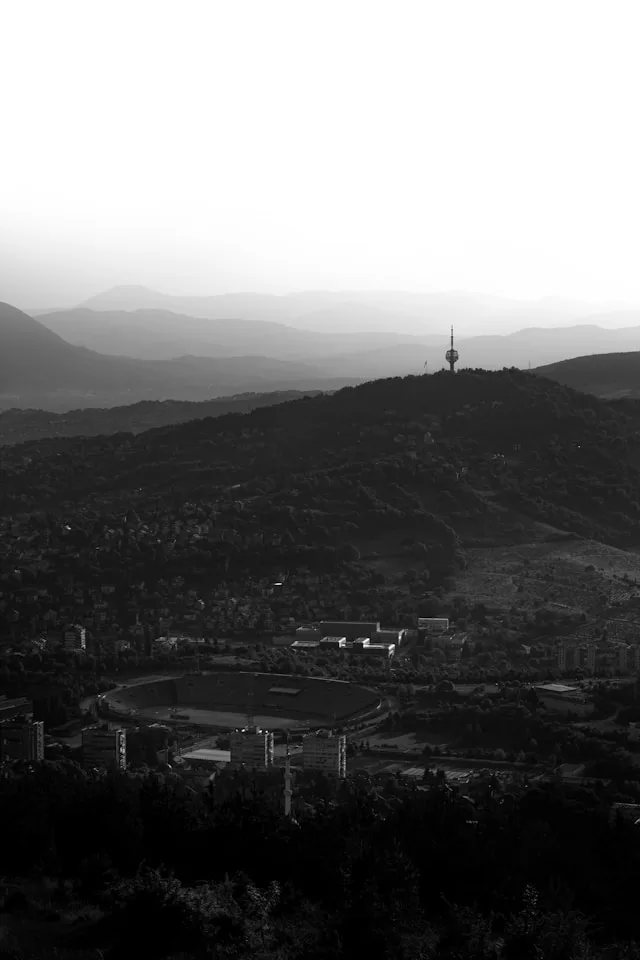
East Sarajevo's Jahorina ski resort added 500 beds, a €4.2 million wellness centre, and €1.8 million in new apartment inventory between late 2024 and early 2025. Private operators poured capital into the mountain. The physical infrastructure grew. The workforce did not keep pace. As of early 2026, the resort's most critical technical and leadership positions remain chronically understaffed, not because candidates are unavailable in the region, but because the candidates this market needs hold certifications and experience profiles that barely exist within Bosnia and Herzegovina's borders.
The contradiction at the heart of Jahorina's talent market is striking. Republika Srpska carries a headline unemployment rate of 15.8%. The RS Employment Service registers three to four active job seekers for every advertised seasonal hospitality position. Yet 18% of technical and managerial roles on the mountain go unfilled. The problem is not a shortage of people. It is a shortage of the right people: lift maintenance engineers with EU certification, mountain safety coordinators with ISPA credentials, multilingual resort general managers who can run a €5 million operation through a compressed 18-week season and then pivot to summer programming. The workers on the unemployment register and the workers these employers need occupy entirely different labour markets that happen to share the same postcode.
What follows is a ground-level analysis of East Sarajevo's mountain tourism economy in 2026: why the investment is accelerating, where the talent gaps are deepest, what structural forces make them so difficult to close, and what organisations operating in this market must do differently to find and secure the leaders and specialists who will determine whether the investment pays off.
The Monopsony That Shapes Everything
To understand hiring on Jahorina, you first need to understand the mountain's unusual economic architecture. Unlike comparable Alpine resorts where multiple lift operators compete, Jahorina's tourism economy revolves around a single anchor: Olympic Center Jahorina. OCJ is a publicly owned entity with private management concessions. It controls 100% of primary lift infrastructure, all 13 lift systems, all 25 kilometres of marked runs, and all slope grooming operations.
How One Entity Sets the Ceiling for an Entire Market
This creates a monopsony dynamic that ripples through the entire private sector. Hotels, apartment operators, restaurants, and ski schools depend on OCJ's capital expenditure decisions for slope accessibility. When OCJ deferred replacement of the Poljice 1 and 2 lifts to 2026 due to budget constraints, it was not just a maintenance delay. It was a capacity constraint that limited uphill throughput by 30% compared to modern detachable systems, directly suppressing the skier visits that private hospitality operators need to fill their beds.
OCJ employs 180 year-round staff and 450 seasonal workers. Its revenue in 2024 was approximately €8.5 million from lift tickets and equipment rental. The entity's Strategic Plan for 2024 to 2027 acknowledges that four of its eight primary lifts exceed 30 years of operational age. Spare parts procurement from Austrian and Italian manufacturers requires 12 to 16 week lead times. The RS Ministry of Trade and Tourism has allocated €8.5 million in budget funds for OCJ infrastructure in 2026, targeting the Poljice lift replacement and snowmaking expansion to cover 65% of slopes, up from 40%.
What This Means for Private Operators
The private sector, which contributes approximately 70% of total sector employment, builds around OCJ's decisions rather than independently of them. Hotel Termag, the largest private hospitality employer with 85 year-round and 120 seasonal staff, completed a €4.2 million wellness expansion. Vučko Mountain Resort invested €1.8 million in apartment inventory. Hotel Bistrica plans to expand from 40 to 120 rooms. These investments assume lift capacity will catch up. If it does not, the beds will exist without the skier throughput to fill them consistently. Every hiring decision a private operator makes carries this embedded dependency on a single public entity's budget cycle.
That dependency would matter less if the workforce were abundant. It is not.
Where the Talent Gaps Are Deepest
The seasonal employment base on Jahorina reached 2,800 full-time equivalent positions in February 2025. Projections for winter 2026/2027 call for 3,200, a 14% increase driven by new bed capacity. The demand is clear. The supply picture is far more complicated.
The Mountain Safety Deficit
The most acute shortage involves certified mountain safety and ski patrol personnel. The RS Employment Service registers only 12 certified mountain rescuers available for employment across the entire entity, against estimated demand of 45 to 50 positions for Jahorina and the neighbouring Igman and Bjelašnica complexes. This is not a competitive hiring challenge. It is an arithmetic impossibility. The qualified candidates do not exist in sufficient numbers within the country.
Hotel Termag and Vučko Resort have both maintained open positions for Mountain Safety Coordinator roles since October 2024. These roles offer premiums of 40 to 50% above standard security personnel wages. They have been advertised continuously through the RS Employment Service portal and specialised alpine sports forums. As of early 2025, they remained unfilled. The hidden 80% of passive talent that job postings never reach is relevant here, but the deeper problem is that even within the passive pool, the absolute number of holders of ISPA or equivalent alpine rescue certifications in Bosnia and Herzegovina can be counted on two hands.
Lift Engineers: A Zero-Unemployment Micro-Specialty
Modern detachable chairlifts and gondola systems require technicians certified under EU Machinery Directive 2006/42/EC or Austrian TÜV standards. East Sarajevo Polytechnic produces mechanical engineers, but without specific aerial lift certifications that require 12 to 18 months of additional training in Austria or Italy. Unemployment in this micro-specialty is effectively zero.
According to industry sources cited in Biznis.ba, OCJ recruited a lead maintenance engineer from Kopaonik Ski Resort in Serbia in September 2024, offering a relocation package and a salary premium of approximately 25% above Kopaonik market rates. The estimated package was €2,800 per month versus €2,200 at Kopaonik. That single recruitment triggered a regional bidding war. Kopaonik's operator had to recruit replacement staff from Bulgaria, and the three qualified Serbian nationals with Doppelmayr certification became targets for multiple operators simultaneously.
This is the reality of executive recruiting in a market where traditional methods fail. When the total qualified candidate pool for a critical role numbers in the single digits across an entire region, job advertising is not a strategy. It is a gesture.
Multilingual Hospitality Leaders
The third major gap sits at the management level. General managers and revenue managers fluent in German, English, and regional languages face average vacancy durations of 90 to 120 days. The average time-to-fill for executive hospitality positions on Jahorina is 4.5 months, more than double what most private operators budget for. The candidates who hold these profiles are overwhelmingly employed. The ratio of active to passive candidates for Director of Revenue positions is approximately 1:8, according to HRS BiH's Recruitment Difficulty Index.
These three shortages are not independent problems. They compound each other in ways that make the whole picture worse than the sum of its parts.
The Stepping-Stone Effect: Why Jahorina Trains Talent for Other Markets
Here is the analytical claim that the raw data alone does not make explicit, but that becomes visible when you connect the compensation differentials, the certification pathways, and the turnover figures.
Jahorina is not just competing for talent. It is subsidising its competitors' talent pipelines.
The pattern works like this. A mechanical engineer from East Sarajevo Polytechnic joins OCJ's technical team. Over two to three seasons, they gain hands-on experience with Doppelmayr systems and earn or work toward TÜV certification. Once certified, they are qualified for positions in Austria and Germany paying €4,500 to €6,000 per month, roughly double their Jahorina salary. They leave. OCJ's technical departments experience 35% annual turnover, not because conditions are poor, but because the certification pathway Jahorina provides is the exact credential that unlocks access to Alpine markets where compensation is structurally unreachable for Bosnian operators.
The same dynamic plays out with mountain guides. The 15 to 20 individuals in BiH holding UIAGM/IFMGA certification maintain 90% or higher employment rates year-round. They transition between heli-skiing operations in Georgia and Kyrgyzstan during winter and alpine guiding in Switzerland and Austria during summer. Jahorina is one stop on a global circuit, not a destination career. Public job postings for these roles generate negligible qualified applicants. Recruitment occurs exclusively through professional networks and direct headhunting.
This creates a structural problem that compensation alone cannot solve. Jahorina operators can raise wages, and they have. Executive compensation for resort management roles grew 12 to 15% annually through 2024, far outpacing the 4.2% aggregate hospitality wage growth reported by the BiH Central Bank. But raising a salary from €2,800 to €3,200 does not close a gap with Austrian employers paying €5,500. The stepping-stone dynamic means Jahorina must recruit, train, and replace its most critical technical staff on a recurring cycle. The organisations that understand this and plan for it will outperform those that treat each departure as a surprise.
Seasonality as a Structural Constraint on Talent Retention
The 18 to 20 week operational window is not merely a revenue challenge. It is the single largest barrier to building and retaining a skilled workforce.
Jahorina's tourism intensity ratio, the peak month divided by the arithmetic mean across 12 months, stands at 8.5 to 1. Comparable Alpine resorts like Kranjska Gora and Schladming operate at 3.2 to 1. This means Jahorina's demand spike is more than two and a half times as concentrated as its competitors'. Seventy-eight percent of annual hotel revenues fall between December and March.
The Off-Season Migration Pattern
RS labour law permits fixed-term contracts for seasonal work up to 10 months but requires permanent status for workers employed continuously for 24 months or more. This creates a specific disincentive. Operators avoid retaining mid-level managers year-round because permanent contracts carry obligations that a four-month revenue window cannot support. The result is that the counteroffer dynamics familiar in year-round industries take a different form here. A Jahorina hospitality manager finishing the winter season does not weigh one offer against another. They weigh eight months of underemployment on the mountain against a summer contract in coastal Croatia.
The numbers make the calculation straightforward. Croatian Adriatic resort wages for summer 2024 reached €1,400 to €1,600 per month for service staff. Jahorina winter rates sat at €900 to €1,100. The migration to Split, Dubrovnik, and Istria during Jahorina's off-season is not disloyalty. It is economic rationality.
The Diversification Gamble
The "Jahorina Summer" initiative aims to increase non-winter revenues from 22% to 35% of annual totals by 2027. Mountain biking infrastructure expansion with 35 kilometres of planned trails and Hotel Termag's 400-delegate congress centre represent the primary vectors. Yet despite €25 million in combined public and private investment between 2020 and 2024, the seasonality coefficient has improved only marginally, from 9.2 to 1 down to 8.5 to 1.
This contradicts the standard tourism development assumption that infrastructure diversification automatically generates proportional demand smoothing. In a secondary mountain market like Jahorina, cultural perceptions and transportation logistics, particularly Sarajevo Airport's winter scheduling limitations, may constrain year-round utilisation more than physical capacity does. Building conference facilities does not create conference demand. That requires commercial leadership, international sales networks, and the kind of revenue management expertise that takes four and a half months to recruit on this mountain.
The organisations that crack the year-round problem will be the ones that attract and retain the senior commercial talent capable of building non-winter revenue streams. The organisations that cannot find that talent will remain locked in the seasonal cycle regardless of how much they invest in physical infrastructure.
Compensation: What Jahorina Pays and Why It Is Not Enough
Understanding Jahorina's compensation structure requires recognising that it operates across three distinct competitive frames simultaneously: the local East Sarajevo market, the regional Balkan ski resort market, and the Western European Alpine market.
A Hotel Operations Manager with five to eight years of experience earns €1,800 to €2,400 per month base salary, plus seasonal performance bonuses of 20 to 30%. A Resort General Manager overseeing 150-plus staff and €5 million or more in revenue commands €3,500 to €5,000 per month with profit-sharing arrangements. These figures represent 15 to 20% premiums over equivalent Sarajevo city hospitality roles, reflecting seasonal intensity and what the market describes as an isolation premium.
For technical roles, the picture is sharper. A Lift Maintenance Supervisor with TÜV certification earns €2,200 to €2,800. A Technical Director managing OCJ's €50 million asset base and 40 technical staff earns €4,000 to €5,500, the highest-paid technical role in the region. Revenue managers earn €1,500 to €2,000 at the specialist level and €3,000 to €4,200 at executive level, with material variation based on foreign language proficiency and international online travel agency experience.
Against Sarajevo, these premiums are competitive. Against Kopaonik, they are roughly equivalent, though Kopaonik's EU candidate country status gives its technicians easier onward mobility. Against Austria and Germany, they are not in the same conversation. The €4,000 to €5,500 ceiling for Jahorina's most senior technical role is the entry point for equivalent positions in the Alps.
This three-way competitive frame means Jahorina can attract candidates from within BiH and from certain regional markets. It cannot retain them once they accumulate the certifications and experience that make them attractive to Western European employers. Compensation benchmarking for this market must account not only for what competitors pay today, but for what the candidate's next employer, two moves from now, will pay.
What Climate and Geopolitics Do to Workforce Planning
Two external risk factors complicate every hiring and investment decision on Jahorina, and both have materialised in recent seasons.
The 2023/2024 season saw a 23-day delay in natural snow opening due to temperatures 3°C above 20-year averages. Early-season revenue fell by 35%. Snowmaking currently covers 40% of slopes. The 2026 expansion to 65% will help, but snowmaking consumes 45% of OCJ's annual energy budget. BiH imports 25% of its electricity. Price volatility in energy markets directly compresses operating margins in a way that resort operators in Austria, with more diversified energy grids and hedging capacity, do not face to the same degree.
The geopolitical dimension is equally concrete. Russian and Ukrainian tourist segments historically represented 15 to 20% of Jahorina's visitors. The 2022 to 2023 period saw a 40% decline in these markets. Croatian and Serbian domestic growth partially offset the loss, but partial replacement of a fifth of your customer base is not recovery. It is structural adjustment. When your visitor mix shifts, your staffing needs shift with it. German-speaking guests require German-speaking staff. The same MICE programming that appeals to Sarajevo corporate clients requires different expertise than the individual leisure market that Russian visitors represented.
These risks do not make Jahorina uninvestable. They make it a market where leadership quality matters disproportionately. A resort general manager who can navigate climate-adjusted revenue planning, manage energy cost volatility, and rebuild visitor segments after geopolitical disruption is not a commodity hire. They are an executive whose profile barely exists in the Western Balkans talent pool.
Why Conventional Search Methods Fail in This Market
The structural characteristics of Jahorina's talent market create conditions where conventional recruitment is fundamentally inadequate for critical roles.
For front-line seasonal positions, the system works. The RS Employment Service registers sufficient active candidates. Three to four job seekers apply for every advertised hospitality position. For the roles that determine whether the mountain's €20-plus million in recent investment generates returns, the system produces nothing.
Consider the maths. Twelve certified mountain rescuers are registered as available across all of Republika Srpska. Forty-five to 50 positions need filling across Jahorina and neighbouring resorts. Job advertising reaches active candidates by definition. In a market where the qualified pool is 90% or more passively employed, a job posting is visible to perhaps 10% of the people you need. For lift engineers with EU certification, unemployment is zero. The posting reaches nobody.
The Jahorina Tourism Cluster, formalised in 2023, coordinates 34 private sector entities for joint marketing and workforce development. This is useful for aggregate seasonal hiring. It does not solve the problem of finding a Technical Director who holds Doppelmayr certification, speaks German, and is willing to manage a €50 million asset base in a market where the season runs 18 weeks and the nearest international airport has limited winter scheduling.
For organisations hiring into these roles, the method must match the market. Passive candidate identification through AI-powered talent mapping and direct approach is not a premium service in this context. It is the only service that reaches the candidates who exist. When your total addressable talent pool for a role numbers 15 to 20 people globally, and all of them are employed, the question is not whether to post and wait. The question is whether your search partner can identify and engage those 15 to 20 people directly, assess their movability, and present the three or four who are genuinely open to the proposition.
KiTalent's approach to executive search across hospitality and specialist sectors is built for exactly this kind of constrained market. Delivering interview-ready candidates within 7 to 10 days through direct headhunting rather than job advertising means the search begins where conventional methods end: with the passive, employed, certified professionals who will never see a job board posting. A 96% one-year retention rate for placed candidates reflects the difference between matching a CV to a job description and matching a career trajectory to a market reality.
For organisations competing for the technical directors, mountain safety specialists, and multilingual resort leaders who will determine Jahorina's trajectory through the rest of this decade, speak with our executive search team about how we approach markets where the candidates you need are not looking and the margin for a wrong hire is measured in lost seasons, not lost quarters.
Frequently Asked Questions
What are the biggest hiring challenges for Jahorina ski resort employers in 2026?
The three most acute shortages are certified mountain safety and ski patrol personnel, lift maintenance engineers with EU or TÜV certification, and multilingual hospitality general managers. Only 12 certified mountain rescuers are registered as available across all of Republika Srpska against demand for 45 to 50 positions. Lift engineering unemployment is effectively zero, with qualified candidates continuously employed across Balkan and Alpine resorts. Senior hospitality management roles take an average of 4.5 months to fill. These are not cyclical hiring difficulties. They reflect a systemic mismatch between the certifications the mountain requires and the certifications the local workforce holds.
What do senior mountain tourism roles pay on Jahorina?
Resort General Managers overseeing 150-plus staff earn €3,500 to €5,000 per month with profit-sharing. Technical Directors managing lift infrastructure earn €4,000 to €5,500, the highest-paid technical role in the region. Revenue Managers earn €3,000 to €4,200 at executive level. Hotel Operations Managers earn €1,800 to €2,400 plus seasonal bonuses of 20 to 30%. These figures carry 15 to 20% premiums over Sarajevo city equivalents but remain well below Alpine market rates of €4,500 to €6,000 for equivalent technical roles.
Why does Jahorina struggle to retain skilled technical staff?
Jahorina functions as a training ground for the Alpine labour market. Technicians gain Doppelmayr certification and hands-on experience over two to three seasons, then move to Austrian or German resorts where salaries are roughly double. This stepping-stone pattern drives 35% annual turnover in technical departments. The compensation gap between Jahorina and Western Europe is too wide to close through salary increases alone. Operators must plan for recurring recruitment cycles rather than treating each departure as an exception.
How does seasonality affect Jahorina's workforce?
Jahorina's peak-to-average tourism intensity ratio is 8.5 to 1, compared to 3.2 to 1 for comparable Alpine resorts. Seventy-eight percent of hotel revenues concentrate in December to March. Staff turnover exceeds 60% between seasons. RS labour law requires permanent contracts after 24 months of continuous employment, which discourages year-round retention of mid-level managers. Many hospitality workers migrate to Croatian Adriatic resorts during the off-season, where summer wages of €1,400 to €1,600 per month exceed Jahorina winter rates.
How can employers find qualified mountain tourism executives in the Balkans?
For roles where the total qualified candidate pool numbers in the dozens regionally, conventional job advertising reaches a fraction of viable candidates. The most effective approach is direct executive search through passive candidate identification, systematically mapping the small number of qualified professionals across Balkan and Alpine markets, assessing their openness to a move, and presenting those who fit. KiTalent delivers interview-ready candidates within 7 to 10 days using AI-enhanced talent mapping, reaching the 80% of qualified professionals who are employed and not actively searching.
What investment is planned for Jahorina in 2026?
Public investment of €8.5 million targets OCJ lift replacement and snowmaking expansion to 65% slope coverage. Private sector investment of €12 to €15 million focuses on apartment construction and summer bike park infrastructure. Hotel Bistrica plans to expand from 40 to 120 rooms. The Jahorina Summer initiative targets increasing non-winter revenues from 22% to 35% of annual totals by 2027. Collectively these investments will increase seasonal labour demand to an estimated 3,200 positions for winter 2026/2027, a 14% increase over the prior season.