Koper's Maritime Cluster Is Growing. Its Talent Pipeline Is Not. The Forces Behind the Adriatic's Most Overlooked Hiring Crisis
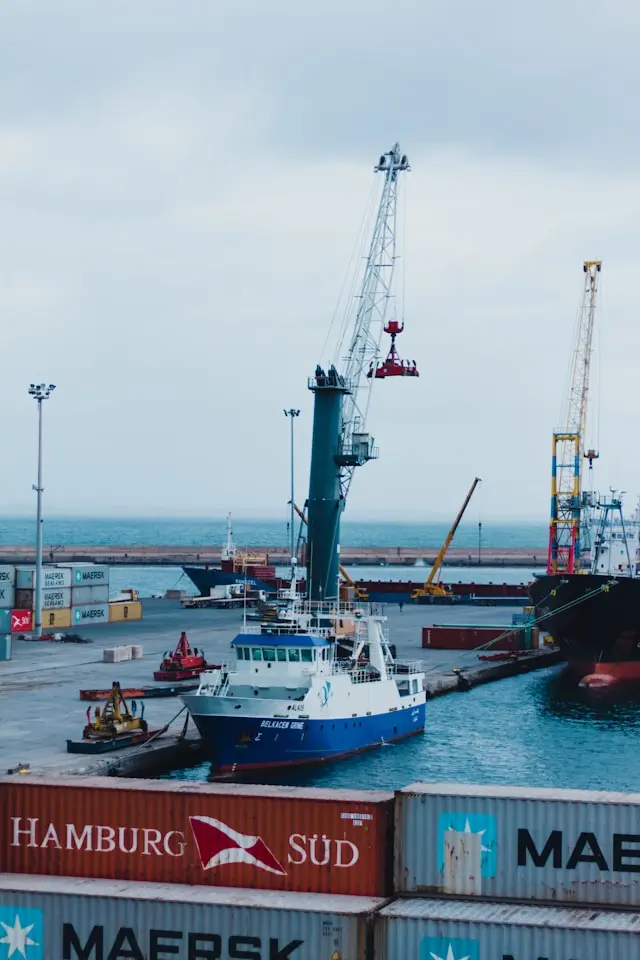
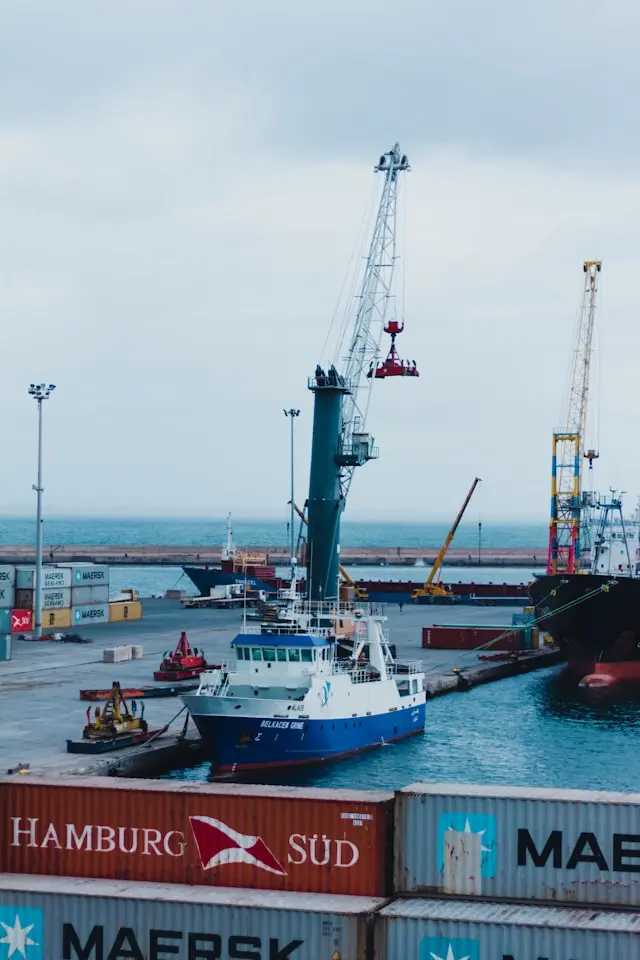
Slovenia's only commercial port handled nearly 23 million tonnes of cargo in 2023. Container volumes tracked 3 to 4 percent above that level through the first three quarters of 2024. Cruise calls reached approximately 130 vessel visits carrying 185,000 passengers. Marina Koper's 550 berths hit near-total utilisation every summer. By every operational measure, Koper's maritime cluster entered 2026 on a trajectory of expansion.
Yet the Employment Service of Slovenia recorded more than 180 unfilled vacancies in maritime transport and shipbuilding occupations in the second quarter of 2024 alone. That figure represented a 35 percent year-on-year increase. Average vacancy duration for these roles reached 78 days, nearly double the 42-day average for general technical positions. The most critical roles, including chief engineer certifications and port automation technicians, remained open for 90 to 180 days. The infrastructure is scaling. The workforce is not.
What follows is a ground-level analysis of the forces creating this gap, why they are harder to resolve than in comparable Adriatic markets, and what organisations operating in Koper's maritime economy need to understand before their next senior hire. The core problem is not simply that skilled workers are scarce. It is that Koper occupies a structural position between two competing labour markets that it cannot outbid on salary or on tax advantage, creating a compression effect that conventional recruitment methods cannot overcome.
The Adriatic's Sole Gateway and Its Hidden Vulnerability
Koper is not one of several Slovenian ports. It is the only one. Luka Koper d.d. functions as the country's entire commercial maritime gateway, employing 1,588 people across its subsidiaries as of December 2023 and handling container, vehicle, and bulk cargo volumes that serve landlocked markets stretching from Austria to Hungary. The Container Terminal 2 expansion targets operational capacity of 1.4 million TEUs by late 2026. Reaching that target requires an additional 150 to 200 logistics and terminal operations personnel, according to Luka Koper's Strategic Development Plan 2023 to 2027.
The maritime cluster surrounding the port adds depth to this picture. An estimated 15 to 20 specialised SMEs in yacht refit, composite repair, marine electronics, and upholstery generate aggregate revenue of €12 to 15 million annually. Ship repair firms including Remontna d.o.o. Koper and Metalna oprema d.o.o. provide mechanical, electrical, and emergency steelwork for coastal vessels and superyachts up to 60 metres. Brodska trgovina Koper operates as the primary maritime chandler. Together, these businesses employ an estimated 200 to 300 workers.
This is a cluster that punches well above its weight for a city of Koper's size. But it has one vulnerability that larger maritime centres do not share. Koper lacks large drydock facilities. Major hull repairs for commercial vessels over 5,000 GT require towage to Trieste or Rijeka. This means the technical workforce must deliver high-value, specialised services within a constrained physical infrastructure, and the skills required to do so are precisely the skills in shortest supply. The port's record throughput figures mask a workforce under acute pressure.
The "Middle Squeeze" That Defines Koper's Talent Problem
The most useful way to understand Koper's hiring challenge is not as a simple shortage. It is as a geographic compression effect.
Italian Compensation Pulls Senior Talent North
To the west, Italian ports offer 30 to 40 percent higher executive compensation for equivalent operations roles. A senior terminal operations manager in Koper earns between €68,000 and €85,000 annually. The same role across the border in Trieste commands €90,000 to €130,000. At the graduate level, the gap is equally pronounced. Fincantieri's shipyard in Monfalcone recruits naval architecture graduates from the University of Primorska with starting offers of €35,000 or more. The equivalent starting salary in Koper sits between €26,000 and €28,000.
Trieste is close enough that these are not abstract comparisons. They are real choices that candidates make weekly.
Croatian Tax Advantages Pull Technicians South
To the south, Croatian ports and shipyards compete through a different mechanism. Gross salary premiums of 15 to 20 percent combine with favourable tax treatment for seafarers, including income tax exemptions. Rijeka's living costs are lower than Koper's, particularly in suburban areas. The commuting distance between the two cities is just 70 kilometres. This enables what employers in Koper describe as cross-border labour poaching without requiring full relocation.
Local yacht refit contractors experience 30 to 40 percent annual turnover in certified TIG welders qualified for aluminium superstructure repair. The response has been to offer accommodation allowances of €400 to €500 per month to attract Croatian technicians from Rijeka and Pula willing to commute. Some contractors reportedly pay project completion bonuses equivalent to one to two months' salary to prevent poaching during peak yachting season. These are retention costs that compress margins in a sector already operating on thin project-based economics.
The Compression in Practice
The result is a market where Koper cannot compete with Italian wages at the top or Croatian tax advantages in the middle. It occupies a band where compensation is adequate by Slovenian national standards but insufficient to retain talent against two neighbouring markets that each offer a distinct structural advantage. This is not a problem that a 5 percent salary increase resolves. It is a positional disadvantage embedded in the geography itself. The organisations that hire successfully in this market do so through methods that reach beyond salary, and the ones that rely on posted vacancies and inbound applications are the ones reporting the longest time-to-fill and highest turnover.
Where the Gaps Are Deepest: Three Roles That Define the Crisis
Not all maritime roles in Koper are equally hard to fill. Three categories account for a disproportionate share of the problem.
Class 1 Marine Engineers
STCW III/2 certified Chief Engineer positions in the Koper-Trieste corridor remain unfilled for 90 to 120 days on average. Fewer than 20 percent of applicants hold valid Slovenian or EU Certificates of Competency at the required level. This is a predominantly passive candidate market. An estimated 80 to 85 percent of qualified candidates in the northern Adriatic are engaged on long-term contracts, rotational sea service, or permanent technical superintendent roles. The unemployment rate among certified marine engineers stands at 0.8 percent, against a national average of 4.2 percent, according to Drewry Maritime Research's Manpower Report.
Active job board applications for these roles come primarily from between-contract seafarers, often with competency gaps or documentation issues. The candidates employers actually need are not looking. Reaching them requires direct engagement through maritime crewing networks, not advertising.
Specialised Ship Repair Technicians
Aluminium and stainless steel welders certified for yacht superstructure repair represent the highest-turnover technical role in the cluster. As noted above, annual turnover reaches 30 to 40 percent. But the recruitment dynamics are equally revealing. These technicians rely on word-of-mouth networks and WhatsApp or Telegram professional groups rather than formal job applications. Average tenure in a current role exceeds 4.2 years, and movement is event-driven rather than aspiration-driven. A technician leaves when a project ends, when an interpersonal conflict escalates, or when a counter-offer arrives. Not when they see a job posting.
LinkedIn data shows that only 12 percent of Slovenia-based marine technicians signal openness to new opportunities, compared to a 28 percent national average. Recruitment success depends on what the industry calls "shoulder-tapping" during the off-season window of November to February, when workloads are lighter and technicians are more receptive to conversations. Advertising during peak season is, by the data, ineffective. The hidden 80 percent of passive talent concept applies here with particular force.
Port Automation Technicians
The transition to automated stacking cranes and Terminal Operating Systems has created demand for a role that barely existed in Koper five years ago. These "blue-collar engineers," combining electromechanical skills with PLC programming capability, represent the sharpest skills mismatch in the cluster. Roles are advertised for five to six months before filling, frequently requiring recruitment from Italian ports in Trieste and Ravenna or German facilities. The local talent pipeline does not produce this profile in sufficient numbers, and the retraining cycle for existing electrical technicians is measured in years, not months.
This third shortage is the one that should concern hiring leaders most. The first two reflect competition for existing skills. The third reflects demand for skills that the local education system was not designed to produce. Capital has moved faster than human capital can follow, and the gap is widening as Luka Koper's terminal automation programme accelerates toward its 2026 capacity target.
The Talent Pipeline: Adequate in Volume, Misaligned in Output
The University of Primorska's Faculty of Maritime Studies and Transport graduates approximately 120 students annually. Sixty percent study nautical sciences. Forty percent focus on maritime transport and logistics. Total enrolment has remained stable at 800 to 900 students. The Secondary School of Maritime Studies Koper adds 40 to 50 vocational graduates per year in maritime technical, ship electrical, and deck rating disciplines.
These numbers are not trivial for a small national market. But they reveal a structural misalignment when set against employer demand. The graduates produced are concentrated in navigation and logistics. The roles hardest to fill are in marine engineering, automation, and specialised fabrication. The university produces the talent a conventional port needs. Koper's port is no longer conventional.
The yacht refit sector illustrates this disconnect most clearly. Yacht refit and maintenance demand is projected to grow 8 to 10 percent annually through 2026, driven by ageing superyacht fleets with an average age of 15 years or more in the Adriatic registry and tightening pre-season compliance requirements. But local capacity constraints in skilled technicians and environmental permitting suggest that revenue growth will outpace employment growth. Productivity gains, not headcount expansion, will absorb most of this demand. That is a signal of a market where the work exists but the workers do not.
The demographic overlay makes this worse. Retirement waves among experienced maritime professionals are reducing the stock of senior technical knowledge at the same moment that EU ETS implementation and MARPOL Annex VI compliance demand new environmental expertise. The cluster is losing experienced talent at one end and failing to produce the right replacements at the other. For organisations planning their talent pipeline in this sector, the timeline for corrective action is measured in academic cycles, not quarters.
Compensation: Competitive Nationally, Exposed Regionally
Executive and specialist compensation in Koper's maritime cluster sits above Slovenian industrial averages but below the levels offered by regional competitors. Understanding where the gaps are sharpest is essential for any hiring strategy.
At the executive level, VP Operations and Technical Director roles at Luka Koper carry annual compensation of €120,000 to €165,000. Executive Board members received average compensation of €128,000 to €145,000 in 2023, excluding stock-based long-term incentives, according to Luka Koper's Annual Report. This places Koper slightly below pan-European port operator benchmarks but materially above Slovenian national norms for equivalent seniority.
The marina and yacht services tier tells a different story. Marina Operations Managers earn €48,000 to €62,000 with seasonal bonuses tied to occupancy rates. Yacht Refit Project Managers earn €55,000 to €75,000 base, with potential for €15,000 to €30,000 in additional commission based on project margins. Ship Repair Superintendents sit at €52,000 to €68,000.
These figures are reasonable within the Slovenian context. But they are the figures that lose candidates to Trieste, Monfalcone, and Rijeka. A yacht refit project manager weighing a €65,000 offer in Koper against a €90,000 equivalent in northern Italy faces a calculation that coastal lifestyle alone cannot resolve. Understanding how to negotiate salary and structure offers that account for total value rather than base compensation alone is critical for employers in this band.
The most revealing compensation data concerns Technical Directors at ship repair SMEs, where salaries of €75,000 to €95,000 often include profit-sharing arrangements. These roles sit at the intersection of technical authority and business management. They require deep domain expertise combined with commercial acumen. The candidates who hold both are precisely the ones with the most options in the northern Adriatic market. Replacing one who leaves is a costly and disruptive process that typically takes three to six months and rarely produces a like-for-like replacement from the local market.
What EU ETS Implementation Means for Koper's Workforce
The inclusion of maritime transport in the EU Emissions Trading System is not merely a regulatory compliance exercise. It is a workforce transformation event. From 2024, shipping companies operating in EU waters began reporting emissions. By 2026, they must surrender allowances covering a rising share of those emissions. This creates demand for a category of professional that Koper's maritime cluster has not previously needed to employ in volume.
EU ETS monitoring and reporting officers. MARPOL Annex VI compliance specialists. Alternative fuel handling technicians, particularly for LNG bunkering procedures as the port explores cleaner fuel infrastructure. Environmental compliance professionals who understand both the regulatory framework and the operational reality of a working port.
The Employment Service of Slovenia's Skills Mismatch Index already flagged environmental compliance as an emerging gap in Q2 2024. The challenge is that these roles require a blend of regulatory knowledge and maritime operational experience that formal education programmes have not yet been designed to deliver. Hiring leaders in this market are not competing for a fixed pool of qualified candidates. They are competing for candidates who are building these competencies in real time, often at their current employers. Moving them requires more than compensation. It requires a proposition that advances their career trajectory in a direction the current employer cannot match.
This regulatory shift connects to a broader pattern visible across industrial and manufacturing sectors where environmental mandates are creating new skill categories faster than the training infrastructure can fill them. The organisations that act earliest to secure this talent will have a measurable advantage through the 2026 compliance cycle. The organisations that wait will find the pool smaller and the premiums higher.
Why Conventional Search Methods Fail in This Market
The data on passive candidate ratios in Koper's maritime cluster reveals a market where job postings and inbound applications reach, at best, 15 to 20 percent of the qualified candidate population.
Chief Engineer candidates are 80 to 85 percent passive. Yacht refit technicians signal openness to opportunities at less than half the national rate. Port automation technicians must frequently be recruited from foreign markets entirely. At the senior leadership level, Port Operations Directors exhibit typical tenures of five to seven years, and movement occurs through private networks rather than advertised vacancies.
This is not a market where posting a role on a Slovenian job board and waiting produces results. The vacancy duration data proves this conclusively. Roles sit open for 78 days on average, and the most specialised positions exceed 120 days. Every month a critical role remains unfilled costs the organisation in delayed projects, overloaded existing staff, and missed revenue during seasonal peaks.
The seasonal dimension compounds the problem. Yacht refit demand concentrates in pre-season and post-season windows. Cruise calls peak from May through October. The window to recruit a technician or engineer who will be productive during peak season is narrow, and it does not align with when those candidates are most receptive to approaches. Successful recruitment in this market requires talent mapping that identifies and engages candidates months before the role becomes urgent.
For organisations hiring executive and senior specialist roles in maritime and industrial sectors, the method matters as much as the compensation. A direct search that identifies and approaches passive candidates through maritime crewing networks, professional associations, and cross-border talent intelligence will consistently outperform an advertised vacancy in a market where the best candidates are not looking.
What This Means for Hiring Leaders Operating in Koper
The original synthesis that emerges from this data is worth stating directly. Koper's maritime talent crisis is not a shortage in the conventional sense. It is a positional problem. The cluster sits between two labour markets that each offer a distinct advantage Koper cannot replicate: Italian compensation levels to the north and Croatian tax treatment to the south. The candidates Koper needs are reachable, but not through conventional channels, and not through salary alone. They require a total proposition, including career trajectory, project complexity, lifestyle, and long-term stability, delivered through a search methodology that reaches them where they actually are.
This means the organisations that will staff their 2026 expansion plans successfully are not the ones offering the highest salaries. They are the ones with the most sophisticated approach to identifying, engaging, and persuading passive candidates across a three-country labour market. The search process itself becomes a competitive advantage.
KiTalent's approach to executive search through direct headhunting is designed for exactly this kind of market. In sectors where 80 percent or more of qualified candidates are passive, where cross-border dynamics complicate sourcing, and where the cost of a delayed hire is measured in lost seasonal revenue and regulatory exposure, the ability to deliver interview-ready candidates within 7 to 10 days through AI-powered talent mapping changes the equation. A pay-per-interview model means organisations invest only when they meet qualified candidates, removing the retainer risk that smaller maritime SMEs in Koper's cluster cannot afford.
With a 96 percent one-year retention rate across 1,450 or more executive placements, KiTalent's methodology addresses not only the initial hire but the retention risk that defines this market. In a cluster where 30 to 40 percent annual turnover in critical technical roles is normal, placing the right candidate the first time is not a luxury. It is the difference between operating at capacity and operating short-handed through another peak season.
For organisations competing for marine engineering, port automation, or yacht refit leadership across the northern Adriatic, where the candidates you need are embedded in roles at competing ports and the cost of a slow search is measured in missed project windows and regulatory deadlines, speak with our executive search team about how we approach this specific market.
Frequently Asked Questions
What are the hardest maritime roles to fill in Koper in 2026?
Three categories account for the most acute shortages. Class 1 Marine Engineers with STCW III/2 certification remain unfilled for 90 to 120 days on average, with fewer than 20 percent of applicants holding valid EU Certificates of Competency. Certified aluminium and stainless steel welders for yacht refit experience 30 to 40 percent annual turnover. Port automation technicians, combining electromechanical skills with PLC programming, are advertised for five to six months before filling. These roles share a common characteristic: the qualified candidates are overwhelmingly passive and must be identified through direct headhunting methods rather than job postings.
How does Koper maritime compensation compare to Trieste and Rijeka?
Italian ports offer 30 to 40 percent higher executive compensation for equivalent operations roles. A senior terminal operations manager earns €68,000 to €85,000 in Koper versus €90,000 to €130,000 in Trieste. Croatian ports compete differently, offering 15 to 20 percent gross salary premiums combined with seafarer tax exemptions. Koper's compensation sits above Slovenian national averages but is structurally squeezed between Italian salary levels and Croatian tax advantages. Employers must build total propositions that include career development, project complexity, and lifestyle factors to offset the gap.
What impact does EU ETS have on maritime hiring in Koper?
The inclusion of maritime transport in the EU Emissions Trading System is creating demand for environmental compliance professionals that Koper's existing workforce does not include in sufficient numbers. Roles in EU ETS monitoring, MARPOL Annex VI compliance, and LNG bunkering procedures require a blend of regulatory knowledge and maritime operational experience that formal education programmes have not yet been designed to deliver. Organisations that secure this talent early will hold a measurable advantage through the 2026 compliance cycle.
How many graduates does the University of Primorska produce for maritime careers?
The Faculty of Maritime Studies and Transport graduates approximately 120 students annually, with 60 percent in nautical studies and 40 percent in maritime transport and logistics. The Secondary School of Maritime Studies adds 40 to 50 vocational graduates per year. While these numbers are meaningful for a small national market, the graduate mix is concentrated in navigation and logistics rather than the marine engineering, automation, and fabrication specialisms where employer demand is strongest.
Why do traditional recruitment methods fail in Koper's maritime sector?
An estimated 80 to 85 percent of qualified marine engineers and senior maritime professionals in the northern Adriatic are passive candidates, currently employed and not applying to job postings. Yacht refit technicians signal openness to new opportunities at less than half the national rate. The result is that advertised vacancies reach only 15 to 20 percent of the qualified candidate pool. KiTalent's AI-powered talent mapping identifies and engages the passive majority through maritime networks and cross-border intelligence, delivering interview-ready candidates within 7 to 10 days.
What is the outlook for Koper's cruise and yachting sectors through 2026?
Cruise calls are projected to reach 150 to 160 vessel visits in 2026, up from approximately 130 in 2024. Yacht refit and maintenance demand is forecast to grow 8 to 10 percent annually, driven by ageing Adriatic superyacht fleets and tightening pre-season compliance requirements. However, local capacity constraints in skilled technicians mean that revenue growth is likely to outpace employment growth. Organisations that cannot secure specialised technical talent will leave revenue on the table during peak season windows.