Koper's €45 Million Cold Chain Bet and the Workforce That Does Not Yet Exist
The Port of Koper is building cold storage capacity it cannot staff. Luka Koper's €45 million investment in Warehouse 5 will add 6,000 pallet positions of multi-temperature storage by late 2026, expanding the port's refrigerated capacity by 48%. The capital is committed. The concrete is being poured. The problem is that the Coastal-Karst region's unemployment rate sits at 4.1%, refrigeration technicians with F-gas certification take 90 to 120 days to recruit, and the two nearest competitor ports are actively pulling mid-level logistics talent out of the Slovene Littoral with signing bonuses.
This is not a market where posting a vacancy and waiting will produce a result. Cold chain operations managers in the Primorska region have an unemployment rate below 2% and an average tenure exceeding 5.5 years. Four out of five qualified candidates for senior cold chain roles are already employed, already compensated at a premium, and not looking. The talent pool is not thin because nobody trained these people. It is thin because the roles require a combination of technical certification, regulatory knowledge, and bilingual capability that takes years to assemble in a single individual.
What follows is an analysis of the forces reshaping Koper's agri-food logistics sector, the employers driving that change, and what senior leaders need to understand before they make their next hiring decision in this market. The article covers the real structure of the port's agri-food operations, the compensation dynamics that make talent attraction harder than it appears, the regulatory pressures accelerating demand for specialists who barely exist in sufficient numbers, and what a realistic search strategy looks like in a market this tight.
Koper's Agri-Food Gateway: What It Actually Is
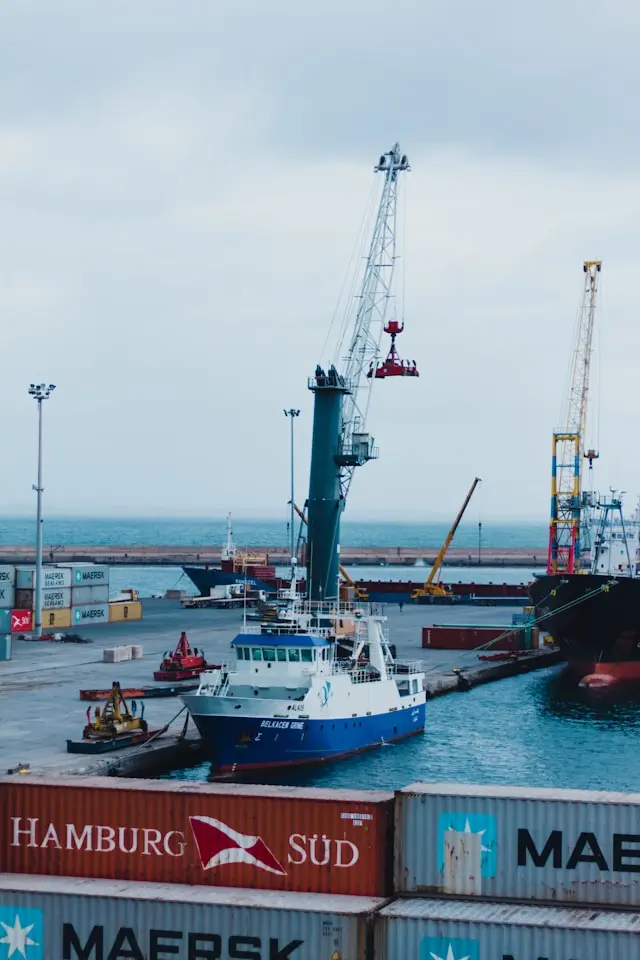
The public narrative around Koper positions the port as an agri-food gateway for Central Europe. The reality is more precise and more constrained than that framing suggests. The Port of Koper's Fruit Terminal handled approximately 247,000 tonnes of bananas, pineapples, and citrus in 2023. That is a meaningful volume. But this cargo is overwhelmingly import traffic from Central America and the Mediterranean, destined for Austria, Hungary, the Czech Republic, Slovakia, and Poland. It is transit consolidation, not Slovenian export infrastructure.
Slovenia's own wine exports, valued at €96.4 million in 2023, travel by road to Italy, Germany, and Croatia. The port's role as an export channel for Slovenian wine and seafood accounts for less than 3% of relevant outbound volume, according to the Statistical Office of the Republic of Slovenia. The port's agri-food function is real, but it is a specific function: receiving, chilling, storing, consolidating, and forwarding imported produce through EU phytosanitary clearance for onward distribution to landlocked Central European markets.
This distinction matters for anyone hiring into this market. The skills required are not agricultural processing skills. They are cold chain logistics and customs brokerage skills, overlaid with EU TRACES NT documentation expertise, HACCP and BRCGS certification, and proficiency in both Slovenian and Italian. The Trieste corridor accounts for 40% of port hinterland traffic. A cold chain operations manager who cannot coordinate with Italian transporters and customs agents is functionally incomplete in this market.
Agri-food represents approximately 1.8% of the port's total tonnage and employs fewer than 600 people directly, including seasonal workers. The automotive and container sectors drive Koper's economy. The cold chain sector is small, specialised, and disproportionately difficult to staff relative to its size.
The Investment Thesis and Its Workforce Contradiction
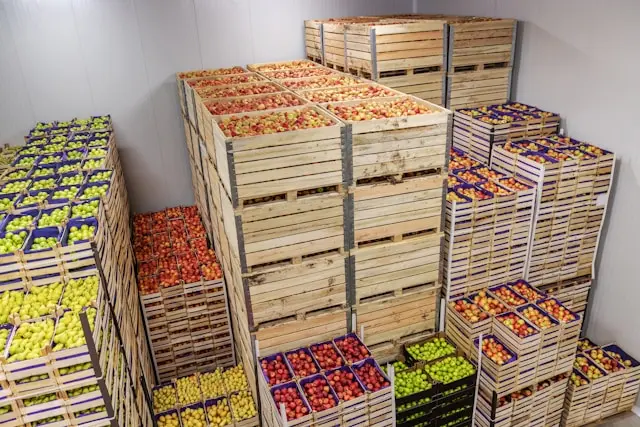
Luka Koper's capital investment plan, filed with the Ljubljana Stock Exchange in October 2024, commits €45 million to reconstructing Warehouse 5 with multi-temperature cold storage. The target completion is Q4 2026. The strategic rationale is clear: reduce dependence on temporary reefer container plugging, which currently serves 30% of cold storage demand, and attract pharmaceutical and high-value food logistics clients willing to pay premium handling fees.
Why the Money Moved Before the People Did
The Chamber of Commerce and Industry of Slovenia (GZS) projects cold chain throughput at Koper will grow 4 to 5% annually through 2026. Rising demand for fresh produce across Central Europe and expanding EU trade with Latin America underpin this projection. But capital investment timelines and workforce development timelines operate on fundamentally different clocks. A warehouse can be designed, permitted, and built in 24 months. A refrigeration technician with Category I F-gas certification cannot be produced in that timeframe. The training pipeline runs through the University of Primorska's Faculty of Maritime Studies and Transport, which graduates approximately 80 logistics professionals per year. Not all of them specialise in cold chain operations. Not all of them stay in the region.
This is the original analytical claim this article is built around: Koper's cold chain sector is experiencing a form of capital-labour desynchronisation where infrastructure investment has outrun the regional workforce's capacity to staff it. The €45 million going into Warehouse 5 will create demand for technicians, operations managers, and compliance specialists at a rate the local labour market cannot absorb. The money has arrived. The people have not.
The Energy Cost Squeeze on Independent Operators
The contradiction deepens when you examine what is happening to the independent operators who might otherwise have developed this workforce over time. Refrigerated warehousing electricity costs rose 34% between 2022 and 2024. Cold storage facilities consume 85 to 120 kWh per cubic metre annually. With Slovenian industrial electricity prices averaging €0.18 per kWh in 2024, up from €0.13 in 2021, energy now represents 35 to 40% of operating costs for independent cold store operators.
Two SMEs in the port's hinterland at Ankaran ceased operations in 2024. This is not a market that is diversifying. It is consolidating toward Luka Koper's own facilities, which benefit from scale economies and subsidised port infrastructure. The independent operators who might have trained the next generation of cold chain technicians are disappearing. The port authority is becoming both the dominant employer and the dominant training ground, which concentrates risk in a way that should concern anyone planning a leadership hire in this sector.
Who Employs Cold Chain Talent in Koper
The employer base is concentrated. Understanding its structure is essential for anyone attempting to recruit in this market, because every qualified candidate you might approach is almost certainly already working for one of four organisations.
Luka Koper employs approximately 2,800 people in the Koper region, including stevedores, logistics coordinators, and reefer technicians. Intereuropa maintains around 450 employees at its Koper regional headquarters, managing warehousing and cross-border transit documentation from its bonded warehouse complex with 2,500 pallet positions. Jastog d.o.o. employs approximately 120 people in seafood processing and cold storage. Consorzio Fruit, an Italian-Slovenian joint venture operating at the Fruit Terminal, has around 80 employees in quality control and palletising.
That is the market. Fewer than 600 people work directly in agri-food cold chain operations across all four employers. At senior level, the pool narrows further. A Director of Logistics and Supply Chain with cold chain focus, a VP of Terminal Operations covering fruit and reefer terminals, a Cold Chain Operations Manager responsible for multi-site temperature compliance: these roles draw from a candidate population that can be counted in the low dozens across the entire Primorska region.
The passive-to-active candidate ratio for cold chain operations managers and directors is estimated at 4:1. Average tenure exceeds 5.5 years. These are people who are settled, compensated at a premium, and not browsing job boards. Reaching them requires direct headhunting methodology that goes beyond what a posted vacancy can achieve.
Compensation: What Cold Chain Roles Actually Pay
Compensation data for this market reveals a premium structure that reflects the scarcity of qualified talent, but that premium is not large enough to overcome the geographic and lifestyle barriers that Koper faces when competing with Trieste and Ljubljana.
A Cold Chain Operations Manager in the Koper region earns €42,000 to €58,000 gross annually, representing a 25 to 30% premium over equivalent non-refrigerated logistics managers. A Reefer Maintenance Lead commands €38,000 to €52,000. At director level, a Director of Logistics and Supply Chain with cold chain focus earns €72,000 to €95,000, with performance bonuses tied to throughput volume and energy efficiency targets. A VP of Terminal Operations at Luka Koper earns €85,000 to €110,000, with long-term incentives tied to the company's stock performance.
The Trieste Differential
These figures must be read against the competitive context. Trieste, 30 kilometres west, pays senior logistics managers €65,000 to €85,000 gross annually. That is 20 to 25% higher than Koper for equivalent roles. But Trieste's housing costs are 40% above Koper's, and Italian labour regulations are materially more complex. Negotiating a move from Koper to Trieste or vice versa is not a simple salary comparison. It requires modelling the net disposable income difference after tax, housing, and commuting costs.
The more dangerous competitor is Rijeka, 80 kilometres southeast. Croatia's Port of Rijeka is in the middle of a €1.2 billion EU-funded expansion programme. Absolute salary levels in Rijeka are 20 to 30% below Koper for operational roles. But the expansion programme is offering HGV drivers and crane operators signing bonuses of €3,000 to €5,000. For a refrigerated transport driver earning €1,800 per month in Koper, a €5,000 signing bonus represents nearly three months of additional gross pay. That is sufficient to trigger a move, particularly when the employer arranges housing.
Ljubljana pulls from the other direction. Logistics roles in the capital pay comparably, but IT and supply chain analytics roles pay 15 to 20% more. The draw is not just compensation. It is career trajectory. A logistics engineer graduating from the University of Primorska faces a choice between a port-side operational career in Koper and a technology-adjacent analytics career in Ljubljana with remote work flexibility. The university's own graduate destination survey confirms the pattern: the capital is absorbing the region's own training output.
The Regulatory Pressure That Is Creating Roles Faster Than the Market Can Fill Them
Two EU regulatory instruments are converging on Koper's cold chain operators in a way that multiplies demand for already-scarce specialists.
F-Gas Regulation and the Retrofit Cliff
The EU's F-gas Regulation (EU) 2024/573 mandates increased leak-checking frequency and bans certain HFC refrigerants by 2027. Retrofitting Koper's older cold rooms, built before 2010, is estimated to cost €800 to €1,200 per pallet position. For a facility with 2,000 positions, that is €1.6 to €2.4 million in compliance capital expenditure. But the capital cost is only part of the problem. The retrofit requires technicians with Category I F-gas certification, and those technicians already take 90 to 120 days to recruit for routine maintenance roles.
The EU's Corporate Sustainability Reporting Directive adds monitoring and documentation requirements that demand a different kind of compliance expertise from what traditional cold chain operators have historically employed. Energy monitoring, refrigerant gas tracking, and sustainability reporting are not skills that a warehouse manager acquired on the job in 2015. They are new requirements generating new roles.
EUDR Complexity for Mixed Cargo Handlers
The EU Deforestation Regulation, entering force in late 2024, requires geolocation tracing for cocoa, coffee, soy, palm oil, cattle, timber, and rubber. While the regulation does not directly target the fruit trade, it increases compliance complexity for logistics operators handling mixed agri-food cargoes. A customs broker at Koper who previously needed to understand phytosanitary documentation now also needs to understand deforestation due diligence for any shipment that includes regulated commodities alongside fruit consignments.
The compounding effect is what matters. Each regulation individually is manageable. Together, they create a compliance surface area that smaller operators cannot cover with their existing teams. This is one reason the sector is consolidating. It is also the reason that the hidden cost of hiring the wrong person into a compliance-sensitive cold chain role is not just an operational inconvenience. It is a regulatory exposure that can result in cargo holds, fines, and loss of licensed operator status.
Why Conventional Search Methods Fail in This Market
A market with fewer than 600 direct employees in agri-food cold chain operations, an unemployment rate for senior specialists below 2%, and a passive-to-active ratio of 4:1 is not a market where advertising a vacancy produces results.
Job postings for cold chain specific roles in the Koper region increased 18% year on year in 2024. Applications per vacancy dropped to 4.2:1, down from 7.1:1 in 2021. These figures describe a market where employers are spending more on recruitment advertising and getting less for it. The postings are not reaching the people who matter, because the people who matter are not looking.
Consider the typical search trajectory. A major fruit-import consortium in Q2 2024, according to reporting in Primorske novice, conducted a search for a refrigerated transport driver with ADR certification that stalled after six months. The consortium eventually recruited drivers from Croatia and arranged temporary housing in Ankaran. That is the outcome when a search defaults to active candidate channels in a market where the active candidate pool is inadequate.
For senior roles, the dynamic is more severe. A Cold Chain Operations Manager search in this market is not competing against other logistics searches. It is competing against retention. The candidates are employed. They are earning a 25 to 30% premium over non-refrigerated logistics peers. Their employers know they are scarce and are increasingly using contested non-compete clauses to prevent lateral movement. Regional HR consultancies report that senior logistics managers with cold chain expertise are regularly poached between Luka Koper and Intereuropa with salary premiums of 15 to 20%, and the resulting non-compete litigation is becoming a feature of the local labour courts.
This is a market that requires talent mapping before a search begins. You need to know who holds which certifications, who has the bilingual capability, who is approaching the end of a non-compete restriction, and who has a reason to consider a move that has nothing to do with money. A job board cannot tell you any of this.
What Hiring Leaders in This Market Need to Do Differently
The structural reality of Koper's cold chain talent market demands a different approach from the one most organisations default to. Three principles apply.
First, the search must begin before the role opens. In a market where the best candidates take 90 to 120 days to recruit even for technical roles, waiting until a vacancy exists to begin sourcing guarantees a gap that affects operational continuity. The organisations that manage cold chain hiring effectively in this region maintain a standing talent pipeline of pre-identified candidates for their most critical certifications.
Second, the compensation offer must account for the full competitive set. A candidate weighing a move from Koper is not just comparing your salary to their current salary. They are comparing it to Trieste's 20 to 25% premium, Rijeka's signing bonuses, and Ljubljana's career flexibility. The proposition must address the specific reason this candidate would stay in Koper, or come to Koper, rather than choosing one of three viable alternatives. That is a question only a direct conversation can answer. It cannot be resolved by benchmarking alone.
Third, the regulatory calendar is now a hiring calendar. The F-gas retrofit deadline, the CSRD reporting requirements, and the EUDR documentation obligations each create a date by which a specific capability must be in place. Working backward from those dates to account for 90 to 120 day recruitment cycles and 30 to 60 day notice periods means that the hiring window for 2027 compliance is already closing in 2026.
For organisations competing for cold chain and logistics leadership in Slovenia's Primorska region, where the candidates are employed, passive, and distributed across a four-employer market, KiTalent delivers interview-ready executive candidates within 7 to 10 days through AI-enhanced direct search methodology. With a 96% one-year retention rate and a pay-per-interview model that eliminates upfront retainer risk, the approach is built for markets exactly this constrained. To discuss how this applies to your next cold chain or logistics leadership search, speak with our executive search team about the Koper market specifically.
Frequently Asked Questions
What is the average salary for a cold chain operations manager in Koper, Slovenia?
A Cold Chain Operations Manager in the Koper region earns €42,000 to €58,000 gross annually, which represents a 25 to 30% premium over equivalent non-refrigerated logistics managers in the same market. At director level, a Director of Logistics and Supply Chain with cold chain focus earns €72,000 to €95,000, with performance bonuses tied to throughput and energy efficiency. These figures are drawn from the GZS Salary Survey for Transport and Logistics 2024 and should be read against Trieste's 20 to 25% premium for equivalent seniority, which shapes candidate expectations during any negotiation.
Why is it so hard to hire refrigeration technicians in Koper?
The Coastal-Karst region has an unemployment rate of 4.1%, already below the national average. Within that tight market, refrigeration technicians with Category I F-gas certification are classified as a shortage occupation by the Employment Service of Slovenia. Typical vacancy duration for these roles is 90 to 120 days, compared to 45 days for general maintenance positions. The EU's F-gas Regulation is increasing demand for these specialists at exactly the moment when the regional training pipeline produces too few graduates to meet existing need, let alone expansion-driven growth.
How does the Port of Koper's cold chain expansion affect hiring demand?
Luka Koper's €45 million investment in Warehouse 5 will add 6,000 pallet positions of multi-temperature storage by late 2026, a 48% increase in refrigerated capacity. This expansion creates demand for additional reefer technicians, operations managers, compliance specialists, and logistics coordinators. However, the regional labour pool cannot absorb this demand at current training output levels, which means organisations hiring into this expansion will need to source candidates from outside the immediate region or compete directly with incumbent employers for existing staff.
What are the main competitors for logistics talent near Koper?
Koper faces three-directional talent competition. Trieste, 30 km west, pays 20 to 25% more for senior logistics roles but carries higher living costs. Rijeka, 80 km southeast, is running a €1.2 billion port expansion offering signing bonuses of €3,000 to €5,000 to attract operational staff. Ljubljana draws graduates and analytics professionals with higher pay for technology-adjacent roles and remote work flexibility. Any executive search strategy in this market must account for all three pull factors simultaneously.
How can companies find passive cold chain candidates in Slovenia?
The passive-to-active candidate ratio for senior cold chain roles in the Primorska region is approximately 4:1. Most qualified candidates are already employed by one of four major organisations and are not actively searching. KiTalent's AI-enhanced talent mapping identifies these professionals through certification databases, industry networks, and cross-border analysis covering the Trieste and Rijeka corridors. This approach reaches the 80% of qualified talent that no job board or posted vacancy will surface.
What EU regulations are affecting cold chain hiring in 2026?
Three regulatory instruments are converging on Koper's cold chain operators. The F-gas Regulation (EU) 2024/573 mandates HFC refrigerant phase-downs and increased leak-checking. The Corporate Sustainability Reporting Directive requires energy and emissions monitoring. The EU Deforestation Regulation adds traceability requirements for mixed agri-food cargoes. Each regulation creates demand for specialists in compliance, monitoring, and documentation. Together they are generating roles faster than the market can fill them, making proactive talent acquisition planning essential rather than optional.