Koper Port Logistics Hiring: €1.8 Billion in Investment, and a Talent Market That Cannot Keep Pace
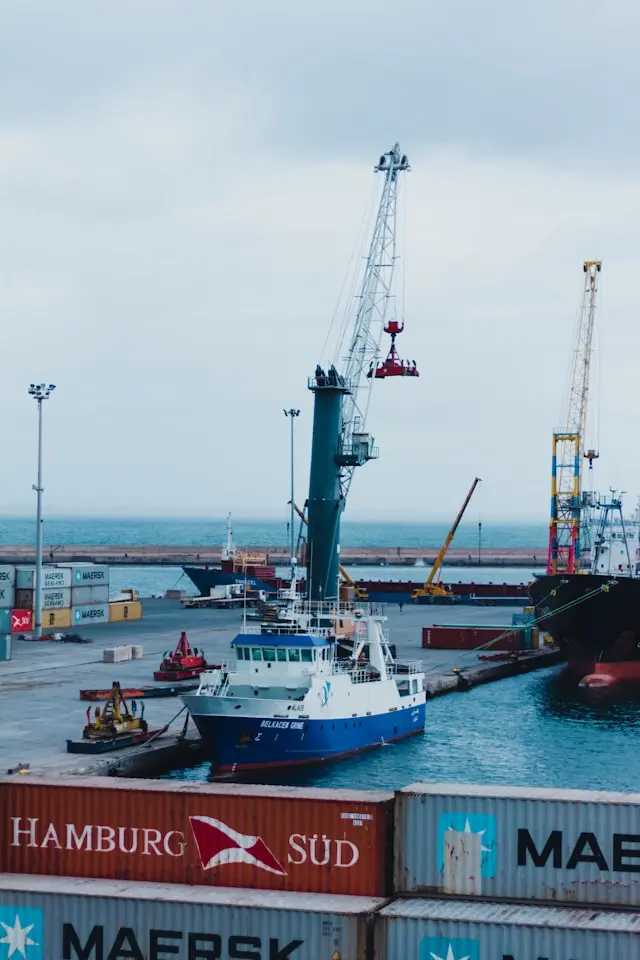
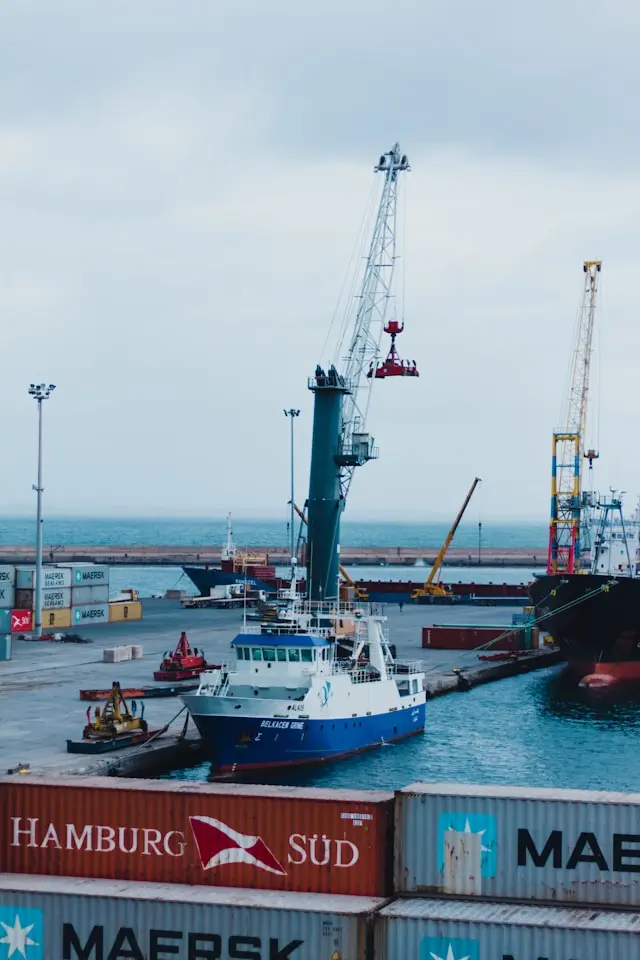
Slovenia's sole international maritime gateway is in the middle of its largest capital deployment in history. The T3 container terminal expansion and the €1.06 billion Divača-Koper second railway track represent a combined €1.8 billion bet on Koper's future as Central Europe's preferred Adriatic port. The first T3 berth became operational in late 2025. The railway project is approaching partial commissioning. The infrastructure, for the first time in a generation, is catching up with the ambition.
The talent market is not. The Coastal-Karst region where Koper sits recorded 890 transport and storage vacancies in the final quarter of 2024, a 34% year-on-year increase. Rubber Tyred Gantry crane operators have been advertised for eight to ten months at a stretch. Senior terminal operations managers have crossed the Italian border for 35-40% salary premiums. Port automation roles combining maritime logistics expertise with systems like Navis N4 sit open for 90 to 120 days. This is not a market where posting a job and waiting produces results.
What follows is an analysis of the forces reshaping Koper's port logistics cluster, the specific talent pressures those forces are creating, and what organisations hiring into this market need to understand before they commit to a search. The picture is more complex than a simple shortage story. It involves a skills mismatch masquerading as unemployment, a geographic competition playing out across three countries, and an investment cycle that has moved faster than the human capital required to operate what it is building.
The Paradox at the Centre of Koper's Expansion
The core tension in Koper's logistics cluster is straightforward to state and difficult to resolve. Nearly €1.8 billion in infrastructure capital has been deployed. Yet the railway section connecting the port to its hinterland still operates on a single track from the 1990s. The T3 terminal expansion will lift annual container capacity to 1.9 million TEU once both berths are operational, which is expected by mid-2026. But without the completed second railway track, container throughput caps at approximately 1.4 million TEU regardless of terminal capacity, according to the OECD's International Transport Forum corridor assessment.
This creates a specific and unusual employment dynamic. The jobs being created in 2025 and 2026 are driven by construction, pre-operational staffing, and capacity preparation. They are not yet driven by actual cargo volume increases. The T3 and railway investments will directly produce 450 to 500 operational jobs at Luka Koper by the end of 2026, with an estimated 1,200 additional positions in forwarding and trucking. That is material growth for a region where the port operator's permanent workforce numbered 1,038 in 2023.
But the cargo those workers will handle depends on infrastructure that remains incomplete. Austrian Federal Railways and Hungarian infrastructure managers have signalled that their own bottleneck upgrades will lag 12 to 18 months behind the Slovenian railway project. Volume growth risks being trapped at the border even after the domestic track is finished. For hiring leaders, the implication is pointed: you are staffing for a capacity target that the logistics chain beyond your control has not yet validated.
A Region With High Unemployment and No Available Workers
The Coastal-Karst region maintains Slovenia's highest unemployment rate at 7.8%, well above the 4.9% national average. On paper, this should make Koper one of the easier markets in the country to hire. The reality is precisely the opposite.
The skills mismatch beneath the headline number
Of the 890 transport and storage vacancies registered in Q4 2024, 62% required technical vocational qualifications. Crane operators. Heavy vehicle drivers. Terminal equipment specialists. Another 23% required university-level credentials in supply chain management or port engineering. The unemployed population in the region does not match these requirements. What the Coastal-Karst has is general unemployment. What the port needs is specific technical capability that does not exist in sufficient volume locally.
Luka Koper's response illustrates the depth of the problem. After failing to recruit enough RTG crane operators externally, the company launched an internal training academy in 2024, investing €4,200 per trainee in certification costs. This is not a company supplementing its hiring pipeline. This is a company that concluded the external pipeline does not function and built its own.
The international labour dependency
The operator has increasingly turned to workers from Serbia, Croatia, and Bosnia-Herzegovina to fill technical roles that the regional market cannot supply. This is a pragmatic solution. It is also a fragile one. Cross-border workers are mobile by definition. They responded to Koper's pull factors. They will respond equally to pull factors elsewhere. Rijeka's expanding terminals are 120 kilometres south and draw from the same bilingual labour pool. A dependency on imported labour in a competitive Adriatic market is a dependency that can reverse.
The disconnect between regional unemployment figures and acute specialist shortages is not a contradiction. It is the clearest signal in this market that aggregate economic indicators are misleading. Any hiring strategy built on the assumption that Koper has ample labour supply because unemployment is high will fail on contact with reality.
Three Countries, One Talent Pool, and an Escalating Bidding War
Koper does not compete for logistics talent in isolation. Its effective labour market stretches across three countries, and in 2026 the competitive dynamics are intensifying on every border.
Trieste: the 40-60% premium next door
The Port of Trieste sits 60 kilometres west. It offers salary premiums of 40-60% for equivalent operational roles, according to Federports' Italian port sector salary survey. In 2023, according to Finance.si, Luka Koper lost two senior Terminal Operations Managers to Trieste's expanded intermodal division. The departing managers moved from approximately €58,000 to €80,000 annually, with housing allowances included. Trieste's cost of living runs roughly 25% higher than Koper's, which partially offsets the wage gap. But only partially. The net gain for a senior manager crossing the border remains material.
This is not an isolated incident. It is a structural feature of the market. Trieste's expanded Pier VII is actively recruiting Slovenian nationals, offering Italian labour law protections and the perceived stability of Eurozone employment. For a Terminal Operations Manager earning €50,000 in Koper, the calculation is not abstract. It is a concrete offer sitting in their inbox.
[Ljubljana](/ljubljana-slovenia-executive-search): the white-collar drain
Ljubljana competes differently. It does not poach crane operators. It draws the supply chain managers, the freight forwarders, the commercial leaders. Ljubljana offers non-port logistics careers in e-commerce fulfilment and pharmaceutical supply chains at comparable salaries, with the added pull of superior lifestyle amenities and educational options for executives with families. The 1.5-hour commute between Ljubljana and Koper is increasingly treated as untenable, which means talent choosing one city is effectively ruling out the other. The market has bifurcated. Operational talent lives in Koper. Commercial and strategic talent gravitates to Ljubljana. This split complicates any organisation trying to build an integrated leadership team.
Rijeka: the emerging threat from the south
Croatia's EU accession and the opening of the Zagreb Deep Sea Terminal have made Rijeka a credible competitor for the first time. Compensation runs 20-30% below Koper, but capacity is expanding rapidly and the talent pool overlaps. Slovenian-Croatian bilingual professionals in the border regions now have three viable employers within a two-hour drive. The loyalty assumptions that held when Koper was the only serious option in the northern Adriatic no longer apply.
What Koper's Port Roles Actually Pay in 2026
Compensation data in this market tells a specific story. The gap between operational management and executive leadership is wide, but both tiers sit below what competing ports in Italy and Northern Europe offer for equivalent experience.
At the senior specialist and manager level, a Port Operations Manager with five to ten years of experience earns between €45,000 and €58,000 annually. Container terminal operations command a 15% premium over general cargo. Maritime and port engineers with chartered status and project management credentials earn €48,000 to €62,000. Customs and trade compliance managers sit between €42,000 and €55,000.
At the executive level, the numbers shift considerably. A Chief Operating Officer responsible for terminal operations commands €95,000 to €130,000, with bonuses tied to TEU throughput and safety metrics. A VP of Intermodal and Rail Logistics earns €85,000 to €115,000, with the upper bound pushed by the scarce trilingual capability the role demands: Slovenian, Italian, and English. A Chief Technology Officer leading port digitalisation earns €90,000 to €125,000, carrying a premium over manufacturing CTO roles due to the scarcity of maritime technology expertise.
The digital and automation tier reveals where the market is tightest. Port automation engineers with Navis N4 and terminal operating system implementation experience earn €55,000 to €75,000 at senior specialist level and €100,000 or more at director level. Supply chain data analysts with Python, Tableau, and maritime optimisation skills earn €38,000 to €52,000 at mid-level, rising to €70,000 to €90,000 at director level.
These figures make the Trieste premium concrete. A senior Terminal Operations Manager at Koper's ceiling of €58,000 faces an offer of €80,000 across the border. That is not a negotiation. That is a departure. The question for Koper employers is not whether their compensation is fair by Slovenian standards. The question is whether Slovenian standards are relevant when the competing employer is an hour's drive away in a different country. For organisations that need help benchmarking executive compensation against cross-border competitors, the data is clear: Koper's packages must be evaluated against Adriatic market rates, not domestic ones.
The Passive Candidate Problem in a Market of 18 Harbour Pilots
The conventional recruitment model fails in Koper for a reason that goes beyond the usual passive-candidate challenge. In most markets, the pool of qualified candidates is large enough that even a low active-search rate produces a workable number of applicants. In Koper, the absolute numbers are so small that passive dominance becomes functionally equivalent to zero availability.
Consider the harbour pilot example. The Slovenian Maritime Administration licenses exactly 18 harbour pilots for Koper. There is zero unemployment in this cohort. Every transition occurs through structured succession planning or international lateral moves. You cannot recruit a harbour pilot through a job board because no harbour pilot is looking at job boards. The entire market consists of employed professionals whose next move will happen through a direct approach or not at all.
The pattern repeats at scale. At VP and Director level in terminal operations, 85% of qualified candidates are employed and not actively searching. Average tenure at Luka Koper exceeds 12 years for this cohort. That creates extremely low liquidity. The people you need are not just passive. They are deeply embedded in organisations where they have spent their careers.
Port automation and IT specialists present a different version of the same constraint. The passive-to-active ratio runs approximately 4:1. These professionals receive three to five recruiter approaches monthly via LinkedIn. They do not respond to standard job board postings. They are not impressed by generic outreach. To move one of these candidates requires a proposition specific enough to answer the question they are already asking: why would I leave a role where I have deep domain knowledge for one where I have to rebuild credibility?
The contrast with the active-candidate segments is instructive. Truck drivers and warehouse operatives show 12-15% unemployment rates in the sector-specific pool. These roles can be filled through traditional recruitment channels. The mistake is assuming that what works for warehouse operatives will work for a port automation director or a terminal operations VP. It will not.
The Original Claim: Capital Moved Faster Than Human Capital Could Follow
This is the analytical thread that connects every tension in the Koper market. The €1.8 billion investment programme proceeded on infrastructure timelines. Terminal construction follows engineering schedules. Railway tunnels follow geological constraints. Neither follows the time required to develop a crane operator, train a port automation engineer, or produce a terminal operations leader with the 12-year tenure that the current cohort possesses.
The T3 terminal expansion will add capacity for 600,000 additional TEU annually. The second railway track will increase daily train capacity from 120 to 200. But the 450 to 500 new operational roles these projects create at Luka Koper require workers who do not currently exist in the regional labour market in sufficient numbers. The €4,200 per trainee that Luka Koper spends on its crane operator academy is not a training budget. It is the cost of building a workforce from scratch because the external market could not supply one.
At the executive level, the mismatch is even more acute. A CTO capable of leading port digitalisation across container, bulk, and liquid terminals needs maritime domain expertise combined with enterprise technology implementation experience. That combination is rare globally. In a market of Slovenia's size, it is vanishingly rare. The investment in automation and digital systems has not reduced the workforce. It has replaced one kind of worker with another that does not yet exist in sufficient numbers. Capital moved faster than human capital could follow.
This has direct consequences for any organisation hiring into the Koper cluster. The hidden cost of a slow or failed executive hire in a market this constrained is not merely the cost of re-running the search. It is the cost of delayed terminal commissioning, deferred throughput growth, and lost competitive position against Trieste and Rijeka during the exact window when Koper's infrastructure investment is supposed to deliver its return.
What Hiring Leaders in This Market Must Do Differently
The evidence from this market points in a single direction. Conventional hiring methods, those that depend on active candidates responding to posted vacancies, will fill the warehouse operative roles and the truck driving positions. They will not fill the terminal operations leadership, the port automation engineering, or the senior intermodal logistics positions that determine whether Koper's infrastructure investment produces a commercial return.
Three adjustments are non-negotiable for organisations hiring at the specialist and executive level in this cluster.
First, the search radius must be international from the outset. The domestic qualified pool for most senior roles is in the low dozens. Koper's talent competition spans Slovenia, Italy, and Croatia. Any effective search must span at least as wide. The trilingual requirement for senior roles (Slovenian, Italian, English) narrows the pool further, but it also defines the geographic corridors where viable candidates actually sit.
Second, compensation must be benchmarked against cross-border competition, not national averages. A package that is competitive by Slovenian standards is not competitive against Trieste's 40-60% premiums. Organisations that anchor their offers to domestic salary data will continue losing senior managers across the Italian border. The cost of living differential partially offsets the gap, but hiring leaders must build the case explicitly rather than assuming candidates will do the arithmetic themselves.
Third, the search methodology must reach the 85% of senior candidates who are not actively looking. In a market where 18 harbour pilots serve the entire port and terminal operations directors average 12-year tenures, passive candidate identification through direct headhunting is not a premium service. It is the only method that contacts the people who actually qualify. Job postings in this market reach the 15% who are already looking. The candidates who would move for the right proposition are in the other 85%, and they require a different approach entirely.
KiTalent's executive search methodology is built for exactly this type of constrained, specialist market. Using AI-enhanced talent mapping to identify and engage passive candidates across international corridors, combined with a pay-per-interview model that removes retainer risk, the approach delivers interview-ready candidates within 7 to 10 days. In a market where conventional searches run 90 to 120 days for port automation roles, that compression is not a convenience. It is a competitive advantage with direct commercial consequences.
For organisations hiring terminal operations leaders, port digitalisation executives, or senior intermodal specialists in the Koper logistics cluster, where the qualified pool is measured in dozens rather than hundreds and the competition spans three countries, start a conversation with our specialist industrial and logistics team about how we approach searches in markets this constrained. KiTalent has completed over 1,450 executive placements globally, with a 96% one-year retention rate. In a market where the cost of a failed hire is measured in delayed terminal commissioning and lost hinterland throughput, that retention rate matters.
Frequently Asked Questions
What are the main talent shortages at Koper port in 2026?
The most acute shortages are in RTG crane operators, where open postings have run for eight to ten months, senior terminal operations managers, and hybrid roles combining maritime logistics with IT systems expertise such as Navis N4 and SAP TM. Port automation engineers at director level are among the hardest roles to fill, with vacancy durations of 90 to 120 days. At the executive tier, CTOs with maritime digitalisation experience and trilingual VPs of intermodal logistics remain persistently scarce. The shortages reflect a skills mismatch rather than a lack of available workers in the region.
How does Koper port compensation compare to Trieste and other Adriatic competitors?
Trieste offers 40-60% salary premiums over equivalent Koper roles, with senior Terminal Operations Managers earning approximately €80,000 versus Koper's ceiling of €58,000. Trieste's cost of living is roughly 25% higher, partially offsetting the gap. Rijeka in Croatia offers 20-30% lower compensation than Koper but is expanding capacity rapidly. For executive roles, Koper COO packages range from €95,000 to €130,000, which is competitive regionally but below Northern European benchmarks. Organisations using cross-border market benchmarking to set their compensation find they retain senior staff more effectively.
Why is it difficult to hire port automation engineers in Slovenia?
Port automation engineers require a rare combination of maritime domain knowledge and enterprise technology skills. The passive-to-active candidate ratio is approximately 4:1, meaning most qualified professionals are employed, not searching, and receiving multiple recruiter approaches monthly. The domestic pool is extremely small given Slovenia's size. Generic IT professionals lack the maritime systems expertise, while maritime professionals typically lack the software implementation background. This makes direct headhunting approaches that identify passive specialists essential rather than optional.
What impact will the Divača-Koper second railway track have on logistics employment?
The 2TDK project will increase daily rail capacity from 120 to 200 trains when complete, theoretically allowing container throughput to grow beyond the current 1.4 million TEU ceiling. This expansion directly creates 450 to 500 operational roles at Luka Koper by the end of 2026, with an estimated 1,200 additional positions in forwarding and trucking. However, bottleneck upgrades in Austria and Hungary are lagging by 12 to 18 months, meaning the full employment multiplier depends on infrastructure coordination beyond Slovenia's borders.
How can companies find senior logistics executives in Koper's small talent market?
The qualified pool for senior port logistics roles in Koper is measured in dozens, not hundreds. At VP and Director level, 85% of candidates are passive and average tenure exceeds 12 years. Effective search requires three elements: international scope covering Slovenia, Italy, and Croatia; compensation benchmarked against cross-border competitors rather than domestic averages; and a methodology designed to identify and engage professionals who are not actively looking. KiTalent delivers interview-ready executive candidates within 7 to 10 days through AI-enhanced talent mapping across international corridors, reaching the candidates that job postings and conventional searches consistently miss.
What regulatory risks affect Koper port operations and hiring decisions in 2026?
The EU Emissions Trading System now includes maritime transport, adding €8 to €12 per TEU in handling costs at Koper and compressing margins across the cluster. Environmental litigation against the T3 expansion regarding dust and noise emissions could delay full operational capacity into 2027. Additionally, Koper's cargo mix is exposed to German industrial output: 30% automotive parts and 25% chemicals mean that German manufacturing contraction correlates with volume declines at Koper within a 90-day lag. Hiring leaders must factor this cyclical exposure into workforce planning and talent pipeline strategies.