Lucerne's Food Manufacturing Sector Is Automating Faster Than It Can Hire: The Talent Paradox Behind Switzerland's Dairy Capital
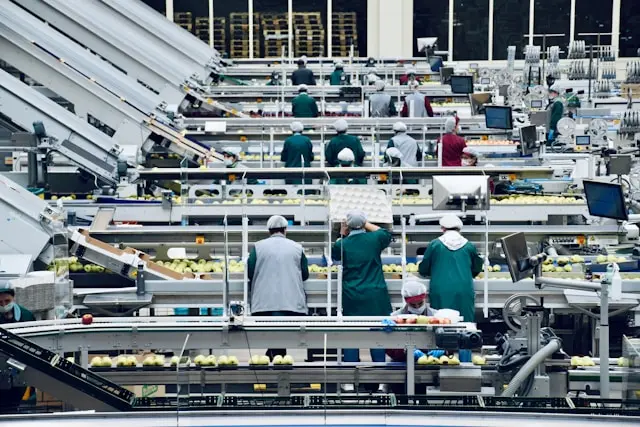
Lucerne's food and beverage manufacturing sector eliminated roughly 8% of its production workforce between 2019 and 2023. Production volumes rose across the same period. The automation investment that drove this substitution, some CHF 45 million across major dairy and specialty food processors in 2023 and 2024 alone, was supposed to resolve the cost pressures of operating in one of Europe's most expensive manufacturing locations. It did resolve them, partially. It also created an entirely new category of problem.
The roles that disappeared were manual, repetitive, and relatively easy to fill. The roles that replaced them require combined expertise in PLC programming, food safety certification, cold chain robotics, and sustainability analytics. These roles now sit open for 280 to 340 days on average. The automation investment did not shrink the hiring challenge. It concentrated it into a smaller number of positions that are individually far harder to fill and far more consequential when left vacant. A pasteurisation line that runs on Siemens S7 integration does not tolerate an eleven-month vacancy in its lead automation engineer the way a manual line tolerates a missing shift worker.
What follows is a ground-level analysis of why Lucerne's food manufacturing sector faces this paradox, where the specific gaps sit, what the compensation market looks like, and what organisations operating in this cluster need to understand before they attempt their next senior hire. The data covers the canton's major employers, the regulatory and geographic forces compressing the talent pool, and the competitive dynamics with Zurich, Zug, and Basel that make every search in this market a cross-regional contest.
The Shape of the Cluster: Smaller and More Specialised Than It Appears
The food and beverage manufacturing sector in the Canton of Lucerne employs approximately 8,500 to 9,000 people directly, representing roughly 4.2% of cantonal employment according to 2023 data from the Swiss Federal Statistical Office. Dairy and specialty foods dominate, anchored by Emmi AG, which maintains its global headquarters and R&D centre in Emmen within the Lucerne agglomeration. Emmi employs approximately 3,200 people across Switzerland, with 800 to 900 based at the Emmen headquarters and adjacent R&D facilities.
Beyond Emmi: The Supporting Ecosystem
The cluster's density, however, is lower than its reputation suggests. Regional SMEs exist: Höhlmühle AG in specialty milling (approximately 120 employees), Konditorei Bachmann AG in industrial bakery and confectionery production (approximately 350 employees in the canton), and an aggregated network of roughly 200 cheese refiners spread across the Entlebuch Biosphere region. SIG Combibloc maintains technical service operations in Root employing around 80 field service engineers and technicians to support Emmi's aseptic packaging lines.
But many of these operations sit in peripheral zones. Entlebuch, Willisau, and locations across cantonal boundaries in Zug and Schwyz host a material share of the production base. The reason is geographic. Lucerne's position between the Vierwaldstättersee and the Pilatus mountain range creates a natural transport bottleneck that elevates distribution costs and severely limits greenfield expansion. Industrial zoned land in the Lucerne agglomeration runs CHF 180 to 250 per square metre, 40% above the Swiss average according to Wüest Partner's 2024 real estate market analysis. This is not a detail. It shapes every workforce planning decision in the cluster, because where facilities locate determines which talent pool they can access.
The institutional support structure adds a critical dimension. The Hochschule Luzern's "Smart Food Factory" research group at the School of Engineering provides both applied research partnerships and a nascent talent pipeline. Zühlke Engineering's Lucerne office consults on automation projects for food manufacturers. These relationships matter because they represent the only local mechanism for producing the hybrid skill profiles the sector now demands. Whether they can produce them at sufficient scale is a separate and more uncomfortable question.
The Automation Paradox: Fewer Jobs, Harder Searches
This is the central tension of Lucerne's food manufacturing talent market in 2026, and it is the analytical claim that the aggregate data supports but that no single data point states directly: the sector's capital investment in automation has not reduced the workforce challenge. It has replaced one type of workforce challenge with a fundamentally different and more difficult one. The old problem was finding enough hands. The new problem is finding enough minds with a combination of competencies that the educational system has not yet learned to produce at scale.
Job vacancy rates in the canton's food and beverage manufacturing sector stood at 3.8% in Q3 2024, nearly double the Swiss manufacturing average of 2.1% according to SECO's vacancy survey. Those vacancies had remained above 3.5% for 18 consecutive quarters. This is not cyclical. It is embedded.
Where the Time-to-Fill Data Points
The severity becomes concrete in the time-to-fill figures. Senior automation and process engineering roles in this market average 340 days to fill. Food technologists specialising in dairy chemistry average 280 days. Bilingual supply chain managers with mandatory German and English and preferred French take 220 days on average. These are not abstract benchmarks. They represent nearly a full year of operational capacity running below design specification for the most technically demanding positions.
A packaging supplier serving Emmi reportedly abandoned a search for a Quality Manager with FSSC 22000 certification after eight months in 2024, according to qualitative case study data from the Swiss Food industry association's workforce survey. The organisation ultimately restructured the role into two junior positions, separating food safety compliance from quality engineering because it could not identify a single candidate with the combined skillset within the Lake Lucerne region. That restructuring is not a solution. It is an accommodation of failure, and it carries its own costs in coordination overhead and diluted accountability.
The production line roles, meanwhile, fill normally. For production operatives and quality assurance technicians, the market is predominantly active, with roughly 60% of qualified candidates actively seeking work. For the strategic roles driving Lucerne's transition to automated, export-oriented specialty production, the market is 75 to 85% passive according to Adecco Group's 2024 Talent Shortage Index for Switzerland. Active job postings generate fewer than 15% of senior-level hires in food technology. The remaining 85% require direct identification of passive candidates who are not looking and will not respond to a job advertisement.
What the Regulatory Cycle Demands and What It Costs
The Swiss Federal Council's revision to the CO2 Act, effective from 2025, alongside new packaging ordinances, has triggered a capital expenditure cycle of CHF 60 to 80 million across the Lucerne cluster for refrigeration retrofitting and sustainable packaging lines. This is not optional investment. The new requirements for industrial refrigeration, specifically F-gas reduction, will cost the average mid-sized dairy processor CHF 2 to 4 million per facility according to the Federal Office for the Environment's 2025 implementation guidance.
Sustainability Compliance as a Hiring Category
This regulatory wave has created an entirely new hiring category that barely existed three years ago: sustainability compliance officers with food industry expertise. These are professionals who must understand life cycle assessment for dairy carbon footprinting, packaging recyclability engineering, and the interaction between CO2 Act requirements and existing food safety frameworks like FSSC 22000 and BRCGS. The overlap between environmental regulation and food safety regulation is where the hiring difficulty concentrates. Candidates who understand one framework rarely understand both, and the cost of hiring the wrong person into a compliance-critical role is not merely a salary lost. It is a facility that cannot pass an audit.
Stricter "Swissness" labelling requirements add a further layer. The requirement that Swiss-made dairy products contain a minimum 60% raw material weight from Swiss sources constrains sourcing flexibility for export products. This is a supply chain complexity that flows directly into the talent requirements for operations leadership. A VP of Supply Chain at a Lucerne dairy producer is not managing a commodity logistics operation. They are managing a constrained-input, temperature-sensitive, multi-regulatory, multi-language operation where a single sourcing decision can disqualify an entire product line from its premium market positioning. The specificity of this role is precisely why it takes 220 days to fill.
The Geographic Squeeze: Why Lucerne's Talent Pool Leaks
Lucerne does not compete for talent in isolation. It competes against Zurich, Zug, and Basel, and it loses on multiple dimensions simultaneously to each.
The Zurich Pull
Zurich draws automation engineers and supply chain executives with salaries 15 to 20% higher than Lucerne for equivalent roles. The premium is not the full story. Zurich offers greater density of corporate headquarters, international schooling options, and direct long-haul flight connectivity. According to Michael Page's 2024 food and beverage hiring trends data, Lucerne employers lose approximately 30% of finalist candidates for VP-level operations roles to Zurich-based offers. The reasons cited are career progression and spouse employment opportunities, not compensation alone.
This is the mechanism that makes executive hiring in food and beverage manufacturing in Lucerne qualitatively different from executive hiring in Zurich. In Zurich, the challenge is competition. In Lucerne, the challenge is persuasion. The candidate must be convinced not merely that the role is worth taking but that the location is worth choosing. When the candidate's spouse is a professional who needs access to an international employer base, Lucerne's case weakens considerably against Zurich's.
The Zug Tax Advantage
Canton Zug sits 30 minutes from Emmen by car and competes aggressively for food technology executives with tax-advantaged compensation structures. Average personal income tax rates for earnings above CHF 200,000 run at roughly 22% in Zug versus 28% in Lucerne. For a VP earning CHF 300,000 base compensation, that differential translates to approximately CHF 18,000 in annual net income. The proximity to commodity trading firms in Zug also offers supply chain executives a lucrative alternative career path entirely outside food manufacturing.
The Basel Drain
The most damaging competitive dynamic may be with Basel's pharmaceutical sector. For high-skill automation and process engineers, Roche, Novartis, and MSD pay 25 to 35% premiums over food manufacturing. A Siemens S7 programmer with cleanroom experience can apply their skills to a pharmaceutical production line at a materially higher salary. The food industry cannot match these premiums without distorting its entire compensation structure. This is not a problem that salary negotiation techniques can resolve at the individual level. It is a systemic drain that removes the most technically skilled candidates from the food manufacturing talent pool entirely.
The cross-border dimension adds a final complication. German nationals who gain Swiss experience in Lucerne frequently return to Germany for senior roles, attracted by housing costs that are 40% lower despite gross salaries that are 20% less. The flow is one-directional. Reverse commuting from Germany to Lucerne is rare due to border logistics and wage structure differences.
Emmi's Strategic Pivot and What It Means for the Cluster
Emmi AG's trajectory through 2025 and into 2026 is reshaping the definition of what the Lucerne food manufacturing cluster actually is. The company reported record international revenue growth of 8.3% organic growth in its international business in 2023 and signalled intentions to consolidate administrative functions at the Emmen headquarters while decentralising high-volume production to newer facilities in Obwalden and international sites.
This strategic direction means the Lucerne location is evolving toward a model of corporate headquarters, R&D centre, and high-value specialty production rather than volume manufacturing. The Emmi Innovation Center in Emmen is at the intellectual heart of this shift. The company plans to expand its Emmen R&D capacity by 15% by 2026. The talent implications are direct: demand for white-collar food technologists, R&D scientists, and leadership roles in technology-driven operations will intensify at the Lucerne site while blue-collar hiring migrates elsewhere.
Simultaneously, Lucerne's freight infrastructure cannot accommodate additional heavy goods traffic without violating urban noise and emissions ordinances. Emmi already routes physical product through distribution centres in Root and Buchs rather than direct from Emmen. The Gotthard Base Tunnel maintenance schedules and A2 motorway congestion at the Gotthard axis have created 12 to 18 hour delays for temperature-sensitive exports to Italy, forcing expensive buffer inventory or air freight for high-margin specialty cheeses.
The cluster is bifurcating. Intellectual property and high-value R&D concentrate in the city. Production and logistics decentralise to peripheral zones. This complicates talent pipeline development because the professionals needed at headquarters and the professionals needed at decentralised production sites require different skill profiles, different compensation structures, and different value propositions. A food technologist drawn to the innovation mission of the Emmen R&D centre has little in common with a cold chain logistics manager willing to work from a transshipment hub in Root. Treating them as a single talent market is a planning error.
Compensation Reality: What Roles Pay and Where Premiums Sit
Compensation data for Lucerne's food manufacturing sector reveals a market that is expensive by Swiss standards at the executive level and acutely squeezed at the specialist level where cross-sector competition is fiercest.
At VP and executive level, Supply Chain and Operations leaders command CHF 240,000 to 320,000 base compensation plus meaningful equity or long-term incentive participation. Food Technology and R&D directors sit at CHF 220,000 to 290,000 base plus 30 to 40% in LTI and bonus. Automation and engineering leadership commands CHF 200,000 to 260,000 base plus variable. Food Safety and Quality Assurance leadership, despite being critical to regulatory compliance, sits notably lower at CHF 180,000 to 230,000 base, reflecting a historical undervaluation that the market has not yet corrected even as regulatory complexity has accelerated.
At senior specialist level with ten or more years of experience, the ranges are tighter. Food technologists earn CHF 135,000 to 165,000 base plus approximately 10% bonus. Automation engineers earn CHF 125,000 to 150,000. Supply chain specialists earn CHF 130,000 to 160,000. Food safety and quality assurance specialists earn CHF 115,000 to 140,000.
Trilingual capability commands an 8 to 12% premium. A supply chain manager who operates fluently in German, French, and English earns materially more than a monolingual German counterpart, reflecting both Emmi's export orientation across Francophone and Anglophone markets and Switzerland's internal linguistic requirements. This premium is a genuine differentiator in compensation benchmarking and a factor that market benchmarking exercises in this sector must account for.
At the very top, Emmi's Executive Board receives total compensation packages ranging from CHF 1.2 million to CHF 3.5 million annually, including long-term incentive plans tied to EBIT and sustainability targets. Department Director levels below the board typically fall in the CHF 250,000 to 400,000 total compensation range. The gap between this ceiling and the specialist floor is where the counteroffer dynamics are most intense, because a senior specialist considering a move to VP level at a competitor must weigh a meaningful jump against the risk of leaving a stable position in a market where alternative employers are few.
What Hiring Leaders in This Market Must Understand
The combination of geographic constraint, regulatory acceleration, automation-driven skills transformation, and competitive leakage to Zurich, Zug, and Basel creates a hiring environment that conventional methods cannot serve. Posting a role on a Swiss job board and waiting for applications reaches, at best, the 15 to 25% of qualified candidates who happen to be actively looking. The other 75 to 85% are employed, performing well, and not monitoring job advertisements. Senior food technologists in dairy chemistry have an unemployment rate below 1.2% nationally. Automation engineers with food industry experience are estimated at 80% passive. VP-level operations and supply chain executives fill over 90% of the time through executive search or internal promotion rather than advertised vacancies.
This is a market where the search method determines the outcome. Organisations that rely on visible, active candidates will consistently assemble shortlists from the weakest segment of the available pool. The strongest candidates, the ones currently running Emmi's pasteurisation automation or managing a multi-regulatory supply chain across three language regions, are not on any job board. They must be identified, mapped, and approached directly with a proposition specific enough to justify the disruption of a stable, well-compensated position.
KiTalent's approach to this challenge uses AI-enhanced talent mapping to identify the passive candidate pool that conventional search does not reach. In a market where the intersection of food safety certification, automation engineering, and trilingual capability defines the ideal candidate profile, the ability to map that intersection across employers and geographies is the difference between a successful search and an eleven-month vacancy. With a pay-per-interview model that eliminates upfront retainer risk, KiTalent delivers interview-ready candidates within 7 to 10 days, supported by a 96% one-year retention rate that reflects the precision of candidate matching rather than the volume of candidate presentation.
For organisations competing for automation leadership, food technology R&D talent, or supply chain executives in Lucerne's concentrated and geographically constrained market, speak with our executive search team about how we approach the specific dynamics of this cluster.
Frequently Asked Questions
What makes executive hiring in Lucerne's food manufacturing sector different from other Swiss markets?
Lucerne's food and beverage manufacturing cluster combines several challenges that do not appear together elsewhere in Switzerland. Geographic constraints limit facility expansion and elevate logistics costs by 12 to 15% compared to Zurich. The talent pool competes directly with Basel's pharmaceutical sector, which pays 25 to 35% premiums for equivalent automation skills. VP-level operations candidates are over 90% passive, meaning they are not visible through job advertising. Trilingual requirements in German, French, and English add a further constraint. The result is a market where senior roles average 220 to 340 days to fill, nearly three times the typical Swiss manufacturing benchmark.
What are the most in-demand executive roles in Lucerne's dairy and specialty food sector?
The highest-demand roles as of 2026 are Senior Automation Engineers with combined food safety and PLC programming expertise, Food Technologists specialising in dairy chemistry and formulation, Supply Chain Directors with SAP Integrated Business Planning experience for perishable goods, and Sustainability Compliance Officers who understand both CO2 Act requirements and food safety frameworks like FSSC 22000. KiTalent's direct headhunting methodology is designed to reach the passive specialists who fill these roles, typically within 7 to 10 days of engagement.
How does compensation in Lucerne's food manufacturing compare to Zurich?
Zurich offers 15 to 20% higher salaries for equivalent automation and supply chain roles in food manufacturing. VP-level operations packages in Lucerne range from CHF 240,000 to 320,000 base plus incentives, while Zurich equivalents exceed this band. However, Lucerne's lower cost of living partially offsets the gap, and Emmi's long-term incentive plans tied to EBIT and sustainability targets provide competitive total compensation at director level and above, reaching CHF 250,000 to 400,000 in total packages.
Why do senior food manufacturing searches in Lucerne take so long to fill?
Three factors compound. First, the candidate pool is extremely passive, with 75 to 85% of qualified senior professionals not actively job seeking. Second, the required skill combinations are unusually narrow, particularly roles requiring food safety certification alongside automation engineering or sustainability analytics. Third, geographic competition from Zurich, Zug, and Basel draws finalist candidates away, with approximately 30% of VP-level finalists accepting offers from competing markets. Conventional job advertising reaches fewer than 15% of viable candidates at senior level.
What regulatory changes are affecting hiring in Swiss food manufacturing?
The revised CO2 Act effective from 2025 requires industrial refrigeration upgrades costing CHF 2 to 4 million per mid-sized facility. New packaging ordinances mandate sustainable packaging line investment across the sector. Stricter Swissness labelling rules require 60% Swiss-origin raw material weight for dairy exports. Together, these regulations are driving CHF 60 to 80 million in capital expenditure across the Lucerne cluster and creating acute demand for professionals who combine environmental compliance expertise with food industry operational knowledge.
How can organisations access passive candidates in Lucerne's food technology market?
In a market where senior food technologists have under 1.2% unemployment and automation engineers are 80% passive, traditional recruitment channels are structurally inadequate. Effective search requires AI-powered talent mapping across employers and geographies, direct approach methodology, and a value proposition crafted for candidates who are not looking to move. KiTalent has completed over 1,450 executive placements globally using this approach, with an average client relationship exceeding eight years.