Novo Mesto's RV Manufacturing Sector Is Shrinking Its Output and Growing Its Talent Gap Simultaneously
Novo Mesto produces roughly 23,000 recreational vehicles a year. That figure is down from peak capacity, the European market contracted through 2023 and 2024, and Adria Mobil's assembly lines are running at 75 to 80 per cent utilisation. By every conventional measure, this should be a market where hiring is straightforward. Fewer units. Lower overtime. Stable headcount. The conditions that typically ease recruitment pressure are all present.
They have not eased it. Open technical positions in Dolenjska's transport equipment manufacturing sector rose 34 per cent year-over-year as of late 2024, even as production volumes stayed flat. CNC programmer roles for five-axis machining centres routinely exceed 90 days to fill. The Slovenian Ministry of Economy classified tool and die makers with RV-specific experience as a critical shortage category, counting fewer than 20 qualified regional candidates against more than 45 open positions across the automotive and RV sectors. The talent problem in Novo Mesto's industrial manufacturing base is not following the demand curve. It is running in the opposite direction.
What follows is an analysis of why this divergence exists, what it means for every organisation hiring technical and leadership talent in this corridor, and why the conventional assumption that a softer market produces easier hiring is precisely wrong in Novo Mesto's case. The dynamics at work here carry implications well beyond recreational vehicles, touching the broader European challenge of retooling manufacturing workforces for electrification and advanced materials while legacy skills retire faster than replacements arrive.
A Market Correction That Did Not Correct the Talent Shortage
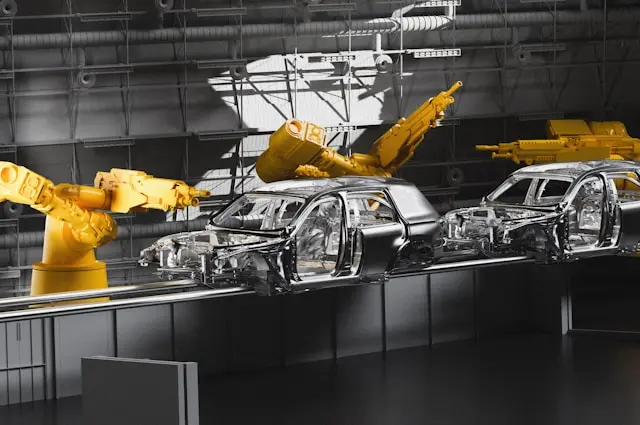
The European recreational vehicle market hit record registration volumes in 2021 and 2022, driven by pandemic-era leisure spending. What followed was predictable: an 18.2 per cent contraction in 2023, then a low-single-digit decline through 2024, according to the European Caravan Federation's market statistics. Adria Mobil, Novo Mesto's dominant employer and a subsidiary of France's Trigano Group, responded by cutting overtime and optimising inventory rather than reducing permanent headcount. The facility held its core workforce at approximately 1,550 to 1,700 direct employees.
This decision was rational. The 2026 outlook points to a 4 to 6 per cent volume recovery, driven by deferred replacement cycles and electrification-compliant model refreshes. Cutting experienced workers in 2024 to rehire them in 2026 would have been more expensive than carrying them through the trough. But the decision also masked something important. The roles that remained unfilled were not the roles affected by lower volumes. Assembly operatives were available. The vacancies that persisted, and grew, were in automation engineering, composite material design, CAD/CAM programming for lightweight structures, and bilingual supply chain management.
The correction, in other words, removed the cyclical pressure from one part of the labour market while leaving the systemic pressure in another part entirely untouched. This is the pattern that misleads hiring leaders. A production slowdown creates the appearance of labour market slack. The slack exists only in categories where the sector has never struggled to hire. In the categories that matter most for product evolution and competitiveness, the shortage deepened during the downturn because fewer candidates entered the pipeline while the technical requirements continued to advance.
The Skills the Sector Needs Are Not the Skills the Region Produces
Novo Mesto's vocational and higher education infrastructure was built around the needs of a mid-twentieth-century manufacturing base. Srednja šola Novo mesto, the region's primary technical secondary school, produces graduates trained in mechatronics, vehicle mechanics, and CNC operation. The University of Novo Mesto's Faculty of Mechanical Engineering delivers bachelor-level engineers with growing but still limited collaboration with Adria Mobil on composite materials research.
The Composite and EV Transition
The gap between what these institutions produce and what the sector now requires is widening. Adria Mobil's product roadmap includes electric-assist motorhome prototypes scheduled for launch from Novo Mesto by the second quarter of 2026. These e-Van platforms require battery integration, lightweight composite body construction using vacuum infusion and resin transfer moulding, and low-voltage electrical systems expertise. None of these disciplines are core outputs of the regional education pipeline in meaningful volume.
The Ageing Trades Workforce
The ageing workforce compounds the problem. The Slovenian Chamber of Craft and Small Business reported an average age of 52 among master toolmakers in the country. These are the specialists who build and maintain the thermoforming moulds used for interior components and the GFRP/CFRP moulds critical to body panel production. New entrants to the trade are insufficient to replace retirements, let alone support expansion. The passive-to-active candidate ratio for master toolmakers sits at roughly 80:20, meaning the overwhelming majority of remaining practitioners are employed and not looking.
For automation engineers, the picture is even tighter. Slovenia's machinery sector reports a 1.8 per cent unemployment rate for specialised robotics engineers, which constitutes full employment. Average tenure exceeds seven years, anchored by pension-adjacent benefits at German-owned automotive plants. The passive-to-active ratio for senior automation roles is estimated at 85:15. The implication for any firm trying to hire in this space is stark: the candidates who can fill these roles are not on any job board, and reaching them requires a fundamentally different method than posting and waiting.
Novo Mesto Is Not a Cluster. It Is an Assembly Outpost Inside a French-Italian Value Chain
One of the more consequential misconceptions about Novo Mesto's manufacturing base is that it functions as a self-contained industrial cluster. Adria Mobil's scale, its 1,600-strong workforce, its campus in the Bršljin industrial zone, and the presence of local suppliers like Iskra Mehanizmi and Kovintrade all support the surface impression of a dense, interdependent ecosystem. The reality is more fragile.
Approximately 60 to 65 per cent of component value is imported through EU supply chains, primarily from Italy and Germany. Trigano Group's procurement is centralised in France. The facility's Just-in-Sequence logistics for Fiat Professional Ducato chassis deliveries create a direct dependency on Italian manufacturing schedules. Local Tier-1 suppliers exist, but they handle a minority share of value. Novo Mesto functions less as a cluster with indigenous supplier development and more as an efficient final assembly node within a corporate value chain controlled from Paris and Turin.
This distinction matters for talent because it shapes what kinds of roles exist locally. In a true cluster, you find supplier engineering, logistics innovation, and entrepreneurial management roles distributed across dozens of firms. In an assembly outpost model, senior strategic functions sit elsewhere. Supply chain managers in Novo Mesto coordinate execution, not design. R&D engineers work within parameters set by the group. The most strategically interesting roles in this value chain are not all located where the vehicles are built.
The consequence for hiring is that Novo Mesto must compete for senior talent against markets that offer broader career trajectories. A supply chain director considering Novo Mesto is choosing between a role with operational depth but limited strategic scope and a role in Ljubljana, Munich, or Milan with access to the full decision-making chain. This is not a compensation problem alone. It is a career architecture problem that shapes how candidates evaluate executive opportunities.
The Three-Front Talent War: Austria, Ljubljana, and Southern Germany
Novo Mesto's geographic position places it within commuting or easy relocation distance of three competitor labour markets, each of which draws from the same technical talent pool but offers materially different propositions.
The Austrian Corridor
Graz and Linz sit 90 to 180 kilometres from Novo Mesto. Austrian manufacturing employers, including Magna Steyr and its automotive supply chain, offer 25 to 35 per cent higher net compensation for equivalent engineering and management roles, according to Statistics Austria and Eurostat purchasing power parity data. Bilingual German-English working environments and stronger euro-denominated stability make the proposition straightforward for Slovenian engineers with composite materials expertise. According to the Regional Development Agency of Dolenjska's labour mobility research, Adria Mobil loses senior mechanical engineers to Austrian competitors on a recurring annual basis.
Ljubljana's White-Collar Pull
Ljubljana, 60 kilometres north, does not compete directly for assembly technicians. It competes for the mid-level managers and finance professionals who keep a manufacturing operation running. Pharmaceutical employers like Krka and Novartis, alongside a growing fintech sector, offer hybrid working arrangements that Novo Mesto's production-centric environment cannot match. Internal migration data from the Statistical Office of the Republic of Slovenia shows a persistent pattern: supply chain and finance professionals move from the Dolenjska manufacturing base toward Ljubljana for broader sector mobility. This creates a mid-management vacancy cycle that is difficult to interrupt because the motivations are not primarily financial. They are structural.
The German Premium
Munich and Stuttgart are further away but exert gravitational pull at the senior end. Premium RV manufacturers including Hymer, Dethleffs, and Carthago, along with broader German OEMs, offer annual salary premiums of €40,000 to €60,000 for senior plant executives and master craftsmen, according to the German Federal Employment Agency's occupational earnings data. Executive-level movement is bidirectional but predominantly favours Germany for VP-level operations talent. Novo Mesto's counter-flow draws mid-career specialists from Croatia and Serbia, which sustains the middle of the talent pyramid but does not address the apex.
The net effect is a talent funnel that narrows as seniority increases. Entry-level and mid-career hiring is manageable with regional and cross-border sourcing. Senior technical specialists and plant leadership represent a market where passive candidate identification through direct search is not a preference. It is the only viable method. The passive-to-active ratio for plant directors and operations VPs in this market is estimated at 90:10.
Compensation Realities and What They Signal
The compensation structure in Novo Mesto's RV sector reflects both its niche specialisation and its geographic constraints. Plant director roles carry total packages of €130,000 to €180,000 annually, a 15 to 20 per cent premium over equivalent automotive plant director roles in Slovenia. This premium exists because the RV specialisation is narrow and seasonal management complexity adds a dimension absent from standard automotive assembly operations.
Head of R&D roles, overseeing 80 to 100 engineers responsible for new model platforms and EU Whole Vehicle Type Approval compliance, command €110,000 to €150,000. Senior supply chain managers managing 150-plus supplier relationships earn €75,000 to €95,000. Senior automation engineers, as individual contributors, sit at €55,000 to €70,000.
These figures are competitive within Slovenia. They are not competitive against Austria or Germany for equivalent roles. The gap is not small enough to close with non-cash benefits alone. A senior automation engineer earning €65,000 in Novo Mesto could earn €85,000 to €95,000 in Graz for similar work. A plant director at €160,000 is looking at €200,000 to €240,000 equivalents in Stuttgart.
This creates a specific negotiation dynamic. Candidates who are already embedded in Novo Mesto, who have family ties to the Dolenjska region or who value the quality of life that a smaller Slovenian city offers, can be retained. Candidates who are mobile, who speak multiple languages, and who hold the composite materials or automation credentials that are in shortest supply are precisely the candidates with the most options elsewhere. Salary negotiation in this market is not a conversation about marginal differences. It is a conversation about whether the total life proposition, including role scope, working environment, and cost of living differential, compensates for a material gap in gross earnings.
The firms that win these negotiations are the ones that understand the full calculation the candidate is making. The firms that lose them are the ones that lead with the number and assume it speaks for itself.
The Electrification Deadline and Its Workforce Implications
Adria Mobil's commitment to launching e-Van platform prototypes from Novo Mesto by mid-2026 is not an aspirational product announcement. It is a compliance-driven deadline with workforce consequences.
EU Euro 7 vehicle emission standards, anticipated for implementation in 2026 to 2027, will require powertrain modifications for motorhome chassis. Trigano has disclosed R&D investment requirements of €5 to €8 million for Novo Mesto certification compliance alone. Simultaneously, REACH chemicals regulation is restricting fiberglass resins and adhesives used in caravan construction, forcing material substitution that disrupts established supplier contracts and the skills associated with those materials.
The workforce implication is precise. The facility needs EV powertrain integration engineers, battery management system specialists, and lightweight composite fabrication experts within the next 12 to 18 months. These are not roles that can be filled by retraining existing metal-bending and welding operatives, even with substantial investment. The knowledge base is different. The safety protocols are different. The testing regimes are different.
This is where the original analytical claim of this article becomes concrete. The investment Novo Mesto is making in automation and electrification has not reduced the workforce requirement. It has replaced one category of worker with another category that does not yet exist in sufficient numbers anywhere in the Julian-Adriatic corridor. Capital commitments moved faster than human capital development could follow, and the market correction that might have provided breathing room instead consumed the time that could have been used for retraining. The 75 to 80 per cent utilisation rate looks like spare capacity. It is actually a countdown. When volumes recover toward the projected 4 to 6 per cent growth in 2026, the facility will need to ramp production with a workforce that has not yet been fully assembled for the products it will be building.
Incremental automation investment expected to reduce reliance on manual welding by 12 to 15 per cent will help at the operative level. It will not help at the engineering level. Automation does not reduce demand for automation engineers. It increases it. Every robotic welding cell, every composite layup system, and every battery integration station requires specialists to programme, maintain, and optimise. The relationship between technology investment and talent demand in manufacturing runs in the same direction, not opposite directions.
What This Means for Organisations Hiring in This Market
The conventional playbook for hiring in a post-contraction manufacturing market assumes that reduced activity produces available talent. In Novo Mesto, this assumption fails because the contraction was cyclical while the talent shortage is systemic. The roles affected by lower volume are not the roles in short supply. The roles in short supply are driven by product evolution, regulatory compliance, and technology adoption, none of which slowed during the downturn.
For organisations searching for senior technical specialists or leadership talent in this corridor, several realities apply.
First, the candidate pool for critical roles is overwhelmingly passive. At the plant director level, nine out of ten viable candidates are employed and not looking. At the senior automation engineer level, the ratio is only slightly less extreme. Traditional executive recruiting methods that rely on active applicant flow will not reach these candidates. A search strategy built around job postings and applications will produce a shortlist drawn from the 10 to 15 per cent of the market that happens to be in transition. The other 85 to 90 per cent must be found through direct identification and approach.
Second, the competitive set is international. A search for a Head of R&D or senior composite materials engineer in Novo Mesto is not competing against other Slovenian employers alone. It is competing against Austrian, German, and Italian employers who can offer materially higher compensation and, in many cases, broader career scope. The search must account for this from the outset, not as a surprise when the preferred candidate declines.
Third, speed matters disproportionately in a small talent pool. When there are fewer than 20 qualified tool and die makers available regionally for 45-plus open positions, every week of delay in a search is a week during which a competitor may approach the same candidate. KiTalent's model of delivering interview-ready candidates within 7 to 10 days through AI-powered talent mapping that identifies passive executives is designed precisely for markets with this profile: small, specialised, and passive.
For organisations competing for automation, composites, or EV integration leadership in Slovenia's manufacturing corridor, where the talent pool is measured in dozens rather than hundreds and the best candidates are already employed in roles they are not planning to leave, connect with our executive search team to discuss how a direct approach changes the outcome.
Frequently Asked Questions
What is the main challenge hiring manufacturing talent in Novo Mesto?
The primary challenge is a systemic skills mismatch that persists regardless of production volumes. While general assembly operatives are available seasonally, the roles in shortest supply are automation engineers, composite materials specialists, CAD/CAM programmers for lightweight structures, and bilingual supply chain managers. These shortages are driven by product evolution toward electrification and advanced materials, not by demand cycles. Unemployment among specialised robotics engineers in Slovenia sits at 1.8 per cent, which is effectively full employment, and most qualified candidates are passive. Firms that rely on job postings alone are reaching only 10 to 15 per cent of the viable candidate market.
What salaries do senior manufacturing roles command in Novo Mesto?
Plant director roles at Novo Mesto's RV facilities carry total compensation of €130,000 to €180,000, including a 15 to 20 per cent premium over equivalent automotive roles in Slovenia. Head of R&D positions command €110,000 to €150,000 for leadership of 80 to 100 engineers. Senior supply chain managers earn €75,000 to €95,000. Senior automation engineers earn €55,000 to €70,000 as individual contributors. These figures are competitive within Slovenia but trail Austrian equivalents by 25 to 35 per cent and German equivalents by substantially more at senior levels. Market benchmarking is essential before structuring an offer in this corridor.
How does Novo Mesto compete with Austria and Germany for manufacturing talent?
Novo Mesto competes on quality of life, cost of living, and role specificity rather than on raw compensation. Austrian employers in Graz and Linz offer 25 to 35 per cent higher net pay for equivalent roles. German premium RV manufacturers offer €40,000 to €60,000 annual premiums for senior executives. Novo Mesto retains talent through regional ties, the relative affordability of the Dolenjska region, and the specialist nature of RV manufacturing. However, the most mobile and most qualified candidates, those with composite materials or automation credentials, are precisely the ones with the strongest international options.
Why are RV manufacturing talent shortages increasing during a market slowdown?
The European RV market contracted 18.2 per cent in 2023 and declined further in 2024, yet open technical positions in Dolenjska rose 34 per cent year-over-year. This divergence exists because the shortage is not volume-driven. It is driven by the transition from legacy metal fabrication skills to composite materials engineering, EV powertrain integration, and robotics programming. Product evolution continued through the downturn. The workforce pipeline did not keep pace. Fewer graduates entered advanced manufacturing trades while the technical requirements for the sector's next generation of products accelerated.
How can KiTalent help with executive search in niche manufacturing markets like Novo Mesto?
KiTalent specialises in identifying and approaching passive candidates in markets where the talent pool is small and highly specialised. With a 96 per cent one-year retention rate across 1,450-plus completed executive placements, the firm uses AI-enhanced talent mapping to identify candidates who are not visible through conventional channels. In markets like Novo Mesto, where passive-to-active ratios reach 90:10 for senior roles, direct headhunting methodology is the only approach that reaches the full candidate market. KiTalent delivers interview-ready shortlists within 7 to 10 days, with a pay-per-interview model that eliminates upfront retainer risk.
What impact will electrification have on RV manufacturing hiring in Slovenia?
Electrification is reshaping the skills profile of Novo Mesto's RV workforce. Adria Mobil's e-Van platform prototypes, expected in 2026, require battery management engineers, low-voltage electrical specialists, and lightweight composite fabrication experts. EU Euro 7 emission standards and REACH chemical restrictions are simultaneously forcing material and powertrain changes. These shifts create demand for specialists who are not produced in sufficient volume by regional educational institutions. The transition will not reduce total headcount. It will replace one type of worker with another, and the replacement workers are currently in shorter supply than the workers they are succeeding.