Pescara's Hospitality Boom Has Built Infrastructure It Cannot Staff
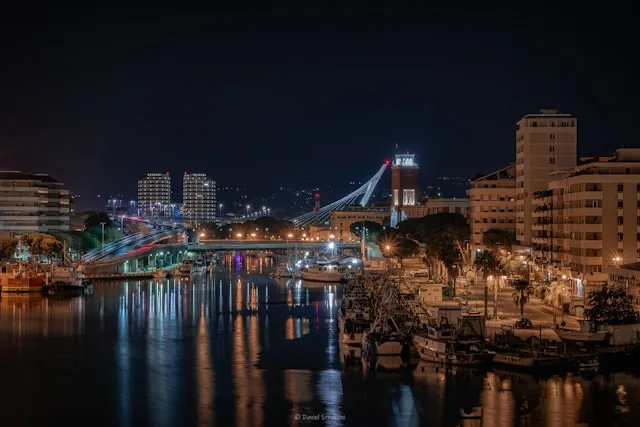
Pescara's Marina Nord expansion will deliver 180 new superyacht berths by late 2026. The congress centre renovation is scheduled to complete by mid-year. Hotel occupancy in August 2024 hit 89%, surpassing pre-pandemic levels. On paper, the city's coastal tourism economy is entering its strongest cycle in a decade.
Beneath these numbers sits a structural contradiction. The city is investing in facilities that require a calibre of hospitality professional it has never reliably produced and currently cannot attract. An executive chef search at one of the city's flagship hotels ran seven months before the role was filled by poaching from Rimini. The marina authority recruited its operations manager from Croatia after exhausting the Italian candidate market. A major seafront property abandoned a technology implementation entirely because it could not hire the person to run it.
This is not a story about seasonal labour shortages, though those persist. It is a story about a coastal tourism economy attempting to move upmarket while the talent pipeline moves in the opposite direction. Enrolment in Pescara's advanced culinary programme has dropped 22% since 2019. The city's salary benchmarks sit 12 to 18% below Rome. And a regulatory environment frozen by the Bolkestein beach concession dispute has locked capital in place, preventing the kind of investment that would make Pescara competitive for the senior professionals its new infrastructure demands. What follows is a ground-level analysis of the forces pulling Pescara's hospitality sector in two directions at once, and what it means for organisations trying to hire leadership talent in this market.
A Record Season That Masks a Deeper Problem
Pescara's 2024 summer season delivered strong headline numbers. Average hotel occupancy in August reached 89%, two percentage points above the pre-pandemic benchmark of 2019. The city's 94 licensed beach clubs along the 10km coastline employed approximately 2,800 seasonal workers. Marina di Pescara generated an estimated €45 million in direct nautical tourism expenditure, with a multiplier effect of 2.3x on surrounding hospitality services.
These figures describe a market that is full. They do not describe a market that is growing.
Average daily rates for 4-star properties came in at €142 in 2024, which, adjusted for inflation, represents a 4% decline against 2019 levels. New hotel room supply grew by just 1.2% net across the year. Zero new 5-star properties broke ground. The seasonality concentration index remains at 78.4%, with 68% of annual hospitality revenue compressed into a three-month window between mid-June and mid-September.
The picture is one of an economy running hot within fixed boundaries. Demand has recovered. Supply has not expanded to meet it. And the talent required to operate at the level these occupancy numbers suggest has become the binding constraint on what happens next. Hiring leaders across Pescara's hospitality and tourism sector are confronting a market where the infrastructure is ready but the people to run it are not.
The Three Roles Pescara Cannot Fill
Executive Chefs Who Can Deliver Fine Dining at Scale
The most visible talent gap sits in the kitchen. As reported by Il Centro in October 2024, Grand Hotel Victoria maintained an open vacancy for an executive chef specialising in alta cucina di mare for seven months. The role was eventually filled by recruiting a chef from Rimini at a 25% salary premium, supplemented with a housing allowance. This is not an isolated case. According to Federalberghi Abruzzo's 2024 workforce survey, 60% of 4-star and 5-star properties in the province report chef vacancies exceeding 90 days.
The compensation gap explains part of the problem. Executive chefs in Pescara earn between €48,000 and €68,000 base, often with profit-sharing arrangements. In Rome, equivalent roles command 30 to 35% more, and the city offers access to Michelin-starred restaurant ecosystems that represent career progression. For a sous chef in Pescara eyeing an executive role, the rational move is north or west. The pipeline is draining at the point where it should be producing its most experienced professionals.
Marina Managers With Luxury Credentials
According to reporting by AbruzzoWeb.it in June 2024, Marina di Pescara conducted a six-month executive search in 2024 for a marina manager with superyacht certification. The search failed to identify any Italian candidates who combined nautical operations credentials with luxury hospitality experience. The role was ultimately filled by recruiting from Split, Croatia.
This is not a volume problem. It is a category problem. The role requires a professional who holds IYMCA or equivalent certification, speaks multiple languages, understands ISM Code compliance, and can manage both maritime logistics and high-net-worth guest relations. CNA Pescara reports that 80% of nautical service companies in the port area face what they describe as impossibilità di reperimento for harbour masters with English and German language competence. As the Marina Nord expansion adds 180 superyacht berths, the demand for this profile will intensify. The supply has not moved.
Revenue Managers Who Understand Seasonal Compression
A major seafront property, described by industry sources as a 90-plus-room 4-star hotel, reportedly abandoned implementation of a new revenue management system in 2024. The reason, according to PescaraPost.it's August 2024 reporting, was an inability to hire a revenue manager with experience in both hospitality and nautical tourism pricing. The role sat vacant for four months before the general manager absorbed the duties.
Revenue management in Pescara is not the same discipline as revenue management in a year-round city hotel. The 78.4% seasonality index means that pricing strategy must extract maximum value from a compressed peak while managing shoulder seasons where occupancy drops sharply. Proficiency in platforms such as Duetto or Atomize, combined with OTA channel management and dynamic pricing for seasonal environments, represents a skill set that is undersupplied nationally and practically absent in Abruzzo. The 55% passive candidate ratio in this role means more than half of qualified revenue managers are not looking at job postings. They must be found through direct approaches and market mapping.
Why the Talent Pipeline Is Shrinking as Demand Grows
The analytical claim that sits at the centre of this market is this: Pescara's infrastructure investment and its talent production system are moving in opposite directions, and the gap between them is widening at the exact seniority level where the consequences are most damaging.
The Marina Nord expansion targets a superyacht clientele that expects fine dining, multilingual service, and operational excellence. Yet enrolment in the Istituto Alberghiero G. De Dominicis advanced culinary programme declined 22% between 2019 and 2024. None of the 2024 graduates specialised in yacht provisioning. The city is building berths for vessels whose owners expect silver-service gastronomy, and the local education system is producing fewer chefs, not more.
This is not a gap that compensation alone can close. You cannot recruit experience that does not yet exist in sufficient quantity locally. And you cannot train it fast enough when the infrastructure arrives on a construction timeline while the talent develops on a career timeline. Capital has moved faster than human capital could follow.
The demographic dimension compounds the problem. The active candidate market for seasonal beach staff is experiencing persistent shortages driven by a decline in the 18-to-25 cohort. Front office roles in the 3-star segment churn at 45% annually. Italian labour law restricts seasonal contracts to eight or nine months, creating hard stops on talent retention. According to INPS data, 40% of seasonal workers in Pescara decline return offers because the employment gap between seasons is financially untenable. The workers Pescara trains each summer leave each autumn, and a growing proportion do not return.
The Regulatory Freeze That Is Blocking Investment
Record occupancy and stagnant supply do not coexist by accident. Pescara's hospitality market is experiencing what the data suggests is a frozen investment environment, driven by two overlapping regulatory constraints.
Beach Concessions and the Bolkestein Impasse
The EU Beach Concessions Directive required transposition by December 2023. As of early 2025, 34% of Pescara's stabilimenti balneari were operating under expired concessions, pending definitive regional tender regulations. According to the Associazione Nazionale Stabilimenti Balneari, this uncertainty has frozen capital investment in beach infrastructure. Operators are unwilling to invest in upgrading facilities when their right to continue operating those facilities is legally unresolved.
For hiring leaders, the implication is direct. Frozen investment means frozen headcount expansion, which means reduced demand for management roles in the beach club segment. But it also means that the operators who survive the regulatory resolution will need to move quickly, and the talent to staff upgraded facilities will not be sitting idle waiting for them.
Zoning Restrictions and the Five-Star Vacuum
Coastal zoning restrictions under the Zone A, B, and C demarcations prevent hotel densification in the historic centre. This is why, despite 89% August occupancy, zero new 5-star properties have broken ground. The existing stock of approximately 12,400 hotel beds, concentrated in the 3-star and 4-star segments, captures windfall profits from constrained supply. But it cannot expand to absorb growing demand or to move upmarket.
Rimini, by contrast, offers 105,000 square metres of congress and exhibition space against Pescara's 8,500. Puglia's strategic tourism plan has already attracted event management firms away from Pescara. The 2026 completion of Pescara's Palazzo dei Congressi renovation may help close this gap for business tourism, but the facility alone does not solve the talent constraint. Hiring executives who can manage congress operations, events logistics, and year-round hospitality programming requires reaching candidates who are not visible on any Italian job board.
Pescara's Compensation Gap Is Widening Where It Matters Most
The salary differential between Pescara and its competitor markets is not a static discount. It is a directional force that shapes every senior search in the city.
Pescara operates at a 12 to 18% discount against Rome for equivalent hospitality roles. The gap against Rimini runs 5 to 8%. At the executive chef level, this translates to a difference of €15,000 to €25,000 in annual base compensation before considering the career progression advantages that Rome's Michelin ecosystem provides. At the marina manager level, Croatia's 12% flat tax regime for high-income earners creates an effective compensation advantage that salary alone cannot match.
Hotel general managers in Pescara earn between €80,000 and €110,000 base with a 20 to 25% bonus and accommodation, according to data from Hays Italy and Federalberghi Abruzzo. F&B directors earn between €55,000 and €75,000 at the executive level. Revenue managers sit between €50,000 and €65,000.
These figures are competitive within the Abruzzo context. They are not competitive in the context of a market trying to attract international talent for superyacht operations, Michelin-capable kitchen leadership, or digital revenue optimisation. When Grand Hotel Victoria needed an executive chef, the solution was a 25% premium plus housing. That is not a salary adjustment. That is the market telling you that the standard package is insufficient.
For organisations trying to fill these roles, the compensation conversation must begin before the search does. Benchmarking against local norms will produce a package that attracts local candidates. Benchmarking against the markets you are actually competing with will produce a package that reaches the candidates you need. The distinction is material, and getting it wrong costs months.
What This Means for Hiring Leaders in 2026
Pescara's hospitality sector is entering 2026 with a specific set of conditions that any hiring executive must understand before launching a search.
First, the passive candidate ratio in the roles that matter most is exceptionally high. General managers are 85% passive. Executive chefs are 78% passive. Marina management is 82% passive. These professionals are not reading job postings. They are embedded in roles elsewhere, often in competitor cities or countries, and they move only when approached with a proposition that addresses their specific career calculus. A search strategy built around advertising and inbound applications will reach, at best, the 15 to 22% of the market that happens to be looking. The other 78 to 85% must be identified and approached directly.
Second, the timeline pressure is real. The Marina Nord expansion delivers in 2026. The congress centre renovation is scheduled for Q2. The Abruzzo Region Tourism Plan has allocated €8.4 million for Pescara's winter tourism product development. These are not future plans. They are current commitments with fixed delivery dates. Every month a critical role sits vacant is a month of revenue lost from infrastructure that is already built or nearly built.
Third, the competitive dynamics are intensifying. Bari's superior air connectivity to Northern Europe, Rimini's congress infrastructure, Rome's culinary career ecosystem, and Croatia's tax advantages are all pulling the same small pool of qualified candidates in directions away from Pescara. The loss of three seasonal air routes from Abruzzo Airport for Summer 2025, including London Stansted, Brussels Charleroi, and Munich, has further compressed average length of stay and reduced Pescara's visibility to the international tourism workforce.
The organisations that hire successfully in this market will be those that treat executive recruitment not as an administrative process but as a strategic function requiring specialist methodology. The search must begin with market intelligence: who holds the credentials, where are they, what would it take to move them. Not with a job posting and a waiting period.
How KiTalent Approaches This Market
The dynamics described throughout this analysis point to a market where conventional hiring methods consistently underperform. When 80% or more of qualified candidates are passive, when compensation benchmarks must be calibrated against international competitors rather than local norms, and when the window between infrastructure delivery and talent readiness is measured in months rather than years, the search methodology matters as much as the role specification.
KiTalent's approach to executive hiring in hospitality and luxury sectors is built for exactly this kind of market. AI-powered talent mapping identifies candidates across geographies, including the Croatian, Rimini, and Rome markets that Pescara competes with directly. The pay-per-interview model means organisations invest only when they meet candidates who match the brief. Interview-ready candidates are delivered within 7 to 10 days. And with a 96% one-year retention rate across 1,450 executive placements, the hire is built to last beyond the season.
For organisations in Pescara that are preparing to staff expanded marina operations, a renovated congress facility, or a winter tourism programme that requires year-round leadership, the cost of a slow or failed search is no longer theoretical. It is measured in berths sitting empty, events booked into competitor venues, and revenue management left to general managers who already have a full-time job.
Start a conversation with our executive search team about how we identify and deliver the hospitality leadership Pescara's next phase of growth requires.
Frequently Asked Questions
What are the hardest hospitality roles to fill in Pescara?
Executive chef positions specialising in fine dining seafood, marina operations managers with superyacht certification, and revenue managers with seasonal pricing experience are the three most consistently difficult roles. Chef vacancies at 4-star and 5-star properties exceed 90 days in 60% of cases. Marina management searches regularly extend beyond six months. The passive candidate ratio for these roles ranges from 78% to 85%, meaning traditional job advertising reaches fewer than one in four qualified professionals. A direct headhunting approach is typically required.
How do Pescara hospitality salaries compare to other Italian cities?
Pescara operates at a 12 to 18% discount against Rome and a 5 to 8% discount against Rimini for equivalent hospitality roles. Hotel general managers earn €80,000 to €110,000 base plus bonus and accommodation. Executive chefs earn €48,000 to €68,000. Marina managers command €70,000 to €95,000 plus housing. These figures are competitive within Abruzzo but fall short of what is needed to attract candidates from competitor markets, particularly when Rome offers Michelin-starred career progression and Croatia offers a 12% flat tax regime.
Why is Pescara struggling to attract hospitality talent despite record occupancy?
Record occupancy has not translated into new investment or upmarket development. Regulatory uncertainty around the Bolkestein beach concession directive has frozen capital expenditure. Coastal zoning restrictions prevent hotel densification. The result is a market that generates strong returns on existing assets but offers limited career progression for ambitious hospitality professionals. Combined with the loss of air routes from Abruzzo Airport and a 22% decline in advanced culinary programme enrolment, the talent pipeline is contracting even as demand holds steady.
What impact will Pescara's marina expansion have on hiring?
The Marina Nord extension adds 180 superyacht berths with delivery scheduled in 2026. Superyacht tourism requires a specific profile: professionals who combine maritime operations credentials, luxury hospitality standards, and multilingual capabilities. The current talent pool in Italy does not produce this profile in sufficient numbers. Marina di Pescara's 2024 search for an operations manager ended with a hire from Croatia, suggesting that the expanded facility will intensify international recruitment competition for a role category where 82% of candidates are passive.
How long does an executive search typically take in Pescara's hospitality sector?
Senior searches in Pescara routinely exceed conventional timelines. Executive chef searches average well over 90 days. Marina management searches in 2024 ran six months. Revenue manager vacancies have lasted four months before being abandoned entirely. KiTalent's AI-enhanced executive search methodology delivers interview-ready candidates within 7 to 10 days by mapping passive talent across competing geographies, reaching candidates who are not visible through standard channels.
What is the Bolkestein directive and how does it affect Pescara's tourism hiring?
The EU Beach Concessions Directive requires member states to open beach concessions to competitive tender rather than automatic renewal. Italy's delayed transposition has left 34% of Pescara's beach clubs operating under expired concessions. This regulatory limbo freezes investment in beach infrastructure, suppresses management-level hiring in the beach club segment, and creates uncertainty for the 2,800 seasonal workers employed across the coastline. Resolution is expected through regional tender frameworks, but the timeline remains unclear as of 2026. Organisations planning to invest in upgraded beach hospitality operations should factor this regulatory risk into their workforce planning.