Pescara's Manufacturing SMEs Are Automating Fast. The Workforce to Run It Does Not Exist Yet
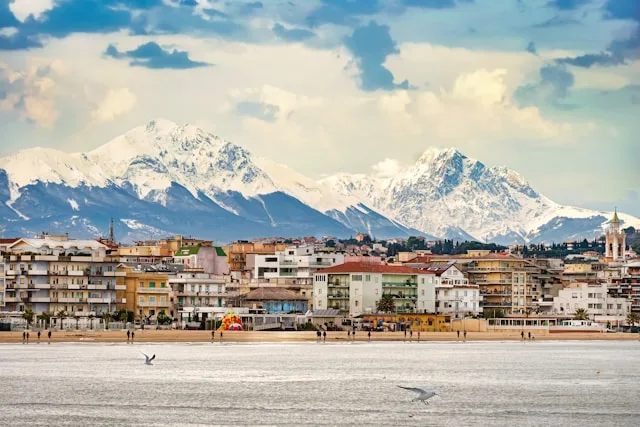
The Province of Pescara hosts approximately 1,850 active manufacturing enterprises. Ninety-four percent of them employ fewer than ten people. Together, they form one of the densest concentrations of metalworking, precision mechanics, and furniture production in central Italy. The San Silvestro-Fontanelle corridor alone contains over 600 manufacturing establishments, and the cluster's output reaches automotive and appliance supply chains stretching into Germany and France. By most measures, this is a manufacturing base performing well above its demographic weight.
The problem is not output. It is the growing distance between what these firms are investing in and who is available to operate what they have bought. A 34% year-over-year increase in automation investment, driven by Italy's Transition 5.0 tax credits, has collided with a workforce where 38% of employees are over 55 and only 11% are under 30. The capital has moved. The human capital has not followed at the same speed. The result is a market where CNC multiaxis programmers are outnumbered by open vacancies at a ratio of four to one, where mechatronics maintenance searches run six months, and where the most qualified candidates must be recruited from competitors in other regions at premiums exceeding 20%.
What follows is an analysis of this widening gap between investment and workforce readiness, the specific roles and skills driving it, and what manufacturing leaders in Pescara and the broader Abruzzo region need to understand before they make their next hiring decision. The challenge here is not a temporary cycle. It is a structural mismatch that will define which firms in this cluster survive the next five years and which do not.
The Cluster That Punches Above Its Weight
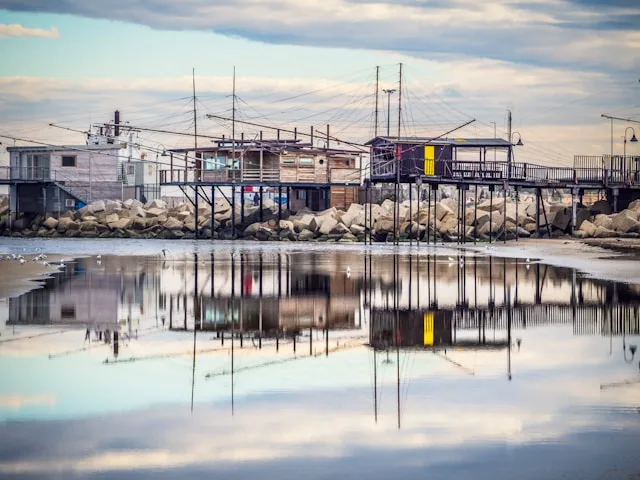
Pescara's industrial and manufacturing sector is built on a model familiar across Italy's productive districts: dense networks of micro-enterprises and SMEs linked by sub-contracting relationships, geographic proximity, and shared supply chain architecture. The Zona Industriale di Pescara spans three municipalities and supports a sectoral mix that has remained stable for decades.
Metalworking and precision mechanics account for 34% of manufacturing employment. Hydraulic valves, precision turning, and mechanical sub-assemblies flow northward to automotive and appliance OEMs in Emilia-Romagna and Marche. Furniture and wood processing, concentrated in the Distretto Produttivo del Mobile della Valle del Pescara, accounts for 28%. Component assembly, serving as Tier 2 and Tier 3 suppliers to multinational original equipment manufacturers, makes up another 22%.
A Sub-contracting Model Under Pressure
The traditional sub-contracting model that held this cluster together is thinning. In 2024, 68% of SMEs still sourced at least 40% of intermediate inputs from within a 50-kilometre radius. That figure has dropped eight percentage points since 2020. The decline is not gradual erosion. It reflects the failure of several mid-tier forging and foundry suppliers, which has forced the cluster into a hybrid sourcing model: local mechanical processing combined with external procurement of specialised steel and electronic components.
This hybrid model works for production. It creates complications for talent. The skills profile required to manage a supply chain that spans both a local turning shop and a German electronic components supplier is materially different from the profile that managed a purely local network. The supply chain manager who thrived in the old model may lack the ERP fluency, multilingual capability, and cross-border logistics experience the new model demands.
Export Strength Masking a Domestic Vulnerability
Abruzzo's manufacturing exports grew 8.3% in 2024, driven substantially by metalworking's integration into German and French supply chains. Export-oriented precision mechanics firms project 4.2% turnover growth through 2025. The export story is strong.
The domestic story is not. Furniture sub-contractors serving Italy's construction sector face a projected 2.1% turnover contraction, a direct consequence of the Superbonus 110% construction incentive expiring in 2024. That expiration created a demand vacuum for metal architectural components. Fifteen percent of surveyed SMEs have been forced to pivot toward industrial components, a transition that requires retooling production lines and, critically, hiring staff with different technical certifications. The cluster is splitting into two trajectories, and the talent implications of each are different.
The Automation Paradox: Capital Moves Faster Than People
This is the central tension in Pescara's manufacturing market in 2026, and it is the dynamic that hiring leaders most need to understand.
Italy's Transition 5.0 tax credit programme has driven a 34% year-over-year increase in automation investment among Pescara's manufacturing SMEs. Firms are buying 5-axis CNC machines, installing IoT sensor networks, and implementing predictive maintenance systems. The investment is rational. It is also, in many cases, running ahead of the workforce's ability to absorb it.
The same firms making these investments report that 38% of their workforce is over 55. Only 11% is under 30. The University of Chieti-Pescara's engineering faculty produces approximately 120 mechanical and industrial engineering graduates annually. Of those, 41% leave the region within three years, primarily for Milan or Bologna. The arithmetic does not balance.
The implication is not that automation was a mistake. It is that automation without a parallel investment in the technicians, programmers, and maintenance specialists required to operate advanced systems creates a different kind of risk. Automated capacity can sit underutilised. Machines purchased with public subsidy can run below capacity because the person qualified to programme them left for Emilia-Romagna, where salaries are 35 to 40% higher for equivalent roles.
This is the original synthesis that the data supports but that no single data point states explicitly: the investment in Industry 4.0 has not reduced the workforce requirement. It has replaced one category of worker with another that does not yet exist in sufficient numbers within this region. Pescara's firms have successfully upgraded their production capacity. They have not yet solved the human capital equation that makes that capacity productive.
The Roles That Cannot Be Filled
Unioncamere's Excelsior system forecasts 2,100 gross hiring needs in Pescara's manufacturing sector for 2026. The difficulty-filling rate stands at 47%. Nearly half of all planned hires are expected to encounter material delays or go unfilled entirely.
CNC Multiaxis Programmers: A 4:1 Demand-Supply Ratio
The most acute shortage sits with Level IV and V CNC technicians capable of 5-axis programming and CAM software proficiency. Demand exceeds supply at a ratio of four to one. The average time to fill this role in Abruzzo runs 180 days, compared to 95 days nationally.
A pattern typical of mid-sized mechanical sub-contractors in the province illustrates the cost. A precision mechanics firm with 45 employees in the San Silvestro industrial zone held an open CNC multiaxis programmer vacancy for eight months in 2024. The role was ultimately filled by recruiting from a competitor in Ancona at a 22% salary premium. The firm absorbed the cost. Many micro-enterprises with thinner margins cannot.
Mechatronics Maintenance Technicians: The Convergence Role
Mechatronics maintenance roles, requiring combined mechanical, pneumatic, and PLC programming skills, carry a difficulty index of 4.3 out of 5.0. These are the roles created directly by Industry 4.0 investment. Every IoT sensor network installed, every predictive maintenance algorithm deployed, requires someone who can diagnose faults across mechanical, electrical, and software domains simultaneously.
A bathroom fixtures manufacturer in Montesilvano restructured its maintenance department in 2024, converting two electrician positions into mechatronics roles. According to a Confindustria Chieti Pescara survey of 40 manufacturing firms, the search required six months and the engagement of a specialised headhunter. The successful candidate was recruited from a packaging machinery firm in Bologna.
The pattern is consistent across the cluster. Firms are creating roles that combine disciplines previously held by separate individuals. The candidates who possess all three competencies are rare, employed, and aware of their market value.
Supply Chain and Operations Managers: The Missing Middle
Mid-level professionals capable of managing ERP systems and multi-tier supplier networks represent a quieter but equally consequential gap. These are the roles that connect Pescara's production floor to its OEM customers in northern Italy and beyond. The executive search challenge for Operations Directors and Supply Chain Managers in this market is compounded by the fact that 85% of qualified candidates at the ten-year-plus experience level are not actively looking. They must be identified and approached directly through proactive headhunting methods.
The compensation for these roles is competitive within the region but struggles against northern alternatives. A senior Supply Chain Manager in Pescara earns €55,000 to €72,000. The same profile in Bologna or Modena commands 35 to 40% more. For an Operations Director with profit-and-loss responsibility, Pescara offers €95,000 to €130,000 base with 20 to 30% bonus potential. Turin's automotive sector starts at €120,000 and reaches €160,000.
The Compensation Equation: Competitive Regionally, Exposed Nationally
Pescara's compensation structure for manufacturing leadership reveals a market that is internally consistent but externally vulnerable. Executive roles requiring bilingual Italian and English proficiency, particularly those involving German automotive clients, command premiums of 12 to 18% above standard ranges. This premium reflects scarcity, not generosity.
For an R&D Manager responsible for industrialisation, the senior specialist range sits at €52,000 to €65,000. At director level, the range extends to €80,000 to €105,000. These figures are reasonable for a market where the cost of living is 28% lower than Milan, according to Il Sole 24 Ore's cost-of-living index. But cost-of-living adjustments do not fully explain career decisions.
The decisive factor for mid-career engineers is not the salary gap alone. It is the career trajectory gap. Bologna and Modena's "Motor Valley" offers multinational machinery firms with structured progression paths. Ferrari, Maserati, and the Marchesini Group provide something Pescara's micro-enterprises cannot easily replicate: a visible next step. Milan offers listed company positions with stock options. Turin's Stellantis and Iveco operations offer global mobility.
Pescara competes on quality of life, cost of housing, and proximity to family. These are powerful retention factors for professionals already established in the region. They are weak recruitment factors for candidates being asked to relocate from a city with a stronger professional ecosystem.
This is why the counteroffer dynamic is particularly destructive in this market. When a Pescara SME loses a six-month search because the finalist accepted a counteroffer from a Bologna employer, the search does not simply restart. It restarts into the same constrained pool, now with one fewer candidate.
The Demographic Wall No Hiring Strategy Can Climb Alone
The Province of Pescara's working-age population is projected to decline 1.2% annually through 2030. This is not a forecast that can be revised upward by policy changes or economic growth. It is a demographic trajectory baked into birth rates from two decades ago.
Within manufacturing specifically, 38% of the workforce is over 55. The replacement demand created by retirements is not cyclical. It is an irreversible draw on an already insufficient talent pool. Every year, the cluster loses experienced CNC operators, maintenance technicians, and production supervisors. Every year, the University of Chieti-Pescara produces 120 engineering graduates, 41% of whom leave.
The ITS "G. Marconi" technical institute and the Polo Tecnologico Abruzzo provide training infrastructure. The Distretto Produttivo del Mobile coordinates apprenticeship programmes. These institutions are necessary but insufficient. The gap between the training pipeline's output and the cluster's hiring demand is widening, not narrowing.
For hiring leaders, the practical implication is stark. Waiting for the talent pipeline to mature is not a viable strategy for any role needed in the next 12 to 24 months. The candidates who possess the right combination of mechanical skill and digital competency today are already employed, mostly in other regions, and overwhelmingly passive. Reaching them requires direct candidate identification and talent mapping that goes beyond job postings and regional networks.
Regulatory Pressure Is Accelerating the Timeline
Two regulatory developments are compressing the window in which Pescara's SMEs can adapt.
Transition 5.0 as a Procurement Gatekeeper
By 2026, the Transition 5.0 tax credit, which requires 25% energy efficiency gains or AI integration, becomes mandatory for accessing public procurement contracts valued above €150,000. This is not an incentive. It is a gate. Firms that cannot demonstrate compliance will lose access to a material revenue stream.
Confindustria Chieti Pescara projects that 20 to 25% of micro-enterprises lacking capital for compliance will exit the market or be absorbed by larger competitors. The consolidation this triggers will reshape the talent market. Absorbed firms release workers, but often at skill levels below what the acquiring firm needs. The net effect may be a brief increase in available labour paired with no improvement in the supply of the advanced profiles that are actually scarce.
ESG Reporting and Supply Chain Audits
The EU Corporate Sustainability Reporting Directive requirements will cascade to Pescara's sub-contractors through supply chain audits by 2026. OEMs in Emilia-Romagna and Marche will require traceability systems from their Tier 2 and Tier 3 suppliers. Most Pescara SMEs do not currently have these systems. Implementing them requires both capital and expertise in quality systems, ESG data management, and technology-enabled compliance processes.
The NIS2 Directive adds a further layer. Mid-sized manufacturing enterprises with 50 or more employees must implement cybersecurity risk management. Compliance costs are estimated at €40,000 to €80,000 per firm. These are not optional investments. They are conditions of remaining in the supply chain.
For hiring leaders, the regulatory calendar means that the competition for compliance-capable professionals, quality systems managers, and ESG specialists will intensify through 2026. These are not roles that Pescara's traditional training pipeline produces. They must be found elsewhere.
What a Successful Hire Looks Like in This Market
The search methodology that works in Milan or Bologna does not translate directly to Pescara's manufacturing SME market. The dynamics here are different in three specific ways.
First, the candidate pool is smaller and more concentrated. For any given senior technical or leadership role, the number of qualified individuals within commuting distance of Pescara may be measured in dozens, not hundreds. A job posting on a national platform generates applications from candidates who will not relocate. The hidden 80% of passive talent in this market is not a metaphor. It is the literal proportion of senior manufacturing professionals who are employed, not searching, and reachable only through direct approach.
Second, the value proposition must be constructed differently. A Pescara SME cannot compete with Bologna on salary or with Milan on career trajectory. It can compete on ownership of outcomes, speed of decision-making, quality of life, and the tangible impact a senior hire has on a 50 to 150 person operation. These advantages are real, but they must be articulated in the first conversation with a candidate, not left to emerge during an interview process.
Third, speed matters disproportionately. In a market where CNC multiaxis programmer searches run 180 days and mechatronics maintenance searches run six months, every week of delay increases the probability that the best candidate in a thin pool accepts another offer. The cost of a prolonged or failed executive search in this market is not measured only in recruiter fees. It is measured in production lines running below capacity because the person qualified to programme or maintain them has not been hired.
KiTalent works with manufacturing SMEs and mid-cap industrial firms across markets where the talent pool is concentrated, passive, and geographically constrained. Our model delivers interview-ready executive candidates within 7 to 10 days through AI-enhanced talent mapping and direct headhunting, reaching the candidates that job postings and regional networks cannot surface. With a 96% one-year retention rate across 1,450 completed executive placements, the approach is built for markets where getting the hire wrong carries consequences that a small organisation cannot absorb.
For manufacturing leaders in Pescara and Abruzzo who need Operations Directors, Supply Chain Managers, R&D leaders, or senior technical specialists in a market where nearly half of all planned hires encounter material difficulty, speak with our industrial sector executive search team about how we approach this specific challenge.
Frequently Asked Questions
Why is it so difficult to hire CNC multiaxis programmers in Pescara?
Demand for Level IV and V CNC technicians in Pescara exceeds supply at a ratio of four to one. The average time to fill this role in Abruzzo is 180 days, nearly double the 95-day national average. The shortage reflects both the limited output of regional training programmes and the pull of higher-paying markets in Emilia-Romagna and Lombardy. The top 20% of CNC specialists, those with 5-axis and CAM proficiency, are 90% passive and must be approached directly through targeted headhunting for manufacturing roles rather than job advertising.
What do Operations Directors earn in Pescara's manufacturing sector?
At the senior specialist and plant manager level with 10 to 15 years of experience, base compensation ranges from €68,000 to €85,000. At executive and VP level with full profit-and-loss responsibility, the range extends to €95,000 to €130,000 with bonus potential of 20 to 30%. Roles requiring bilingual Italian and English proficiency and experience managing German automotive client relationships command an additional 12 to 18% premium above these figures.
How does Pescara's manufacturing talent market compare to Bologna or Milan?
Bologna and Modena offer salaries 35 to 40% higher for equivalent mechatronics and operations roles. Milan offers 45 to 55% premiums for executive positions, along with listed company equity packages. However, Pescara's cost of living is 28% lower than Milan's. The compensation gap is partially offset by living costs, but career trajectory advantages in northern hubs remain a decisive factor for mid-career professionals deciding whether to stay or relocate.
What is the Transition 5.0 tax credit and how does it affect manufacturing hiring?
Transition 5.0 is an Italian government programme requiring 25% energy efficiency gains or AI integration in manufacturing operations. By 2026, compliance becomes mandatory for accessing public procurement contracts above €150,000. An estimated 20 to 25% of micro-enterprises unable to fund compliance may exit the market. The programme has driven a 34% increase in automation investment but has simultaneously intensified demand for technicians and engineers with Industry 4.0 competencies that remain in short supply across Abruzzo.
How can Pescara SMEs compete for talent against larger firms in northern Italy?
Pescara SMEs cannot match northern salary levels directly. Effective recruitment strategies for this market centre on three advantages: the tangible operational impact a senior hire has in a smaller organisation, faster decision-making and greater autonomy than corporate environments offer, and a quality of life that northern industrial cities cannot replicate. These must be communicated proactively during the initial candidate approach and talent pipeline development, not left to emerge during late-stage interviews.
What is the demographic outlook for Pescara's manufacturing workforce?
The province's working-age population is declining at 1.2% annually through 2030. Within manufacturing, 38% of employees are over 55 and only 11% are under 30. The University of Chieti-Pescara produces around 120 engineering graduates per year, but 41% leave the region within three years. This means replacement demand from retirements alone exceeds the local training pipeline's ability to supply qualified professionals, making external recruitment and cross-regional executive search essential for critical roles.