Piacenza's €127 Million Industry 4.0 Bet and the Engineers Who Don't Exist to Run It

Piacenza province spent €127 million on advanced manufacturing systems in 2024. Interconnected production lines. Digital twins. IoT-enabled predictive maintenance. The capital moved fast, driven by Italy's Industry 4.0 tax credits and the competitive pressure of a machinery sector that exports 78% of everything it produces. The machines arrived. The people to programme, integrate, and maintain them did not.
This is not a story about a province that failed to invest. Piacenza's 1,387 mechanical and metallurgical enterprises generate €1.4 billion in annual exports. Anchor firms like Omas Industries in Fiorenzuola d'Arda and Bausch+Ströbel in Pontenure operate at the leading edge of food processing and pharmaceutical packaging technology. The province has bet heavily on digitalisation. The problem is that the bet requires a workforce that the local and regional labour market cannot supply in sufficient numbers. The Unioncamere Excelsior system projected 1,480 difficult-to-fill vacancies in the machinery sector for 2025 alone, with difficulty rates reaching 82% for CNC programmers and 78% for mechatronics engineers.
What follows is an analysis of how this gap between capital investment and available human capital is reshaping Piacenza's industrial economy, who is affected, and what leaders running machinery businesses in this province need to understand before their next senior hire.
The Investment That Outran Its Own Workforce
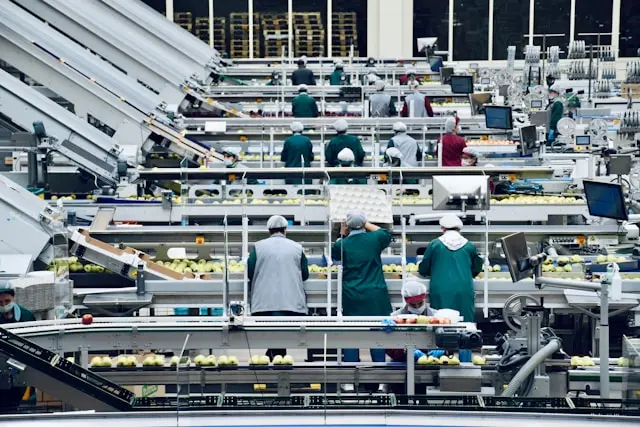
The trajectory is stark. Industry 4.0 tax credits, administered through Italy's Credito d'Imposta 4.0 programme, drove record capital expenditure across Piacenza's machinery sector in 2024. The €127 million figure, reported by the Agenzia delle Entrate, represents investment predominantly in interconnected production systems and digital twin implementation. The large exporters led the way. Omas Industries and Bausch+Ströbel deploy advanced IoT-enabled predictive maintenance across their production floors. Their Tier 2 and Tier 3 suppliers, many employing fewer than 50 workers, have followed with varying degrees of commitment and capability.
But adoption is bifurcated. According to Confindustria Emilia's Osservatorio Industria 4.0 for the Piacenza area, 70% of mechanical firms in the province are small enterprises. Among these, cybersecurity readiness and data analytics integration lag materially behind the anchor manufacturers. The tax credit created the incentive to purchase equipment. It did not create the technicians to operate it.
This is where the original analytical claim of this article sits. The €127 million in capital expenditure has not reduced Piacenza's workforce requirements. It has replaced one category of worker with another that the province's education and training infrastructure produces in critically insufficient numbers. The machinery is more capable. The roles needed to run it are harder to fill. Capital moved faster than human capital could follow, and the result is a growing risk of stranded industrial assets: advanced production systems that cannot be utilised at their designed capacity because the people who understand edge computing, MQTT protocols, and OPC UA connectivity are not available for hire in this market.
The firms that recognised this earliest have already adapted their recruitment strategies. The rest are learning the hard way that a six-figure equipment purchase means nothing if the integration engineer search runs 180 days with no result.
Where the Vacancies Are Deepest
The Unioncamere Excelsior data for Emilia-Romagna, extrapolated to Piacenza province, quantifies the problem with uncomfortable precision. The machinery sector requires an estimated 2,100 new technical hires across 2025 and 2026, with 68% demanding tertiary-level technical qualifications. Within the 1,480 vacancies classified as difficult to fill in 2025, three categories concentrate the pain.
Mechatronics Engineers: 340 Vacancies, 78% Difficulty
These are not entry-level roles. The mechatronics engineers Piacenza's machinery firms need must bridge mechanical design, electronic control systems, and software integration. The 78% difficulty rate means that for every ten searches initiated, fewer than three reach a satisfactory conclusion within a normal hiring cycle. The remaining seven either extend past six months, result in a compromise hire, or fail entirely.
CNC Programmers and Setters: 290 Vacancies, 82% Difficulty
The 82% difficulty rate for CNC-specialised technicians is the highest in the dataset. These are professionals capable of multi-axis programming on Heidenhain and Siemens platforms, increasingly required to work with additive manufacturing for rapid prototyping of valve components and pump housings. The supply constraint is not about the number of CNC operators in Northern Italy. It is about the number who can programme five-axis simultaneous milling while also understanding the digital integration layer that connects their machine to a factory-wide IoT architecture.
Automation Systems Integrators: 210 Vacancies, 75% Difficulty
The integrators sit at the junction of hardware and software. They connect PLCs to SCADA systems, programme Siemens TIA Portal environments, and validate the resulting systems against pharmaceutical standards like GAMP 5 and 21 CFR Part 11 where the application demands it. The 75% difficulty rate reflects both the technical specificity and the thin population of qualified candidates.
These three categories alone account for 840 vacancies. Each unfilled role represents not just lost productivity but underutilised capital expenditure, the very equipment purchased with Industry 4.0 credits sitting below optimal capacity because nobody qualified is available to programme it.
The Passive Candidate Problem in a Province of 290,000
The ratio tells the story. LinkedIn Talent Insights data for the Piacenza-Bologna corridor in late 2024 shows that for Senior Automation Engineer roles, the split between active and passive candidates is approximately 1:9. Ninety percent of qualified candidates are employed, settled, and not responding to job advertisements. Recruiter outreach response rates for qualified automation engineers run at 12%, compared to 34% for general manufacturing roles. Average tenure sits at 4.2 years.
This is a market where posting a vacancy and waiting for applications reaches, at best, 10% of the viable candidate pool. The other 90% must be identified, approached, and persuaded individually. For a small or mid-sized machinery firm in Fiorenzuola d'Arda or Castel San Giovanni, with an HR function of one or two people, this kind of proactive search is operationally impossible without external capability.
The contrast with lower-skilled roles sharpens the picture. Production operative and junior maintenance technician positions maintain active candidate ratios of 3:1, with unemployment in these categories remaining elevated according to ANPAL data. The market is simultaneously oversupplied at the base and acutely undersupplied at the technical apex.
This bifurcation carries a strategic implication for every operations director in the province. The roles that matter least to competitive positioning are the easiest to fill. The roles that determine whether a €2 million production line operates at 60% or 95% capacity are the ones where the search takes half a year and may still fail.
The Geographic Talent Drain: Bologna, [Parma](/parma-emilia-romagna-italy-executive-search), Milan, Germany
Piacenza does not exist in isolation. It sits in a corridor where talent flows are shaped by motorway distances and salary differentials, and nearly every flow runs against it.
The Regional Pull: Bologna and Parma
Bologna is 30 minutes down the A1. Parma is 20 minutes away. Both offer denser industrial ecosystems and compensation premiums of 8 to 15% for equivalent roles. Engineering talent graduating from the Università di Parma (Department of Industrial Engineering) and the Università di Bologna (Alma Mater Studiorum) has no structural reason to settle in Piacenza when the larger cities offer more employers, higher salaries, and broader career paths.
Piacenza's counter-argument is cost of living. Housing costs run approximately 25% below Bologna, according to Immobiliare.it data. This offset is real but often insufficient for a 28-year-old automation engineer choosing between a first job in Bologna's thriving mechatronics cluster and a comparable role in a smaller firm in Podenzano. The employer brand differential matters. Piacenza's machinery firms are predominantly B2B industrial businesses. They are excellent at what they do. They are invisible to most graduates compared to the names in Modena's Motor Valley or Bologna's packaging machinery district.
The Milan Premium and the Germany Ceiling
Milan draws senior executives and automation specialists with salaries 30 to 40% above Piacenza benchmarks. The purchasing power gap narrows once Milan's housing costs are factored in, but for a CTO or R&D Director earning €130,000 in Piacenza, the prospect of €180,000 in Milan remains persuasive, particularly when the role carries greater visibility and a clearer path to the next career step.
The most damaging drain, however, runs international. Top-tier automation architects and R&D directors regularly move to Baden-Württemberg, Bavaria, or the Zurich-Basel corridor, where total compensation for equivalent roles reaches €180,000 to €250,000. According to the Fondazione Studi Consulenti del Lavoro, this creates a ceiling effect on senior technical retention in the province. A firm in Piacenza can develop a talented automation engineer over ten years only to lose them to a German OEM offering double the total package. The irony is that many of these German OEMs are the same companies that buy Piacenza's exported machinery.
This dynamic means Piacenza's export success and its talent problem are structurally linked. The province manufactures competitively enough to sustain trade surpluses with Germany and France. But it cannot retain the high-value R&D functions that would secure long-term competitive positioning, because those same destination countries outbid it for the very talent it produces.
What the Demand Drivers Mean for 2026 Hiring
The demand pressure is not easing. Three forces are pulling the machinery sector's hiring requirements upward in 2026, each adding new skills to an already stretched talent pool.
Pharmaceutical serialisation regulations under EU Directive 2011/62/EU are driving investment in track-and-trace automation systems. For Piacenza's pharmaceutical packaging cluster, anchored by Bausch+Ströbel, this translates into demand for engineers who understand both automation hardware and pharmaceutical validation frameworks. As reported in the Bausch+Ströbel Group Annual Report, capacity utilisation in this segment already runs at 85 to 90%, driven by the reshoring of pharmaceutical production to Europe. Additional regulatory requirements compound the hiring need.
Agri-tech precision farming is integrating AI-enabled variable-rate application systems into the agricultural machinery manufactured in the province. FederUnacoma's technology trend analysis for 2024 to 2026 identifies this as a structural shift in product capability. For firms like Amazone, this means recruiting engineers who combine traditional agricultural machinery knowledge with machine learning and sensor integration competencies.
Nearshoring acceleration adds volume to the entire sector. German OEMs are increasing sourcing from Northern Italian suppliers to reduce dependency on Chinese manufacturing, a trend projected by SIMEST/SACE's Export Report to increase Piacenza mechanical exports by 4 to 5% in 2026. More orders require more production capacity. More production capacity requires more engineers and technicians that the province already cannot find.
Each of these drivers is positive for Piacenza's economy. Each one simultaneously deepens the talent crisis. The province's machinery firms are winning orders they may struggle to fulfil, not because of capital constraints but because of human capital constraints.
Compensation Realities for Machinery Leaders in Piacenza
Understanding the compensation structure is essential for any executive hiring decision in this market, because the numbers explain both why talent stays and why it leaves.
Operations and Plant Leadership
An Operations Manager with 8 to 12 years of experience managing a plant of 100 or more employees earns €75,000 to €95,000 base salary plus bonus. At the executive level, a Director of Operations or General Manager for a machinery division with €50 million or more in revenue commands €120,000 to €160,000 base, with total compensation reaching €180,000 to €220,000 including long-term incentives. These figures, drawn from Michael Page and Hays Italy salary guides for Northern Italy, carry a caveat: Piacenza-specific packages are estimated at 10 to 12% below Milan metropolitan benchmarks.
R&D and Automation Engineering Leadership
A Senior Automation Engineer with seven or more years of PLC/SCADA experience earns €55,000 to €72,000. A Chief Technology Officer or R&D Director for an industrial automation firm earns €130,000 to €170,000 base. In family-owned firms transitioning to professional management, equity participation is becoming increasingly common as a retention mechanism.
The Supply Chain Premium
A Supply Chain Director managing international supplier networks earns €110,000 to €145,000 base. Given Piacenza's export intensity, where 78% of machinery output crosses borders, these roles carry outsized strategic importance and corresponding market premiums.
The compensation gaps between Piacenza and its competitor geographies are not closing. At the senior specialist level, the 8 to 15% premium available in Bologna or Parma acts as a persistent pull. At the executive level, the 30 to 40% Milan premium and the near-doubling available in Germany create a ceiling that Piacenza's firms cannot match on salary alone. Retention and recruitment in this market increasingly depend on non-monetary factors: project complexity, autonomy, quality of life, and the proposition of leading something meaningful inside a firm that exports to 60 countries.
Regulatory Headwinds and Structural Constraints
Two regulatory developments add cost and complexity to Piacenza's machinery firms in 2026, with direct implications for the talent they need.
The Carbon Border Adjustment Mechanism (CBAM), entering its transitional phase in 2026, requires machinery exporters to report embedded carbon for steel and aluminium inputs. For the province's 1,387 metalworking enterprises, most of which lack dedicated environmental accounting functions, this creates a new compliance requirement that demands either internal capability or external advisory. Energy efficiency engineers, already scarce, become even more critical. Heat recovery system design and electrification of thermal processes are no longer optional improvements. They are competitive necessities for firms whose customers increasingly require Scope 3 emission data.
Italy's Labour Decree (Decreto Lavoro 2023) restrictions on fixed-term contracts, capping them at 12 months except for specific exemptions, constrain the ability of machinery firms to scale workforces seasonally for export order peaks. In a volatile demand environment, this regulation effectively forces permanent hiring commitments, raising the stakes on every recruitment decision and increasing the cost of a wrong hire.
A structural constraint compounds these regulatory pressures. Unlike Bologna or Milan, Piacenza lacks dedicated venture capital or private equity infrastructure for industrial automation scale-ups. The AIFI reports just €12 million in VC investment in Piacenza province, compared to €340 million in the Bologna metropolitan area. This capital gap constrains growth for digital transformation beyond what traditional bank lending can support, limiting the ability of smaller firms to invest in both equipment and the talent to operate it simultaneously.
What Hiring Leaders in Piacenza's Machinery Sector Must Do Differently
The conventional hiring playbook fails in this market. Posting a vacancy, screening inbound applications, and selecting from whoever responds reaches at most 10% of viable candidates for the roles that matter most. The 90% who must be found through direct, proactive executive search and headhunting will never see a job posting and will never apply.
This reality is not unique to Piacenza. But it is more acute here than in larger industrial centres because the absolute numbers are smaller. Bologna has more automation engineers. Parma has more mechatronics graduates. Piacenza's candidate pools are thinner, which means the margin for error in every search is tighter.
The firms adapting most effectively are doing three things. First, they are building long-term talent pipelines rather than searching reactively. Omas Industries' partnership with ITS "G. Galilei" in Fiorenzuola d'Arda, creating a 24-month Mechatronics Specialist apprenticeship with guaranteed placement, is an example. According to Libertà Piacenza, this restructuring followed years of unsuccessful traditional university graduate recruitment. Second, they are benchmarking compensation not against local norms but against the markets actually competing for their candidates: Bologna, Parma, and increasingly Germany. Third, they are using specialist search firms that can access passive candidates across the entire corridor and beyond, rather than relying on local networks that have already been exhausted.
For organisations competing for automation, mechatronics, and manufacturing leadership in Piacenza's machinery sector, where 90% of qualified candidates are invisible to job boards and every unfilled technical role represents underutilised capital investment, speak with KiTalent's industrial manufacturing executive search team about how a targeted, AI-enhanced direct search reaches the candidates this market requires. KiTalent delivers interview-ready leadership candidates within 7 to 10 days through a pay-per-interview model with no upfront retainer, backed by a 96% one-year retention rate across 1,450 completed executive placements.
Frequently Asked Questions
What makes Piacenza's machinery sector difficult to hire for in 2026?
Piacenza's machinery sector combines high export intensity, with 78% of output sold internationally, and rapid Industry 4.0 adoption with an extremely thin local talent pool. The province's 290,000 population cannot generate sufficient mechatronics engineers, CNC programmers, and automation integrators for 1,387 manufacturing firms. Difficulty-to-fill rates reach 82% for CNC specialists and 78% for mechatronics engineers. Proximity to Bologna and Parma, which offer 8 to 15% higher salaries, compounds the challenge through persistent talent outflow. Firms relying on job advertisements alone access only 10% of qualified candidates.
What salaries do machinery executives earn in Piacenza province?
Operations Directors and General Managers leading €50M+ revenue machinery divisions earn €120,000 to €160,000 base, with total compensation of €180,000 to €220,000 including incentives. CTOs and R&D Directors earn €130,000 to €170,000 base, with equity participation increasingly common in family-owned firms. Senior Automation Engineers earn €55,000 to €72,000. All figures run approximately 10 to 12% below equivalent Milan roles, though Piacenza's 25% lower housing costs partially offset the gap. Firms conducting executive compensation benchmarking should compare against Bologna and Parma, not local norms.
Which companies are the largest machinery employers in Piacenza?
The anchor manufacturers include Omas Industries in Fiorenzuola d'Arda with over 350 employees specialising in cereal milling and food processing machinery, Bausch+Ströbel in Pontenure with 280 employees in pharmaceutical packaging equipment, Amazone with 150 employees in agricultural machinery, and Omer in Podenzano with 120 employees producing brushless motors and actuators. Beyond these, a dense network of 1,387 metalworking SMEs operates as Tier 2 and Tier 3 suppliers, with particular concentration in valve and fluid control manufacturing around Castel San Giovanni.
How does KiTalent help machinery firms in Northern Italy find engineers and technical leaders?
KiTalent uses AI-enhanced talent mapping and direct headhunting to identify and approach the passive candidates who represent 90% of the qualified pool in Piacenza's machinery sector. Rather than waiting for applications, the methodology maps the entire relevant candidate population across the Emilia-Romagna corridor and beyond, including professionals in Bologna, Parma, Modena, and international markets. Interview-ready candidates are delivered within 7 to 10 days under a pay-per-interview model, eliminating the 180-day search cycles that industrial associations report as typical for specialist automation roles.
What is the biggest risk facing Piacenza's machinery sector in 2026?
The most material risk is stranded capital investment. The province's machinery firms invested €127 million in Industry 4.0 systems in 2024, but the technicians and engineers required to programme and maintain these systems are the hardest roles to fill, with difficulty rates above 75%. If advanced production lines operate at 60% capacity because integration engineers cannot be hired, the return on that capital expenditure collapses. This risk is compounded by CBAM compliance requirements and the ongoing emigration of senior technical talent to Germany and Switzerland, where compensation can reach double Piacenza levels.
Why do machinery hiring searches in Piacenza take so long?
Searches for specialised roles regularly exceed 180 days because the candidate population is extremely small and overwhelmingly passive. A pharmaceutical packaging firm seeking a PLC programmer with Siemens TIA Portal experience and GAMP 5 pharmaceutical validation knowledge faces a candidate pool where 90% are already employed and only 12% respond to recruiter outreach. Local networks are quickly exhausted, forcing firms to recruit from Bologna or Parma at 15 to 20% salary premiums. The combination of technical specificity, geographic competition, and small absolute candidate numbers makes traditional recruitment methods ineffective for critical technical and leadership roles.